

 English
 Español
 Deutsch
 中文简体
中文简体

Product Consultation
Your email address will not be published. Required fields are marked *
Europe's Solar and Energy Storage Transition: Transforming the Power System Infrastructure for a Renewable Future
Jul 10,2026
Power Systems Are Becoming “Real-Time Systems”: Why Data Is More Critical Than Electricity
Jul 06,2026
New EPBD Regulations Drive HVAC Energy Transparency and Boost Demand for Smart Meters
Jul 07,2026Content
In modern electrical distribution, accurate single phase energy measurement is no longer a simple requirement reserved for utility billing. It has become a practical foundation for energy efficiency, tenant sub-metering, solar generation monitoring, equipment-level consumption analysis, and cost allocation in residential, commercial, and light industrial environments. A compact, reliable, and easy-to-install meter can help facility managers understand where electricity is used, help installers complete projects faster, and help end users manage energy with greater confidence.
The resettable DIN rail single phase electronic kWh meter with pulse output is designed for exactly this role. Built for 1P2W single phase two wire AC systems, it combines direct load measurement up to 100A, LCD display, active energy and power measurement, pulse output, and resettable partial energy in a compact 2-module, 36 mm-wide housing. Its practical design makes it suitable for electrical cabinets, distribution boards, metering panels, charging points, solar generation monitoring, small commercial units, workshops, apartments, and many other applications where space, reliability, and accuracy matter.
The product is represented by the SDM230DR model family, a single phase electronic kWh meter developed for direct connection without external current transformers in applications up to 100A. It provides active energy measurement compliant with IEC 62053-21 Class 1.0 and EN 50470-1/3 Class B, while its power measurement accuracy reaches 1% of range maximum. The meter also includes a pulse output for active energy, enabling connection to external data loggers, energy management systems, PLCs, gateways, or building automation devices.
Resettable Din Rail Single Phase Electronic kWh meter with Pulse Output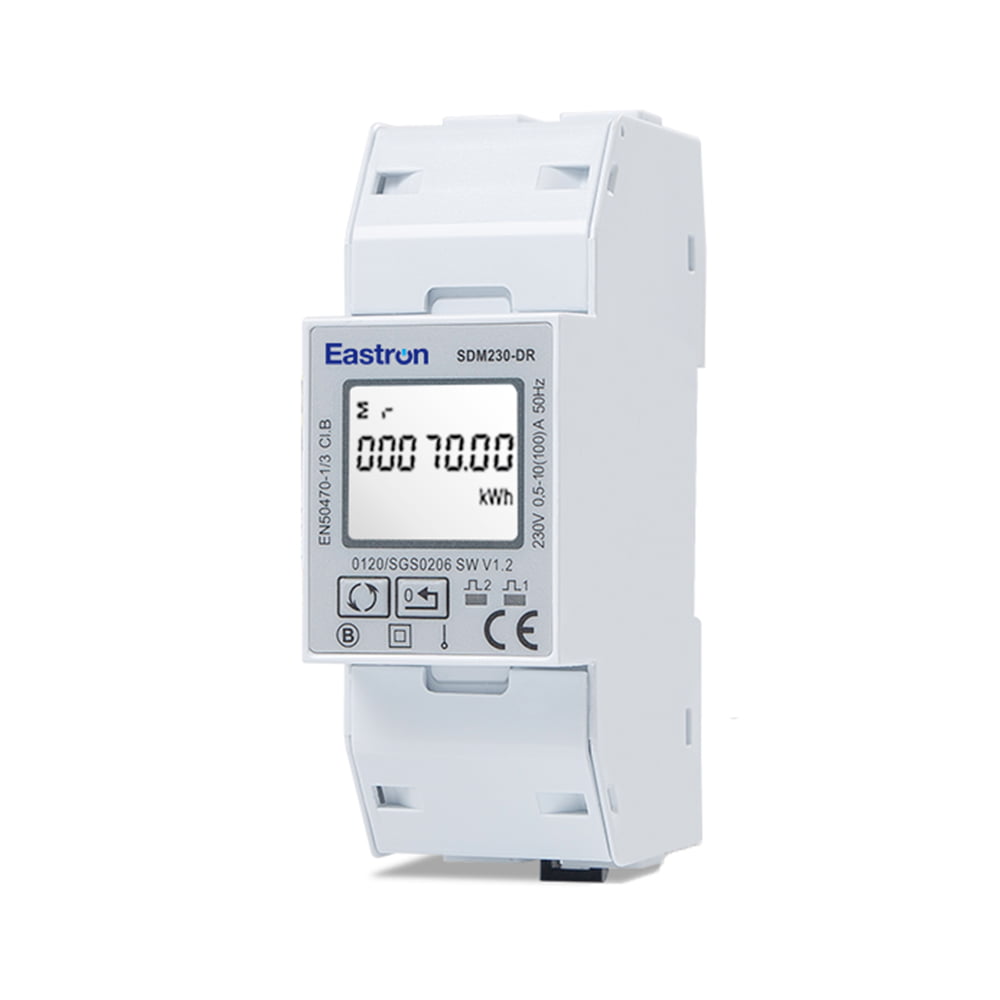
The meter is a resettable DIN rail electronic kWh meter for single phase AC systems. It is engineered for 1P2W networks, meaning one phase and neutral, which is the standard configuration in many residential and small commercial electrical installations. With a rated voltage of 230V and an operating voltage range from 80% to 120% of rated voltage, it supports stable operation under normal grid fluctuation conditions.
One of the most important features of this product is its maximum direct load current of 100A. Many compact single phase meters require external current transformers at higher current levels, adding cost, wiring complexity, and potential installation errors. This product allows direct connection up to 100A, making the system simpler and more economical for many real-world applications.
The meter includes an LCD display with backlight, allowing users to read energy and power information clearly in distribution cabinets, service rooms, or other low-light environments. Unlike mechanical meters or basic non-backlit digital meters, the backlit LCD improves usability during commissioning, inspection, maintenance, and routine data checks.
The product also provides resettable partial energy. This function is valuable when users need to monitor electricity consumption over a specific period, project, tenant cycle, machine operation, or maintenance interval without erasing the accumulated total energy record. The resettable partial energy function helps transform a basic kWh meter into a practical energy management tool.
Item |
Specification |
Practical Value |
System Type |
Single phase two wire, 1P2W, 1P+N |
Suitable for residential, commercial, and light industrial single phase circuits |
Measurement Method |
RMS measurement on single phase AC system |
Supports accurate electrical measurement under typical AC load conditions |
Rated Voltage |
230V |
Compatible with common single phase low-voltage networks |
Operating Voltage |
80% to 120% of rated voltage |
Maintains operation during normal voltage variation |
Rated Current |
10A |
Optimized for common metering conditions |
Maximum Current |
100A direct load |
Reduces need for external current transformers in many applications |
Minimum Current |
0.5A |
Supports measurement across a broad load range |
Starting Current |
40mA |
Enables detection of very small loads |
Active Energy Accuracy |
IEC 62053-21 Class 1.0 / EN 50470-1/3 Class B |
Provides recognized accuracy for energy measurement |
Power Accuracy |
1% of range maximum |
Supports practical load and power monitoring |
Display |
Backlit LCD |
Improves readability in panels and cabinets |
Output |
Pulse output for active energy |
Allows integration with monitoring and control systems |
Width |
2 modules, 36 mm |
Saves DIN rail space and supports compact panel design |
Reset Function |
Partial energy resettable |
Useful for temporary measurement, billing periods, and consumption analysis |
Compared with traditional single phase electromechanical meters, this electronic kWh meter offers a more compact structure, better readability, pulse communication capability, and greater functional flexibility. Mechanical meters are often larger, slower to respond, and less suitable for integration into digital monitoring systems. They may still perform basic energy accumulation, but they do not easily support modern data collection or short-term energy analysis.
Compared with low-cost basic electronic meters, the resettable DIN rail meter provides a stronger balance of features. Its 100A direct load capacity, pulse output, backlit LCD, partial energy reset, and recognized accuracy standards place it above entry-level models that may only display total kWh and lack external output. For installers and system integrators, these added functions reduce the need for supplementary devices and improve the usefulness of each metering point.
The 2-module 36 mm width is a major competitive advantage. Electrical panels often have limited DIN rail space, especially in retrofit projects where additional devices must be installed beside existing breakers, relays, surge protection devices, and control modules. A compact 2-module meter can be fitted into many cabinets without requiring extensive rearrangement. This reduces installation time and helps control project costs.
The 100A direct connection capability is another important advantage. Some competing compact meters are rated for lower direct current, such as 45A, 63A, or 80A. When the required current is higher, installers may need to use CT-operated meters, which require external current transformers, extra wiring, and additional space. Direct metering up to 100A simplifies the installation and reduces possible wiring mistakes, especially in distributed sub-metering projects with many metering points.
The pulse output gives the meter a bridge to wider systems. Many simple meters only show data locally, forcing users to read values manually. With pulse output for active energy, this product can be connected to data acquisition equipment, energy counters, building management systems, or remote monitoring gateways. Pulse output is simple, robust, and widely accepted in metering applications, making it a practical interface for both new installations and upgrades.
The resettable partial energy function provides flexibility that many basic meters do not offer. Users can reset a partial register at the start of a monitoring period while retaining the main accumulated energy record. This is useful for temporary projects, machine testing, rental spaces, energy audits, seasonal energy tracking, and solar generation checks. In many cases, this one function can replace manual calculation or spreadsheet tracking.
Ease of use is a decisive factor in electrical metering. A technically accurate meter can still create problems if it is difficult to read, difficult to install, or unclear during operation. This product is designed around practical field requirements. Its LCD display presents measured information clearly, while the backlight helps electricians and users check readings in dark electrical rooms or inside enclosed panels.
The DIN rail form factor is familiar to electrical installers. It fits directly into standard distribution boards and control cabinets, aligning with circuit breakers and other modular electrical devices. This reduces learning time and supports a clean, organized panel layout. The 36 mm width also makes it easier to allocate space during panel design.
The wiring arrangement supports direct input for single phase metering. Because no external current transformer is needed for loads up to 100A, installation is more straightforward. This is especially beneficial for contractors working on multi-unit buildings, shopping areas, small factories, and renewable energy installations where multiple single phase meters may be installed in one project.
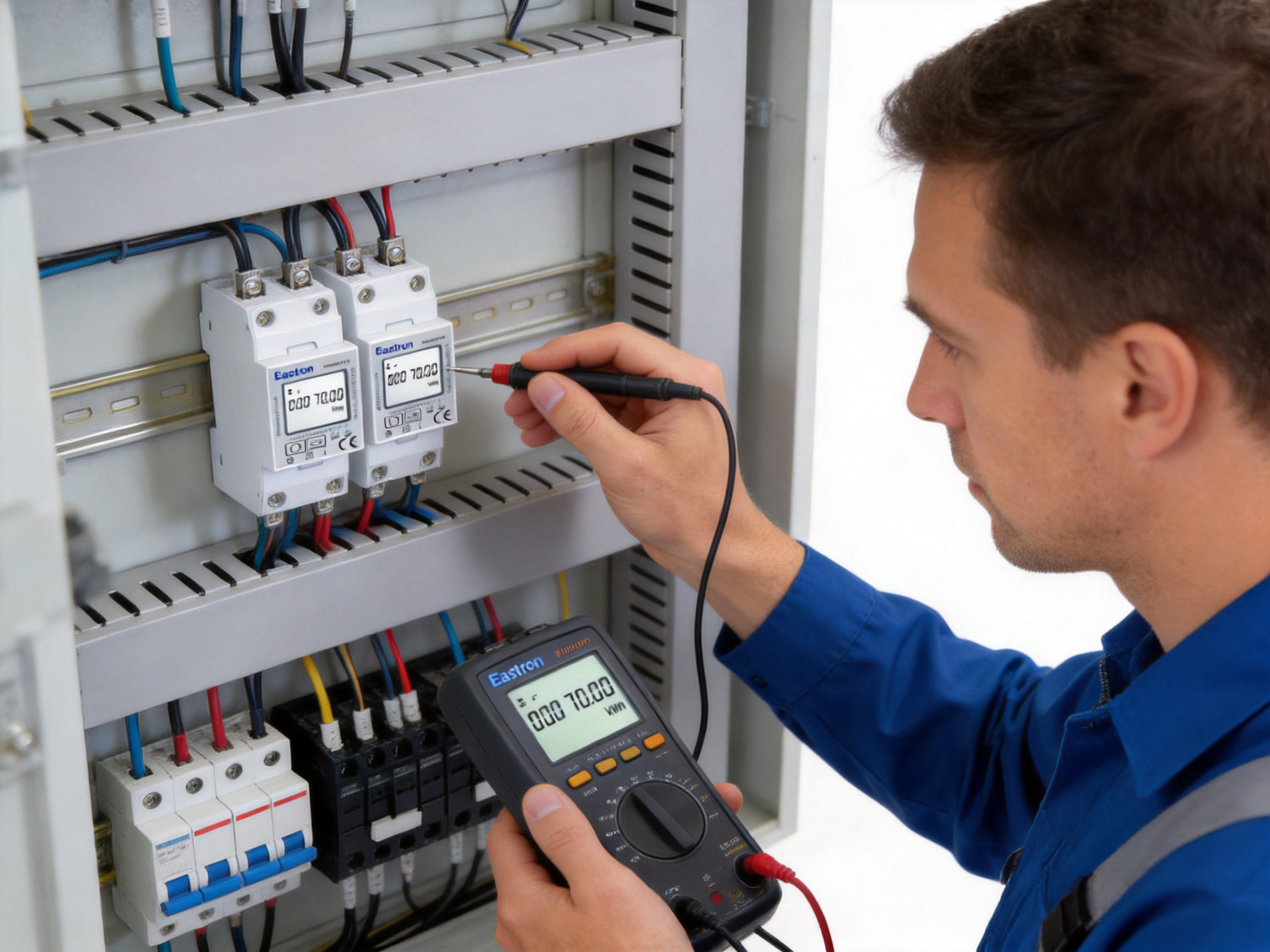
Energy measurement must be trustworthy. A meter used for cost allocation, tenant sub-metering, equipment analysis, or energy management must provide readings that users can rely on. This product measures active energy according to IEC 62053-21 Class 1.0 and EN 50470-1/3 Class B. These standards are widely recognized in the electricity metering field and help confirm that the product is designed and tested according to established performance requirements.
Class 1.0 active energy accuracy is suitable for many sub-metering and energy monitoring applications. It provides a strong balance between accuracy, cost, and practical performance. For users who need to understand consumption patterns, compare loads, allocate costs, or measure generated energy, this level of accuracy offers dependable data without unnecessary complexity.
The power measurement accuracy of 1% of range maximum also supports practical electrical analysis. Users can view power demand and better understand how much electrical load is being used at a given moment. This can help identify abnormal consumption, verify equipment performance, and improve awareness of load behavior.
The meter’s starting current of 40mA is valuable because it allows the meter to begin registering very small loads. In modern buildings, many devices consume standby power. While each load may be small, the total can become significant across a building or facility. A meter that responds to low starting current helps users capture these small but meaningful energy flows.
The pulse output is one of the most useful features of the product. It converts measured active energy into electrical pulses that can be counted by external equipment. This allows the meter to serve not only as a local display instrument but also as a field data source for larger energy monitoring systems.
Pulse output is widely used because it is simple and reliable. It does not require complex communication protocols for basic energy counting. A data logger or controller can count pulses over time and calculate total energy consumption. This makes the meter suitable for applications where users need remote records, trend data, or automatic reporting but do not require a full communication bus at every metering point.
For building managers, pulse output can support centralized monitoring of multiple circuits. For solar generation users, it can help record generated energy. For machine operators, it can connect energy use to production cycles. For landlords, it can support transparent allocation of electricity costs. For energy consultants, it can provide measured data during audits and performance verification.
In comparison with meters that only provide local display, pulse output significantly increases application value. Local display is useful during inspection, but remote counting creates long-term data. When energy data is collected over days, weeks, and months, users can identify waste, compare operating schedules, and make better decisions.
Partial energy reset is a feature that solves a common problem in field measurement. Total energy accumulation is important, but many users also need to measure energy during a defined period. For example, a facility manager may want to know how much energy a workshop uses during one production batch. A landlord may need to record usage for a monthly billing period. A solar system owner may want to compare generation from one week to another. A technician may need to test consumption before and after equipment replacement.
Without a resettable partial register, users must manually subtract the previous reading from the current reading. This is possible, but it creates extra work and increases the chance of error. A resettable partial energy function makes the process more direct. The user can reset the partial energy value at the beginning of a monitoring period and then read the accumulated energy at the end.
This function makes the meter more useful than a basic totalizing meter. It supports practical workflows in real installations. It also helps users communicate energy information more clearly, because the displayed partial value directly corresponds to the selected time period or project.
The product is suitable for a wide range of single phase metering tasks. In residential buildings, it can be installed for apartment sub-metering, landlord-tenant electricity allocation, home office energy tracking, or individual circuit monitoring. Its compact DIN rail design allows installation in common distribution boards without requiring a large enclosure.
In commercial environments, the meter can be used for small shops, kiosks, offices, restaurants, lighting circuits, HVAC auxiliary circuits, and shared service areas. The pulse output enables connection to building management or energy monitoring systems, giving owners better visibility into operating costs.
In light industrial facilities, it can monitor single phase machinery, auxiliary equipment, pumps, fans, lighting panels, and small production lines. The resettable partial energy function is especially useful for production-related energy tracking, maintenance comparisons, and energy audits.
In renewable energy applications, the meter can be used for solar generation measurement, especially where a uni-directional or anti-reverse measurement version is required. Solar generation monitoring benefits from clear active energy data and the ability to interface with external monitoring equipment through pulse output.
In temporary installations, the meter can help measure energy used by construction equipment, event power supplies, mobile workshops, or rented facilities. Its direct 100A capacity reduces the need for additional components, while partial reset makes it easy to measure consumption over the rental or project period.
The quality of an electronic energy meter depends not only on its circuit design but also on the manufacturing system behind it. Eastron Electronic Co., Ltd., headquartered in Jiaxing, China, near Shanghai, Hangzhou, and Jiangsu, has developed strong capabilities in electricity metering and energy measurement solutions. The company produces electricity meters, power analyzers, current sensors, communication modules, and management systems, creating a broad technical foundation for product development.
A key strength is continuous investment in research and development. Energy measurement technology must adapt to changing requirements, including improved accuracy, compact installation, digital integration, renewable energy applications, and international compliance. Development teams in China and the United Kingdom contribute to product innovation and help keep designs aligned with market expectations. Cooperation with universities and institutions further supports the introduction of advanced technologies into practical products.
The company has established a professional laboratory capable of performing EMC, LVD, accuracy, and environmental tests according to IEC, EN, GB, and UL standards. This laboratory capability is highly important because metering products must operate reliably in electrical environments that include voltage fluctuations, electromagnetic interference, temperature variation, and installation differences. Internal test capability helps shorten development cycles, improve quality control, and verify performance before products reach customers.
Manufacturing is supported by ISO 9001 quality management principles, and production is approved by SGS according to MID standards. These systems help ensure that product quality is not accidental but controlled through documented processes, inspection, testing, and continuous improvement. For customers, this means more consistent product performance and greater confidence in long-term supply.
The company also holds patented technologies in software, embedded software, and hardware. This is significant because modern energy meters depend on integrated expertise: accurate sensing, stable metering algorithms, firmware reliability, display control, communication outputs, safety design, and mechanical structure. Patented technology indicates ongoing technical development rather than simple assembly.
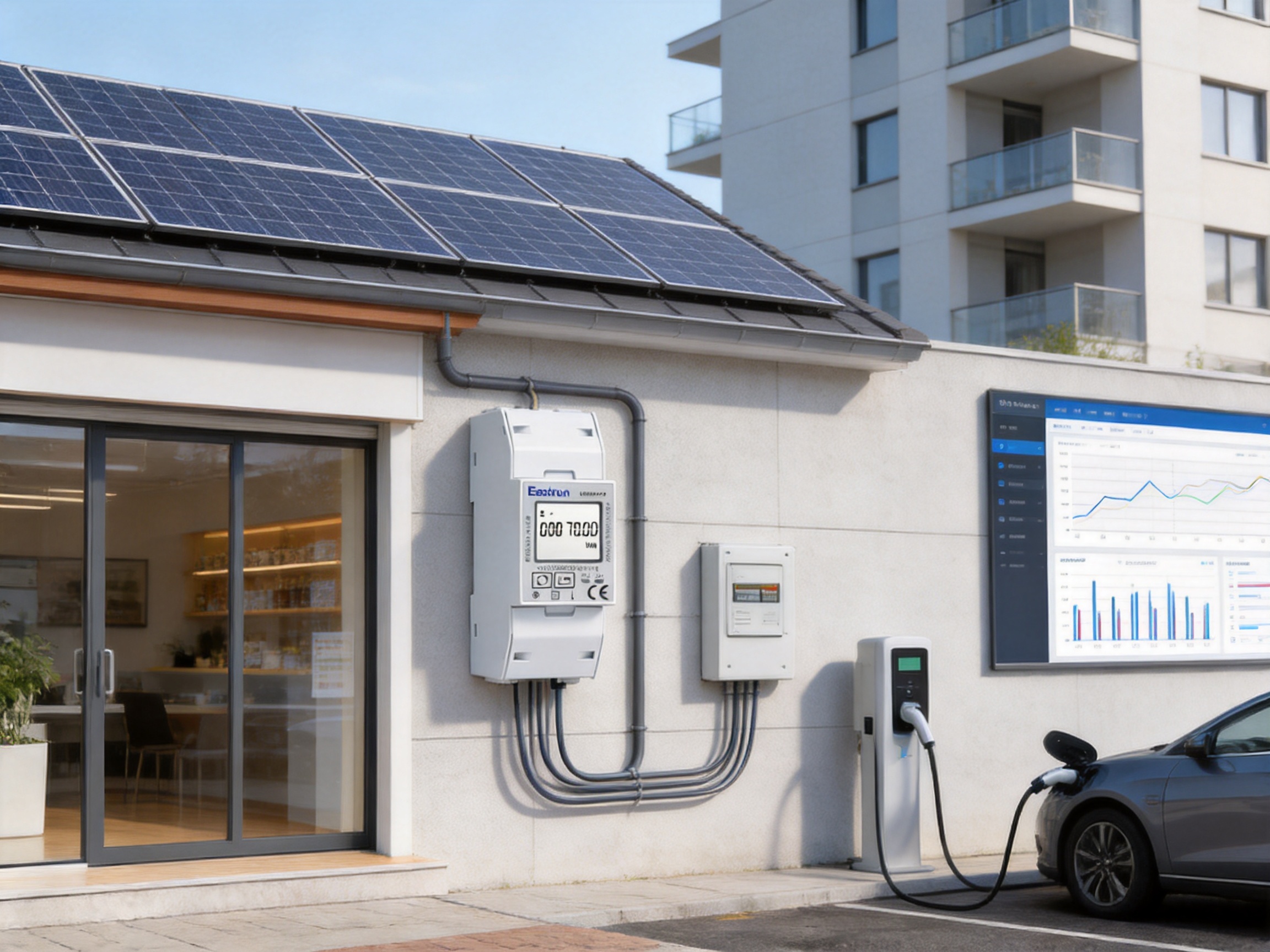
Reliable energy meters require precise production processes. During manufacturing, components must be selected, assembled, soldered, calibrated, inspected, and packaged according to strict procedures. Any weakness in the production chain can influence long-term accuracy and reliability. A professional meter manufacturer must therefore combine engineering design with disciplined manufacturing execution.
For a compact direct-connected 100A meter, current path design and assembly quality are especially important. Conductive parts must handle rated and maximum currents safely, while measurement circuits must maintain accuracy over time. Mechanical design must support secure terminal connection and stable installation on DIN rail. The enclosure must protect internal electronics and support safe use inside electrical panels.
Testing is equally critical. Accuracy testing verifies that the meter measures energy within specified limits. EMC testing helps confirm resistance to electromagnetic disturbances. LVD-related testing supports electrical safety evaluation. Environmental testing helps assess performance under temperature and humidity conditions. These tests help ensure that the final product is suitable for real installations, not just ideal laboratory conditions.
Compared with suppliers that rely mainly on external testing or limited inspection, a manufacturer with its own professional laboratory can respond more quickly to design improvements, customer requirements, and compliance updates. Internal capability also supports better root-cause analysis if a technical issue appears. This helps protect customers from inconsistent performance and supports long-term product reliability.
In metering applications, physical size is often overlooked until installation begins. Electrical cabinets are frequently crowded. Retrofitting a meter into an existing panel can be difficult when there is limited DIN rail space. A compact 2-module meter provides a practical advantage because it occupies only 36 mm of width.
This compactness does not only save space; it can also reduce total project cost. If a meter is too large, the installer may need a bigger enclosure, a panel redesign, or additional labor to rearrange devices. A 36 mm meter can often fit into available space, allowing faster and cleaner installation.
For multi-circuit metering projects, compact size becomes even more important. If ten or twenty meters must be installed, every module of width matters. A 2-module design allows more metering points in the same cabinet and improves overall system density. This is a clear advantage over wider competing products.
Direct current measurement up to 100A provides important savings. CT-operated meters are useful in high-current applications, but they add components and installation steps. Each current transformer must be selected with the correct ratio, installed in the right orientation, wired to the meter, and checked during commissioning. Mistakes can cause incorrect readings or system troubleshooting delays.
With direct connection up to 100A, the meter avoids many of these issues. Installers connect the load circuit directly through the meter terminals, simplifying the layout. For single phase loads within the meter’s current range, this approach is faster and more intuitive. It also reduces inventory complexity because fewer accessory parts are required.
From a customer perspective, fewer components usually mean lower total installed cost. The purchase price of the meter is only one part of project economics. Labor, accessories, panel space, wiring time, testing time, and maintenance also matter. A compact direct-connected meter can reduce several of these costs simultaneously.
A backlit LCD may appear to be a small feature, but it has real field value. Electrical panels are often installed in basements, utility rooms, corridors, service cupboards, industrial corners, or outdoor enclosures with limited lighting. A display that is difficult to read slows down commissioning and increases the risk of recording errors.
The backlit display allows readings to be checked more comfortably. Electricians can verify operation after installation, facility managers can inspect consumption, and users can confirm data without additional tools in many situations. This improves the daily usability of the meter.
Compared with meters that lack backlighting, the product offers a better user experience. This is especially helpful when meters are mounted behind transparent cabinet doors or in deep panels where shadows reduce visibility.
Energy efficiency starts with measurement. Without metering, users may know the total electricity bill but not understand which circuit, tenant, device, or process is responsible for consumption. By installing single phase sub-meters, users can divide the electrical system into measurable sections.
The resettable DIN rail kWh meter supports this strategy. It can measure active energy on selected circuits and provide pulse data to monitoring systems. Over time, this data helps identify high-consumption areas, standby loads, unusual usage patterns, and opportunities for operational improvement.
For businesses, better energy visibility can support cost reduction and sustainability goals. For property managers, sub-metering improves transparency. For homeowners, circuit-level metering can reveal consumption from heating, cooling, appliances, workshops, or electric vehicle support equipment. For solar users, generation measurement helps verify system output.
The product is supported by a manufacturer with experience supplying products and services to more than 50 countries across Europe, Asia-Pacific, America, the Middle East, and Africa. International market experience is important because it exposes products to diverse grid conditions, regulatory expectations, installation practices, and customer requirements.
A meter used in many regions must be robust, consistent, and adaptable. It must meet recognized standards and be manufactured under controlled processes. The company’s experience with IEC, EN, GB, UL-related testing and MID-approved production supports its ability to serve international customers.
For distributors and OEM partners, supplier reliability is as important as product performance. A manufacturer with a broad product range, professional technical support, after-sales service, and continuous R&D can provide long-term cooperation rather than one-time transactions.
When compared with ordinary single phase DIN rail meters, this product offers several clear advantages. Some competing meters are limited to lower current ratings, making them unsuitable for 100A direct installations. Others lack resettable partial energy, reducing their usefulness for temporary monitoring and periodic billing. Some provide only local display without pulse output, limiting integration with remote systems. Others use wider housings, increasing panel space requirements.
The meter’s combination of 100A direct measurement, 2-module compact design, pulse output, backlit LCD, resettable partial energy, and recognized accuracy standards creates a balanced product for practical field use. It does not overload the user with unnecessary complexity, yet it provides the functions most needed in energy monitoring and sub-metering applications.
Another advantage is the manufacturing background. A product is more competitive when it is supported by strong R&D, laboratory testing, quality management, and international supply experience. Customers are not only buying a device; they are relying on the engineering and production system behind the device.
The meter is intended for DIN rail installation in suitable electrical enclosures. Installation should be performed by qualified personnel following local electrical regulations and the product wiring diagram. Because the meter is designed for single phase two wire systems, correct phase and neutral connection is essential for accurate operation and safety.
The load current must not exceed the specified maximum current of 100A. Appropriate circuit protection should be used according to the installation design. Terminals should be tightened securely, and conductor size should match the current requirements and applicable standards.
After installation, the LCD display can be checked to confirm operation. The pulse output can be connected to compatible external equipment if remote counting or system integration is required. If partial energy monitoring is needed, the resettable register can be used according to the operating instructions.
For best performance, the meter should be installed in an environment suitable for electrical equipment, protected from excessive moisture, dust, mechanical damage, and abnormal temperature conditions. Periodic inspection of wiring and display readings can support long-term reliability.
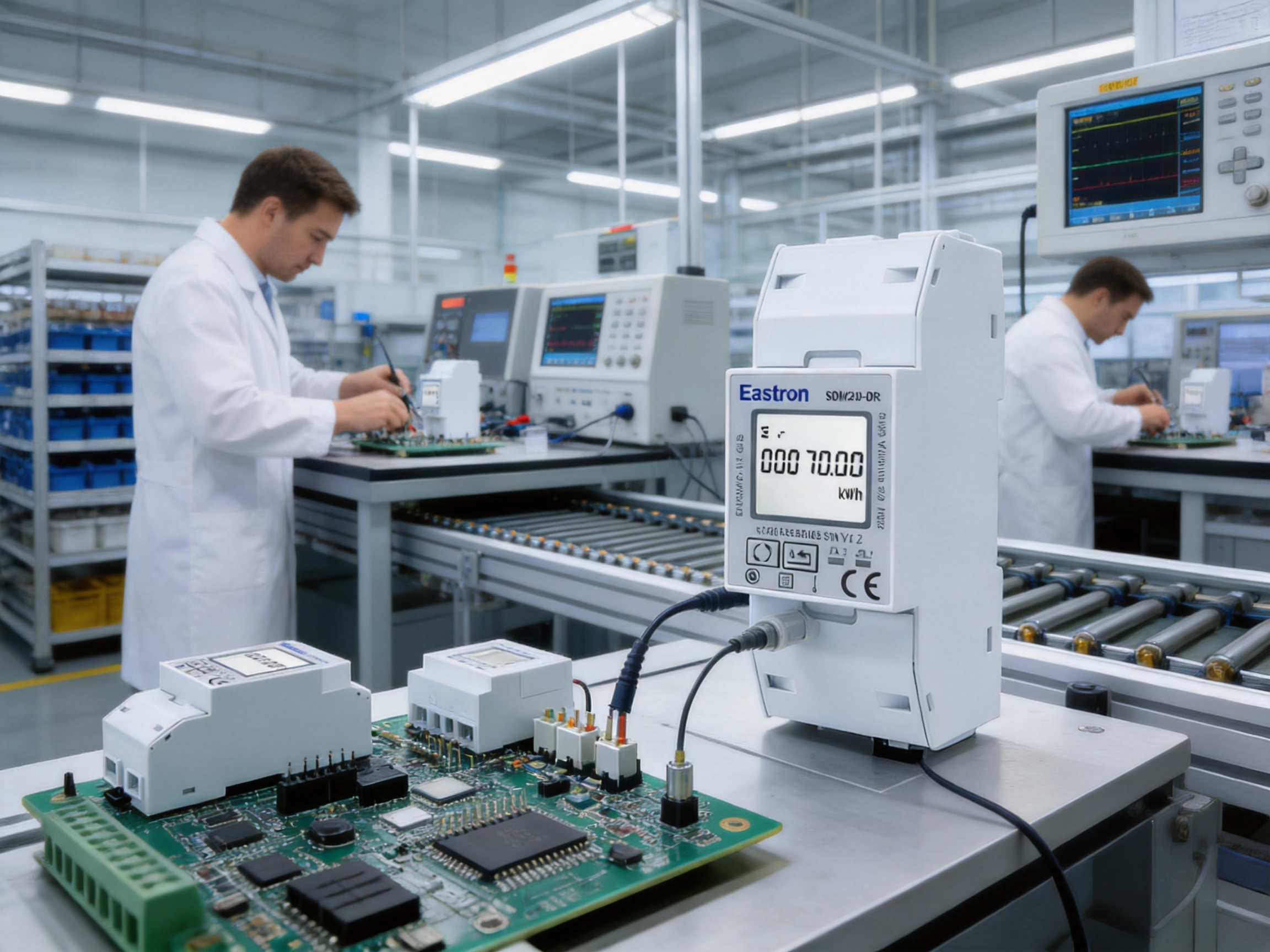
For distributors, the product is attractive because it serves many common applications with one compact model. Its direct 100A capability covers a broad range of single phase installations. The pulse output and resettable function expand its market beyond basic residential metering into commercial, industrial, and renewable energy monitoring.
For installers, the meter saves time. DIN rail mounting, compact width, direct wiring, and clear display make installation and commissioning straightforward. Reduced need for external current transformers lowers wiring complexity and helps avoid errors.
For end users, the product provides clear energy information. It helps users understand consumption, allocate costs, track periodic usage, and integrate energy data into larger systems. Its backlit LCD supports local reading, while pulse output supports remote data collection.
For system integrators, the product offers a simple field metering point. Pulse output is easy to interface with data acquisition equipment, and the meter’s compact size supports dense metering panels. This makes it useful in energy management systems where many single phase circuits must be monitored.
It is designed for single phase two wire AC systems, commonly described as 1P2W or 1P+N systems. These systems are widely used in residential, commercial, and light industrial electrical installations.
The meter supports direct load measurement up to 100A. This reduces the need for external current transformers in many single phase applications.
Yes. It has an LCD display with backlight, making readings easier to view in electrical cabinets, utility rooms, and low-light installation environments.
The pulse output provides pulses corresponding to active energy consumption. External equipment such as data loggers, counters, gateways, or energy management systems can count these pulses for remote monitoring and reporting.
The meter provides resettable partial energy. This allows users to monitor consumption for a selected period while preserving the main energy measurement function.
Active energy measurement is specified according to IEC 62053-21 Class 1.0 and EN 50470-1/3 Class B. Power measurement accuracy is 1% of range maximum.
The 2-module, 36 mm width saves DIN rail space. This is valuable in compact distribution boards, retrofit projects, and multi-meter installations.
Yes. It can be used for single phase solar generation energy measurement, especially where active energy monitoring and pulse output are required. A uni-directional anti-reverse measurement version is also useful in solar-related applications.
Installers, distributors, landlords, property managers, energy consultants, solar system users, small businesses, and facility managers can all benefit from the meter’s compact size, direct 100A rating, pulse output, and resettable partial energy function.
The product is supported by advanced R&D capability, professional testing laboratories for EMC, LVD, accuracy, and environmental tests, ISO 9001 quality management, MID-related production approval by SGS, patented technologies, and international market experience.
The resettable DIN rail single phase electronic kWh meter with pulse output is a practical and competitive solution for modern energy measurement. It combines the essential functions required in real installations: active energy and power measurement, LCD display with backlight, pulse output, direct 100A load capacity, resettable partial energy, and compact 2-module DIN rail mounting.
Its advantages over many competing products are clear. It saves panel space, simplifies installation, supports remote pulse-based data collection, provides flexible periodic monitoring, and measures according to recognized accuracy standards. The ability to measure up to 100A directly is especially valuable because it reduces the need for external current transformers and lowers total installation complexity.
Behind the product is a manufacturer with strong technical capability, advanced laboratory testing, quality management systems, patented technologies, and broad international experience. This manufacturing strength helps ensure that the meter is not only functional on paper but reliable in real-world applications.
For projects that require compact, accurate, and flexible single phase energy measurement, this resettable DIN rail kWh meter offers an effective balance of performance, usability, and cost efficiency. It is suitable for sub-metering, energy management, solar generation measurement, commercial monitoring, residential distribution, and many other applications where dependable electrical data is essential.
IEC 62053-21, Electricity Metering Equipment, Particular Requirements for Static Meters for Active Energy.
EN 50470-1, Electricity Metering Equipment, General Requirements, Tests and Test Conditions.
EN 50470-3, Electricity Metering Equipment, Static Meters for Active Energy, Class Indexes A, B and C.
ISO 9001, Quality Management Systems Requirements.
International Electrotechnical Commission, Low-Voltage Electrical Installation and Metering Guidance.
General industry literature on DIN rail energy meters, pulse output metering, and single phase sub-metering applications.
Your email address will not be published. Required fields are marked *

We develop and produce high performance electricity meters, power analyzers, current sensors, communication modules and management systems. China Custom Smart Meters Manufacturers and Factory
Address:NO 52, Dongjin Road, Nanhu, Jiaxing, Zhejiang, China
Copyright @ Eastron Electronic Co., Ltd. All rights reserved Electricity Meters Manufacturers
