

 English
 Español
 Deutsch
 中文简体


Product Consultation
Your email address will not be published. Required fields are marked *
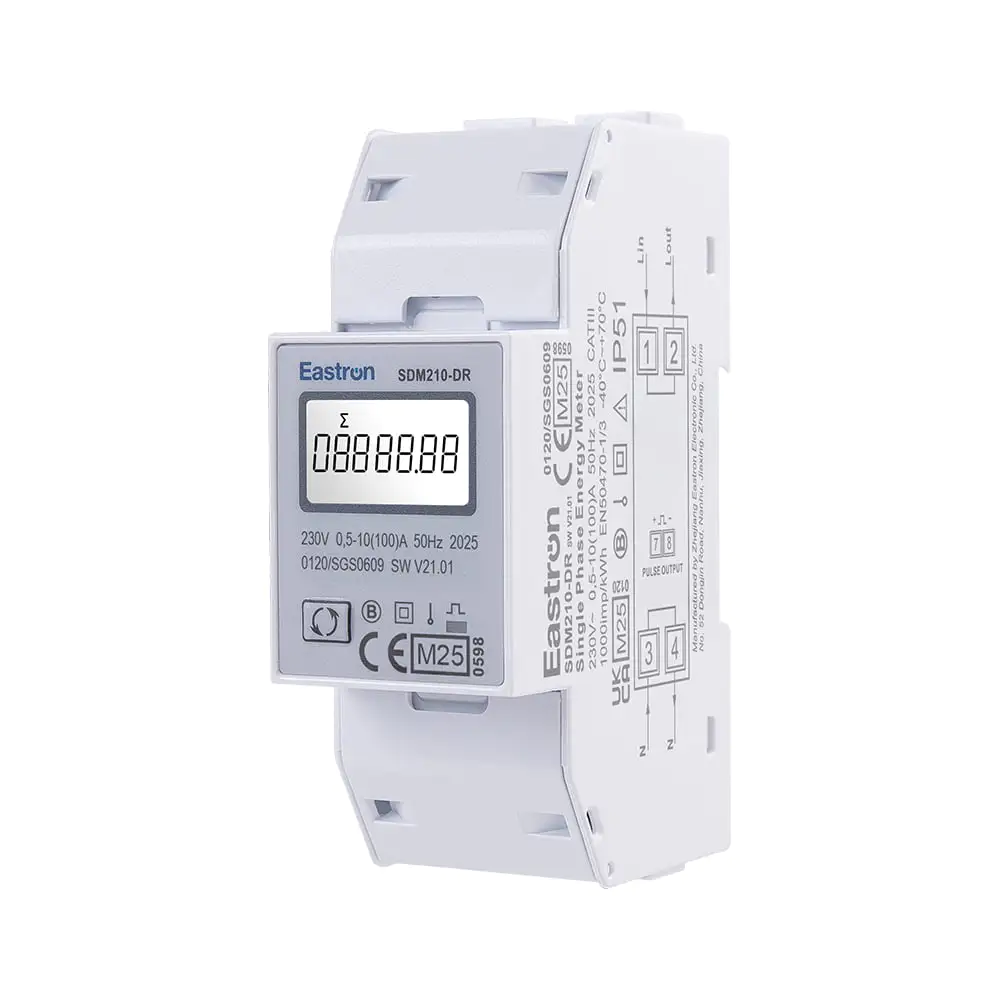
Resettable Din Rail Single Phase Electronic Energy meter with Pulse Output
Aug 11,2022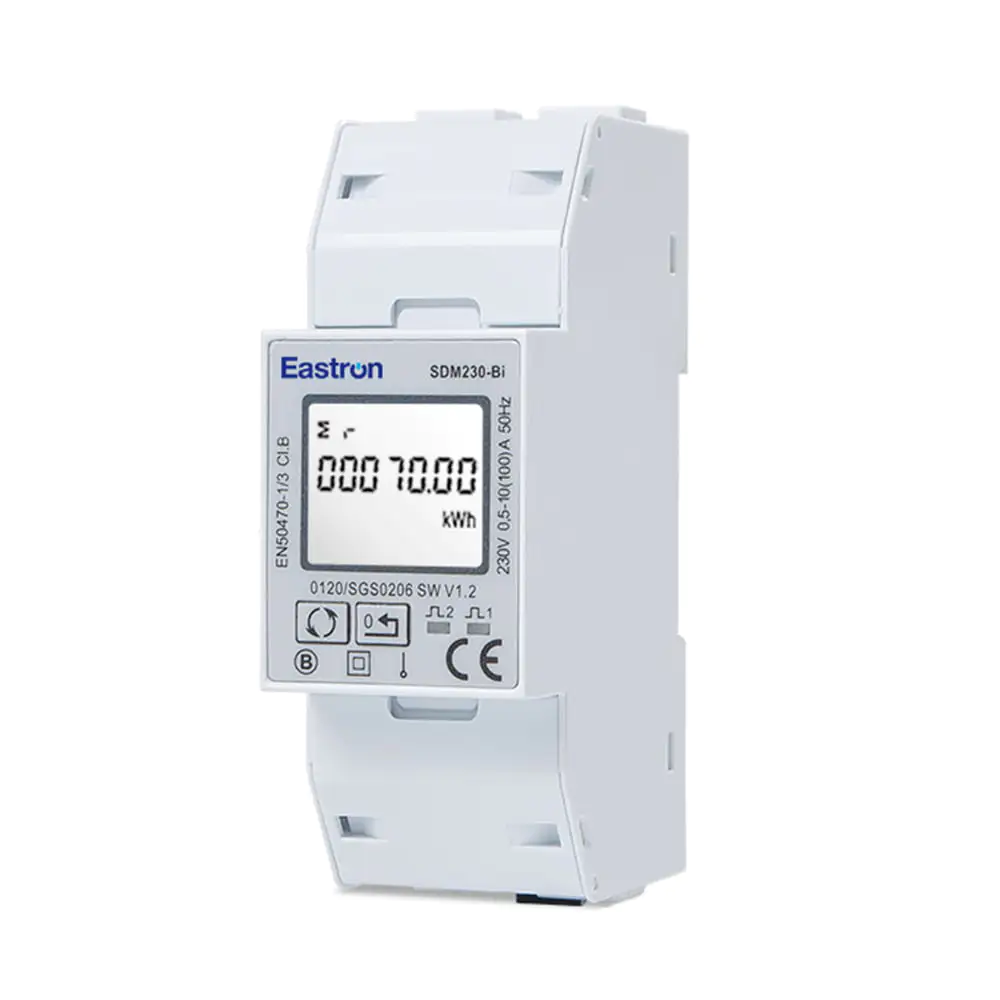
Resettable Bi-directional Din Rail Single Phase Electronic kWh meter with Pulse Output
Aug 11,2022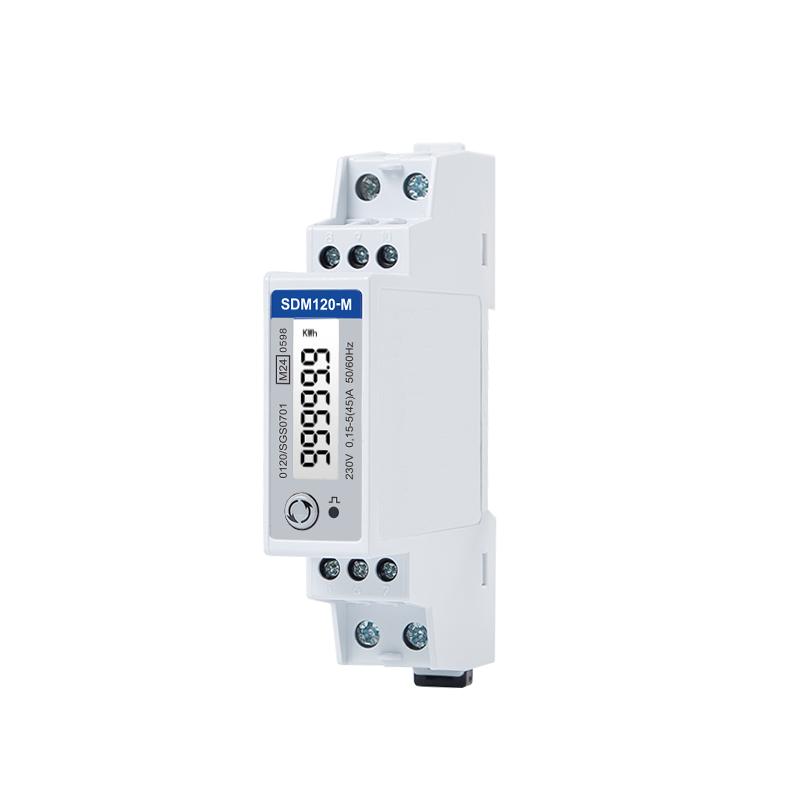
MID Din Rail Type Single Phase Multi-function Energy Meter for EV Charging Metering
Jul 26,2022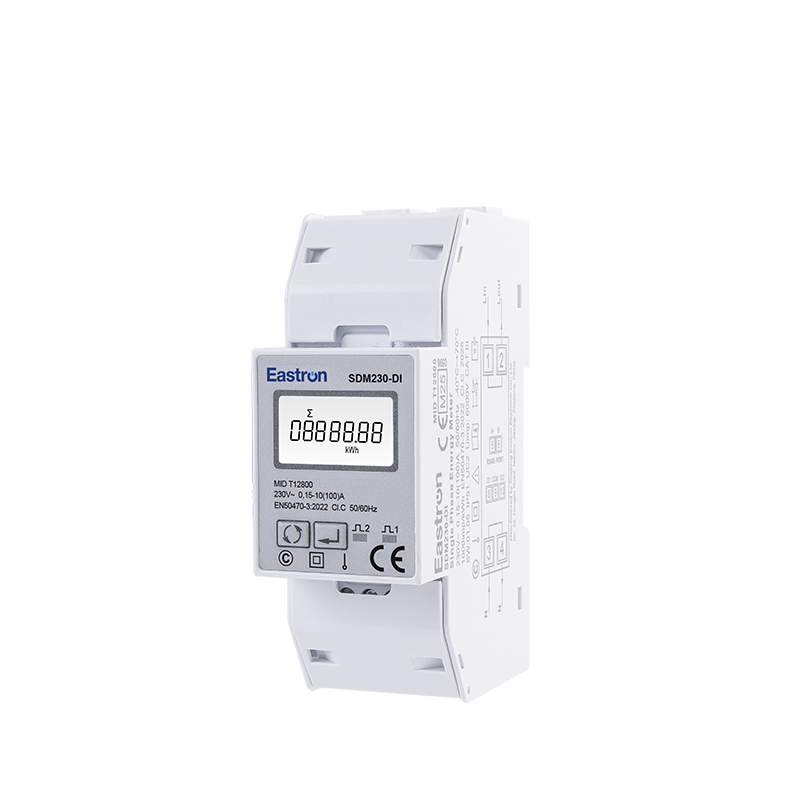
MID/ UL Approved Single Phase Din Rail Type Multi-function Energy Meter for EV Charging Metering
Nov 24,2022
CT Type RS485 Modbus Single Phase Din Rail Energy Meter for PV Metering
May 30,2025
CT Connection Single Phase Din Rail Wifi Energy Meter for PV Metering
May 30,2025Content
Accurate energy measurement is becoming increasingly important in homes, commercial buildings, renewable-energy installations, small industrial systems and distributed power applications. As electricity prices, self-generation systems and energy-efficiency requirements continue to evolve, users need more than a basic consumption counter. They need a compact meter that can measure energy flowing in both directions, support convenient panel installation, provide clear local readings and help distinguish between total energy and energy associated with a specific operating period.
The SDM230BI is designed to meet these requirements. It is a single-phase, two-wire electronic kilowatt-hour meter with a direct current capacity of up to 100 A, a resettable partial-energy function, bi-directional measurement and a pulse output for active energy. Installed on a DIN rail, the meter occupies only two modules, or 36 mm of width, making it suitable for compact distribution boards and energy-management cabinets.
Its combination of direct-load capability, bi-directional measurement and resettable energy data gives it a practical advantage over conventional single-direction meters. It can be used where electricity is consumed from the grid, generated locally, or exchanged between both the installation and the supply network. Typical applications include solar photovoltaic systems, residential sub-metering, rental properties, small commercial premises, workshops, auxiliary distribution panels and energy-monitoring projects.
Resettable Bi-directional Din Rail Single Phase Electronic kWh meter with Pulse Output
The SDM230BI is a 1P2W electronic energy meter intended for single-phase alternating-current systems. Its measurement method is based on RMS measurement on a single-phase AC system with phase and neutral conductors. The rated voltage is 230 V, while the operating voltage range is 80% to 120% of the rated value. The meter is designed for direct connection rather than requiring an external current transformer for loads up to its specified maximum current.
The meter has a rated current of 10 A and a maximum current of 100 A. Its minimum current is 0.5 A, and its starting current is 40 mA. These specifications allow the device to cover a broad range of everyday single-phase circuits, from relatively light loads to installations with substantial direct-connected demand.
Unlike a basic mechanical meter or a simple single-direction electronic counter, the SDM230BI is capable of recording energy in both import and export directions. Import energy represents energy supplied to the installation, while export energy represents energy flowing from the installation toward the supply network or another connected circuit. This function is especially valuable for solar-generation systems, battery-assisted installations and sites that may alternate between consumption and generation.
The meter also provides active-power measurement. Energy measurement indicates accumulated electricity over time, while power measurement indicates the instantaneous or current rate of electricity use. Having both values available allows operators to understand not only how much energy has been used, but also how the load behaves at a particular moment.
Parameter |
Specification |
Practical Significance |
Measurement system |
Single-phase, two-wire AC system |
Suitable for 1P2W installations with phase and neutral conductors |
Rated voltage |
230 V |
Matches common single-phase supply systems |
Operating voltage |
80% to 120% of rated voltage |
Provides an operating range around the nominal supply voltage |
Rated current |
10 A |
Reference current for the measurement system |
Maximum direct current |
100 A |
Supports high-current direct-connected applications within installation requirements |
Minimum current |
0.5 A |
Defines the lower specified measurement range |
Starting current |
40 mA |
Allows the meter to begin registering at a low current level |
Active-energy accuracy |
IEC 62053-21 Class 1.0 / EN 50470-1 and EN 50470-3 Class B |
Provides a defined accuracy classification for active-energy measurement |
Power accuracy |
1% of range maximum |
Supports practical monitoring of load power |
Display |
LCD with backlight |
Improves readability in electrical cabinets and indoor installations |
Output |
Pulse output for active energy |
Allows connection to external counters, controllers or energy-management equipment |
Installation format |
DIN rail, two modules, 36 mm width |
Conserves distribution-board space |
Energy direction |
Bi-directional measurement |
Supports import and export energy monitoring |
One of the most important advantages of the SDM230BI is its ability to measure energy in both directions. Traditional energy meters are often designed around a simple assumption: electricity enters a building from the grid and is consumed by connected loads. That assumption is no longer sufficient for many modern installations.
Solar photovoltaic panels can produce more electricity than a building needs during periods of strong sunlight. When this happens, surplus electricity may flow back toward the grid or into another part of the electrical system. At night or during periods of low generation, the direction changes and electricity is imported again. A meter that only records one direction may fail to provide a complete view of the installation.
The SDM230BI is suitable for monitoring this changing operating pattern. Its bi-directional measurement function can help users identify imported energy and exported energy, making it easier to evaluate solar production, self-consumption and the balance between local generation and demand.
This feature is also useful in battery-storage applications. During charging, energy may move toward the battery system; during discharge, the flow may reverse. Although the meter is not a battery-management system, its ability to observe energy direction can provide valuable information for system monitoring and performance analysis.
Bi-directional measurement can also assist with troubleshooting. If a circuit expected to consume energy begins showing export behavior, the reading may indicate a wiring issue, an unexpected generator, a control-system condition or a change in the operating state of a connected device. The meter therefore supports not only billing-related observation but also operational analysis.
When installing any bi-directional meter, the wiring arrangement must follow the applicable electrical regulations and the manufacturer’s wiring diagram. The direction of the conductor, the connection of the line and neutral terminals, and the configuration of the pulse interface should be verified by a qualified installer.
The resettable partial-energy function gives the SDM230BI an additional level of flexibility. A permanent accumulated energy register is useful for long-term measurement, but it does not always provide the short-term information needed for operational analysis. A resettable partial register can be used to monitor energy during a selected period, project or operating cycle.
For example, a property manager may want to observe the energy consumption of a tenant between two inspection dates. A technician may wish to measure the energy used by a temporary load during a maintenance project. A solar installer may use the partial register to assess the energy behavior of a new installation after commissioning. In each case, the ability to reset a partial reading makes the meter more convenient than a device that only provides a permanent cumulative total.
The resettable function can also support routine energy audits. An operator can record the current total reading, reset the partial value, allow the installation to operate for a defined period and then compare the new partial result with production or occupancy data. This approach helps reveal changes in load behavior without losing the long-term accumulated reading.
It is important to distinguish between a resettable partial-energy value and a permanent total-energy value. The partial value should be used for temporary observation, while the total value should be retained for historical reference and long-term comparisons. Before using the meter for contractual billing or regulated measurement, users should confirm the applicable legal and certification requirements for their jurisdiction and application.
The ability to accept a maximum direct load of 100 A is another major product benefit. Many compact meters require an external current transformer when they are used on higher-current circuits. A current-transformer-based arrangement can be effective, but it adds components, wiring, installation steps and potential sources of measurement error if the transformer ratio or polarity is incorrect.
For suitable circuits within the specified operating conditions, direct connection can simplify the installation. The installer does not need to allocate additional space for a separate current transformer, and the distribution-board design can remain more straightforward. Direct connection can also make the relationship between the circuit conductors and the displayed measurement easier to understand during commissioning.
The 100 A maximum does not mean that every installation can be connected without additional protection or verification. Cable cross-sections, protective devices, terminal capacity, enclosure temperature, short-circuit conditions and local electrical regulations must all be considered. The meter should be installed only within the limits stated in its technical documentation and by appropriately qualified personnel.
The rated current of 10 A, maximum current of 100 A, minimum current of 0.5 A and starting current of 40 mA describe different aspects of the measurement system. They should not be confused with the rating of an upstream circuit breaker or with the continuous capacity of the complete installation. Correct system design requires consideration of all components in the current path.
The two-module, 36 mm housing is designed for modern modular electrical enclosures. Space inside distribution boards is often limited, particularly when the enclosure must accommodate circuit breakers, residual-current devices, contactors, surge protection, communication equipment and other monitoring devices. A narrow energy meter allows more functions to be installed without requiring a larger cabinet.
DIN rail mounting also supports standardized installation practices. The meter can be positioned alongside other modular devices, which helps create a clean and organized panel layout. A compact format can reduce the amount of enclosure space required in new projects and may make it easier to retrofit monitoring into an existing board.
The LCD display is equipped with a backlight to improve visibility. This is valuable in technical rooms, plant areas and electrical cabinets where lighting may be poor. A clear local display reduces the need to connect a separate service instrument merely to check the energy value during installation or maintenance.
Although the product is compact, installers should maintain sufficient clearance for conductor bending, terminal access, heat dissipation and safe maintenance. The final enclosure arrangement should comply with all relevant standards and site-specific requirements.
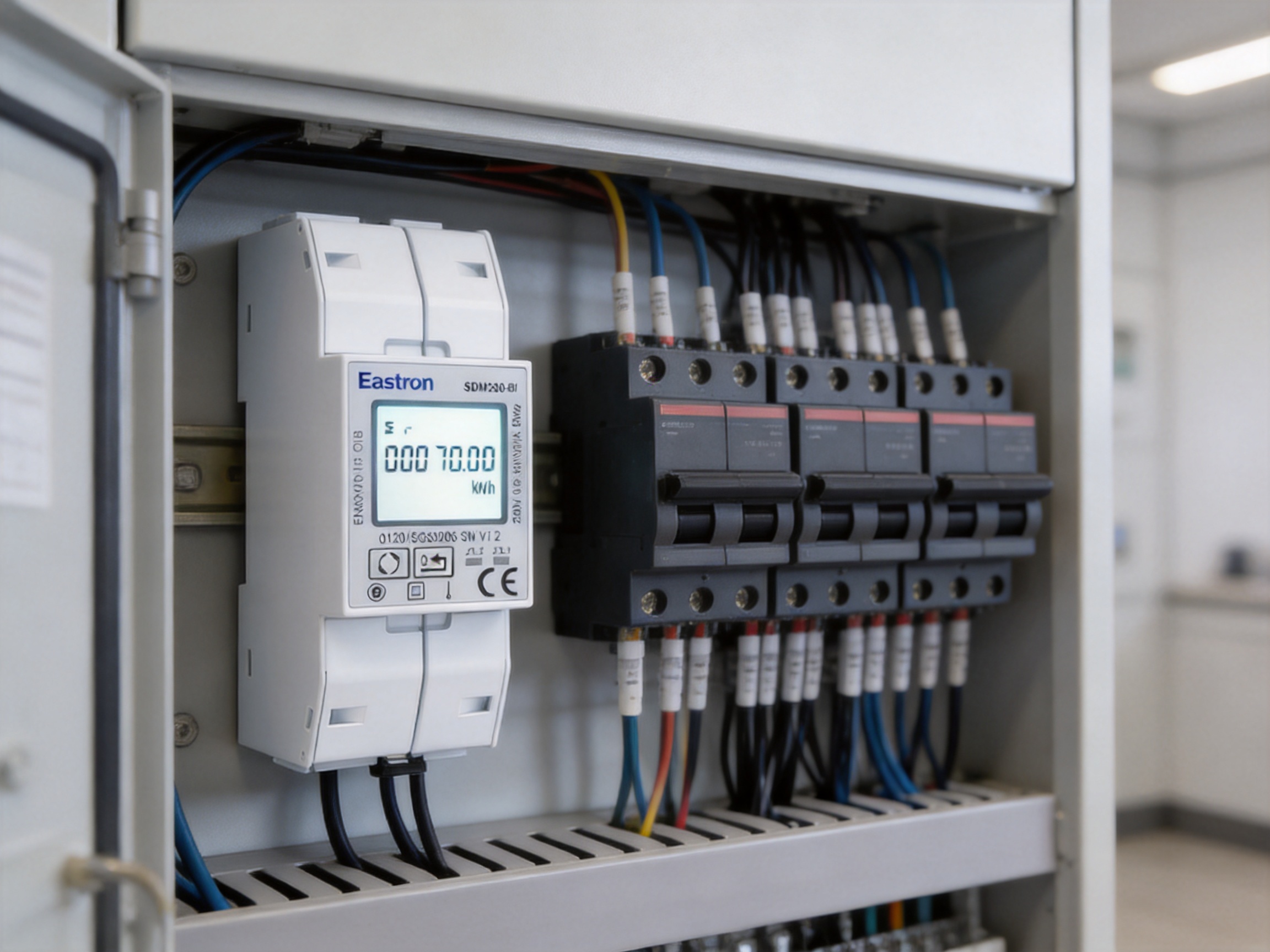
The SDM230BI specifies active-energy accuracy according to IEC 62053-21 Class 1.0 and EN 50470-1/3 Class B. These classifications provide a recognized framework for evaluating meter performance. A stated accuracy class is more meaningful than an unqualified claim of “high accuracy,” because it gives engineers and purchasers a defined reference for comparison.
For active energy, accuracy affects the reliability of consumption and generation records. In a solar application, reliable readings help compare the energy produced by a local generation system with energy imported from the grid. In a sub-metering application, accurate measurement can help allocate energy use among apartments, workshops, departments or equipment groups.
The specified power measurement accuracy is 1% of range maximum. Power readings are useful for identifying peak demand, observing equipment startup, checking whether a load is operating normally and evaluating the effect of energy-saving measures. Energy and power are related but not interchangeable: power is a rate, while energy is the accumulated result over time.
Actual performance depends on installation quality, conductor arrangement, supply conditions, temperature, load characteristics and operation within the specified range. The accuracy class should therefore be considered together with correct wiring, appropriate environmental conditions and periodic verification practices.
Users who require legally binding billing, revenue-grade measurement or a regulated application should verify that the exact product version and installation arrangement meet the requirements of the relevant authority. A general technical classification does not automatically make every installation suitable for every legal-metering purpose.
The pulse output provides a practical interface between the meter and external equipment. Active-energy pulses can be counted by a building-management system, data logger, programmable controller, remote monitoring gateway or other compatible device. This makes the meter useful in installations where local display readings need to be transferred into a wider energy-management system.
Pulse-based integration is often simpler than installing a more complex communications network for a small number of meters. An external controller can calculate energy accumulation from the pulse signal, create time-based reports or trigger actions when a defined amount of energy has been measured.
For example, a facility may connect the pulse output to a central data-acquisition system to collect readings from several distribution boards. A solar installer may use the signal as one input in a commissioning system. A small business may connect it to an energy-monitoring device that displays daily, weekly and monthly trends.
Because pulse-output specifications can vary by product version and configuration, system designers should confirm the pulse rate, electrical interface, isolation characteristics, allowable load and wiring requirements before connecting external equipment. The meter and receiving device must be electrically compatible, and the installation should follow the supplied terminal diagram.
Mechanical meters may provide basic energy accumulation, but they generally offer less flexibility for modern monitoring. They may not provide a backlit display, a pulse output, a resettable partial-energy function or clear bi-directional measurement. Their moving parts can also make them less suitable for applications requiring rapid observation of changing energy conditions.
The SDM230BI uses electronic measurement technology and provides a digital display, an active-energy pulse output and a compact modular format. These features make it easier to integrate the meter into contemporary electrical systems and energy-management projects.
Many basic electronic sub-meters are designed primarily to record imported energy. They may be adequate for simple consumption monitoring, but they are less suitable when a site includes local generation or changing power-flow direction. The SDM230BI adds bi-directional measurement and resettable partial energy, allowing it to support a broader range of operating scenarios.
Current-transformer-based solutions can measure high currents and may be necessary in certain installations. However, they require separate sensing components and careful attention to transformer ratio, polarity, secondary wiring and installation space. Where a direct-connected meter is appropriate, the SDM230BI can reduce system complexity by handling loads up to 100 A directly.
A full multifunction power analyzer may provide many electrical parameters, communication protocols and advanced power-quality functions. Those capabilities are valuable in large systems, but they may be unnecessary for a compact single-phase circuit that mainly requires energy, power, direction and pulse monitoring. The SDM230BI offers a focused solution with a smaller footprint and a simpler installation concept.
This focused design can reduce unnecessary cost and configuration work. Users obtain the functions most relevant to energy accumulation and basic load evaluation without installing a larger device for features they may never use.
In a home with photovoltaic generation, the meter can help observe electricity imported from the grid and electricity exported from the property. The resettable partial register can be used during commissioning or for periodic performance checks. Its compact housing is suitable for residential distribution boards where panel space is limited.
Shops, offices, restaurants and small service businesses often need to monitor specific circuits without installing an extensive metering system. The SDM230BI can be installed on an auxiliary distribution board, an HVAC circuit, a workshop supply or another selected single-phase load.
Sub-metering can support internal energy allocation and help property owners understand consumption by unit or tenant. The resettable partial-energy function may be useful for inspection periods, while the permanent measurement record can support longer-term operational analysis.
Small workshops may operate compressors, tools, extraction systems, heaters and other substantial loads. The 100 A direct-load capability and power display can help operators observe the energy behavior of individual circuits. The pulse output can feed a production or maintenance monitoring system.
Energy-storage installations can experience changing flow direction as batteries charge and discharge. Bi-directional measurement provides useful information about the relationship between the storage system, local loads and the grid. The meter should be integrated according to the complete storage system design and should not be treated as a replacement for battery protection or battery management equipment.
Because the partial-energy value can be reset, the meter can be used for defined monitoring periods. This is useful for comparing energy consumption before and after equipment replacement, evaluating a process change or estimating the effect of an energy-efficiency measure.
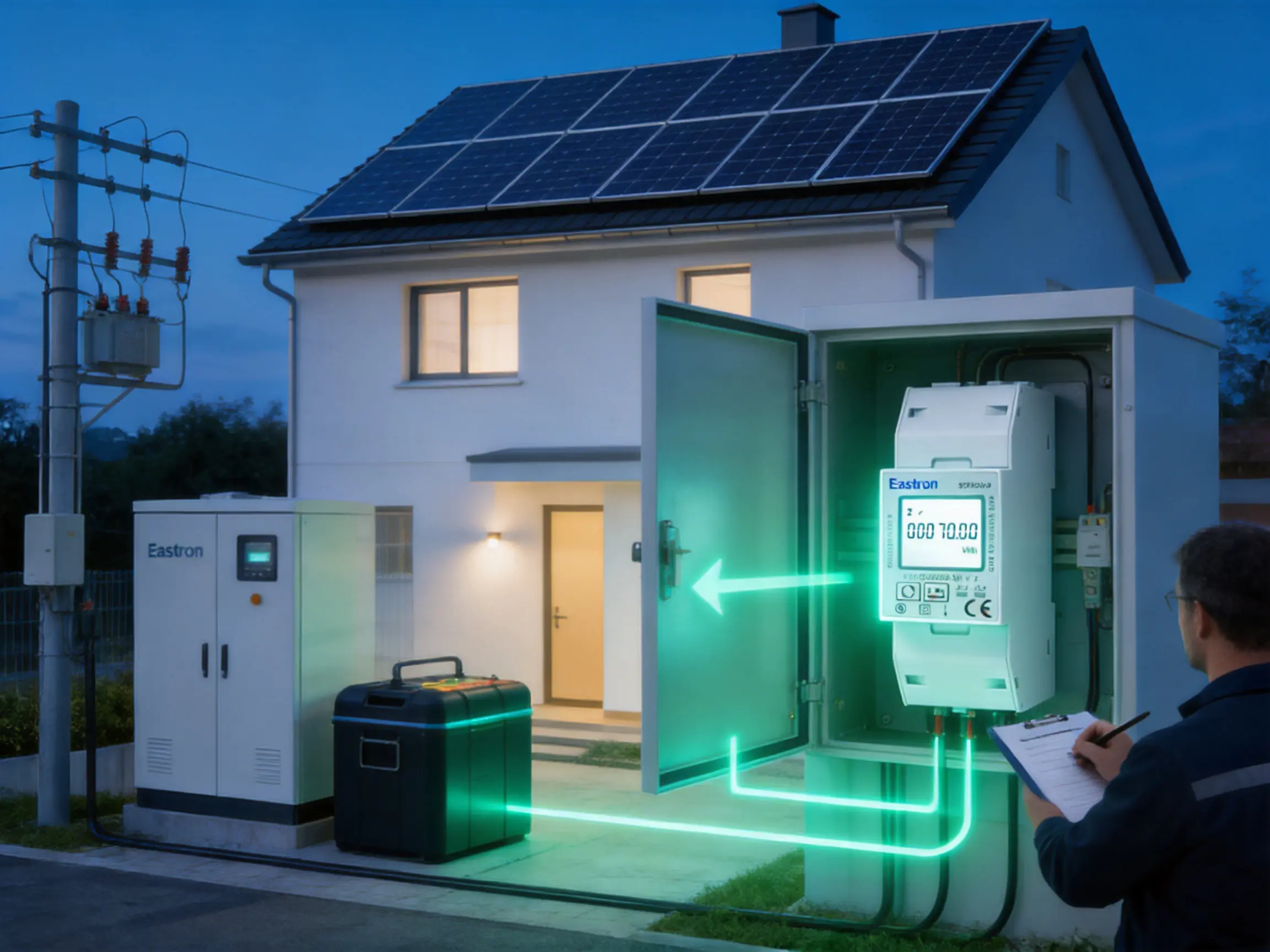
The product is manufactured by Eastron Electronic Co., Ltd., a specialist company focused on electricity products and energy measurement solutions. Its product development activities cover electricity meters, power analyzers, current sensors, communication modules and management systems. This wider technical scope is important because modern energy meters increasingly need to operate as part of connected measurement systems rather than as isolated counters.
The company is headquartered in Jiaxing, China, in a region with convenient access to major industrial and technology centers near Shanghai, Hangzhou and Jiangsu. Its development and production capabilities are supported by engineering teams in China and the United Kingdom. The combination of regional manufacturing resources and international technical development helps the company address varied application requirements and market expectations.
Investment in research and development is a central strength. The company has developed patented technologies in software, embedded software and hardware, and has been recognized as a High-tech Enterprise and High-tech R&D Centre of Electricity Application. For a measurement product, this multidisciplinary capability is significant because accuracy and reliability depend on the coordinated design of sensing circuits, embedded algorithms, display functions, firmware, communications and mechanical construction.
Energy meters must operate reliably in real electrical environments. They can be exposed to voltage variation, switching transients, changing load characteristics, electromagnetic interference and temperature changes. A professional development process therefore requires more than assembling a display and a current-sensing circuit. It requires controlled design verification, firmware testing, electrical safety evaluation and repeatable production procedures.
Eastron has established a professional laboratory capable of conducting EMC, LVD, accuracy and environmental tests. These testing capabilities support the development and verification of products intended for different national and international markets.
EMC testing evaluates whether the meter can operate correctly in the presence of electromagnetic disturbances and whether it avoids creating unacceptable interference for surrounding equipment. This is especially relevant in distribution boards that may contain contactors, variable-speed drives, switching power supplies and communication devices.
LVD-related testing supports the evaluation of electrical safety under applicable low-voltage requirements. It can include considerations such as insulation, dielectric performance, clearance, creepage and protection against electric shock, depending on the relevant product and standard requirements.
Accuracy testing verifies whether measurement performance corresponds to the specified classification. This is essential for an energy meter because the value of the product depends directly on the trustworthiness of its readings. Environmental tests help evaluate operation under conditions such as temperature variation and other stresses relevant to the intended application.
Having testing facilities within the company can improve development efficiency. Engineers can identify design issues earlier, repeat tests during product refinement and maintain closer control over verification. It can also support more consistent communication between research and development, production and quality teams.
The company operates according to an ISO 9001 quality-management system. A quality-management system provides a structured framework for documented processes, corrective actions, supplier management, production control and continuous improvement. It does not remove the need for product-specific testing, but it helps establish repeatable methods across the organization.
Production is also approved by SGS according to MID standards, as stated in the company information. This demonstrates experience with formal metering-related production and assessment requirements. Purchasers should nevertheless verify the certification status of the exact model and version required for their application.
Advanced manufacturing begins before the production line. Product requirements must first be translated into electrical, mechanical, software and safety specifications. For the SDM230BI, this includes the single-phase measurement architecture, current-handling capability, bi-directional energy logic, resettable register, LCD interface, pulse output and DIN rail enclosure.
The electronic design must balance measurement sensitivity with the ability to withstand the specified current. The sensing system must provide reliable readings across the intended operating range, including low-current operation near the minimum specified value and higher-current operation approaching the maximum direct-load rating.
Embedded software must interpret the sensing signals, calculate power and energy, distinguish import and export behavior, manage the display and control the pulse output. The resettable partial-energy function also requires controlled register management so that the user can reset the appropriate value without compromising the permanent accumulated record.
Mechanical design is equally important. The enclosure must fit the standard DIN rail format, maintain the specified two-module width and provide appropriate terminal access. Internal spacing, insulation, thermal behavior and resistance to ordinary installation stresses must be considered during design verification.
During production, controlled assembly processes help maintain consistency between units. Components must be correctly placed, soldered, inspected and tested. Calibration or verification procedures should confirm that the measurement channel, display, energy registers and output function operate as intended before the meter is released.
Final inspection is particularly important for products installed in electrical distribution systems. A professional production process should include checks for appearance, terminal integrity, display operation, software behavior and electrical performance. Traceability and documented quality procedures further support reliable delivery for customers in different markets.
The SDM230BI should be installed by a qualified professional who understands single-phase electrical systems and the requirements for work inside distribution equipment. Before installation, the system voltage, expected current, conductor arrangement and available enclosure space should be checked against the product specifications.
The meter is intended for a 1P2W single-phase system. The line and neutral conductors must be connected to the correct terminals shown in the wiring diagram. Incorrect wiring may result in inaccurate readings, failure to measure correctly, damage to the product or an unsafe condition.
The maximum direct current of 100 A should be respected at all times. Appropriate upstream protection must be provided, and the conductor size must be selected according to the current, installation method, ambient conditions and local regulations. The meter should not be used as a substitute for a circuit breaker, fuse, isolator or other required protective device.
After installation, the commissioning process should include a visual inspection, verification of terminal tightness, confirmation of voltage, observation of the LCD and comparison of the displayed power with the expected load. If a known load is available, the installer can use it to confirm that the meter responds in the expected direction.
For bi-directional applications, the installer should verify both import and export behavior where practical. A solar or storage installation may require testing under different operating states. The pulse output should be connected only after its interface and receiving equipment have been confirmed as compatible.
When the resettable partial register is used for an energy audit, the initial value and reset date should be documented. This creates a reliable reference for later analysis and helps prevent confusion between the partial reading and the permanent accumulated reading.
Before ordering, users should confirm that a single-phase two-wire meter is appropriate for the intended circuit. A three-phase installation, a system requiring neutral-current measurement or an application requiring advanced power-quality data may need a different product category.
The user should also determine whether direct connection is suitable. If the expected current exceeds the direct rating, if the installation requires isolation through current transformers or if the electrical design has special protection requirements, a current-transformer meter may be more appropriate.
It is also important to identify the required output function. The SDM230BI provides a pulse output for active energy, but it is not described as a full digital communications meter with a broad protocol set. If the project requires remote configuration, multi-parameter data registers or direct network communication, the purchaser should evaluate a gateway-compatible or communications-enabled model.
Finally, the buyer should define whether the meter is intended for internal monitoring, sub-metering, system commissioning, energy management or regulated billing. The required approvals and documentation can differ significantly among these applications.
The SDM230BI competes effectively by combining several useful functions in one compact device. Its strongest advantages are not based on a single specification, but on the relationship between its features.
First, it supports up to 100 A direct load while remaining only 36 mm wide. This combination can simplify compact panel design. Second, it measures energy in both directions, which makes it relevant to solar and storage applications that are not well served by ordinary import-only meters. Third, it includes a resettable partial-energy value, which supports temporary audits and operational comparisons. Fourth, it provides a backlit LCD and pulse output, allowing both local inspection and external integration.
The product also benefits from a manufacturer with experience across meters, power analyzers, current sensors, communication modules and energy-management systems. This broader expertise can support product development that considers the complete measurement ecosystem instead of treating the meter as an isolated component.
Compared with a large multifunction analyzer, the SDM230BI offers a focused and space-efficient solution. Compared with a basic sub-meter, it offers more flexibility for changing energy direction and temporary measurement periods. Compared with a current-transformer arrangement, it may reduce component count for suitable loads. These advantages make it particularly attractive for installers seeking a practical balance between capability, size and installation simplicity.
Routine maintenance should begin with visual inspection. The installer or facility operator should check for signs of overheating, loose terminals, damaged conductors, moisture ingress or enclosure problems. The display should remain readable, and the meter should respond consistently when loads are switched.
Periodic comparison with another trusted measurement reference can help identify unexpected changes. If the meter is part of an energy-management system, the pulse count and the local display should be compared during commissioning and after major modifications.
Electrical installations should be de-energized and made safe before any work is performed on the meter or its wiring. Maintenance personnel should follow site lockout and isolation procedures. The meter should not be opened or modified in the field unless specifically authorized by the manufacturer and applicable regulations.
Long-term value comes from using the data consistently. Operators can record total energy at regular intervals, use the partial register for defined studies and monitor changes in power behavior. When these practices are combined with production, occupancy or weather information, the meter can become a useful part of a broader energy-improvement program.

It is designed for a single-phase, two-wire AC system, commonly described as 1P2W. Its specified measurement type is RMS measurement on a single-phase system with phase and neutral conductors.
Yes. The SDM230BI is a bi-directional energy meter designed to measure imported and exported active energy. This makes it suitable for applications involving solar generation, battery storage or other sources of reverse power flow.
The specified maximum direct current is 100 A. The installation must still comply with conductor, protective-device, enclosure and local electrical requirements.
The rated current is 10 A. This is the reference current specified for the meter and should not be confused with the maximum direct current of 100 A.
Yes. It provides a partial-energy value that can be reset. This can be used for temporary monitoring, energy audits, commissioning periods or defined operational studies.
The product description distinguishes between partial energy, which is resettable, and bi-directional accumulated energy measurement. Users should follow the operating instructions to confirm the behavior of the exact register being reset and should record readings before performing a reset.
Yes. It has an LCD display with backlight, allowing users to read the measurement locally in an electrical cabinet or distribution board.
It provides a pulse output for active energy. The external receiving device must be compatible with the meter’s pulse-output specifications. The pulse rate and interface details should be confirmed in the technical documentation before connection.
The meter occupies two DIN rail modules and has a stated width of 36 mm. Its compact size helps conserve space in modular distribution boards.
The product information specifies IEC 62053-21 Class 1.0 and EN 50470-1/3 Class B for active-energy measurement.
Suitability depends on the country, application, certification status of the exact product version and installation conditions. Users requiring regulated billing or revenue measurement should verify all applicable legal and certification requirements before purchase and installation.
No. The SDM230BI is designed for single-phase, two-wire systems. A three-phase application requires a meter designed for the relevant three-phase configuration.
No. The meter is a measurement device and does not replace a circuit breaker, fuse, isolator, residual-current device or other required protective equipment.
It should be installed and commissioned by a qualified electrical professional familiar with distribution-board work, single-phase wiring, measurement equipment and local safety regulations.
The manufacturer has research and development capabilities in electricity meters, power analyzers, current sensors, communication modules and energy-management systems. It also operates a professional laboratory for EMC, LVD, accuracy and environmental testing, follows ISO 9001 quality-management practices and has production approved by SGS according to MID standards as stated in the supplied company information.
The SDM230BI is a compact and versatile solution for single-phase energy measurement. Its direct 100 A capacity, bi-directional measurement, resettable partial-energy function, active-power measurement, backlit LCD and pulse output address many of the practical requirements found in modern electrical installations.
Its value is particularly clear in systems where energy does not flow in only one direction. Solar generation, battery storage and distributed-energy applications require measurement equipment that can reflect both imported and exported energy. The resettable partial register adds another level of usability by allowing operators to evaluate defined time periods without abandoning long-term measurement records.
The two-module DIN rail form factor, combined with direct connection for suitable loads, can simplify panel design and reduce the need for additional sensing hardware. At the same time, the specified accuracy classifications and laboratory capabilities of the manufacturer provide a structured basis for evaluating product performance and quality.
For purchasers, the most important step is to match the meter to the electrical system, current level, required output, regulatory purpose and installation environment. When correctly selected and installed, the SDM230BI can serve as a reliable component in residential, commercial, renewable-energy, sub-metering and energy-management applications.
IEC 62053-21, Electricity Metering Equipment — Particular Requirements — Static Meters for Active Energy.
EN 50470-1, Electricity Metering Equipment — General Requirements, Tests and Test Conditions.
EN 50470-3, Electricity Metering Equipment — Particular Requirements — Static Meters for Active Energy.
ISO 9001, Quality Management Systems — Requirements.
Manufacturer technical information for the SDM230BI single-phase bi-directional DIN rail energy meter.
Manufacturer information regarding laboratory testing, product development, manufacturing capabilities and energy-measurement solutions.
Your email address will not be published. Required fields are marked *

We develop and produce high performance electricity meters, power analyzers, current sensors, communication modules and management systems.
Address:NO. 52, Dongjin Road, Nanhu, Jiaxing, Zhejiang, China
Copyright @ Eastron Electronic Co., Ltd. All rights reserved
