

 English
 Español
 Deutsch
 中文简体


Product Consultation
Your email address will not be published. Required fields are marked *
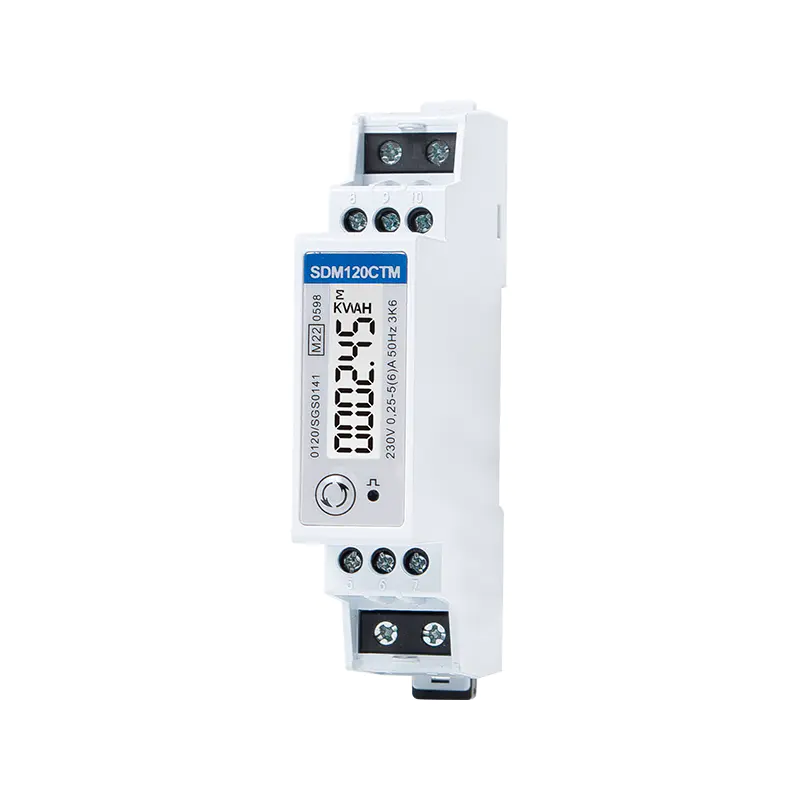
MID CT Type Din Rail Single Phase Multi-function Solar PV /Zero Export Meter for PV Metering
Nov 24,2022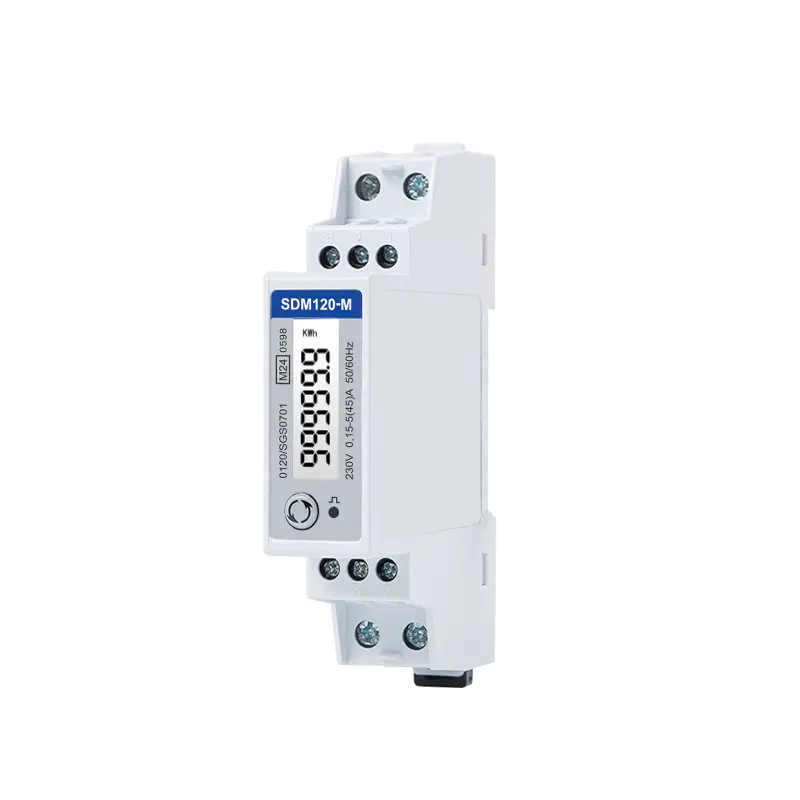
MID Din Rail Single Phase Multi-function Solar PV /Zero Export Meter for PV Metering
Jul 26,2022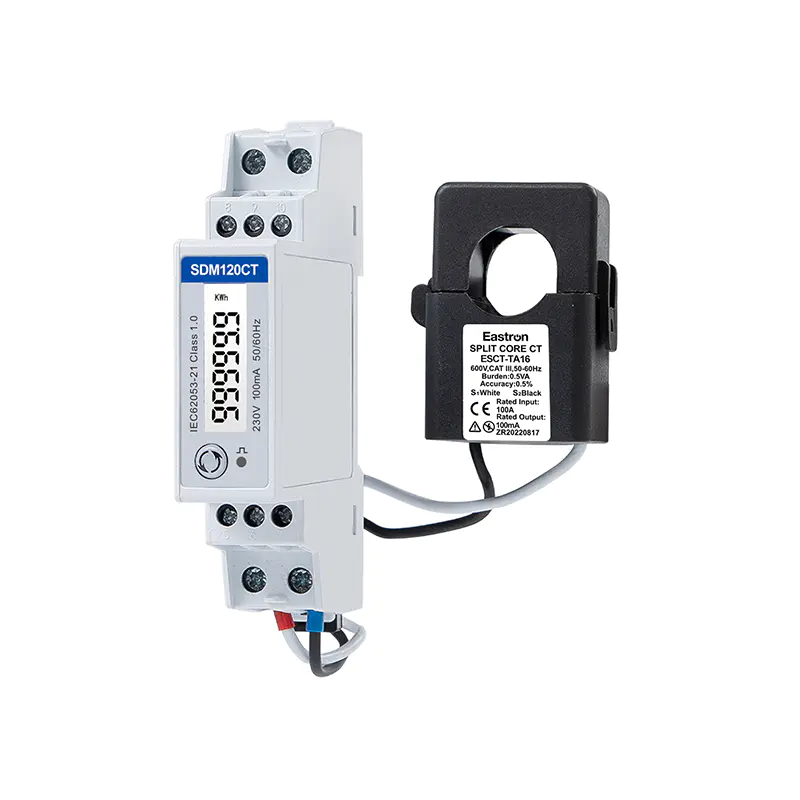
MID/RCM 100mA CT input Din Rail Single Phase Multi-function Solar PV /Zero Export Meter for PV Metering
Nov 24,2022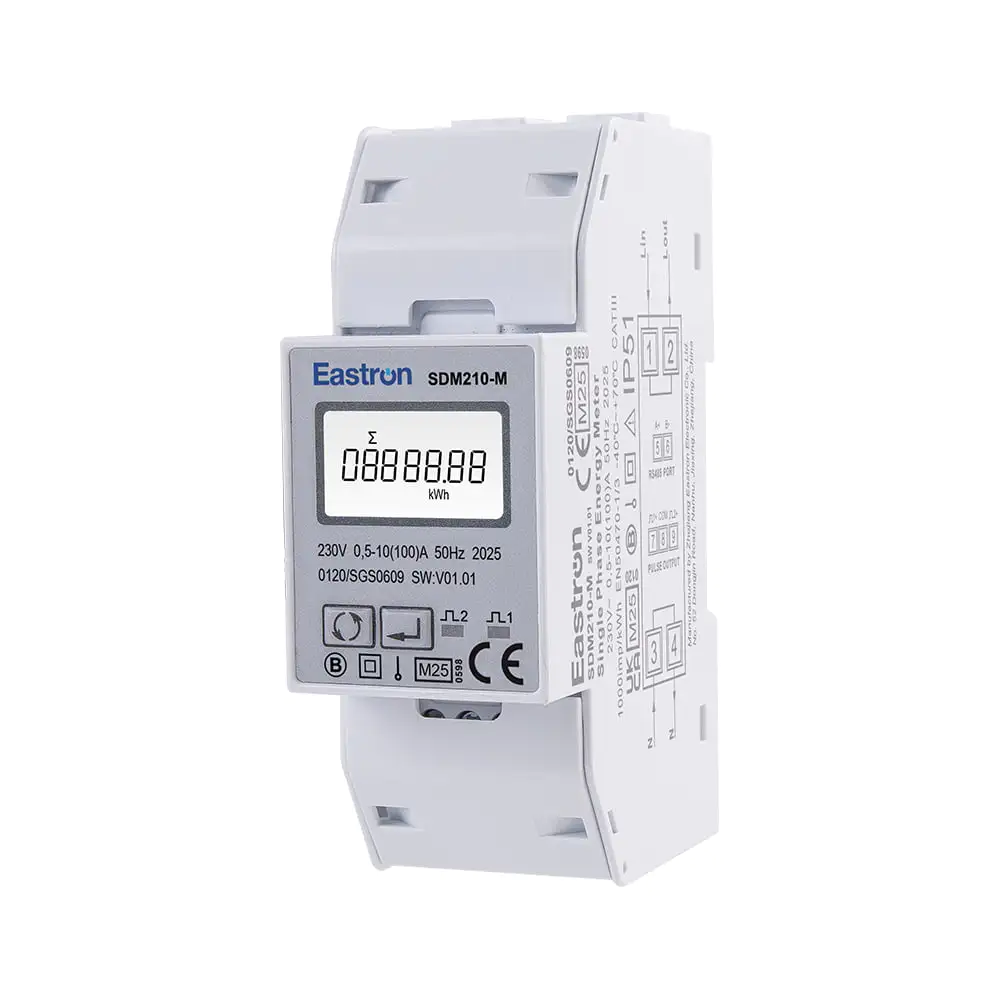
MID Din Rail Single Phase Multi-function Solar PV /Zero Export Meter for PV Metering
Nov 24,2022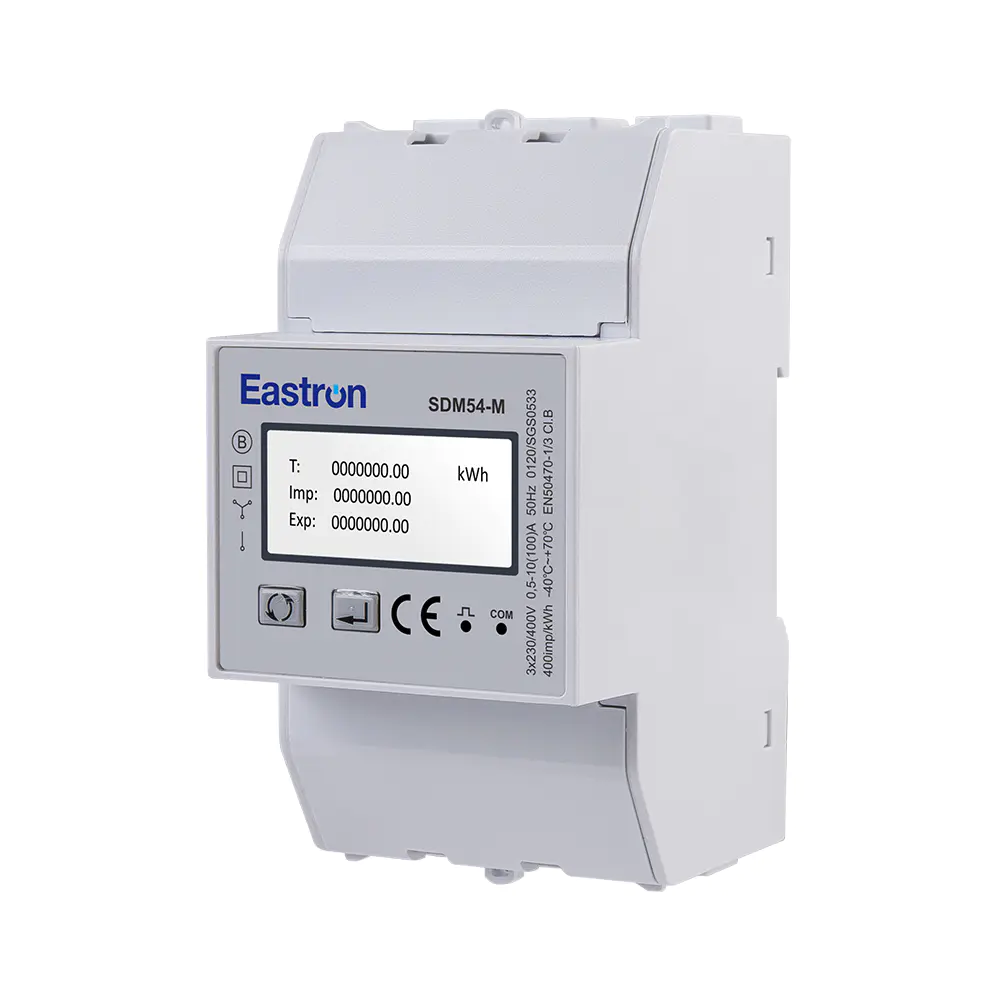
MID 3 Modules Din Rail Three Phase Multi-function Solar PV /Zero Export Meter for PV Metering
Aug 02,2022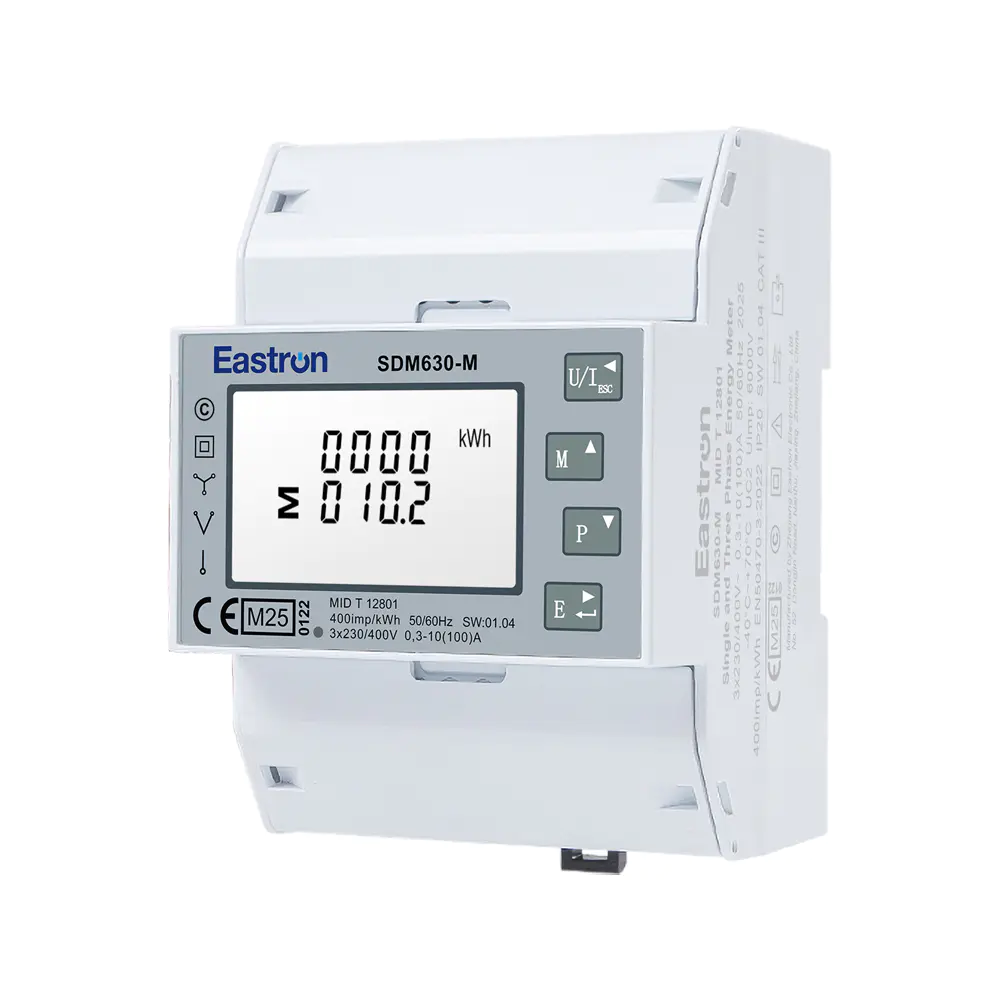
MID Din Rail Three Phase Multi-function Solar PV /Zero Export Meter for PV Metering
Aug 02,2022Content
The transition toward distributed solar generation is changing the way electricity is produced, measured, controlled, and consumed. Residential properties, commercial buildings, industrial facilities, and small renewable-energy installations increasingly require accurate information about both imported and exported electricity. In these applications, a conventional energy meter may not provide enough information. Users often need to monitor voltage, current, active power, reactive power, power factor, frequency, demand, and energy flow in both directions through one compact device.
The SDM210-M is designed for this purpose. It is a MID-approved, single-phase, two-wire, multifunction energy meter intended for DIN-rail installation and solar photovoltaic metering. With direct measurement up to 100 A, RS485 Modbus RTU communication, pulse outputs, and bidirectional energy measurement, it provides a practical measurement solution for solar PV systems, zero-export applications, energy-monitoring panels, and compact electrical distribution boards.
Its combination of certification, compact construction, direct-load capability, communication functions, and multifunction measurement allows it to serve as more than a basic kilowatt-hour counter. It can act as a local display instrument, a data source for an energy management system, a feedback meter for zero-export control, and a certified meter for applications where dependable energy measurement is important.
A solar PV installation does not simply produce electricity. It creates a dynamic relationship between generation, building consumption, battery storage, and the utility grid. During periods of high solar production, a site may generate more electricity than it consumes. At other times, the site may require electricity from the grid. The direction and magnitude of this energy flow can change within seconds as cloud cover, equipment operation, and household or industrial loads vary.
For this reason, solar energy systems require measurement equipment that can identify the actual condition of the electrical installation. A meter used in a PV system should be able to measure imported and exported energy, indicate instantaneous power, and provide values that can be transmitted to an inverter, controller, gateway, building management system, or monitoring platform.
In a zero-export system, accurate real-time measurement is especially important. The control system must know whether the site is consuming more electricity than the PV system is producing or whether surplus electricity is moving toward the grid. It can then adjust inverter output or activate other control actions. A meter with one-direction-only measurement may fail to provide the information needed for reliable export limitation.
The SDM210-M addresses this requirement with bidirectional measurement and communication capability. It measures energy flow in both directions while also providing electrical parameters that help operators understand system performance. This makes it suitable for installations where solar generation must be monitored at the point of connection or where export control depends on dependable measurement.
The SDM210-M is a single-phase, two-wire multifunction energy meter for 1P+N AC systems. It is installed on a standard DIN rail and occupies only one 18 mm module. Its compact size is particularly useful in residential distribution boards, compact solar control cabinets, small commercial switchboards, and retrofit projects where available panel space is limited.
The meter is rated for a nominal voltage of 230 V and supports a maximum direct current of 100 A. Because the current can be connected directly up to the specified maximum, many installations do not require external current transformers. This can simplify wiring, reduce component count, and lower the overall installation cost.
The device measures active energy, reactive energy, voltage, current, active power, frequency, power factor, and demand-related values. It provides two pulse outputs and an RS485 communication interface using Modbus RTU. The communication port allows measured values and configuration information to be integrated into supervisory software, remote-monitoring platforms, power management systems, and solar inverter control architectures.
| Item | Specification or Function |
|---|---|
| Application | Solar PV metering, zero-export monitoring, energy management, and single-phase power measurement |
| System type | Single-phase, two-wire, 1P+N AC system |
| Nominal voltage | 230 V |
| Operating voltage | 80% to 120% of nominal voltage |
| Rated current | 10 A |
| Maximum direct current | 100 A |
| Minimum current | 0.5 A |
| Starting current | 40 mA |
| Active energy accuracy | IEC 62053-21 Class 1.0 and EN 50470-1/3 Class B |
| Reactive energy accuracy | IEC 62053-23 Class 2 and IEC 61557-12 Class 2 |
| Communication | RS485 Modbus RTU |
| Pulse outputs | Two pulse outputs |
| Communication address | 1 to 247 |
| Transmission distance | Up to 1,000 m under suitable installation conditions |
| Baud rate | 2,400 bps to 38,400 bps; default 9,600 bps |
| Parity | None by default, with odd and even options |
| Stop bits | One or two |
| Module width | 18 mm, one DIN-rail module |
One of the most significant practical advantages of the SDM210-M is its ability to measure up to 100 A through a direct connection. Many meters designed for higher-current applications require external current transformers. Although current transformers are valuable in large systems, they add additional hardware, wiring, enclosure space, commissioning steps, and potential measurement errors caused by incorrect polarity or ratio settings.
Direct connection removes many of these complications in suitable installations. An installer can connect the line conductor directly through the meter according to the wiring diagram, without selecting, mounting, and configuring a separate current transformer. This can reduce the time required for installation and make the electrical design easier to understand.
The absence of external current transformers also helps conserve space. In a compact solar distribution board, every component occupies valuable room. A one-module meter with direct 100 A measurement can be installed in locations where a meter-plus-transformer arrangement would be difficult or impossible.
Direct measurement can also improve transparency during maintenance. When no external transformer ratio is involved, technicians have fewer configuration parameters to verify. This is useful for small PV systems, residential projects, and standardized installations where fast commissioning and consistent wiring are priorities.
External current transformers remain appropriate for larger currents, high-power systems, or installations requiring special protection and isolation arrangements. However, for applications within the SDM210-M current range, direct connection offers a straightforward alternative to transformer-based metering.
Solar PV systems frequently experience energy flow in both directions. Electricity may be imported from the utility during low-generation periods and exported toward the grid when solar production exceeds local demand. A bidirectional meter records these conditions so that the site operator, inverter, or energy management system can distinguish consumption from generation-related export.
This functionality is important for net-energy monitoring, self-consumption analysis, export limitation, and system troubleshooting. By observing the direction of power flow, an operator can determine whether a PV system is meeting on-site demand, whether the inverter is producing as expected, and whether the site is approaching an export threshold.
Bidirectional measurement also supports better investment analysis. Solar owners can compare total PV production, self-consumed energy, imported energy, and exported energy. These values help identify opportunities for load shifting, battery integration, demand management, and improved system sizing.
In zero-export applications, the meter is generally placed at an appropriate grid connection or monitoring point. Its measurements can be read through RS485 Modbus communication by a controller or compatible energy management device. The control system can then use the information to regulate inverter output or coordinate other equipment. The exact control architecture depends on the inverter, controller, installation design, and local electrical requirements, but the meter provides the essential measurement data required by the system.
A basic energy meter normally focuses on accumulated kilowatt-hours. That value is important, but it does not fully explain the behavior of an electrical installation. The SDM210-M measures multiple electrical parameters so that users can evaluate both energy consumption and power quality conditions.
Active energy is the energy that performs useful work in electrical equipment. It is commonly expressed in kilowatt-hours and is central to energy billing, solar yield analysis, consumption monitoring, and performance reporting. The SDM210-M provides active energy measurement with an accuracy class aligned with IEC and EN requirements stated for the product.
Reactive energy is associated with inductive and capacitive electrical behavior. Motors, transformers, fluorescent lighting systems, and other equipment may exchange reactive energy with the electrical network. Monitoring this value can assist with system analysis, power-factor improvement, and the evaluation of equipment behavior.
Voltage and current values allow operators to assess the electrical operating point of the connected circuit. Unexpected voltage variation, excessive current, or imbalance between expected and measured values may indicate wiring problems, overloaded circuits, equipment faults, or unusual operating conditions.
Instantaneous active power shows how much real electrical power is being consumed or generated at a particular moment. In a PV system, it helps compare solar generation with local demand. It can also reveal rapid changes caused by switching loads, cloud movement, inverter operation, or control actions.
Frequency is an important characteristic of AC electrical systems. Monitoring frequency provides additional information about the condition of the supply and may help identify abnormal operating conditions in specialized power systems.
Power factor indicates the relationship between active power and apparent power. A low power factor may result in higher current for a given amount of useful power. Monitoring power factor can therefore support electrical efficiency analysis and help identify loads that may benefit from correction or further investigation.
Demand values help users understand how electrical loads develop over time. Two facilities may consume the same total energy but have very different demand profiles. A demand reading can support tariff analysis, load scheduling, peak reduction, and capacity planning.
MID Din Rail Single Phase Multi-function Solar PV /Zero Export Meter for PV Metering
The SDM210-M is particularly well suited to solar installations because it combines the main functions needed at a PV interconnection point. Its single-phase format matches many residential and small commercial systems. Its 100 A direct-load capability covers a wide range of common service and sub-distribution applications. Its bidirectional measurement identifies the direction of energy flow, while RS485 Modbus provides a practical communication path for monitoring and control.
For a residential PV installation, the meter may be used to monitor energy exchange between the home, the solar inverter, and the utility grid. It can provide the data needed to display current consumption, PV-related export, and accumulated energy values.
For a small commercial system, the meter can be connected to a central monitoring platform. Facility managers can use the collected data to compare solar production with building demand and to identify periods of high energy use.
For a zero-export system, the meter can serve as a measurement device at the point where the installation connects to the public network. The control system can read power-flow information and adjust inverter behavior to help prevent unintended export, subject to the capabilities of the complete system.
For retrofit projects, the compact DIN-rail form factor is beneficial. Existing panels may have limited spare capacity, and a meter that occupies only one 18 mm module can be easier to integrate than larger multifunction instruments.
Local display is useful for commissioning and inspection, but modern energy systems increasingly depend on remote data access. The SDM210-M includes an RS485 interface with Modbus RTU communication, allowing it to exchange information with a broad range of industrial automation and energy management equipment.
RS485 is widely used in electrical monitoring because it supports reliable serial communication over extended distances when the network is designed and installed correctly. The meter supports communication addresses from 1 to 247, allowing multiple devices to be organized on a suitable bus network. The specified maximum transmission distance is up to 1,000 m under appropriate conditions, including suitable cable selection, topology, termination, grounding, and electromagnetic-noise management.
The communication speed can be configured from 2,400 bps to 38,400 bps, with 9,600 bps as the default setting. Parity can be set to none, odd, or even, and one or two stop bits are supported. These options help the meter communicate with different master devices and existing control architectures.
A response time of less than 100 milliseconds supports responsive monitoring and control applications. Actual system performance depends on polling intervals, network loading, the master device, cable quality, and the number of connected instruments. Nevertheless, the communication characteristics provide a suitable foundation for real-time or near-real-time solar monitoring.
The meter can transmit measured data to a programmable logic controller, data logger, gateway, supervisory control system, inverter controller, building management platform, or industrial computer. Possible applications include automatic data collection, energy dashboards, alarm generation, historical trend analysis, export limitation, and maintenance diagnostics.
Modbus integration also reduces the need for proprietary communication infrastructure. System designers can use standard industrial communication practices and map the meter into a larger energy-management architecture. Before commissioning, the installer should verify the register map, communication parameters, wiring polarity, address assignments, and compatibility with the selected master device.
In addition to RS485 communication, the SDM210-M provides two pulse outputs. Pulse outputs are useful when an external device needs a straightforward representation of accumulated energy. A data logger, pulse counter, building automation controller, or legacy monitoring system can use the pulses for energy counting without implementing a complete digital communication protocol.
This dual-output arrangement may support separate monitoring functions, depending on the device configuration and system design. Pulse-based integration can be valuable in applications where a simple interface is preferred, where an existing control cabinet already uses pulse counters, or where an independent verification channel is required.
RS485 and pulse outputs can also complement each other. Modbus can provide detailed electrical parameters, while a pulse output can provide a simple accumulated-energy signal to another system. The appropriate use of each output should follow the product documentation and the requirements of the complete installation.
Measurement accuracy is one of the most important factors when selecting a meter for solar and energy-management applications. An inaccurate meter may distort energy reports, reduce confidence in system performance, and cause a control system to respond incorrectly. The SDM210-M is specified with active-energy accuracy corresponding to IEC 62053-21 Class 1.0 and EN 50470-1/3 Class B.
The product information also specifies reactive-energy accuracy according to IEC 62053-23 Class 2 and IEC 61557-12 Class 2. Current and voltage accuracy are stated as 0.5% of range maximum, while power accuracy is stated as 1% of range maximum. Frequency accuracy is specified as 0.2% of mid-frequency, and power-factor accuracy is specified as 1% of unity, or 0.01.
| Measured Parameter | Specified Accuracy | Practical Importance |
|---|---|---|
| Active energy | IEC 62053-21 Class 1.0; EN 50470-1/3 Class B | Energy accounting, PV monitoring, and consumption reporting |
| Reactive energy | IEC 62053-23 Class 2; IEC 61557-12 Class 2 | Reactive-load analysis and power-management evaluation |
| Power | 1% of range maximum | Instantaneous load and generation monitoring |
| Current | 0.5% of range maximum | Load assessment and circuit monitoring |
| Voltage | 0.5% of range maximum | Supply-condition and operating-point evaluation |
| Frequency | 0.2% of mid-frequency | AC system condition monitoring |
| Power factor | 1% of unity, or 0.01 | Power-quality and efficiency assessment |
Standards classifications should always be interpreted in relation to the complete installation, applicable regulations, environmental conditions, and the intended legal or commercial use. For projects involving regulated billing or official settlement, the project engineer should confirm that the selected model, certification status, installation method, and local approval requirements are suitable.
Space efficiency is a major design consideration in modern electrical panels. Solar control boards often contain circuit breakers, surge protection devices, contactors, inverter interfaces, communication gateways, residual-current protection, and other control components. A meter that occupies one 18 mm module leaves more room for these devices and may reduce the need for an oversized enclosure.
The DIN-rail mounting format supports fast mechanical installation and standardized panel construction. It is familiar to electrical contractors and compatible with many residential and commercial distribution-board layouts. The compact housing can also improve the visual organization of the panel and simplify replacement if service is required.
Small size does not eliminate the need for correct installation. The installer must observe the specified current and voltage limits, use suitable conductors and protective devices, follow the wiring diagram, maintain correct polarity, and comply with local electrical codes. Communication wiring should be routed appropriately, especially in environments with inverters, switching equipment, or other sources of electromagnetic interference.
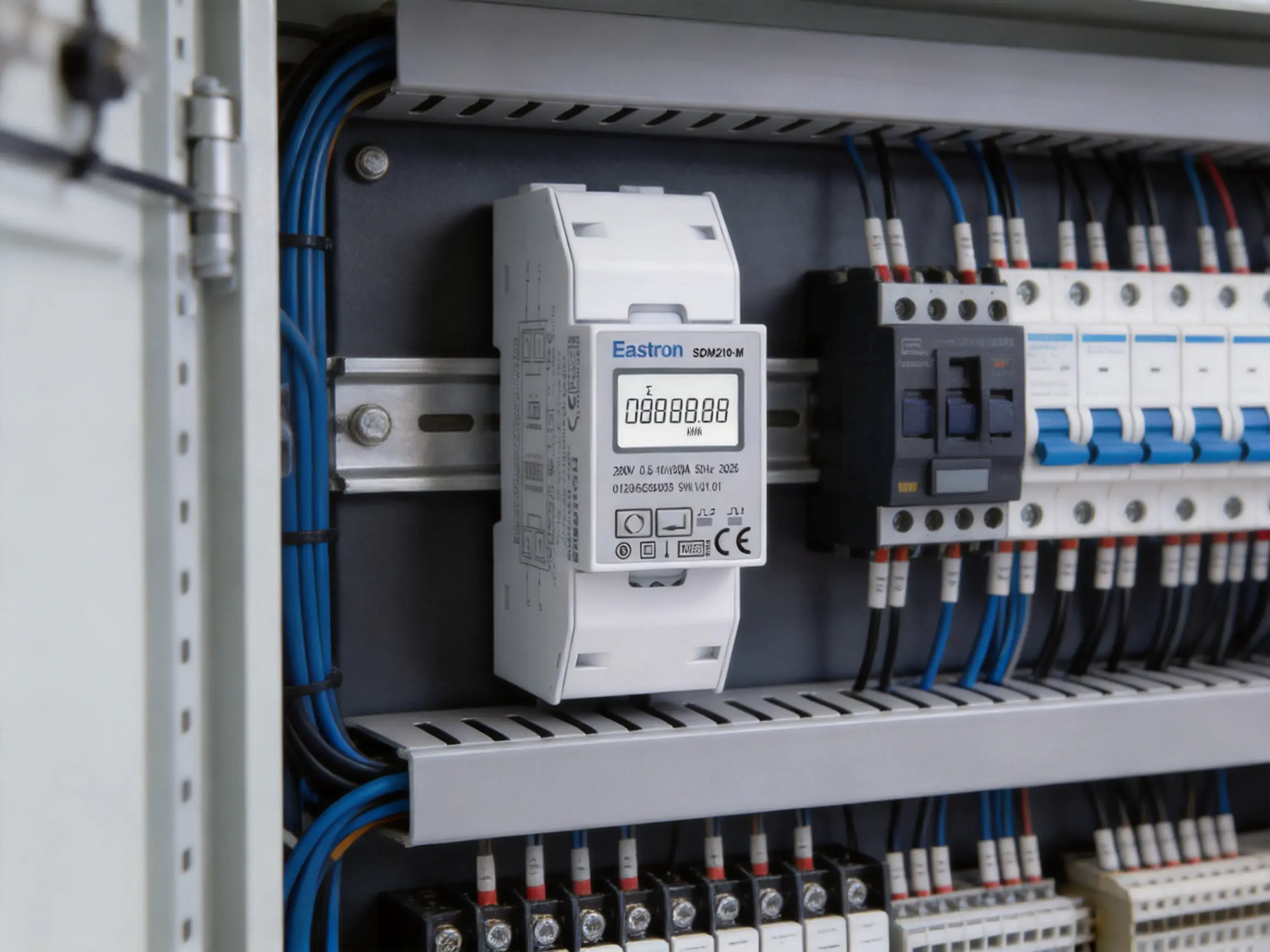
The SDM210-M offers several advantages when compared with a basic single-direction energy meter or a larger meter that requires external current transformers.
A simple kilowatt-hour meter may show accumulated energy but provide little insight into instantaneous operation. The SDM210-M measures a broader group of electrical parameters, allowing users to analyze the condition of the circuit and the performance of connected equipment.
Many traditional meters are designed primarily for consumption measurement. The SDM210-M is intended to measure energy in both directions, which is more appropriate for solar PV systems where import and export can alternate throughout the day.
External current transformers can increase cost and installation complexity. Within its specified range, direct measurement up to 100 A provides a simpler alternative and avoids the need to manage transformer ratios and polarity during commissioning.
A conventional meter may offer only a local display or a pulse output. The SDM210-M adds RS485 Modbus RTU, making it easier to integrate detailed meter data into a supervisory system. The pulse outputs remain available for simple counting or connection to compatible legacy equipment.
Large multifunction meters may consume several modules or require a separate mounting plate. The one-module width of the SDM210-M is advantageous where panel space is restricted, particularly in residential retrofit projects.
The MID approval and specified standards-related accuracy provide an important selection advantage for projects that require recognized measurement performance. Certification does not replace project-specific compliance review, but it can support more disciplined product selection than relying only on an informal monitoring device.
The quality of an energy meter depends not only on its visible features but also on the engineering, testing, production control, and quality systems behind it. Eastron Electronic Co., Ltd. develops and manufactures electricity meters, power analyzers, current sensors, communication modules, and energy-management products. Its broader product portfolio gives the company experience across measurement hardware, embedded software, communications, and power-monitoring applications.
The company is headquartered in Jiaxing, Zhejiang, China, with access to major industrial and technology centers in the surrounding region. It also maintains development capability in China and the United Kingdom. This combination supports product development across hardware design, firmware, measurement technology, communication functions, and application-specific solutions.
Product development for a multifunction meter requires coordinated work in analog measurement, digital signal processing, embedded programming, display or user-interface behavior, communication protocols, mechanical design, safety, and regulatory compliance. The company’s research and development activities cover these areas and are supported by cooperation with universities and professional institutions.
Investment in research and development is particularly important for solar metering because PV applications are becoming more connected and more responsive. A current product must not only measure energy but also communicate with inverters, gateways, controllers, and monitoring software. Firmware stability, register consistency, and communication reliability are therefore essential product attributes.
Eastron has established its own professional laboratory for EMC, LVD, accuracy, and environmental testing. These testing categories address different aspects of product performance.
Accuracy testing evaluates whether the meter measures electrical quantities within the relevant specifications. This is essential for a product used in energy accounting and system control.
Electromagnetic compatibility testing evaluates the meter’s ability to operate correctly in the presence of electromagnetic disturbances and its emissions toward other equipment. Solar installations frequently contain switching power electronics, inverter circuits, contactors, and communication devices, making EMC considerations especially important.
Low-voltage directive-related testing addresses electrical safety considerations such as insulation, protection against electric shock, and other applicable safety characteristics. Environmental testing can evaluate performance under conditions such as temperature and humidity variations, depending on the test program and product requirements.
Testing according to IEC, EN, GB, and UL-related requirements gives the company a structured framework for serving customers in different markets. The exact applicable standard depends on the product model and target market, but the capability demonstrates an engineering approach based on verification rather than visual inspection alone.
The company follows an ISO 9001 quality-management system. A quality system provides a framework for controlling design changes, supplier management, manufacturing procedures, inspection records, corrective actions, traceability, and customer feedback. For an electronic measuring instrument, these controls help ensure that production remains consistent as volumes increase.
Production approval by SGS according to MID standards further supports the company’s ability to manufacture meters under regulated measurement requirements. MID-related production control is important because a certified meter must continue to conform to the approved design and specified performance throughout manufacturing.
The company holds patented technologies in software, embedded software, and hardware. Energy meters are increasingly software-defined instruments. Their measurement algorithms, event handling, data storage, communication registers, and display functions all affect how users interact with the product.
Embedded expertise also contributes to stable operation. The meter must sample electrical signals, calculate parameters, maintain energy registers, manage communications, and respond to configuration commands. These functions must work together without compromising measurement integrity. Hardware and firmware development carried out as part of an integrated engineering process can help address these requirements more effectively.
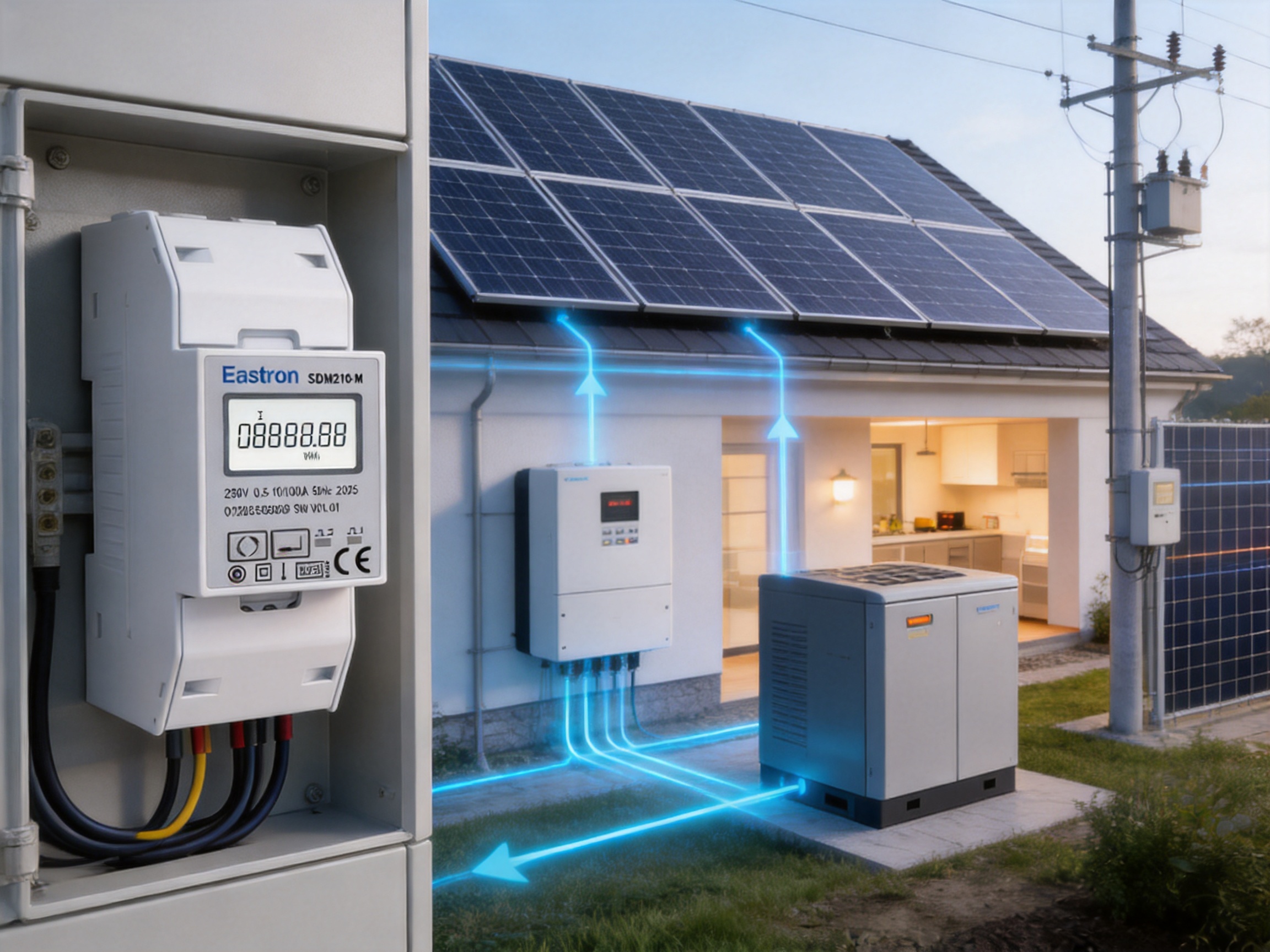
Correct installation is essential for obtaining reliable readings. Before installation, the engineer or electrician should confirm that the system is a single-phase, two-wire AC circuit compatible with the meter’s voltage and current ratings. The nominal voltage is 230 V, and the stated operational range is 80% to 120% of nominal voltage.
The maximum current of the circuit must not exceed the meter’s 100 A direct-connection rating. Appropriate upstream protection should be selected according to local regulations, conductor capacity, fault levels, and the design of the distribution board.
The meter should be mounted securely on the appropriate DIN rail. Line and neutral connections must follow the specified wiring diagram. Incorrect polarity can affect the interpretation of power direction and energy registers. In solar applications, polarity verification is particularly important because the system may need to distinguish imported power from exported power.
For RS485 communication, the installer should assign a unique address to each meter on the bus. Duplicate addresses can prevent reliable communication. The master and meter must use matching baud rate, parity, and stop-bit settings. Cable routing should avoid unnecessary proximity to high-current switching conductors and inverter power cables.
Where long communication distances are used, the network should follow accepted RS485 practices. These may include suitable twisted-pair cable, correct termination, an appropriate bus topology, controlled grounding, and protection against transient disturbances. The stated 1,000 m maximum should not be treated as a universal guarantee for every environment; actual distance depends on installation conditions and network design.
After installation, commissioning should include verification of voltage, current direction, communication response, pulse behavior, and energy accumulation. In a PV system, testing should cover both import and export conditions where possible. The installer should compare meter readings with expected values and confirm that the connected controller interprets the data correctly.
The meter can serve as a field-level measurement point in a broader energy-management system. A gateway may collect Modbus data from one or more meters and forward it to a local server or cloud platform. A building management system may use the values for dashboards, alarms, and historical analysis. An industrial controller may use active power and energy-flow values in a load-management sequence.
Because the SDM210-M measures more than accumulated energy, system designers can create richer monitoring strategies. For example, an alarm may be generated if voltage moves outside an expected range, if current exceeds a planned value, if power factor declines, or if export continues during a period when export should be restricted.
Historical data can help identify changes in site behavior. A decline in daytime PV-related performance may suggest inverter derating, shading, soiling, or a communication problem. A sudden increase in imported energy may indicate new loads or a change in operating schedules. Meter data does not replace professional diagnosis, but it provides an objective starting point.
In commercial facilities, multiple meters can be used to divide energy data by tenant, department, production area, or equipment group. The small module width makes distributed metering more practical in panels with many outgoing circuits.
Homes with single-phase solar installations can use the meter to monitor the relationship between household consumption and PV generation. Its compact format is appropriate for domestic distribution boards, while Modbus communication can connect the meter to an inverter monitoring system or home energy-management platform.
Retail stores, offices, workshops, and small service facilities often need to measure energy flow without installing a large industrial power meter. The SDM210-M can provide local and remote information about energy use, solar contribution, and grid exchange.
Where regulations, utility agreements, or site policies require the PV installation to avoid exporting electricity, the meter can provide bidirectional power-flow data to the control system. Proper configuration and commissioning are necessary to ensure that the complete inverter-control arrangement responds correctly.
Panel builders can integrate the meter into compact monitoring assemblies. The one-module form factor makes it possible to include several measurement points in a limited enclosure while retaining standard DIN-rail organization.
Existing electrical systems may lack sufficient space for large meters or current-transformer assemblies. Direct measurement and compact construction can simplify retrofit work when the circuit falls within the meter’s specified ratings.
The meter may be used to monitor the consumption of a dedicated single-phase machine, HVAC circuit, pump, charger, or other load. Its multifunction readings can help operators understand not only how much energy the equipment uses but also how its voltage, current, power factor, and demand behave.
Remote access to electrical measurements can reduce the need for frequent manual inspections. Maintenance personnel can review values through a supervisory system and identify unusual behavior before visiting the site. This can be particularly useful for distributed PV installations, where equipment may be installed across many locations.
The meter can also support preventive maintenance. If current increases without a corresponding change in production or occupancy, the cause may require investigation. If power factor changes significantly, a load or compensation device may be behaving differently. If the energy direction does not match the expected solar operating condition, wiring polarity, inverter settings, or communication mapping may need to be checked.
Accurate historical records also assist with service decisions. Instead of relying exclusively on user reports, technicians can review trends and event timing. This can shorten troubleshooting time and help distinguish an intermittent electrical issue from a communication or software problem.
Choosing a meter for a solar application involves more than comparing nominal current and price. The supplier’s ability to support design, certification, testing, customization, documentation, and after-sales service can strongly affect the success of a project.
Eastron supplies electricity meters and energy-measurement products to customers in Europe, Asia-Pacific, America, the Middle East, and Africa. Experience across multiple markets exposes the company to different installation practices, communication requirements, certification expectations, and application conditions.
The company’s product range includes electricity meters, power analyzers, current sensors, communication modules, and management systems. This breadth allows customers to select complementary products from a supplier with knowledge of the wider energy-measurement chain. It may also simplify technical communication when a project requires several types of measurement or communication equipment.
Professional technical support and after-sales service are important for products that become part of an automated energy system. A meter that is electrically accurate but difficult to configure can delay commissioning. Clear technical documentation, register information, wiring guidance, and responsive support all contribute to a smoother project lifecycle.
When evaluating the SDM210-M, engineers should begin by confirming the electrical system. The model is intended for single-phase, two-wire applications, so it should not be selected for three-phase systems or circuits outside its voltage and current range.
The next consideration is the required measurement direction. If the application involves solar generation, battery operation, or export limitation, bidirectional measurement should be confirmed as a necessary function. The system designer should also establish how the host controller interprets import and export registers.
Communication requirements should be reviewed before ordering. The system should define the Modbus address, baud rate, parity, stop bits, cable type, polling strategy, and data points required by the monitoring or control software. If pulse outputs are to be used, the receiving device must be compatible with the pulse signal and energy scale.
Certification requirements should be reviewed with the project owner, utility, authority having jurisdiction, and legal metrology specialist where applicable. The stated MID approval and standards-related accuracy make the product relevant to regulated or certification-sensitive projects, but final acceptance depends on the complete application and local rules.
Environmental and enclosure requirements should also be considered. The meter should be installed in a suitable electrical cabinet or distribution board and protected from conditions beyond its rated operating environment. The installation should provide adequate protection from moisture, excessive heat, mechanical damage, and contamination.
A structured workflow can improve the quality of a solar metering project. First, define the measurement point and identify whether the meter will measure grid exchange, PV output, a dedicated load, or a sub-distribution circuit.
Second, calculate the expected current and confirm that direct connection is appropriate. If the current may exceed 100 A, a different metering solution should be considered rather than operating the SDM210-M beyond its rating.
Third, select the communication architecture. Decide whether the meter will connect directly to an inverter, PLC, gateway, or supervisory platform. Establish the register requirements and verify compatibility before installation.
Fourth, prepare the panel layout. Reserve one 18 mm DIN-rail module and provide adequate space for conductors, protective devices, communication terminals, and safe access for commissioning.
Fifth, install and test the meter according to the wiring instructions. Confirm voltage and polarity before energizing the circuit. After energization, verify local readings and compare them with an independent reference where appropriate.
Finally, test system behavior under both import and export conditions. Confirm that the monitoring system reports the correct direction and that any zero-export control responds as intended. Record the meter address, communication settings, installation location, and commissioning results for future maintenance.
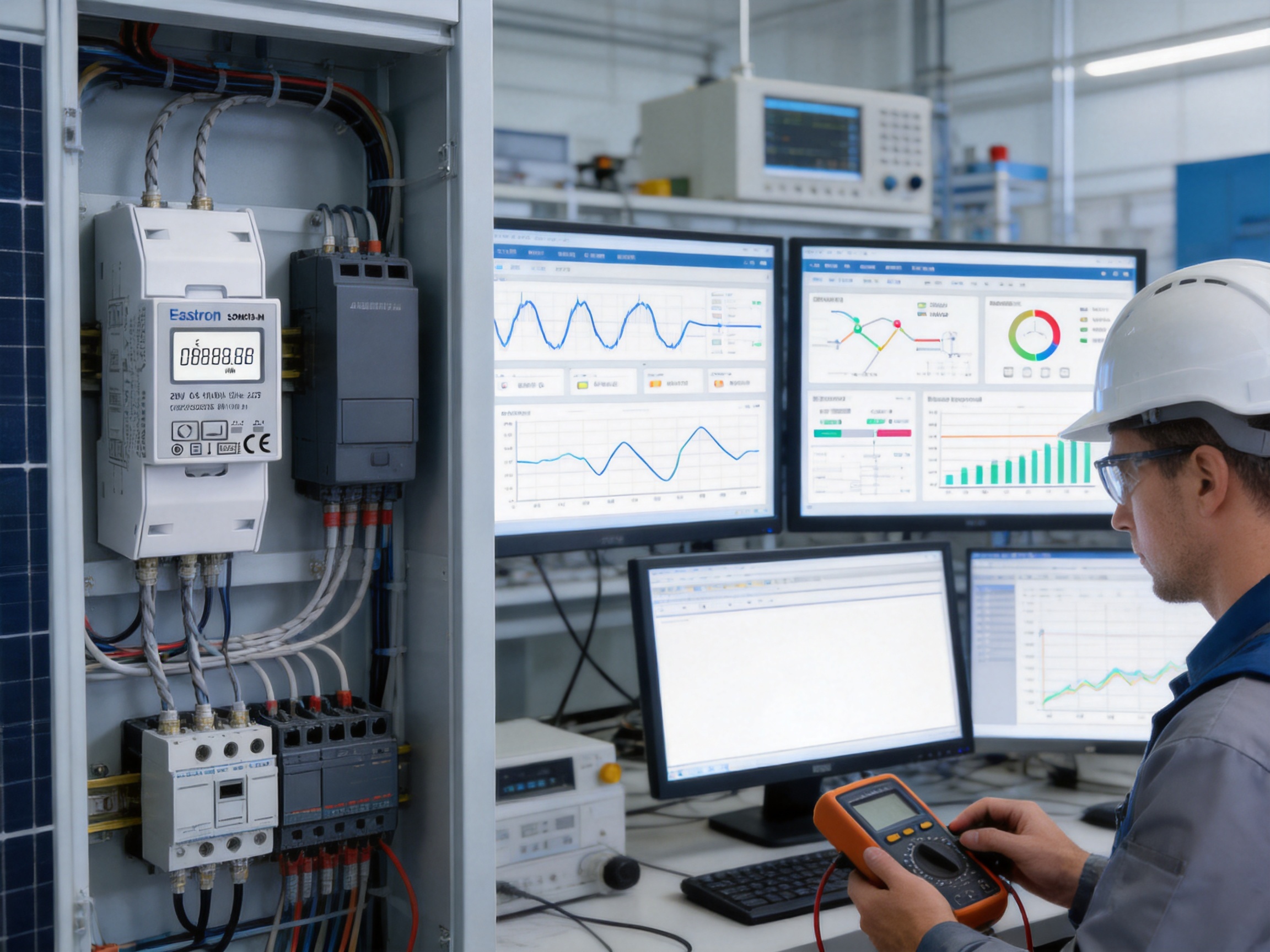
The SDM210-M is designed for a single-phase, two-wire AC system, commonly described as a 1P+N or 1P2W system. Its stated nominal voltage is 230 V.
Yes. The product is specified for bidirectional measurement, making it suitable for applications where electricity may be imported from or exported to the grid, including solar PV and zero-export systems.
The maximum direct-load current is 100 A. The installation must remain within the specified current rating and comply with all applicable electrical protection and wiring requirements.
External current transformers are not required for suitable circuits within the 100 A direct-measurement range. Avoiding external transformers can reduce wiring complexity, panel space, and installation cost.
The meter uses RS485 communication with Modbus RTU. Communication addresses from 1 to 247 are supported, along with configurable baud rates, parity, and stop bits.
The specified maximum transmission distance is up to 1,000 m. Actual performance depends on cable selection, network topology, termination, grounding, electromagnetic interference, baud rate, and the number of devices on the bus.
Yes. The SDM210-M provides two pulse outputs in addition to RS485 Modbus communication. Pulse outputs can be used with compatible counters, loggers, and control systems.
The meter measures active energy, reactive energy, voltage, current, active power, frequency, power factor, demand-related values, and other multifunction electrical parameters stated in the product information.
It is designed for solar PV and zero-export metering applications and provides bidirectional measurement with Modbus communication. The complete zero-export function depends on the inverter, controller, software, wiring, configuration, and local requirements.
The meter occupies one 18 mm module, making it suitable for compact distribution boards and control cabinets.
Active-energy accuracy is specified as IEC 62053-21 Class 1.0 and EN 50470-1/3 Class B.
The stated rated current is 10 A, with a maximum current of 100 A, a minimum current of 0.5 A, and a starting current of 40 mA.
The operational voltage is specified as 80% to 120% of the nominal voltage. For a nominal voltage of 230 V, the installation should be designed and checked according to the applicable electrical requirements.
Commissioning should include verification of wiring, polarity, voltage, current direction, energy registers, Modbus address, communication parameters, pulse outputs, and the response of the complete solar or zero-export control system.
Eastron Electronic Co., Ltd. provides electricity measurement products, technical support, and after-sales service. Its capabilities include product development, laboratory testing, standards-oriented manufacturing, and energy-measurement solutions for international markets.
The SDM210-M combines the functions required by many modern single-phase solar and energy-monitoring projects in a compact DIN-rail instrument. Its bidirectional measurement supports the changing energy flows found in PV systems. Its direct 100 A connection can eliminate the need for external current transformers in suitable applications. Its one-module width helps conserve panel space, while RS485 Modbus and two pulse outputs support integration with both modern and traditional monitoring architectures.
The product also provides a broad group of electrical measurements, including active and reactive energy, voltage, current, power, frequency, power factor, and demand-related information. These capabilities make it more useful than a basic consumption-only meter for system commissioning, operational analysis, zero-export monitoring, and long-term energy management.
Its MID approval and specified IEC and EN accuracy classifications support applications where recognized measurement performance is important. Behind the product, Eastron’s research and development resources, professional laboratory, ISO 9001 quality-management system, standards-related production controls, patented technologies, and international experience provide additional confidence for system designers and equipment manufacturers.
For residential solar installations, small commercial buildings, compact switchboards, retrofit projects, and zero-export applications within the specified ratings, the SDM210-M offers a balanced combination of measurement capability, installation simplicity, communication flexibility, certification support, and space efficiency.
IEC 62053-21, Electricity Metering Equipment — Particular Requirements — Static Meters for Active Energy.
IEC 62053-23, Electricity Metering Equipment — Particular Requirements — Static Meters for Reactive Energy.
EN 50470-1, Electricity Metering Equipment — General Requirements, Tests, and Test Conditions.
EN 50470-3, Electricity Metering Equipment — Particular Requirements for Static Meters for Active Energy.
IEC 61557-12, Electrical Safety in Low-Voltage Distribution Systems — Power Metering and Monitoring Devices.
Modbus Application Protocol Specification, Modbus Organization.
Product technical information for the SDM210-M single-phase multifunction solar PV and zero-export meter.
Manufacturer information concerning electricity meters, power analyzers, current sensors, communication modules, laboratory testing, quality management, and energy-measurement solutions.
Your email address will not be published. Required fields are marked *

We develop and produce high performance electricity meters, power analyzers, current sensors, communication modules and management systems.
Address:NO. 52, Dongjin Road, Nanhu, Jiaxing, Zhejiang, China
Copyright @ Eastron Electronic Co., Ltd. All rights reserved
