

 English
 Español
 Deutsch
 中文简体


Product Consultation
Your email address will not be published. Required fields are marked *
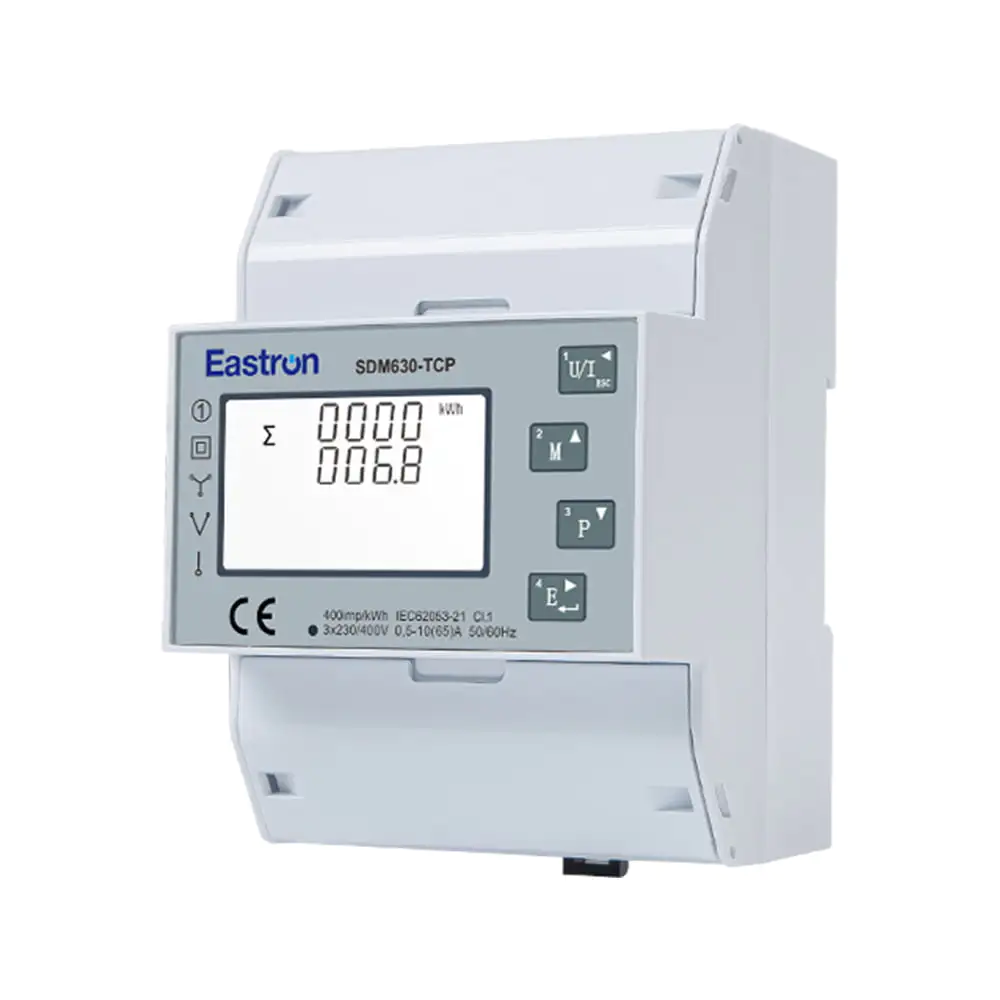
Direct Type Three Phase Ethernet Modbus TCP Energy Meter for Data Center Metering
Nov 24,2022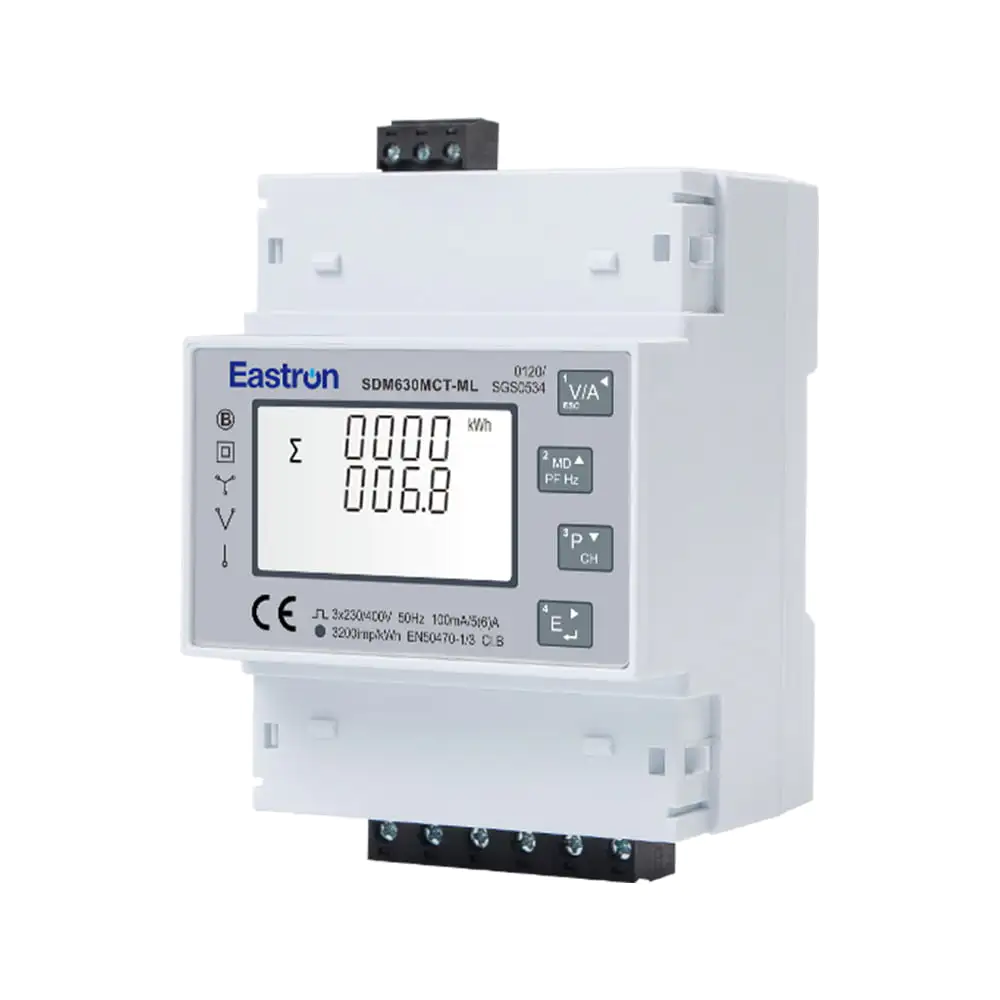
Quad Load Three Phase Multi-function RS485 Energy Meter for Data Center Metering
Aug 03,2022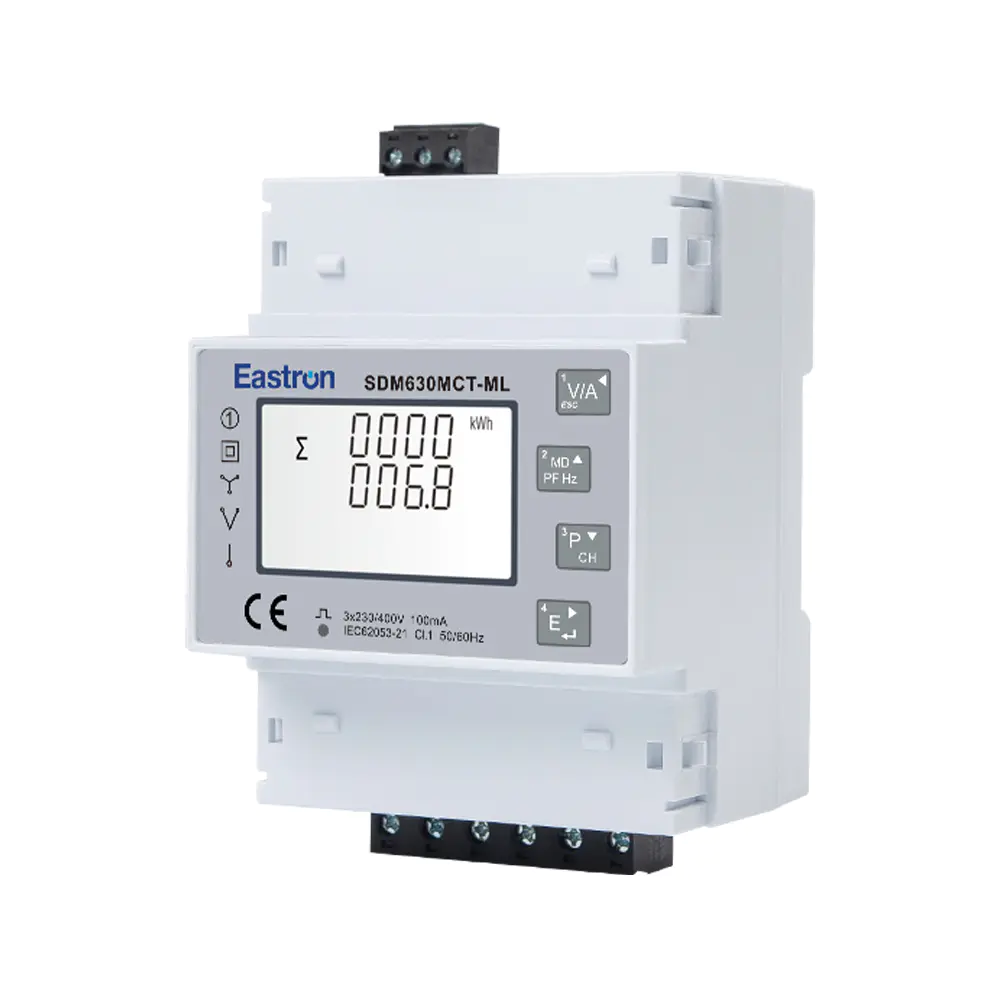
Multi-Circuit Three Phase Ethernet Modbus TCP Energy Meter for Data Center Metering
Aug 03,2022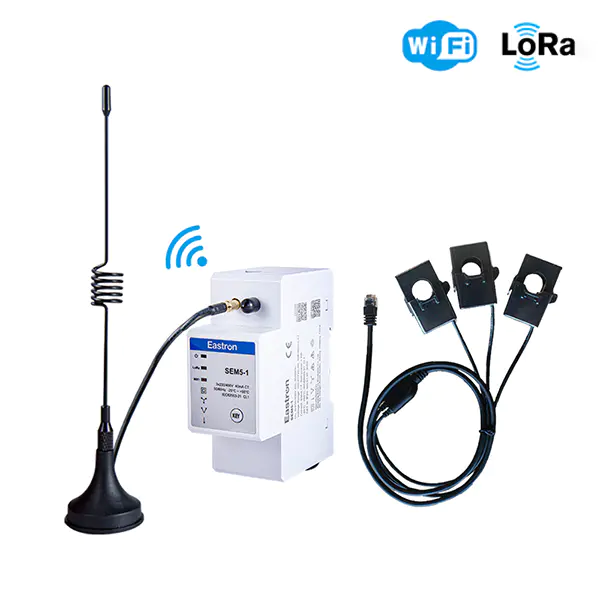
Wifi & LoRa Three Phase Din Rail Energy Meter for PV Metering
Sep 19,2025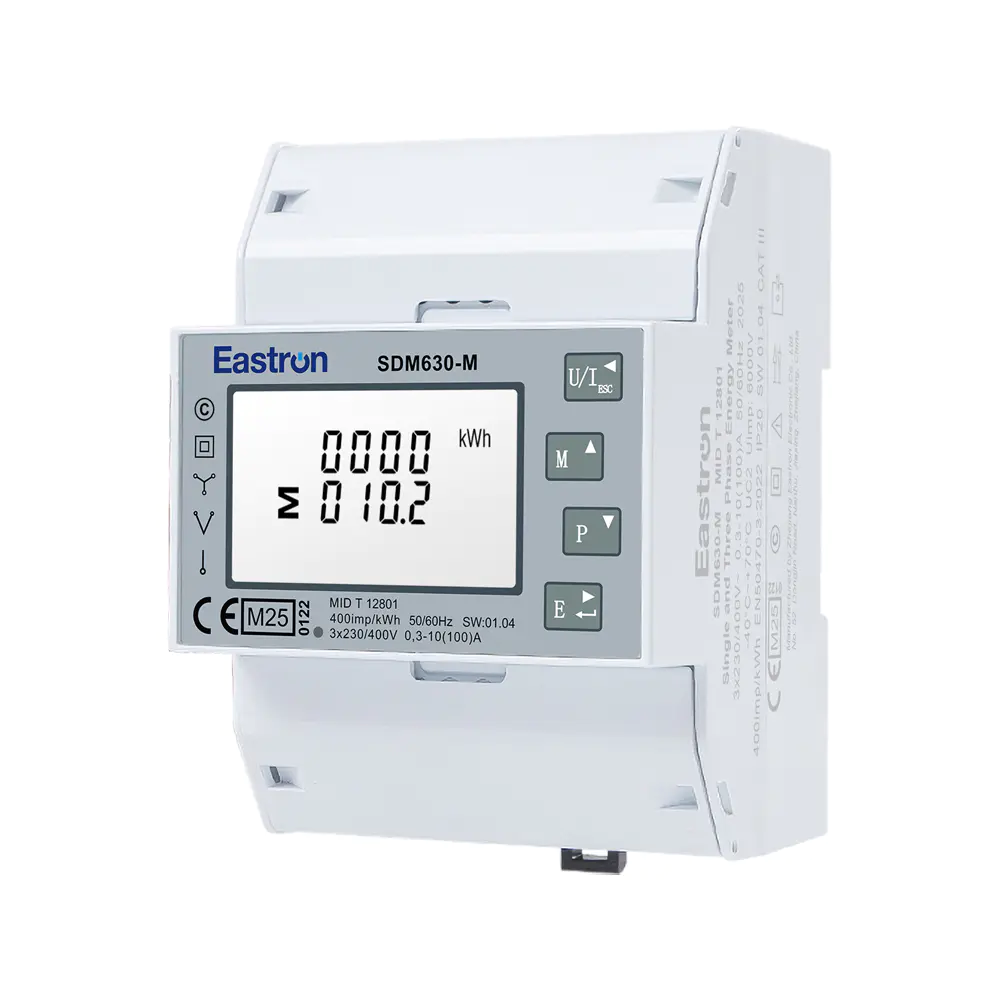
MID UL Certified Din Rail Three Phase Multi-function Energy Meter for EV Charging Metering
Aug 02,2022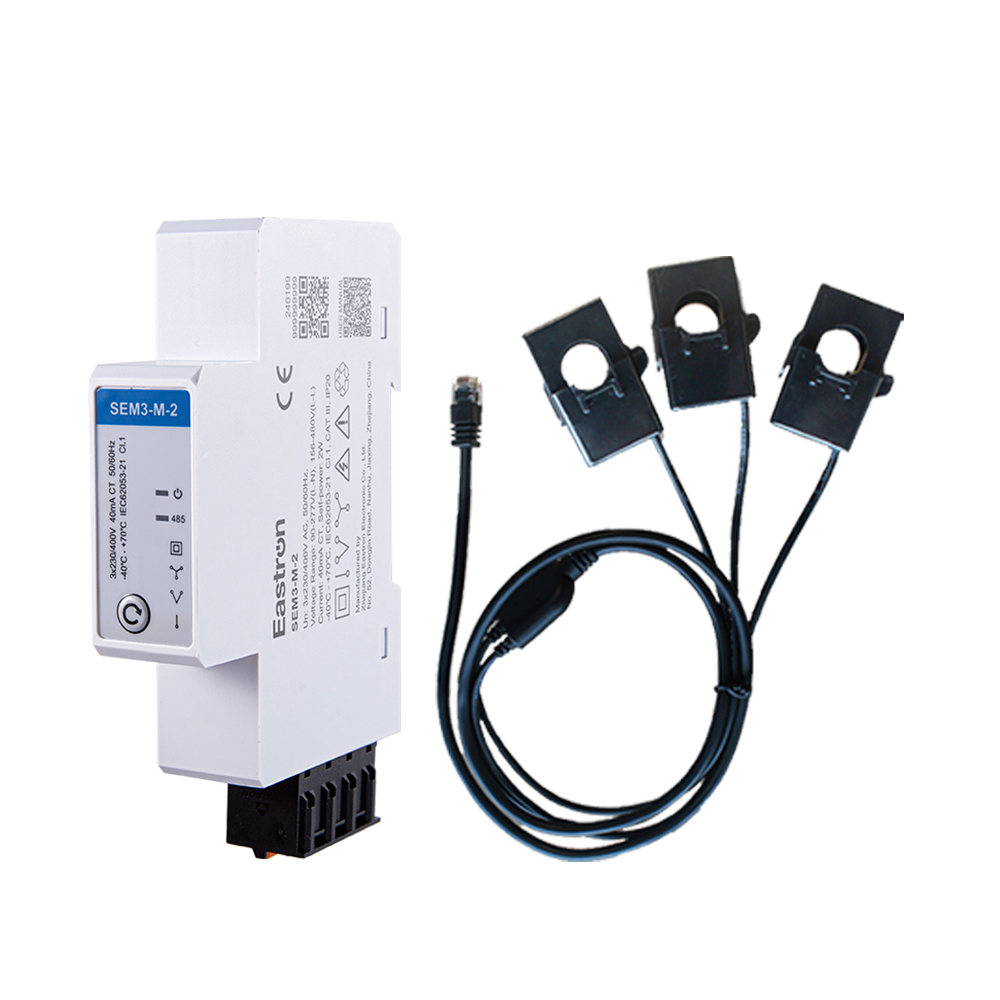
RS485 CT Connection Three Phase Din Rail Energy Meter for PV Metering
May 30,2025Content

Modern electrical installations are becoming more distributed, data-driven, and demanding. A single facility may contain several production lines, tenant areas, charging points, HVAC systems, lighting circuits, and auxiliary loads that must be measured independently. Traditional meters often require separate devices for each circuit, extensive wiring, and additional communication equipment. These requirements increase installation time, cabinet space, commissioning effort, and the likelihood of wiring errors.
The SDM630MCT-ML-TCP addresses these challenges by combining multi-load measurement, three-phase electrical monitoring, Ethernet Modbus TCP communication, flexible current transformer configuration, and a plug-in Easy Click connection concept in one compact solution. It can operate as four independent three-phase energy meters or as twelve independent single-phase energy meters, making it suitable for applications where several loads must be monitored from a centralized location.
Designed for direct integration with supervisory control and data acquisition systems, building management systems, industrial automation platforms, and energy management software, the meter provides a practical method for collecting electrical data through a standard Ethernet network. Its architecture supports both detailed measurement and simplified installation, helping users create scalable energy-monitoring systems without installing a separate meter for every circuit.
The SDM630MCT-ML-TCP is an Ethernet Modbus TCP quad-load three-phase energy meter intended for the Easy Click System. It is designed to measure electrical parameters on single-phase and three-phase AC networks while collecting data from multiple loads through external current transformers.
The product supports 3P3W and 3P4W electrical systems and is compatible with 100 mA or 100 mV CT secondary signals. Depending on the wiring configuration, it can monitor four three-phase loads or twelve single-phase loads. This multi-load capability allows one instrument to replace several conventional meters in applications where multiple circuits are positioned within the same distribution board or control cabinet.
The meter measures RMS values including harmonics on three-phase AC systems. Its measurement range includes voltage, current, active power, reactive power, apparent power, power factor, frequency, energy, demand, and total harmonic distortion-related parameters. These measurements provide users with a broader view of electrical performance than a basic kWh meter.
Communication is provided through Ethernet Modbus TCP. This enables the meter to communicate with TCP/IP masters and allows measured values to be read remotely by a SCADA platform, energy management system, data logger, or industrial controller. The Ethernet connection can simplify system architecture by using existing network infrastructure instead of requiring a dedicated serial communication network for every monitoring point.
The meter also incorporates independently programmable CT ratios. This feature allows each measured circuit to be configured according to the primary rating of its current transformer. Different loads can therefore use different CT sizes while remaining connected to the same multi-load meter.
Its RJ12 plug-in connection concept supports rapid installation. By using plug-in connectors rather than requiring extensive point-to-point wiring, the Easy Click System can reduce installation time and help prevent incorrect terminal connections.
Ethernet Modbus TCP Quad Load Three Phase Energy Meter for Easy Click System
One of the most important advantages of the SDM630MCT-ML-TCP is its ability to measure multiple loads with one instrument. Conventional energy-monitoring designs often assign one meter to each load. Although this approach is straightforward, it can result in a large number of meters, additional voltage connections, more communication addresses, and a crowded electrical panel.
The multi-load architecture provides an alternative. Four three-phase loads can be measured as separate measurement objects, or twelve single-phase loads can be monitored individually. This arrangement is particularly useful in commercial buildings, multi-tenant properties, distribution panels, production areas, workshops, data centers, and facilities with groups of smaller circuits.
For a building with four three-phase air-conditioning units, for example, a single meter can monitor the electrical performance of all four units. In a commercial distribution board, the same product can measure separate tenant circuits or service areas. In a workshop, it may monitor several machine groups without installing an individual meter on every outgoing feeder.
The twelve-single-phase configuration is useful where loads are distributed across individual phases or where single-phase circuits need to be tracked independently. Lighting, office equipment, plug loads, small pumps, ventilation systems, and auxiliary systems can all be assigned their own measurement channels, subject to the electrical design and CT installation arrangement.
This flexibility can reduce the amount of hardware required in a monitoring project. It may also reduce the number of communication points that must be configured in the software. Instead of managing multiple independent meters, the control system can communicate with one device containing multiple measurement channels.
Multi-load measurement also supports more meaningful energy allocation. A facility manager can distinguish between production energy, common-area consumption, tenant usage, HVAC demand, and auxiliary loads. This information can support internal cost allocation, energy benchmarking, maintenance planning, and efficiency programs.
Ethernet communication is a major benefit for modern energy-monitoring systems. The SDM630MCT-ML-TCP communicates using Modbus TCP, a widely adopted industrial protocol that operates over standard TCP/IP networks. This makes the meter suitable for integration into systems that already use Ethernet for automation, monitoring, and data collection.
Using Ethernet Modbus TCP can simplify connection to a central server or supervisory platform. A facility may collect data from meters located in several electrical rooms and forward the readings to a central energy dashboard. The meter can also be connected directly to a TCP/IP master for remote reading.
Compared with a purely local display-based instrument, network communication gives operators access to electrical information without visiting the distribution board. Measurement data can be read from a control room, maintenance office, engineering workstation, or cloud-connected gateway, depending on the overall system design.
Ethernet integration can also make future expansion easier. When additional meters are installed, they can be incorporated into the same network architecture. This supports gradual implementation, allowing a facility to begin with critical loads and later expand monitoring to secondary circuits.
For system integrators, Modbus TCP offers a familiar communication environment. The protocol is commonly supported by programmable logic controllers, SCADA systems, building automation controllers, industrial gateways, and energy management software. The use of a standard protocol can reduce the need for proprietary communication tools.
The product information also specifies communication settings associated with the RS485 and Ethernet Modbus environment, including communication addressing from 1 to 247, transmission speeds from 1200 bps to 38400 bps for serial applications, selectable parity, and one or two stop bits. The Ethernet version is intended for Modbus TCP communication, while related versions in the product family provide RS485 Modbus communication through an RJ45 port.
Although Ethernet networks can provide broad connectivity, good network design remains important. Users should assign suitable IP addresses, segment control networks where required, protect access to the monitoring system, and coordinate the meter with the addressing and polling strategy of the master device.
The SDM630MCT-ML-TCP is more than an energy accumulation device. It is a multifunction meter intended to provide a detailed picture of electrical system operation. The available measurement functions include voltage, current, power, power factor, frequency, total harmonic distortion-related values, demand, and energy.
Voltage measurement helps users verify whether supply conditions are within the expected operating range. Abnormal voltage may indicate supply problems, loose connections, unbalanced systems, transformer issues, or excessive voltage drop. Monitoring voltage over time can help maintenance teams identify conditions that might not be visible during a brief site inspection.
Current measurement shows how heavily each monitored load is operating. It can reveal overloaded circuits, unexpected standby consumption, abnormal phase loading, and changes in machine behavior. Current trends can also provide useful information for preventive maintenance when a motor or production system begins drawing more power than normal.
Active power is directly related to the rate of real energy consumption. It is useful for identifying peak operating periods, evaluating equipment performance, and managing demand. Reactive power and apparent power provide additional information about the electrical behavior of inductive and electronic loads.
Power factor measurement helps users assess how effectively electrical current is being converted into useful power. Poor power factor can increase current for a given active load and may contribute to higher losses or additional charges in some utility arrangements. Monitoring power factor by load can help identify where correction or equipment review may be appropriate.
Frequency measurement is important for confirming the stability of the electrical supply. In systems with generators, variable operating conditions, or sensitive equipment, frequency trends may provide useful diagnostic information.
Demand measurement allows users to study how consumption changes over time. Demand data can support peak-load management, capacity planning, tariff analysis, and evaluation of operational changes. When combined with energy readings, demand information helps distinguish between total consumption and the rate at which power is being used.
Harmonic-related measurements are valuable in installations containing variable-frequency drives, switched-mode power supplies, data-processing equipment, LED lighting, battery chargers, and other nonlinear loads. Harmonic information can help engineers investigate heating, nuisance tripping, transformer stress, and power-quality concerns.
The meter uses true RMS measurement. True RMS technology is important because many modern electrical loads produce waveforms that are not perfectly sinusoidal. A measurement method based only on an ideal sine wave may not accurately represent the heating effect or effective value of distorted current and voltage. True RMS measurement provides a more dependable basis for evaluating real-world AC systems.
Measurement accuracy is a central consideration when selecting an energy meter. The stated accuracy for power is 0.5% of the maximum range, while current and voltage accuracy are also specified as 0.5% of the maximum range. Frequency accuracy is specified as 0.2% of the mid-frequency, and power factor accuracy is 1% of unity, or 0.01.
For active energy, the meter is specified to IEC 62053-22 Class 0.5S and IEC 62053-21 Class 1.0. Reactive energy is specified to IEC 62053-23 Class 2. These standards provide a recognized basis for evaluating energy-meter performance and help users compare the product with other instruments used in commercial and industrial applications.
Accuracy is influenced by the complete measurement chain. Correct CT selection, proper CT installation, suitable conductor routing, appropriate voltage connections, and correct parameter programming are all important. The meter’s independently programmable CT ratios help users configure each channel to match the installed transformer primary rating.
Accurate energy monitoring is especially important when data is used for tenant billing support, internal cost allocation, equipment benchmarking, energy-saving verification, or compliance documentation. Although the meter must always be applied within the requirements of the specific project and local regulations, its stated measurement classes provide a strong technical foundation for many monitoring applications.
Engineers should also consider the operating range, phase arrangement, burden requirements, environmental conditions, and installation practices when evaluating accuracy. A well-designed installation ensures that the instrument can deliver the value expected from its measurement specifications.
The product accepts 100 mA or 100 mV CT secondary signals and supports programmable CT primary values from 1 A to 9999 A. This provides flexibility for installations ranging from relatively small loads to high-capacity feeders.
External current transformers allow the meter to be installed without placing the full load current directly through the meter body. This is useful for larger conductors, existing switchboards, retrofit projects, and installations where the main circuit cannot be interrupted for conventional direct-connected metering.
Independent CT ratio programming is particularly valuable in multi-load applications. Different feeders may have different current requirements, so a single fixed ratio would be inconvenient or unsuitable. With independent settings, each monitored load can be configured according to its own CT primary rating.
For example, one channel may monitor a small auxiliary circuit through a lower-rated CT, while another channel monitors a large motor feeder through a higher-rated CT. Each channel can be configured separately, allowing the meter to calculate current, power, and energy according to the relevant transformer ratio.
Correct polarity and phase association remain essential. CTs must be installed according to their marked direction, and each current input must be matched to the corresponding voltage phase. Incorrect orientation or phase pairing can produce inaccurate power and energy readings even when the CT ratio is programmed correctly.
Installation teams should follow the product documentation and applicable electrical safety procedures when working with current transformers. CT secondary circuits should be handled carefully, and the selected CT type must match the meter input requirements.
Installation efficiency is one of the product’s strongest practical advantages. The Easy Click System uses plug-in connectors, including an RJ12 socket for fast connection, to simplify the connection process. The design is intended to save up to 80% of installation time and reduce the risk of wiring mistakes.
In a conventional installation, every measurement circuit may require individual terminal preparation, labeling, tightening, inspection, and continuity checking. When several loads are measured, the number of connections can grow rapidly. Plug-in connectors can make the assembly more organized and repeatable.
Faster installation is valuable in both new construction and retrofit work. In new projects, shorter installation times can help contractors meet demanding schedules. In existing facilities, reduced intervention time can minimize operational disruption, particularly when work must be completed during a planned maintenance window.
The plug-in approach can also improve consistency between installations. Standardized connectors and prepared wiring arrangements make it easier for technicians to reproduce the same connection method across multiple panels or sites. This can support quality control and reduce dependence on individual installer experience.
Lower wiring complexity may also simplify troubleshooting. Clearly organized plug-in connections make it easier to isolate a channel, replace a device, or check a suspected wiring issue. The benefit is especially relevant in multi-load systems, where a large number of conductors could otherwise create confusion inside the cabinet.
Despite the convenience of the connection system, commissioning should still include a complete inspection. The installer should verify voltage phase order, CT polarity, CT-to-phase matching, programmed ratios, communication settings, and the direction of measured power. A fast installation should be followed by careful validation.
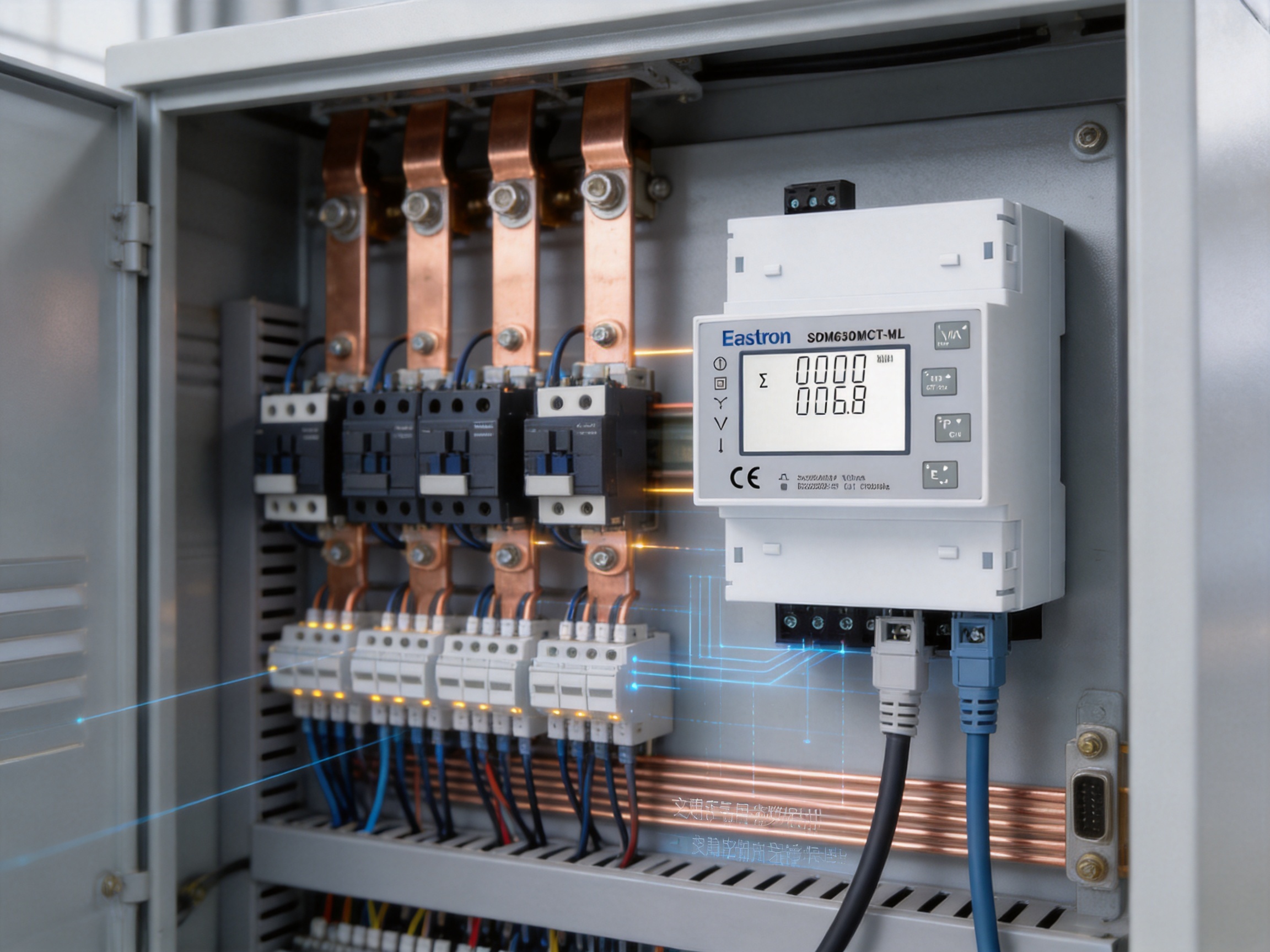
Commercial buildings often contain many electrical loads that operate on different schedules. Offices, retail areas, elevators, HVAC equipment, kitchens, parking facilities, and common areas can all have distinct consumption profiles. The meter can help facility managers monitor these areas through a single multi-load instrument.
Separate measurement channels can support comparisons between tenant areas and shared services. Building operators can identify which systems contribute most to energy use and evaluate whether operating schedules, controls, or maintenance actions are producing measurable improvements.
Industrial facilities may need to monitor several machines, production lines, compressors, pumps, or process sections. The meter’s external CT inputs and multi-load arrangement make it suitable for installing monitoring at a distribution-board level without placing a separate meter on every feeder.
Collected data can support production-energy analysis. Managers may compare energy use per operating hour, batch, product unit, or production shift. Electrical trends can also help identify equipment that is operating outside its normal pattern.
Data centers and technical rooms require continuous awareness of electrical loading. The meter can monitor groups of power distribution circuits, cooling equipment, auxiliary systems, or selected rack-level supplies, depending on the electrical layout and CT arrangement.
Remote Ethernet communication allows data to be forwarded to a monitoring platform without requiring personnel to inspect local displays. This can support centralized alarms, trend analysis, and capacity planning.
Solar power systems, battery systems, and other distributed energy installations require measurement of import, export, generation, and auxiliary consumption. The meter can provide electrical data for selected feeders and loads, subject to the system design and measurement direction requirements.
When integrated with an energy management platform, the measurements can help operators compare generated energy with site consumption and identify periods of excess demand or underused generation capacity.
In multi-tenant buildings, energy measurement may be needed for separate offices, workshops, retail units, or service areas. A multi-load meter can reduce the number of devices required in a central panel while still providing separate readings for each monitored area.
The measurement data can support internal allocation models and operational reporting. Any billing or legal metering application must be assessed against the relevant national requirements, certification rules, and utility regulations.
Charging installations may include multiple charging points or groups of chargers. Measuring their electrical demand separately can help operators understand utilization, manage available capacity, and evaluate the impact of charging schedules.
The meter can also be used to monitor associated equipment, such as ventilation, lighting, or site services, allowing the operator to distinguish charging energy from other consumption.
A conventional design based on one meter per load can be easy to understand, but it may require more panel space, more wiring, more communication addresses, and more commissioning time. The SDM630MCT-ML-TCP offers a more consolidated approach by combining several measurement functions within one device.
Compared with basic kWh meters, it provides a wider range of electrical information. Users can evaluate not only energy consumption but also voltage, current, power, reactive power, power factor, frequency, demand, and harmonic-related conditions.
Compared with meters that use only local displays, Ethernet Modbus TCP makes remote data access more practical. Operators can integrate measurement values into existing supervisory and automation systems instead of relying on manual readings.
Compared with fixed-ratio multi-circuit meters, independently programmable CT ratios provide more flexibility when different circuits have different current capacities. This can reduce the need to select a completely different meter for every installation.
Compared with systems that require extensive terminal wiring, the Easy Click System is designed to accelerate installation and reduce wiring mistakes. This can be particularly beneficial when a project contains many measurement channels or when installation time is limited.
Compared with single-purpose instruments, the multifunction architecture supports broader energy-management objectives. The data can be used for energy audits, operational optimization, maintenance analysis, demand management, and performance verification.
These advantages do not eliminate the need for proper system engineering. The best product choice depends on the required accuracy, network architecture, voltage system, CT arrangement, environmental conditions, and regulatory requirements. However, the combination of multi-load capability, Ethernet communication, flexible CT programming, and rapid connection makes this product well suited to modern energy-monitoring projects.
The manufacturer behind the product is an established developer and producer of electricity meters, power analyzers, current sensors, communication modules, and energy-management solutions. Its product development activities cover hardware, embedded software, communication functions, measurement technology, and system integration.
A broad product portfolio gives the engineering organization experience across many electrical measurement applications. Knowledge gained from single-phase meters, three-phase meters, multifunction instruments, current transformers, gateways, and management systems can contribute to the development of products that work effectively as part of a complete monitoring solution.
The company maintains development teams in China and the United Kingdom and cooperates with universities and technical institutions. This combination of internal development and external cooperation supports continued research into measurement accuracy, communication, embedded control, and new energy applications.
Research and development are especially important for a product such as the SDM630MCT-ML-TCP because the device combines several technical disciplines. The meter must measure electrical quantities accurately, process multiple channels, apply CT ratios correctly, communicate reliably over Ethernet, and operate as part of a wider automation system.
The company also holds patented technologies in software, embedded software, and hardware. Intellectual property in these areas may support distinctive approaches to measurement algorithms, product architecture, communication functions, and installation design.
Product reliability depends on more than component selection. A professional laboratory capable of EMC, LVD, accuracy, and environmental testing allows the manufacturer to evaluate products under a range of electrical and physical conditions.
EMC testing helps assess whether the product can operate reliably in the presence of electromagnetic disturbances and whether it limits unwanted emissions. This is important in industrial environments where motors, drives, contactors, switching equipment, and communication systems may operate nearby.
Low-voltage directive-related testing supports evaluation of electrical safety and insulation-related performance. Accuracy testing verifies measurement behavior against defined standards, while environmental testing helps assess operation under temperature, humidity, and other specified conditions.
Testing according to IEC, EN, GB, and UL-related requirements allows the manufacturer to address different market expectations. The exact suitability of a product for a specific project must still be confirmed through the applicable product documentation and regional approvals.
The company follows an ISO 9001 quality management system. A structured quality system can help standardize design control, supplier management, production procedures, inspection, testing, corrective actions, and customer support.
For electrical measuring instruments, process consistency is essential. Small variations in assembly, calibration, connector quality, or firmware configuration can affect long-term performance. A formal quality framework helps create repeatable production practices and traceable improvement processes.
The company’s production is approved by SGS according to MID standards, reflecting experience with regulated measurement products. MID-related manufacturing capability can be valuable for customers who require controlled production processes and documented conformity for appropriate product categories.
Manufacturing strength also includes the ability to support product development from concept through production. Engineering teams must coordinate circuit design, mechanical construction, firmware, calibration, testing, documentation, and supply-chain planning. This integrated approach helps reduce the gap between a prototype and a dependable commercial product.
Before installation, engineers should confirm the electrical system type. The product supports 3P3W and 3P4W arrangements, while the broader product description also references single-phase configurations. The selected connection method must match the actual network and the wiring diagram supplied for the product version.
The voltage rating should also be checked. The stated rated voltage is 230 V line-to-neutral or 120 V line-to-neutral, with an operational voltage range of 80% to 120% of the rated value. Project designers should verify compatibility with the local supply and the phase-to-neutral or phase-to-phase voltage present at the installation point.
CT secondary compatibility must be confirmed before procurement. The specified inputs are 100 mA or 100 mV. CT primary ratios should be selected according to the expected load current, and each channel should be programmed with the correct value.
CTs should be installed so that their polarity markings and phase designations are consistent. The current transformer on phase one should correspond to the phase-one voltage input, and the same principle should be applied to the remaining phases. Incorrect phase association can affect active power, power factor, and energy direction.
Communication planning should include network topology, IP addressing, Modbus TCP port configuration, polling intervals, data registers, access control, and integration testing. A clear register map and naming convention can simplify the development of SCADA screens and energy dashboards.
After installation, commissioning personnel should compare the meter readings with expected load behavior. A known load or reference instrument may be used for verification. Readings should be checked under different operating conditions, including low load, normal load, and higher demand where safe and practical.
Communication testing should verify that the master can read all required channels, that values are correctly scaled, and that the data refreshes at the expected interval. Any alarms or data-quality flags should be reviewed before the system is placed into routine operation.
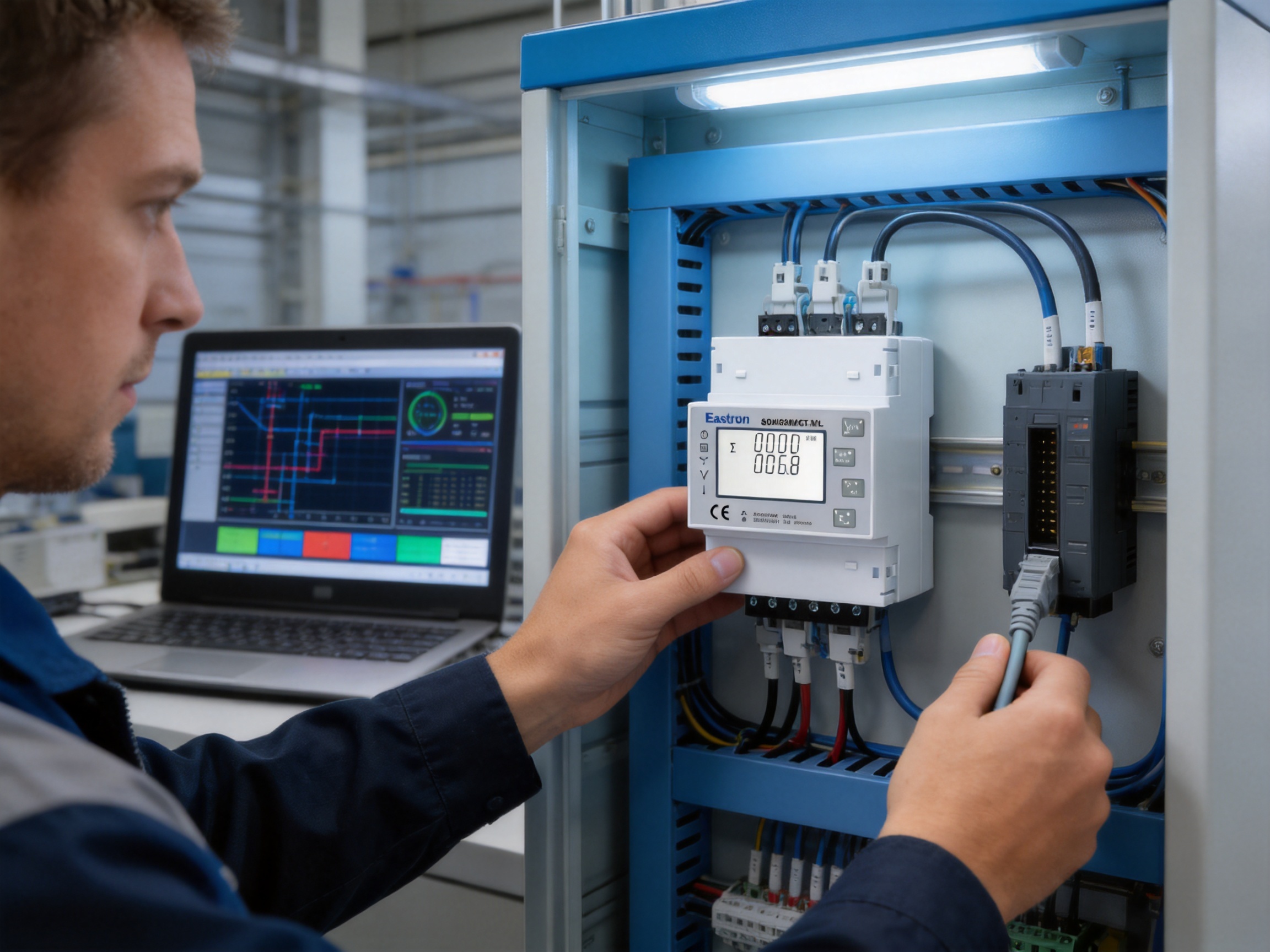
Collecting data is only the first step in an energy-management program. The value of the SDM630MCT-ML-TCP increases when its measurements are organized into useful reports, trends, alerts, and performance indicators.
Daily and weekly energy profiles can reveal operating patterns. If a facility consumes significant energy outside normal working hours, managers can investigate lighting schedules, HVAC controls, standby equipment, or production procedures.
Demand trends can help identify the causes of peak consumption. A site may have acceptable total energy use but experience high short-duration peaks that increase costs or stress electrical infrastructure. Monitoring each load separately helps determine which equipment contributes to these peaks.
Power factor trends can show whether correction equipment is operating correctly or whether a new group of inductive loads is affecting the installation. Harmonic-related information can help guide more detailed power-quality investigations.
Energy intensity indicators can be developed by combining meter data with production output, floor area, occupancy, operating hours, or other relevant variables. This allows managers to assess efficiency more fairly than by reviewing total consumption alone.
Remote readings also support maintenance. A change in current, power factor, or demand may indicate a mechanical problem, blocked filter, worn motor, incorrect control setting, or abnormal operating condition. Energy data does not replace specialized maintenance testing, but it can provide an early indication that further investigation is needed.
The manufacturer supplies products and energy-measurement solutions to customers in Europe, Asia-Pacific, America, the Middle East, and Africa. Experience across different markets exposes the company to varied electrical systems, installation practices, regulatory requirements, and application expectations.
International experience can also strengthen documentation, technical support, and product adaptation. Customers often require assistance with meter selection, CT sizing, communication integration, installation, commissioning, and troubleshooting. A manufacturer with dedicated technical and after-sales teams can provide support throughout the product lifecycle.
Reliability is supported by the combination of laboratory testing, quality-system practices, product engineering, and field experience. For a networked meter, reliability includes not only measurement stability but also communication performance, connector quality, firmware behavior, and the ability to maintain accurate configuration over time.
Long-term serviceability is another consideration. A product used in an energy-management system may become part of a facility’s operational infrastructure. Clear technical documentation, stable communication functions, replacement planning, and responsive support can therefore be as important as the initial purchase price.
Product characteristic |
Specification or capability |
Measurement system |
RMS measurement including harmonics on three-phase AC systems |
Supported phase arrangements |
3P3W and 3P4W; broader product description also references 1P2W and 1P3W applications |
Load configuration |
Four three-phase energy meters or twelve single-phase energy meters |
CT secondary input |
100 mA or 100 mV |
Programmable CT primary |
1 A to 9999 A |
Rated voltage |
230 V line-to-neutral or 120 V line-to-neutral |
Operational voltage |
80% to 120% of rated voltage |
Ethernet communication |
Ethernet Modbus TCP |
Connection concept |
Easy Click plug-in connection with RJ12 socket for fast connection |
Active energy accuracy |
IEC 62053-22 Class 0.5S and IEC 62053-21 Class 1.0 |
Reactive energy accuracy |
IEC 62053-23 Class 2 |
Power accuracy |
0.5% of maximum range |
Frequency accuracy |
0.2% of mid-frequency |
Power factor accuracy |
1% of unity, or 0.01 |
Communication address range |
1 to 247 for the stated Modbus communication environment |
Serial transmission speed for related communications |
1200 bps to 38400 bps |
The most effective energy-monitoring products combine measurement capability with practical installation and system integration. The SDM630MCT-ML-TCP reflects this approach by addressing three common project challenges: the need to monitor multiple loads, the need to connect data to a centralized platform, and the need to complete installation efficiently.
Its four-three-phase or twelve-single-phase arrangement provides a strong balance between channel density and measurement detail. Ethernet Modbus TCP supports integration into current automation infrastructures. Independently programmable CT ratios accommodate different feeder sizes, while the Easy Click connection concept reduces wiring effort.
The product also provides data beyond basic energy totals. Voltage, current, power, power factor, frequency, demand, and harmonic-related measurements support a more complete understanding of facility operation. These values can help organizations move from simple energy reporting toward active energy management.
From a manufacturing perspective, the product benefits from a company focused on electrical measurement, supported by research and development teams, laboratory testing, quality-management processes, international experience, and a broad portfolio of related products. These strengths are important when customers require not only a meter but also dependable technical support and a pathway to expand their monitoring system.
It is an Ethernet Modbus TCP quad-load three-phase energy meter designed for the Easy Click System. It measures electrical parameters on multiple loads and communicates measured data to a TCP/IP master, SCADA system, energy-management platform, or other compatible controller.
It can be configured to operate as four independent three-phase energy meters or twelve independent single-phase energy meters. The appropriate arrangement depends on the electrical system and the selected wiring configuration.
No. It is a multifunction meter. It can measure voltage, current, active power, reactive power, apparent power, power factor, frequency, energy, demand, and harmonic-related parameters, subject to the applicable measurement channel and configuration.
The specified CT secondary inputs are 100 mA or 100 mV. The CT primary ratio can be programmed from 1 A to 9999 A, allowing the meter to match a wide range of feeder sizes.
Yes. The meter supports independently programmable CT ratios, which allows each channel to be configured for the current transformer installed on that specific load.
The SDM630MCT-ML-TCP uses Ethernet Modbus TCP. It can communicate with compatible TCP/IP masters and may be integrated into SCADA, building management, industrial automation, and energy-management systems.
Ethernet allows measured values to be accessed remotely over a network. This can simplify central data collection and reduce the need for personnel to read meters locally. It can also support future expansion when additional monitoring points are added to the same network architecture.
The Easy Click System uses plug-in connectors to simplify installation. It is intended to reduce wiring mistakes and save installation time, with the product information indicating potential installation-time savings of up to 80%.
The stated rated voltage is 230 V line-to-neutral or 120 V line-to-neutral, with an operational range of 80% to 120% of rated voltage. The installation must be checked against the actual electrical system and the product wiring instructions.
Yes. Its multi-load architecture, external CT inputs, true RMS measurement, Ethernet communication, and multifunction data make it suitable for industrial distribution boards, production areas, machinery groups, pumps, HVAC systems, and other commercial or industrial loads.
Any billing, tenant-allocation, or legally regulated metering application must be evaluated against the requirements of the relevant jurisdiction and project. Users should confirm whether the specific product version, certification, installation, and application meet local legal-metrology requirements.
Many modern loads create distorted electrical waveforms. True RMS measurement can provide a more representative value for AC voltage and current than methods designed only for ideal sinusoidal waveforms.
Commissioning should include verification of the wiring system, phase sequence, CT polarity, CT-to-phase matching, CT ratios, rated voltage, communication settings, register scaling, and the direction of measured power. Readings should be compared with expected load behavior or a suitable reference instrument.
The SDM630MCT-ML-TCP is designed for facilities that need detailed electrical information from multiple loads without the complexity of installing a separate meter on every circuit. Its ability to function as four three-phase meters or twelve single-phase meters provides flexibility for commercial, industrial, infrastructure, and energy-management applications.
Ethernet Modbus TCP enables direct connection to modern monitoring and automation systems, while true RMS measurement and multifunction electrical data support deeper analysis of energy use and power conditions. Independently programmable CT ratios allow the device to accommodate different feeder capacities, and the Easy Click plug-in connection concept helps reduce installation effort and wiring risk.
Supported by a manufacturer with experience in electricity measurement, embedded technology, laboratory testing, quality management, and international product supply, the meter represents a practical platform for scalable energy monitoring. It can help organizations improve visibility, simplify data collection, identify operational inefficiencies, and develop more informed energy-management strategies.
IEC 62053-21, Electricity Metering Equipment, Static Meters for Active Energy, Class 1 and Class 2 Requirements.
IEC 62053-22, Electricity Metering Equipment, Static Meters for Active Energy, Class 0.1S, 0.2S and 0.5S Requirements.
IEC 62053-23, Electricity Metering Equipment, Static Meters for Reactive Energy, Class 2 and Class 3 Requirements.
Modbus Organization, Modbus Application Protocol Specification.
International Electrotechnical Commission, Guidance on Electrical Measurement, Power Quality, and Energy-Monitoring Practices.
Product technical information for the SDM630MCT-ML-TCP Ethernet Modbus TCP Quad-Load Three-Phase Energy Meter.
Manufacturer information concerning electricity meters, power analyzers, current sensors, communication modules, laboratory testing, quality management, and energy-measurement solutions.
Your email address will not be published. Required fields are marked *

We develop and produce high performance electricity meters, power analyzers, current sensors, communication modules and management systems.
Address:NO. 52, Dongjin Road, Nanhu, Jiaxing, Zhejiang, China
Copyright @ Eastron Electronic Co., Ltd. All rights reserved
