

 English
 Español
 Deutsch
 中文简体
中文简体

Product Consultation
Your email address will not be published. Required fields are marked *
Europe's Solar and Energy Storage Transition: Transforming the Power System Infrastructure for a Renewable Future
Jul 10,2026
Power Systems Are Becoming “Real-Time Systems”: Why Data Is More Critical Than Electricity
Jul 06,2026
New EPBD Regulations Drive HVAC Energy Transparency and Boost Demand for Smart Meters
Jul 07,2026Content
Modern energy management demands more than a simple reading of consumed kilowatt-hours. Commercial buildings, industrial facilities, renewable energy installations, multi-tenant properties, charging infrastructure, and backup-power systems all require accurate, communicative, compact, and regulation-ready metering. A three phase MID energy meter with dual tariff capability, RS485 Modbus communication, pulse outputs, and DIN rail mounting provides a practical answer to these needs. The SDM630-2T is designed for direct-load applications up to 100A, supports multiple wiring modes, and combines measurement accuracy with communication flexibility for smart power monitoring.
This article focuses on the SDM630-2T Dual Tariff RS485 Modbus DIN Rail Three Phase MID Energy Meter, a multifunction meter developed for three phase and single phase applications where reliable energy data, import/export measurement, and dual power source tracking are essential. The unit is suitable for 3P4W, 3P3W, and 1P2W networks, offering active and reactive energy measurement, voltage, current, frequency, power, power factor, total harmonic distortion, demand information, pulse outputs, and Modbus RTU communication through RS485.
Unlike basic kWh meters that only record total consumption, this product is designed as a compact energy data platform. Its dual tariff function makes it especially useful where energy must be measured separately from two sources, such as grid supply and generator supply. Its bi-directional measurement capability supports imported and exported energy monitoring, which is increasingly important in distributed energy systems and facilities with solar generation, battery storage, or regenerative loads.
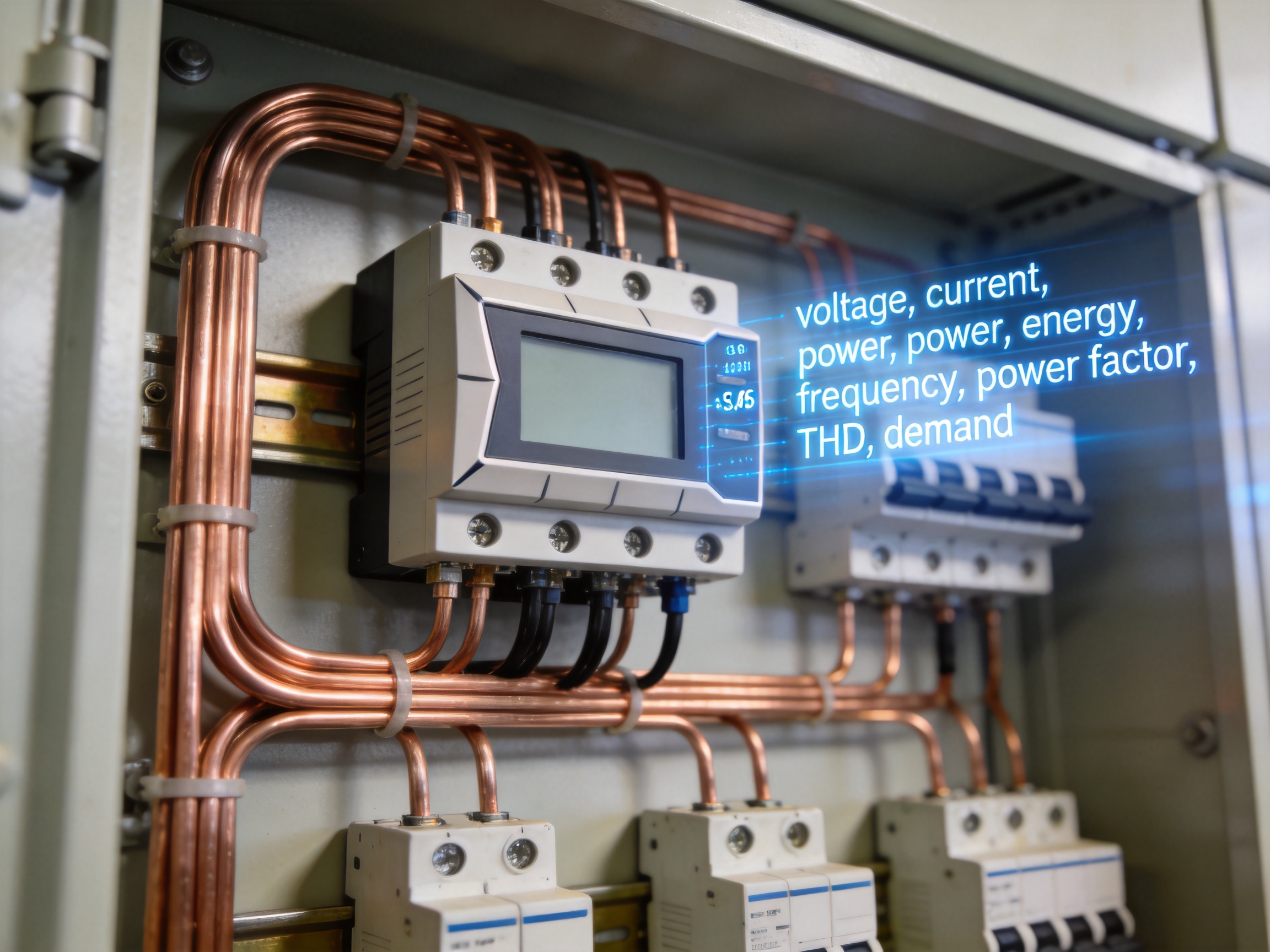
The SDM630-2T is a DIN rail mounted three phase MID energy meter built for direct connection up to a maximum current of 100A. Its 4-module, 72 mm wide enclosure allows efficient installation in distribution boards and electrical panels where space is limited. The product measures RMS values including harmonics on three phase AC systems, supporting 3P, 3P+N, and adaptable operating modes for different power distribution arrangements.
The meter measures and displays key electrical parameters including kWh, kVArh, W, Var, VA, V, A, power factor, THD, frequency, and demand. This makes it more than a revenue or sub-billing meter; it is also an operational monitoring instrument that helps facility managers, electrical contractors, system integrators, and energy service providers understand power quality and load behavior.
Its communication structure includes two pulse outputs and RS485 Modbus RTU. Pulse outputs are valuable for traditional data loggers, building management systems, and energy counters, while Modbus RTU offers structured digital access to measured values for automation systems, gateways, SCADA platforms, and energy monitoring software. The communication address range of 1 to 247, transmission distance up to 1000 meters, and selectable baud rates from 2400 bps to 38400 bps provide flexibility for complex installations.
The product has been assessed and certified according to the requirements of EU Directive 2014/32/EU, known as the Measuring Instruments Directive. MID certification is an important distinction for metering applications where legal confidence, accuracy, and compliance are required. In energy billing, tenant allocation, or regulated measurement environments, the difference between a certified energy meter and a general monitoring device can be decisive.
The meter provides direct current input with rated current of 10A, maximum current of 100A, minimum current of 0.3A, and starting current of 40mA. Its rated voltage is 3 × 230/400V AC, with voltage range from 100 to 277V AC line-to-neutral and 100 to 480V AC line-to-line. This broad voltage compatibility supports many low-voltage distribution applications across commercial and industrial electrical systems.
The unit offers voltage accuracy of ±0.5%, current accuracy of ±0.5%, frequency accuracy of ±0.2%, and power factor accuracy of ±1%. Active power, reactive power, and apparent power are measured with ±1% accuracy. Active energy performance follows Class 1/0.5 under IEC 62053-21 and Class B/C under EN50470-3:2022, while reactive energy follows Class 2 under IEC62053-23. These specifications position the meter for dependable, regulation-conscious energy measurement.
Feature |
Specification |
Practical Value |
Network Types |
3P4W, 3P3W, 1P2W |
Supports different distribution configurations with one meter platform. |
Maximum Direct Load |
100A |
Reduces the need for current transformers in many small and medium loads. |
Mounting Width |
4 modules, 72 mm |
Saves panel space and simplifies DIN rail installation. |
Communication |
RS485 Modbus RTU and pulse outputs |
Integrates with BMS, SCADA, data loggers, gateways, and monitoring systems. |
Tariff Function |
Two tariffs for dual power source measurement |
Separates energy from grid and generator or other source combinations. |
Energy Direction |
Bi-directional import/export measurement |
Useful for solar, storage, regenerative loads, and sub-metering. |
Certification |
MID assessed under EU Directive 2014/32/EU |
Supports compliant metering and confidence in measured energy values. |
Dual tariff functionality is one of the defining advantages of the SDM630-2T. In many electrical installations, energy consumption is not supplied by a single source at all times. Facilities may rely on the utility grid during normal operation and switch to a generator during outages. Some sites may combine grid supply with renewable energy, backup power, or controlled source switching. Measuring only total consumption can hide the true cost, operating pattern, or performance of each source.
With dual tariff measurement, the meter can separate energy values associated with two power sources. In the product description, this is referred to as dual source measurement, making the meter suitable for recording energy from both grid and generator. This is valuable for cost allocation, fuel analysis, generator runtime evaluation, power reliability reporting, and energy strategy planning.
For example, a commercial building equipped with backup generators may need to know how much electricity was supplied by the grid and how much was supplied by the generator during an outage. Without dual tariff measurement, building operators may need additional meters or manual calculations. With a dual tariff meter, this separation is integrated into the metering device itself, helping reduce system complexity.
In industrial environments, dual tariff capability can support operational decision-making. If generator energy is significantly more expensive than grid energy due to fuel and maintenance costs, accurate tracking helps managers evaluate the economic impact of outages or peak shifting. If a site uses two sources under different tariff structures, the meter can help reveal how consumption is distributed and where optimization is possible.
Many competitor meters in the same general category provide basic three phase kWh measurement, but the SDM630-2T combines several advanced functions in one compact device. The first competitive advantage is its direct 100A load capacity. Direct connection can reduce installation cost and simplify wiring compared with systems that require external current transformers for comparable load levels. Fewer components can also mean fewer wiring errors and easier commissioning.
The second advantage is multi-network compatibility. Support for 3P4W, 3P3W, and 1P2W operation allows the meter to be used across different sites and project types. Contractors and distributors benefit from stocking a versatile model rather than multiple narrowly configured meters. System integrators benefit from a consistent communication and data format across installations.
The third advantage is the combination of MID certification and advanced measurement features. Some meters are communication-rich but not suitable for certified billing-related applications. Others are certified but limited in monitoring functionality. This meter bridges the gap by providing legal confidence for energy measurement while also offering multi-parameter data for energy management.
The fourth advantage is dual tariff, dual power source capability. Many standard DIN rail meters may offer one tariff or require external systems to separate source-based consumption. The SDM630-2T integrates the capability into the product design, helping reduce additional hardware and simplifying data interpretation.
The fifth advantage is bi-directional measurement. As electrical systems become more dynamic, import-only metering is often insufficient. Facilities with photovoltaic systems, battery energy storage, elevators with regenerative drives, or bidirectional power flows need a meter that can register imported and exported energy. Bi-directional functionality helps support these newer power architectures.
The sixth advantage is communication flexibility. RS485 Modbus RTU remains one of the most widely used field communication methods in industrial automation and energy monitoring. With address settings from 1 to 247, long-distance communication up to 1000 meters, selectable speed, parity, and stop bits, the meter is compatible with many network designs and control systems.
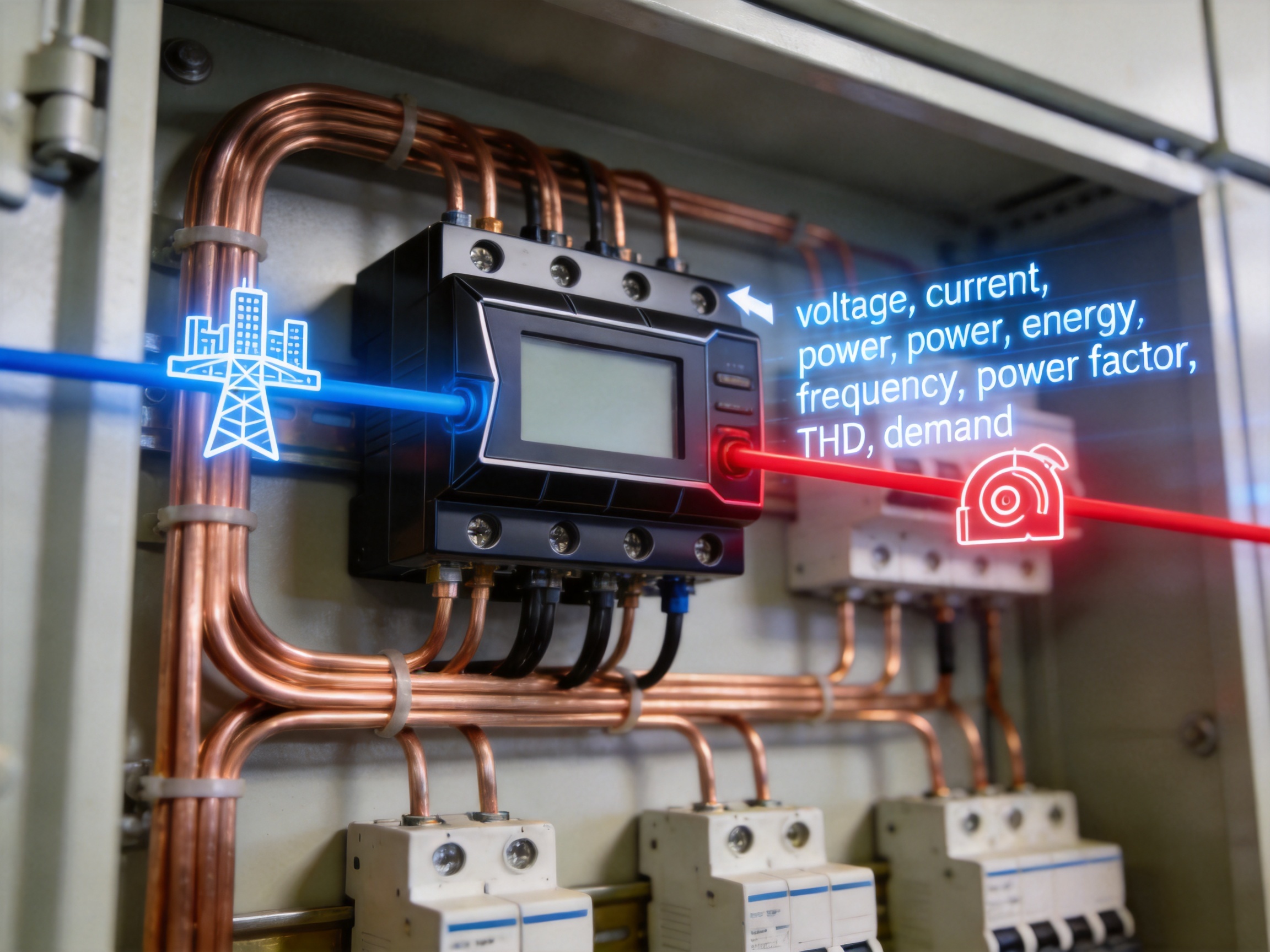
Energy management is not only about total kWh. Facility managers also need to understand demand, load balance, power quality, and equipment behavior. The SDM630-2T supports measurement of active energy, reactive energy, active power, reactive power, apparent power, voltage, current, power factor, frequency, total harmonic distortion, and demand. These values help users identify inefficiencies and operational risks.
Voltage and current measurements help operators detect phase imbalance, overload conditions, voltage deviations, and abnormal load changes. Power factor readings help identify sites that may be paying penalties or operating inefficiently due to reactive loads. Frequency monitoring helps confirm supply stability, especially when generator operation is involved. THD measurement provides insight into harmonic distortion, which can affect transformers, motors, cables, and sensitive electronics.
Demand measurement is particularly valuable in commercial and industrial energy cost control. The meter can measure maximum demand current over preset periods of up to 60 minutes. Demand values help users understand peak load behavior, evaluate capacity requirements, and identify opportunities for load scheduling or demand reduction.
By making multiple electrical parameters available through display and RS485 Modbus, the meter supports both local inspection and remote analytics. A technician can view data on site, while a building management system or energy platform can collect data continuously for trends, alarms, reports, and dashboards.
RS485 Modbus RTU is a practical and mature communication solution for energy metering. It is robust, widely supported, and suitable for multi-drop networks over long cable runs. The SDM630-2T provides RS485 Modbus communication with address range from 1 to 247 and a maximum transmission distance of 1000 meters. This allows many meters to be connected across a building or facility and read by a central gateway, PLC, BMS controller, or data acquisition system.
The transmission speed range from 2400 bps to 38400 bps enables installers to balance communication speed and network reliability. Lower speeds may be preferred for long cable distances or electrically noisy environments, while higher speeds may be selected for faster polling in compact networks. Parity options include none, odd, and even, with none as default. Stop bits can be set to 1 or 2, and response time is less than 100 milliseconds.
These communication settings are important because energy metering networks are rarely isolated. They often include meters from different panels, long cable runs, electrical noise from drives and motors, and multiple devices sharing a communication bus. A flexible communication configuration improves the chance of smooth integration and long-term reliability.
Modbus also supports scalable energy management. A single meter can provide local monitoring, while dozens or hundreds of meters can feed a centralized platform for building-wide or site-wide energy analysis. The SDM630-2T is therefore suitable not only as a standalone meter but also as part of larger systems and solutions.
The meter includes two pulse outputs for imported and exported energy. Pulse outputs remain widely used because they are simple, dependable, and compatible with many older and modern data collection devices. They can be connected to pulse counters, data loggers, automation input modules, or monitoring gateways.
In practical installations, pulse outputs can provide an independent energy signal even when digital communication is not required or when a simple metering interface is preferred. They can also provide redundancy. For example, RS485 Modbus may be used for detailed real-time measurement, while pulse outputs feed an existing billing or energy recording device.
Having both pulse outputs and Modbus communication gives the meter a broader application range than devices that offer only one interface. This dual-interface design can reduce the need to replace existing monitoring infrastructure during upgrades.
Panel space is valuable. The SDM630-2T uses a 4-module, 72 mm wide DIN rail enclosure, making it compact for a three phase direct-connected meter. Its standard DIN rail mounting format simplifies installation in distribution boards, electrical cabinets, machine panels, and sub-metering enclosures.
For electrical contractors, installation efficiency affects project cost and delivery time. A compact direct-connected meter can be installed without the additional space, wiring, and commissioning steps associated with current transformer installations for loads up to 100A. The meter’s ability to work with several wiring configurations also helps contractors adapt to different site conditions.
Compact design also benefits retrofit projects. Existing panels may have limited available space, and replacing or adding meters can be difficult when enclosure capacity is constrained. A 72 mm wide meter helps preserve space for breakers, surge protection, terminal blocks, communication modules, and other control equipment.
MID certification is a critical product attribute. The Measuring Instruments Directive establishes requirements for measuring instruments used in regulated applications in the European market. A meter assessed and certified under EU Directive 2014/32/EU provides confidence that it has met defined requirements for measurement performance and conformity.
For users, this matters because energy data is often connected to money, accountability, and compliance. In tenant billing, cost allocation, energy performance contracts, and shared infrastructure, disputes can arise if measurement accuracy is questioned. A MID-certified meter helps reduce uncertainty and supports transparent energy accounting.
The SDM630-2T is not only certified but also multifunctional. This combination is important because many projects require both compliance and data richness. Users should not have to choose between certified energy measurement and smart communication. This meter supports both priorities.
Commercial buildings often require sub-metering for tenants, floors, mechanical systems, lighting, data rooms, electric vehicle infrastructure, and backup power. The SDM630-2T provides a compact and communicative solution for these applications. Its MID certification supports credible energy allocation, while RS485 Modbus allows data to be integrated into building management systems.
In a multi-tenant office building, each tenant’s three phase distribution board may be equipped with a meter to track consumption. The 100A direct load capacity can suit many tenant-level circuits. Modbus communication can deliver readings to a central energy platform, enabling monthly reports and operational analysis.
For mechanical systems such as HVAC equipment, pumps, or ventilation units, the meter can provide not only energy consumption but also power, current, power factor, and demand. Facility managers can use these values to identify abnormal operating patterns, compare equipment efficiency, and support maintenance decisions.
Where a building has generator backup, dual tariff functionality can separate grid and generator energy. This helps operators understand the real energy contribution of backup systems and supports cost tracking for fuel-based electricity production.
Industrial sites need reliable metering for production lines, motor control centers, workshops, compressed air systems, process equipment, and auxiliary services. The SDM630-2T is useful for these environments because it provides robust measurement and communication in a compact DIN rail format.
Industrial energy use is often dynamic. Loads change with shifts, production batches, equipment starts, and process conditions. Measuring only monthly utility consumption does not provide enough detail. Sub-metering with multifunction meters gives plant managers better visibility into where energy is used and when peaks occur.
Power factor and reactive energy measurement are especially relevant in industry because motors, transformers, and drives can influence reactive power consumption. Monitoring these values helps determine whether power factor correction is needed or whether existing correction equipment is working properly.
THD measurement also has industrial value. Harmonics can be produced by variable frequency drives, rectifiers, welding equipment, UPS systems, and other nonlinear loads. While a DIN rail energy meter is not a full power quality analyzer, THD information provides a useful indication of harmonic conditions and can help trigger deeper investigation when needed.
As renewable generation and distributed energy resources grow, meters must handle power flows in more than one direction. The SDM630-2T supports bi-directional measurement of imported and exported energy, making it suitable for installations where electricity may be consumed from the grid and also exported back to the grid or another system.
Solar photovoltaic systems are a common example. A facility with rooftop solar may import power during low generation periods and export power when generation exceeds demand. Bi-directional measurement helps track both values and supports energy balance analysis.
Battery energy storage systems also create more complex energy flows. They may charge from the grid, discharge to loads, interact with solar generation, or provide peak shaving. Accurate import/export metering helps operators understand the behavior and benefit of storage assets.
In systems that use both grid and generator power, the dual tariff feature adds another layer of clarity. Users can understand not only direction of energy flow but also source-based energy allocation.
The quality of an energy meter depends not only on its design but also on the manufacturing system behind it. Eastron Electronic Co., Ltd. is headquartered in Jiaxing, China, near Shanghai, Hangzhou, and Jiangsu, and operates as a high-tech manufacturer and supplier of electricity products and energy measurement solutions. The company develops and produces electricity meters, power analyzers, current sensors, communication modules, and management systems.
The company’s strength is supported by ongoing research and development. Development teams in China and the United Kingdom contribute to product innovation, while cooperation with universities and institutions helps bring advanced technologies into practical metering products. This R&D structure is important in a market where energy systems are becoming more digital, more connected, and more compliance-driven.
Manufacturing quality is reinforced by a professional laboratory capable of performing EMC, LVD, accuracy, and environmental tests according to IEC, EN, GB, and UL standards. This internal testing capability supports product reliability before products reach customers. It also helps accelerate development cycles, because engineering teams can validate designs, detect weaknesses, and improve performance using controlled test procedures.
The company follows the ISO 9001 quality management system, and its production is approved by SGS according to MID standards. These process controls help ensure that product quality is not limited to prototypes or sample units, but is maintained across production batches. For customers, stable manufacturing quality is essential because meters are often installed in large quantities and expected to operate for years.
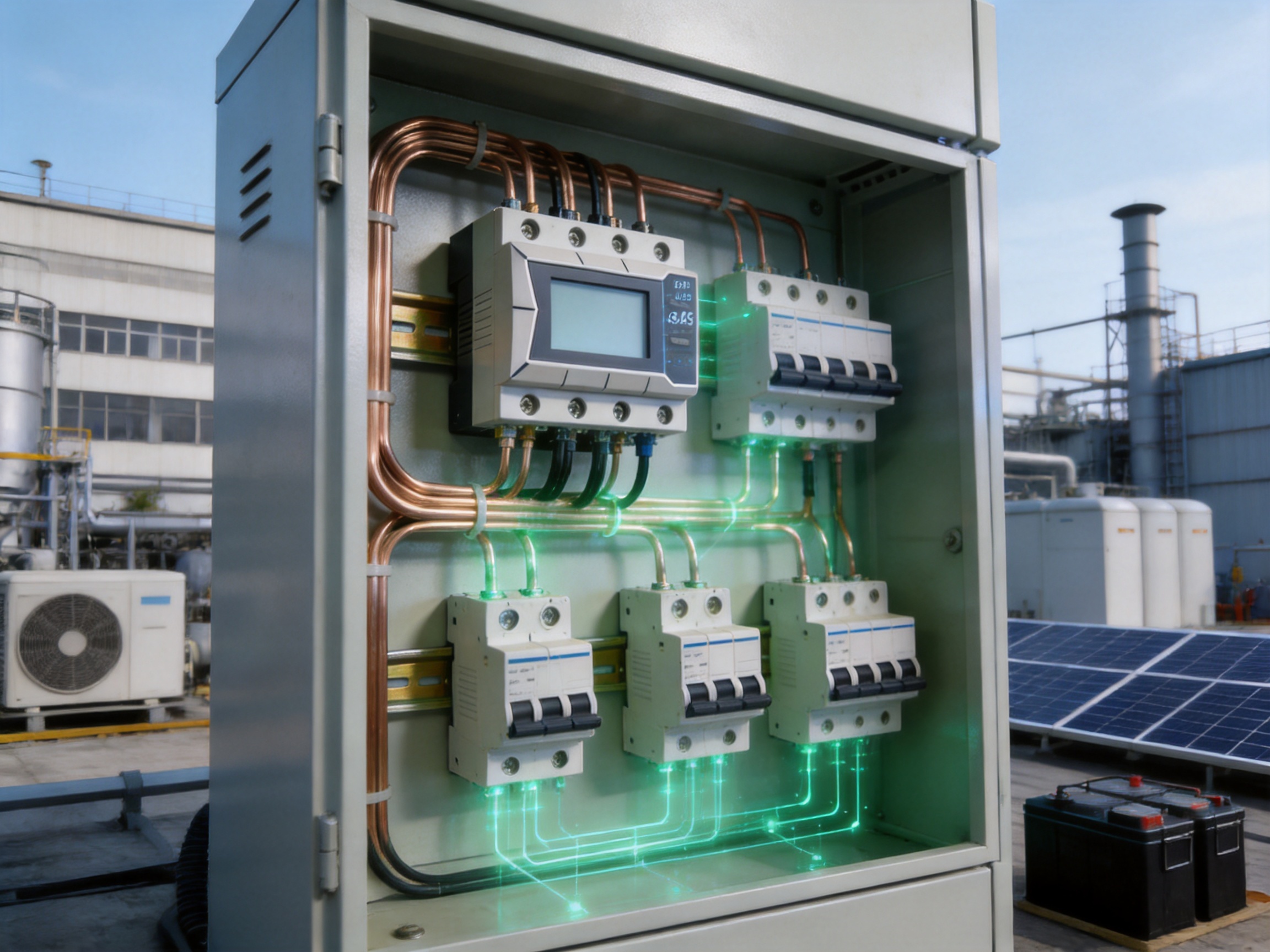
Energy meters must perform accurately in real-world electrical environments. They may be exposed to electromagnetic interference, temperature variation, voltage fluctuation, load changes, communication noise, and mechanical handling. A strong testing process is therefore essential. The company’s laboratory capability for EMC testing helps evaluate resistance to electromagnetic disturbances and emissions. This is especially important in industrial and commercial panels where drives, contactors, relays, and switching power supplies are common.
LVD testing supports electrical safety by addressing low-voltage equipment requirements. Accuracy testing confirms measurement performance against relevant standards, while environmental testing evaluates how products behave under conditions such as temperature and humidity stress. Together, these tests help create a more dependable meter.
Competitor products may claim similar functions on a datasheet, but the real difference often appears in long-term stability, batch consistency, communication reliability, and compliance documentation. A manufacturer with its own testing facilities and standards-based quality system can provide stronger assurance to customers, distributors, and project engineers.
Patented technologies in software, embedded software, and hardware also contribute to product differentiation. Modern energy meters rely on firmware, measurement algorithms, communication stacks, memory management, and user interfaces. Reliable embedded design is essential for accurate measurement, stable communication, and long service life.
The SDM630-2T is not an isolated device; it fits into a broader ecosystem of energy measurement solutions. The manufacturer’s product range includes electricity meters, power analyzers, current sensors, communication modules, and management systems. This system-level experience is important because successful energy monitoring requires compatibility between meters, communication infrastructure, software, installation practices, and user requirements.
A company that understands complete energy measurement systems can design meters that are easier to integrate. RS485 Modbus, pulse outputs, compact DIN rail mounting, multi-parameter measurement, and certified accuracy all reflect practical project needs. The product is not merely a component; it is a data source for broader energy intelligence.
System-level thinking also benefits technical support. When customers deploy meters in networks, they may need guidance on wiring, communication settings, addressing, monitoring platforms, and troubleshooting. A manufacturer with experience in complete solutions is better positioned to support successful implementation.
When selecting a three phase energy meter, buyers often compare price, certification, current capacity, communication, size, and functionality. Some low-cost meters appear attractive at first but may lack MID certification, dual tariff capability, bi-directional measurement, or robust communication settings. Others may be physically larger, require current transformers for moderate loads, or provide limited measurement values.
The SDM630-2T offers a balanced value proposition. It provides direct 100A metering, compact DIN rail design, certified energy measurement, import/export capability, two pulse outputs, RS485 Modbus, and dual source tariff measurement. This combination can reduce total system cost even if the unit price is higher than a basic meter, because it may eliminate extra devices, reduce installation labor, and simplify data collection.
For projects requiring communication, choosing a meter without Modbus can lead to additional gateway hardware or manual reading. For projects requiring source separation, choosing a single-tariff meter may require duplicate metering or external logic. For projects requiring certified measurement, choosing a non-certified device may create compliance and billing risk. The SDM630-2T addresses these issues in a single product.
Before selecting the SDM630-2T, users should verify the electrical system type, load current, voltage level, communication requirements, certification needs, and tariff logic. The meter supports 3P4W, 3P3W, and 1P2W systems, with rated voltage of 3 × 230/400V AC and voltage ranges suitable for many low-voltage applications. The maximum direct current is 100A, making it appropriate for many distribution and sub-metering circuits.
If the load exceeds 100A, a current transformer meter may be more appropriate. If the project requires M-Bus rather than Modbus, related variants in the product family may be considered. If a digital input function is needed, another product variant may suit the requirement. The SDM630-2T is specifically strong where RS485 Modbus, pulse outputs, MID certification, direct 100A measurement, and dual tariff source separation are needed together.
Communication planning is also important. Installers should assign unique Modbus addresses, select baud rate and parity settings compatible with the master device, and use appropriate RS485 wiring practices. For long communication runs, cable type, termination, grounding, and electrical noise should be considered carefully.
The value of a smart energy meter is measured not only by its specification but also by the decisions it enables. By providing accurate energy data and multiple electrical parameters, the SDM630-2T helps users identify inefficient loads, compare consumption patterns, allocate costs fairly, and monitor power source behavior.
In commercial buildings, better metering can encourage tenants and departments to reduce waste. In industrial facilities, sub-metering can reveal energy-intensive processes and support continuous improvement. In generator-backed facilities, source-separated energy values can clarify the real cost of backup operation. In renewable systems, import/export measurement can support performance tracking and energy balancing.
The meter also contributes to digital transformation. Energy data can be collected through Modbus and integrated into dashboards, cloud platforms, local servers, or building automation systems. Once data is visible, users can create alarms, reports, performance indicators, and maintenance insights.
The manufacturer’s products and services have been supplied to more than 50 countries across Europe, Asia-Pacific, America, the Middle East, and Africa. This international market experience matters because metering products must meet different installation practices, electrical environments, compliance expectations, and customer requirements.
Global use also encourages product maturity. Feedback from multiple markets helps refine design, documentation, support processes, and product options. A meter intended for international installations must be practical, reliable, and adaptable.
The company’s commitment to high-quality products and first-class service is supported by professional technical and after-sales teams. For customers, technical support can be as important as hardware performance, especially in projects involving communication integration, meter networks, and compliance documentation.

The meter is designed to measure and monitor three phase or single phase electrical energy in commercial, industrial, renewable, and sub-metering applications. It records active and reactive energy, supports imported and exported energy measurement, and provides electrical parameters such as voltage, current, power, power factor, frequency, THD, and demand.
The dual tariff function allows energy measurement to be separated between two sources or tariff conditions. A common application is measuring energy from both the utility grid and a generator. This helps users understand source-based energy consumption, operating cost, and backup power usage.
Yes. The SDM630-2T supports direct load measurement up to a maximum current of 100A. This can simplify installation and reduce the need for external current transformers in suitable applications.
The meter can work with 3P4W, 3P3W, and 1P2W systems. This flexibility allows it to be used in different distribution configurations and project environments.
Yes. It includes RS485 Modbus RTU communication and two pulse outputs. Modbus allows digital integration with building management systems, SCADA systems, gateways, data loggers, and energy monitoring platforms.
MID certification indicates that the meter has been assessed according to EU Directive 2014/32/EU. This provides confidence for regulated energy measurement and applications where billing, cost allocation, or compliance is important.
Compared with basic kWh meters, it offers multi-parameter measurement, bi-directional energy monitoring, dual tariff source separation, RS485 Modbus communication, two pulse outputs, compact DIN rail mounting, and MID-certified performance.
Yes. Its bi-directional import/export measurement makes it suitable for systems involving solar generation, battery storage, or other distributed energy resources where power may flow in both directions.
The manufacturer operates a professional laboratory capable of EMC, LVD, accuracy, and environmental testing according to IEC, EN, GB, and UL standards. It follows ISO 9001 quality management and has production approved by SGS according to MID standards.
It can be installed in DIN rail distribution boards, commercial electrical panels, industrial control cabinets, tenant metering panels, generator monitoring systems, renewable energy installations, and smart energy monitoring networks.
The SDM630-2T Dual Tariff RS485 Modbus DIN Rail Three Phase MID Energy Meter is a compact yet powerful solution for modern energy measurement. It combines direct 100A capacity, multi-network compatibility, MID certification, dual tariff source measurement, bi-directional energy monitoring, pulse outputs, and RS485 Modbus communication. These features make it suitable for commercial buildings, industrial facilities, generator-backed systems, renewable energy installations, and smart sub-metering applications.
Its advantage over many competitor products lies in integration. Instead of offering only basic energy reading, it provides a broad set of electrical data, certified measurement confidence, communication flexibility, and practical installation benefits. The dual source tariff function is especially valuable for facilities that need to distinguish between grid and generator energy or manage multiple supply conditions.
Behind the product is a manufacturer with strong R&D capability, international market experience, professional laboratory testing, ISO 9001 quality management, SGS-approved MID production, and expertise across electricity meters, power analyzers, current sensors, communication modules, and energy management systems. These strengths support not only product performance but also long-term reliability and project success.
For users seeking an accurate, communicative, compact, and regulation-ready three phase energy meter, the SDM630-2T offers a well-balanced solution. It helps transform electrical consumption from a simple number into actionable energy intelligence, supporting better cost control, operational visibility, compliance, and smarter energy management.
European Parliament and Council. Directive 2014/32/EU on the Harmonisation of the Laws of the Member States Relating to the Making Available on the Market of Measuring Instruments.
International Electrotechnical Commission. IEC 62053-21, Electricity Metering Equipment: Particular Requirements for Static Meters for Active Energy.
International Electrotechnical Commission. IEC 62053-23, Electricity Metering Equipment: Particular Requirements for Static Meters for Reactive Energy.
European Committee for Standardization. EN 50470-3:2022, Electricity Metering Equipment: Particular Requirements for Static Meters for AC Active Energy.
International Organization for Standardization. ISO 9001, Quality Management Systems Requirements.
Modbus Organization. Modbus Application Protocol and Serial Line Implementation Guide.
Your email address will not be published. Required fields are marked *

We develop and produce high performance electricity meters, power analyzers, current sensors, communication modules and management systems. China Custom Smart Meters Manufacturers and Factory
Address:NO 52, Dongjin Road, Nanhu, Jiaxing, Zhejiang, China
Copyright @ Eastron Electronic Co., Ltd. All rights reserved Electricity Meters Manufacturers
