

 English
 Español
 Deutsch
 中文简体


Product Consultation
Your email address will not be published. Required fields are marked *
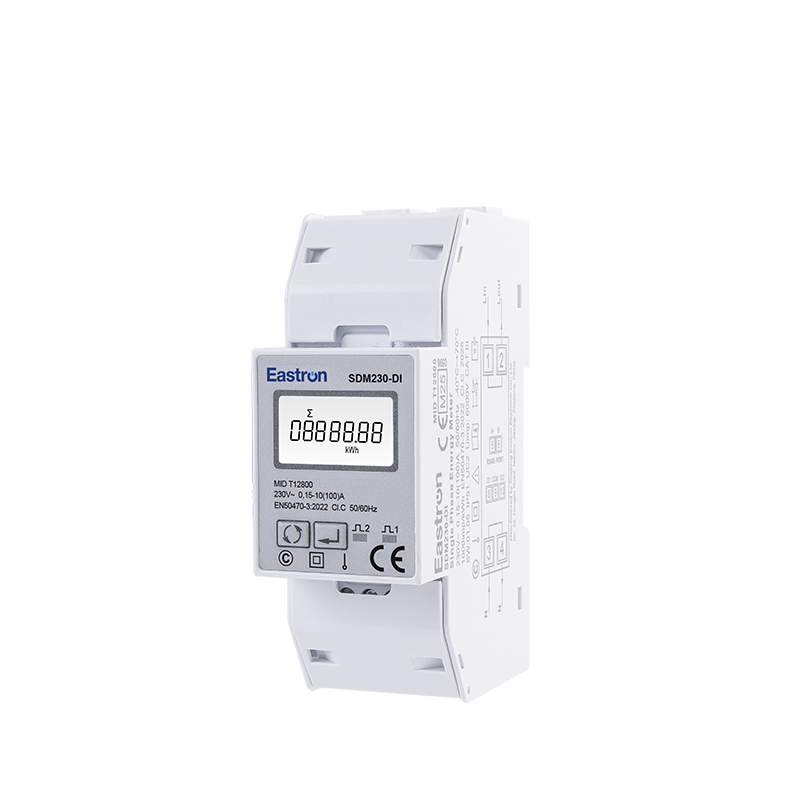
MID/ UL Approved Single Phase Din Rail Type Multi-function Energy Meter for EV Charging Metering
Nov 24,2022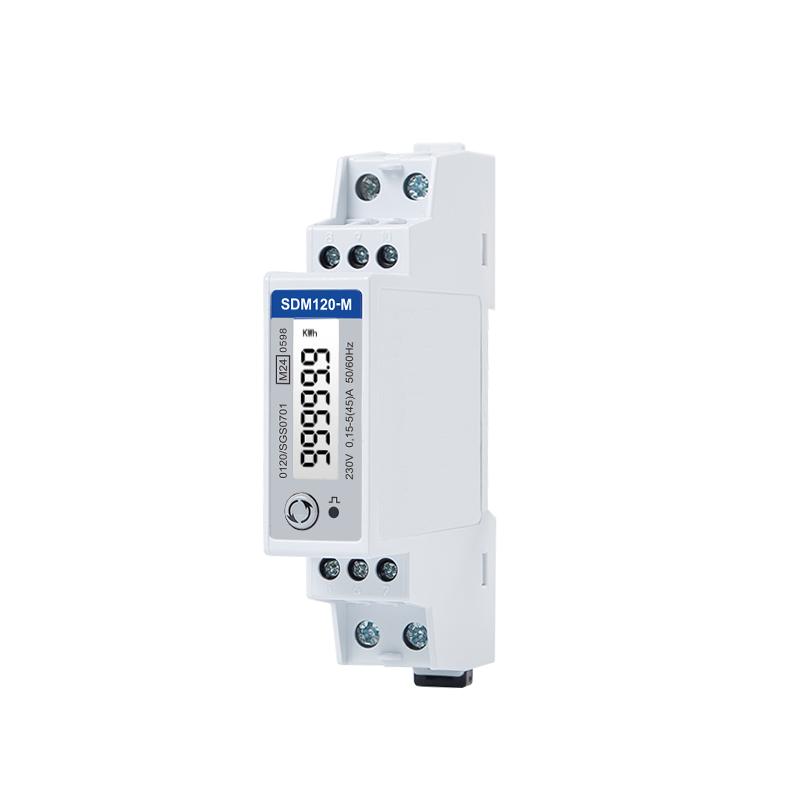
MID Din Rail Type Single Phase Multi-function Energy Meter for EV Charging Metering
Jul 26,2022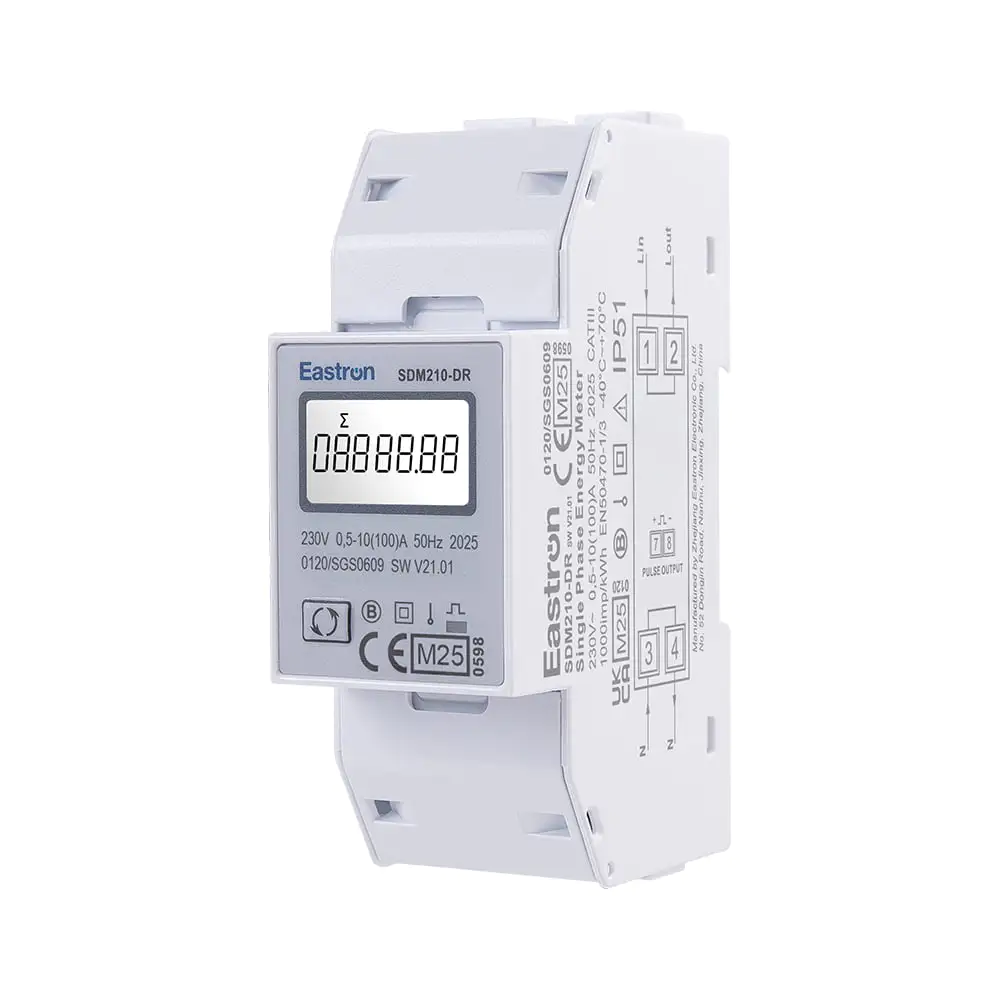
Resettable Din Rail Single Phase Electronic Energy meter with Pulse Output
Aug 11,2022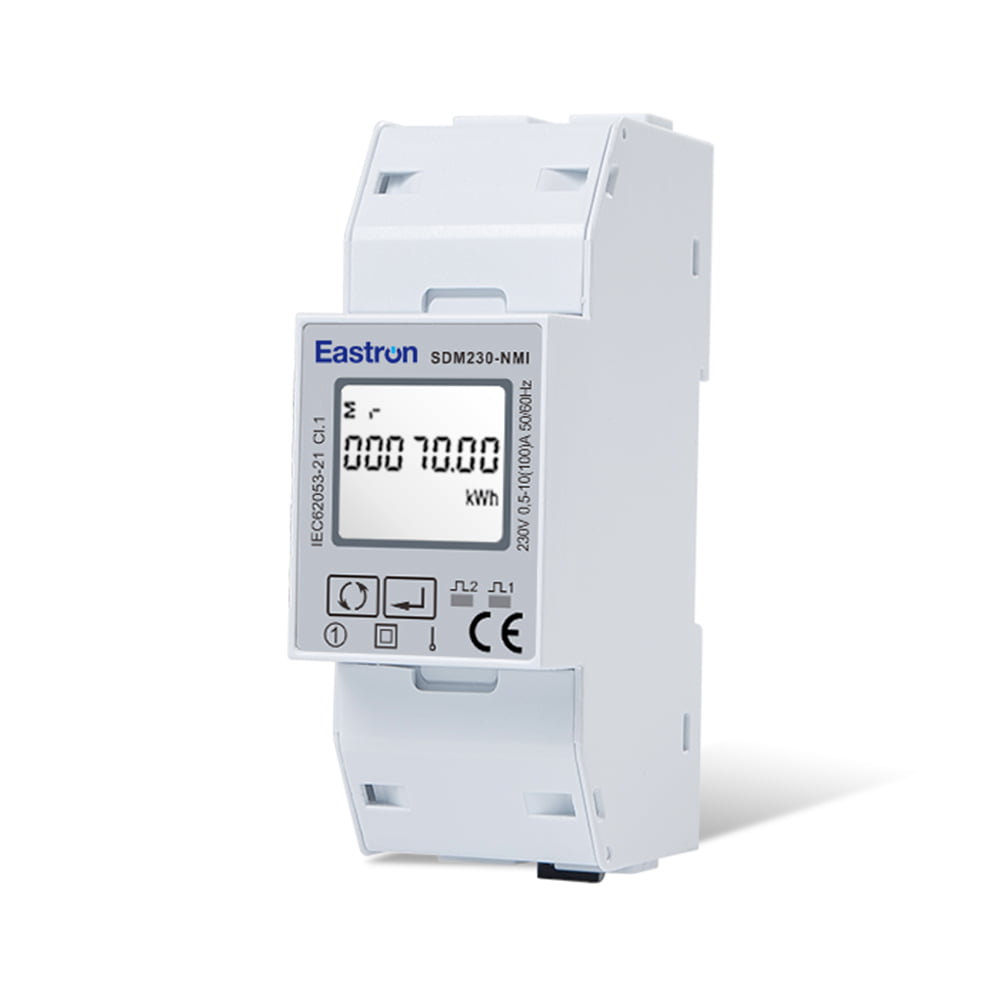
Din Rail Single Phase Multi-function Solar PV/Zero Export Meter with 50mS Data Update
Nov 24,2022
Dual RS485 Din Rail Single Phase Multi-function Solar PV/Zero Export Meter with 50mS Data Update for VPP Solution
Nov 24,2022
CT Type RS485 Modbus Single Phase Din Rail Energy Meter for PV Metering
May 30,2025Content
Modern electrical installations demand more than a simple count of kilowatt-hours. Residential distribution boards, solar photovoltaic systems, electric vehicle charging points, light industrial panels, utility sub-metering projects, and energy management systems all require compact, reliable, and informative metering. A single-phase multi-function energy meter with pulse output answers this demand by combining accurate energy measurement, electrical parameter monitoring, bidirectional measurement capability, and simple integration into monitoring equipment.
The SDM120-P Din Rail Single Phase Multi-function Energy Meter with Pulse Output is designed for single-phase two-wire networks and direct-connected loads up to 45A. Its 1-module, 18mm-wide DIN rail housing makes it especially valuable where panel space is limited. Despite its compact size, it measures active energy, reactive energy, voltage, current, active power, reactive power, apparent power, power factor, frequency, demand, and other important electrical values. It also provides two pulse outputs for import and export energy, making it suitable for energy recording, remote counting, photovoltaic monitoring, and distributed consumption analysis.
This article explains the product’s technical strengths, application value, competitive advantages, and the manufacturing capabilities behind it. It also explores why compact multi-function meters have become increasingly important in modern electrical infrastructure, how pulse output supports practical energy data collection, and how advanced quality control contributes to long-term reliability.
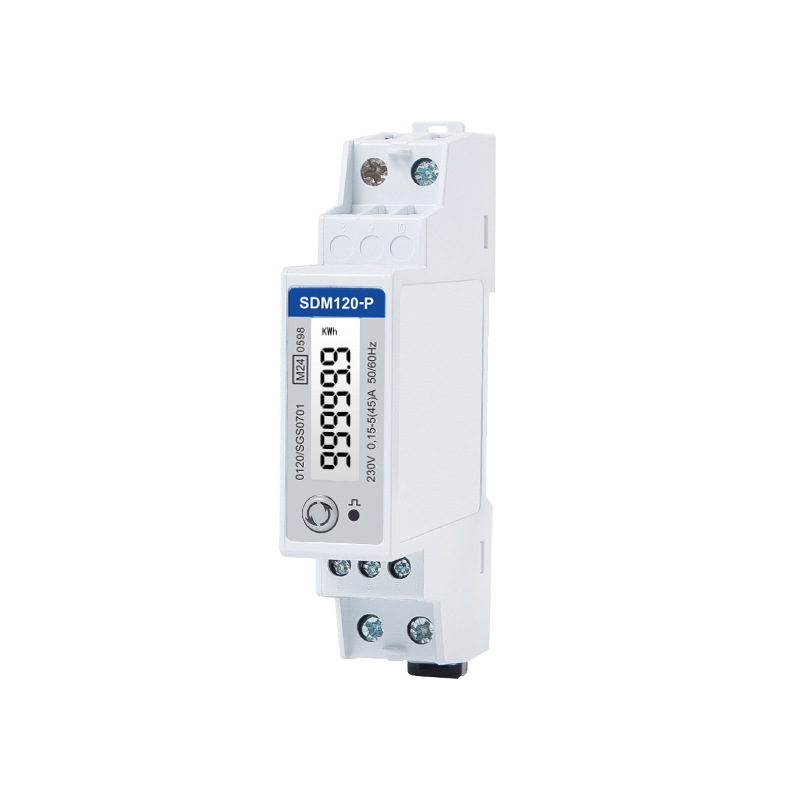
Din Rail Single Phase Multi-function energy meter with Pulse Output
The SDM120-P is a DIN rail mounted single-phase multi-function energy meter built for 1P2W electrical systems. It is intended for direct load connection, with a rated current of 5A and a maximum current of 45A. This means it can be installed in many residential, commercial, and light industrial circuits without external current transformers, simplifying wiring and reducing installation cost.
The product is compact, occupying only one DIN module with an 18mm width. In practical distribution boards, every millimeter matters. Many electrical panels are already crowded with circuit breakers, residual current devices, surge protection devices, contactors, communication modules, and controllers. A narrow meter helps designers preserve space while still obtaining detailed energy data.
Its backlit LCD display allows local reading of electrical values even in low-light cabinet environments. In many metering applications, technicians need to check voltage, current, power, or accumulated energy directly at the panel. A clear display improves commissioning efficiency and reduces the need for additional handheld instruments during routine inspection.
The meter measures active energy and reactive energy and supports bidirectional measurement. Bidirectional measurement is increasingly important because electrical installations no longer consume power in only one direction. Solar PV inverters, battery storage systems, micro-generation equipment, and EV charging systems may create complex import and export energy flows. A meter that can distinguish between directions provides more meaningful energy information.
The SDM120-P model provides two pulse outputs for import and export energy. Pulse output is a proven and widely used method of communicating energy consumption to external devices such as data loggers, building management systems, programmable logic controllers, energy gateways, or monitoring platforms. It is simple, electrically robust, and easy to integrate in applications where full digital communication is not required.
The meter uses RMS measurement on a single-phase AC system, specifically 1P+N. RMS measurement is important because real electrical loads are often not purely resistive. Many modern devices include switched-mode power supplies, motor drives, inverters, LED drivers, and electronic chargers. These loads may create waveform distortion, and RMS measurement provides a more meaningful representation of actual electrical conditions than simple average-based measurement.
The product measures voltage with an accuracy of ±0.5%, current with ±0.5%, frequency with ±0.2%, power factor with ±1%, and active, reactive, and apparent power with ±1%. Active energy is specified as Class 0.5/1 according to IEC 62053-21 and Class C/B according to EN 50470-3:2022. Reactive energy is specified as Class 2 according to IEC 62053-23.
The rated voltage is 230V, and the operational voltage range is 85 to 276V AC. This wide operating range supports stable operation in environments where supply voltage may fluctuate. The minimum current is 0.15A, and the starting current is 40mA, allowing the meter to begin registering low levels of consumption. Such sensitivity is valuable in standby load monitoring, small equipment circuits, and energy-saving projects where low-load behavior matters.
The maximum direct current capacity of 45A makes the meter suitable for many common single-phase loads. Direct connection reduces installation complexity because no external current transformer selection, wiring, ratio programming, or CT polarity verification is needed. This is especially beneficial for installers working in compact consumer units or small distribution panels.
Item |
Specification |
Practical Value |
System Type |
Single phase, 1P2W, 1P+N |
Suitable for common residential and light commercial circuits |
Mounting |
DIN rail, 1 module, 18mm width |
Saves distribution board space |
Rated Current |
5A |
Standard metering reference current |
Maximum Current |
45A direct load |
No external current transformer required for many applications |
Starting Current |
40mA |
Registers low-level consumption |
Voltage Range |
85 to 276V AC |
Supports stable operation under supply variation |
Display |
Backlit LCD |
Easy local reading during installation and maintenance |
Measured Values |
kWh, W, V, A, PF, Hz, demand, and more |
Provides full electrical insight beyond energy total only |
Output |
Two pulse outputs for import and export energy |
Simple integration with external monitoring devices |
Measurement Direction |
Bidirectional |
Useful for solar PV, storage, and import/export monitoring |
Approval |
MID approved |
Supports regulated energy metering applications in relevant markets |
A traditional kWh meter may show only accumulated energy. While this is enough for basic billing or cost allocation, it is not enough for modern energy management. Facility managers, installers, homeowners, and system integrators often need to understand how electricity is being used in real time. The SDM120-P provides this broader picture.
Voltage measurement helps identify supply problems, undervoltage conditions, overvoltage risks, and unstable distribution circuits. Current measurement helps verify circuit loading and supports safe system planning. Active power indicates actual power consumption at a given moment, while apparent power and power factor help reveal the relationship between useful energy and total electrical demand. Frequency monitoring confirms grid stability, and demand-related values support load assessment over time.
By combining these functions into a single 18mm-wide device, the meter reduces the need for separate instruments. This contributes to simpler panels, fewer wiring points, faster commissioning, and easier troubleshooting. It also supports more informed decisions in energy-saving projects, because users can observe both accumulated consumption and operating conditions.
For example, in a small commercial installation, a technician may use the meter to identify high standby consumption during non-business hours. In a solar PV installation, the user may monitor import and export energy trends. In an EV charging circuit, the meter can help record energy delivered and observe load current. In a residential sub-metering project, it can separate the consumption of an apartment, room, heating circuit, or dedicated appliance group.
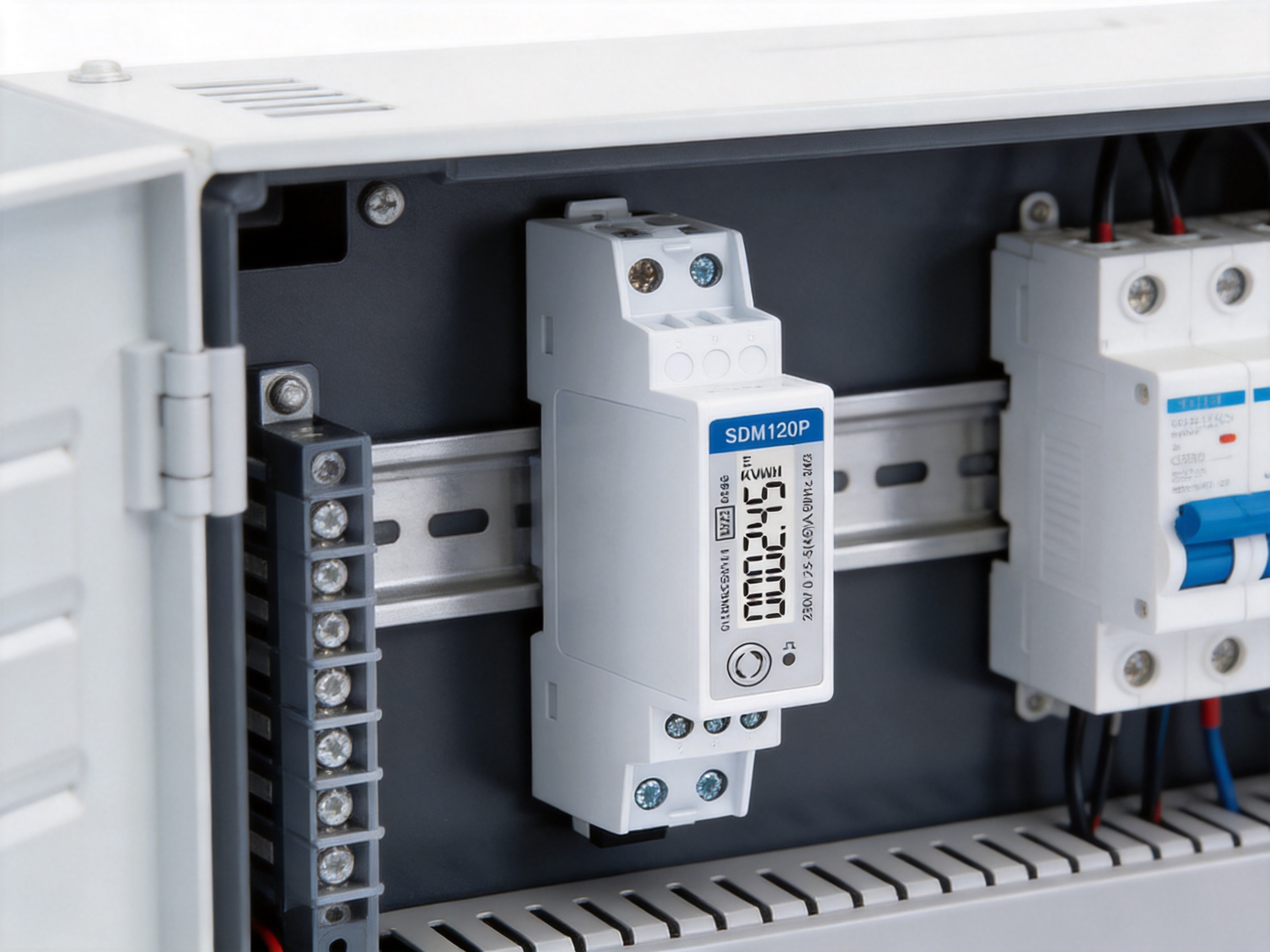
Pulse output is one of the most widely accepted methods for transmitting energy measurement data. Each pulse represents a defined quantity of energy. External devices count these pulses and calculate energy consumption or energy export. The approach is simple, reliable, and compatible with many energy data loggers and automation systems.
The SDM120-P includes two pulse outputs for import and export energy. This is a significant advantage over basic meters with only one pulse output. In modern installations, import-only metering may not be enough. Solar PV systems, battery systems, and distributed energy applications require direction-aware energy data. With separate pulse outputs, users can track energy flowing from the grid and energy flowing back toward the grid or another part of the system.
Pulse output also offers a clean solution where communication networks are unnecessary or not available. RS485, M-Bus, Ethernet, and wireless systems can provide rich data, but they may require addressing, configuration, protocol integration, and software support. Pulse counting is more straightforward. For many applications, energy totals are the key requirement, and pulse output satisfies that need with minimal complexity.
In harsh or electrically noisy environments, pulse output can be robust when wired correctly. It also allows long-term compatibility with legacy metering systems. Many building energy management systems, remote terminal units, and industrial controllers include pulse input channels. This makes the SDM120-P easy to integrate into existing infrastructure without redesigning the monitoring architecture.
Electricity networks are becoming more dynamic. In the past, the typical electrical flow was simple: power came from the utility grid and was consumed by the load. Today, many sites both consume and generate electricity. Rooftop solar PV systems export surplus energy. Battery systems charge and discharge. Electric vehicles may become part of intelligent load management systems. Microgrids and distributed energy resources require more detailed measurement.
Bidirectional measurement allows the meter to recognize energy flow direction. This capability makes the SDM120-P more relevant to contemporary energy applications than a basic unidirectional meter. Users can distinguish between imported and exported energy, which is essential for performance analysis, settlement support, system optimization, and consumption behavior studies.
For solar PV applications, bidirectional data helps owners understand how much generated energy is self-consumed and how much is exported. For EV charging systems, it supports detailed monitoring of charging energy and the electrical conditions of the circuit. For residential and commercial sub-metering, it helps prepare installations for future distributed generation, even if the site currently consumes only from the grid.
One of the most visible advantages of the product is its 1-DIN-module width. Many competing multi-function meters require two, three, or four DIN modules. Wider devices may be acceptable in large panels, but they become a limitation in retrofit projects or compact distribution boards. The SDM120-P provides multi-parameter measurement in only 18mm, giving panel builders and installers more freedom.
Space saving is not only about convenience. It can directly affect project cost and feasibility. If a meter is too wide, an installer may need to replace the enclosure, rearrange devices, add an auxiliary panel, or remove other components. These changes increase labor time and material cost. A narrow meter can often be added to an existing distribution board with minimal modification.
The 1-module design is particularly attractive for residential consumer units, small commercial boards, EV charger enclosures, PV combiner or monitoring panels, and equipment cabinets. It is also useful for multi-circuit sub-metering projects, where several meters may need to fit side by side. Saving one or two modules per circuit can significantly reduce panel size when multiplied across many circuits.
The ability to handle up to 45A directly gives the meter a practical advantage over low-current meters that require current transformers for many circuits. Current transformers are useful in high-current installations, but they add complexity. The installer must select the correct CT ratio, ensure correct orientation, route secondary wiring, verify secure connections, and in some cases program the meter. Errors in CT selection or installation can cause inaccurate readings.
For single-phase circuits within the meter’s current range, direct connection is simpler and often more reliable. It reduces component count and shortens installation time. It also reduces the chance of ratio mismatch or polarity mistakes. This makes the product suitable for installers who need efficient deployment across many similar circuits.
The 45A maximum current rating is appropriate for many common single-phase loads, including lighting and socket circuits, small heating circuits, small machinery, residential sub-circuits, and certain EV charging or solar monitoring points depending on system design. As always, installation must follow local electrical codes, protective device coordination, conductor sizing rules, and safety requirements.
A meter’s measurement capability is important, but usability in the field is equally important. Electrical cabinets are often installed in basements, utility rooms, plant rooms, garages, risers, or outdoor enclosures where lighting may be poor. A backlit LCD improves readability and helps technicians confirm operation quickly.
During commissioning, a technician may need to verify voltage, current, energy direction, power factor, or load status. Clear local display reduces dependence on external devices and speeds up troubleshooting. During maintenance, it allows quick inspection without connecting a laptop, handheld reader, or communication adapter.
This usability advantage is especially important in small installations where no central monitoring system exists. The local display becomes the main user interface, so clarity and accessibility matter. A compact meter with a readable display provides both technical data and practical convenience.
The meter is MID approved, which is a major differentiator in markets where regulated measuring instruments require conformity with recognized standards. MID approval supports confidence in the meter’s design, accuracy, and suitability for applications where energy measurement must meet formal requirements.
In energy metering, accuracy is not merely a technical preference. It affects billing, cost allocation, performance evaluation, and customer trust. A meter used for tenant sub-metering, energy service contracts, charging applications, or renewable energy monitoring must provide dependable data. MID approval helps users, installers, and project owners rely on the measurement results.
Compared with non-approved low-cost meters, a MID-approved meter can provide stronger assurance for professional projects. It reflects a higher level of product validation and manufacturing discipline. In competitive procurement, this can be an important deciding factor because the cost of inaccurate or non-compliant measurement may be far higher than the cost difference between meters.
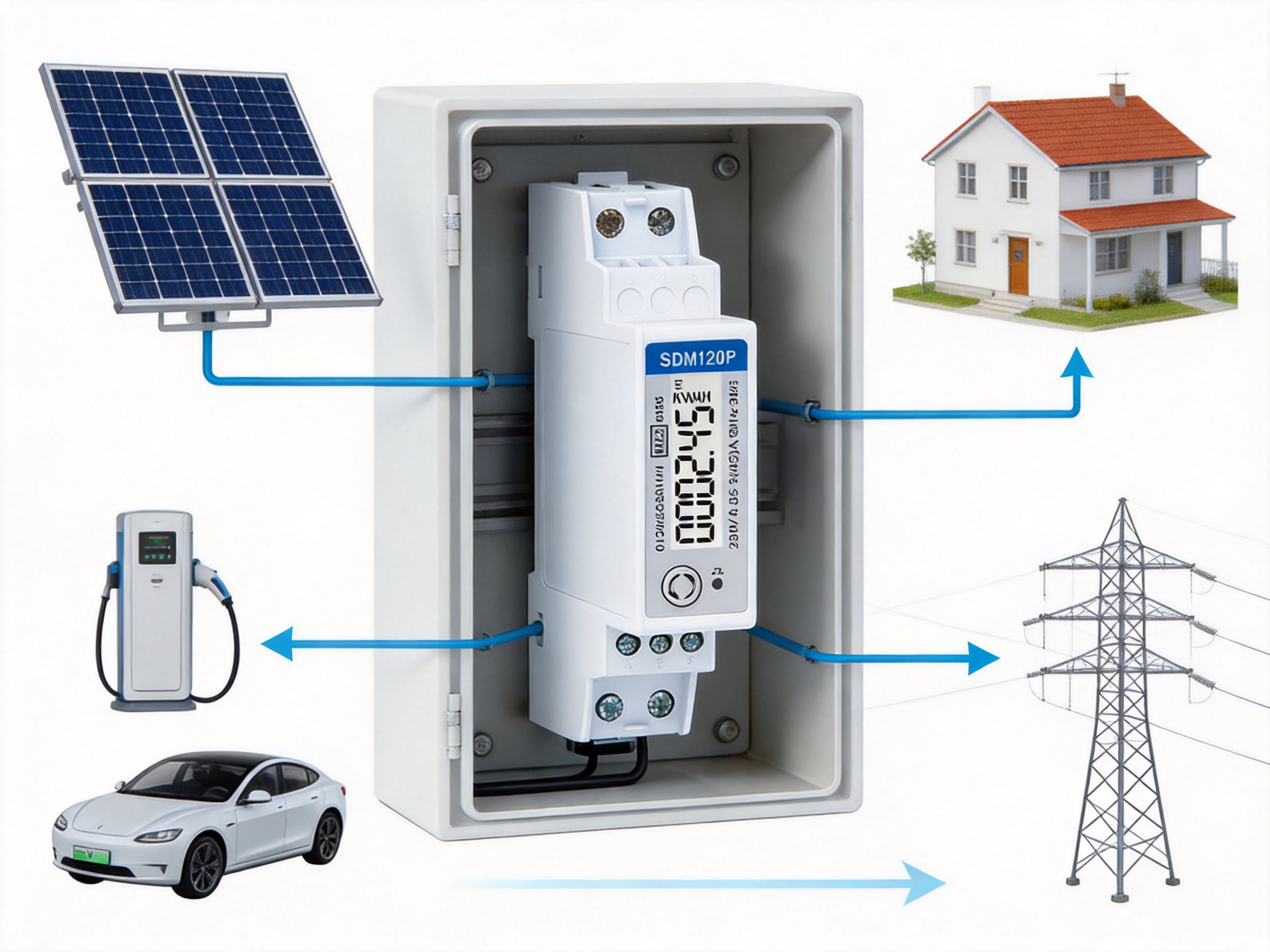
The SDM120-P is positioned as more than a basic electricity counter. Its advantages become clear when compared with conventional single-function meters, wider multi-function meters, and communication-heavy devices that may be excessive for simple applications.
Against basic kWh meters, the product offers broader measurement. Instead of only showing accumulated energy, it provides voltage, current, power, power factor, frequency, demand, active energy, and reactive energy. This helps users diagnose electrical conditions rather than simply record consumption.
Against many larger multi-function meters, the product offers a compact 18mm width. This is particularly valuable in retrofit and multi-circuit installations. A small footprint can reduce enclosure costs, simplify panel design, and allow more meters to be installed in the same space.
Against meters that depend primarily on digital communication, the SDM120-P offers simple pulse output. Digital communication is powerful, but not every project needs it. Pulse output is easy to understand, easy to count, and widely supported by existing equipment. The two pulse outputs for import and export energy provide direction-aware monitoring without requiring complex protocol integration.
Against lower-quality meters, the product benefits from a manufacturer with strong research, testing, and quality management capabilities. Metering accuracy, electrical safety, electromagnetic compatibility, and environmental reliability all depend on design and manufacturing discipline. A compact housing is useful only if the internal electronics, terminals, firmware, calibration, and production control are engineered carefully.
Residential energy use is becoming more complex. Homes may include heat pumps, solar PV systems, battery storage, EV chargers, smart appliances, and home energy management systems. A compact multi-function meter can support better visibility into these loads.
For household sub-metering, the product can monitor a dedicated circuit such as a heating system, workshop, rental unit, garage, or EV charger. The backlit LCD allows homeowners or electricians to view readings locally, while pulse output can feed data to a home monitoring system.
Its compact width is especially useful in consumer units where space is limited. Many residential panels have little spare capacity, so a 1-module meter is easier to accommodate than wider alternatives. Direct 45A measurement can cover many common circuits without external sensors.
For homes with solar PV, bidirectional measurement provides insight into energy flow. Monitoring import and export separately supports better understanding of self-consumption and grid interaction. This can help users evaluate whether storage, load shifting, or behavioral changes would improve energy efficiency.
Solar PV systems need accurate energy monitoring for performance evaluation, self-consumption analysis, and export tracking. A bidirectional single-phase meter is particularly suitable for small solar installations where electricity can flow both from the grid to the load and from the PV system toward the grid.
The two pulse outputs for import and export energy can be connected to compatible monitoring equipment. This allows system integrators to track energy direction without complicated network communication. The wide operating voltage range and compact DIN rail format make the meter convenient for inverter-adjacent distribution boards or monitoring enclosures.
In solar projects, accurate measurement helps owners distinguish between generated energy, consumed energy, imported grid energy, and exported surplus energy. Although generation meters and inverter data can provide part of the picture, a dedicated energy meter at the correct point of connection improves confidence in site-level energy analysis.
Electric vehicle charging is one of the fastest-growing single-phase energy monitoring applications. Charging circuits can represent a major portion of household or commercial electricity use. Measuring EV charging energy helps users understand cost, manage loads, allocate expenses, and verify operation.
A direct-connected 45A meter is suitable for many single-phase charging circuits, subject to installation design and local regulations. The meter’s multi-function readings can help technicians confirm charging current, voltage stability, active power, and power factor. Pulse output can send energy data to a charger controller, monitoring gateway, or external data logger.
In shared parking areas, workplaces, rental properties, and small commercial sites, metering is essential for fair cost allocation. A compact MID-approved meter can support professional energy recording where accurate and trustworthy data is required.
Although the product is compact, it can contribute significantly to industrial and utility energy monitoring. Many industrial sites have numerous single-phase auxiliary circuits, control cabinets, lighting circuits, small pumps, heaters, and service panels. Monitoring these circuits helps identify energy waste and supports preventive maintenance.
In utility or infrastructure applications, compact meters may be installed in distribution cabinets, telecommunications power systems, railway auxiliary panels, public lighting control boxes, or small equipment shelters. Pulse output allows integration into remote terminal units or supervisory systems that already include pulse counting channels.
For energy audits, a multi-function meter provides more useful information than an energy-only device. Power factor, current, voltage, and demand readings help engineers understand how a circuit behaves and whether improvements are possible. Even when the main metering system is complex, small branch meters can reveal important local details.
While the SDM120-P focuses on pulse output, the same product family includes variants with additional communication capabilities. The SDM120M includes two pulse outputs plus RS485 Modbus, and the SDM120MB includes two pulse outputs plus M-Bus EN13757. This family approach gives project designers flexibility.
For simple energy counting, the pulse-output model can be selected. For building automation and industrial monitoring requiring register-level data, the Modbus version may be suitable. For metering networks commonly used in building utility collection, the M-Bus version may be selected. This means a project can maintain similar mechanical dimensions and measurement characteristics while choosing the communication method that best fits the system architecture.
This flexibility is valuable for distributors, panel builders, and system integrators. They can standardize on a compact meter platform while serving different customer requirements. It also simplifies training and support because the physical installation and measurement concept remain familiar across variants.
A reliable energy meter is the result of more than a circuit design. It requires precision component selection, stable firmware, careful calibration, electrical safety design, electromagnetic compatibility testing, mechanical reliability, production consistency, and quality management. Eastron Electronic Co., Ltd. supports these requirements through its manufacturing and development capabilities.
The company is headquartered in Jiaxing, China, near Shanghai, Hangzhou, and Jiangsu. This location provides access to a strong industrial supply chain, skilled technical resources, logistics networks, and manufacturing infrastructure. The company develops and produces electricity meters, power analyzers, current sensors, communication modules, and management systems, giving it broad experience across energy measurement technologies.
Its product development benefits from energetic and innovative teams in China and the United Kingdom. International development capability helps the company understand different market requirements, technical standards, and application environments. Cooperation with leading universities and institutions also supports the adoption of advanced technologies in metering products.
The company has established its own professional laboratory for EMC, LVD, accuracy, and environmental testing according to IEC, EN, GB, and UL standards. This is a major strength because energy meters must operate reliably in electrically demanding environments. EMC testing helps confirm that the meter can resist interference and does not create unacceptable emissions. LVD-related testing supports electrical safety. Accuracy testing validates measurement performance. Environmental testing checks product behavior under temperature, humidity, and other conditions.
The company follows the ISO 9001 quality management system, and its production is approved by SGS according to MID standards. These systems support consistent manufacturing, traceability, process control, and continuous improvement. For customers, this means the product is not merely designed to perform well in a laboratory; it is manufactured under controlled conditions intended to deliver consistent performance batch after batch.

Energy meters are installed in electrical systems for many years. They may be exposed to voltage fluctuations, load changes, switching transients, temperature variation, humidity, and electromagnetic interference from nearby equipment. A dependable meter must continue to measure accurately and safely throughout its service life.
Professional testing is therefore essential. EMC testing evaluates immunity to disturbances such as electrostatic discharge, fast transients, surges, conducted interference, and radiated fields. In real installations, meters may be close to contactors, relays, inverters, variable-speed drives, EV chargers, and communication equipment. Good EMC performance helps reduce the risk of malfunction or measurement instability.
Accuracy testing verifies that the meter records energy and electrical parameters within specified limits. This includes different current levels, power factors, and operating conditions. For a multi-function meter, accuracy control must cover more than kWh. Voltage, current, power, frequency, and power factor measurement must also be checked in accordance with design requirements.
Environmental testing helps confirm that the meter can tolerate expected operating conditions. Temperature changes can affect electronic components, LCD performance, and measurement circuits. Humidity may influence insulation and long-term reliability. A disciplined testing program helps identify and correct weaknesses before products reach customers.
Production quality assurance also includes process control. PCB assembly, soldering, terminal installation, firmware programming, calibration, housing assembly, labeling, and final inspection must be performed consistently. In metering products, small manufacturing variations can influence accuracy and reliability, so controlled production processes are essential.
Energy metering technology continues to evolve. Customers require smaller meters, better accuracy, more communication options, lower power consumption, stronger cybersecurity for connected devices, improved displays, and easier integration with energy management systems. A manufacturer must invest in research and development to keep pace with these demands.
Eastron has built a wide product range and continues to invest in new technologies and new products for electricity metering. The company holds patented technologies in software, embedded software, and hardware, reflecting its engineering depth. Recognition as a High-tech Enterprise and High-tech R&D Centre of Electricity Application further supports its technical positioning.
For the SDM120-P, innovation is visible in the combination of compact form factor, direct 45A measurement, multi-function display, bidirectional measurement, pulse outputs, and MID approval. Fitting these capabilities into a 1-module DIN rail housing requires careful electrical and mechanical design. Heat management, terminal layout, insulation distance, display arrangement, and internal component placement must all be optimized.
Firmware is also important. A multi-function meter must calculate electrical parameters accurately and present them clearly. It must handle changing load conditions, direction of energy flow, pulse output timing, display navigation, and internal data management. Reliable embedded software contributes to stable long-term operation.
Customers often compare meters by price and headline specifications, but manufacturing capability is equally important. A meter may look competitive on paper, yet fail to deliver stable performance if the manufacturer lacks strong quality systems, calibration capability, component control, or testing facilities.
For distributors, reliable manufacturing reduces after-sales problems and warranty claims. For panel builders, consistent product dimensions and terminal quality simplify assembly. For installers, predictable wiring and clear display reduce commissioning time. For end users, accurate measurement supports trust in energy data. For energy service providers, stable long-term performance protects business reputation.
The company’s professional laboratory, ISO 9001 quality management, SGS-approved MID production, and international R&D cooperation all contribute to customer confidence. These strengths help differentiate the product from low-cost commodity meters that may not provide the same level of validation or production discipline.
The meter is designed for DIN rail installation in single-phase two-wire systems. As with any electrical measuring device, installation should be performed by qualified personnel according to local electrical regulations and the product’s official instructions. Correct wiring, appropriate protective devices, suitable conductor sizing, and safe isolation procedures are essential.
When using pulse outputs, the external counting device must be compatible with the meter’s pulse output characteristics. Cable routing should minimize electrical noise pickup, especially in panels containing contactors, drives, or high-current switching equipment. Pulse wiring should be clearly labeled to distinguish import and export channels.
Because the meter supports bidirectional measurement, installers should pay attention to line and load orientation. Correct orientation ensures that import and export energy are interpreted as intended. During commissioning, local display readings can help confirm voltage, current, power, and energy direction.
In retrofit projects, the 18mm width is a major installation advantage, but panel space, ventilation, terminal access, and compliance with enclosure ratings must still be checked. The meter should be installed in an environment suitable for its specification and protected from unauthorized tampering where required.
Energy savings begin with measurement. Without accurate data, users may rely on estimates, assumptions, or monthly utility bills that provide limited detail. A multi-function meter helps turn electrical consumption into actionable information.
By observing active power and current, users can identify high-load equipment. By tracking energy over time through pulse output, they can evaluate operating schedules and detect unnecessary consumption. By monitoring voltage and power factor, they can identify supply or load characteristics that may affect efficiency. By separating import and export energy, solar PV users can improve self-consumption strategies.
In commercial buildings, sub-metering can reveal which areas or systems consume the most energy. In residential settings, dedicated circuit monitoring can encourage more efficient behavior. In EV charging, energy records support cost transparency. In industrial facilities, branch circuit data helps maintenance teams detect abnormal operation before it becomes a larger problem.
The lowest purchase price does not always mean the lowest total cost. In metering projects, total value includes installation time, panel space, accuracy, approval status, reliability, integration simplicity, support, and long-term confidence. The SDM120-P is designed to deliver value across these categories.
Its compact size can reduce enclosure requirements. Its direct 45A connection can reduce the need for external current transformers. Its multi-function readings can reduce the need for separate instruments. Its two pulse outputs can simplify import and export energy integration. Its MID approval supports confidence in regulated applications. Its manufacturer’s testing and quality systems support long-term dependability.
When a meter fails, reads inaccurately, or is difficult to integrate, the resulting cost can exceed any initial savings. Replacement labor, troubleshooting time, customer dissatisfaction, and data loss all matter. A professionally manufactured meter with strong technical support offers a more secure choice for serious energy monitoring projects.
It is designed for single-phase two-wire systems, commonly described as 1P2W or 1P+N. This makes it suitable for many residential, commercial, and light industrial single-phase circuits.
The meter supports a maximum direct load of 45A. This allows it to be used in many circuits without external current transformers, simplifying installation.
It measures active energy, reactive energy, voltage, current, active power, reactive power, apparent power, power factor, frequency, demand, and related values. This makes it more informative than a basic kWh-only meter.
Two pulse outputs allow separate pulse signals for import and export energy. This is especially useful in solar PV, battery, and other bidirectional energy applications where energy may flow in both directions.
Yes. Its bidirectional measurement and import/export pulse outputs make it suitable for monitoring energy flow in single-phase solar PV systems, subject to proper system design and installation.
The 18mm, 1-module DIN rail width saves panel space. This is valuable in compact consumer units, retrofit projects, EV charger panels, PV monitoring boxes, and multi-circuit metering installations.
Yes. It includes a backlit LCD display, allowing technicians and users to read values locally even in low-light cabinet environments.
MID approval supports confidence that the meter meets relevant measuring instrument requirements in applicable markets. It is important for professional and regulated energy measurement applications.
Pulse output is simpler and widely compatible with data loggers and controllers. Modbus and M-Bus provide richer digital data but require protocol integration. The pulse-output model is ideal where energy counting is the main requirement.
Yes. Related versions include models with RS485 Modbus and M-Bus EN13757 communication, in addition to pulse outputs. This gives system designers flexibility for different monitoring architectures.
The manufacturer has professional testing capabilities for EMC, LVD, accuracy, and environmental performance according to major standards. It follows ISO 9001 quality management and has SGS-approved production according to MID standards.
Typical applications include residential sub-metering, solar PV systems, EV charging circuits, small commercial panels, industrial auxiliary circuits, utility cabinets, and energy management systems.
The SDM120-P Din Rail Single Phase Multi-function Energy Meter with Pulse Output offers a strong combination of compact design, practical measurement capability, bidirectional energy monitoring, and easy integration. Its 1-module 18mm housing saves valuable panel space, while its 45A direct load capability reduces installation complexity. The backlit LCD supports convenient field reading, and the two pulse outputs provide straightforward import and export energy data for monitoring systems.
Compared with basic kWh meters, it provides much richer electrical information. Compared with wider multi-function meters, it saves space. Compared with communication-heavy solutions, it offers simple and reliable pulse integration where that is the most practical choice. Compared with low-quality alternatives, it benefits from MID approval and the support of a manufacturer with strong R&D, testing, quality management, and production capabilities.
For residential energy monitoring, solar PV systems, EV charging, light industrial circuits, commercial sub-metering, and utility applications, the product provides a balanced solution: small in size, broad in function, and practical in installation. In an energy market increasingly driven by data, efficiency, and distributed power flow, a compact bidirectional multi-function meter with pulse output is a smart component for modern electrical systems.
International Electrotechnical Commission. IEC 62053-21: Electricity Metering Equipment: Static Meters for Active Energy.
International Electrotechnical Commission. IEC 62053-23: Electricity Metering Equipment: Static Meters for Reactive Energy.
European Committee for Standardization. EN 50470-3:2022: Electricity Metering Equipment: Particular Requirements for Static Meters for AC Active Energy.
European Committee for Standardization. EN 13757: Communication Systems for Meters and Remote Reading of Meters.
International Organization for Standardization. ISO 9001: Quality Management Systems: Requirements.
General technical materials for single-phase DIN rail energy meters, pulse output metering, bidirectional energy measurement, and electrical sub-metering applications.
Your email address will not be published. Required fields are marked *

We develop and produce high performance electricity meters, power analyzers, current sensors, communication modules and management systems.
Address:NO. 52, Dongjin Road, Nanhu, Jiaxing, Zhejiang, China
Copyright @ Eastron Electronic Co., Ltd. All rights reserved
