

 English
 Español
 Deutsch
 中文简体
中文简体

Product Consultation
Your email address will not be published. Required fields are marked *
Europe's Solar and Energy Storage Transition: Transforming the Power System Infrastructure for a Renewable Future
Jul 10,2026
Power Systems Are Becoming “Real-Time Systems”: Why Data Is More Critical Than Electricity
Jul 06,2026
New EPBD Regulations Drive HVAC Energy Transparency and Boost Demand for Smart Meters
Jul 07,2026Content
In modern electrical installations, accurate measurement is no longer limited to reading accumulated kilowatt-hours. Residential buildings, solar photovoltaic systems, electric vehicle charging points, small commercial panels, industrial sub-circuits, and utility distribution boards all require compact instruments that can show real-time electrical conditions, verify consumption trends, and provide dependable output signals for monitoring systems. The Din Rail single phase multi-function energy meter with pulse output, represented by the SDM120-P, is designed for exactly this environment. It combines active energy metering, multi-parameter measurement, direct current input up to 45A, backlit LCD display, bi-directional measurement, and dual pulse output in a narrow 18mm one-module housing.
The product belongs to the single phase multi-function energy meter category and is intended for 1P2W single phase AC systems. It measures RMS values on a single phase 1P+N system and provides readings including kWh, W, V, A, power factor, Hz, demand, active energy, reactive energy, active power, reactive power, apparent power, and related electrical parameters. Compared with many traditional single-purpose kWh meters, it offers a broader monitoring function in a much smaller space. Compared with larger panel meters, it reduces installation footprint while still providing the essential information required by electricians, facility managers, energy service companies, equipment builders, and system integrators.
Din Rail Single Phase Multi-function energy meter with Pulse Output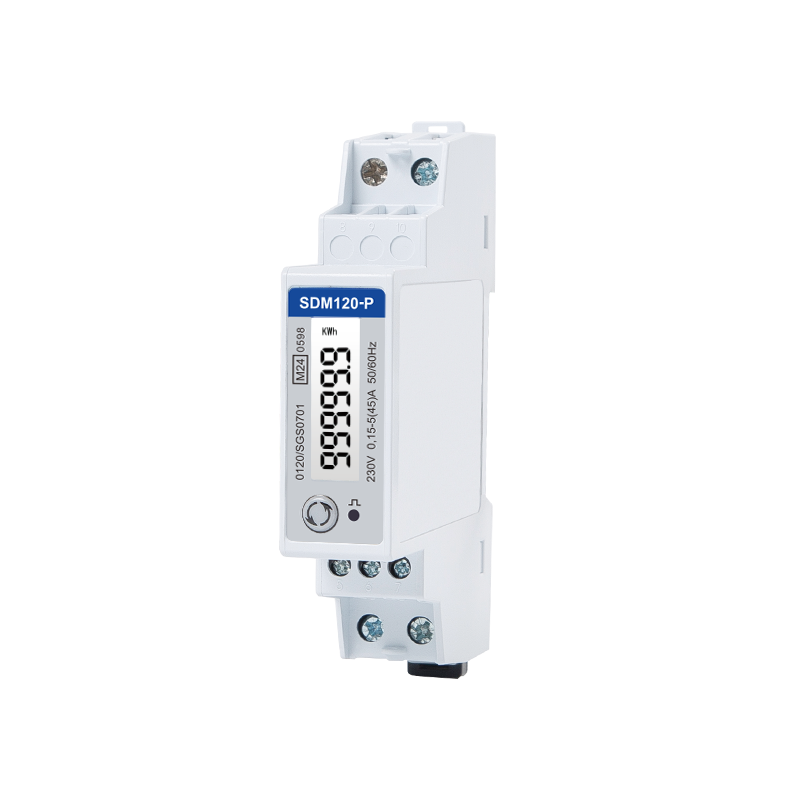
The SDM120-P is a Din Rail single phase multi-function energy meter with pulse output and a backlit LCD display. Its most immediate advantage is the balance between compactness and function. With a width of only one module, or 18mm, it fits easily into distribution boards where every module matters. This is especially valuable in retrofits, apartment consumer units, photovoltaic combiner and monitoring cabinets, EV charging enclosures, small equipment panels, and metering boards that already contain protection devices, terminals, relays, and communication equipment.
Many conventional single phase meters provide only accumulated active energy. While such meters may be sufficient for simple billing or rough consumption checks, they do not provide enough information for modern energy management. A circuit can consume energy inefficiently because of poor power factor, unstable voltage, high current loading, or unexpected demand peaks. A multi-function meter helps users see more than a single total. By displaying voltage, current, active power, frequency, power factor, and energy values, the SDM120-P supports better diagnosis, preventive maintenance, and usage analysis.
The meter’s pulse output is another important practical feature. Pulse output remains one of the simplest and most reliable ways to integrate an energy meter into external counters, building management systems, data loggers, PLC inputs, energy monitoring gateways, and third-party automation equipment. The SDM120-P provides two pulse outputs for imported and exported energy, allowing the system to distinguish energy direction. This is essential in solar PV and other distributed energy applications where energy may flow from the grid to the load or from generation back toward the grid.
The product is designed with a maximum direct load of 45A. Direct connection simplifies installation because no external current transformer is required within the rated range. This reduces wiring complexity, minimizes component count, and helps avoid CT ratio configuration errors. For small to medium single phase circuits, 45A direct input is a practical capacity that covers many residential, light commercial, EV charging, and equipment-level monitoring scenarios.
The meter is designed for 1P2W installations and measures RMS values on a single phase AC system. It has a rated current of 5A and maximum current of 45A. The minimum current is 0.15A, and the starting current is 40mA. These values show that the meter is intended not only to withstand common single phase circuit currents but also to begin registering energy at low load levels. For energy monitoring, low starting current is meaningful because standby loads, chargers, controllers, lighting electronics, and small appliances may draw modest current but still contribute to long-term consumption.
The rated voltage is 230V, while the operational voltage range is 85 to 276V AC. This wide operating range supports stable performance in electrical environments where voltage may fluctuate or where installations are subject to different local supply conditions. Frequency measurement accuracy is specified at ±0.2%, while voltage and current measurement accuracy are specified at ±0.5%. Active power, reactive power, apparent power, and power factor measurement accuracy are specified at ±1%. Active energy is rated according to Class 0.5/1 under IEC 62053-21 and Class C/B under EN 50470-3:2022, while reactive energy is Class 2 under IEC 62053-23.
These specifications place the meter in a strong position among compact single phase instruments. Some competitors in the same size class may provide only basic energy measurement, limited display data, or a single pulse channel. Others may offer broader measurement but require a larger enclosure width or lack clear import/export pulse separation. The SDM120-P integrates multi-measurement, compact DIN mounting, direct 45A input, dual pulse output, and bi-directional energy measurement in one device, making it a flexible choice for both new projects and upgrades.
Feature |
Specification or Description |
User Benefit |
System Type |
Single phase AC, 1P2W, 1P+N |
Suitable for residential, PV, EV charging, and single phase sub-metering |
Maximum Direct Current |
45A |
No CT required for many common single phase circuits |
Rated Current |
5A |
Standard reference current for accurate measurement |
Starting Current |
40mA |
Registers low-load consumption more effectively |
Rated Voltage |
230V |
Matches common single phase electrical networks |
Operational Voltage |
85 to 276V AC |
Supports stable operation across variable supply conditions |
Display |
Backlit LCD |
Improves readability in panels and low-light environments |
Measurements |
kWh, W, V, A, PF, Hz, demand, active and reactive energy |
Provides a complete view of circuit performance |
Output |
Two pulse outputs for imported and exported energy |
Easy integration with counters, loggers, gateways, and control systems |
Installation Width |
1 module, 18mm |
Saves space in crowded DIN rail distribution boards |
Certification |
MID approved |
Supports regulated metering confidence and market acceptance |
The first competitive advantage is multi-function visibility. A basic kWh meter answers one question: how much energy has been used. The SDM120-P answers several questions: what is the current voltage, how much current is flowing, what is the active power at this moment, what is the power factor, what is the frequency, what is the demand, and how much imported or exported energy has accumulated. This broader measurement set is valuable because real electrical systems are dynamic. Loads switch on and off, voltage varies, power factor changes with equipment type, and energy direction may reverse in solar or storage systems.
The second advantage is space efficiency. In many installations, the distribution board is already crowded. Adding a meter should not require a larger enclosure, rewiring of multiple modules, or removal of useful protective components. The one-module 18mm design reduces the cost and difficulty of installation. Compared with two-module or four-module devices, the compact width can save valuable rail space and allow more metered circuits in the same cabinet.
The third advantage is direct connection up to 45A. Current transformer-based meters are necessary for larger loads, but they introduce extra parts, wiring steps, and configuration concerns. For smaller circuits, a direct-connected meter is faster and cleaner to install. Direct measurement also avoids common CT installation mistakes such as reversed polarity, wrong ratio selection, loose secondary wiring, or mismatch between CT and meter settings. By supporting a 45A maximum direct load, the SDM120-P covers a practical range of single phase applications without external transformers.
The fourth advantage is bi-directional measurement. In the past, many single phase meters were used only for one-way consumption. Today, buildings often have solar PV, battery systems, regenerative equipment, or circuits that can export energy. A meter that recognizes both import and export provides more meaningful data. With two pulse outputs for imported and exported energy, the SDM120-P is well suited for distributed energy monitoring, self-consumption analysis, and energy flow verification.
The fifth advantage is its backlit LCD. Although digital communication and remote data collection are important, local readability remains essential during commissioning, maintenance, inspection, and troubleshooting. A backlit display makes it easier for technicians to check values in poorly lit electrical rooms or inside panel enclosures. Clear local information reduces the need for additional test instruments and helps confirm that the system is operating correctly.
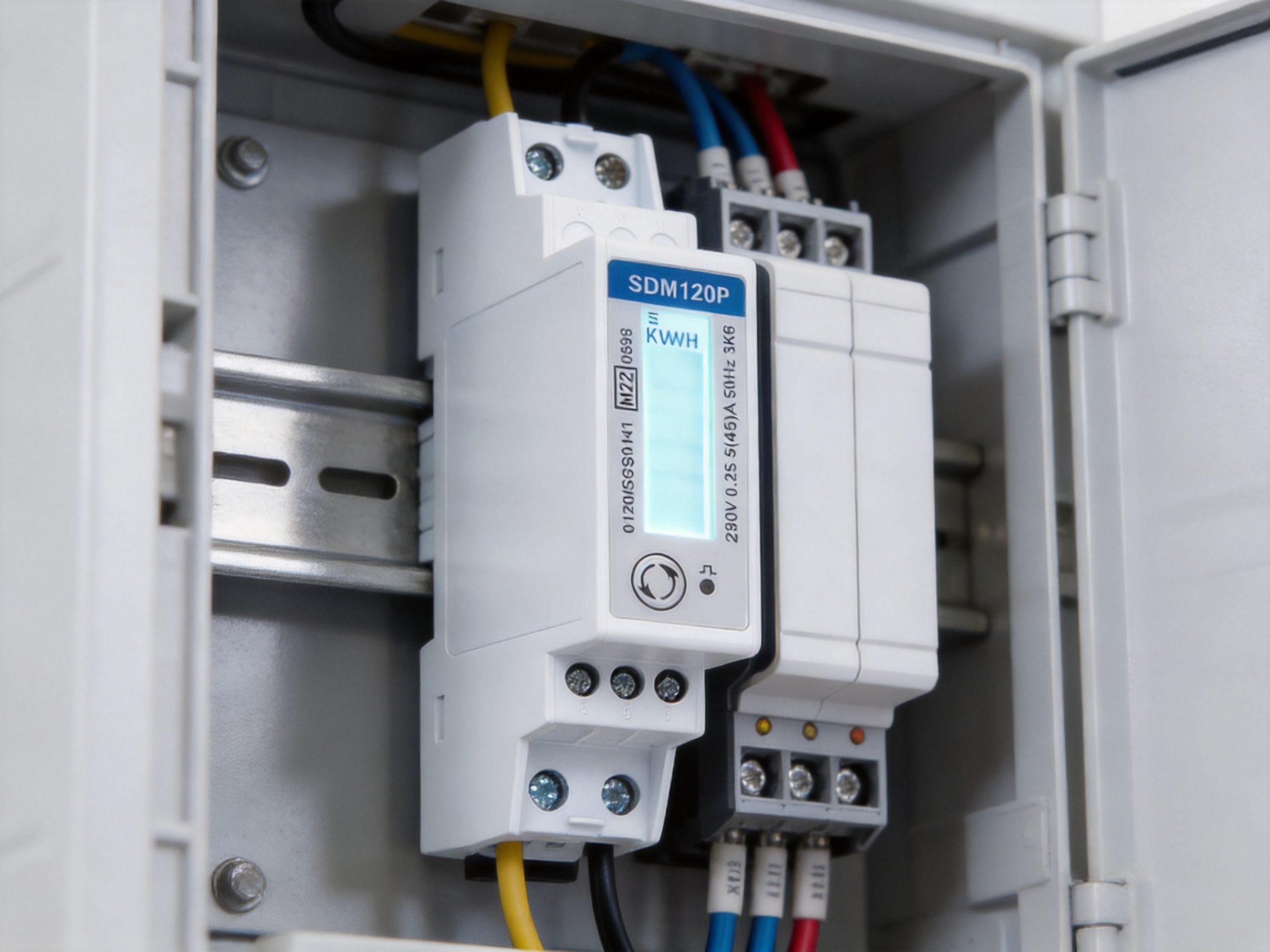
Pulse output is simple, robust, and widely understood. Each pulse represents a defined amount of energy, enabling external devices to count consumption without complex protocol integration. For installations where a building management system, data acquisition unit, or PLC has pulse input channels, pulse meters are often the most cost-effective and dependable choice. They do not require communication addressing, baud rate configuration, or protocol mapping for basic energy accumulation.
The SDM120-P improves on ordinary pulse meters by providing two pulse outputs for imported and exported energy. This distinction is important because a single total pulse channel may not reveal whether energy is being consumed from the grid or exported back to it. In a PV installation, for example, a daytime export condition and a nighttime import condition have very different financial and operational meanings. Separate import and export pulse outputs help monitoring systems record energy direction more accurately.
Pulse output also has advantages in electrically noisy or mixed-equipment environments. When designed and wired correctly, pulse counting can provide stable energy totals over long periods. It is easy to isolate, easy to test, and compatible with many legacy systems. For users who do not need continuous high-speed data exchange but do need reliable accumulated energy information, the pulse output approach remains highly relevant.
At the same time, the SDM120 product family also includes variants with communication options such as RS485 Modbus RTU and M-Bus EN13757. The SDM120M provides two pulse outputs plus RS485 Modbus, while the SDM120MB provides two pulse outputs plus M-Bus. This family structure allows project designers to choose the appropriate model for the level of integration required. A simple sub-metering panel may use pulse output, while a more advanced energy management system may select a communication-enabled version. The shared platform approach supports consistency across projects.
In residential applications, the meter can monitor whole-home consumption or individual circuits such as heating, cooling, kitchen equipment, EV charging, or auxiliary loads. Because it is only 18mm wide, it can often be added to a domestic distribution board without major redesign. Homeowners, landlords, property managers, and energy consultants can use the readings to identify high-consumption circuits, verify energy-saving measures, and track long-term usage patterns.
Solar installations benefit greatly from bi-directional metering. A PV-equipped building may import energy when demand exceeds generation and export energy when generation exceeds demand. The SDM120-P supports bi-directional measurement and provides separate pulse outputs for imported and exported energy. This makes it useful for monitoring self-consumption, export volume, inverter-side performance, and system balance. Its compact form is also useful in PV distribution boards and monitoring cabinets where space is limited.
EV charging circuits require dependable measurement because charging loads can be substantial and may operate for long periods. A 45A direct-connected single phase meter is suitable for many single phase charging applications. The meter can provide energy totals and real-time electrical values, helping operators understand charging consumption, verify load behavior, and integrate energy counts into local management systems through pulse output.
Industrial facilities often need to monitor individual machines, production lines, lighting circuits, office areas, or auxiliary systems. Utility and facility managers may not always need a large power analyzer for every circuit; a compact multi-function single phase meter can provide enough information at a lower space and installation cost. The SDM120-P is well suited for sub-metering panels where multiple branch circuits must be monitored in a limited enclosure.
Original equipment manufacturers may need a compact meter inside machinery, control panels, test equipment, vending systems, pumps, HVAC units, or packaged electrical systems. The one-module DIN rail form factor helps OEMs add energy visibility without enlarging the enclosure. Pulse output enables simple connection to controllers or counters, while the LCD allows local service personnel to check electrical values directly.
Accuracy is central to energy metering. The SDM120-P provides voltage and current measurement accuracy of ±0.5%, frequency accuracy of ±0.2%, and power-related accuracy of ±1% for active power, reactive power, apparent power, and power factor. Active energy is specified as Class 0.5/1 under IEC 62053-21 and Class C/B under EN 50470-3:2022, while reactive energy is Class 2 under IEC 62053-23. These references to recognized metering standards are significant because they provide a common technical language for comparing meter performance.
MID approval is another important advantage. In markets and applications where measuring instruments must comply with European measuring instrument requirements, MID approval supports acceptance and confidence. Even in applications that are not legally regulated for billing, MID approval can serve as a quality indicator. It shows that the manufacturer has considered accuracy, production consistency, and compliance requirements beyond basic functionality.
Compared with low-cost non-certified meters, a standards-based and approved product reduces uncertainty. In energy monitoring projects, incorrect readings can lead to flawed decisions, billing disputes, poor system optimization, or failure to identify abnormal consumption. A meter that is designed around recognized standards provides stronger assurance for engineers, procurement teams, and end users.
The installation format is one of the most important practical design decisions. DIN rail mounting is the standard in many distribution and control panels. A one-module width means the meter uses the same space as a narrow circuit protection device. This simplifies panel layout and supports neat wiring. For contractors and panel builders, small mechanical dimensions translate into shorter planning time and easier integration.
The 1P2W connection is straightforward for single phase live and neutral circuits. Direct load connection up to 45A avoids the need for extra CT space and secondary wiring. Fewer installation parts also mean fewer potential fault points. In compact consumer units and small control cabinets, reducing component count is often as important as reducing device cost.
The LCD with backlight improves usability throughout the product lifecycle. During installation, the electrician can verify voltage, current, power, and energy values without connecting a laptop or external reader. During maintenance, a technician can quickly check whether a circuit is energized, overloaded, lightly loaded, or behaving abnormally. During energy audits, the local display can support quick inspections before more detailed data collection is performed.
The multi-measurement capability also reduces the need for separate instruments. Instead of installing a basic kWh meter and then using temporary clamp meters or panel meters for voltage, current, and power checks, users can rely on one device for routine information. This can reduce project cost, save panel space, and simplify documentation.
The technical quality of an energy meter depends not only on the circuit design but also on the manufacturer’s engineering discipline, production control, testing resources, and long-term focus on metering technology. Eastron Electronic Co., Ltd., headquartered in Jiaxing, China near Shanghai, Hangzhou, and Jiangsu, develops and produces electricity meters, power analyzers, current sensors, communication modules, and management systems. The company’s product range reflects a broad commitment to energy measurement solutions rather than a narrow focus on a single device type.
A key strength is the company’s continuous investment in research and development. Its development teams in China and the United Kingdom support product innovation, embedded software development, hardware design, and metering technology improvement. This international R&D structure helps the company respond to different market requirements, standards, and application practices. Cooperation with leading universities and institutions further supports advanced technology development.
The company has also established a professional laboratory capable of performing EMC, LVD, accuracy, and environmental tests according to IEC, EN, GB, and UL standards. This is a major advantage over suppliers that rely only on external testing or limited production checks. In-house testing capacity allows engineers to evaluate product performance during development, validate design changes, troubleshoot issues faster, and maintain consistency during production. For a metering product, this matters because accuracy and reliability must remain stable across different electrical conditions and environmental stresses.
Quality management is another important foundation. The company follows the ISO 9001 quality management system, and its production is approved by SGS according to MID standards. These systems support traceability, process control, inspection discipline, and continuous improvement. For customers purchasing energy meters in quantity, consistent production quality is as important as the specification sheet. A product that performs well in a sample but varies in mass production creates risk. A controlled quality system helps reduce that risk.
The company also holds many patented technologies in software, embedded software, and hardware, and has been recognized as a High-tech Enterprise and High-tech R&D Centre of Electricity Application. These recognitions indicate sustained technical capability. In the energy metering field, software and embedded firmware are especially important because modern meters must calculate parameters accurately, manage displays, process pulse outputs, handle communication in related models, store data reliably, and maintain stability over long service periods.
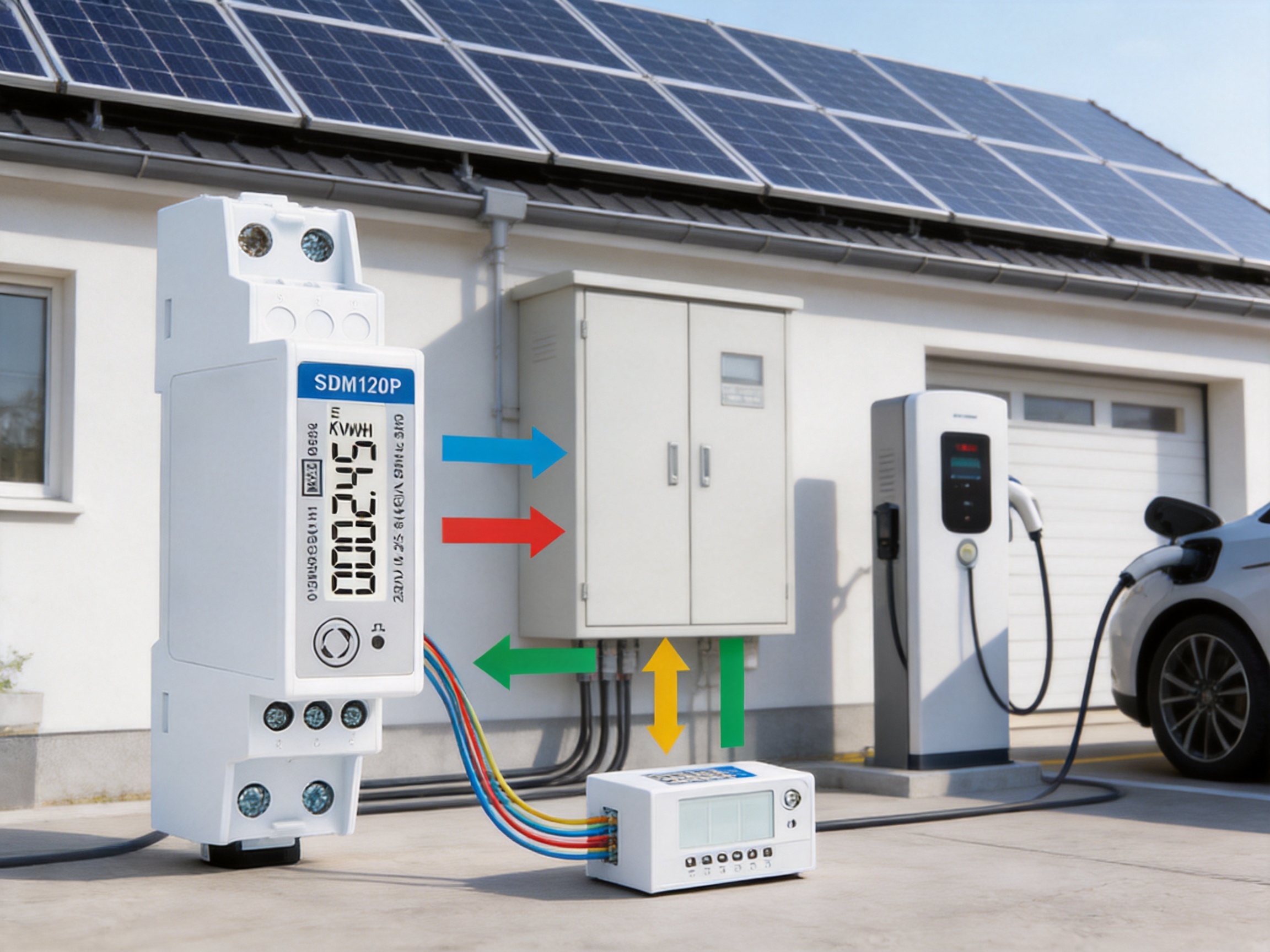
Energy meters operate in environments that may include voltage variation, electromagnetic interference, temperature changes, vibration, installation errors, and long-term continuous operation. A robust product must therefore be validated beyond simple power-on checks. EMC testing helps ensure that the meter can withstand electromagnetic disturbances and does not create unacceptable interference. LVD-related testing supports electrical safety. Accuracy testing verifies metering performance across current ranges and operating conditions. Environmental testing evaluates performance under temperature and humidity stresses.
The existence of a professional laboratory for EMC, LVD, accuracy, and environmental testing gives the manufacturer direct control over product validation. During product development, engineers can test early prototypes, compare design alternatives, and refine hardware or firmware before final certification. During production, test capability supports ongoing quality monitoring. During customer support, laboratory resources can help analyze field feedback and confirm solutions.
This testing culture benefits the SDM120-P because compact meters must be carefully designed. A small 18mm enclosure creates challenges in thermal management, component layout, isolation, display integration, terminal design, and electromagnetic performance. Reliable performance in such a compact format requires mature engineering and manufacturing processes. The product’s combination of compact width, 45A direct input, multi-function measurement, and certified performance suggests careful attention to design verification.
Energy efficiency and electrical transparency are becoming standard expectations. Building owners want to understand where energy is consumed. Facility managers want to detect abnormal loads. Installers want quick commissioning tools. Solar users want to understand import and export. EV charging operators want reliable energy totals. OEMs want integrated monitoring without increasing enclosure size. The SDM120-P addresses these needs by bringing multi-function measurement into a narrow DIN rail device.
Compact metering also supports scalable monitoring. Instead of installing one large central meter, users can install multiple compact meters for individual circuits. This creates a more detailed energy map. For example, a small commercial building may monitor lighting, air conditioning, kitchen equipment, office sockets, EV charging, and solar generation separately. With each circuit measured, energy-saving actions become more targeted. Pulse outputs can be collected by a central logger to build consumption profiles.
In industrial settings, sub-metering can reveal production energy intensity, machine idle consumption, maintenance issues, or process changes. A compact direct-connected meter is not intended to replace high-end power quality analyzers, but it offers a cost-effective way to obtain routine electrical data from many points. The SDM120-P fits this role because it provides more data than a basic kWh meter while remaining simple to install.
When compared with a basic mechanical or electronic kWh meter, the SDM120-P provides a richer information set, a smaller modern DIN rail design, and pulse output for system integration. Mechanical meters are durable in some applications, but they are not well suited to digital monitoring, compact panels, or multi-parameter energy analysis. Basic electronic meters may show kWh but often lack power, voltage, current, power factor, demand, and bi-directional pulse separation.
When compared with larger multi-function meters, the SDM120-P offers the advantage of compactness. Larger meters may include more advanced communication functions, wider displays, or three phase capability, but they also require more panel space and may be unnecessarily complex for single phase direct-load circuits. For applications that need accurate single phase monitoring and pulse output, the SDM120-P provides an efficient match between capability and size.
When compared with CT-operated meters for small circuits, the SDM120-P simplifies installation. CT meters are excellent for high-current circuits, but they require external transformers and careful ratio management. For loads up to 45A, a direct-connected meter can reduce both hardware cost and installation time. It also avoids the risk of CT secondary disconnection or polarity mistakes.
When compared with communication-only smart meters, the pulse-output model offers simplicity. Not every project requires a full communication network. Some sites prefer pulse counting because it is easy to integrate with existing equipment, easy to troubleshoot, and suitable for long-term accumulated energy measurement. The SDM120-P fits these projects while still belonging to a broader family that includes Modbus and M-Bus options when communication is needed.
Energy management begins with measurement. Without reliable data, efficiency projects are based on estimates. The SDM120-P can support energy management at the circuit level. Its pulse output can be connected to a data acquisition system that records energy consumption over time. Real-time display readings can assist with commissioning and verification. Multi-parameter measurement helps identify whether energy use is linked to high current, low power factor, voltage variation, or demand peaks.
For residential and small commercial monitoring, pulse data may be enough to create daily, weekly, or monthly consumption charts. For solar applications, imported and exported pulses can be used to analyze self-consumption and grid interaction. For EV charging, pulse data can support session energy counting when integrated with suitable control equipment. For industrial equipment, pulse totals can be compared with production output to calculate energy intensity.
Because the meter is compact and direct connected, it can be deployed at multiple locations without major panel redesign. This encourages distributed metering, where several circuits are monitored separately. Distributed data is more actionable than a single total because it reveals which loads are responsible for consumption changes.
Proper installation is essential for accurate and safe operation. The meter is intended for DIN rail mounting in a suitable electrical enclosure. Wiring should follow the specified single phase 1P2W connection arrangement, with attention to live and neutral terminals and correct load direction. Installers should ensure that the circuit current does not exceed the maximum 45A direct input rating and that the supply voltage remains within the operational range of 85 to 276V AC.
Pulse output wiring should be routed and terminated according to the requirements of the connected counter, data logger, PLC, or gateway. Where long cable runs are used, installers should consider electrical noise, cable type, input compatibility, and isolation requirements. The pulse outputs for imported and exported energy should be correctly mapped in the monitoring system so that energy direction is recorded accurately.
During commissioning, the backlit LCD can be used to verify voltage, current, power, power factor, frequency, and energy values. A simple load test can confirm that the meter is counting in the expected direction and that pulse outputs are being received by the external system. These checks reduce the risk of incorrect data collection after the installation is closed and handed over.
Energy meters are expected to operate continuously for many years. Long-term reliability depends on component selection, circuit design, firmware stability, production control, calibration, and testing. The manufacturer’s professional laboratory, ISO 9001 quality system, SGS-approved MID production, and experience in international markets all contribute to customer confidence. The company supplies products and services to more than 50 countries across Europe, Asia-Pacific, America, the Middle East, and Africa, which demonstrates broad market exposure and practical experience with diverse installation environments.
Technical support and after-sales service are also important. Energy meters are often part of larger systems, and customers may need help with model selection, installation interpretation, output integration, or troubleshooting. A manufacturer with professional support teams can help installers and system integrators reduce project risk. This service capability is especially valuable when meters are used in PV systems, EV charging solutions, building management systems, or OEM equipment where integration requirements vary.
Although this article focuses on the SDM120-P pulse output version, the related product family includes variants that support different communication needs. The SDM120P provides two pulse outputs for imported and exported energy. The SDM120M provides two pulse outputs plus RS485 Modbus RTU. The SDM120MB provides two pulse outputs plus M-Bus EN13757. This structure allows users to standardize mechanical design and measurement philosophy while selecting different output methods for different projects.
Modbus RTU over RS485 is common in industrial automation, building management, and energy monitoring. It supports addressing from 1 to 247, transmission distance up to 1000m maximum, baud rates from 1200bps to 38400bps, parity settings including none, odd, and even, one or two stop bits, and response time under 100 milliseconds. M-Bus EN13757-3 is widely used in utility and building metering networks. It supports communication addresses from 1 to 250, transmission distance up to 1000m maximum, transmission speeds from 300bps to 9600bps, parity options, stop bit options, and response time under 100 milliseconds.
This family flexibility is a competitive advantage because projects can evolve. A first phase may require simple pulse collection, while a later phase may require protocol-based data acquisition. By offering pulse, Modbus, and M-Bus models in the same product family, the manufacturer gives designers a migration path without forcing a complete change in meter style.

It is designed for single phase AC systems using a 1P2W arrangement, commonly described as 1P+N. It is suitable for many residential, commercial, PV, EV charging, industrial sub-metering, and utility monitoring applications where a single phase circuit must be measured.
The meter supports a maximum direct current of 45A. This means many common single phase circuits can be measured without using an external current transformer, simplifying installation and reducing wiring complexity.
The meter can measure active energy, reactive energy, voltage, current, active power, reactive power, apparent power, power factor, frequency, demand, and related energy values. This makes it more informative than a basic kWh-only meter.
The two pulse outputs are used for imported and exported energy. This is especially useful in solar PV and distributed energy applications where energy can flow in both directions. Separate pulse signals help external monitoring systems record import and export more clearly.
Yes. Its bi-directional measurement and import/export pulse output capability make it suitable for monitoring energy flow in solar PV systems, including consumption from the grid and export back toward the grid.
The compact one-module width saves DIN rail space. It allows the meter to be installed in crowded distribution boards, small control cabinets, EV charging panels, and OEM equipment where larger meters may not fit conveniently.
Yes. It has a backlit LCD display, which helps installers and users read values in panels, electrical rooms, and low-light conditions. The display is useful for commissioning, maintenance, and quick local checks.
Active energy accuracy is specified according to IEC 62053-21 and EN 50470-3:2022, while reactive energy accuracy is specified according to IEC 62053-23. The meter is also MID approved, supporting confidence in regulated and quality-sensitive applications.
For circuits up to 45A, the direct-connected design is usually simpler than a CT-operated meter. It reduces component count, saves space, and avoids CT wiring or ratio configuration errors. CT meters remain necessary for higher-current circuits, but they are not always needed for smaller single phase loads.
The manufacturer has R&D teams in China and the United Kingdom, a professional laboratory for EMC, LVD, accuracy, and environmental tests, ISO 9001 quality management, SGS-approved MID production, patented technologies, and international supply experience in more than 50 countries.
The Din Rail single phase multi-function energy meter with pulse output is a compact but capable solution for modern single phase energy monitoring. It provides much more than accumulated kWh. With voltage, current, power, power factor, frequency, demand, active and reactive energy measurement, bi-directional energy capability, dual pulse outputs, a backlit LCD, and 45A direct connection, the SDM120-P addresses the practical needs of installers, system integrators, facility managers, energy consultants, solar users, EV charging operators, and OEM manufacturers.
Its strongest value lies in the balance of size, function, and reliability. The 18mm one-module format saves valuable panel space. The direct 45A input simplifies installation. The dual pulse outputs support easy integration with external monitoring equipment. The bi-directional measurement capability makes it relevant to today’s renewable and distributed energy systems. MID approval and standards-based accuracy provide confidence, while the manufacturer’s advanced R&D, laboratory testing, quality management, and international service capability strengthen the product’s long-term appeal.
In a market where some meters are compact but limited, and others are powerful but oversized, this product offers a practical middle path. It is small enough for dense distribution boards, capable enough for meaningful energy analysis, and supported by a manufacturer with deep experience in electricity metering and energy measurement solutions. For projects that require dependable single phase monitoring with simple pulse integration, it stands out as a highly competitive choice.
International Electrotechnical Commission. IEC 62053-21: Electricity Metering Equipment, Static Meters for Active Energy.
International Electrotechnical Commission. IEC 62053-23: Electricity Metering Equipment, Static Meters for Reactive Energy.
European Committee for Electrotechnical Standardization. EN 50470-3:2022: Electricity Metering Equipment, Particular Requirements for Static Meters for Active Energy.
European Standard EN 13757-3: Communication Systems for Meters and Remote Reading of Meters.
International Organization for Standardization. ISO 9001 Quality Management Systems Requirements.
Manufacturer product documentation for SDM120 series single phase multi-function energy meters.
Your email address will not be published. Required fields are marked *

We develop and produce high performance electricity meters, power analyzers, current sensors, communication modules and management systems. China Custom Smart Meters Manufacturers and Factory
Address:NO 52, Dongjin Road, Nanhu, Jiaxing, Zhejiang, China
Copyright @ Eastron Electronic Co., Ltd. All rights reserved Electricity Meters Manufacturers
