

 English
 Español
 Deutsch
 中文简体
中文简体

Product Consultation
Your email address will not be published. Required fields are marked *
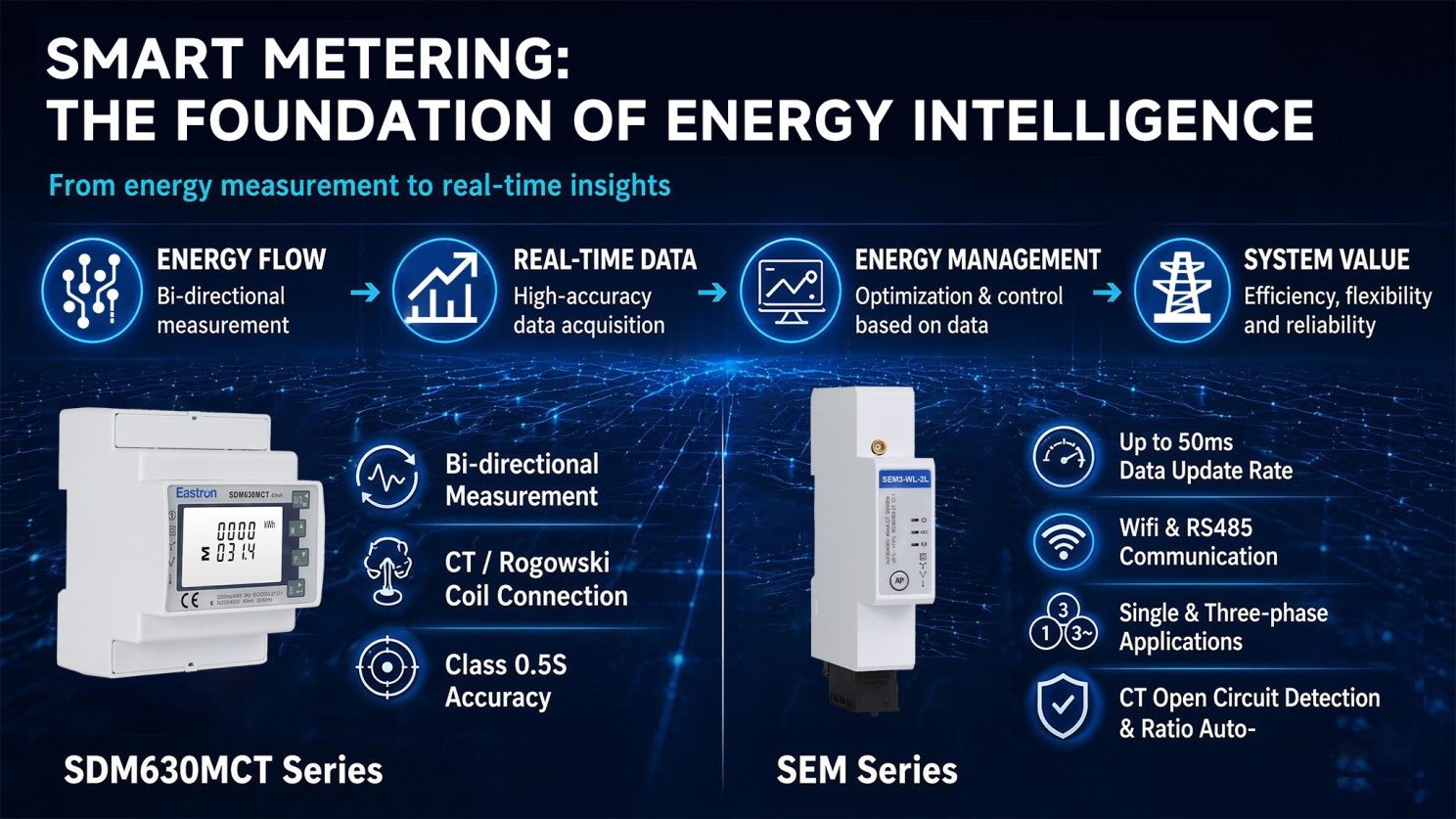
Europe's Solar and Energy Storage Transition: Transforming the Power System Infrastructure for a Renewable Future
Jul 10,2026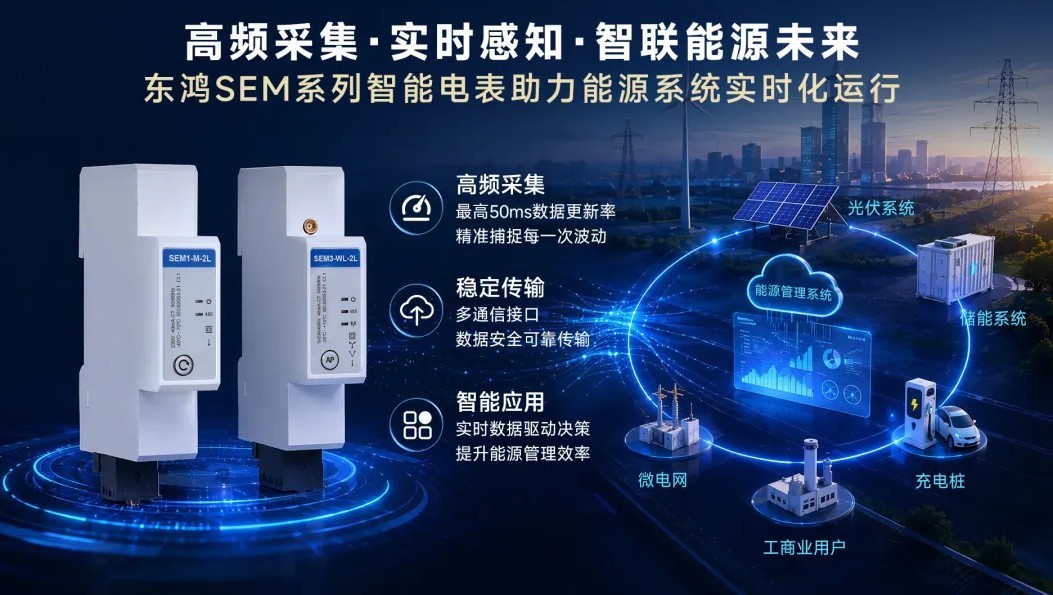
Power Systems Are Becoming “Real-Time Systems”: Why Data Is More Critical Than Electricity
Jul 06,2026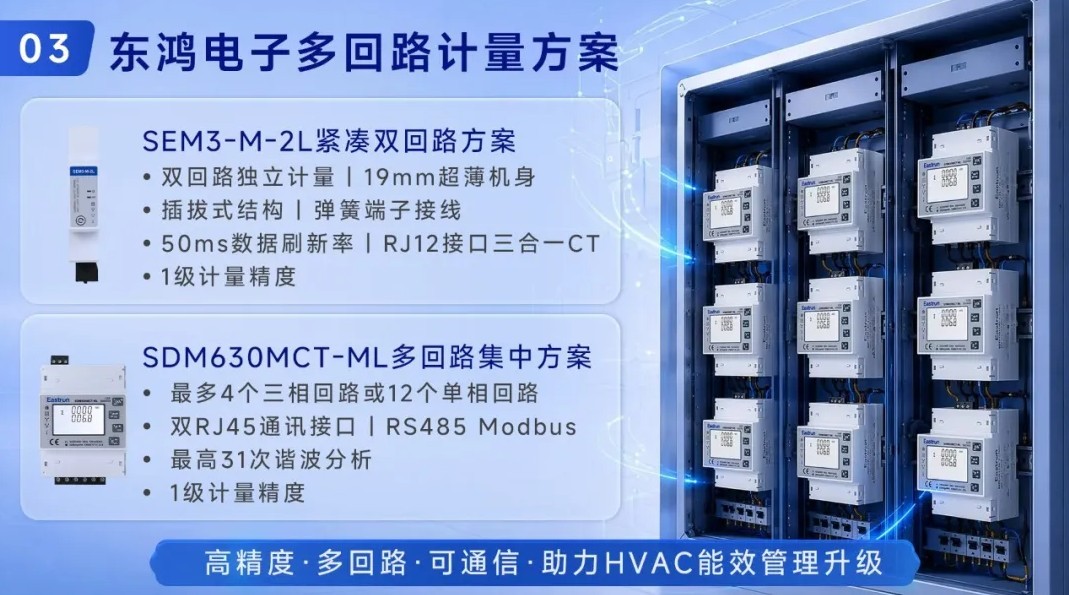
New EPBD Regulations Drive HVAC Energy Transparency and Boost Demand for Smart Meters
Jul 07,2026Content
In three-phase electrical installations, accurate measurement is more than a billing requirement. It is a foundation for energy management, load analysis, renewable integration, facility optimization, and operational safety. The CT type DIN rail three-phase electronic kWh meter with bi-directional measurement is designed for applications where current levels are variable, electrical systems are distributed, and energy flow may occur in both import and export directions.
This article introduces the SDM72CT-BI three-phase four-wire electronic kWh meter, a CT-operated energy meter suitable for 3P4W systems with a nominal voltage of 3 x 230/400 V. It supports bi-directional energy measurement, pulse output for active energy, configurable CT primary input, 1 A or 5 A CT secondary options, DIN rail mounting, and Class 1.0 active energy accuracy according to IEC 62053-21. With a compact 4-module, 72 mm-wide structure, it provides a practical balance of measurement capability, installation convenience, and cost efficiency.
For contractors, panel builders, energy consultants, OEM equipment manufacturers, and facility managers, this meter offers a compact and economical way to measure energy in three-phase systems where direct connection is not suitable or not preferred. For systems involving solar PV, battery storage, grid export, industrial sub-metering, or distributed loads, its bi-directional measurement capability is especially valuable.
CT Type Din Rail Three Phase Electronic kWh meter with Bi-directional Measurement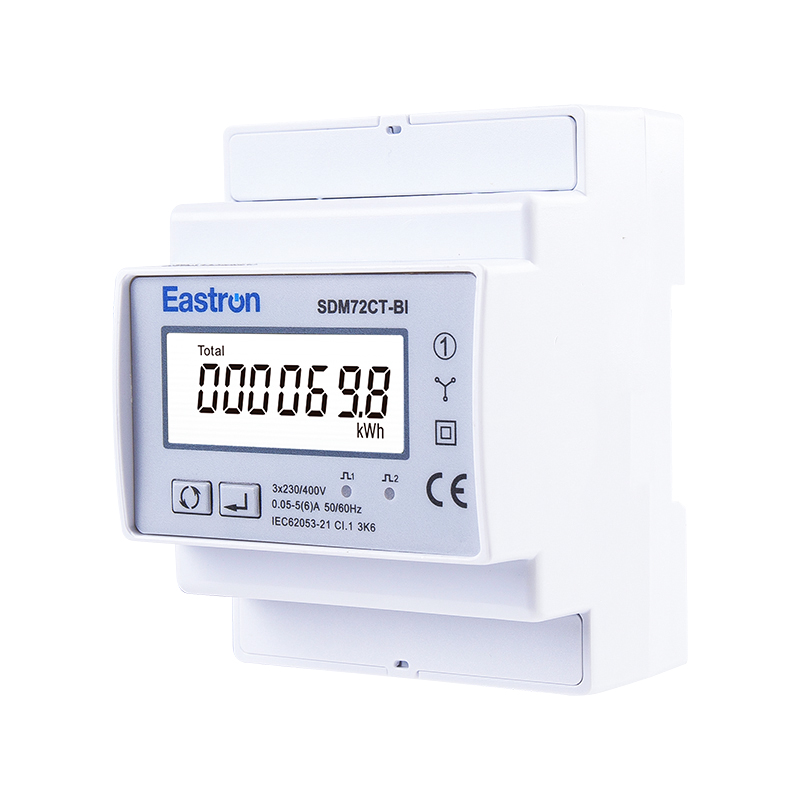
The SDM72CT-BI is a CT type DIN rail three-phase electronic kWh meter with bi-directional measurement and pulse output. It is designed for three-phase four-wire AC electrical systems and operates with external current transformers. Instead of carrying high load current directly through the meter, the system uses CTs to step down current to a secondary signal, typically 1 A or 5 A. This makes the meter suitable for installations with a wide current range, while keeping the meter compact and easy to integrate into electrical distribution panels.
The meter measures RMS values on a three-phase AC system and records active energy with Class 1.0 accuracy. It supports CT primary settings from 1 A to 9999 A, allowing it to match a wide range of CT ratios. This flexibility means the same meter model can be used across many different projects, reducing inventory complexity for distributors, panel builders, and installation companies.
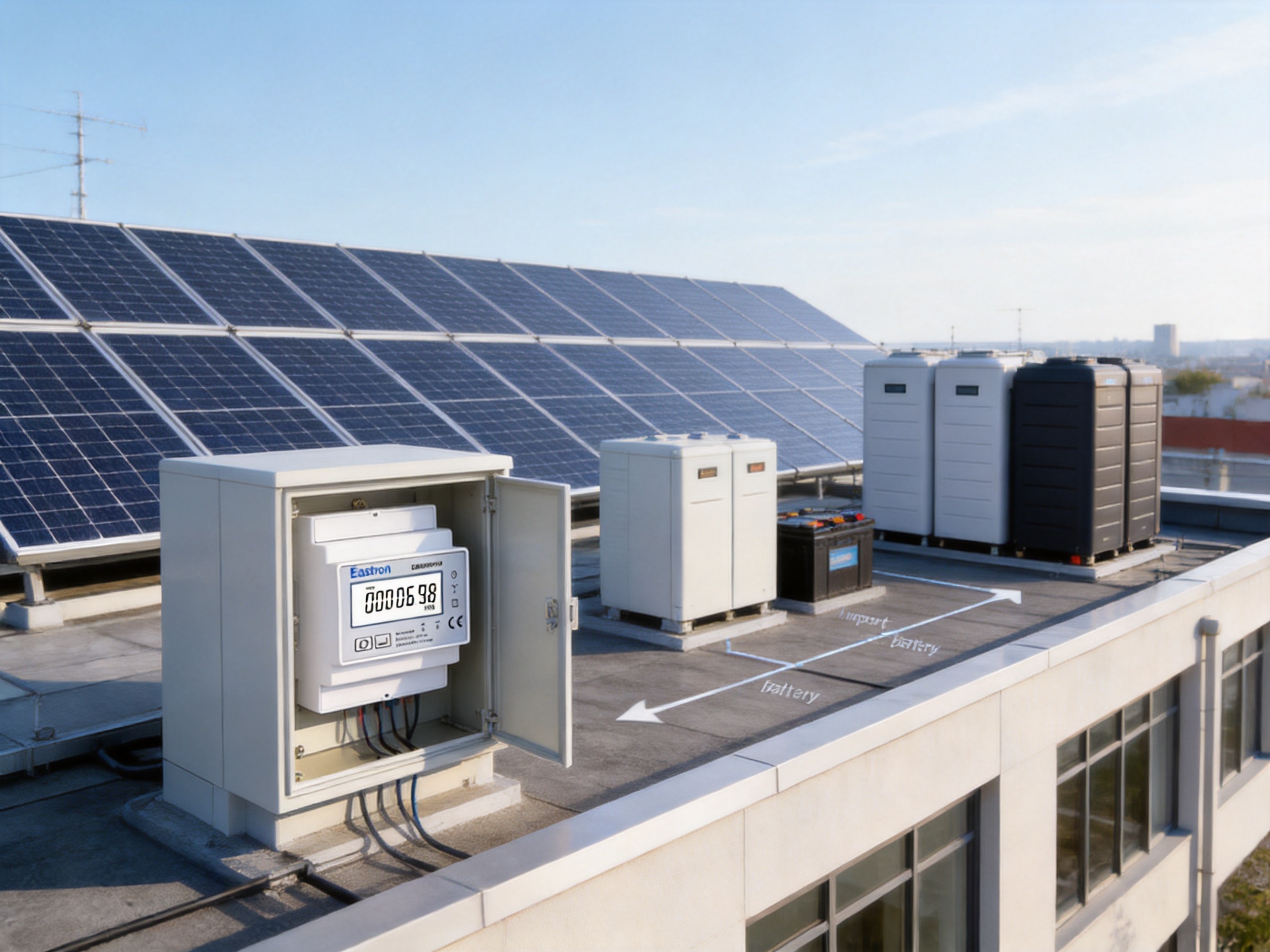
One of the most important functions of this meter is bi-directional measurement. In a conventional one-way energy meter, the primary purpose is to record electricity consumed from the grid. However, modern electrical systems are no longer always one-directional. A building may import power at night and export solar power during the day. A battery system may charge during off-peak periods and discharge during peak tariff windows. A factory may operate equipment while also generating energy from a rooftop photovoltaic system. In these environments, the ability to measure energy flow in both directions is essential.
The SDM72CT-BI also includes pulse output for active energy. Pulse output is a widely used function in automation and monitoring systems. It allows the meter to transmit energy consumption data to data loggers, building management systems, PLCs, energy monitoring gateways, or remote reading devices. This makes the product suitable not only for standalone metering but also for integrated energy management solutions.
Item |
Specification |
Practical Benefit |
System Type |
Three-phase four-wire, 3P4W |
Suitable for common commercial and industrial low-voltage distribution systems |
Voltage |
3 x 230/400 V |
Compatible with standard three-phase low-voltage networks |
Current Input |
CT operated, 1 A or 5 A secondary |
Allows use with external current transformers for higher-current circuits |
CT Primary Range |
1 A to 9999 A |
Flexible matching with many CT ratios and project requirements |
Minimum Current |
0.25 A |
Supports measurement under low-load conditions |
Starting Current |
10 mA |
Helps detect very low current flow after starting threshold is reached |
Accuracy |
Active energy Class 1.0 according to IEC 62053-21 |
Provides reliable energy measurement for sub-metering and monitoring |
Display |
LCD |
Provides direct local reading during operation and commissioning |
Output |
Pulse output for active energy |
Enables integration with monitoring systems and remote data collection |
Mounting |
35 mm DIN rail |
Simple installation in standard electrical cabinets and distribution boards |
Width |
4 modules, 72 mm |
Compact design saves panel space |
Direct-connected meters are widely used in residential and light commercial applications, but they are not always practical for higher-current three-phase circuits. When current levels rise, direct wiring through the meter can require larger terminals, thicker conductors, more installation space, and greater thermal design consideration. A CT-operated meter avoids these limitations by measuring the secondary output of external current transformers.
This approach provides several advantages. First, it improves installation flexibility. The meter can be installed in a control cabinet while CTs are placed around the main conductors. Second, it supports higher current circuits without requiring the full load current to pass through the meter. Third, it allows one meter type to be adapted to many different current ratings simply by selecting suitable CTs and setting the correct CT ratio. Fourth, it helps reduce panel complexity because the meter remains compact even when applied to large circuits.
Compared with many conventional fixed-current meters, the CT primary range of 1 A to 9999 A gives the SDM72CT-BI a broad application scope. This is especially helpful for companies that handle multiple projects with different load sizes. Instead of stocking several meter variants for different current ratings, a panel builder can use a flexible CT-operated meter and pair it with the correct current transformers.
For commercial and industrial environments, CT metering is often the preferred approach for main distribution boards, sub-distribution boards, production lines, HVAC systems, pumping stations, data centers, and renewable energy connections. The SDM72CT-BI fits these needs by combining CT input with DIN rail convenience and bi-directional functionality.
Traditional electrical systems were designed around one-way power delivery: generation plants produced energy, transmission and distribution networks delivered it, and end users consumed it. Today, this model has changed. Many buildings and facilities are both consumers and producers of energy. Solar photovoltaic systems, wind microgeneration, battery energy storage, electric vehicle infrastructure, and demand-response systems all create conditions where energy can flow in two directions.
Bi-directional measurement allows a meter to register both imported and exported energy. In practical terms, this means the meter can support applications where electricity is drawn from the grid at some times and sent back to the grid or another part of the system at other times. This function is critical for understanding the true energy profile of a site.
For example, a commercial building with rooftop solar may consume all generated energy during working hours on cloudy days but export excess energy on sunny weekends. A standard one-way meter may not provide enough insight into this behavior. A bi-directional meter helps identify how much energy is imported and exported, allowing managers to evaluate self-consumption, grid dependence, and renewable system performance.
In battery storage systems, bi-directional measurement is also valuable. Batteries may charge from the grid, from solar generation, or from another source, and later discharge energy to support loads. Without bi-directional measurement, the energy balance of the system can be incomplete. The SDM72CT-BI provides a practical metering solution for these increasingly common installations.
Compared with meters that only record consumption, a bi-directional CT-operated meter offers a more future-ready approach. As energy systems become more distributed, measurement tools must evolve from simple consumption counters into instruments that help users understand energy movement. This product supports that transition while remaining straightforward and economical.
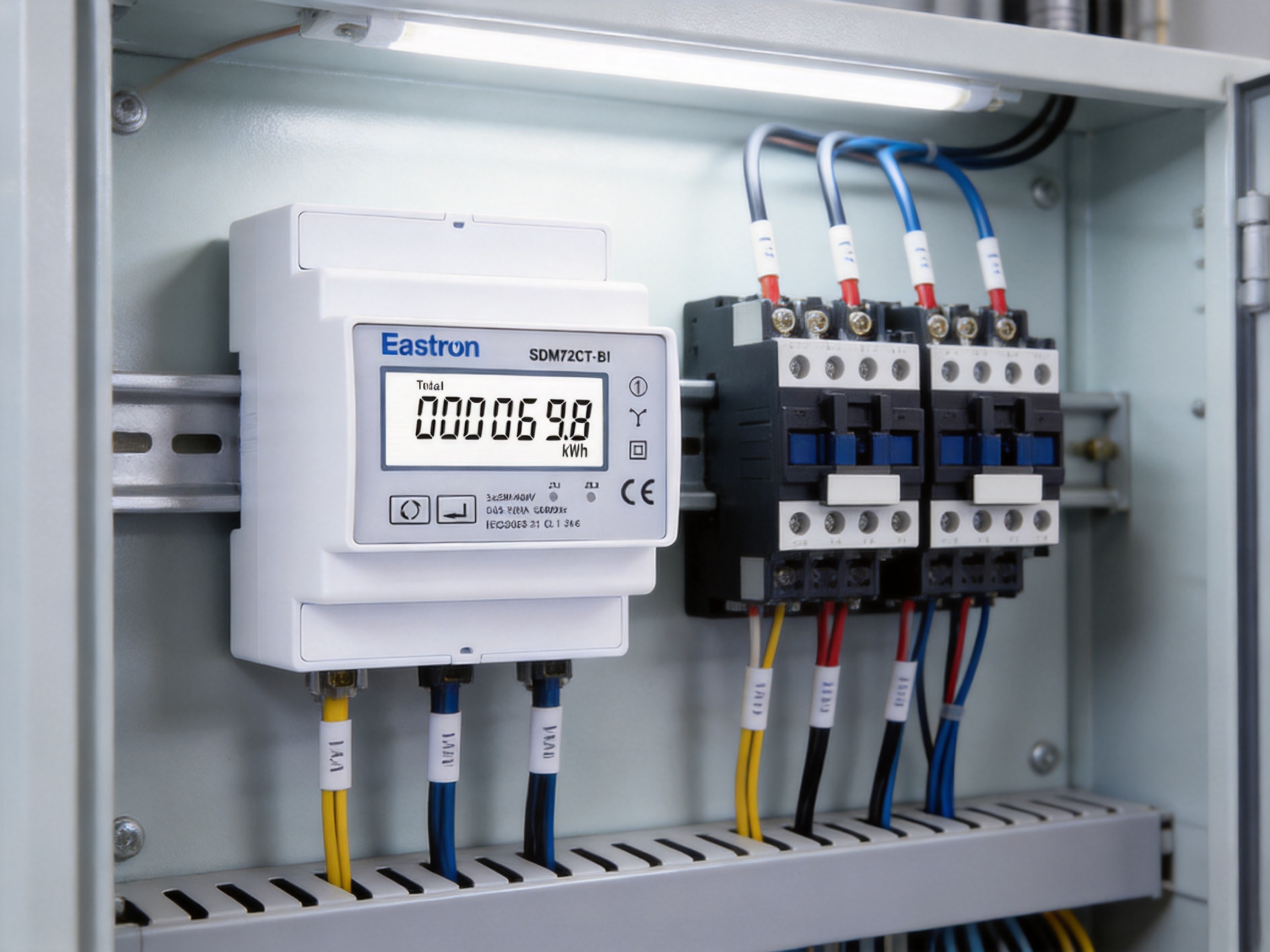
Pulse output remains one of the most reliable and widely accepted methods for transmitting energy measurement information. Each pulse represents a defined amount of active energy. External devices can count these pulses to calculate total energy consumption or export, depending on system configuration and monitoring logic.
The pulse output of the SDM72CT-BI makes it easy to connect the meter to many types of equipment. These may include building management systems, energy data loggers, programmable logic controllers, gateway devices, monitoring terminals, and centralized energy management platforms. Because pulse output is simple and robust, it is often chosen for sub-metering projects where cost-effective data collection is required.
In multi-tenant buildings, pulse output can be used to collect energy data from different sections of the property. In factories, it can help monitor production lines or workshops. In renewable energy systems, it can provide input to supervisory systems that track energy generation and usage. In commercial facilities, it can support sustainability reporting, tenant allocation, cost analysis, and operational benchmarking.
Another advantage of pulse output is its compatibility with many legacy and modern systems. While advanced communication protocols are useful in many applications, pulse output remains a universal interface that is easy to understand, test, and maintain. For projects where simplicity and reliability matter, this output method is a practical advantage.
Space inside electrical panels is valuable. Every millimeter matters, especially in retrofit projects or compact distribution boards. The SDM72CT-BI is built in a 4-module housing with a width of 72 mm. It mounts on a standard 35 mm DIN rail, allowing fast installation in common electrical enclosures.
DIN rail mounting is an important advantage because it supports standardized panel design. Electricians and panel builders are familiar with DIN rail components, and installation is typically faster than custom mounting arrangements. The meter can be positioned alongside breakers, relays, contactors, power supplies, terminals, and monitoring equipment.
Compared with larger panel-mounted meters, this compact DIN rail meter helps save space and reduce cabinet design complexity. It is especially useful for sub-metering panels where multiple meters may be installed in one enclosure. A 72 mm width allows several meters to be arranged efficiently while maintaining accessibility for wiring and reading.
The LCD display provides local visibility without requiring additional equipment. During commissioning, maintenance, or inspection, personnel can read values directly from the meter. This is useful when verifying wiring, checking energy accumulation, or confirming operation before connecting to monitoring systems.
Energy measurement accuracy is essential for meaningful analysis. The SDM72CT-BI provides active energy accuracy according to IEC 62053-21 Class 1.0. This level of accuracy is suitable for many sub-metering, energy monitoring, and facility management applications. It allows users to make informed decisions based on reliable measured values.
The meter measures RMS values on a three-phase AC system. RMS measurement is important because AC electrical quantities vary continuously over time. Proper RMS measurement helps represent the effective value of voltage and current, which is necessary for accurate power and energy calculations.
The product also specifies power measurement accuracy as 1% of range maximum. For users monitoring load behavior, this supports practical evaluation of energy consumption patterns and power usage trends. Combined with CT operation and configurable CT primary values, the meter can be adapted to a wide range of installations while maintaining dependable measurement performance.
Accuracy is not only a function of the meter. It also depends on correct CT selection, CT class, installation direction, wiring accuracy, and configuration. The flexible design of the SDM72CT-BI gives installers the tools they need, but proper engineering practice remains essential. Correct CT ratio setting, correct phase matching, and careful wiring verification should always be part of commissioning.
The SDM72CT-BI offers several advantages when compared with many conventional three-phase meters on the market. These advantages are not based on unnecessary complexity but on practical features that matter in real installations.
First, its CT-operated design supports broad current adaptability. Many direct-connected meters are limited by their maximum current rating. When current exceeds that limit, a different metering approach is needed. The SDM72CT-BI can be paired with CTs suitable for a wide range of primary currents, making it useful in both moderate and high-current systems.
Second, its bi-directional measurement capability gives it an edge over meters designed only for import measurement. As renewable energy and storage systems become more common, bi-directional measurement is no longer a niche feature. It is becoming a standard requirement in many modern energy projects.
Third, the meter provides pulse output for active energy. Some simple meters provide only local display, which limits their usefulness in centralized monitoring systems. With pulse output, this meter becomes part of a broader data collection strategy without requiring a complicated communication infrastructure.
Fourth, the compact 72 mm DIN rail format saves panel space. In competitive projects, panel size, installation time, and material efficiency all affect total project cost. A compact meter can help reduce enclosure requirements and simplify panel layouts.
Fifth, the CT primary range from 1 A to 9999 A improves inventory efficiency. For distributors and panel builders, fewer meter variants can mean simpler purchasing, easier stock control, and faster project response. The same meter model can serve many applications when matched with appropriate current transformers.
Sixth, Class 1.0 active energy accuracy provides reliable data for energy management. While some low-cost meters may be acceptable for rough indication, facility managers and engineers often require consistent measurement performance. The SDM72CT-BI is designed for dependable use in professional environments.
Seventh, it is made by a manufacturer with strong expertise in energy measurement solutions. Product performance depends not only on design but also on manufacturing quality, testing capability, and long-term technical support. This is where the strengths of Eastron Electronic Co., Ltd. add value beyond the hardware itself.
The meter is suitable for a wide range of three-phase four-wire energy measurement applications. Its CT input, bi-directional capability, pulse output, and compact housing make it useful in both new installations and retrofit projects.
In commercial buildings, it can be used for tenant sub-metering, floor-level metering, HVAC system monitoring, lighting system measurement, and renewable energy tracking. Shopping centers, office buildings, hotels, schools, hospitals, and public buildings can benefit from accurate sub-metering to improve energy cost allocation and operational transparency.
In industrial facilities, the meter can monitor production lines, workshops, machinery groups, compressed air systems, pumping stations, refrigeration systems, and process loads. By measuring energy at a more detailed level, managers can identify high-consumption areas and evaluate the impact of efficiency improvements.
In renewable energy systems, the bi-directional function helps track energy import and export. Solar PV installations, hybrid power systems, battery storage equipment, and microgrid projects can use the meter as part of their measurement infrastructure.
In infrastructure projects, the meter may be applied to transportation facilities, water treatment plants, telecommunications sites, and public utility distribution panels. These environments often require compact, reliable devices that can be integrated into standard electrical cabinets.
In OEM equipment, machine builders and system integrators may use the meter to add energy measurement functionality to their products. Because it mounts on DIN rail and uses pulse output, integration can be straightforward.
For energy service companies and consultants, the meter can support audits, monitoring projects, and performance verification. Measuring energy accurately before and after improvements is essential for proving savings and building trust with customers.
Correct installation is critical for any CT-operated three-phase meter. The SDM72CT-BI is designed to simplify installation, but technicians should follow good electrical practice and local regulations.
The voltage inputs should be connected according to the three-phase four-wire wiring diagram. Phase sequence should be verified to ensure accurate readings. Current transformers should be installed on the corresponding phase conductors, and the CT secondary wiring should be connected to the correct meter terminals. CT polarity must be observed, especially in bi-directional applications, because reversed CT orientation can affect import and export interpretation.
The CT primary setting must match the actual CT ratio used in the installation. For example, if a 500/5 A CT is used, the meter should be configured according to that primary value and secondary input. Incorrect CT ratio settings will cause energy readings to be scaled incorrectly.
Installers should also confirm whether the CT secondary is 1 A or 5 A and configure or select the meter connection accordingly. The product supports CT secondary options of 1 A and 5 A, which allows compatibility with common CT types. The CT burden, accuracy class, and cable length should be considered when selecting CTs.
During commissioning, technicians should check voltage presence, current direction, load conditions, pulse output operation, display readings, and phase correspondence. Where possible, readings should be compared with expected load values or reference instruments. This process helps detect wiring mistakes before the system is placed into service.
Because CT circuits can produce high voltage if opened while energized, CT secondary circuits should be handled carefully. Safe working procedures must be followed. Shorting terminals or proper isolation methods should be used when servicing CT circuits, according to professional electrical safety practices.
A metering product is only as reliable as the organization that designs, manufactures, tests, and supports it. Eastron Electronic Co., Ltd., headquartered in Jiaxing, China near Shanghai, Hangzhou, and Jiangsu, is a high-tech manufacturer and supplier specializing in electricity products and energy measurement solutions. The company develops and produces electricity meters, power analyzers, current sensors, communication modules, and management systems.
The company’s strength is built on long-term investment in research and development. Its development teams in China and the United Kingdom focus on new technologies and product improvement. This international engineering structure supports innovation while helping the company respond to market requirements in different regions.
Cooperation with universities and professional institutions further strengthens the company’s technical foundation. Energy measurement is a field where standards, electronics, firmware, calibration, electromagnetic compatibility, and practical installation knowledge all intersect. By investing in research partnerships and internal engineering capability, the manufacturer can develop products that address real-world requirements rather than only basic specification targets.
The company also holds patented technologies in software, embedded software, and hardware. These capabilities matter because modern energy meters are not simple electromechanical counters. They depend on metering chips, firmware algorithms, display logic, communication design, anti-interference engineering, calibration methods, and production quality control. A strong technical base helps improve consistency, reliability, and long-term product evolution.
Professional testing is essential in energy metering. The manufacturer has established its own laboratory capable of performing EMC, LVD, accuracy, and environmental tests according to IEC, EN, GB, and UL standards. This in-house testing capability is a major advantage because it allows engineers to verify performance during development, refine designs quickly, and maintain quality during production.
EMC testing helps ensure that products can operate properly in environments with electromagnetic interference and that they do not generate unacceptable interference to other equipment. In electrical distribution panels, meters may be installed near contactors, drives, relays, switching power supplies, and other devices that create electrical noise. Good EMC performance is therefore essential.
LVD-related testing supports electrical safety evaluation. Energy meters are connected to live electrical systems, so insulation, creepage, clearance, dielectric strength, and safety design must be carefully controlled. A manufacturer with professional LVD testing capability can better validate product safety during design and production.
Accuracy testing is central to metering quality. A meter must maintain measurement performance within specified limits. The laboratory’s ability to test accuracy according to applicable standards supports dependable production and quality assurance.
Environmental testing helps verify product behavior under different temperature, humidity, and operating conditions. Electrical meters may be installed in panels located in equipment rooms, factories, basements, utility spaces, and outdoor enclosures. Testing helps ensure that the product can maintain stable performance under expected service conditions.
The company follows the ISO 9001 quality management system. ISO 9001 emphasizes process control, continuous improvement, corrective action, documentation, and customer satisfaction. For customers, this provides confidence that manufacturing is not based on isolated inspection but on a systematic quality framework.
Production is approved by SGS according to MID standards. This reflects experience with regulated metering requirements and disciplined production control. Although the SDM72CT-BI should be selected according to the requirements of each project and local regulations, the manufacturer’s broader experience with MID-related production demonstrates a strong quality culture in energy metering.
The SDM72CT-BI reflects a practical design philosophy. It does not attempt to solve every possible metering requirement with unnecessary complexity. Instead, it focuses on features that are widely needed: CT operation, three-phase four-wire measurement, bi-directional energy measurement, active energy pulse output, LCD indication, compact DIN rail mounting, and dependable accuracy.
This practical approach is beneficial for many users. A facility manager does not always need a complex analyzer for every feeder. A panel builder may need a cost-effective meter that fits easily into a standard enclosure. A solar installer may need a reliable import-export measurement point. A systems integrator may need pulse output for a monitoring gateway. The SDM72CT-BI addresses these needs directly.
Flexibility is also central to the product. The CT primary range from 1 A to 9999 A means it can serve small and large circuits. The 1 A and 5 A CT secondary compatibility supports common CT standards. The pulse output can connect to many external systems. The DIN rail design fits standard panels. These flexible characteristics reduce barriers to adoption.
Economy is another important factor. In energy management projects, the cost of metering points can significantly affect project feasibility. A meter that provides the essential functions without unnecessary cost can enable more measurement points within the same budget. More measurement points usually mean better energy visibility, more accurate cost allocation, and stronger opportunities for efficiency improvement.
Energy management begins with measurement. Without accurate and well-placed meters, organizations cannot fully understand where energy is consumed, when peaks occur, which systems are inefficient, or how renewable generation affects grid consumption. The SDM72CT-BI can serve as a key field device in such systems.
When installed at main feeders, it can help track overall import and export energy. When installed at sub-feeders, it can identify energy use by department, tenant, process, or equipment group. When connected through pulse output to monitoring systems, it can contribute data for dashboards, reports, alarms, and trend analysis.
For organizations pursuing carbon reduction, energy conservation, or cost control, sub-metering provides actionable information. A building may discover that HVAC energy consumption remains high outside working hours. A factory may identify that compressed air systems are using excessive energy. A solar operator may compare exported energy with self-consumed energy. These insights depend on reliable metering devices installed at the right locations.
The meter’s bi-directional function makes it especially relevant for energy transition projects. As more customers install solar panels, storage systems, and smart load control, energy management systems must record both consumption and generation behavior. The SDM72CT-BI supports this need while remaining simple to install and integrate.
Eastron Electronic Co., Ltd. supplies products and services to more than 50 countries across Europe, Asia-Pacific, America, the Middle East, and Africa. This global experience is important because metering requirements vary by market. Different regions may have different installation practices, standards expectations, voltage systems, certification requirements, and customer preferences.
A manufacturer serving many international markets must maintain product consistency, documentation quality, technical support capability, and responsive service. The company’s professional teams for technical support and after-sales service help customers select products, solve technical questions, and maintain confidence throughout the product life cycle.
For distributors and OEM customers, supplier stability is a major consideration. A product may be technically suitable, but if supply, support, or quality is inconsistent, project risk increases. The manufacturer’s established product range, R&D investment, laboratory capability, quality system, and international customer base strengthen its position as a reliable partner.
When selecting a three-phase energy meter, users often compare several options: direct-connected meters, CT-operated meters without bi-directional measurement, advanced multifunction power analyzers, and communication-enabled smart meters. Each type has its place, but the SDM72CT-BI occupies a valuable middle ground.
Compared with direct-connected meters, it is better suited to higher-current applications because it uses external CTs. It avoids the need to pass full load current through the meter and provides broader scalability.
Compared with CT meters that only measure one-way energy, it is more suitable for modern systems with import and export energy flow. This is particularly important for renewable energy, storage, and microgrid applications.
Compared with high-end multifunction analyzers, it offers a more economical solution when the main requirement is active energy measurement with pulse output. Not every feeder needs extensive harmonic analysis, waveform capture, or advanced communication. For many sub-metering points, a reliable kWh meter is the most cost-effective choice.
Compared with meters requiring complex communication setup, pulse output offers simplicity. It can be integrated into many systems with minimal configuration. This is useful where robustness and ease of maintenance are more important than advanced networking functions.
Therefore, the SDM72CT-BI is especially attractive for projects requiring a practical balance of functionality, compactness, flexibility, and cost control.

It is designed for three-phase four-wire AC systems, commonly described as 3P4W. The rated voltage is 3 x 230/400 V, making it suitable for many standard low-voltage commercial and industrial distribution systems.
CT-operated means the meter measures current through external current transformers instead of carrying the full load current directly. The CTs convert higher primary current into a lower secondary current, such as 1 A or 5 A, which the meter can measure safely and efficiently.
Bi-directional measurement records energy flow in both directions. This is important for solar PV systems, battery storage, microgrids, and facilities that may both import power from the grid and export power back to the grid or another part of the installation.
Yes. The meter includes pulse output for active energy. This output can be connected to data loggers, building management systems, gateways, PLCs, or other monitoring equipment that can count pulses and calculate energy values.
The meter provides active energy accuracy according to IEC 62053-21 Class 1.0. It also specifies power measurement accuracy of 1% of range maximum.
The CT primary range is 1 A to 9999 A. This wide range allows the meter to be used with many current transformer ratios and in many different project sizes.
The meter supports 1 A and 5 A CT secondary current options. These are common CT secondary ratings used in electrical metering and monitoring applications.
The meter has a 4-module housing with a width of 72 mm. It is designed for installation on a standard 35 mm DIN rail.
Yes. Its bi-directional measurement makes it suitable for renewable energy systems where energy may be imported and exported. It can be used in solar PV, storage, and hybrid energy applications when properly selected and installed.
Its key advantages include CT operation, broad CT primary range, bi-directional measurement, pulse output, compact DIN rail housing, Class 1.0 active energy accuracy, and support from a manufacturer with strong R&D, testing, quality management, and global supply experience.
The SDM72CT-BI CT type DIN rail three-phase electronic kWh meter is a practical and flexible solution for modern energy measurement. It is designed for three-phase four-wire systems and provides CT-operated measurement, bi-directional energy recording, active energy pulse output, LCD display, Class 1.0 active energy accuracy, and compact DIN rail installation.
Its strengths are especially relevant in today’s changing electrical environment. As buildings and industrial facilities become more energy-aware, and as renewable generation and storage become more common, meters must do more than record one-way consumption. They must support import-export measurement, integrate with monitoring systems, and adapt to different current levels. This product meets those needs in a compact and economical format.
Beyond the product itself, the manufacturing background adds important value. Eastron Electronic Co., Ltd. combines R&D investment, patented technologies, professional laboratory testing, ISO 9001 quality management, SGS-approved MID production experience, and international market service. These strengths help ensure that customers receive not only a meter but also a dependable energy measurement solution supported by engineering and manufacturing competence.
For panel builders, system integrators, contractors, facility managers, renewable energy installers, and energy consultants, the SDM72CT-BI offers a strong combination of adaptability, reliability, and practical functionality. It is well suited for projects that require accurate three-phase CT metering with bi-directional capability and simple integration into wider monitoring systems.
International Electrotechnical Commission. IEC 62053-21: Electricity Metering Equipment, Particular Requirements for Static Meters for Active Energy.
International Electrotechnical Commission. IEC Standards for Low-Voltage Electrical Measurement and Metering Equipment.
International Organization for Standardization. ISO 9001 Quality Management Systems Requirements.
European Committee for Electrotechnical Standardization. EN Standards for Electrical Safety and Electromagnetic Compatibility.
Underwriters Laboratories. UL Standards for Electrical and Electronic Measurement Equipment.
General industry guidance on current transformer metering, three-phase energy measurement, and electrical panel installation practices.
Your email address will not be published. Required fields are marked *

We develop and produce high performance electricity meters, power analyzers, current sensors, communication modules and management systems. China Custom Smart Meters Manufacturers and Factory
Address:NO 52, Dongjin Road, Nanhu, Jiaxing, Zhejiang, China
Copyright @ Eastron Electronic Co., Ltd. All rights reserved Electricity Meters Manufacturers
