

 English
 Español
 Deutsch
 中文简体


Product Consultation
Your email address will not be published. Required fields are marked *
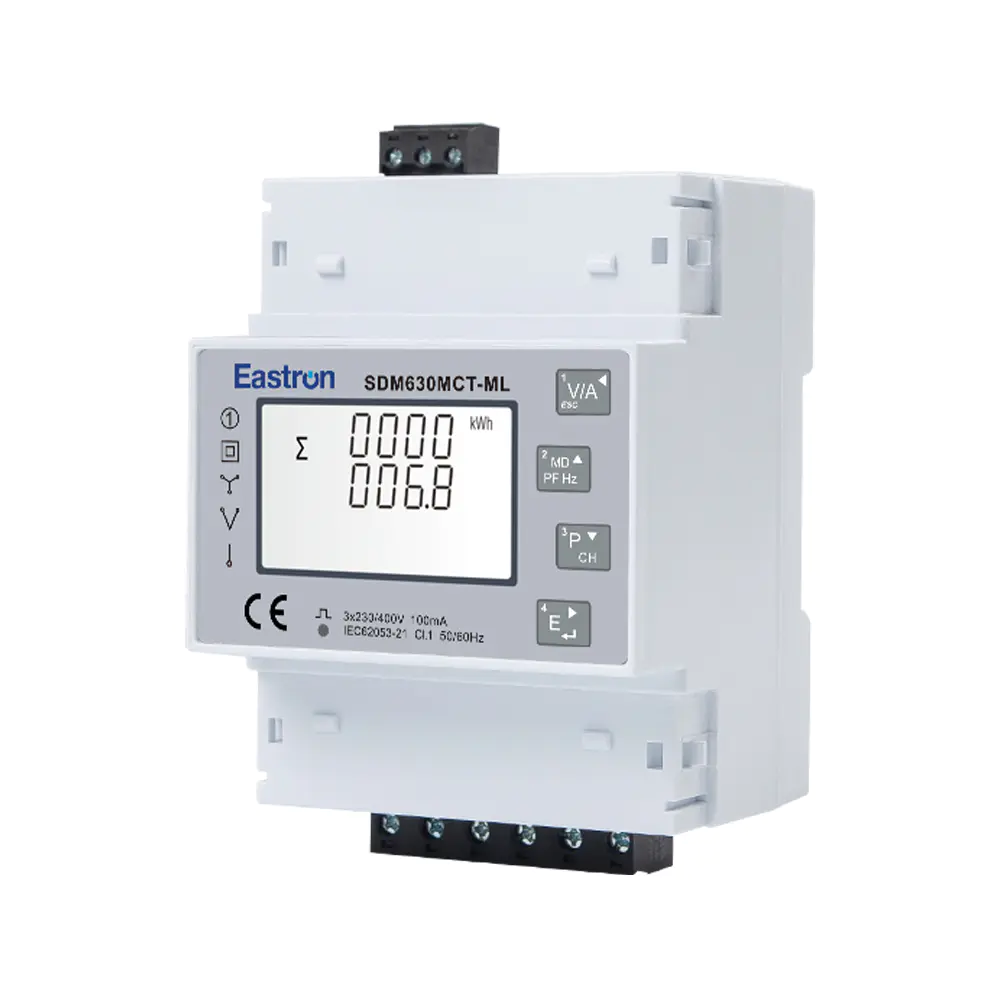
Multi-Circuit Three Phase Ethernet Modbus TCP Energy Meter for Data Center Metering
Aug 03,2022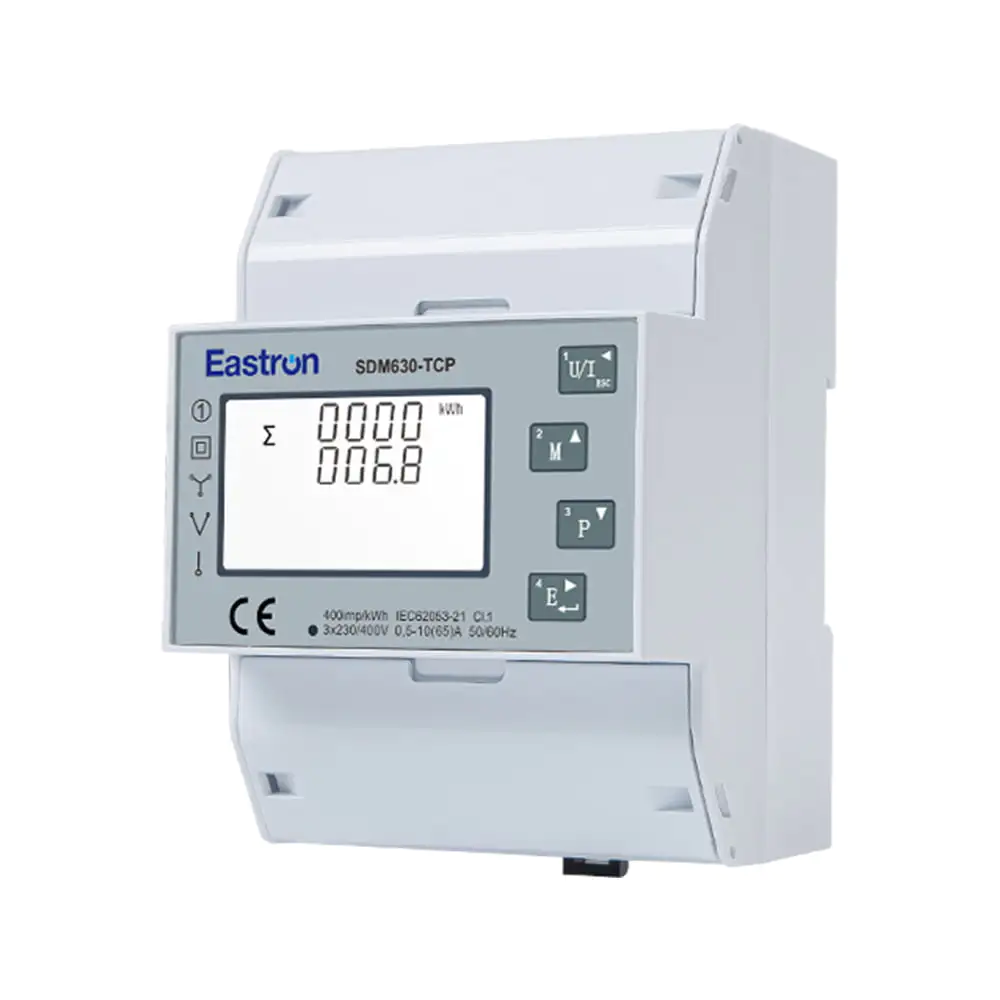
Direct Type Three Phase Ethernet Modbus TCP Energy Meter for Data Center Metering
Nov 24,2022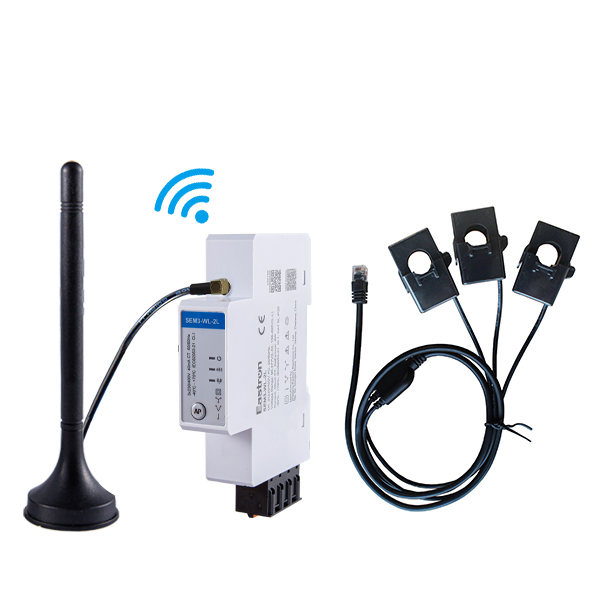
CT Type Three Phase Din Rail Wifi Energy Meter for PV Metering
May 30,2025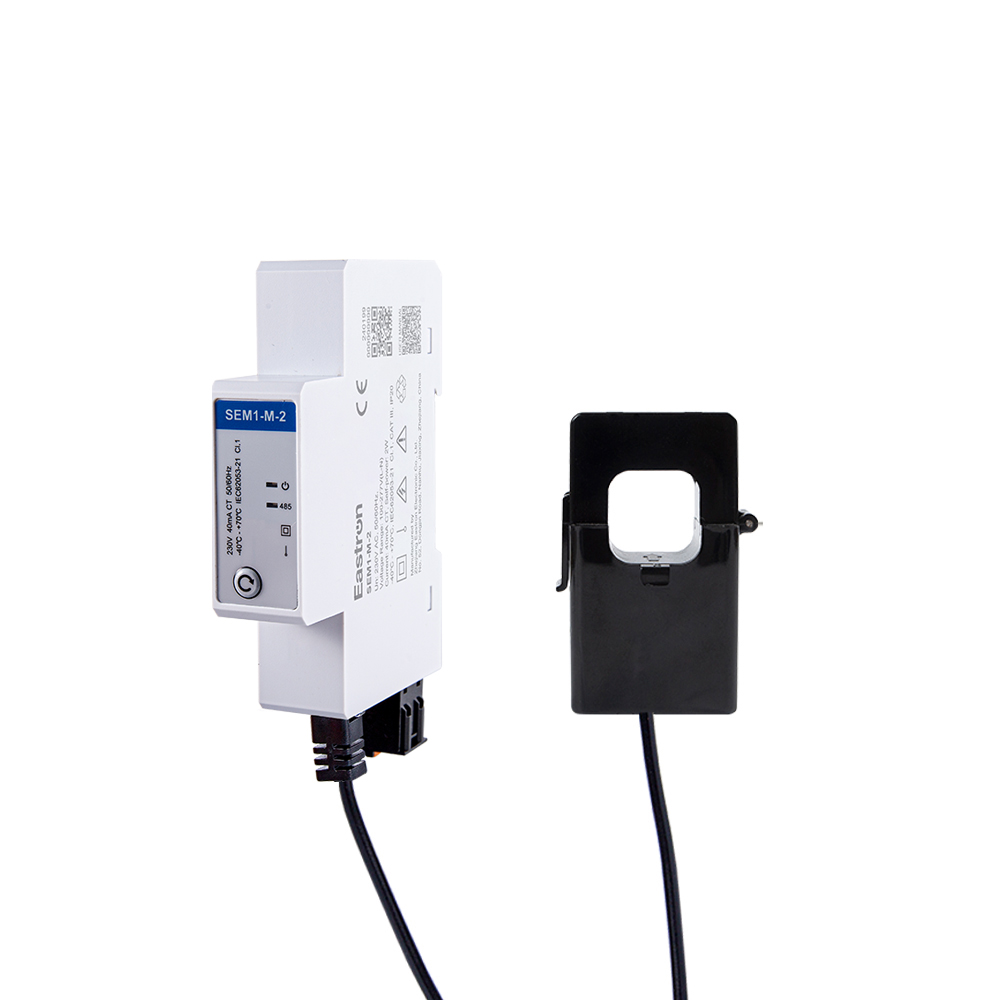
CT Type RS485 Modbus Single Phase Din Rail Energy Meter for PV Metering
May 30,2025
CT Operated Wireless Three Phase Energy Meter for PV Metering
May 30,2025
RS485 CT Connection Three Phase Din Rail Energy Meter for PV Metering
May 30,2025Content
Modern electrical installations require more than a simple indication of voltage or current. Facility owners, industrial operators, building managers, electrical contractors, and energy service providers increasingly need accurate measurements, accessible communication, flexible wiring options, and dependable long-term operation. The CT Type Modbus TCP Din Rail Three Phase UL Energy Meter addresses these requirements in a compact device designed for installation panels, distribution boards, control cabinets, and energy-management systems.
The SDM630MCT-TCP is a multifunction energy meter for three-phase AC systems. It uses external current transformers for current measurement, supports 1 A or 5 A CT secondary inputs, and communicates through Ethernet using the Modbus TCP/IP protocol. It can be applied to 1P2W, 1P3W, 3P3W, and 3P4W network configurations, allowing one meter family to serve a broad range of electrical installations.
In addition to active energy, the meter measures voltage, current, active power, reactive power, apparent power, power factor, frequency, demand, total harmonic distortion, and related electrical parameters. Bidirectional measurement makes it suitable for installations where energy may flow in either direction, including distributed generation, renewable-energy systems, battery storage, and load-management applications.
Its UL certification, compact four-module DIN-rail format, backlit LCD, touch keypad, CT and PT operation, and Ethernet connectivity provide a combination of features that is valuable in modern low-voltage and commercial power systems. Rather than functioning only as a local display, the meter can act as a field measurement device within a larger supervisory, building-management, or energy-monitoring architecture.
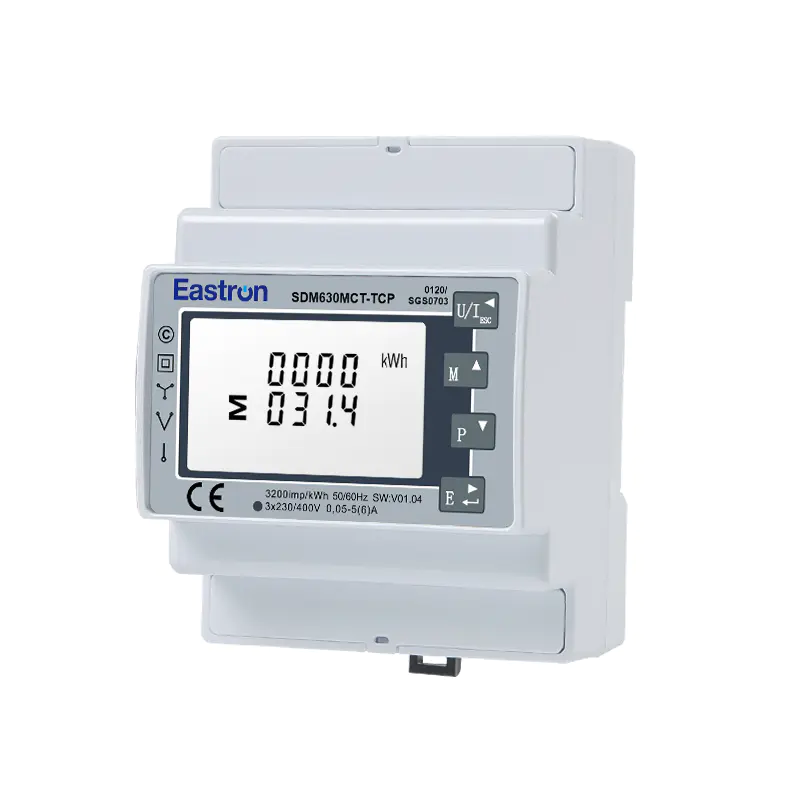
CT Type Modbus TCP Din Rail Three Phase UL Energy Meter
The SDM630MCT-TCP is a CT-operated, three-phase multifunction electricity meter developed for applications where direct current measurement is not sufficient or practical. External current transformers allow the meter to measure circuits with substantially higher operating currents than the meter’s internal terminals would normally accommodate. The CT primary ratio can be configured from 1 A to 9999 A, while the CT secondary input can be selected as either 1 A or 5 A.
The voltage measurement section is designed for three-phase systems with a rated voltage of 3 x 230/400 V AC. The specified voltage range is 100–277 V AC line-to-neutral and 173–480 V AC line-to-line. This range covers many common commercial, industrial, and building-distribution systems.
The meter is designed to work with four commonly encountered electrical arrangements:
1P2W systems, normally used for single-phase two-wire measurement.
1P3W systems, used where a single-phase three-wire arrangement is present.
3P3W systems, typically used for three-phase three-wire networks without a neutral conductor.
3P4W systems, used for three-phase four-wire networks with a neutral conductor.
This topology flexibility is an important practical advantage. Electrical contractors can use the same product platform across different projects instead of selecting a completely different meter for every wiring arrangement. Correct configuration remains essential, but the broad compatibility simplifies procurement, panel design, commissioning, and maintenance.
Current transformers provide electrical isolation between the primary power circuit and the measuring instrument. The primary conductor carries the actual load current, while the CT produces a proportional secondary current—typically 1 A or 5 A—for the meter’s input. This arrangement enables measurement of larger feeders and branch circuits while keeping the meter’s current terminals within a standardized measurement range.
For electrical distribution systems, CT operation offers several installation benefits. A meter can be installed without routing the full load current through the instrument. This can reduce the physical size of the meter terminals, simplify panel layout, and make the instrument suitable for circuits with current ratings beyond the capacity of a direct-connected meter.
CTs also provide flexibility when the measuring point is physically separated from the control panel. With suitable CT selection and correctly sized wiring, the measurement device can be located where local display and communication access are most convenient. This is particularly useful in switchboards, generator panels, industrial production lines, data-center distribution systems, and energy submetering installations.
The SDM630MCT-TCP supports CT primary settings from 1 A to 9999 A. This wide configuration range allows the installer to match the meter to a broad selection of current transformers. The CT ratio must be entered accurately during commissioning because an incorrect ratio will affect current, power, demand, and energy readings.
The product also supports PT-operated voltage measurement. When a system voltage exceeds the direct input range or requires instrument transformers for other design reasons, the voltage transformer ratio can be incorporated into the measurement arrangement. This provides additional flexibility for specialized distribution applications, subject to correct system design and safety requirements.
A modern energy meter must support more than accumulated kilowatt-hours. Electrical performance can change because of fluctuating loads, motor starting, nonlinear equipment, poor power factor, harmonic currents, phase imbalance, and changing operating schedules. The SDM630MCT-TCP presents a broad set of values that can help users understand both energy consumption and power quality conditions.
Measured or displayed quantities include voltage, current, active power, reactive power, apparent power, power factor, frequency, total harmonic distortion, demand, active energy, and reactive energy. The front LCD provides local access to the information, while Ethernet communication allows the same data to be collected remotely.
Active energy, expressed in kilowatt-hours, is the primary measurement used for consumption analysis, tenant allocation, production reporting, and energy-cost management. The product specifies Class 0.5S active-energy performance according to IEC 62053-22. This level of accuracy is appropriate for many high-quality monitoring and submetering applications where reliable energy data is important.
Because the meter supports bidirectional measurement, it can distinguish energy movement in both directions when applied and configured correctly. This is valuable for sites with photovoltaic generation, battery energy storage, regenerative drives, cogeneration, or other systems that can export energy to a distribution network.
Reactive power and apparent power provide additional insight into the behavior of electrical loads. Motors, transformers, fluorescent lighting systems, and power-electronic equipment may consume or produce reactive power. Monitoring reactive power can help identify inefficient operating conditions and support power-factor-correction strategies.
Apparent power combines the effects of active and reactive power and is useful when assessing transformer loading, feeder capacity, and equipment utilization. A system may have moderate active power but high apparent power because of low power factor. Monitoring both values gives engineers a more complete view of actual electrical demand.
Power factor indicates how effectively electrical current is being converted into useful active power. A poor power factor can increase current for a given useful load, potentially contributing to higher losses and reduced available capacity. The meter specifies power-factor accuracy of ±1%, making it suitable for routine monitoring and control decisions.
Frequency measurement provides information about the stability of the supply and can help identify operating changes in generator-based or isolated electrical systems. The specified frequency accuracy is ±0.2%.
Demand measurement is useful for identifying peak loading and understanding how a facility approaches its supply limit. In locations where electricity charges include demand-related costs, recorded demand can support load scheduling and peak-reduction programs. In industrial plants, demand information can also assist with transformer and feeder capacity planning.
Total harmonic distortion information supports the assessment of nonlinear loads. Variable-frequency drives, switching power supplies, uninterruptible power supplies, LED lighting, and other electronic equipment can introduce harmonic currents and voltages. A meter that combines energy measurement with power-quality data gives operators more context than a basic kWh counter.
Measurement accuracy is a central consideration when selecting an energy meter. The published specifications for the SDM630MCT-TCP include voltage accuracy of ±0.5%, current accuracy of ±0.5%, frequency accuracy of ±0.2%, power-factor accuracy of ±1%, active-power accuracy of ±1%, reactive-power accuracy of ±1%, and apparent-power accuracy of ±1%.
Active energy is specified as Class 0.5S according to IEC 62053-22, while reactive energy is specified as Class 2 according to IEC 62053-23. These classifications provide a recognized basis for comparing energy-meter performance and support dependable energy reporting when the installation is correctly designed and commissioned.
The stated minimum current is 0.05 A, and the starting current is 5 mA. These values indicate that the meter is designed to respond to relatively small measurement signals while also supporting larger CT-defined primary currents. Actual system performance depends on the selected CT, wiring, burden, phase configuration, installation conditions, and correct programming.
Accuracy should always be considered as part of a complete measurement chain. The CT ratio, CT accuracy class, phase relationship, secondary wiring resistance, voltage connections, and meter settings all influence the final result. A high-quality meter cannot compensate for an incorrectly sized or incorrectly installed transformer. For this reason, installation documentation, CT orientation, phase identification, and commissioning checks are essential.
The integrated Ethernet port is one of the most important features of the product. Modbus TCP/IP is widely used in industrial automation, building-management systems, energy-management platforms, supervisory control systems, and data-acquisition software. By using standard Ethernet communication, the meter can be connected to existing network infrastructure rather than relying only on a short-range serial link.
Remote reading allows operators to collect measurements without visiting each electrical panel. This can reduce inspection time, support centralized dashboards, and make energy information available to engineering, operations, and maintenance teams. When multiple meters are deployed across a facility, Ethernet communication can help create a unified measurement system.
The default communication parameters include IP address 192.168.1.200, port 502, subnet mask 255.255.255.0, gateway 192.168.1.1, and DHCP off. These settings can be adapted to the site network during commissioning. Port 502 is the conventional Modbus TCP port, which simplifies integration with many compatible software platforms and controllers.
The specified communication address range is 1–247. The final network design should account for IP addressing, network segmentation, cybersecurity policies, firewall rules, access control, and whether the meter is placed on an operational technology network or a general corporate network. Although Modbus TCP is widely supported, it should be deployed with appropriate network protection because the protocol itself is not intended to provide comprehensive cybersecurity functions.
The meter can supply electrical data to a wide variety of systems, including programmable logic controllers, supervisory systems, building-management platforms, energy dashboards, industrial data historians, and custom software. Typical data points may include phase voltages, phase currents, total active power, individual phase power, power factor, frequency, energy totals, reactive energy, demand, and harmonic-related values.
For a facility manager, this information can support energy benchmarking, equipment scheduling, tenant billing studies, and abnormal-consumption alerts. For an industrial engineer, it can support machine-level energy analysis, production-cost calculations, and maintenance investigations. For a system integrator, the Ethernet interface offers a familiar communication path for connecting field measurements to a larger automation architecture.
Remote communication also helps reduce the need for repeated manual readings. This can be especially beneficial where panels are located in restricted areas, at height, in large campuses, or in environments where access requires additional safety procedures.
Although remote communication is a major feature, local visibility remains important. The SDM630MCT-TCP uses a large backlit LCD to show measurement values and configuration information. The display allows technicians to verify electrical conditions at the panel without connecting a laptop or opening a software interface.
Four touch keypads on the front provide access to data checking and programming functions. During installation, technicians can review values, confirm the selected network type, check CT settings, and verify that the meter is responding to the applied electrical signals.
Local controls can also assist with troubleshooting. If a remote system reports an unexpected reading, a technician can compare the software value with the front-panel display. This helps determine whether the issue is related to communication, software mapping, network configuration, wiring, or the electrical system itself.
A structured commissioning process should include verification of the voltage connection, CT polarity, phase sequence, CT primary setting, CT secondary setting, PT ratio if applicable, network parameters, and energy direction. The technician should also compare the meter’s readings with a trusted reference instrument when required by the project.
The meter is four modules wide, equivalent to 72 mm, and designed for DIN-rail mounting. Compact dimensions are valuable in distribution panels where space is limited and where several protective, control, measurement, and communication devices must share the same enclosure.
DIN-rail installation provides a familiar mounting method for electrical contractors and panel builders. It can reduce mechanical fabrication work, simplify replacement, and support organized device placement. The four-module width offers a practical balance between a readable display, front access, terminal arrangement, and efficient use of panel space.
A compact meter can also support more measurement points within a centralized cabinet. For example, a facility may place separate meters on incoming utility power, major production lines, HVAC systems, renewable-energy inverters, and selected tenant circuits. The reduced footprint helps make multi-point monitoring more achievable without requiring large dedicated instrument panels.
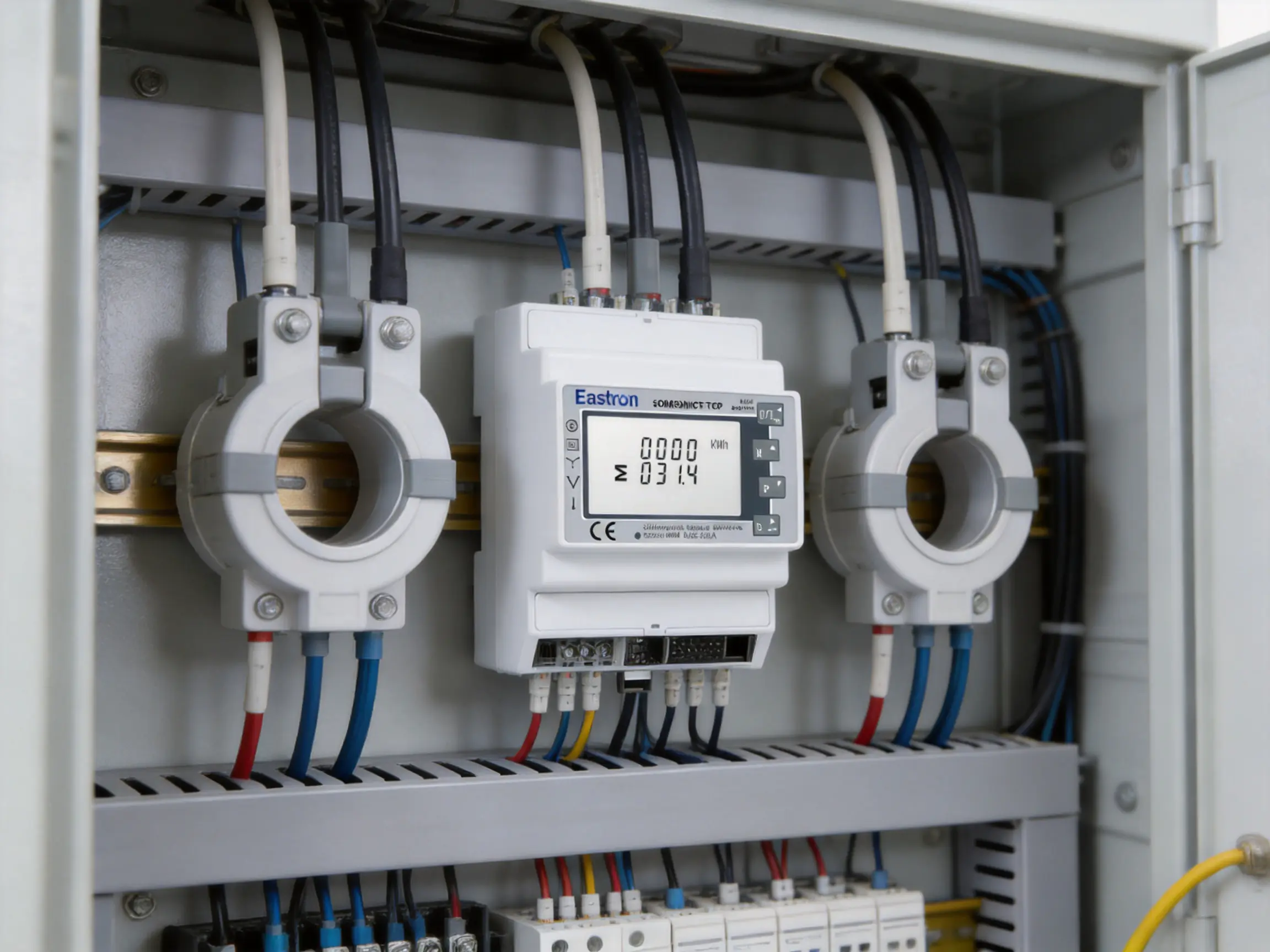
The SDM630MCT-TCP has been assessed and certified as meeting the requirements of UL 61010. For users and project engineers, certification provides an important basis for evaluating the suitability of measurement equipment in applications that require recognized safety compliance.
UL 61010 relates to safety requirements for electrical measurement, control, and laboratory equipment. Certification does not eliminate the need for correct installation, appropriate overcurrent protection, enclosure design, grounding, and qualified electrical work. However, it gives specifiers a stronger compliance reference than an unverified instrument would provide.
UL certification can be particularly significant in North American projects, export-oriented equipment, commercial facilities, industrial control panels, and projects where consultants or authorities request recognized product approvals. It can also simplify technical review by providing documented evidence that the product has been evaluated against an applicable safety standard.
The product category is identified as a three-phase UL energy meter, making it appropriate for projects where certification is a purchasing or approval requirement. The combination of UL assessment, IEC energy accuracy classifications, and industrial communication capability creates a useful specification profile for international applications.
A basic energy meter may provide only voltage, current, and accumulated kilowatt-hours. Such a device can be sufficient for a simple consumption display, but it may not meet the needs of a facility that requires remote data collection, power analysis, multiple wiring configurations, or bidirectional measurement.
The SDM630MCT-TCP provides a broader measurement set, including active, reactive, and apparent power, power factor, frequency, demand, and harmonic-related information. This allows users to move from simple consumption recording toward active energy management.
Its Ethernet Modbus TCP interface is another important distinction. A local-only meter requires manual readings or an additional communication device. The integrated Ethernet port reduces the number of separate components required for networked monitoring and can simplify the system architecture.
CT operation also distinguishes the device from direct-connected meters. External CTs allow the meter to serve higher-current circuits and provide greater flexibility in panel layout. The ability to configure CT primary values up to 9999 A expands the range of potential applications.
The support for 1P2W, 1P3W, 3P3W, and 3P4W systems reduces product selection complexity. A contractor or distributor can stock one multifunction platform for several common network types instead of carrying multiple specialized models.
Finally, the combination of a backlit LCD, four touch keys, DIN-rail mounting, UL certification, and bidirectional measurement creates a more complete product than a simple local kWh indicator. These capabilities are particularly valuable where equipment must be integrated into a professionally managed electrical system.
Some networked measurement devices are designed primarily as communication modules and offer limited local information. This can make installation and troubleshooting more dependent on software tools. The SDM630MCT-TCP combines remote Ethernet communication with a front-mounted LCD and touch controls.
Local display access is useful during commissioning because technicians can confirm whether the instrument is measuring correctly before completing the software integration. It also provides a convenient fallback when the supervisory system is offline or when a temporary network issue prevents remote access.
The local interface and Ethernet interface serve different user groups. Maintenance personnel can view values at the panel, while energy managers and control engineers can use the network data from a central workstation. This dual-access approach improves practical usability without requiring an additional display unit.
Commercial buildings often contain multiple tenants, common services, HVAC systems, elevators, lighting systems, and data rooms. A CT-based multifunction meter can monitor incoming feeders and selected distribution circuits. Through Modbus TCP, measurements can be transferred to a building-management or energy-management platform.
Building operators can use the data to compare consumption by floor, tenant, system, or operating schedule. Demand and power-factor information may help identify avoidable peaks or underperforming equipment. Bidirectional energy measurement can support buildings that combine grid supply with solar generation or battery storage.
Industrial plants have a wide variety of loads, including motors, compressors, welding equipment, heating systems, pumps, drives, and production machinery. The SDM630MCT-TCP can be installed at the main incomer, transformer secondary, production line, or individual machine feeder, depending on the measurement objective.
Power, current, demand, and power-factor measurements can help engineers assess the electrical behavior of production assets. Energy data can also be associated with production quantities, enabling more accurate calculations of energy intensity and operating cost.
Harmonic-related measurements may be useful when plants contain substantial amounts of power-electronic equipment. While the meter is not a replacement for a complete power-quality investigation, it can provide an initial indication of conditions that require further analysis.
Solar photovoltaic systems and battery energy-storage systems create power flows that may change direction. A bidirectional meter can be used to observe imported and exported energy at suitable measurement points. When connected to an energy-management platform, its data can assist with self-consumption analysis, export monitoring, and load coordination.
Correct phase wiring and energy-direction configuration are essential in these applications. The meter should be installed and programmed according to the system design, and the measurement objective should be clearly defined—for example, grid import, grid export, inverter output, or facility net energy.
Data centers require continuous awareness of electrical loading, distribution capacity, and equipment utilization. CT-operated meters can be installed on upstream feeders, power-distribution units, cooling systems, and auxiliary services. Ethernet communication supports centralized monitoring across multiple rooms or electrical levels.
The compact DIN-rail form factor is useful where cabinet space is carefully allocated. Local display access can also support maintenance work without requiring a separate portable measuring instrument for every basic verification.
Energy submetering allows organizations to understand how electricity is distributed within a site. The SDM630MCT-TCP can support submetering for workshops, retail areas, offices, apartments, tenant spaces, mechanical systems, and specialized equipment.
When multiple meters are connected through Modbus TCP, data can be aggregated into a common database. This supports trend analysis, internal cost allocation, energy benchmarking, and identification of unusual consumption patterns.

The product is manufactured by Eastron Electronic Co., Ltd., a company focused on electricity meters, power analyzers, current sensors, communication modules, and energy-management solutions. Its product portfolio reflects a specialization in electrical measurement rather than a general-purpose approach to unrelated electronic products.
Specialization supports product development because measurement accuracy, power-system compatibility, communication reliability, display design, and certification requirements must be considered together. A company that works continuously in these fields can build practical knowledge across hardware, embedded software, testing, application engineering, and customer support.
Eastron maintains development teams in China and the United Kingdom and continues to invest in new technologies and products for electricity metering. International development resources can help the company respond to differing market requirements, regional standards, installation practices, and communication expectations.
The development of a multifunction Ethernet meter requires coordinated work in several areas. The voltage and current measurement circuits must provide stable signal acquisition. Embedded software must calculate electrical parameters and manage configuration. The communication firmware must implement Modbus TCP behavior. The user interface must present values clearly. Mechanical design must support DIN-rail installation, terminal access, and display visibility.
Certification requirements add another layer of engineering discipline. Safety spacing, insulation, thermal behavior, electromagnetic compatibility, enclosure design, and component selection must be considered from the beginning rather than added after the product is complete.
The company has established a professional laboratory capable of performing electromagnetic compatibility, low-voltage directive, accuracy, and environmental tests according to IEC, EN, GB, and UL standards. In-house laboratory capability is a major manufacturing strength because it allows engineers to evaluate product performance throughout development and production improvement.
Accuracy testing helps verify that current, voltage, power, and energy calculations meet their intended specifications. EMC testing helps assess immunity and emissions in environments where electrical noise, switching devices, and communication equipment are present. Environmental testing can help evaluate performance under changing temperature and other operating conditions.
Internal testing also supports faster troubleshooting. If a product revision or component change affects performance, engineering teams can investigate the result within a controlled laboratory environment. This can reduce dependence on external facilities for every development iteration and support a more systematic quality process.
Eastron follows the ISO 9001 quality management system. A structured quality system helps organize design control, purchasing, production, inspection, corrective action, documentation, and customer feedback. For an energy-meter manufacturer, consistency is especially important because measurement performance depends on controlled assembly, calibrated test equipment, accurate component placement, and reliable firmware.
The company’s production is also approved by SGS according to MID standards. Although the SDM630MCT-TCP is presented here as a UL-certified product, experience with MID-related production requirements demonstrates familiarity with formal measurement-product controls and external assessment processes.
Certifications and laboratory capabilities do not replace responsible installation, but they provide confidence that the product has been developed and evaluated within a controlled technical framework. For distributors, panel builders, system integrators, and end users, this can reduce uncertainty when selecting a meter for a professional project.
The company holds patented technologies in software, embedded software, and hardware. A multifunction meter depends on all three areas. Hardware determines how electrical signals are acquired and protected. Embedded software converts those signals into useful electrical quantities. Application software and communication functions make the data available to external systems.
Continued investment in these technologies can support improvements in measurement functions, user interfaces, network integration, diagnostic tools, and product reliability. It also helps the manufacturer respond to changing requirements in smart metering and energy-management applications.
Reliable energy measurement requires consistent production at every stage. Current and voltage channels must be assembled correctly, terminals must be secure, displays and keypads must function properly, and communication ports must operate within the intended network conditions. Calibration and verification procedures are therefore important parts of the manufacturing process.
A controlled production environment should include incoming-material inspection, process control, assembly checks, firmware management, functional testing, and final inspection. The company’s laboratory and ISO 9001 framework provide a foundation for these activities.
For networked meters, production quality also includes communication verification. Ethernet hardware, firmware configuration, default network parameters, and Modbus TCP behavior must be checked so that the device can be integrated efficiently at the project site.
For measurement equipment, traceability is another valuable consideration. Test instruments should be maintained and calibrated, test procedures should be documented, and product results should be reviewed against defined acceptance criteria. These practices help ensure that performance remains consistent between production batches.
Installation should be performed by qualified personnel in accordance with applicable electrical codes, local regulations, and the product documentation. The meter is connected to voltage inputs and CT secondary inputs, and it requires the appropriate supply and measurement connections to operate correctly.
The selected CTs must match the primary circuit and the meter’s programmed CT ratio. The CT secondary rating must also match the configured 1 A or 5 A input. CT polarity and phase association must be checked carefully. Reversed CT polarity or cross-connected phases can produce incorrect power and energy readings even when the displayed voltage and current values appear reasonable.
Voltage connections should be selected according to the actual system topology. The meter must be configured for 1P2W, 1P3W, 3P3W, or 3P4W operation as appropriate. The line-to-neutral and line-to-line voltage must remain within the specified ranges unless an approved voltage transformer arrangement is used.
Communication configuration should be planned before installation. The default IP parameters may need to be changed to match the site network. The installer should record the final IP address, subnet, gateway, port, and any communication address settings for future maintenance.
After wiring, the commissioning process should include a phase-by-phase review. The technician should confirm that each current transformer corresponds to the correct voltage phase, that the measured power direction is expected, and that the total energy value changes appropriately under load.
Connecting an energy meter to Ethernet makes data more accessible, but it also creates a responsibility to manage the network securely. The meter should be placed on an appropriately controlled network, with access limited to authorized systems and users.
Network administrators should consider segmentation, firewall rules, controlled routing, device inventories, password management where applicable, and monitoring of unusual communication behavior. The communication port should not be exposed directly to an untrusted public network.
Modbus TCP integration should also be documented. Engineers should record the register map, data types, scaling factors, signed or unsigned values, energy-direction conventions, and update intervals used by the supervisory system. Clear documentation helps prevent misinterpretation of values and reduces maintenance time.
When selecting the SDM630MCT-TCP, project designers should first define the electrical system. The number of phases, presence or absence of a neutral, voltage level, expected current, and direction of power flow all influence the installation arrangement.
The next step is CT selection. The CT primary rating should be appropriate for the maximum expected circuit current, and the secondary output should be 1 A or 5 A as required by the meter configuration. The CT accuracy class and burden should be suitable for the project’s measurement objectives.
Designers should also determine whether voltage transformers are necessary. The product accepts the specified direct voltage range, but PT operation may be appropriate in systems with higher voltages or special isolation requirements.
Communication needs should be defined early. If the site already uses Ethernet infrastructure and Modbus TCP-compatible software, the SDM630MCT-TCP can reduce the need for protocol converters. If the system uses a different protocol, a suitable gateway or supervisory integration layer may be required.
Finally, certification requirements should be reviewed. UL 61010 assessment is an important advantage where recognized North American safety compliance is required. Other project approvals may involve additional enclosure, wiring, installation, or system-level requirements.
| Product model | SDM630MCT-TCP |
| Measurement type | RMS measurement including harmonics on three-phase AC systems |
| Supported configurations | 1P2W, 1P3W, 3P3W, 3P4W |
| Current input | External CT secondary, 1 A or 5 A |
| CT primary setting | 1–9999 A |
| Minimum current | 0.05 A |
| Starting current | 5 mA |
| Rated voltage | 3 x 230/400 V AC |
| Voltage range | 100–277 V AC line-to-neutral; 173–480 V AC line-to-line |
| Active-energy accuracy | Class 0.5S, IEC 62053-22 |
| Reactive-energy accuracy | Class 2, IEC 62053-23 |
| Voltage accuracy | ±0.5% |
| Current accuracy | ±0.5% |
| Frequency accuracy | ±0.2% |
| Power-factor accuracy | ±1% |
| Active-power accuracy | ±1% |
| Reactive-power accuracy | ±1% |
| Apparent-power accuracy | ±1% |
| Communication | Ethernet Modbus TCP/IP |
| Default communication port | 502 |
| Default IP address | 192.168.1.200 |
| Default subnet mask | 255.255.255.0 |
| Default gateway | 192.168.1.1 |
| Default DHCP status | Off |
| Mounting | DIN rail |
| Width | Four modules, 72 mm |
| Local interface | Backlit LCD and four touch keypads |
| Certification | UL 61010 assessment and certification |
| Measurement direction | Bidirectional |
It is a CT-operated, multifunction three-phase energy meter with an Ethernet port supporting Modbus TCP/IP communication. It measures energy and a broad range of electrical parameters and is designed for DIN-rail installation.
Yes. The meter supports 1P2W and 1P3W arrangements in addition to 3P3W and 3P4W three-phase systems. The wiring mode must be selected and configured correctly for the actual installation.
The meter supports 1 A and 5 A CT secondary inputs. The selected CT secondary rating must correspond to the meter configuration.
The CT primary setting can be configured from 1 A to 9999 A. The setting should match the actual primary rating of the installed current transformer.
Yes. The meter supports bidirectional measurement, making it suitable for installations where energy may be imported or exported, including renewable-energy and battery-storage applications.
No. It measures voltage, current, active power, reactive power, apparent power, power factor, frequency, demand, energy, and harmonic-related parameters. This makes it suitable for broader electrical analysis and energy management.
The meter uses Ethernet Modbus TCP/IP. The default communication port is 502, and the default IP configuration includes 192.168.1.200 with DHCP turned off.
Yes. The backlit LCD and four touch keypads allow users to view measurements and access configuration functions locally. Ethernet communication is used for remote reading and programming but is not required for basic local display operation.
The product has been assessed and certified as meeting the requirements of UL 61010. Project designers should still review all system-level requirements, installation codes, enclosure requirements, and authority approvals applicable to the specific project.
The meter is four DIN modules wide, or approximately 72 mm. Its DIN-rail format is suitable for compact distribution and control panels.
Technicians should verify the voltage topology, voltage range, CT primary and secondary settings, CT polarity, phase association, energy direction, phase sequence, network parameters, and communication with the supervisory system.
The meter provides useful measurements such as RMS quantities and harmonic-related information, but the exact requirements of a formal power-quality investigation should be reviewed separately. Specialized studies may require instruments with additional recording, event-capture, or compliance functions.
The CT Type Modbus TCP Din Rail Three Phase UL Energy Meter is designed for electrical installations that require accurate measurement, flexible system compatibility, remote communication, and recognized safety certification. Its support for 1P2W, 1P3W, 3P3W, and 3P4W configurations makes it adaptable across many common network types.
CT and PT operation expands its application range, while the 1–9999 A CT primary setting supports a wide variety of current transformers and feeder sizes. Class 0.5S active-energy performance, broad multifunction measurement, bidirectional operation, and a local backlit display provide a strong foundation for energy monitoring and electrical analysis.
The integrated Ethernet Modbus TCP interface is especially valuable for connected facilities. It enables centralized data collection, integration with energy-management systems, and remote access without requiring a separate communication converter. The compact four-module DIN-rail housing further supports efficient panel design.
Beyond the product specifications, the manufacturer’s dedicated electricity-measurement focus, international development teams, professional testing laboratory, ISO 9001 quality system, patented technologies, and experience with IEC, EN, GB, UL, and MID-related requirements provide important manufacturing strengths.
For commercial buildings, industrial plants, renewable-energy systems, data centers, infrastructure projects, and submetering installations, the SDM630MCT-TCP offers a practical combination of measurement depth, communication capability, compact installation, and compliance-oriented engineering.
IEC 62053-22, Electricity Metering Equipment—Particular Requirements—Static Meters for Active Energy, Class 0.1S, 0.2S and 0.5S.
IEC 62053-23, Electricity Metering Equipment—Particular Requirements—Static Meters for Reactive Energy, Classes 2 and 3.
UL 61010, Safety Requirements for Electrical Equipment for Measurement, Control, and Laboratory Use.
ISO 9001, Quality Management Systems—Requirements.
Modbus Application Protocol Specification, Modbus Organization.
Product technical information for the SDM630MCT-TCP multifunction CT-operated Ethernet energy meter.
Manufacturer information concerning electricity measurement products, laboratory testing, research and development, quality management, and energy-management solutions.

Your email address will not be published. Required fields are marked *

We develop and produce high performance electricity meters, power analyzers, current sensors, communication modules and management systems.
Address:NO. 52, Dongjin Road, Nanhu, Jiaxing, Zhejiang, China
Copyright @ Eastron Electronic Co., Ltd. All rights reserved
