

 English
 Español
 Deutsch
 中文简体


Product Consultation
Your email address will not be published. Required fields are marked *
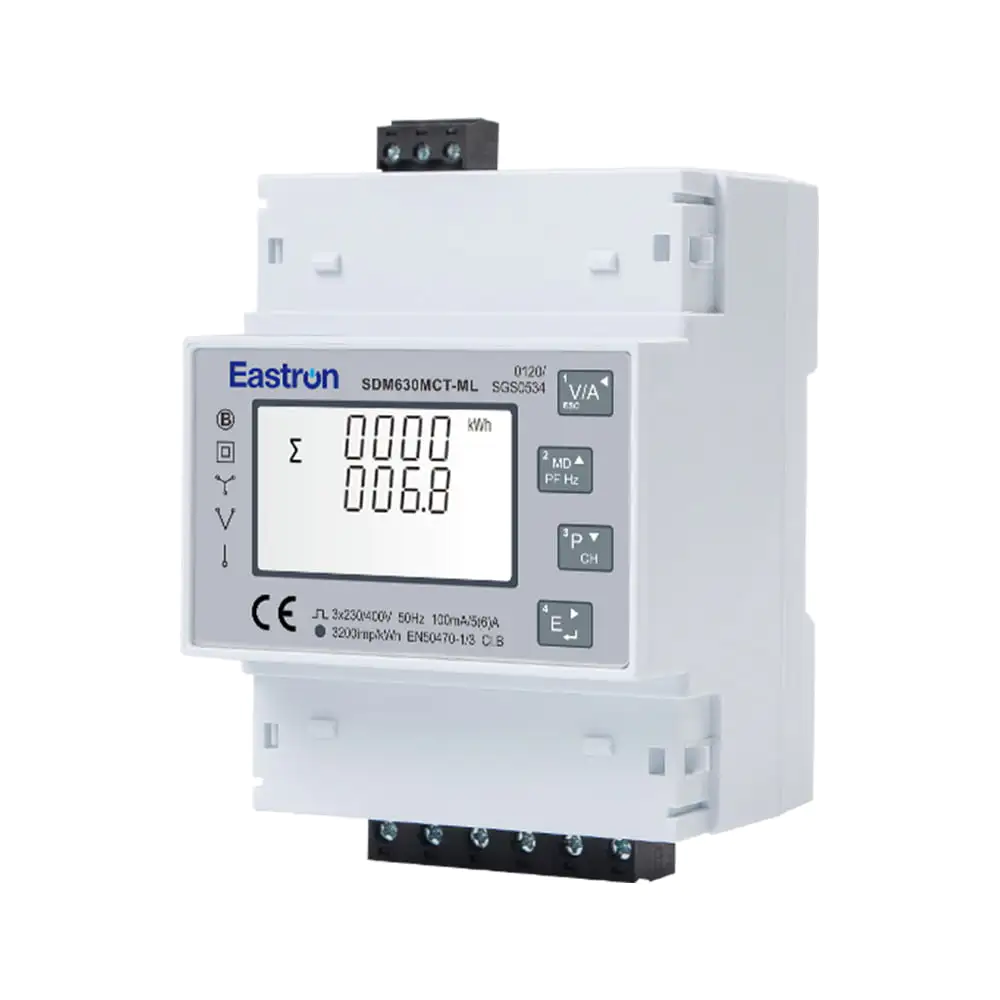
Quad Load Three Phase Multi-function RS485 Energy Meter for Data Center Metering
Aug 03,2022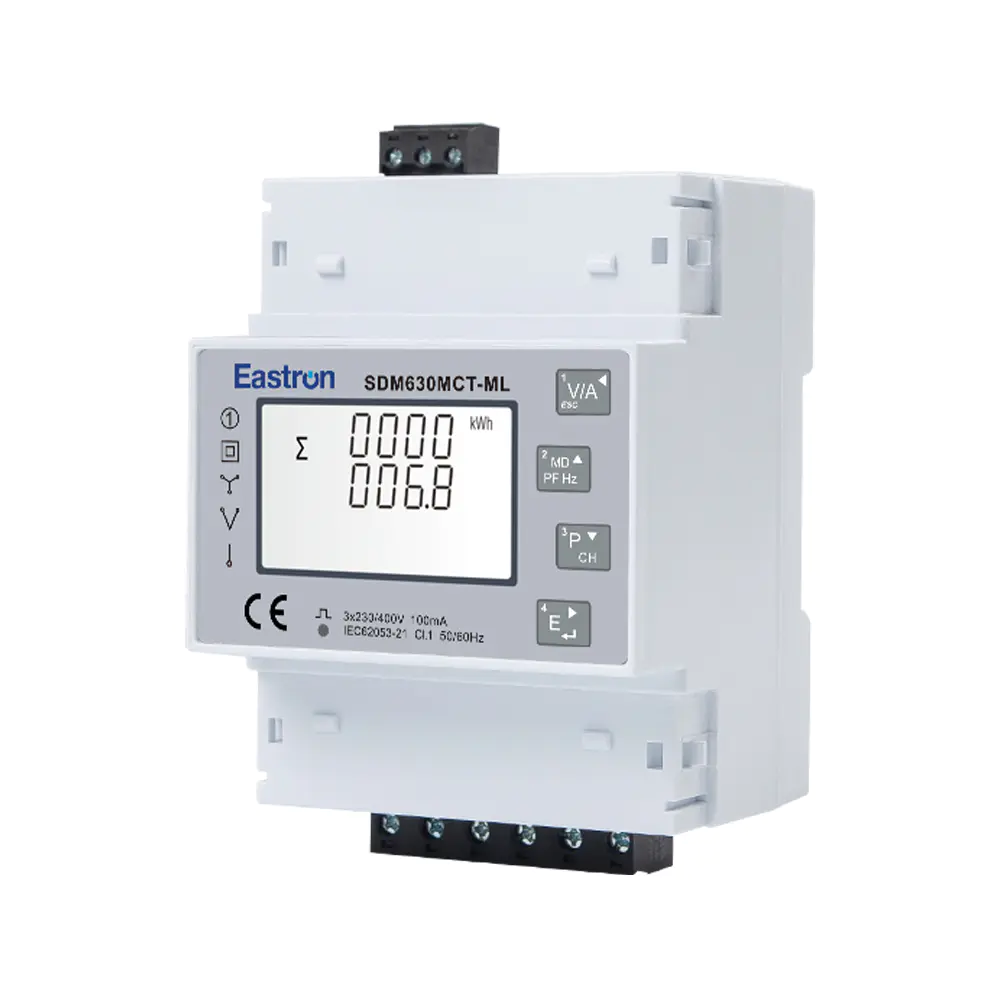
Multi-Circuit Three Phase Ethernet Modbus TCP Energy Meter for Data Center Metering
Aug 03,2022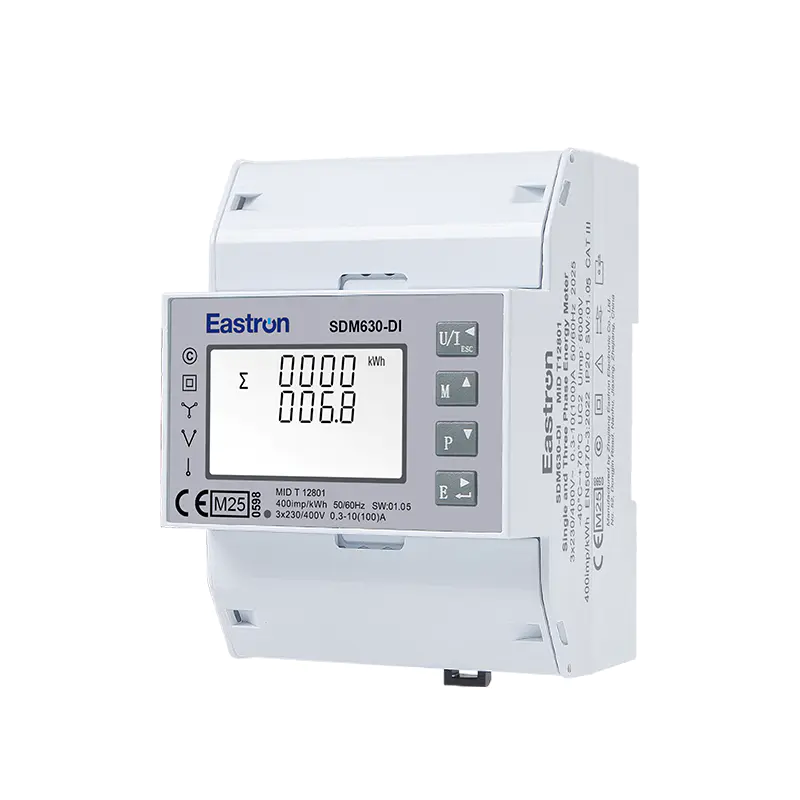
MID & UL Approved Three Phase Din Rail Type Multi-function Energy Meter for EV Charging Metering
Nov 24,2022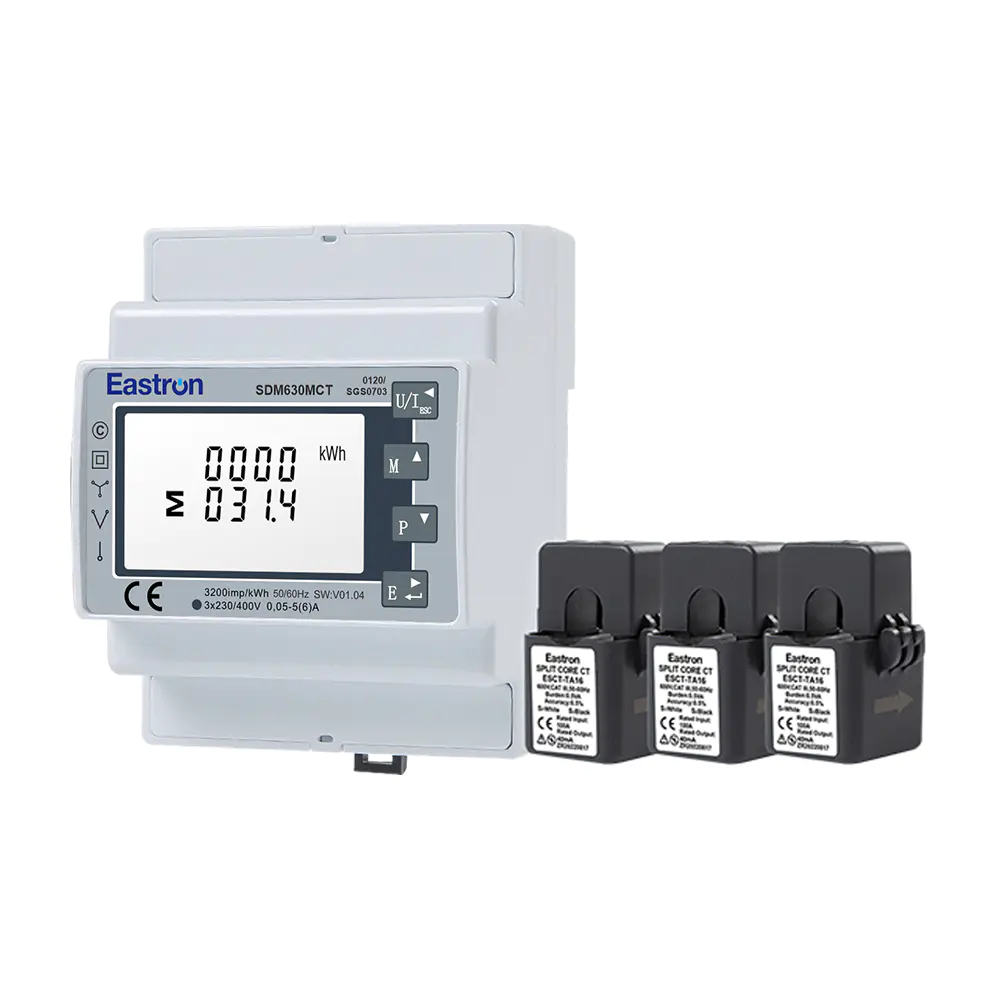
MID/UL CT Type Din Rail Three Phase Multi-function Energy Meter for EV Charging Metering
Nov 24,2022
MID UL Certified Din Rail Three Phase Multi-function Energy Meter for EV Charging Metering
Aug 02,2022
CT Operated Wireless Three Phase Energy Meter for PV Metering
May 30,2025Content
In modern electrical installations, energy measurement is no longer limited to counting kilowatt-hours at the end of a billing period. Facility managers, system integrators, equipment builders, and energy service providers increasingly need detailed visibility into voltage, current, power, power factor, frequency, imported energy, exported energy, and time-based consumption patterns. A multi-tariff RS485 Modbus DIN rail three-phase multifunction energy meter answers this need by combining compact installation, direct current measurement up to 100A, bidirectional energy data, pulse outputs, and digital communications in one practical device.
The SDM630-MT is designed for three-phase energy monitoring applications where accuracy, communication flexibility, and tariff-based energy accounting are important. It supports 3P4W, 3P3W, and 1P2W systems, making it suitable for a wide range of distribution boards and electrical configurations. With a 4-module, 72mm DIN rail housing, it fits neatly into standard electrical panels while still delivering extensive measurement functions. Its multi-tariff capability supports up to four tariffs and ten time segments, enabling energy consumption to be measured according to different time zones or rate periods.
Compared with many conventional meters that only display basic active energy, this meter provides a broader measurement platform. It can monitor kWh, kVArh, W, Var, VA, power factor, frequency, demand, voltage, and current. It can also measure imported and exported energy, which is particularly valuable in installations involving solar photovoltaic systems, distributed generation, battery storage, or equipment capable of feeding energy back into the network.
For users who need to connect meters to building management systems, industrial controllers, data loggers, or energy management platforms, RS485 Modbus RTU communication is a major advantage. It allows remote reading, parameter configuration, data acquisition, and tariff setup. The meter also provides two pulse outputs for imported and exported energy, supporting integration with pulse counters, data concentrators, or legacy monitoring equipment.
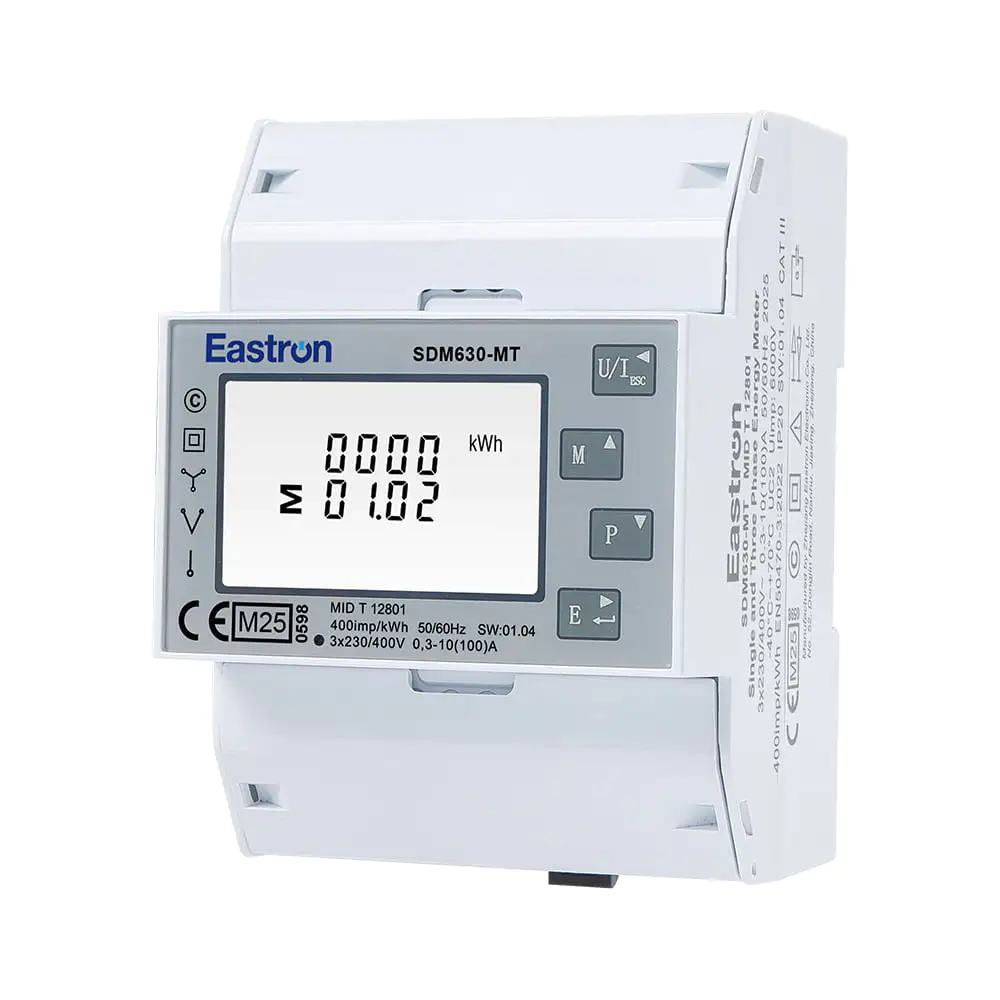
Multi-tariff RS485 Modbus Din Rail Three Phase Multi-function Energy Meter
The SDM630-MT belongs to the category of three-phase multifunction energy meters. It is intended for installations where the user wants more than a simple consumption figure. In commercial buildings, factories, campuses, EV charging infrastructure, renewable energy systems, and multi-tenant properties, energy data must often be segmented by time, load type, department, tenant, or process. A multifunction meter with communications provides the foundation for this type of analysis.
Traditional electromechanical meters and basic electronic meters are often insufficient for these applications. They may provide a cumulative kWh reading, but they typically do not provide detailed parameters such as reactive energy, apparent power, phase voltage, line current, or power factor. They may also lack communication ports, forcing manual reading and increasing labor cost. In contrast, the SDM630-MT is designed as a connected metering device that supports digital energy management.
Its multi-tariff function is especially useful where electricity prices vary according to the time of day. Many utilities and private billing systems apply peak, shoulder, off-peak, and special-period tariffs. By supporting up to four tariffs and ten time segments, the meter can help users understand when energy is being consumed and how cost is distributed across different tariff periods. This is valuable not only for billing but also for operational optimization.
For example, a manufacturing site may discover that certain high-load equipment operates during peak tariff hours. With accurate tariff-based data, the site can shift some operations to lower-cost periods, reduce demand pressure, or improve load scheduling. A commercial building may use the meter to identify whether HVAC, lighting, or tenant loads are responsible for high peak-period consumption. An EV charging operator may use tariff data to design charging pricing strategies that reflect actual energy cost.
One of the practical advantages of this meter is its ability to support a maximum current of 100A by direct connection. In many small and medium three-phase installations, this removes the need for external current transformers. Eliminating current transformers can reduce installation cost, wiring complexity, panel space requirements, and potential measurement errors caused by incorrect CT ratio settings or wiring mistakes.
Competitor products in similar applications may require CT input even at moderate current levels. While CT meters are essential for high-current systems, direct-connected meters are often preferable for distribution boards, small commercial units, machine-level metering, and sub-metering circuits up to 100A. The direct-load design makes installation simpler and more accessible for qualified electricians and system integrators.
The meter can work with 3P4W, 3P3W, and 1P2W supplies. This flexibility allows one meter model to be applied across different site configurations. A 3P4W system is common in low-voltage distribution networks with neutral, while 3P3W systems are used where a neutral conductor is not required. The ability to support 1P2W measurement also increases the usefulness of the device in mixed electrical environments.
For distributors, panel builders, and project contractors, this flexibility simplifies stock management. Instead of purchasing several narrowly defined models for different wiring configurations, they can use one versatile meter in multiple scenarios. This reduces procurement complexity and helps project teams respond quickly to installation changes.
The meter measures active energy, reactive energy, active power, reactive power, apparent power, voltage, current, power factor, frequency, and demand. This wide parameter set allows users to evaluate both consumption and power quality-related operating conditions. While it is not positioned as a high-end power quality analyzer, it provides a strong set of measurements for everyday energy management and load monitoring.
Power factor data can help identify inefficient inductive loads or the need for compensation equipment. Reactive energy readings can support energy billing or internal cost allocation where reactive power penalties apply. Voltage and frequency measurements help verify supply conditions. Demand readings support load management and capacity planning. Together, these parameters help users move from simple metering to practical energy intelligence.
Bidirectional measurement is increasingly important. In the past, most electrical installations only consumed energy from the grid. Today, many sites include photovoltaic generation, energy storage systems, regenerative drives, or other sources that can export energy. A meter that measures both imported and exported energy provides a clearer picture of energy flow.
For renewable energy applications, imported energy shows electricity drawn from the grid, while exported energy shows surplus production sent back to the network or another part of the installation. This distinction supports net metering analysis, self-consumption calculations, and system performance evaluation. Compared with meters that only count forward energy, bidirectional measurement offers a more complete and future-ready solution.
RS485 Modbus RTU remains one of the most widely used communication methods in energy monitoring and industrial automation. It is stable, cost-effective, and supported by many programmable logic controllers, gateways, data loggers, building management systems, and energy management software platforms. The SDM630-MT supports communication addresses from 1 to 247, transmission speeds from 1200bps to 38400bps, selectable parity, one or two stop bits, and response time below 100ms.
This communication capability is a major advantage over meters that require manual reading or proprietary software. Open and widely adopted protocols help system integrators build scalable monitoring networks. Multiple meters can be connected on the same RS485 bus, with data collected by a gateway or supervisory system. This makes the device suitable for sub-metering projects with many measurement points.
In addition to Modbus communication, the meter includes two pulse outputs for imported and exported energy. Pulse outputs remain useful because many existing energy monitoring systems and data acquisition devices are designed to count pulses. By offering both pulse outputs and RS485 communication, the meter can support new digital systems as well as older or simpler systems.
This dual-output approach provides installation flexibility. A facility can use Modbus for detailed parameter reading while also using pulse outputs for independent energy counting or verification. In some projects, pulse outputs are connected to local controllers, while Modbus is connected to a higher-level energy management platform.
The following table summarizes major specifications and functions of the SDM630-MT based on the supplied product data.
Item |
Specification |
Practical Benefit |
Meter Type |
Three-phase multifunction energy meter |
Suitable for detailed electrical monitoring in commercial and industrial installations |
Supported Wiring |
3P4W, 3P3W, 1P2W |
Flexible use across different electrical systems |
Maximum Current |
100A direct load |
Reduces the need for external current transformers in suitable applications |
Rated Current |
10A |
Designed for common low-voltage metering applications |
Minimum Current |
0.5A |
Supports accurate measurement at low load levels |
Starting Current |
40mA |
Helps detect very small load consumption |
Rated Voltage |
3 x 230/400V AC |
Matches common three-phase low-voltage distribution systems |
Operational Voltage |
80% to 120% of rated voltage |
Provides stable operation under normal voltage variation |
Measured Energy |
kWh and kVArh, import and export |
Supports active and reactive energy accounting |
Communication |
RS485 Modbus RTU |
Enables remote reading and system integration |
Pulse Output |
Two pulse outputs for imported and exported energy |
Compatible with pulse counters and legacy data systems |
Tariff Function |
Up to 4 tariffs and 10 time segments |
Supports time-of-use energy analysis and cost allocation |
Installation Width |
4 modules, 72mm |
Compact DIN rail installation in standard panels |
Accurate metering is essential because energy data is often used for billing, cost allocation, efficiency analysis, and operational decisions. The SDM630-MT measures RMS values including harmonics on three-phase AC systems. Its active energy accuracy is Class 1.0 according to IEC 62053-21 and Class B according to EN50470-1/3, while reactive energy accuracy is Class 2 according to IEC 62053-23. Voltage and current measurement accuracy is specified at ±0.5%, frequency at ±0.2%, power factor at ±1%, and active, reactive, and apparent power at ±1%.
These accuracy specifications make the meter suitable for a wide range of sub-metering and energy monitoring applications. In many commercial and industrial projects, Class 1 active energy accuracy provides a strong balance between performance and cost. It is precise enough for practical energy management while maintaining a compact and economical device format.
Some competing low-cost meters focus only on active energy and may not clearly state measurement accuracy across multiple parameters. Others may provide communications but lack robust multi-tariff functionality. The strength of this product lies in combining several important capabilities in one device: direct 100A input, multifunction measurement, bidirectional energy, multi-tariff support, pulse output, Modbus communication, and compact DIN rail installation.
The multi-tariff function is one of the defining features of the SDM630-MT. Electricity is not always priced equally throughout the day. Many utilities use time-of-use pricing to encourage users to shift consumption away from high-demand periods. Energy service companies and private operators may also apply different rates to reflect peak demand cost, grid capacity, or internal billing policies.
With support for up to four tariffs and ten time segments, the meter can separate energy consumption into different periods. These tariffs and segments can be configured through RS485 communication. This allows remote setup, making the meter easier to manage in larger projects where many units are installed across multiple panels or buildings.
For a commercial building, tariff periods may include daytime peak hours, evening shoulder hours, overnight off-peak hours, and weekend rates. For an industrial facility, tariffs may align with production shifts, high-demand periods, or internal departmental accounting rules. For EV charging infrastructure, tariffs may reflect charging prices for different times of day. The ability to record energy by tariff helps users connect technical consumption data with financial cost.
Compared with meters that only provide total kWh, multi-tariff meters deliver more actionable information. A total kWh value may show that a site consumed a large amount of electricity, but it does not reveal whether that energy was consumed during expensive peak periods or cheaper off-peak periods. Tariff-based data supports decisions such as load shifting, process scheduling, equipment automation, and demand reduction programs.
RS485 is well suited for multi-drop networks in electrical panels and facility monitoring systems. Its maximum communication distance of up to 1000m, depending on installation conditions, allows meters to be distributed across a building or industrial area. The address range of 1 to 247 supports networks with many devices, while configurable baud rates and parity settings allow compatibility with different host systems.
In a typical installation, several meters are connected along an RS485 bus. A gateway, PLC, data logger, or energy management controller polls each meter using Modbus RTU. The host system can collect real-time parameters, energy totals, tariff registers, and status information. Data may then be displayed in dashboards, stored in databases, or forwarded to cloud platforms for reporting and analytics.
This architecture offers a competitive advantage over meters with closed communication systems. Open Modbus support allows users to choose their preferred software and hardware platform. It also reduces long-term risk because Modbus is widely understood by engineers and supported by many industrial devices.
The product data specifies a response time of less than 100ms. In practical terms, this helps maintain efficient communication when multiple meters are connected to one bus. Fast response supports more frequent polling and more responsive dashboards. For energy monitoring, extremely high-speed data is usually not required, but reliable and timely readings are important for operational visibility.
Energy management systems often collect data at intervals ranging from several seconds to several minutes. The meter’s Modbus communication capability is well aligned with this requirement. Users can monitor trends, detect abnormal consumption, verify load changes, and compare energy use between tariff periods.
Because RS485 Modbus is a common standard, the meter can be integrated with many types of gateways. A gateway can convert Modbus RTU to Modbus TCP, Ethernet, Wi-Fi, cellular, or cloud protocols depending on the project architecture. This makes the meter suitable for both local monitoring systems and remote energy management platforms.
In buildings, the meter can connect to a building management system. In factories, it can connect to supervisory control and data acquisition systems or industrial automation controllers. In renewable energy installations, it can connect to solar monitoring systems or energy storage controllers. This broad integration potential increases the long-term value of the meter.
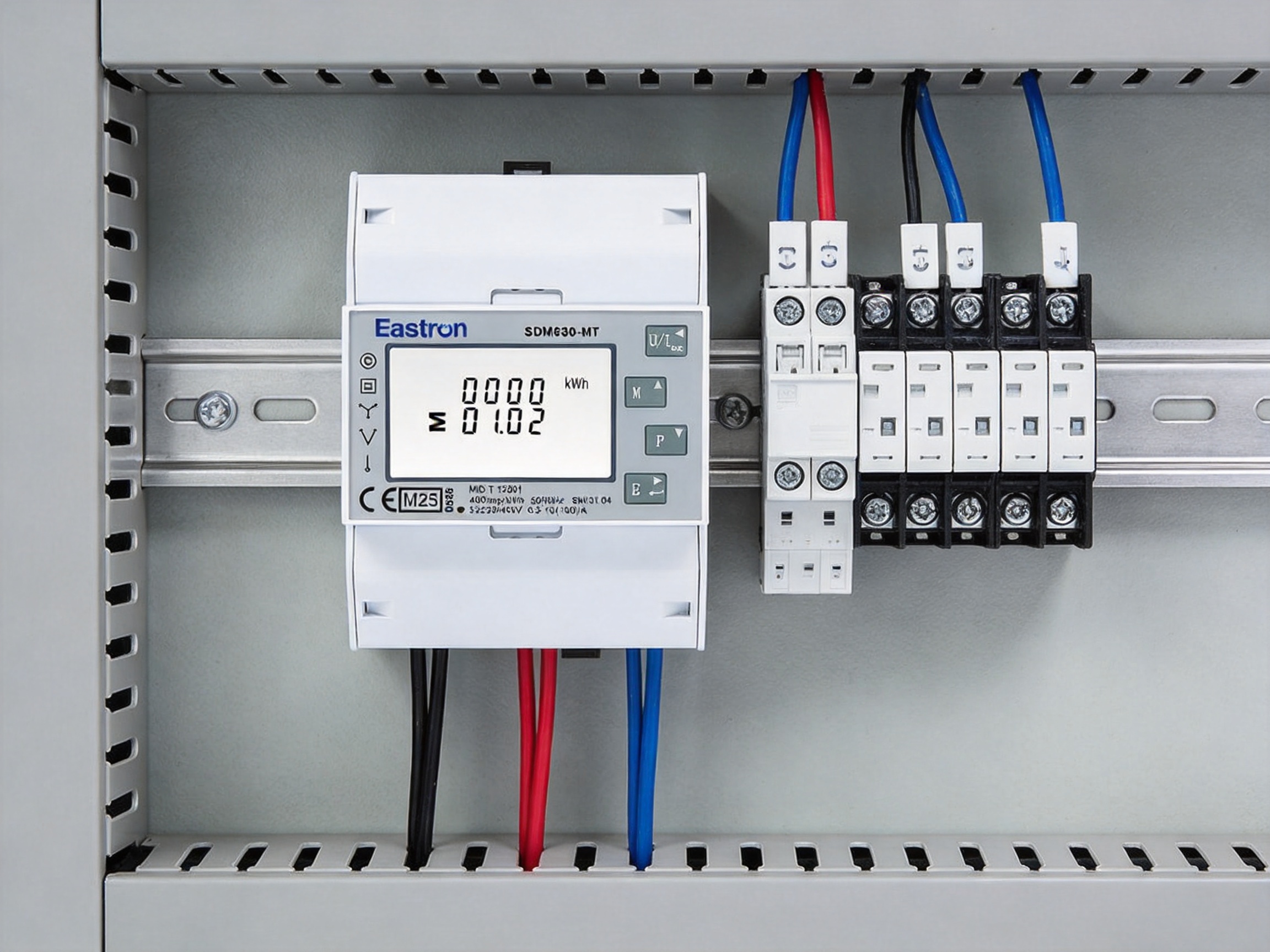
Panel space is valuable. Electrical distribution boards often contain circuit breakers, residual current devices, surge protection devices, contactors, communication modules, and terminal blocks. A 4-module, 72mm-wide DIN rail energy meter provides extensive functionality while preserving panel space. This compact design is particularly useful for retrofit projects, where spare space may be limited.
DIN rail mounting also simplifies installation and service. Qualified electricians can mount the device in standard enclosures without custom brackets. Clear terminal arrangements and standard wiring practices help reduce installation time. For panel builders, a compact DIN rail meter is easy to incorporate into repeatable cabinet designs.
Direct current measurement up to 100A further improves installation efficiency. Where the circuit rating is within the direct-load capability of the meter, installers do not need to mount current transformers, route secondary CT wiring, or configure CT ratios. This reduces components and helps avoid common installation errors such as reversed CT polarity, mismatched CT ratios, or open CT secondary circuits.
Basic kWh meters are suitable for simple consumption counting, but they provide limited operational insight. They may not show reactive energy, power factor, voltage, current, demand, or exported energy. They may also require manual reading. The SDM630-MT offers a significantly broader measurement set and supports RS485 Modbus communication, making it more suitable for intelligent energy management.
In cost allocation projects, a basic meter can show how much energy was consumed, but it cannot easily explain when it was consumed or what electrical conditions were present. The multi-tariff function adds time-based cost visibility, while multifunction measurements support deeper analysis of load behavior.
Non-communicating meters require site personnel to read displays manually. This increases labor cost and introduces the risk of reading errors. Manual reading also limits data frequency. A meter may be read monthly, but monthly readings cannot reveal daily load patterns, peak-period behavior, or short-term anomalies.
The RS485 Modbus interface enables automatic data collection. Users can collect readings frequently, generate reports, and create alerts. This capability is essential for modern energy monitoring systems. Compared with non-communicating meters, the SDM630-MT reduces manual work and improves data quality.
Some meters provide communication but only record total energy. They may be acceptable where electricity cost is flat. However, in time-of-use billing environments, single-tariff readings are incomplete. The SDM630-MT’s multi-tariff function provides a stronger solution for users who need cost analysis by time period.
For organizations pursuing energy savings, tariff information is often more actionable than total energy alone. Reducing peak-period consumption can sometimes produce greater savings than reducing the same amount of off-peak consumption. A multi-tariff meter helps identify these opportunities.
CT-operated meters are necessary for high-current circuits, but they can be less convenient for circuits up to 100A. They require additional components and careful installation. For suitable circuits, a direct-connected meter provides simpler wiring and fewer points of failure. The SDM630-MT’s 100A direct-load capability gives it an advantage in many sub-metering and distribution board applications.
Proprietary communication systems can limit integration options and increase dependency on one software ecosystem. Modbus RTU is widely adopted and easy for engineers to implement. The SDM630-MT benefits from this open communication approach, making it easier to integrate into diverse projects and long-term infrastructure.
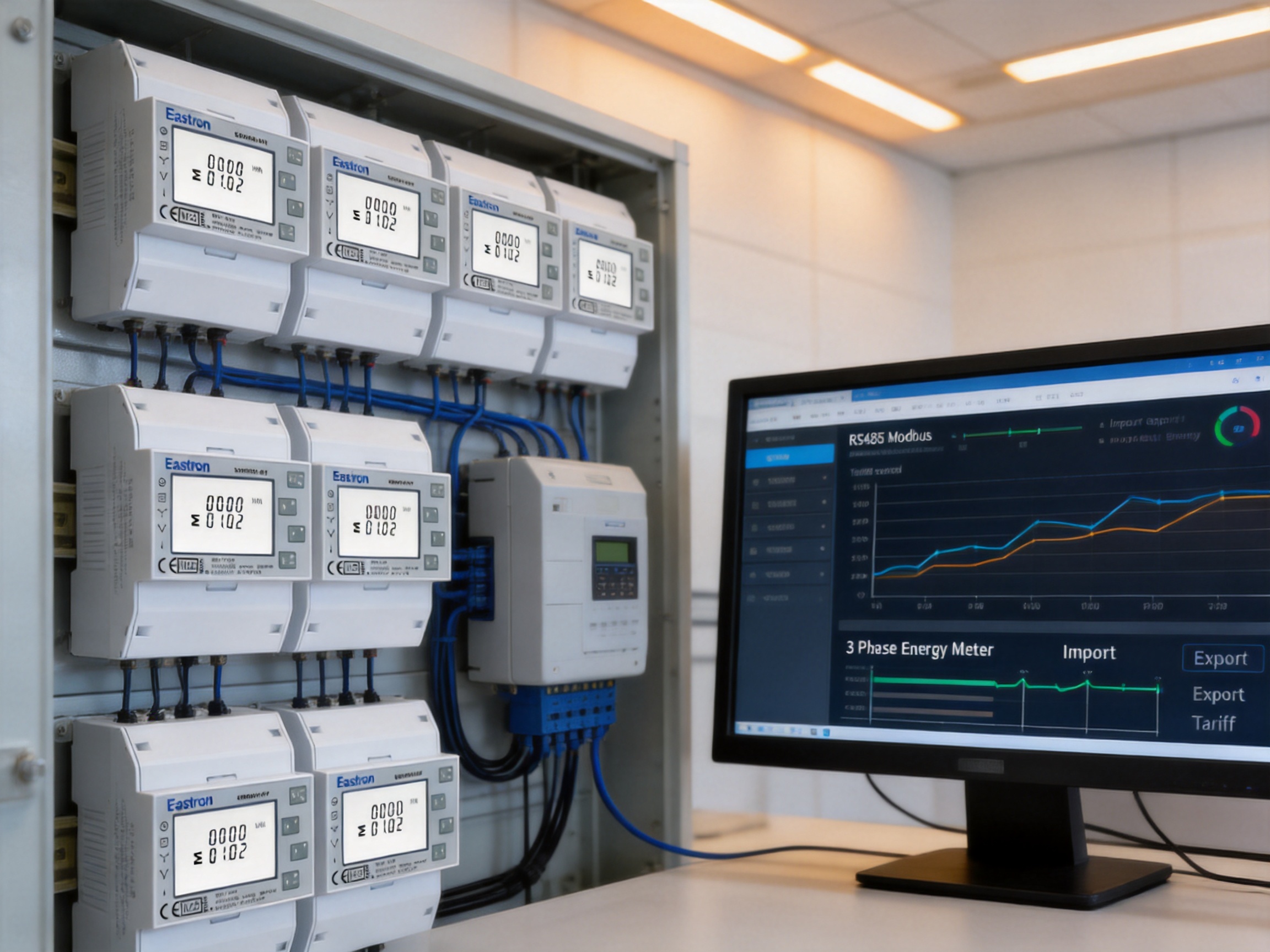
Commercial buildings often contain many types of electrical loads, including lighting, HVAC, elevators, office equipment, data rooms, and tenant spaces. The SDM630-MT can be used to monitor main distribution circuits, sub-distribution boards, or individual tenant supplies. Its multi-tariff function helps building owners understand energy cost across different time periods, while Modbus communication supports centralized monitoring.
For property managers, accurate sub-metering supports fair tenant billing and energy accountability. For facility teams, real-time data helps identify abnormal loads, inefficient operation schedules, or equipment running outside expected hours. Over time, energy data can support sustainability programs and operational improvements.
Industrial sites require reliable energy data for production planning, equipment monitoring, and cost control. Machines, process lines, compressed air systems, pumps, fans, and heating equipment can consume significant energy. By installing multifunction meters at strategic points, operators can compare consumption between departments, production lines, or shifts.
The meter’s demand, power, voltage, current, and power factor readings help identify electrical loading conditions. Multi-tariff measurement helps factories understand the cost impact of production schedules. If high-energy processes can be moved to lower-cost periods, the savings may be substantial.
Bidirectional energy measurement makes the meter suitable for installations involving solar photovoltaic systems and other distributed energy resources. It can measure imported energy from the grid and exported energy back to the grid or internal network. This supports performance analysis and self-consumption optimization.
In a solar-equipped building, the meter can help show how much energy is consumed during solar production hours versus how much is imported during evening or peak periods. When connected through Modbus, these readings can be integrated into solar monitoring dashboards or energy management systems.
EV charging stations require accurate and communicable energy data. Charging operators may need to allocate cost by charger, site, user group, or time period. The SDM630-MT’s multi-tariff capability can help align charging records with time-of-use electricity pricing. Its Modbus communication allows data collection by charging management systems or local controllers.
For smaller AC charging sites within the meter’s current range, direct 100A measurement can simplify installation. The meter can support both energy accounting and operational monitoring, helping operators manage electrical capacity and tariff exposure.
In shopping centers, office parks, apartment service areas, universities, and industrial parks, energy often needs to be allocated to different users or zones. A compact multifunction meter can be installed in each distribution section, with data collected centrally through RS485 networks. Multi-tariff readings can support internal billing models that reflect real energy costs more accurately than flat-rate estimates.
The performance of an energy meter depends not only on its design but also on the manufacturing process behind it. Eastron Electronic Co., Ltd. is a high-tech manufacturer and supplier focused on electricity products and energy measurement solutions. The company develops and produces electricity meters, power analyzers, current sensors, communication modules, and management systems. This product ecosystem gives the company strong experience in metering technology, communication interfaces, and practical energy applications.
A key manufacturing strength is the company’s commitment to research and development. Its development teams in China and the United Kingdom support continuous product improvement and new technology development. Cooperation with universities and institutions helps bring advanced technologies into products. For customers, this means the meter is not an isolated product but part of a broader technical platform supported by engineering experience.
Quality control is also central to reliable metering. The company has established a professional laboratory capable of performing EMC, LVD, accuracy, and environmental tests according to IEC, EN, GB, and UL standards. These tests are important because energy meters must operate safely and accurately in electrical environments that may include voltage variation, electromagnetic interference, temperature changes, and long service periods.
EMC testing helps verify that the product can operate in environments with electromagnetic disturbance and will not generate excessive interference. LVD-related testing supports electrical safety. Accuracy testing ensures that measurement performance meets relevant standards. Environmental testing helps evaluate product reliability under different operating conditions. Together, these processes contribute to stable long-term operation.
The company follows the ISO 9001 quality management system, and its production is approved by SGS according to MID standards. It also holds patented technologies in software, embedded software, and hardware. These capabilities indicate a structured approach to product development, manufacturing control, and technical innovation.
Reliable energy meters require disciplined manufacturing at every stage, from component selection to final calibration. Although the details of each production line may vary by product model, advanced meter manufacturing typically includes controlled electronic assembly, automated inspection, firmware programming, calibration, functional testing, safety testing, and final quality verification. Eastron’s laboratory and quality system provide the foundation for these processes.
Energy meters depend on accurate sensing circuits, stable power supply design, reliable communication interfaces, and durable mechanical construction. Component selection must balance performance, safety, cost, and long-term availability. A manufacturer with experience in electricity metering can design circuits that maintain accuracy under real-world operating conditions.
The SDM630-MT’s ability to measure RMS values including harmonics reflects the importance of measurement design. Modern loads such as variable frequency drives, LED lighting, switch-mode power supplies, and EV chargers can introduce harmonic distortion. RMS measurement including harmonics provides a more realistic representation of electrical conditions than simplified measurement methods.
In electronic meter production, consistency is essential. Printed circuit boards must be assembled accurately, soldering quality must be controlled, and sensitive measurement circuits must be protected from defects. Advanced production processes typically include surface-mount technology assembly, inspection systems, and controlled workflows to reduce variation.
For customers, consistent manufacturing means that meters installed across a large project will behave predictably. This is important in multi-meter networks where readings are compared across departments, tenants, or time periods. Stable manufacturing quality supports confidence in the data.
Calibration is one of the most important stages in energy meter manufacturing. Each meter must be checked against reference equipment to verify that active and reactive energy measurements meet accuracy requirements. Voltage, current, power, and frequency readings may also be verified. A professional laboratory capable of accuracy testing strengthens this process.
For the SDM630-MT, active energy accuracy according to IEC and EN standards is a major product value. Calibration and verification ensure that the meter performs as expected before it reaches the customer. This reduces commissioning risk and supports reliable long-term metering.
Because the meter includes RS485 Modbus communication, manufacturing quality must include communication verification. Addressing, baud rate settings, parity options, response behavior, and register reading must operate correctly. In connected energy systems, communication reliability is just as important as measurement accuracy. A meter that measures correctly but fails to communicate reliably can disrupt an entire monitoring system.
Electrical meters are often installed in distribution boards where they may experience temperature variation, electrical noise, and continuous operation. Environmental testing helps confirm that product design and assembly can withstand normal operating conditions. EMC and LVD testing further support reliable and safe use in demanding electrical environments.
System integrators and panel builders often evaluate products based on performance, installation efficiency, documentation, communication compatibility, and supply reliability. The SDM630-MT offers several advantages for these professionals. Its 72mm DIN rail format fits standard panel layouts. Its direct 100A measurement reduces the need for additional CT hardware in suitable applications. Its Modbus communication simplifies integration with many control platforms.
Multi-tariff configuration through RS485 is also useful for integrators managing large installations. Instead of physically accessing each meter to adjust settings, technicians can configure tariff periods through communication tools. This can save significant time when many meters are installed.
Pulse outputs provide additional flexibility for panel builders serving customers with existing monitoring systems. Some clients may request pulse outputs for compatibility with established data loggers, while others may require Modbus for advanced monitoring. Providing both outputs in one meter helps meet varied project requirements.
A multifunction meter becomes valuable when its data is used to improve decisions. The SDM630-MT can help users answer practical questions: Which circuits consume the most energy? Are loads balanced across phases? Is power factor acceptable? When does peak consumption occur? How much energy is imported versus exported? How much energy is consumed in each tariff period?
Phase voltage and current data can reveal imbalance. Power readings can show real-time load behavior. Power factor readings can identify inefficiency or compensation needs. Demand data can help evaluate whether a site is approaching contracted capacity. Tariff registers can link technical behavior to financial impact. Exported energy readings can support renewable energy analysis.
When connected to software, this information can be transformed into charts, alarms, reports, and performance indicators. Users can track energy intensity, compare building zones, verify savings projects, or monitor equipment after maintenance. The meter therefore supports not only measurement but also continuous improvement.

Correct application is essential for safe and accurate operation. The meter should be installed by qualified personnel in accordance with applicable electrical standards and local regulations. The current rating of the circuit must be suitable for direct connection up to the product’s maximum current. Wiring configuration should match the selected system type, such as 3P4W, 3P3W, or 1P2W.
For Modbus networks, proper RS485 wiring practice is important. Twisted-pair communication cable, suitable shielding where needed, correct polarity, proper addressing, and appropriate termination can improve network reliability. Baud rate, parity, and stop bits should be configured consistently between the meter and host system.
For multi-tariff use, tariff periods should be carefully planned before configuration. Users should align tariff segments with utility billing periods or internal cost allocation rules. Because the meter supports up to four tariffs and ten segments, it can handle a variety of schedules, but clear planning helps avoid confusion in reporting.
For pulse output applications, pulse constants and input compatibility should be verified with the receiving device. Pulse outputs may be used alongside Modbus, but the system designer should define which data source is used for billing, monitoring, or verification.
Energy systems are becoming more digital, distributed, and cost-sensitive. A future-ready meter must support communication, detailed measurement, bidirectional energy flow, and flexible billing structures. The SDM630-MT meets these requirements in a compact DIN rail package.
Its strongest advantage is the combination of functions. A meter with only RS485 but no multi-tariff function may not meet time-of-use billing needs. A meter with tariff support but no broad measurement parameters may not provide enough operational insight. A CT-only meter may be unnecessarily complex for moderate current circuits. A non-communicating meter may be unsuitable for modern data systems. This product brings together direct 100A measurement, multifunction electrical parameters, bidirectional energy, pulse outputs, Modbus RTU, and multi-tariff capability.
Backed by a manufacturer with experience in energy measurement solutions, professional testing capabilities, ISO 9001 quality management, and international standard awareness, the product offers more than a list of specifications. It reflects an integrated approach to design, manufacturing, testing, and application support.
Its main purpose is to measure and monitor electrical energy and related parameters in three-phase or compatible single-phase systems. It is especially useful where users need time-based tariff measurement, remote communication, and multifunction electrical data.
It can work with 3P4W, 3P3W, and 1P2W systems. This makes it flexible for different low-voltage distribution configurations.
The meter supports a maximum direct load current of 100A. This can reduce installation complexity in suitable circuits because external current transformers may not be required.
It supports up to four tariffs and ten time segments. These tariffs and segments can be configured through RS485 communication.
Multi-tariff measurement allows users to understand energy consumption according to different time periods. This is important for time-of-use pricing, peak and off-peak cost analysis, internal billing, and load-shifting strategies.
Yes. It supports RS485 Modbus RTU communication, allowing data to be collected by gateways, data loggers, controllers, or energy management systems.
It can measure active energy, reactive energy, active power, reactive power, apparent power, voltage, current, power factor, frequency, and demand. It also supports imported and exported energy measurement.
Bidirectional measurement allows the meter to record both imported and exported energy. This is useful for renewable energy systems, battery storage, regenerative loads, and any installation where energy can flow in both directions.
Yes. Its bidirectional energy measurement and Modbus communication make it suitable for monitoring import and export energy in solar photovoltaic and distributed generation systems.
The specified maximum transmission distance is 1000m, depending on installation conditions and proper RS485 wiring practices.
A basic kWh meter usually provides only cumulative active energy. This meter provides multi-parameter measurement, tariff-based energy data, RS485 communication, pulse outputs, and bidirectional measurement, making it much more useful for modern energy management.
The two pulse outputs are used for imported and exported energy. They allow integration with pulse counters, data loggers, or legacy monitoring systems.
Yes. It has a 4-module, 72mm-wide DIN rail design, making it suitable for installation in standard electrical distribution boards.
Active energy accuracy is Class 1.0 according to IEC 62053-21 and Class B according to EN50470-1/3.
The manufacturer has professional testing capabilities for EMC, LVD, accuracy, and environmental performance according to international and regional standards. It follows ISO 9001 quality management and has strong research and development resources.
The multi-tariff RS485 Modbus DIN rail three-phase multifunction energy meter is a practical and powerful solution for modern electrical monitoring. It combines direct 100A measurement, support for multiple wiring systems, extensive electrical parameters, imported and exported energy measurement, two pulse outputs, and RS485 Modbus communication. Its multi-tariff function adds significant value for users who need to understand not only how much energy is consumed, but when it is consumed and how cost is distributed across tariff periods.
Compared with basic meters, non-communicating meters, single-tariff devices, and CT-only solutions for moderate loads, this meter offers a stronger balance of functionality, installation simplicity, and integration flexibility. It is suitable for commercial buildings, industrial facilities, renewable energy systems, EV charging infrastructure, campuses, and multi-tenant environments.
Its value is further strengthened by the manufacturing capabilities behind it. With experienced research and development teams, professional laboratory testing, quality management systems, and a broad focus on energy measurement solutions, the manufacturer provides a strong foundation for reliable product performance. For users seeking compact, communicable, accurate, and tariff-ready energy metering, the SDM630-MT represents a future-oriented choice for smarter energy management.
IEC 62053-21, Electricity Metering Equipment, Static Meters for Active Energy, Classes 1 and 2.
IEC 62053-23, Electricity Metering Equipment, Static Meters for Reactive Energy.
EN 50470-1, Electricity Metering Equipment, General Requirements, Tests and Test Conditions.
EN 50470-3, Electricity Metering Equipment, Particular Requirements for Static Meters for Active Energy.
Modbus Organization, Modbus Application Protocol Specification.
International Electrotechnical Commission, Low-Voltage Electrical Installation and Metering Guidance.
ISO 9001, Quality Management Systems Requirements.
Your email address will not be published. Required fields are marked *

We develop and produce high performance electricity meters, power analyzers, current sensors, communication modules and management systems.
Address:NO. 52, Dongjin Road, Nanhu, Jiaxing, Zhejiang, China
Copyright @ Eastron Electronic Co., Ltd. All rights reserved
