

 English
 Español
 Deutsch
 中文简体
中文简体

Product Consultation
Your email address will not be published. Required fields are marked *
Europe's Solar and Energy Storage Transition: Transforming the Power System Infrastructure for a Renewable Future
Jul 10,2026
Power Systems Are Becoming “Real-Time Systems”: Why Data Is More Critical Than Electricity
Jul 06,2026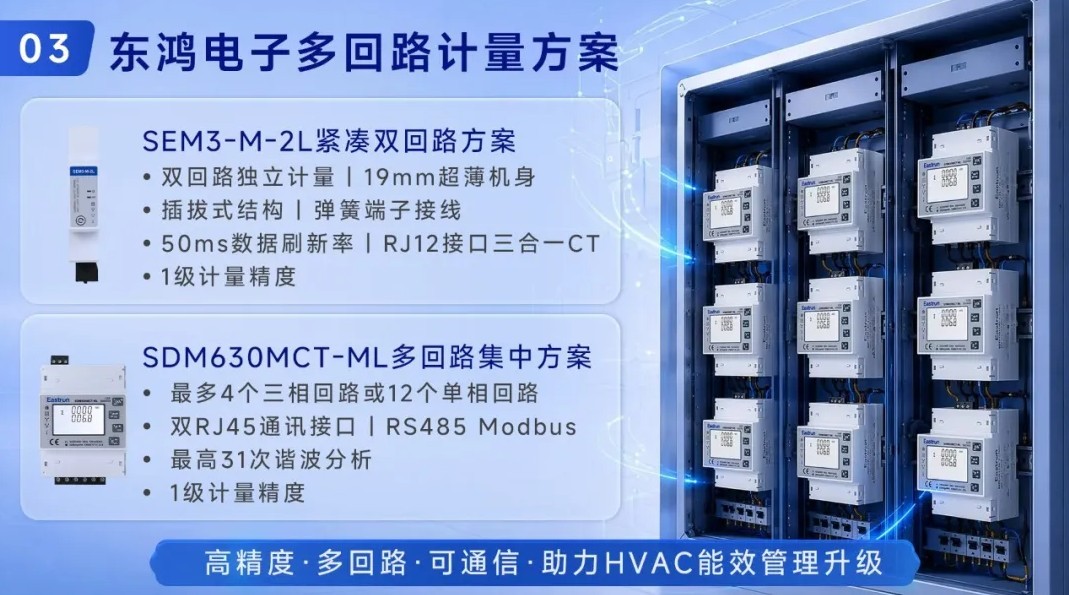
New EPBD Regulations Drive HVAC Energy Transparency and Boost Demand for Smart Meters
Jul 07,2026Content
Modern data centers depend on power visibility as much as they depend on servers, cooling, storage, and network infrastructure. In high-density environments, every rack, row, distribution panel, and load group can influence uptime, efficiency, capacity planning, and operating cost. A multi-circuit three-phase Ethernet Modbus TCP energy meter is therefore more than a measuring device; it is a key component of intelligent power distribution and data-driven facility management.
The SDM630MCT-ML-TCP is designed for data center metering applications where multiple loads must be monitored with accuracy, speed, and simplified installation. It supports three-phase and single-phase measurement configurations, provides Ethernet Modbus TCP communication, and offers multi-parameter monitoring for up to four three-phase loads or twelve single-phase loads. With support for 100mA or 100mV current transformer secondary inputs, independently programmable CT ratios, RJ12 socket connections, and true RMS measurement, it gives facility teams a practical tool for measuring, analyzing, and integrating electrical data.
This article explains the product’s role in data center power monitoring, its technical strengths, its advantages over many conventional metering approaches, and the manufacturing and engineering capabilities behind it. It also includes practical selection guidance, application examples, a technical table, a Q&A section, and references for further reading.
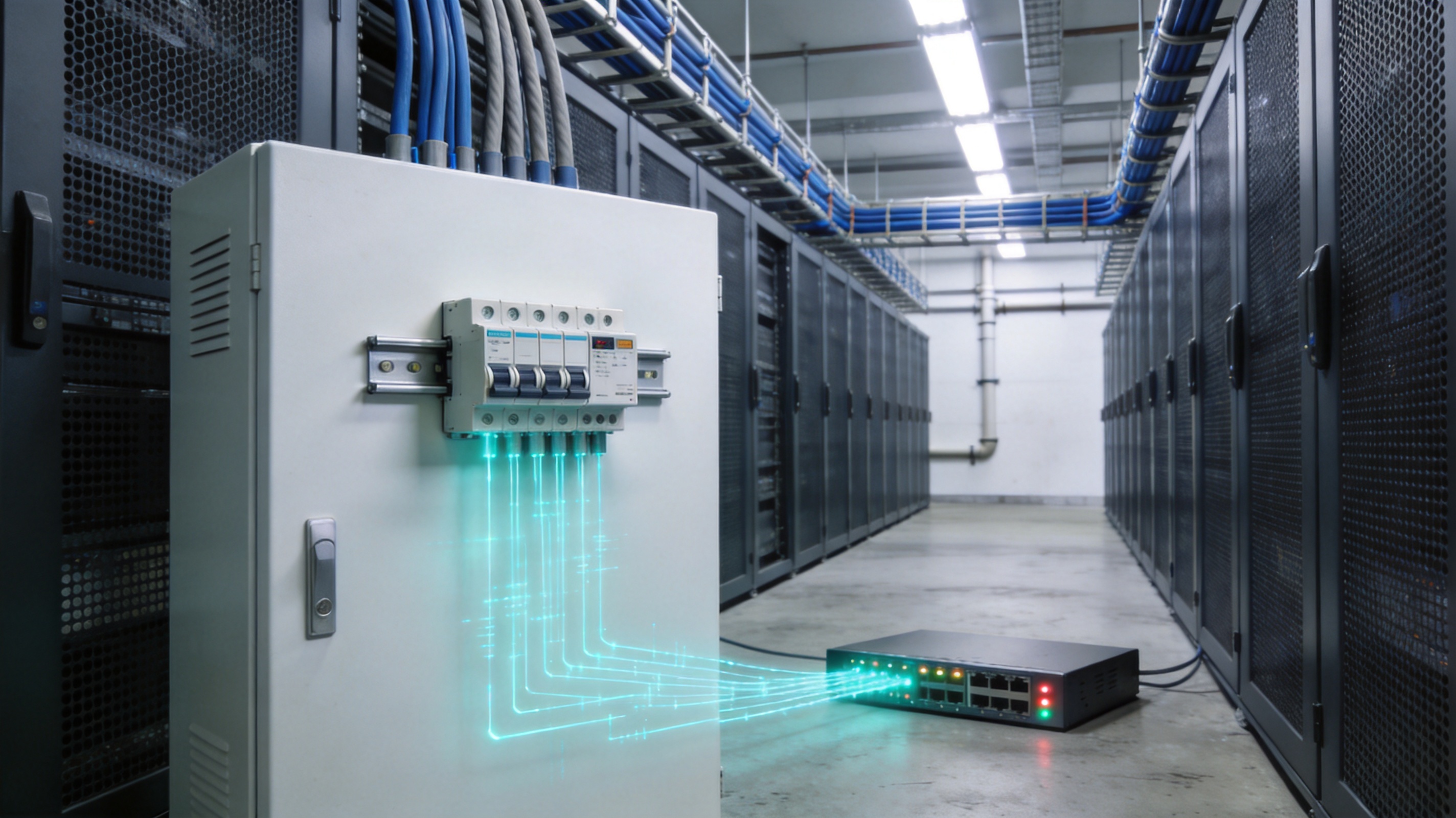
Data centers are among the most electricity-intensive facilities in the modern economy. Their electrical systems are not static; loads shift as servers are deployed, virtualized workloads move, battery systems charge and discharge, cooling equipment responds to heat, and redundancy architectures balance demand. In such an environment, a traditional single-point meter can provide total consumption information, but it cannot show the detailed load distribution needed for operational decisions.
For example, a facility manager may need to know whether a specific power distribution unit is approaching a current limit, whether a row of racks is consuming more power than planned, whether voltage imbalance is present, or whether an energy allocation model is accurate for internal billing. These questions require multi-circuit measurement, not merely whole-building metering. The SDM630MCT-ML-TCP addresses this need by allowing multiple loads to be monitored from one compact device.
In data center environments, space is valuable. Electrical panels and metering cabinets are often crowded with circuit protection devices, communication modules, wiring terminals, and monitoring equipment. A meter that can monitor four three-phase loads or twelve single-phase loads reduces the number of individual meters required. This improves installation density, lowers wiring complexity, and supports cleaner cabinet design.
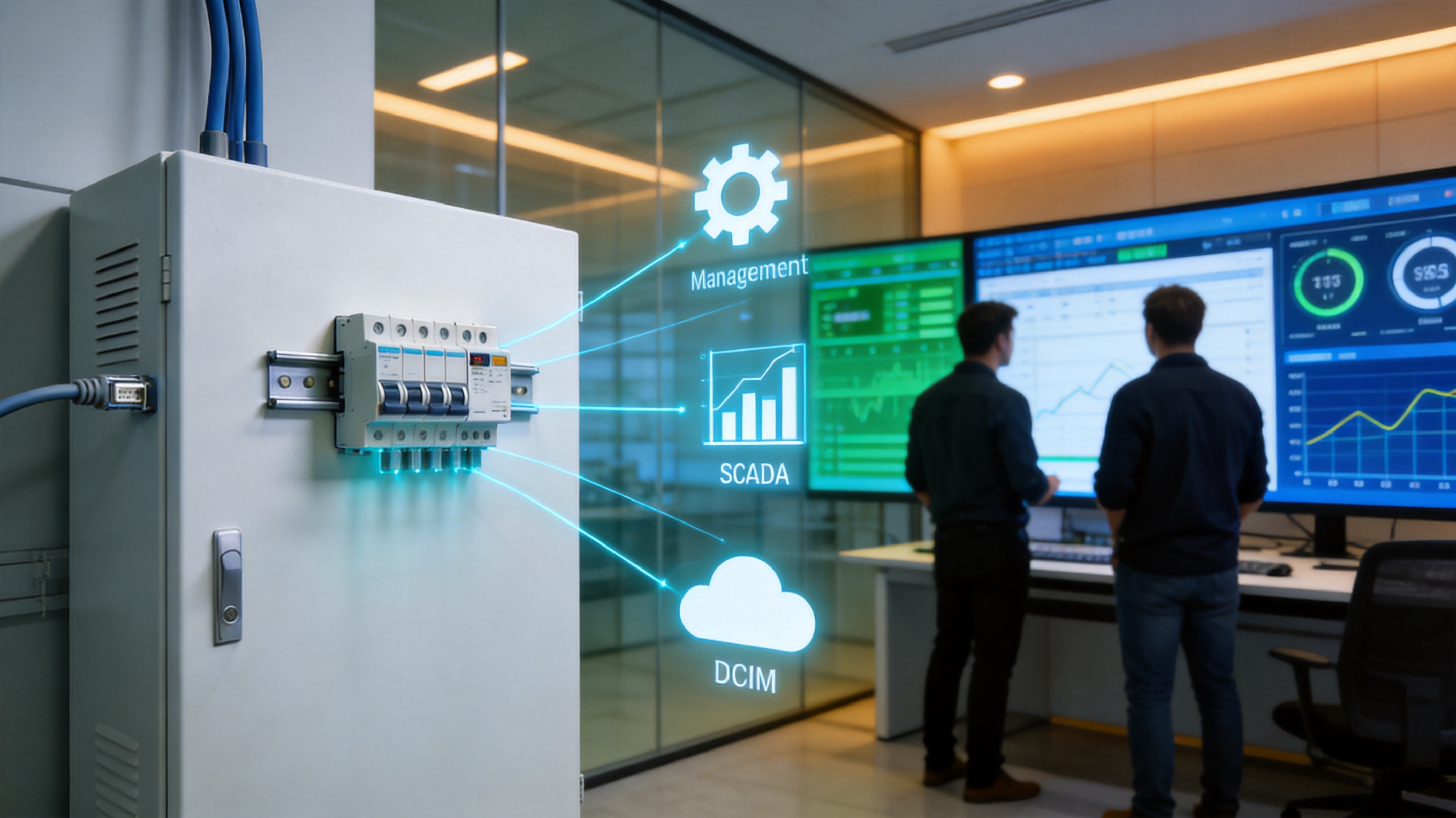
Communication is equally important. Energy data only becomes valuable when it can be integrated into building management systems, DCIM platforms, SCADA systems, or local dashboards. Ethernet Modbus TCP communication enables the meter to connect directly to TCP/IP masters for remote reading. This is particularly useful where existing network infrastructure is already available and where fast integration with supervisory systems is required.
The data center sector also demands reliability and repeatability. Measurement errors can affect capacity forecasts, power usage effectiveness calculations, customer billing, and maintenance scheduling. Therefore, a meter intended for this sector must combine electrical accuracy, stable communication, flexible input configuration, and strong manufacturing quality control.
The SDM630MCT-ML-TCP is a multi-circuit three-phase Ethernet Modbus TCP energy meter for data center metering. It is built to measure important electrical parameters in three-phase and single-phase networks, including voltage, current, power, power factor, frequency, total harmonic distortion, demand, and energy. It can operate in common power system configurations such as 1P2W, 1P3W, 3P3W, and 3P4W.
The device is especially useful where several circuits must be monitored from one location. It can function as four three-phase energy meters or twelve single-phase energy meters, depending on the application. This multi-load capability allows one meter to cover a broader range of monitoring points than many conventional single-circuit meters.
The meter supports current inputs through 100mA or 100mV CT secondary signals. Its CT primary value can be configured from 1A to 9999A, allowing it to adapt to a wide range of electrical installations. Independently programmable CT ratios make it practical to monitor loads of different sizes from the same meter, which is common in data centers where circuits may feed equipment with different current ratings.
Ethernet Modbus TCP communication is one of the key features of the SDM630MCT-ML-TCP. By using TCP/IP networking, it can communicate with SCADA systems or other TCP/IP masters for remote reading. This helps reduce the need for additional serial-to-Ethernet conversion hardware and simplifies integration into modern monitoring architectures.
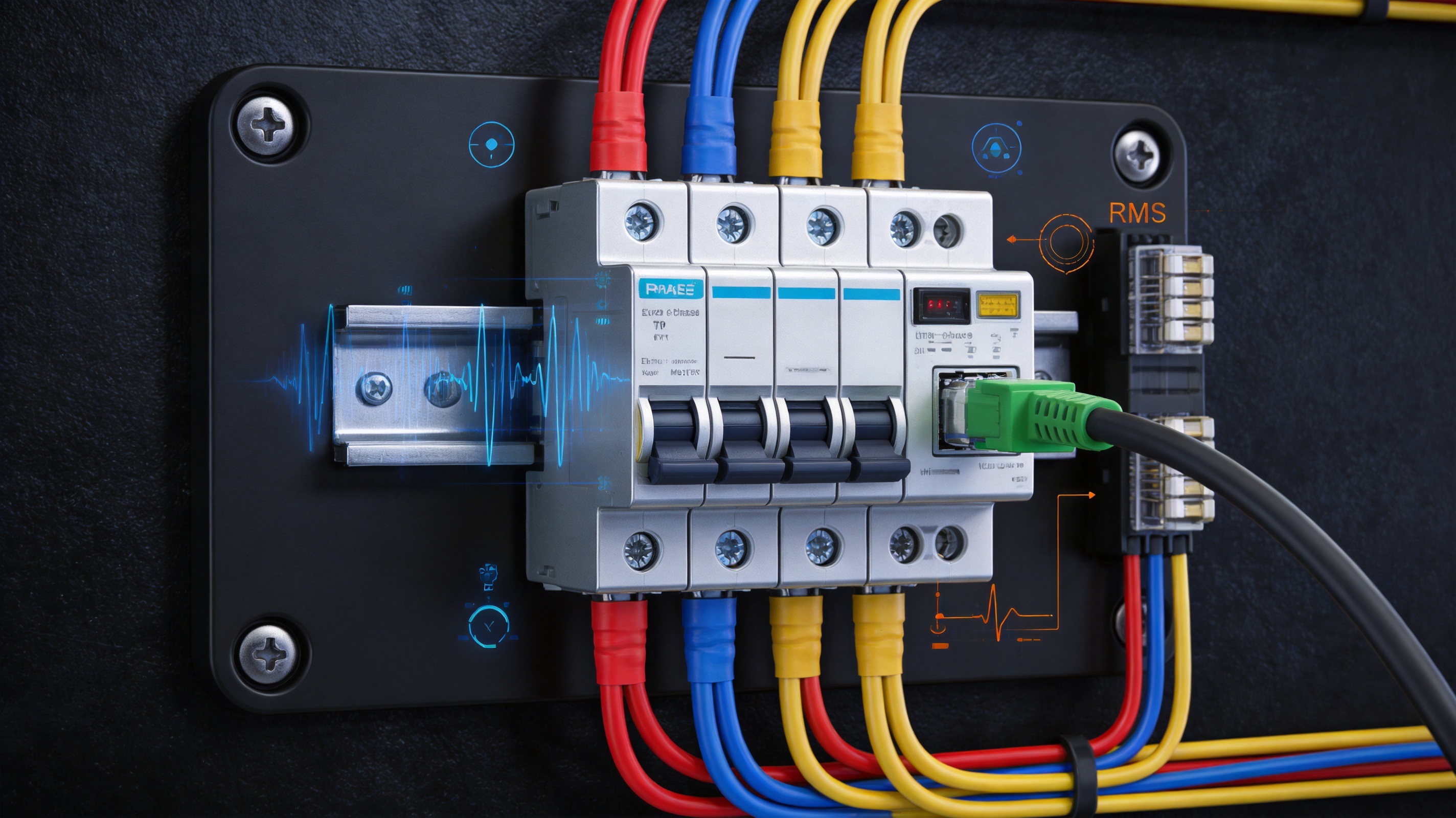
The meter also uses plug-in connectors and RJ12 sockets for fast connection. This is important for data center projects where installation time, wiring accuracy, and serviceability are significant concerns. A design that supports quick connection can reduce labor time, lower the risk of wiring mistakes, and improve consistency across multiple panels.
The SDM630MCT-ML-TCP provides RMS measurement including harmonics on three-phase AC systems, including 3P and 3P+N networks. True RMS measurement is important in data centers because IT power supplies and other electronic loads may introduce non-linear current waveforms. A basic average-reading meter may not accurately reflect such distorted waveforms, while true RMS technology supports more reliable measurement under real operating conditions.
Measurement accuracy is a critical specification. The meter offers power accuracy of 0.5% of range maximum, current accuracy of 0.5% of range maximum, voltage accuracy of 0.5% of range maximum, frequency accuracy of 0.2% of mid-frequency, and power factor accuracy of 1% of unity. Active energy measurement is aligned with IEC 62053-22 Class 0.5S and IEC 62053-21 Class 1.0, while reactive energy measurement corresponds to IEC 62053-23 Class 2.
The voltage input supports rated voltage values of 230V L-N and 120V L-N, with operational voltage from 80% to 120% of Un. These values make the product suitable for different low-voltage distribution systems commonly found in global data center environments.
For communication, Ethernet Modbus TCP allows connection to TCP/IP masters. The broader product family also includes RS485 Modbus variants, but the SDM630MCT-ML-TCP is particularly oriented toward Ethernet-based integration. Communication parameters associated with the Modbus family include address ranges, transmission distances, baud rates, parity settings, and stop bit options, while the Ethernet version gives the facility a network-based path to data acquisition.
Feature |
SDM630MCT-ML-TCP Capability |
Operational Benefit |
Application |
Multi-circuit data center metering |
Supports detailed energy visibility across multiple loads |
Load Monitoring |
Up to 4 three-phase loads or 12 single-phase loads |
Reduces the number of meters needed in panels |
Network Types |
1P2W, 1P3W, 3P3W, 3P4W |
Adapts to different electrical distribution architectures |
Communication |
Ethernet Modbus TCP |
Enables direct connection to SCADA and TCP/IP monitoring systems |
CT Secondary Input |
100mA or 100mV |
Supports flexible and safer CT-based measurement designs |
CT Primary Range |
1A to 9999A |
Allows configuration for circuits with different current ratings |
Measurement Method |
True RMS including harmonics |
Improves accuracy with non-linear electronic loads |
Energy Accuracy |
IEC 62053-22 Class 0.5S; IEC 62053-21 Class 1.0 |
Provides dependable energy data for monitoring and analysis |
Connection Design |
RJ12 socket and plug-in connectors |
Saves installation time and helps reduce wiring errors |
One of the most important advantages of this meter is circuit density. A conventional approach may require one meter for each three-phase circuit or multiple meters for single-phase branch circuits. In contrast, the SDM630MCT-ML-TCP can be used as four three-phase meters or twelve single-phase meters. This reduces hardware count, panel space, wiring effort, and integration complexity.
Another advantage is communication readiness. Many older meters rely on pulse outputs or serial communication only. While RS485 remains useful in many industrial applications, Ethernet Modbus TCP is often more convenient for modern data centers where networked monitoring infrastructure is common. The ability to connect directly with TCP/IP masters helps streamline system architecture and makes remote reading easier.
The use of independently programmable CT ratios provides flexibility that many simpler meters cannot match. In real installations, not every circuit has the same current rating. One circuit may serve a small auxiliary load, another may serve a high-density rack row, and another may feed power distribution equipment. Being able to configure CT ratios independently means that one meter can monitor different circuit sizes without forcing standardization around a single ratio.
The RJ12 socket and plug-in connector design is another competitive advantage. Electrical cabinet work is labor-intensive, and errors in CT wiring can cause incorrect readings, commissioning delays, and additional troubleshooting costs. A fast connection approach can reduce installation time significantly and help improve wiring consistency. In projects with many cabinets or repeated metering points, these savings can become substantial.
True RMS measurement also sets the meter apart from basic metering devices that may be less suitable for electronic loads. Data centers contain a high concentration of switch-mode power supplies, UPS systems, variable-speed cooling equipment, and other power electronics. These devices can create harmonic content and waveform distortion. True RMS measurement helps produce more meaningful readings in such environments.
The product’s multi-parameter measurement capability provides a broader view of electrical health. Rather than only reporting kilowatt-hours, it can provide voltage, current, power, power factor, total harmonic distortion, frequency, demand, and energy. These parameters support troubleshooting, capacity planning, energy optimization, and preventive maintenance.
Installation speed matters in data center projects. New capacity may need to be brought online quickly, maintenance windows may be short, and operational risk must be minimized. Any metering solution that requires extensive point-to-point wiring can become a bottleneck, especially when dozens or hundreds of circuits must be monitored.
The SDM630MCT-ML-TCP addresses this issue through plug-in connectors and RJ12 socket connections. This design supports an easier click-style installation approach, which can save significant wiring time compared with traditional terminal-heavy methods. The manufacturer describes the product as capable of saving up to 80% installation time in suitable applications, while also helping avoid wiring mistakes.
Reduced wiring complexity also improves maintainability. If a panel must be serviced or expanded, organized plug-in connections are easier to inspect and manage than dense bundles of individually terminated wires. This can help technicians identify circuits, verify connections, and reduce the chance of accidental disturbance during maintenance.
For data centers, wiring errors are not just inconvenient; they can undermine trust in the monitoring system. If CTs are reversed, assigned to the wrong phase, or connected to the wrong meter channel, readings may be misleading. A simplified connection system helps reduce this risk, supporting faster commissioning and more reliable data from the start.
Modbus remains one of the most widely used communication protocols in electrical monitoring and automation. Modbus TCP extends the familiar Modbus data model onto Ethernet networks, making it well suited for facilities that already use IP-based infrastructure. The SDM630MCT-ML-TCP uses Ethernet Modbus TCP to make electrical data available to SCADA systems, energy management platforms, and other TCP/IP masters.
Direct Ethernet communication can reduce the need for gateways, protocol converters, or additional data acquisition hardware. This can simplify architecture and reduce points of failure. In a data center, where monitoring reliability is essential, fewer intermediate devices can mean easier troubleshooting and stronger system transparency.
Ethernet integration also supports centralized data collection. Facility managers can monitor electrical parameters from control rooms, remote operations centers, or cloud-connected systems, depending on the architecture used. This makes the meter suitable for both local facility monitoring and larger energy management strategies.
The product’s communication capability is particularly valuable for applications such as rack-level energy allocation, branch circuit monitoring, power distribution unit supervision, electrical trend analysis, and alarm generation. When integrated into SCADA or DCIM systems, measured values can help operators identify abnormal load growth, voltage issues, overload risk, or poor power factor.
Energy consumption is only one part of data center power management. While kilowatt-hours are important for billing and efficiency calculations, real-time and historical electrical parameters provide deeper insight. The SDM630MCT-ML-TCP can measure key values such as voltage, current, active power, reactive power, apparent power, power factor, frequency, total harmonic distortion, demand, and energy.
Voltage monitoring helps identify supply quality issues. A persistent low-voltage or high-voltage condition can affect equipment performance and may indicate upstream distribution problems. Current monitoring helps operators understand load levels and avoid overloads. Power readings show the actual demand profile of circuits, while energy readings quantify consumption over time.
Power factor measurement is useful because poor power factor can increase losses and may affect distribution efficiency. Frequency measurement provides confirmation of supply stability. Total harmonic distortion measurement is valuable in facilities with many non-linear loads, as harmonic distortion can contribute to overheating, nuisance trips, and reduced equipment life.
Demand measurement supports capacity planning. Data centers often operate with strict power envelopes. By understanding demand trends, operators can decide when to add capacity, rebalance loads, or investigate unexpected growth. In colocation facilities, demand and energy data can also support customer reporting and internal cost allocation.
A major design strength of the SDM630MCT-ML-TCP is its ability to monitor multiple load structures. It can be used as four three-phase energy meters where three-phase loads need to be tracked separately. It can also be applied as twelve single-phase energy meters where individual single-phase branch circuits require measurement.
This flexibility is extremely useful in data centers because electrical distribution designs vary. Some facilities distribute power through three-phase rack PDUs, while others have single-phase branch circuits. Some panels may contain mixed load types. A meter that can adapt to these configurations improves standardization and reduces the need to stock multiple meter types for different panels.
For three-phase monitoring, the meter can track each three-phase load as a distinct circuit. This supports monitoring of distribution boards, equipment groups, UPS outputs, or rack rows. For single-phase monitoring, the meter can capture consumption across multiple branch circuits, enabling more granular reporting.
The independent CT ratio configuration further strengthens this flexibility. A facility can use appropriately rated CTs for each monitored circuit and configure the meter accordingly. This avoids the compromise of using uniform CT ratios where circuit capacities differ.
Reliable energy data requires accurate measurement. The SDM630MCT-ML-TCP is designed with accuracy characteristics aligned with recognized IEC energy metering standards. Active energy measurement corresponds to IEC 62053-22 Class 0.5S and IEC 62053-21 Class 1.0, while reactive energy measurement corresponds to IEC 62053-23 Class 2.
Class 0.5S active energy accuracy is particularly meaningful in applications where dependable energy measurement is required across a range of load conditions. In data centers, where consumption is high and operational decisions may be based on measured data, improved accuracy can translate into better planning and more credible reporting.
The meter’s stated measurement accuracies for power, current, voltage, frequency, and power factor help support a comprehensive monitoring strategy. While energy accuracy supports consumption reporting, electrical parameter accuracy supports operational analysis and maintenance decisions.
Standards alignment also makes the product easier to specify in professional projects. Engineers, consultants, and facility owners often rely on international standards when selecting metering equipment. A standards-based device can support documentation requirements, procurement confidence, and system acceptance.
The most direct application is branch circuit monitoring. By monitoring multiple outgoing circuits from a distribution panel, operators can understand where power is consumed and whether any circuit is approaching capacity. This can support load balancing and reduce the risk of unexpected overloads.
Another application is rack or row energy monitoring. In high-density data centers, power consumption may vary significantly from one rack row to another. Multi-circuit metering allows operators to measure groups of racks and compare energy profiles. This can support cooling optimization, customer billing, and capacity allocation.
The meter can also be used for UPS output monitoring. By measuring circuits downstream of UPS systems, operators can better understand protected load demand and battery-backed power distribution. This information can help evaluate redundancy, runtime assumptions, and load growth.
Power distribution unit monitoring is another suitable use. The meter can help track the energy and demand associated with PDUs or sub-distribution panels. In facilities with multiple tenants or business units, this can support transparent energy allocation.
Energy efficiency programs can also benefit. Data centers often track performance metrics such as power usage effectiveness. Although facility-level meters provide total energy data, multi-circuit meters provide the granular visibility needed to identify inefficiencies, validate improvement projects, and compare zones or equipment groups.
The quality of a metering device depends not only on its design but also on the strength of the company that manufactures it. Eastron Electronic Co., Ltd. is headquartered in Jiaxing, China, near Shanghai, Hangzhou, and Jiangsu. The company is a high-tech manufacturer and supplier of electricity products and energy measurement solutions, including electricity meters, power analyzers, current sensors, communication modules, and management systems.
The company has developed a broad product range over years of investment in electricity metering technologies. Its development teams in China and the United Kingdom support product innovation and engineering depth. Cooperation with universities and institutions also helps introduce advanced technologies into product development.
For a product such as the SDM630MCT-ML-TCP, this background matters. Data center metering requires a combination of measurement accuracy, electrical safety, communication reliability, and manufacturability. A company with experience across metering, communication modules, power analysis, and current sensing can better coordinate the different technologies required in a multi-circuit Ethernet meter.
The company has established its own professional laboratory capable of performing EMC, LVD, accuracy, and environmental tests according to IEC, EN, GB, and UL standards. This laboratory capability is an important strength because it allows the company to validate designs internally, improve quality control, and respond efficiently to market requirements.
Manufacturing under an ISO 9001 quality management system provides a structured framework for process control, documentation, corrective action, and continuous improvement. Production approved by SGS according to MID standards further reflects experience with regulated metering requirements. While the SDM630MCT-ML-TCP is targeted at data center metering rather than necessarily every legal metrology application, a company with MID-related production experience brings valuable discipline to meter manufacturing.
Eastron also holds patented technologies in software, embedded software, and hardware, and has been recognized as a High-tech Enterprise and High-tech R&D Centre of Electricity Application. These capabilities support long-term product development rather than simple assembly. In a market where energy metering products must evolve with communication protocols, accuracy demands, and installation practices, in-house R&D is a major competitive advantage.
Electrical meters must perform consistently under real-world conditions. They may be installed in cabinets with electromagnetic interference, temperature variation, voltage fluctuations, and communication traffic. Quality assurance must therefore address more than basic functional testing.
EMC testing helps verify that products can operate properly in electromagnetic environments and that they do not emit unacceptable interference. For a data center meter installed near switching power supplies, UPS systems, network equipment, and electrical distribution devices, EMC performance is especially relevant.
LVD testing relates to low-voltage safety requirements. Since energy meters are connected to electrical systems, safety design and verification are essential. Accuracy testing ensures that the meter provides reliable measurement across specified operating conditions. Environmental testing helps confirm performance under temperature, humidity, and other environmental stresses.
The company’s professional laboratory capability allows these tests to be incorporated into product development and quality control. This can shorten feedback loops between design, testing, and manufacturing. It also helps engineers identify improvements early, before products reach large-scale deployment.
For data center operators, this manufacturing strength translates into confidence. A meter is often installed as part of critical infrastructure, and replacing or troubleshooting unreliable meters can be costly. Strong testing practices help reduce the likelihood of field issues and support long-term system stability.
The SDM630MCT-ML-TCP reflects a practical design philosophy: provide high-density measurement, reduce installation complexity, and make data easy to integrate. Rather than focusing only on a single specification, the product combines multiple features that solve common field problems.
Multi-circuit capability solves the problem of panel space and meter count. Ethernet Modbus TCP solves the problem of communication integration. RJ12 sockets and plug-in connectors solve the problem of time-consuming wiring. Independently programmable CT ratios solve the problem of mixed circuit ratings. True RMS measurement solves the problem of non-linear loads. Multi-parameter measurement solves the problem of limited visibility.
This combination is what differentiates the meter from many simpler alternatives. A single-circuit meter may be accurate, but it may require many devices for the same project. A pulse-output meter may be inexpensive, but it may not provide detailed real-time parameters. A serial-only meter may be useful, but it may require additional gateway hardware for Ethernet systems. A meter with fixed CT ratios may be easy to configure, but it may lack flexibility in mixed-load panels.
In contrast, the SDM630MCT-ML-TCP is designed for demanding electrical monitoring environments where installation efficiency, data richness, and communication convenience must work together.
Energy management is increasingly important for data center operators. Rising electricity costs, sustainability targets, carbon reporting, and customer expectations all require better energy visibility. Multi-circuit metering provides the data foundation for these efforts.
By measuring multiple circuits, the SDM630MCT-ML-TCP helps operators identify where energy is being consumed. This supports energy baselining, trend analysis, and verification of efficiency improvements. For example, if a cooling optimization project is implemented, circuit-level monitoring can help determine whether the electrical load profile changed as expected.
Granular measurement also supports accountability. In multi-tenant or departmental facilities, energy usage may need to be allocated to specific users or service groups. While the exact billing method depends on local regulations and system design, accurate metering data can support transparent internal reporting.
Demand monitoring can also support peak management. Even when total energy consumption is acceptable, high demand peaks can affect infrastructure planning or utility cost structures. Monitoring multiple circuits helps identify which areas contribute to peaks and whether load shifting or balancing is possible.
Power quality-related measurements such as power factor and total harmonic distortion can also contribute to sustainability. Poor power factor and excessive harmonics can increase losses and reduce electrical efficiency. By identifying these issues, operators can take corrective action and improve the overall performance of the electrical system.
System integrators and panel builders need products that are easy to install, easy to configure, and easy to integrate. The SDM630MCT-ML-TCP offers several advantages for these professionals.
First, one meter can replace multiple meters in many designs. This reduces bill-of-material complexity and may simplify panel layout. Second, plug-in wiring and RJ12 connections can improve assembly efficiency. Third, Ethernet Modbus TCP communication makes integration with many supervisory systems straightforward.
For panel builders, reduced wiring time is especially valuable. Repeated production of metering panels becomes more efficient when connections are standardized and simplified. The risk of rework also decreases when the connection system helps prevent wiring mistakes.
For system integrators, the ability to obtain multiple parameters through Modbus TCP is valuable. Instead of collecting only energy pulses, the integrator can map voltage, current, power, demand, frequency, power factor, and energy values into a monitoring platform. This improves the final value delivered to the end user.
For consultants and design engineers, the product’s standards-based accuracy and multi-load function can simplify specification. It provides a strong fit for projects where detailed electrical monitoring is required but panel space and installation labor must be controlled.

For data center owners, the meter’s value is measured by operational outcomes. Better metering can improve uptime awareness, capacity planning, energy efficiency, and financial control.
Uptime awareness improves because operators can monitor load levels and detect abnormal changes. If a circuit begins drawing more current than expected, the monitoring system can alert staff before a breaker trip or overload condition occurs. If voltage or power factor changes unexpectedly, the data can guide investigation.
Capacity planning improves because actual measured loads are more reliable than assumptions. Many facilities are designed with redundancy and safety margins, but unused capacity cannot always be identified without measurement. Multi-circuit meters help determine where capacity is available and where expansion may require upgrades.
Energy efficiency improves because detailed data reveals patterns. Operators can compare zones, track load growth, and evaluate the effect of equipment changes. Without circuit-level data, inefficiencies may remain hidden inside total consumption figures.
Financial control improves because energy costs can be allocated more accurately. In colocation environments, transparent reporting is important for customer trust. In enterprise facilities, departments or applications may need energy accountability. Multi-circuit metering provides the raw data needed for such reporting models.
When selecting a multi-circuit energy meter for a data center, engineers should consider electrical configuration, CT compatibility, communication architecture, accuracy requirements, installation method, and monitoring software integration.
The electrical configuration should match the facility’s distribution system. The SDM630MCT-ML-TCP supports 1P2W, 1P3W, 3P3W, and 3P4W applications, making it suitable for a variety of designs. The number of circuits to be monitored should also be evaluated. If the project requires four three-phase circuits or up to twelve single-phase circuits per meter location, this product can be a strong fit.
CT compatibility is essential. The meter supports 100mA and 100mV CT secondary inputs, with CT primary values programmable from 1A to 9999A. Engineers should select CTs appropriate for the conductor size, current range, accuracy requirement, and installation method.
Communication architecture should be planned early. If the site uses Ethernet-based SCADA or DCIM integration, Modbus TCP is a practical choice. Network addressing, cybersecurity policies, data polling intervals, and integration mapping should be coordinated with the facility’s IT and operations teams.
Accuracy requirements should be matched to the application. For energy management and monitoring, the meter’s active energy accuracy classes and multi-parameter measurement capability provide a strong foundation. If the application involves legal billing, local regulations and certification requirements should be reviewed.
Installation method should consider available panel space, wiring routes, CT placement, and service access. The product’s plug-in connector design and RJ12 sockets can simplify installation, but good engineering practice still requires clear labeling, correct phase association, and commissioning verification.
Successful metering depends on proper commissioning. Even an advanced meter can produce incorrect data if CTs are installed incorrectly, phases are mismatched, or communication settings are not verified.
A recommended commissioning process begins with confirming the electrical system type, such as 3P4W or 3P3W. Next, CT orientation and phase association should be checked. The CT ratio should be programmed for each circuit according to the installed CT primary rating. Voltage inputs should be verified against expected system voltage.
Communication should then be tested. For Ethernet Modbus TCP, the meter should be reachable from the monitoring system, and register values should be read successfully. Data mapping should be confirmed by comparing real-time values against known loads or portable test instruments.
After initial verification, trend data should be reviewed for several operating cycles. Sudden negative power values, unrealistic power factor readings, or inconsistent phase values may indicate wiring or configuration issues. Early detection during commissioning prevents long-term data quality problems.
Documentation is also important. Each meter channel should be associated with a circuit name, panel reference, CT ratio, voltage configuration, and communication address or network identity. Good documentation makes future maintenance and expansion easier.
The future of data center management is increasingly digital, automated, and analytics-driven. Operators need real-time data not only for energy reporting but also for predictive maintenance, capacity forecasting, workload planning, and sustainability management. Metering devices must therefore provide accurate data in a format that can be integrated into software systems.
The SDM630MCT-ML-TCP fits this direction because it combines multi-circuit measurement with Ethernet communication. It is not limited to isolated local display readings; it is designed to feed data into larger monitoring ecosystems. This makes it suitable for both current facility needs and future digital infrastructure strategies.
As data centers become denser, multi-circuit capability becomes more valuable. Installing one meter per circuit may become impractical in space-constrained panels. A high-density meter reduces hardware footprint while preserving visibility.
As power systems become more complex, multi-parameter measurement also becomes more important. Energy alone is not enough. Operators need to understand power quality, demand, load balance, and trends. The product’s measurement range supports this broader view.
As installation labor becomes more expensive and project schedules become tighter, simplified connection designs become more valuable. Plug-in connectors and RJ12 sockets are not minor conveniences; they are practical features that can affect project cost, commissioning speed, and long-term maintainability.
Eastron’s products and services have been supplied to more than 50 countries across Europe, Asia-Pacific, America, the Middle East, and Africa. This international experience supports an understanding of different electrical standards, market expectations, and application environments.
The company’s mission is to create value for customers and grow together with partners. This is reflected in a product strategy that combines technical performance with installation practicality. For global customers, reliable technical support and after-sales service are important because metering systems are often integrated into larger electrical and software infrastructures.
The company’s professional teams for technical support and after-sales service help customers select, install, configure, and maintain products. This service capability is important for system integrators, distributors, and end users who need more than a device; they need a dependable measurement solution.
The company’s broader product portfolio also supports system-level thinking. Since it develops electricity meters, power analyzers, current sensors, communication modules, and management systems, it can address energy measurement from multiple angles. This broad expertise is beneficial when designing products for advanced applications such as data center metering.
The SDM630MCT-ML-TCP is designed for multi-circuit energy metering in data centers and similar power-intensive environments. It measures multiple three-phase or single-phase loads and communicates data through Ethernet Modbus TCP.
The meter can be used as four three-phase energy meters or twelve single-phase energy meters. This allows one device to monitor multiple circuits and reduces the need for many separate meters.
Ethernet Modbus TCP allows the meter to connect directly to TCP/IP masters, SCADA systems, and other monitoring platforms. This simplifies integration into modern networked data center infrastructure.
The meter can measure voltage, current, power, power factor, frequency, total harmonic distortion, demand, and energy. These parameters support energy management, troubleshooting, capacity planning, and power quality monitoring.
The meter supports 100mA and 100mV CT secondary inputs. CT primary values can be configured from 1A to 9999A, allowing the meter to adapt to many circuit sizes.
Independently programmable CT ratios allow different monitored circuits to use different CT ratings. This is helpful in data centers where circuit capacities vary across panels and load groups.
The meter uses plug-in connectors and RJ12 sockets for fast connection. This can reduce wiring work, help avoid wiring mistakes, and make repeated panel installations more efficient.
Data centers contain many electronic loads that can create distorted current waveforms. True RMS measurement provides more accurate readings under these non-linear load conditions than basic measurement methods.
The meter’s active energy measurement is aligned with IEC 62053-22 Class 0.5S and IEC 62053-21 Class 1.0. Reactive energy measurement corresponds to IEC 62053-23 Class 2.
The manufacturer has professional R&D teams, patented technologies, ISO 9001 quality management, MID-related production approval by SGS, and an in-house laboratory for EMC, LVD, accuracy, and environmental testing according to IEC, EN, GB, and UL standards.
The SDM630MCT-ML-TCP is a strong solution for data center power monitoring because it addresses several critical needs at once: high-density circuit measurement, Ethernet-based communication, flexible CT configuration, true RMS accuracy, multi-parameter visibility, and simplified installation. Its ability to operate as four three-phase meters or twelve single-phase meters makes it especially valuable in environments where panel space and wiring time are limited.
Compared with conventional single-circuit or communication-limited meters, it offers clear practical advantages. Ethernet Modbus TCP supports direct integration with SCADA and monitoring systems. RJ12 and plug-in connections help reduce installation effort and wiring errors. Independently programmable CT ratios allow one meter to adapt to mixed circuit sizes. True RMS measurement supports reliable readings in data centers with non-linear electronic loads.
The product is also supported by a manufacturer with strong engineering, testing, and quality capabilities. Eastron Electronic Co., Ltd. has developed a broad portfolio in electricity metering and energy measurement solutions, supported by R&D teams, professional laboratory testing, quality management systems, patented technologies, and global market experience. These strengths help ensure that the product is not only technically capable but also practical for real-world deployment.
For data center owners, system integrators, panel builders, and energy managers, the SDM630MCT-ML-TCP provides a compelling balance of accuracy, connectivity, installation efficiency, and monitoring depth. As data centers continue to demand better visibility and smarter energy management, multi-circuit Ethernet metering will remain an important foundation for efficient, reliable, and transparent power infrastructure.
International Electrotechnical Commission. IEC 62053-22: Electricity Metering Equipment—Particular Requirements—Static Meters for Active Energy, Classes 0.2S and 0.5S.
International Electrotechnical Commission. IEC 62053-21: Electricity Metering Equipment—Particular Requirements—Static Meters for Active Energy, Classes 1 and 2.
International Electrotechnical Commission. IEC 62053-23: Electricity Metering Equipment—Particular Requirements—Static Meters for Reactive Energy.
International Electrotechnical Commission. IEC 61000 Series: Electromagnetic Compatibility Standards.
International Organization for Standardization. ISO 9001: Quality Management Systems—Requirements.
Modbus Organization. Modbus Application Protocol Specification.
ASHRAE Technical Committee 9.9. Thermal Guidelines for Data Processing Environments.
Uptime Institute. Data Center Site Infrastructure Tier Standard: Topology.
Your email address will not be published. Required fields are marked *

We develop and produce high performance electricity meters, power analyzers, current sensors, communication modules and management systems. China Custom Smart Meters Manufacturers and Factory
Address:NO 52, Dongjin Road, Nanhu, Jiaxing, Zhejiang, China
Copyright @ Eastron Electronic Co., Ltd. All rights reserved Electricity Meters Manufacturers
