

 English
 Español
 Deutsch
 中文简体
中文简体

Product Consultation
Your email address will not be published. Required fields are marked *
Europe's Solar and Energy Storage Transition: Transforming the Power System Infrastructure for a Renewable Future
Jul 10,2026
Power Systems Are Becoming “Real-Time Systems”: Why Data Is More Critical Than Electricity
Jul 06,2026
New EPBD Regulations Drive HVAC Energy Transparency and Boost Demand for Smart Meters
Jul 07,2026Content
As electric mobility expands from early adoption into large-scale public, commercial, and fleet charging networks, the quality of energy measurement inside direct-current fast charging stations has become a decisive factor in profitability, legal compliance, customer trust, and system reliability. The MID Approved Smart DC Energy Meter for EV charger stations, model DCM6-650, is designed specifically for demanding DC charging applications where high current, high voltage, secure billing data, and regulatory approval are all required at the same time.
This smart DC energy meter supports voltage from 150 V DC to 1000 V DC and a maximum current of 650 A, making it suitable for modern high-power charging systems. It is developed for energy measurement inside EV charger stations and combines MID approval, PTB/Eichrecht-oriented secure data functionality, RS485 Modbus communication, internal charging data recording, line-loss energy measurement, charging duration monitoring, and encrypted data handling. These characteristics make it a practical metering solution for charge point manufacturers, charging network operators, system integrators, public infrastructure projects, and energy-service providers that need dependable measurement at the point where power is delivered and billed.
Unlike general-purpose DC measurement devices, the DCM6-650 is engineered around the operating realities of EV charging. These realities include rapidly changing load profiles, long operating hours, high electromagnetic stress, demanding installation environments, communication with charger controllers, and strict requirements for trustworthy consumption records. In this context, a meter is not only a measurement component. It is a compliance tool, a billing foundation, a diagnostic data source, and a bridge between hardware performance and user confidence.
MID Approved Smart DC Energy Meter for EV Charger Stations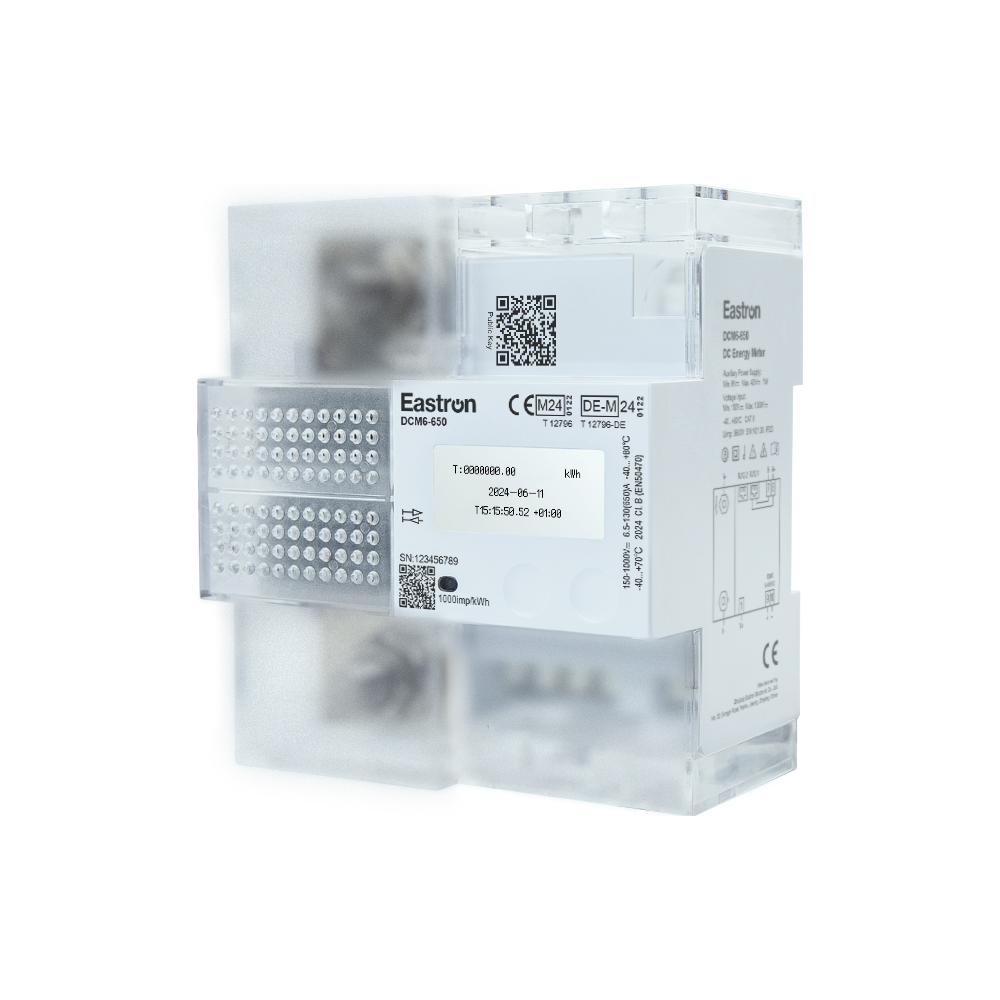
The DCM6-650 belongs to the DCM6 Series of smart DC energy meters. It is a MID approved DC meter designed for measurement within EV charger stations and is also developed with PTB and Eichrecht-related requirements in mind. The product is intended for high-current DC charging where the meter must support up to 650 A while maintaining Class 1 accuracy and secure communication of charging information.
Its electrical operating range is one of its most important strengths. With a voltage range from 150 V DC to 1000 V DC, the meter can be applied in a broad variety of DC charging architectures. This makes it suitable for current charging stations as well as future-oriented charging platforms designed around higher voltage vehicle batteries. The auxiliary power supply is 9–40 V DC, which supports integration with typical charger control and auxiliary systems.
The maximum current rating of 650 A is particularly important for high-power EV charging. As vehicles move toward faster charging and larger battery packs, the current capacity of the meter must be able to keep up with the charging module and cable system. A meter with insufficient capacity can become a bottleneck or require additional complexity. The DCM6-650 is designed to avoid that limitation by offering a high current load capability in a compact metering solution.
The product provides 2+1 RS485 Modbus communication ports. In practical charger design, multiple communication interfaces can simplify architecture. One RS485 channel may be used for communication with the charging controller, another may be reserved for maintenance, monitoring, or redundant data exchange, while the plug-in terminal interface supports convenient connection. This flexibility is valuable for charger manufacturers that must design equipment for different markets and network requirements.
The meter uses a dot-matrix LCD display with a life cycle of more than 12 years. A clear, long-life display is important for service technicians, auditors, and installers who need direct access to key information without relying entirely on external software. In environments where equipment must remain operational for many years, display durability contributes directly to lower maintenance cost and higher operational confidence.
The following table summarizes the principal specifications of the DCM6-650 smart DC energy meter for EV charger stations.
| Parameter | Specification | Application Value |
| Product Type | Smart DC energy meter for EV charging stations | Designed for direct-current charging measurement and billing data support |
| Voltage Range | 150–1000 V DC | Compatible with a wide range of DC fast charging platforms |
| Maximum Voltage | 1000 V DC | Supports high-voltage EV charging architectures |
| Auxiliary Power Supply | 9–40 V DC | Convenient integration with charger auxiliary systems |
| Starting Current | 0.52 A | Supports measurement from low-current operating conditions |
| Minimum Current | 6.5 A | Provides defined measurement behavior at light load |
| Transition Current | 13 A | Supports stable accuracy transition across load ranges |
| Reference Current | 130 A | Designed around demanding charging workloads |
| Maximum Current | 650 A | Suitable for high-power EV charging stations |
| Accuracy Class | Class 1 | Supports reliable commercial energy measurement |
| Display | Dot-matrix LCD | Provides local reading and service visibility |
| Display Life Cycle | More than 12 years | Supports long-term infrastructure operation |
| Communication Type | 2 x RS485 RTU | Enables Modbus integration with charger systems |
| Ports | 2 x RJ12 plus 1 plug-in terminal | Improves wiring flexibility and service convenience |
| RS485 Baud Rate | 4800–115200 bps, 19200 bps default | Adaptable to different communication architectures |
| Data Format | 8N1, settable | Supports standard serial communication configuration |
| Security Functions | Signed and encrypted charging data | Supports trusted billing and compliance-oriented data protection |
| Storage Function | Internal charging process data storage | Helps preserve charging records for verification and audit |
| Approval | MID approved | Supports regulated energy metering applications |
DC fast charging stations differ significantly from alternating-current metering environments. In AC systems, metering technology has been mature for decades, and the measurement point is often located at the grid input. In DC fast charging, however, the customer receives energy after conversion from AC to DC. Power modules, cables, contactors, filters, and other components may introduce losses between the grid input and the vehicle output. For transparent billing, operators increasingly need accurate DC-side measurement that represents the energy actually delivered through the charging process.
This requirement is especially important in markets where public charging must comply with metrological regulation. Customers expect to pay for the actual quantity of energy delivered, not an estimated value or an indirect calculation. Regulators require traceable, secure, and verifiable measurement. Charging network operators need reliable records to resolve disputes, manage revenue, and integrate charging data into back-office systems.
A meter such as the DCM6-650 addresses this challenge by measuring energy directly in the DC path and by supporting signed and encrypted charging data. This combination of physical measurement and digital security helps create a chain of trust. When charging data is stored, protected, and communicated through defined interfaces, the charging session becomes easier to audit and harder to manipulate.
For high-power charging stations, the challenge becomes even more demanding. Higher current means greater thermal stress, stricter conductor design, more demanding insulation and safety considerations, and more severe transient conditions. A meter designed only for low-power DC applications may not be adequate. The DCM6-650’s 650 A maximum current and 1000 V DC maximum voltage make it suitable for the more demanding segment of the EV charging market.
The Measuring Instruments Directive, commonly known as MID, is a key regulatory framework for measuring instruments used in commercial transactions in many markets. For EV charging, MID approval provides a strong basis for confidence because it indicates that the meter is designed and evaluated according to recognized metrological standards. A MID approved meter is not merely a sensor; it is a regulated measuring instrument intended to support billing and legal traceability.
For charge point operators, the use of MID approved DC metering can reduce commercial risk. When customers question a charging bill, the operator can rely on measurement equipment with recognized approval rather than on non-certified estimation. For charger manufacturers, integrating an approved meter can shorten project qualification and strengthen the product offering. For public procurement projects, regulatory alignment can be a decisive requirement.
The DCM6-650 is described as a MID DC meter and is designed for energy measurement within EV charger stations. It combines approval with the practical interfaces required for charger integration. This is important because compliance alone is not enough. A meter must also fit into the electrical and communication architecture of the charging station. The DCM6-650 addresses both sides: approved measurement and practical system integration.
In competitive terms, this is a significant advantage over basic DC energy sensors or meters without regulatory approval. Non-approved products may be adequate for internal monitoring, but they can become unsuitable when the energy value is used for customer billing. The DCM6-650 is positioned for the more demanding environment where measurement results must be trusted by operators, users, and authorities.
Germany’s Eichrecht requirements have influenced the EV charging industry far beyond one national market. They emphasize transparent, verifiable, and tamper-resistant billing data. A charger must not only measure energy accurately; it must also allow the user or relevant party to verify that the billed charging session corresponds to authentic measurement data.
The DCM6-650 is designed with a dedicated micro-controller for encryption functionality in order to comply with Eichrecht-related requirements. This is a major advantage compared with meters that rely only on external systems for data security. When security is embedded closer to the measurement device, the integrity of charging information is strengthened at the source.
Signed and encrypted charging data help prevent unauthorized modification of measurement records. In an EV charging ecosystem that includes meters, charge controllers, network gateways, payment systems, cloud platforms, mobile applications, and roaming networks, each additional interface can become a potential point of vulnerability. The meter’s ability to provide protected data reduces the risk that session data can be altered after measurement.
Internal storage of charging processes further supports auditability. If communication is interrupted or if a back-office system fails to receive data immediately, the meter can retain charging information for later retrieval or verification. This function is particularly valuable for public charging infrastructure, where uptime, billing integrity, and dispute resolution are essential.
In comparison with competitors that offer only raw Modbus values, the DCM6-650 provides a more complete metering foundation. It supports not only measurement, but also the secure handling of charging session information. That distinction is important for operators seeking long-term compliance and customer trust.
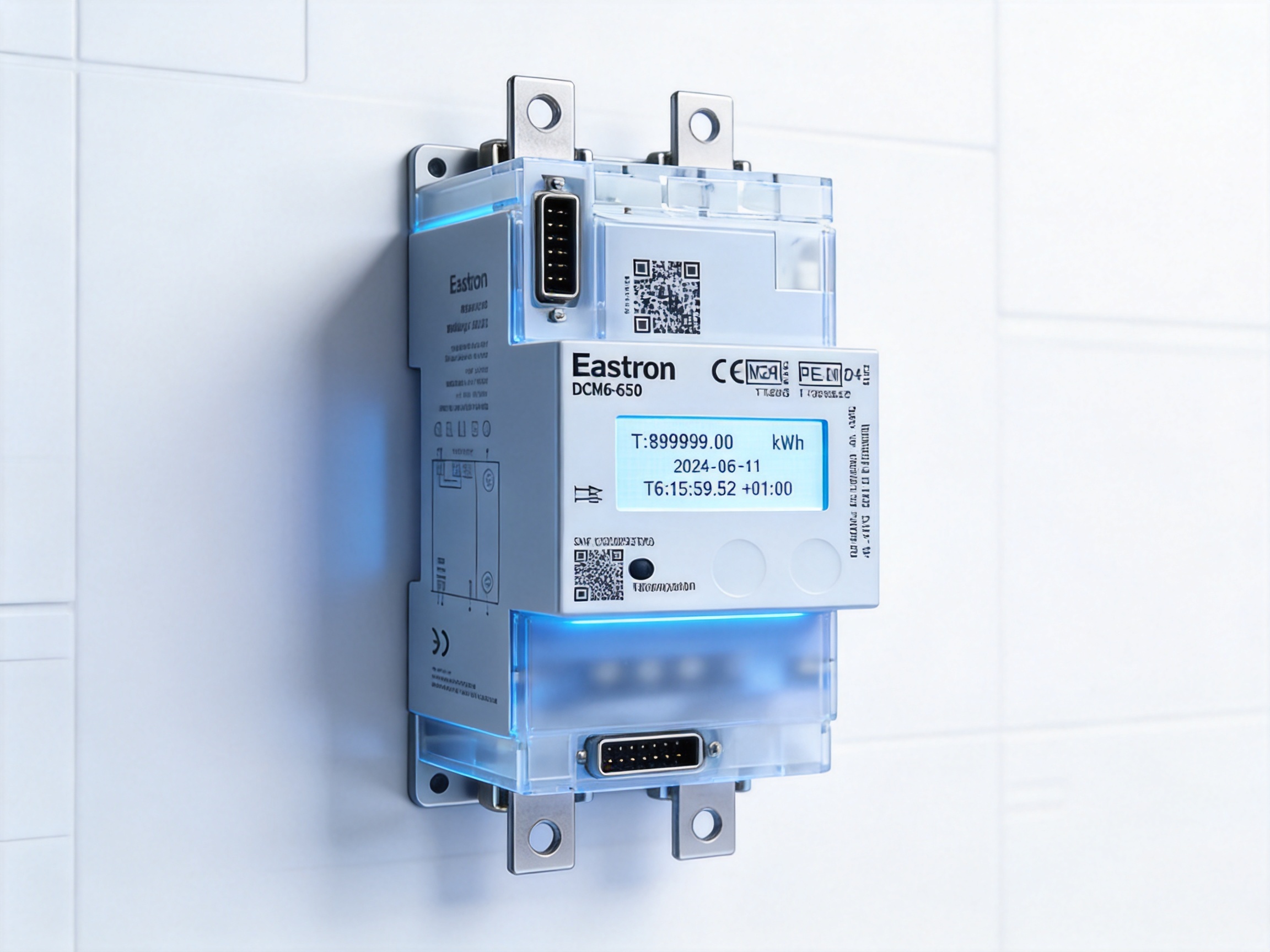
The 150–1000 V DC voltage range allows the DCM6-650 to support both existing and future charging station designs. Many modern electric vehicles operate around 400 V battery systems, while an increasing number use higher voltage platforms around 800 V. Charging infrastructure must therefore be flexible enough to serve multiple vehicle generations. A meter with a 1000 V DC maximum voltage is well positioned for this shift.
The 650 A maximum current rating is equally important. High-power chargers deliver large amounts of energy in short time periods. To accomplish this, they require components capable of handling high current safely and accurately. If a meter cannot support the required current, the charger designer may need to use external shunts, multiple measurement paths, or lower-rated products with protective limitations. Such approaches may increase cost, complexity, and points of failure.
By providing a high current rating in a purpose-built meter, the DCM6-650 supports simplified system design. It can be integrated into charger platforms requiring robust DC measurement without forcing the manufacturer to compromise on charging power. This helps charger designers meet market demand for faster charging while retaining accurate metering and compliance support.
Thermal stability is a key consideration in high-current metering. In EV charging stations, long sessions, frequent charging cycles, hot ambient conditions, and cabinet constraints may all increase temperature stress. A professional DC energy meter must be designed with proper material selection, conductor layout, insulation coordination, and accuracy stability. The DCM6-650 is intended for this high-demand environment rather than for light-duty measurement.
The starting current of 0.52 A and defined current values up to 650 A show that the meter is characterized across a broad operating range. This matters because charging sessions do not always operate at maximum current. They may ramp up, taper down, pause, or change according to vehicle battery management requirements. Reliable measurement across the current profile supports accurate session totals.
Line loss energy measurement is a valuable function in DC charging stations. In a high-power charger, energy can be lost in cables, internal conductors, contactors, connectors, and other elements of the power path. These losses may vary depending on current level, temperature, cable length, and installation design. Understanding line loss is important for both technical optimization and commercial transparency.
The DCM6-650 includes line loss energy measurement, helping operators and engineers evaluate the difference between energy conversion, delivery, and consumption points. For charger manufacturers, such data can support product development and performance verification. For network operators, it can help identify abnormal loss conditions, deteriorating connections, or inefficient installation layouts.
Competitor products that provide only a basic accumulated energy value may not offer the same level of diagnostic insight. A meter with line loss measurement contributes to smarter infrastructure operation. Instead of treating the charger as a black box, operators can gain more information about how energy behaves inside the system.
This can also improve preventive maintenance. Abnormally high losses may indicate loose connections, aging contactors, cable problems, or heat-related degradation. Detecting such changes early can reduce downtime and prevent more serious failures. In commercial charging networks, where station availability directly affects revenue, diagnostic measurement has practical financial value.
EV chargers are integrated systems. The meter must communicate with a charger controller, payment platform, energy management system, maintenance tool, gateway, or supervisory network. RS485 Modbus RTU remains widely used because it is robust, cost-effective, and suitable for industrial environments. The DCM6-650 supports 2 x RS485 RTU communication and provides 2 x RJ12 plus 1 plug-in terminal connection options.
The baud rate range from 4800 to 115200 bps, with 19200 bps as default, gives engineers the flexibility to match existing communication standards. The 8N1 serial format is also settable, supporting practical integration in diverse control systems. This adaptability is important because EV charger manufacturers may build different product lines for different countries, power levels, enclosure types, and network providers.
The 2+1 port architecture offers an advantage over meters with only one communication interface. In a single-port system, the meter’s communication line may become a constraint when multiple devices need access. With additional ports, system designers can separate operational data exchange from service access or design more flexible communication topologies.
For example, one interface can communicate with the internal charge controller, while another can be connected to a diagnostic terminal or gateway. This can reduce service time and simplify commissioning. In large charging networks, reduced service time translates into lower operating cost and faster deployment.
Communication flexibility also supports future upgrades. As charging stations evolve, operators may add energy management, load balancing, remote diagnostics, or compliance verification systems. A meter with multiple communication interfaces is better prepared for these changes than a minimal single-channel device.
The DCM6-650 uses a dot-matrix LCD display with a life cycle of more than 12 years. While many modern systems rely heavily on remote monitoring, a local display remains essential for installation, troubleshooting, inspection, and service. Technicians often need to confirm meter status directly at the charger, especially during commissioning or fault diagnosis.
A dot-matrix LCD can present information more flexibly than a simple segmented display. It can support clearer menus, status messages, and measurement data presentation. This improves usability and reduces the risk of misreading during maintenance.
The long display life cycle supports the economics of charging infrastructure. EV charging stations are capital assets expected to operate for many years. Components that degrade prematurely increase maintenance expense and create customer dissatisfaction. A meter designed with long-life display technology contributes to lower total cost of ownership.
In competitive comparison, low-cost meters may reduce initial purchase price but create higher lifetime costs through display failure, communication instability, or limited service support. The DCM6-650 is positioned as an infrastructure-grade meter, where reliability and compliance are more valuable than short-term component savings.
The meter supports charging data recording and charging duration monitoring. These functions are essential for a modern EV charging business model. A charging session is not only an energy transaction; it is also a time-based service event. Operators may need to record start time, stop time, duration, energy delivered, and session-related status information.
Charging duration monitoring can support multiple business and technical purposes. It can help calculate parking or occupancy fees, identify vehicles that remain connected after charging is complete, support fleet charging schedules, and provide insight into station utilization. When combined with accurate energy data, duration information gives operators a fuller picture of charging behavior.
Internal recording of charging data also supports dispute resolution. If a customer questions a bill or claims a session did not complete correctly, stored data can help reconstruct the event. In regulated markets, this capability may be required or strongly preferred.
For fleet operators, charging records are also valuable for energy allocation. Companies may need to assign electricity costs to vehicles, drivers, routes, departments, or depots. Accurate DC energy records simplify this process and make electrified fleet management more transparent.
The DCM6-650 offers multiple advantages over conventional DC meters and basic measurement modules. The first advantage is its combination of high voltage and high current capability. Many DC meters can measure either moderate current or limited voltage, but high-power EV charging requires both. A 1000 V DC and 650 A range provides a strong foundation for next-generation fast charging systems.
The second advantage is MID approval. Basic sensors can provide measurement values, but they may not be suitable for commercial billing. In public charging, lack of approval can limit market access and create legal uncertainty. The DCM6-650 addresses this by providing a compliance-oriented solution.
The third advantage is secure charging data. Signed and encrypted records, supported by a dedicated micro-controller for encryption, raise the meter above simple measurement devices. This helps protect billing data integrity and supports Eichrecht-related expectations.
The fourth advantage is communication flexibility. The 2+1 RS485 Modbus architecture provides practical installation and integration benefits. Competing products with fewer ports may require additional communication hardware or more complex system design.
The fifth advantage is internal charging data storage. In real charging networks, communication can fail, back-office platforms can experience delays, and stations can operate in challenging environments. Internal storage helps preserve critical session information.
The sixth advantage is the inclusion of line loss energy measurement. This function supports diagnostics, efficiency optimization, and maintenance planning. It moves the meter from a passive billing component toward a smarter infrastructure monitoring device.
The seventh advantage is long service life. The dot-matrix LCD with more than 12 years of life supports durable operation. For infrastructure owners, reliability over time is more important than the lowest initial cost.
The quality of a precision energy meter depends not only on its design concept, but also on the manufacturing capabilities behind it. Eastron Electronic Co., Ltd. is headquartered in Jiaxing, China, near Shanghai, Hangzhou, and Jiangsu. This location provides access to a strong manufacturing ecosystem, logistics networks, skilled technical talent, and supply-chain resources. The company is a high-tech manufacturer and supplier of electricity products and energy measurement solutions, including electricity meters, power analyzers, current sensors, communication modules, and management systems.
For a product such as the DCM6-650, advanced manufacturing is critical. DC energy metering at high voltage and high current requires precision electronic design, reliable insulation systems, careful component selection, stable calibration processes, strong firmware control, and rigorous final testing. The company’s experience across electricity meters and energy measurement products gives it a broad technical foundation for developing specialized EV charging meters.
Eastron has built a rich product range over many years and continues to invest in research and development. Its development teams in China and the United Kingdom contribute to product innovation and help maintain a competitive edge. Cooperation with universities and institutions brings advanced technologies into product design. This combination of internal engineering and external technical collaboration supports continuous improvement.
The company has established a professional laboratory capable of performing EMC, LVD, accuracy, and environmental tests according to IEC, EN, GB, and UL standards. This is a major strength because energy meters must operate reliably under electrical noise, temperature variation, safety stress, and long service conditions. Testing capability inside the company allows faster development cycles, tighter quality control, and better problem resolution before products reach customers.
Production follows the ISO 9001 quality management system, and manufacturing is approved by SGS according to MID standards. For customers, this means that quality is not treated as a final inspection step only. It is part of a structured management system covering design, production, testing, documentation, and continuous improvement.
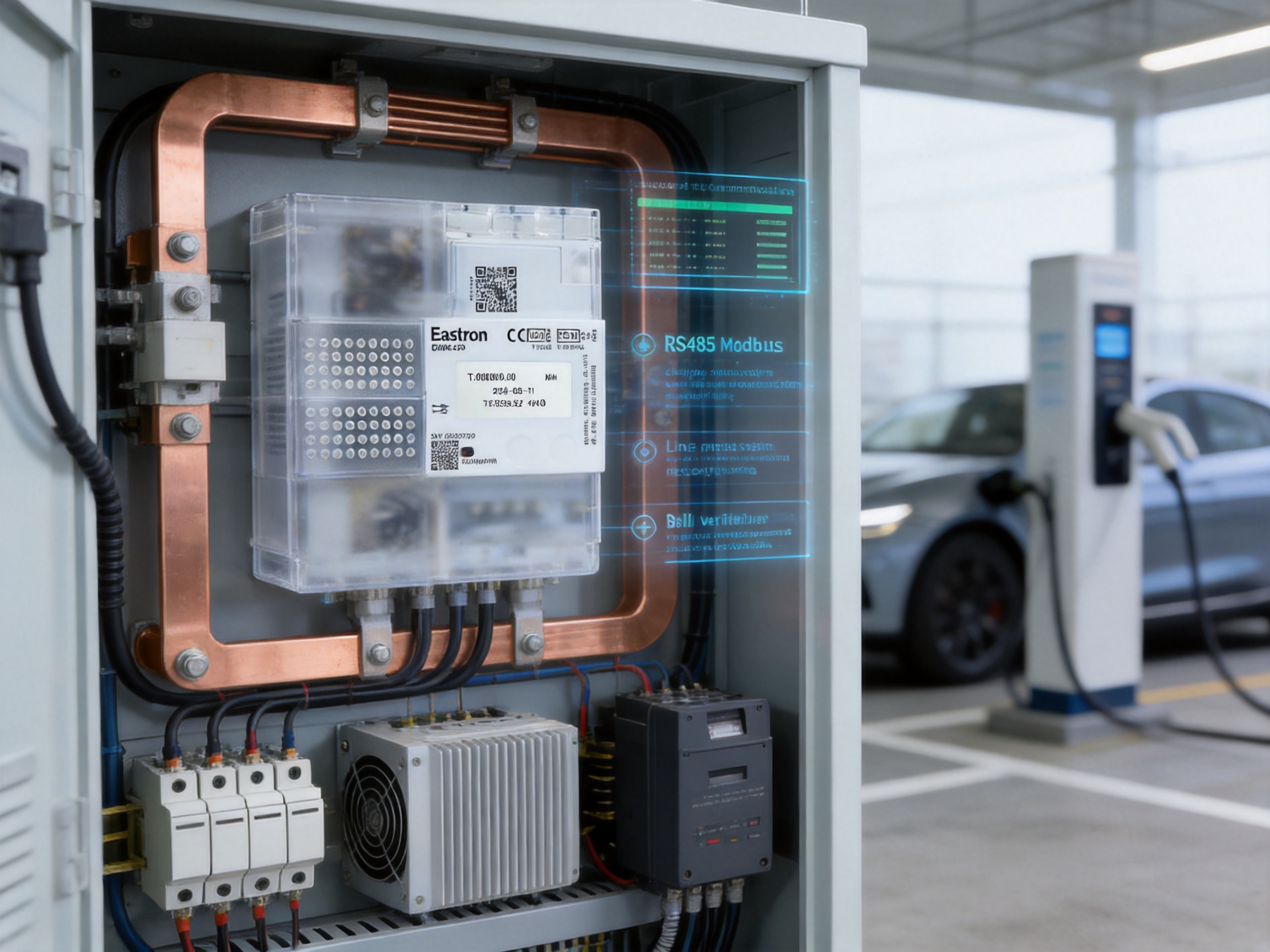
In energy measurement, accuracy and reliability must be proven, not assumed. The DCM6-650 benefits from a manufacturing environment supported by professional testing capability. Accuracy testing verifies that the meter performs within its specified class across defined operating conditions. For a Class 1 DC meter used in commercial charging, this is essential.
EMC testing is particularly important in EV chargers. Fast chargers contain high-power converters, switching devices, control electronics, communication circuits, contactors, cooling systems, and sometimes multiple power modules operating in parallel. These elements can generate electromagnetic interference. A meter installed inside such equipment must resist interference while maintaining accurate measurement and communication stability.
LVD-related safety testing addresses electrical safety concerns. With voltage up to 1000 V DC, insulation coordination, creepage distance, clearance, dielectric strength, and protection design are all critical. DC voltage can be more challenging than AC in some switching and arc conditions, so meter design and manufacturing must account for the specific risks of DC systems.
Environmental testing helps verify that the meter can withstand temperature and humidity variations, mechanical stress, and long-term operating conditions. EV chargers are often installed outdoors or in semi-protected environments. Even when the meter is inside a cabinet, it may be exposed to heat, cold, condensation risk, vibration, and dust-related stress. A professional testing process helps ensure durability.
Quality assurance also includes firmware validation. Because the DCM6-650 includes communication, data storage, signing, and encryption functions, software reliability is as important as hardware accuracy. Embedded software must handle measurement calculation, data formatting, communication responses, event recording, and secure data management without compromising performance.
The company’s patented technologies in software, embedded software, and hardware further support the product’s competitiveness. In modern metering, intellectual property and engineering know-how play a key role in achieving reliable measurement, secure data, and efficient production.
EV charging technology is evolving quickly. Charging power levels are increasing, vehicle battery voltages are changing, communication standards are developing, and regulatory requirements are becoming more detailed. A meter manufacturer must therefore maintain strong research and development capability rather than relying only on established products.
Eastron continues to invest in new technologies and new products for electricity metering. The development teams in China and the UK contribute international perspectives and engineering experience. This is especially relevant for a product serving EV charging markets, because requirements may differ between Europe, Asia-Pacific, America, the Middle East, and Africa.
R&D capability affects product performance in several ways. It supports improved measurement algorithms, better temperature compensation, more reliable communication protocols, enhanced encryption implementation, optimized mechanical design, and easier integration with charger systems. It also helps the company respond to customer-specific requirements.
The DCM6 Series illustrates this product-development approach. In addition to the DCM6-650 for maximum 650 A current load, another model, DCM6-200, supports maximum 200 A current load. This series structure allows customers to select a meter according to charger power level while staying within a consistent product family. A consistent series can simplify design, certification, procurement, and service training for charger manufacturers.
For customers building multiple charger models, product family continuity is important. A manufacturer may produce 60 kW, 120 kW, 240 kW, and higher-power chargers. Using related meter models across the range can reduce engineering work and spare-parts complexity. It also supports a more unified software and communication strategy.
In a typical DC fast charging station, AC power from the grid enters the charger and is converted by power modules into DC output. The charger controller communicates with the vehicle, manages safety checks, controls contactors, regulates charging current and voltage, records session data, and communicates with a network platform. The DC energy meter is installed in the DC measurement path to record energy delivered during the charging process.
The DCM6-650 is designed for this internal charger measurement role. Its voltage and current range correspond to high-power DC output requirements. Its RS485 Modbus communication allows the charger controller to read measurement values and session-related data. Its secure data functions support trusted billing records. Its internal storage supports session traceability.
For charger manufacturers, the meter can become a standardized module within the charger design. The presence of RJ12 and plug-in terminal options helps adapt to different wiring layouts. The dot-matrix LCD supports commissioning and service. The auxiliary power supply range of 9–40 V DC aligns with practical control-system design.
For operators, the meter’s functions support daily business operation. Accurate energy measurement enables billing. Duration monitoring supports usage analysis. Stored charging data supports audit trails. Line loss measurement supports maintenance and efficiency management. Encrypted data supports customer trust.
Charge point manufacturers face intense competition. Their products must charge vehicles quickly, operate safely, integrate with networks, comply with regulations, and remain cost-effective. The metering component can either simplify or complicate this challenge. The DCM6-650 helps manufacturers by combining multiple required capabilities in one specialized product.
First, the meter supports regulatory alignment. A MID approved DC meter can help manufacturers access projects and markets where certified metering is required. This can shorten qualification discussions and strengthen technical documentation.
Second, the high current and voltage capability supports advanced charger designs. Manufacturers developing high-power charging platforms can integrate the meter without being limited by low measurement capacity.
Third, communication flexibility helps engineering teams design cleaner system architectures. Multiple RS485 connection options reduce integration restrictions and make service access easier.
Fourth, secure data functions help manufacturers respond to market expectations for transparent billing. As end users become more aware of charging accuracy and fairness, secure metering becomes a product differentiator.
Fifth, the availability of related models in the DCM6 Series supports product-line scalability. Manufacturers can use the 200 A model for lower-power systems and the 650 A model for higher-power systems, maintaining a coherent design strategy.
Charging network operators need reliable revenue protection, high station uptime, and customer satisfaction. Metering quality directly affects all three. If energy measurement is inaccurate or billing data is difficult to verify, the operator may face disputes, refunds, regulatory concerns, or reputational damage. If the meter fails, the charger may be taken out of service.
The DCM6-650 supports operator needs through accurate Class 1 measurement, MID approval, secure charging data, and long-life design. Internal data storage gives operators more confidence that charging records are not lost. Encrypted and signed data supports billing integrity. Line loss measurement can help identify technical problems that reduce efficiency or threaten reliability.
For networks with many charging sites, standardization is important. A reliable meter with consistent communication interfaces can simplify remote monitoring and service procedures. Technicians can be trained on one product family, spare parts can be managed more efficiently, and software integration can be reused across sites.
The meter also supports energy-management strategies. As charging networks grow, operators must manage peak demand, local grid constraints, dynamic pricing, and renewable energy integration. Accurate DC-side energy data becomes a valuable input for planning and optimization.
Fleet electrification is one of the strongest drivers of high-power charging infrastructure. Bus depots, logistics centers, taxi fleets, municipal fleets, delivery hubs, and corporate campuses all require reliable charging data. In these environments, energy consumption is a business cost that must be allocated, analyzed, and controlled.
The DCM6-650 helps fleet operators measure charging energy accurately at the DC output. This can support vehicle-level cost analysis, route energy planning, operational reporting, and maintenance decisions. Charging duration monitoring also helps fleet managers optimize schedules and avoid congestion at chargers.
High current capability is valuable for fleets because vehicle downtime is expensive. Faster charging can improve asset utilization, but only if the charging infrastructure remains reliable and measurable. A 650 A meter supports charging systems designed to deliver high power to heavy-duty or high-capacity vehicles.
Secure data may also matter in commercial fleets where charging costs are billed between departments, contractors, tenants, or customers. Reliable records reduce administrative disputes and support transparent accounting.
When evaluating a meter, the initial purchase price is only one part of the cost. Total cost of ownership includes integration cost, certification risk, maintenance, downtime, replacement, service training, and dispute resolution. The DCM6-650 is designed to reduce these hidden costs through reliability, compliance, communication flexibility, and secure data handling.
A lower-cost non-approved meter may appear attractive at first, but if it cannot support billing compliance, it may require redesign or replacement. A meter with limited current capacity may restrict charger performance. A meter with weak communication options may require additional gateways. A meter without internal storage may increase risk when data transmission fails. A meter without secure data functions may be unsuitable for markets requiring verifiable charging information.
By combining these functions in one product, the DCM6-650 offers value beyond its specification sheet. It supports a more robust charger design and a more reliable operating model. This is why professional infrastructure projects often prioritize lifecycle value over lowest component cost.
Eastron’s products and services have been supplied to more than 50 countries across Europe, Asia-Pacific, America, the Middle East, and Africa. This international experience is important for EV charging projects, because charging infrastructure is global but local requirements can vary. A manufacturer with broad export experience is better prepared to support different standards, documentation needs, customer expectations, and technical environments.
The company provides technical support and after-sales service through professional teams. For charger manufacturers and operators, supplier support is a practical necessity. Meter integration may involve communication mapping, installation guidance, testing assistance, configuration, troubleshooting, and documentation. A responsive supplier can reduce development time and help resolve field issues quickly.
The company’s mission is to create value for customers and grow together with partners. In the context of EV charging, this means providing not only a hardware device, but also a dependable measurement solution that supports long-term infrastructure success. Its values of integrity, pragmatism, refinement, and innovation align with the requirements of precision metering, where trust and continuous improvement are essential.
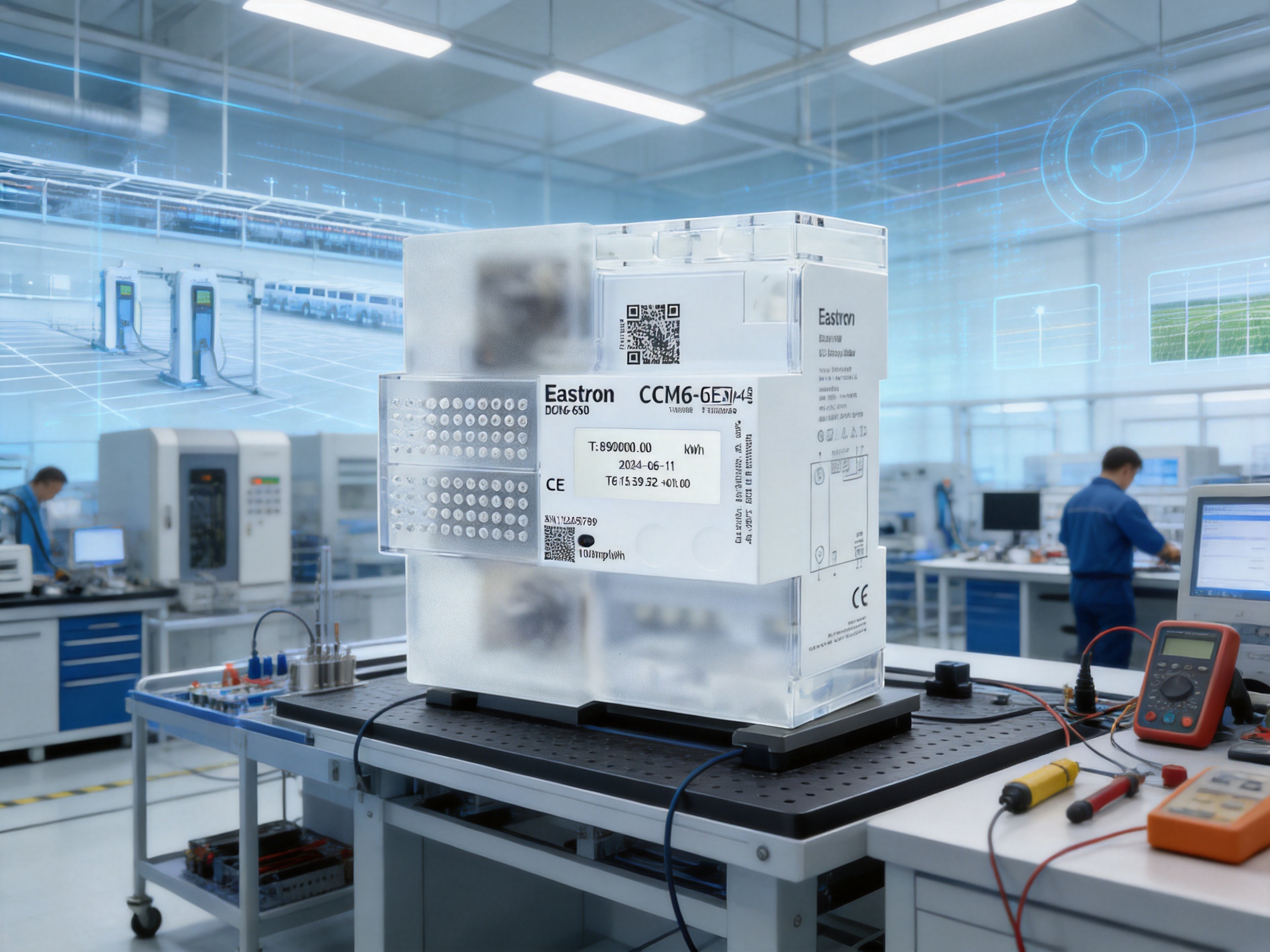
Although every charger design is different, several general integration principles apply to a high-power DC meter. The meter should be installed according to its wiring diagram and dimensional requirements. Conductors, terminals, insulation, and protective devices must be selected for the voltage and current of the system. Proper thermal design must be considered, especially in compact charger cabinets or high-temperature environments.
Communication wiring should be designed to minimize interference. RS485 lines should use appropriate cable types, routing, grounding practices, and termination where necessary. In high-power chargers, separating communication lines from noisy power paths can improve communication stability. The meter’s baud rate and serial settings should match the charger controller configuration.
The auxiliary power supply should be within the 9–40 V DC range and should be stable under charger operating conditions. Power supply disturbances can affect communication or display behavior, so auxiliary circuit design should be considered carefully.
Commissioning should include verification of communication, measurement readings, display status, data recording, and secure data functions where applicable. For commercial applications, documentation should be maintained according to project and regulatory requirements.
The EV charging market is moving toward higher power, stricter regulation, and more transparent billing. In this market, meters that only provide basic measurement values may become less competitive. The DCM6-650 is positioned for the next stage of infrastructure development by combining high-power capability, compliance, communication, data security, and operational diagnostics.
Compared with low-end DC meters, it offers stronger legal and commercial suitability through MID approval. Compared with simple current sensors, it provides energy calculation, data recording, communication, and display. Compared with meters lacking encryption support, it offers a more secure foundation for Eichrecht-oriented charging systems. Compared with single-port devices, it provides better integration flexibility.
This multi-dimensional advantage is important because charger manufacturers and operators do not evaluate meters in isolation. They evaluate how the meter affects the entire charger lifecycle: design, certification, production, commissioning, operation, maintenance, billing, and customer trust. The DCM6-650 addresses these lifecycle requirements comprehensively.
EV charging infrastructure is expected to continue developing toward higher charging power, smarter grid interaction, and more complex billing models. Dynamic pricing, renewable energy integration, vehicle-to-grid concepts, depot energy management, and roaming payment systems all increase the need for trustworthy measurement data.
A future-ready meter must therefore do more than measure voltage and current. It must communicate reliably, preserve data, support verification, operate over long service periods, and integrate into intelligent systems. The DCM6-650’s design reflects this direction. Its Modbus communication supports system integration. Its secure data functions support trustworthy billing. Its line loss measurement supports efficiency analysis. Its high voltage and current range supports advanced charging platforms.
As charging stations become part of broader energy systems, the value of accurate metering will increase. Charging data may be used for energy settlement, grid planning, carbon reporting, fleet optimization, demand response, and asset management. A reliable DC meter becomes a strategic data source rather than a simple component.
The DCM6-650 is designed for DC energy measurement inside EV charger stations. It supports commercial and compliance-oriented charging applications where accurate, secure, and traceable energy data is required.
It supports a DC voltage range from 150 V to 1000 V, making it suitable for a wide range of fast charging systems, including higher-voltage EV platforms.
The maximum current rating is 650 A. This makes the meter suitable for high-power EV charging stations that require large current delivery.
Yes. The meter is MID approved, which supports its use in regulated commercial energy measurement applications.
MID approval helps ensure that the meter is suitable for commercial transactions where energy measurement is used for billing. It increases confidence for operators, users, and regulatory authorities.
The meter is designed with PTB and Eichrecht-oriented functions, including a dedicated micro-controller for encryption and support for signed and encrypted charging data.
The meter supports 2 x RS485 RTU communication, with 2 x RJ12 ports and 1 plug-in terminal. This provides flexible integration with charger controllers and service systems.
The default baud rate is 19200 bps, and the settable range is 4800 to 115200 bps.
Yes. It supports charging data recording and stores charging processes in internal data storage, helping preserve session information for verification and audit.
It uses a dot-matrix LCD display with a life cycle of more than 12 years, supporting local reading, installation, and maintenance.
The meter provides Class 1 accuracy, suitable for reliable DC energy measurement in EV charging applications.
Line loss energy measurement helps evaluate energy losses in the charging path, such as losses in cables, conductors, connectors, and internal components. This supports diagnostics and efficiency optimization.
It helps charger manufacturers integrate high-power DC metering, meet regulatory expectations, support secure billing data, simplify communication design, and build scalable charger product lines.
It supports accurate billing, data security, internal session storage, maintenance diagnostics, and long-term reliable operation, all of which are important for profitable charging networks.
Yes. The DCM6-200 is another model in the DCM6 Series and supports a maximum current load of 200 A, making it suitable for lower-current charging applications.
The MID Approved Smart DC Energy Meter for EV charger stations, model DCM6-650, is a high-performance metering solution for modern DC fast charging infrastructure. With support for 150–1000 V DC, maximum current of 650 A, Class 1 accuracy, MID approval, RS485 Modbus communication, internal charging data recording, signed and encrypted charging information, line loss energy measurement, and charging duration monitoring, it addresses the central challenges of high-power EV charging.
Its value lies not only in measurement accuracy, but also in the trust it helps create. Public and commercial charging networks depend on verifiable billing data. Charger manufacturers depend on reliable components that simplify design and compliance. Fleet operators depend on accurate records for cost control and scheduling. The DCM6-650 supports all of these needs.
Behind the product is a manufacturer with strong expertise in electricity meters, energy measurement solutions, communication modules, testing laboratories, R&D teams, patented technologies, ISO 9001 quality management, and international service experience. This manufacturing foundation strengthens the product’s reliability and competitiveness.
As EV charging infrastructure continues to move toward higher power and stricter data transparency, advanced DC metering will become increasingly important. The DCM6-650 is well positioned for this future because it combines high electrical capacity, regulatory approval, secure data architecture, practical communication interfaces, and infrastructure-grade durability. For EV charger stations that require accurate, trusted, and future-ready DC energy measurement, it represents a strong and competitive solution.
1. International Electrotechnical Commission. Standards and technical guidance for electrical measuring equipment and electromagnetic compatibility.
2. European Union. Measuring Instruments Directive framework for regulated measuring instruments in commercial applications.
3. Physikalisch-Technische Bundesanstalt. Technical principles relating to legal metrology and charging infrastructure verification.
4. EV charging industry technical literature on DC fast charging architecture, metering, communication, and billing-data security.
5. Quality management and conformity assessment practices based on ISO 9001, IEC, EN, GB, UL, and MID-related production standards.
Your email address will not be published. Required fields are marked *

We develop and produce high performance electricity meters, power analyzers, current sensors, communication modules and management systems. China Custom Smart Meters Manufacturers and Factory
Address:NO 52, Dongjin Road, Nanhu, Jiaxing, Zhejiang, China
Copyright @ Eastron Electronic Co., Ltd. All rights reserved Electricity Meters Manufacturers
