

 English
 Español
 Deutsch
 中文简体
中文简体

Product Consultation
Your email address will not be published. Required fields are marked *
Europe's Solar and Energy Storage Transition: Transforming the Power System Infrastructure for a Renewable Future
Jul 10,2026
Power Systems Are Becoming “Real-Time Systems”: Why Data Is More Critical Than Electricity
Jul 06,2026
New EPBD Regulations Drive HVAC Energy Transparency and Boost Demand for Smart Meters
Jul 07,2026Content
In modern electrical systems, energy data is no longer a passive record kept only for billing. It has become a practical operating resource for solar photovoltaic systems, smart buildings, industrial equipment, distributed energy management, and facility optimization. The CT type WiFi and RS485 single phase multi-function energy meter addresses this shift by combining compact DIN rail installation, current transformer connection, multi-parameter measurement, bi-directional energy metering, and dual communication interfaces in one device. Designed for 1P2W networks, this meter provides a flexible monitoring solution for users who need reliable electrical data without complicated wiring or closed communication barriers.
The SEM1-WL-2 energy meter is built for applications where installation convenience, open communication, and accurate monitoring are equally important. It measures voltage, current, frequency, active power, reactive energy, active energy, power factor, imported energy, exported energy, and total energy. With both WiFi and RS485 connectivity, it supports MODBUS TCP and MODBUS RTU communication, helping integrators connect the meter to building management systems, solar monitoring platforms, industrial control systems, and local energy dashboards. Compared with conventional single-interface meters, this dual-communication approach gives the user more freedom during installation, commissioning, maintenance, and system expansion.
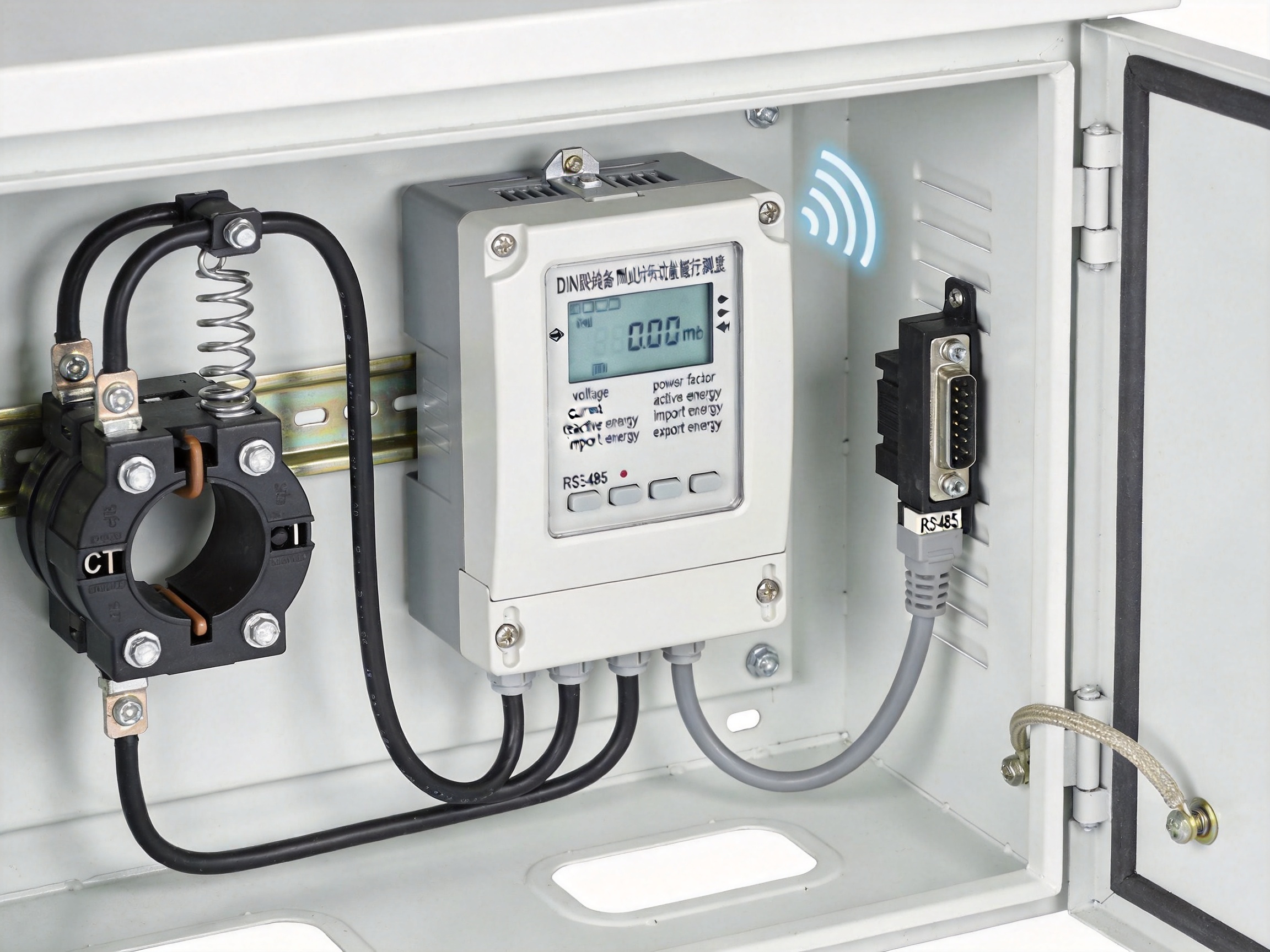
The product belongs to the single phase multi-function energy meter category and is intended for CT connection. This design is especially valuable where direct current wiring is inconvenient, where space is limited, or where the measured circuit carries current levels that are better handled through a current transformer. Instead of forcing installers to route the full load current through the meter body, the CT type connection enables a safer and more practical installation approach for many monitoring scenarios. This is one of the key advantages of the product when compared with many basic single phase meters that rely only on direct connection.
The meter is DIN rail mounted and compact, making it suitable for electrical distribution boards, control cabinets, solar combiner monitoring panels, small industrial panels, and smart energy sub-metering installations. Compactness is not only about saving panel space; it also reduces installation complexity, improves cabinet layout, and makes retrofitting easier. In many real projects, available cabinet space is limited, and every additional module has to justify its footprint. A compact meter that offers both WiFi and RS485 communication provides a strong practical advantage because it avoids the need for separate gateway modules in some configurations and reduces the number of components required for energy monitoring.
The meter adopts easy connection solutions, including spring terminals and RJ terminals. These details matter significantly in field installation. Traditional screw terminals can be effective, but they often require careful torque control and may be affected by vibration, repeated maintenance, or inconsistent workmanship. Spring terminals can simplify wiring and support stable contact pressure, while RJ-style communication terminals make signal connection more convenient and less error-prone. By designing the meter around practical connection efficiency, the product supports faster deployment and lower maintenance cost.
The SEM1-WL-2 is also designed for bi-directional measurement. This feature is increasingly important because many modern electrical installations are no longer purely consuming power from the grid. Solar PV systems, energy storage systems, and distributed generation sites may import energy at one time and export energy at another. A meter that records import and export energy separately is therefore more useful than a basic unidirectional meter. In total mode, import and export energy are measured separately, and total energy equals import energy plus export energy. This makes the product suitable for monitoring energy flow in applications where both consumption and generation must be understood.
CT connection is one of the defining characteristics of this meter. In electrical metering, the way current is measured has a major influence on installation method, safety, flexibility, and serviceability. Direct connected meters require load current to pass through the meter terminals. This approach may be appropriate for lower-current applications, but it can become less convenient in systems where the wiring is thick, the current is high, or the existing installation cannot be easily modified. A CT type meter uses a current transformer to sense current indirectly, allowing the main conductor to remain in its existing path while the meter receives a scaled signal.
This provides several competitive advantages. First, CT connection can simplify retrofit projects. When a building owner or facility operator wants to add energy monitoring to an existing circuit, it may not be desirable to disconnect and reroute heavy power cables. A CT-based solution can reduce the mechanical difficulty of installation. Second, it supports easier maintenance because the monitoring circuit is more separated from the main power path. Third, it can make the solution more scalable across different current ranges when suitable current transformers are selected. These advantages are particularly relevant for solar PV monitoring, industrial equipment monitoring, branch circuit sub-metering, and smart building energy management.
In comparison, some competing single phase meters focus only on simple energy accumulation and direct connection. Such devices may be adequate for basic billing-like recording, but they do not always offer the flexibility required by modern energy systems. A CT type multi-function meter can provide more practical installation options while also capturing a wider range of electrical parameters. This combination of installation flexibility and measurement depth makes the SEM1-WL-2 attractive to system integrators, energy service companies, equipment builders, and technically oriented end users.
One of the strongest advantages of the product is its combination of WiFi and RS485 communication. Many meters on the market provide only one communication method. A WiFi-only meter may be convenient for quick digital connection but can be unsuitable in electrically noisy industrial environments or in panels where wireless signal quality is unstable. An RS485-only meter may be robust and widely accepted in automation systems, but it usually requires wired infrastructure and may not be as convenient for quick access through a local network. By supporting both, the meter gives users a practical choice.
RS485 communication uses MODBUS RTU, a widely used protocol in energy management, industrial automation, building management, and monitoring systems. It supports communication addresses from 1 to 247, half-duplex transmission, floating point data, transmission distance up to 1000 meters, transmission speeds from 2400 bps to 115200 bps, selectable parity, and one or two stop bits. The response time is less than 50 ms. These specifications make the meter suitable for wired multi-device networks where reliability and standard integration are priorities.
WiFi communication uses MODBUS TCP, also with floating point data. The RF band is 2.4 GHz to 2.5 GHz, the maximum RF power is less than 20 dBm, and the WiFi protocol supports 802.11 b/g/n. The WiFi range can reach up to 30 meters indoors and 50 meters outdoors depending on local conditions. This wireless interface supports convenient connection in applications where wiring an RS485 bus is not practical, where temporary monitoring is needed, or where the user wants easier integration with local network equipment.
The combination of MODBUS RTU and MODBUS TCP is important because it avoids vendor lock-in. In many energy monitoring projects, closed protocols increase integration cost and limit future flexibility. An open and widely adopted protocol allows engineers to connect the meter to supervisory software, gateways, data loggers, programmable controllers, and cloud-connected energy platforms. This openness is a significant competitive advantage over meters that require proprietary applications or limited gateways for meaningful data access.
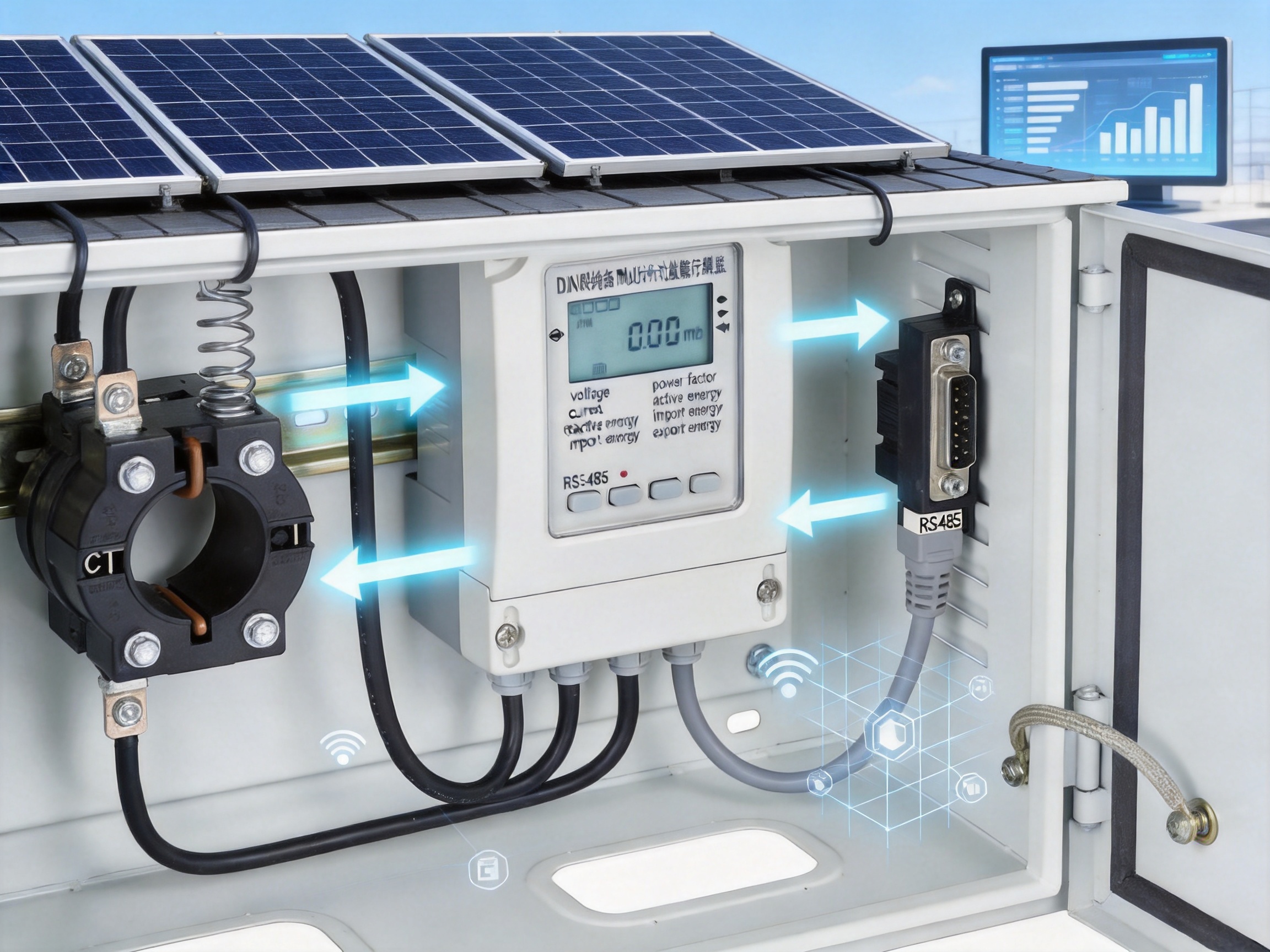
The SEM1-WL-2 measures characteristics of a 1P2W network. It provides RMS measurement including harmonics, enabling a practical representation of real electrical behavior rather than relying only on simplified ideal waveforms. Modern electrical systems often include non-linear loads such as switch-mode power supplies, LED drivers, inverters, variable speed drives, chargers, and electronic control equipment. These loads can introduce harmonic distortion, and RMS measurement including harmonics helps provide more meaningful data for energy monitoring and power analysis.
The meter measures voltage, frequency, current, power, active energy, reactive energy, imported energy, exported energy, and power factor. Energy is measured in kWh and kVArh. For an energy monitoring system, this range of parameters is valuable because energy consumption alone does not always explain system behavior. Power factor can indicate inefficient load characteristics. Reactive energy can influence power quality and utility cost considerations in some installations. Voltage and frequency data can help identify supply issues. Current and active power values support load profiling and equipment operation analysis.
The active energy accuracy is Class 1 according to IEC 62053-21 Class 1, with active energy measurement accuracy of ±1%. Power measurement accuracy is ±1%, reactive energy is ±2%, frequency is ±0.2%, voltage is ±0.5%, and power factor is ±0.1. Current accuracy varies by current range: ±0.5% from 4 A to 120 A, ±1% from 1 A to 4 A, and ±3% from 0.06 A to 1 A. These values reflect a meter designed for practical monitoring across a broad operating range. For energy management, these specifications provide a useful balance between accuracy, cost-effectiveness, and installation convenience.
The data update rate is also a notable characteristic. Active power updates at 50 ms through RS485 and 100 ms through WiFi. This supports responsive monitoring compared with slow meters that may update only at longer intervals. Fast update rates can be helpful in applications where load changes need to be observed closely, such as industrial equipment cycles, solar inverter behavior, or energy optimization tests. While billing-grade data accumulation is important, real-time operational insight is increasingly valuable, and faster data refresh supports better visibility.
Feature |
Specification |
Practical Value |
Network Type |
Single phase 1P2W |
Suitable for common residential, commercial, and light industrial single phase monitoring |
Connection Type |
CT connection |
Supports easier retrofit and avoids routing full load current through the meter |
Communications |
WiFi and RS485 |
Offers both wireless convenience and wired industrial reliability |
Protocols |
MODBUS TCP and MODBUS RTU |
Enables open integration with common energy and automation systems |
Active Energy Accuracy |
±1%, IEC 62053-21 Class 1 |
Provides reliable energy monitoring for management and analysis |
Voltage Range |
100 to 277 V AC L-N |
Supports broad operating conditions for single phase systems |
Frequency Range |
50/60 Hz |
Suitable for international electrical environments |
Data Update Rate |
50 ms by RS485, 100 ms by WiFi for active power |
Supports responsive monitoring of changing loads |
Installation Format |
Compact DIN rail mounting |
Saves cabinet space and simplifies integration |
The energy meter market includes many products that appear similar at first glance, but the differences become clear when evaluating installation, communication, measurement scope, and long-term system value. A conventional low-cost single phase meter may provide only kWh accumulation. It may lack power factor data, reactive energy data, import and export separation, or communication flexibility. Such a meter can tell the user how much energy was consumed, but it may not help explain when, how, or why energy was consumed. The SEM1-WL-2 provides multi-parameter data that supports deeper operational understanding.
Another common limitation among competing products is communication restriction. Some meters are RS485 only. Others are WiFi only. Some use proprietary communication frameworks that make data access dependent on a specific application or platform. The dual interface design of the SEM1-WL-2 helps overcome these limitations. In a new smart building installation, RS485 can be used for a stable wired meter network. In a smaller retrofit project, WiFi can reduce cabling work. In a system where both are useful, WiFi can support quick access while RS485 remains connected to the main control network. This flexibility improves project adaptability.
Installation convenience also creates a major competitive difference. The meter uses spring terminals or RJ terminals for easy connection. For installers, every minute saved in panel wiring matters, especially when multiple meters are deployed across a building or facility. Simplified connections reduce labor cost, reduce wiring mistakes, and make commissioning faster. A product that is easier to connect can provide a lower total installed cost even if the device itself is compared against alternatives purely by unit price.
The CT connection further strengthens its position. Many competing direct meters may require more invasive wiring changes, particularly in retrofit applications. When electrical panels are already crowded or when downtime must be minimized, CT connection is a practical advantage. It can also help panel builders design more organized assemblies because the current sensing path and meter signal path can be managed more flexibly. The result is a meter that is not merely a measurement device but part of an easier overall system solution.
Bi-directional measurement is another meaningful advantage. As solar PV systems and distributed energy resources become more common, meters that only measure consumption are less useful. Import and export data are necessary to understand net energy behavior, self-consumption, grid export, and system performance. The total mode design, with import and export measured separately and total energy calculated as the sum of both, gives users a clearer view of energy flow. This is especially important for solar monitoring, where generation and consumption profiles must be studied together.
Solar photovoltaic systems are one of the most important application areas for a bi-directional energy meter. In a PV installation, electricity may flow from the grid to the load, from the PV inverter to the load, or from the PV system back toward the grid depending on generation and consumption conditions. A meter that can distinguish imported and exported energy helps users understand these flows. This data can support performance evaluation, self-consumption analysis, and energy management decisions.
The SEM1-WL-2 is particularly suitable for solar PV monitoring because it combines CT connection, WiFi connectivity, RS485 communication, and multi-parameter measurement. In a small solar installation, WiFi may simplify data connection to a local monitoring network. In a more professional installation, RS485 MODBUS RTU can connect the meter to a data logger, gateway, inverter management device, or site energy controller. The same meter can therefore serve different project types without requiring a complete change in communication strategy.
Fast active power updates can also support dynamic solar monitoring. PV output changes with sunlight, clouds, shading, inverter behavior, and load variations. A meter that updates active power quickly can provide a more responsive picture of energy exchange. This is helpful when analyzing export limitation strategies, load shifting, or demand response. While energy totals are important for long-term reporting, real-time power data helps operators understand what is happening at the moment.
Smart buildings depend on reliable data from distributed devices. Energy meters are among the most important field devices because they connect electrical consumption with building operation. Lighting, HVAC, elevators, pumps, office equipment, charging equipment, and tenant loads all contribute to the building energy profile. A compact single phase multi-function meter can be used for sub-metering branch circuits, monitoring specific equipment, or tracking energy use in selected zones.
The SEM1-WL-2 supports smart building applications through MODBUS communication and broad parameter measurement. Building management systems often use open communication protocols to collect data from many devices. MODBUS RTU through RS485 is widely used in building automation because it is stable, cost-effective, and suitable for multi-drop networks. MODBUS TCP through WiFi can provide another path for data acquisition when wireless integration is preferred. This combination helps engineers match the communication method to the building’s infrastructure.
In smart buildings, space in distribution boards is often limited. The compact DIN rail design helps reduce space pressure and allows the meter to fit into existing panels more easily. Easy connection terminals also help during installation, especially in buildings where work must be completed quickly to minimize disruption. In commercial retrofits, labor time and tenant disturbance can be major cost factors. A meter that is quicker to install can therefore offer a significant project-level advantage.
Power factor, reactive energy, current, voltage, and frequency data can help facility managers identify inefficient or abnormal conditions. For example, poor power factor may indicate the need to review equipment behavior. Voltage irregularities may help diagnose supply problems. Current and active power trends may reveal operating schedules or standby consumption. Compared with meters that report only kWh, a multi-function device supports more informed building management.
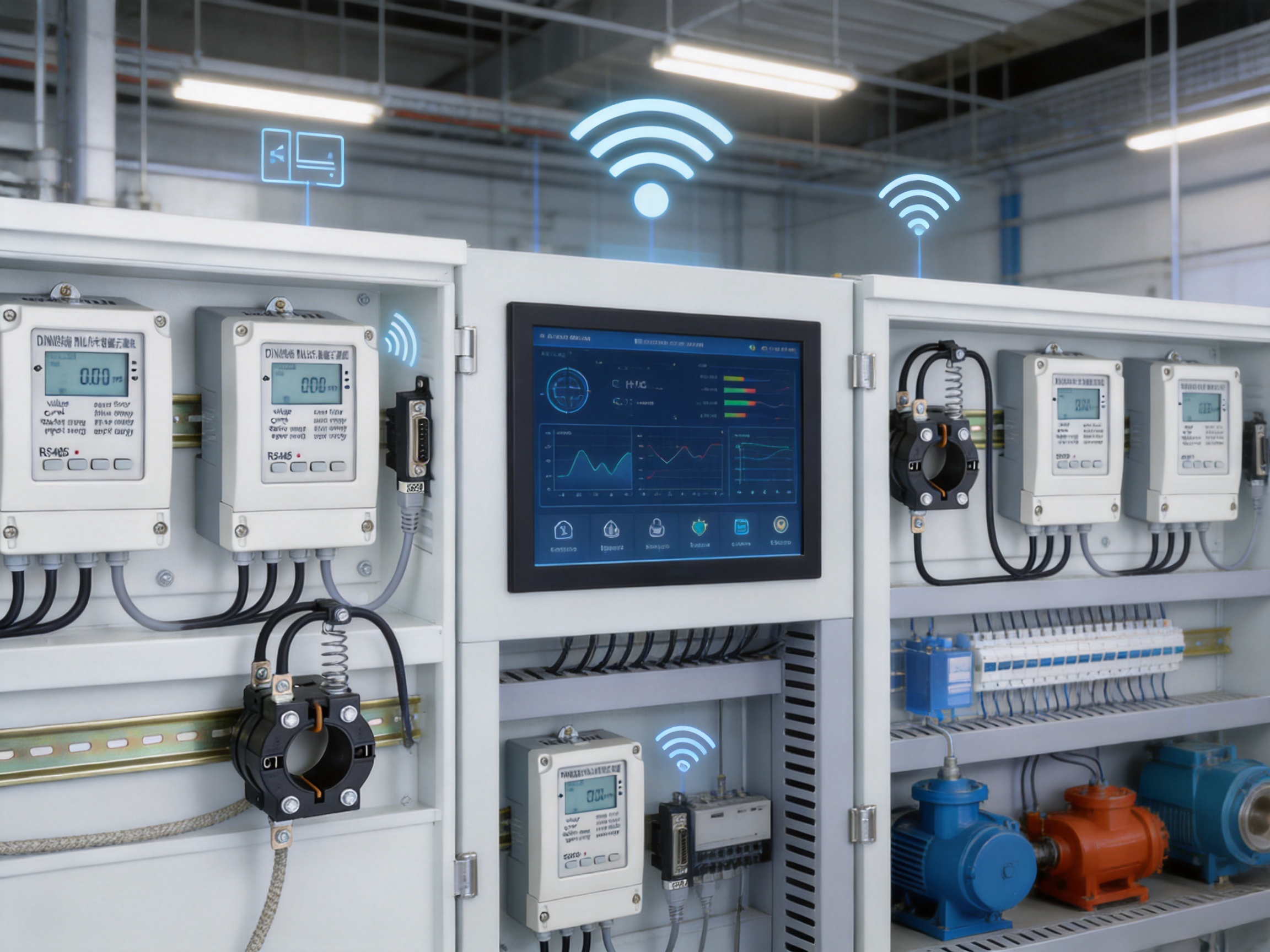
Industrial equipment monitoring requires rugged communication, meaningful measurement parameters, and practical installation. Machines often operate in cycles, with changing power demand during startup, running, idle, and shutdown conditions. Understanding these patterns can support preventive maintenance, production analysis, energy cost allocation, and process optimization. A single phase multi-function meter with fast update capability can provide useful electrical data for specific equipment or auxiliary systems.
The RS485 interface is especially relevant in industrial environments. Wired communication is often preferred where wireless signals may be affected by metal enclosures, electromagnetic interference, distance, or network policy. MODBUS RTU is widely used in programmable controller systems and industrial monitoring platforms. With address support from 1 to 247 and transmission distance up to 1000 meters, the meter can be integrated into larger wired networks when properly designed.
At the same time, WiFi adds convenience during commissioning or in installations where wired communication is difficult. The ability to access data through MODBUS TCP can reduce the need for additional conversion hardware. For equipment builders, offering a meter with both interfaces can make the finished machine more adaptable to different customer sites. One customer may want RS485 connection to a PLC, while another may prefer wireless data collection. The same meter can support both approaches.
Energy meters are often evaluated by specifications, but installation and maintenance are equally important to real-world performance. A meter that is difficult to install can increase project time, create wiring errors, and raise service costs. The SEM1-WL-2 addresses this through compact design, CT connection, spring terminals, and RJ terminals. These features reduce the complexity of physical integration and make the meter more installer-friendly.
DIN rail mounting is a standard and efficient method for electrical panels. It allows the meter to be installed alongside circuit breakers, contactors, relays, power supplies, gateways, and other control devices. Compact size helps preserve panel capacity and supports neat cabinet layouts. In projects involving multiple monitoring points, small differences in device width can have a large effect on total panel space. A compact multi-function meter allows designers to include more functionality without expanding the cabinet.
Spring terminals support easier and more consistent conductor connection. They can reduce the risk of loose screw connections caused by improper torque. RJ terminals simplify communication wiring by providing a more standardized connection approach. These details show that the product is designed not only from an electronic measurement perspective but also from the perspective of installers and maintenance personnel. Good metering design must consider the entire product life cycle, from panel assembly to commissioning to long-term operation.
The quality of an energy meter depends not only on its circuit design but also on the manufacturer’s research, testing, production control, and service capability. Eastron Electronic Co., Ltd., headquartered in Jiaxing, China near Shanghai, Hangzhou, and Jiangsu, is a high-tech manufacturer and supplier of electricity products and energy measurement solutions. The company develops and produces electricity meters, power analyzers, current sensors, communication modules, and management systems. This broad product background supports a strong understanding of energy measurement from both device and system perspectives.
The company has built a rich product range and continues to invest in research and development of new technologies and new products for electricity metering. Its development teams in China and the UK help maintain technological competitiveness, while cooperation with universities and institutions supports the introduction of advanced technologies into products. This R&D structure is important because smart metering is evolving quickly. Communication technology, metering standards, power quality requirements, and energy management applications continue to change, and a manufacturer must be able to adapt.
To ensure product reliability, the company has established its own professional laboratory capable of performing EMC, LVD, accuracy, and environmental tests according to IEC, EN, GB, and UL standards. This is a major strength compared with manufacturers that rely only on external validation after product development. Internal test capability allows engineers to identify issues earlier, refine designs faster, and maintain closer quality control. EMC testing is especially important for electrical products because meters must operate reliably in environments with electrical noise, switching loads, and communication signals. LVD testing supports electrical safety validation. Accuracy testing is essential for metering credibility. Environmental testing helps verify performance under different operating conditions.
The company follows the ISO 9001 quality management system, and its production is approved by SGS according to MID standards. It also holds patented technologies in software, embedded software, and hardware, and has been recognized as a High-tech Enterprise and High-tech R&D Centre of Electricity Application. These strengths indicate a manufacturing environment focused on process control, product development, and technical capability. For customers, such manufacturing maturity reduces risk. A meter is often installed in service for many years, so consistent quality and long-term support matter as much as initial performance.
Advanced manufacturing for energy meters requires coordination between design engineering, component selection, calibration, assembly, firmware development, communication testing, and final inspection. A multi-function meter such as the SEM1-WL-2 includes measurement circuitry, communication modules, embedded software, power supply components, terminals, and mechanical housing. Each part must work reliably with the others. A strong manufacturer controls the process from design validation to production testing.
Accuracy testing is central to metering quality. The meter must measure current, voltage, power, and energy within specified limits across operating ranges. For active energy, the product reaches Class 1 accuracy according to IEC 62053-21. Achieving consistent accuracy in mass production requires careful calibration procedures, stable components, and controlled test systems. Manufacturing strength is not only the ability to design a good prototype; it is the ability to produce many units that meet the same standard repeatedly.
Communication testing is also important. Because the product supports both WiFi and RS485, manufacturing validation must confirm communication reliability, protocol behavior, parameter access, and response performance. MODBUS RTU and MODBUS TCP are widely used, but proper implementation still requires careful firmware and interoperability testing. A product intended for open integration must communicate predictably with external systems, gateways, controllers, and monitoring platforms.
Mechanical design and terminal reliability also require manufacturing attention. DIN rail mounting must be secure. Terminals must maintain contact quality. The housing must protect internal electronics and fit panel installations. Compact products must also manage internal layout carefully, balancing electrical isolation, heat considerations, RF performance, and serviceability. The company’s laboratory and quality management system provide the foundation for verifying these aspects before and during production.
Energy meters are increasingly part of larger systems. They may connect to gateways, cloud platforms, building automation systems, energy management software, or industrial controllers. The SEM1-WL-2 supports this system role through open communication and multi-parameter data. Instead of being a standalone display device only, it becomes a field data source for higher-level analysis and control.
In a building, multiple meters can be used to divide energy consumption by floor, tenant, equipment type, or functional area. In a solar system, the meter can help show import and export behavior. In industrial equipment, it can provide power profiles for operation monitoring. In each case, communication is as important as measurement. Data that remains isolated inside the meter has limited value. Data that can be accessed through MODBUS networks becomes part of a useful energy intelligence system.
The availability of both WiFi and RS485 helps system designers create hybrid architectures. For example, RS485 can connect several meters in a local panel, while WiFi can allow network access without additional cabling. Alternatively, WiFi can serve temporary diagnostics while RS485 handles permanent data acquisition. The product does not force one architecture, which is a significant advantage in real projects where site conditions vary.
Effective energy management begins with accurate and timely measurement. Without measurement, energy-saving decisions are based on assumptions. With multi-parameter measurement, users can identify consumption patterns, compare equipment performance, detect abnormal operation, and evaluate the results of efficiency measures. The SEM1-WL-2 contributes to this process by providing a broad set of electrical data in a format that can be integrated into management systems.
For facility managers, the meter can support load analysis and cost allocation. For solar system operators, it can support import and export monitoring. For industrial users, it can support equipment energy profiling. For panel builders and system integrators, it provides a compact and communication-ready component that can be included in turnkey solutions. This versatility gives the product value across multiple sectors rather than restricting it to a narrow application.
Energy monitoring also supports sustainability goals. Organizations seeking to reduce carbon impact need reliable data to understand where energy is used and where improvements are possible. Sub-metering is often a key step in this process because total site consumption does not show which equipment or area is responsible for energy demand. A compact single phase meter can be deployed at selected monitoring points to build a clearer energy picture.
Real electrical environments are not ideal. Loads switch on and off, voltage may vary, harmonics may be present, communication lines may extend across long distances, and panels may contain multiple devices. A useful energy meter must handle these conditions while maintaining measurement and communication stability. The SEM1-WL-2 is designed with RMS measurement including harmonics, broad voltage operation from 100 to 277 V AC L-N, and 50/60 Hz frequency compatibility. These features help it fit into diverse electrical systems.
The RS485 transmission distance of up to 1000 meters is particularly useful in larger facilities, provided proper network design is followed. This allows meters to be distributed across panels while still reporting to a centralized system. The selectable baud rate range from 2400 bps to 115200 bps gives integrators flexibility to match existing communication networks. Addressing from 1 to 247 supports multi-device configurations. These characteristics are standard in professional MODBUS environments and important for practical integration.
WiFi communication adds another layer of convenience, but the product specifications also acknowledge that wireless range depends on local conditions. This is an honest and practical consideration. Walls, metal cabinets, interference, and router placement can affect performance. By also including RS485, the meter avoids depending solely on wireless conditions. This dual-path design improves reliability planning because users can select the communication method best suited to the site.
Product performance is important, but long-term customer value also depends on support. Eastron provides technical support and after-sales service through professional teams. Its products and services have been supplied to more than 50 countries across Europe, Asia-Pacific, America, the Middle East, and Africa. This international experience is valuable because electrical standards, installation practices, and customer expectations differ across regions. A manufacturer serving global markets must understand diverse requirements and maintain consistent product quality.
The company’s mission is to create value for customers and grow together with partners. This approach is reflected in products that combine practical installation features with communication openness and measurement capability. For distributors, system integrators, and equipment builders, a reliable supplier relationship can be as important as the technical specification of a single device. Consistent documentation, stable production, responsive technical support, and product development capability all contribute to successful long-term cooperation.
The meter is designed for single phase 1P2W networks. It is suitable for applications such as solar PV systems, smart buildings, industrial equipment monitoring, energy management panels, and sub-metering installations where single phase electrical parameters need to be measured and communicated.
CT connection allows current to be measured through a current transformer rather than routing the full load current directly through the meter. This can simplify retrofit installation, improve wiring flexibility, reduce panel modification work, and make the device practical for circuits where direct connection is inconvenient.
Yes. The meter supports RS485 communication with MODBUS RTU and WiFi communication with MODBUS TCP. This dual communication design gives users the reliability of wired industrial networks and the convenience of wireless network integration.
Yes. The meter supports bi-directional measurement. It measures import and export energy separately, and in total mode the total energy equals import energy plus export energy. This is especially useful for solar PV and distributed energy applications.
The meter measures voltage, frequency, current, active power, active energy, reactive energy, imported energy, exported energy, power factor, and related electrical characteristics. Energy is measured in kWh and kVArh.
The active energy accuracy is ±1%, corresponding to IEC 62053-21 Class 1. This makes the meter suitable for reliable energy monitoring and management applications.
MODBUS is widely used in building automation, industrial control, energy monitoring, and data acquisition systems. Support for MODBUS RTU and MODBUS TCP helps users integrate the meter into open systems without depending on proprietary communication methods.
Basic kWh meters may only record accumulated energy and may provide limited or no communication. This meter offers CT connection, WiFi and RS485 communication, bi-directional measurement, multi-parameter monitoring, compact DIN rail installation, and open protocol integration. These features provide greater value for modern energy management applications.
Yes. Its compact DIN rail format, MODBUS communication, multi-parameter measurement, and easy connection design make it suitable for smart building sub-metering, equipment monitoring, and energy management systems.
The manufacturer has professional laboratory capabilities for EMC, LVD, accuracy, and environmental tests according to IEC, EN, GB, and UL standards. It follows ISO 9001 quality management, has production approved by SGS according to MID standards, and maintains R&D teams in China and the UK. These strengths support product reliability and long-term development.

The CT type WiFi and RS485 single phase multi-function energy meter is a practical response to the growing need for accurate, connected, and installation-friendly energy monitoring. It combines CT connection, compact DIN rail mounting, spring and RJ terminal convenience, active energy Class 1 accuracy, RMS measurement including harmonics, bi-directional energy measurement, and dual communication through MODBUS RTU and MODBUS TCP. These features make it more capable than basic single-function meters and more flexible than products limited to only wired or only wireless communication.
Its advantages are especially clear in solar PV systems, smart buildings, and industrial equipment monitoring. In solar applications, import and export energy measurement supports energy flow analysis. In smart buildings, multi-parameter data helps improve visibility and efficiency. In industrial settings, fast active power updates and RS485 communication support equipment monitoring and system integration. Across these scenarios, the meter provides not only energy totals but also operational insight.
Behind the product is a manufacturer with strong R&D capability, broad experience in energy measurement solutions, professional laboratory testing, international market experience, ISO 9001 quality management, and production strength. These factors matter because energy meters must be reliable over long service lives and must integrate smoothly into real systems. By combining practical product design with advanced manufacturing and quality control, the meter offers strong value for users seeking a modern single phase energy monitoring solution.
International Electrotechnical Commission. IEC 62053-21: Electricity Metering Equipment, Particular Requirements for Static Meters for Active Energy.
International Electrotechnical Commission. IEC Standards for Electrical Measurement, Safety, and Electromagnetic Compatibility.
Modbus Organization. MODBUS Application Protocol Specification.
International Organization for Standardization. ISO 9001 Quality Management Systems Requirements.
General industry literature on smart metering, distributed energy monitoring, and building energy management systems.
Your email address will not be published. Required fields are marked *

We develop and produce high performance electricity meters, power analyzers, current sensors, communication modules and management systems. China Custom Smart Meters Manufacturers and Factory
Address:NO 52, Dongjin Road, Nanhu, Jiaxing, Zhejiang, China
Copyright @ Eastron Electronic Co., Ltd. All rights reserved Electricity Meters Manufacturers
