

 English
 Español
 Deutsch
 中文简体
中文简体

Product Consultation
Your email address will not be published. Required fields are marked *
Europe's Solar and Energy Storage Transition: Transforming the Power System Infrastructure for a Renewable Future
Jul 10,2026
Power Systems Are Becoming “Real-Time Systems”: Why Data Is More Critical Than Electricity
Jul 06,2026
New EPBD Regulations Drive HVAC Energy Transparency and Boost Demand for Smart Meters
Jul 07,2026Content
Electricity distribution networks are becoming more intelligent, more data-driven, and more demanding. In commercial buildings, industrial plants, renewable energy facilities, data centers, infrastructure projects, and public utility environments, electrical managers need more than a basic kWh reading. They need a compact instrument that can measure, analyze, communicate, alarm, record, and support decision-making. A three phase panel mounted multi-function meter with 4 digital inputs, 2 digital outputs, Class 0.5S active energy accuracy, RS485 Modbus RTU communication, harmonic measurement up to the 63rd order, and flexible CT/PT configuration provides exactly that kind of advanced capability.
This article focuses on a 4DI 2DO three phase panel mounted multi-function panel meter designed for electricity distribution applications. The meter is engineered for 1P2W, 3P3W, and 3P4W systems, supports 5A CT input, measures RMS values including harmonics, displays a broad set of electrical parameters, and helps users monitor voltage, current, frequency, power, energy, power factor, harmonics, maximum demand, and import/export energy. It is not merely a display device installed on a panel door; it is an intelligent energy analyzer that supports remote monitoring, external signal counting, external device control, alarm configuration, and sequence-of-events recording.
In a competitive market where many panel meters still focus on only the most basic measurements, this product stands out by combining high measurement accuracy, comprehensive power quality analysis, flexible communication, digital input and output functionality, multi-tariff availability, and a practical 96 mm by 96 mm panel format. It is suitable for electricity distribution boards, low-voltage switchgear, facility energy management systems, and industrial automation architectures where compact dimensions and reliable data are equally important.
4DI 2DO Three Phase Panel Mounted Multi-function Panel Meter for Electricity Distribution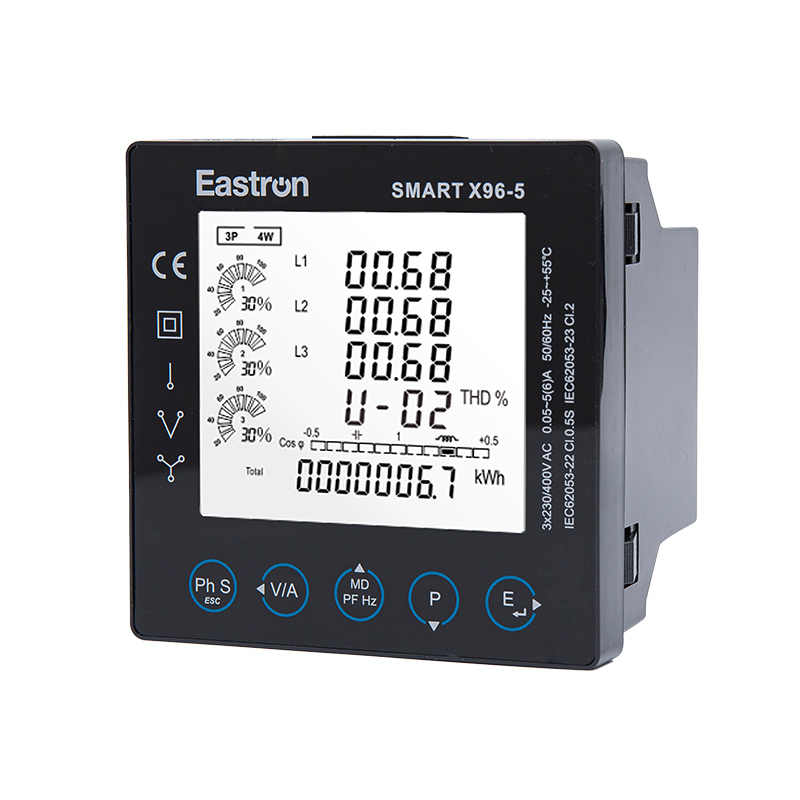
The product is a three phase panel mounted multi-function meter for electricity distribution. It is designed for panel installation and is suitable for single and three phase systems, including 1P2W, 3P3W, and 3P4W electrical networks. With a 5A CT input and configurable CT and PT ratios, the meter can be adapted to a wide operating range. This flexibility makes it useful in applications ranging from small distribution boards to larger systems requiring external current transformers and voltage transformer configuration.
Its core role is to measure and display electrical characteristics in real time. These include voltage, current, frequency, active power, reactive power, apparent power, active energy, reactive energy, power factor, imported energy, exported energy, harmonics, total harmonic distortion, and maximum demand. For users who need deeper insight into the quality and behavior of their electrical system, the ability to measure individual harmonics up to the 63rd order is especially important. This enables the product to serve not only as an energy meter but also as a practical power monitoring and diagnostic instrument.
The meter includes RS485 Modbus RTU communication, a widely used protocol in industrial and building automation environments. Through RS485, the device can be integrated into energy management systems, SCADA platforms, building management systems, gateways, and other monitoring solutions. Remote reading and configuration reduce the need for manual inspection, improve operational efficiency, and help create a centralized overview of power consumption and distribution conditions.
In addition to measurement and communication, the meter includes 4 digital inputs and 2 digital outputs. These I/O features are valuable in real operating environments because they allow the meter to interact with external devices and signals. Digital inputs can be used for external signal counting or status detection, while digital outputs can be used for alarm output, control signaling, or external device operation depending on system design. This gives the meter a more active role in the distribution system compared with conventional meters that only measure and display.
Traditional metering often focuses on accumulated energy consumption. While this is useful for billing or general monitoring, it does not provide enough information for modern electricity distribution management. Facility operators need to understand how energy is being used, whether the system is balanced, whether power factor is acceptable, whether harmonics are present, and whether loads are approaching critical demand levels. A multi-function meter addresses these requirements by offering a complete view of electrical performance.
Voltage and current measurement help operators verify supply conditions and loading. Power readings show how energy is being converted or consumed in real time. Active, reactive, and apparent power allow engineers to distinguish between useful work, reactive loading, and total system burden. Energy import and export values are important in systems with generation, energy storage, or bidirectional energy flow. Frequency monitoring helps confirm network stability. Power factor measurement helps identify inefficient load conditions that may increase utility penalties or reduce system capacity.
Harmonic measurement is increasingly important because many modern loads are non-linear. Variable frequency drives, LED lighting, UPS systems, data center equipment, power electronics, chargers, and automation devices can introduce harmonic distortion into the electrical network. Excessive harmonics can lead to overheating, nuisance tripping, transformer stress, capacitor failure, reduced efficiency, and inaccurate readings in less capable measuring devices. A meter that measures THD and individual harmonics up to the 63rd order provides a stronger diagnostic foundation than meters limited to basic power values.
Maximum demand measurement supports load planning and capacity management. In many facilities, peak demand can influence electricity costs and infrastructure sizing. By monitoring demand trends, users can identify opportunities to redistribute loads, adjust processes, or prevent overload conditions. Multi-tariff availability further expands the meter’s energy management value by supporting time-based energy analysis where tariff periods are relevant.
One of the strongest advantages of this meter is its combination of compact panel design and extensive functionality. It offers the features of a power analyzer, energy meter, communication terminal, alarm device, and I/O interface in a 96 mm by 96 mm panel-mounted housing. This allows electrical panel builders and system integrators to save panel space while delivering advanced monitoring functionality.
The Class 0.5S active energy accuracy is a significant advantage. In energy monitoring applications, accuracy directly affects confidence in collected data. Lower-grade meters may be acceptable for approximate indication, but systems used for energy analysis, internal cost allocation, efficiency improvement, or operational decision-making require more precise readings. Class 0.5S accuracy provides a more reliable basis for measuring energy consumption patterns and comparing loads over time.
The harmonic measurement capability up to the 63rd order is another major differentiator. Many competing panel meters may provide only total harmonic distortion, or may measure only lower-order harmonics. Measurement up to the 63rd order supports more detailed power quality analysis and allows engineers to identify distortion characteristics more effectively. This can be especially useful in industrial plants, commercial buildings, automation systems, and facilities with many electronic loads.
The meter’s RMS measurement including harmonics on three phase AC systems supports more realistic electrical monitoring. RMS measurement is essential when waveforms are distorted, because average-based or simplified measurement methods can produce misleading values. By measuring RMS values including harmonics, the meter provides better representation of actual electrical stress and load conditions.
RS485 Modbus RTU communication gives the product strong compatibility with existing monitoring ecosystems. Modbus RTU remains one of the most widely adopted communication protocols in electrical distribution, industrial control, building automation, and energy management. The meter supports common baud rates including 2400, 4800, 9600, 19200, and 38400 bps, with address settings from 1 to 247, selectable parity, and 1 or 2 stop bits. This range of configuration options makes integration easier in systems with varied communication requirements.
The 4 digital inputs and 2 digital outputs offer practical system-level advantages. Digital inputs can be connected to external contacts or pulses for status monitoring, event counting, or auxiliary signals. Digital outputs can support alarms or control commands. Compared with a basic meter that only reads electrical values, this I/O capability helps reduce the number of separate devices required in a panel, simplifying wiring and improving system integration.
The meter also supports alarm configuration, with 30 types of parameters available for alarm setting. This means operators can define thresholds or conditions related to measured values and take action when abnormal conditions occur. Alarm support is valuable for preventive maintenance, load supervision, and protection of electrical assets. Combined with digital outputs and communication, alarms can be used both locally and remotely.
Sequence-of-events recording with time information is another advanced feature. The meter can record 20 SOE entries, helping users trace the timing of important system events. In troubleshooting, the sequence of events can be as important as the event itself. When an electrical incident occurs, time-stamped event information can help engineers understand whether a voltage fluctuation, load change, alarm, or external status signal occurred first.
Category |
Specification |
Value or Description |
System Types |
Supported Wiring |
1P2W, 3P3W, 3P4W |
Measurement |
Measurement Method |
RMS including harmonics on three phase AC systems |
Accuracy |
Active Energy |
IEC 62053-22 Class 0.5S, IEC 62053-21 Class 1.0 |
Accuracy |
Voltage and Current |
0.5% of range maximum |
Power Quality |
Harmonic Measurement |
THD and individual harmonics up to the 63rd order |
Input |
Rated Current |
5A CT input |
Voltage |
Measured Voltage |
50V to 600V for 3P4W; 50V to 480V for 3P3W |
Communication |
Protocol |
RS485 Modbus RTU, 2-wire half duplex |
I/O |
Digital Input and Output |
4DI and 2DO |
Mechanical |
Dimensions |
96 mm x 96 mm x 92 mm |
Environment |
Operating Temperature |
-25°C to 55°C |
Accuracy is one of the most important factors when selecting an energy monitoring instrument. In electricity distribution, inaccurate data can lead to poor decisions. If current values are understated, operators may overlook overload risks. If energy values are inaccurate, cost allocation may be unfair. If voltage readings are unreliable, troubleshooting becomes more difficult. This meter addresses these concerns with strong accuracy specifications for key parameters.
Active energy accuracy complies with IEC 62053-22 Class 0.5S and IEC 62053-21 Class 1.0. This makes the device suitable for precise energy monitoring and performance tracking. Active power, reactive power, and apparent power are specified at 1.0% of range maximum. Voltage and current are specified at 0.5% of range maximum. Frequency accuracy is specified at 0.2% of mid-frequency, and power factor accuracy is 1% of unity, or 0.01. THD accuracy is specified at 2% up to the 63rd harmonic.
For facility managers, energy consultants, electrical engineers, and panel builders, these accuracy levels help establish trust in the displayed and transmitted data. A reliable meter becomes part of the decision-making infrastructure. When energy-saving projects are implemented, the meter helps verify before-and-after results. When power quality problems are suspected, harmonic values provide evidence. When load planning is needed, current and demand values support engineering judgment.
Compared with lower-cost alternatives that may provide only approximate readings or limited accuracy under non-sinusoidal conditions, this product offers a more dependable measurement foundation. In facilities with complex loads, harmonic distortion, and changing operating conditions, dependable measurement is not a luxury; it is a requirement for safe and efficient operation.
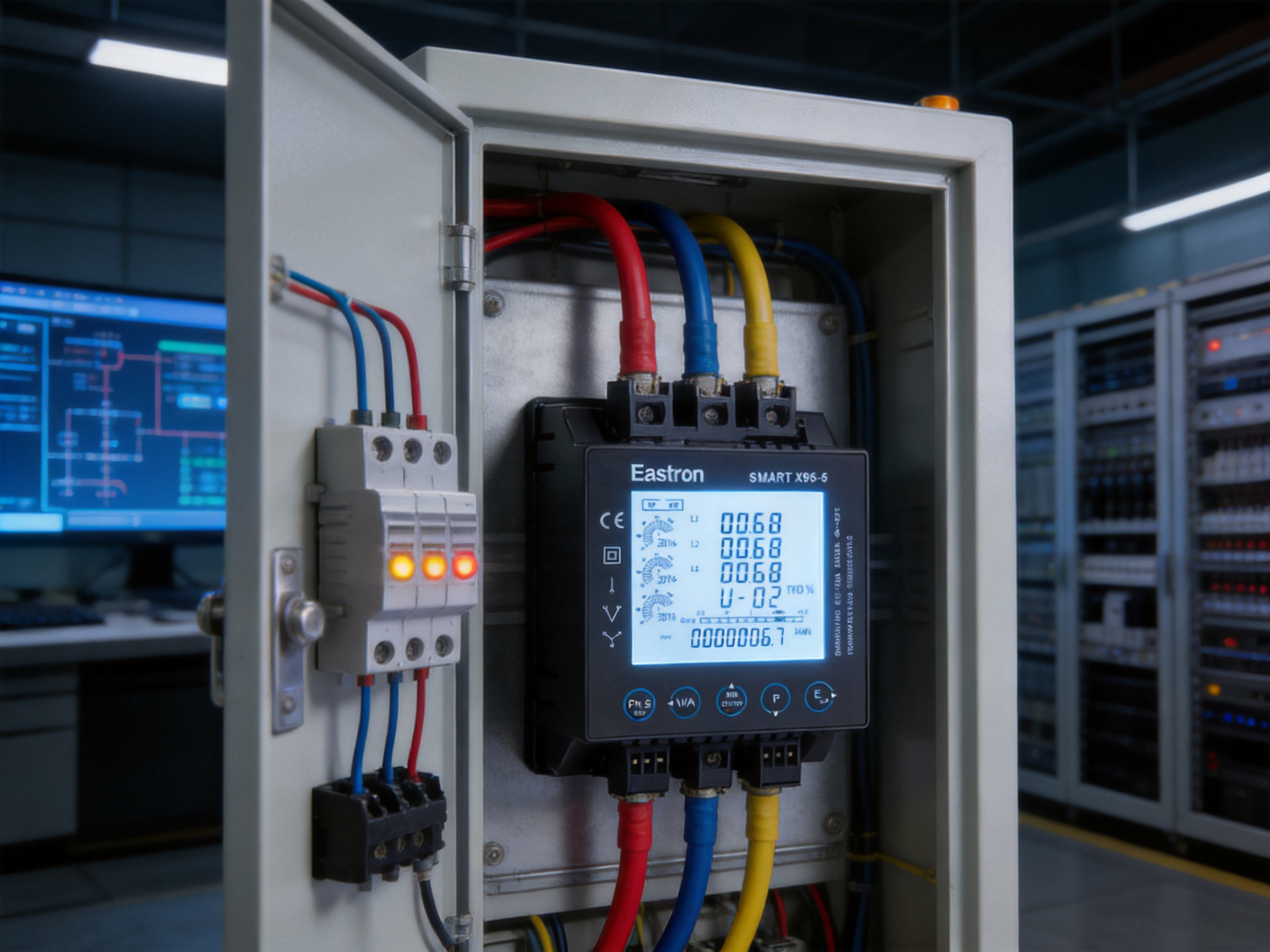
Power quality is a growing concern in modern electrical systems. The increasing use of electronic equipment has improved efficiency and control but has also introduced waveform distortion. Harmonics are components of voltage or current at multiples of the fundamental frequency. For example, in a 50 Hz system, the 3rd harmonic is 150 Hz, the 5th harmonic is 250 Hz, and so on. High harmonic levels can affect equipment life, system efficiency, and power reliability.
The meter’s ability to measure THD and harmonics up to the 63rd order gives users a deep view of waveform distortion. This feature is especially valuable in facilities that use drives, rectifiers, UPS systems, LED lighting, welding equipment, automation lines, lifts, escalators, charging systems, or other non-linear loads. Instead of relying on assumptions, users can measure the actual harmonic profile and determine whether corrective action is required.
Harmonic analysis can support multiple practical goals. It can help identify overloaded neutrals caused by triplen harmonics. It can indicate when capacitor banks may be exposed to resonance risk. It can help determine whether filters are needed. It can support compliance assessments and energy quality improvement programs. It can also help maintenance teams identify changes in load behavior that may signal equipment degradation or system imbalance.
Competitors that provide only basic voltage, current, and power values cannot deliver this level of visibility. Even meters that provide only total harmonic distortion may not be sufficient when engineers need to know which harmonic orders are dominant. By providing up to the 63rd harmonic, this meter moves closer to the functionality expected from a power analyzer while retaining the convenience and cost-effectiveness of a panel-mounted meter.
Modern electrical distribution rarely exists in isolation. Data must flow from field instruments to supervisory systems, energy dashboards, control rooms, gateways, and cloud-connected platforms. RS485 Modbus RTU communication makes the meter easy to integrate into many of these environments. Because Modbus RTU is widely recognized and supported, system integrators can connect the meter to a broad range of controllers, data loggers, gateways, and software platforms.
The meter uses a 2-wire half-duplex RS485 interface. It supports multiple baud rates, including 2400, 4800, 9600, 19200, and 38400 bps. Device addresses can be set from 1 to 247, allowing many devices to share one RS485 network when designed correctly. Parity options include none, even, and odd, while stop bit options include 1 or 2. These settings provide the flexibility required to match existing networks and reduce commissioning difficulties.
Remote monitoring offers many advantages. Operators can read energy values without opening panels. Maintenance teams can analyze electrical conditions from a central location. Energy managers can collect long-term data and identify trends. Alarms can be transferred to monitoring systems for faster response. Configuration can be managed more efficiently, reducing field labor and minimizing disruption.
In comparison with meters that offer no communication or rely on proprietary interfaces, RS485 Modbus RTU provides openness and practical compatibility. For panel builders and OEMs, this means easier integration into customer projects. For end users, it means less dependence on a closed ecosystem and more freedom to build energy monitoring systems according to site requirements.
The product’s 4DI 2DO configuration is one of its defining advantages. Digital inputs and outputs make the meter a more interactive component of the electrical distribution system. In many projects, engineers need to monitor breaker status, count external pulses, receive status signals, or trigger external equipment. Without built-in I/O, these functions often require additional modules, increasing cost, wiring complexity, and panel space.
Digital inputs can be used for external signal counting and status monitoring. For example, a digital input may receive a signal from an auxiliary contact, a pulse output from another device, or a status indication from external equipment. This allows the meter to collect more contextual information than electrical measurements alone. In distribution systems, context is valuable because it helps link electrical events to equipment states.
Digital outputs can be used for external device control or alarm signaling. When a configured alarm condition occurs, a digital output can provide a signal to another device, such as an indicator, relay, controller, or alarm circuit. This can help operators respond more quickly to abnormal conditions such as high current, low voltage, poor power factor, excessive demand, or other parameter thresholds depending on configuration.
The ability to configure 30 types of parameters for alarm enhances practical usefulness. A meter that only displays abnormal readings relies on someone to notice the problem. A meter that can generate alarm outputs and communicate alarm conditions supports proactive monitoring. This helps reduce downtime, prevent equipment stress, and improve the overall reliability of the power distribution system.
Usability is just as important as technical performance. The meter includes a backlit LCD display designed for full viewing angles, supporting clear reading in panel environments. A bar graph for power indication gives operators a quick visual reference. These display features are useful in switchrooms, control cabinets, production floors, and maintenance areas where technicians need to understand electrical status quickly.
The panel-mounted format is based on a 96 mm by 96 mm front size, with a depth of 92 mm and a weight of approximately 420 g. This format is common in industrial panels, making it suitable for new installations and replacement projects. The meter’s push-in installation and plug-in connection design help simplify installation and maintenance. Practical connection methods can reduce wiring time and support more efficient panel assembly.
The meter case uses self-extinguishing UL 94 V-0 material, reflecting attention to fire safety and durability. The front display has an IP51 protection rating according to IEC 60529. Terminals are shrouded screw-clamp type, supporting secure wiring. These mechanical features matter because a meter in a distribution panel must withstand real site conditions, not just laboratory demonstrations.
The environmental range also supports broad application. Operating temperature is specified from -25°C to 55°C, and storage temperature from -40°C to 70°C. Humidity rating is less than 95% RH at 50°C, non-condensing. Pollution degree is 2, and operating altitude is specified up to 2000 m. These specifications allow the meter to be used in many commercial and industrial environments when installed according to relevant electrical standards and enclosure requirements.
The meter is designed to work with a wide range of current transformers and potential transformers. This is essential for distribution applications because electrical systems vary widely in current levels and voltage arrangements. A fixed direct-input meter may be suitable for small loads, but a CT-operated meter can be scaled for much larger currents. With a rated current input of 5A and a maximum current display range up to 9999A, the meter can be applied in many distribution scenarios when paired with appropriate CTs.
Measured voltage ranges include 50V to 600V for 3P4W systems and 50V to 480V for 3P3W systems. The auxiliary power supply supports 230V L-N AC or 120V to 380V DC, giving additional flexibility for different panel power architectures. This flexibility can reduce the need for multiple meter models across different projects and simplify inventory for panel builders.
Configurable CT/PT ratios are also important for data accuracy. When a meter is properly configured to match the installed transformers, the displayed and communicated values represent actual system values. This supports correct energy calculation, demand monitoring, and alarm threshold setting. In contrast, meters with limited ratio options may create inconvenience or force users to compromise on system design.
In the market for panel-mounted energy meters and power analyzers, competitors vary widely in functionality. Some products focus primarily on kWh measurement. Others offer multi-parameter display but limited communication. Some include Modbus but do not support digital I/O. Some provide basic harmonic data but cannot measure up to high harmonic orders. Some offer good accuracy but lack alarm functions or event recording. This product combines these capabilities into one compact instrument.
The first competitive advantage is functional integration. By combining energy metering, power monitoring, harmonic analysis, communication, digital inputs, digital outputs, alarms, multi-tariff availability, and SOE recording, the meter reduces the need for multiple separate devices. This can lower system complexity, reduce panel space requirements, simplify procurement, and make commissioning more efficient.
The second advantage is measurement depth. Harmonic measurement up to the 63rd order positions the product above many standard multi-function meters. For users concerned with power quality, this can be a decisive factor. The meter does not only tell users how much energy is consumed; it helps explain how the electrical system is behaving.
The third advantage is communication openness. RS485 Modbus RTU is practical, widely supported, and familiar to integrators. Products that depend on proprietary protocols may limit user freedom. A Modbus-compatible meter can be connected to many existing systems, making it suitable for retrofits, expansions, and multi-vendor environments.
The fourth advantage is the 4DI 2DO structure. In real projects, digital I/O can save additional hardware and make the meter part of a broader control and monitoring strategy. This is particularly useful in distribution panels where space is limited and every extra module increases wiring complexity.
The fifth advantage is high active energy accuracy. Class 0.5S active energy accuracy provides confidence for monitoring and analysis. While not every application requires revenue-grade billing functionality, many applications benefit from accurate energy data. Energy efficiency projects, tenant sub-monitoring, production energy analysis, and sustainability reporting all depend on credible measurement.
The sixth advantage is manufacturer strength. A product is only as reliable as the engineering, production, quality management, and support behind it. The manufacturer’s experience in electricity meters, power analyzers, current sensors, communication modules, and management systems contributes to a complete understanding of energy measurement applications. This broad product foundation supports better design choices, more stable product development, and stronger application support.
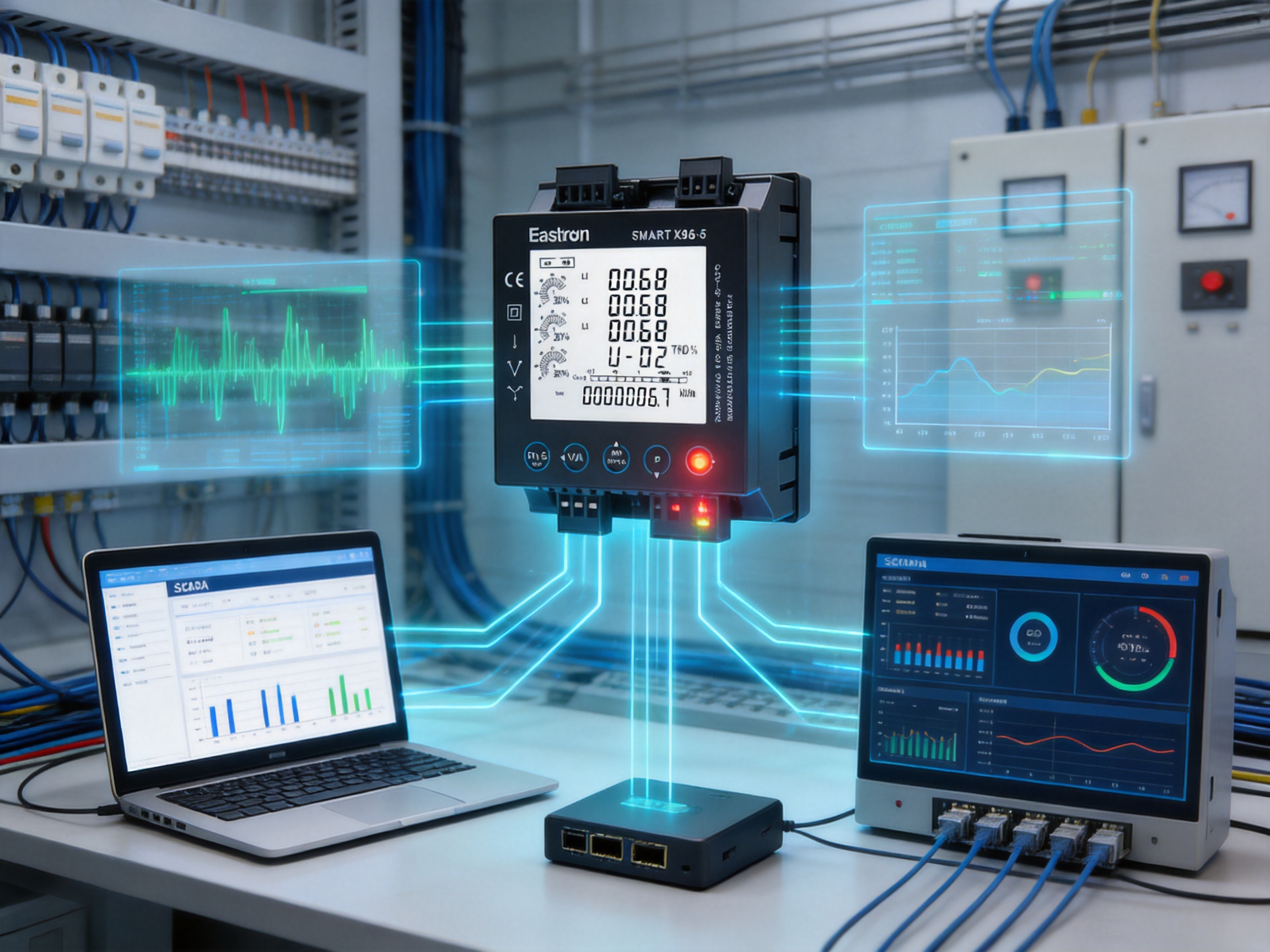
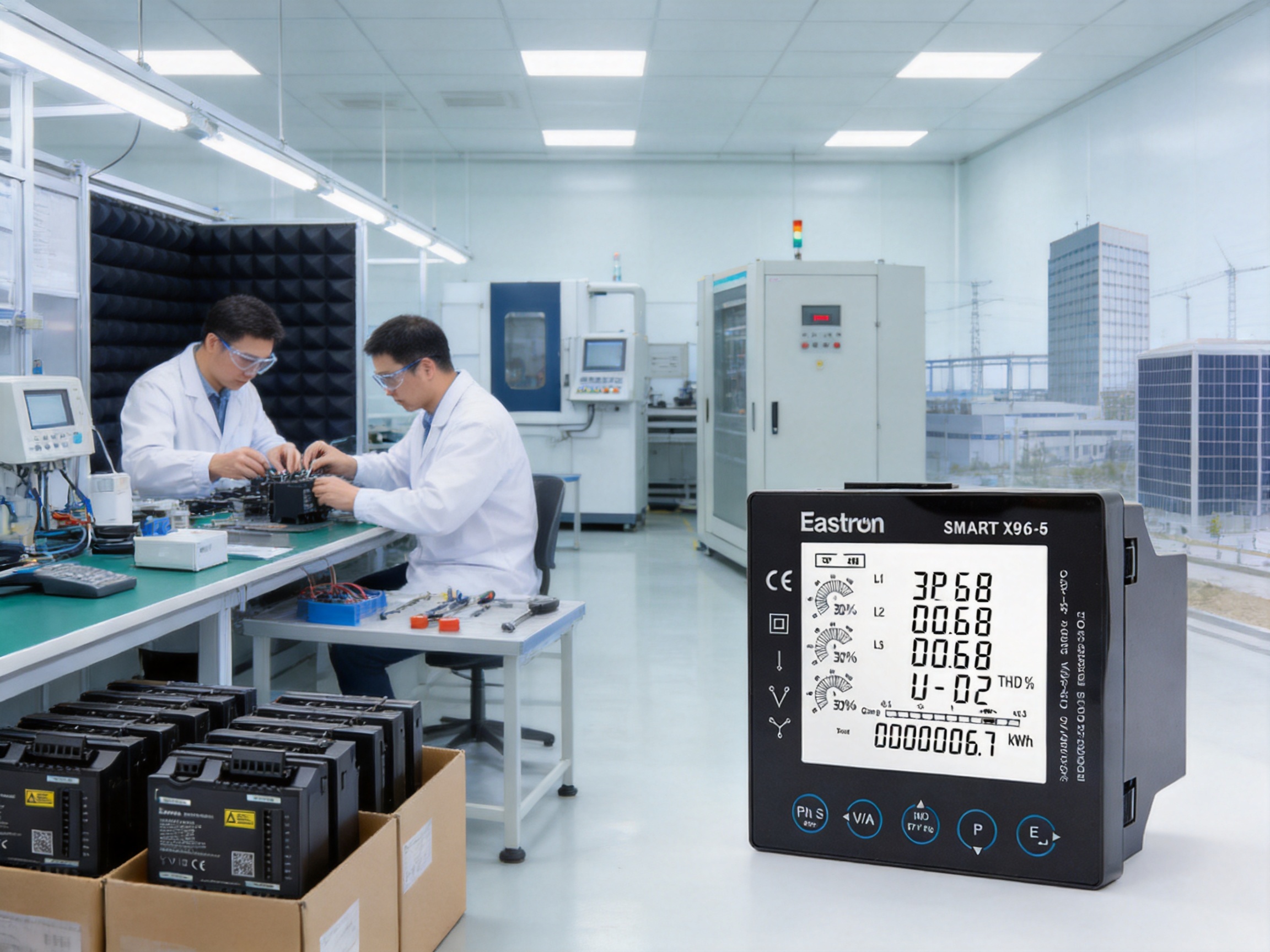
The company behind the product is a high-tech manufacturer and supplier specializing in electricity products and energy measurement solutions. Headquartered in Jiaxing, China near Shanghai, Hangzhou, and Jiangsu, it benefits from a strong regional manufacturing and technology environment. The company develops and produces electricity meters, power analyzers, current sensors, communication modules, and management systems, giving it a broad base of expertise across measurement, communication, and energy management.
One of the manufacturer’s key strengths is continuous investment in research and development. Its development teams in China and the United Kingdom contribute to product innovation and technical competitiveness. Cooperation with leading universities and institutions brings advanced technologies into product development. This matters because metering technology is not static. Requirements for accuracy, communication, power quality, digitalization, and system integration continue to evolve, and strong R&D capability is necessary to keep products relevant.
The company has established a professional laboratory capable of performing EMC, LVD, accuracy, and environmental tests according to IEC, EN, GB, and UL standards. This is a significant manufacturing and quality advantage. In electrical distribution, products must operate reliably in environments with electromagnetic interference, voltage stress, temperature variation, humidity, and long service expectations. Laboratory capability allows the manufacturer to validate designs, identify potential weaknesses, and improve product reliability before and during production.
Electromagnetic compatibility testing helps ensure that the meter can function properly in electrically noisy environments and does not create unacceptable interference for other equipment. Low voltage directive-related testing supports electrical safety. Accuracy testing verifies that measurement performance meets stated requirements. Environmental testing evaluates behavior under temperature and humidity conditions. Together, these testing capabilities support consistent product quality and reduce risk for end users.
The company follows the ISO 9001 quality management system, which provides a structured framework for process control, documentation, continuous improvement, and customer satisfaction. Its production is approved by SGS according to MID standards. The company also holds patented technologies in software, embedded software, and hardware and has been recognized as a High-tech Enterprise and High-tech R&D Centre of Electricity Application. These qualifications support confidence in its engineering and manufacturing maturity.
For buyers, advanced manufacturing strength translates into practical benefits. It means that products are designed with standards in mind, tested under controlled conditions, produced through managed processes, and supported by technical teams. It also means that the manufacturer can respond to application needs, improve designs over time, and maintain consistency across product batches.
A reliable meter begins with design choices. Measurement circuits must handle voltage and current signals accurately. Firmware must calculate electrical parameters correctly. Communication functions must remain stable. The display must be readable. The enclosure must support safe installation. Inputs and outputs must be designed for practical field use. The manufacturer’s experience across metering and power analysis supports these design requirements.
During development, products must be validated against relevant standards and application conditions. The professional laboratory capability allows testing for electromagnetic performance, safety, accuracy, and environmental resistance. This helps ensure that the meter is not merely functional under ideal conditions but robust enough for real distribution systems. In many facilities, electrical panels are exposed to switching transients, temperature variation, dense wiring, and continuous operation. Strong validation reduces the probability of field failures.
Production quality is also essential. Even a well-designed product can fail if manufacturing control is weak. ISO 9001-based management supports standardized processes, inspection steps, corrective action, and continual improvement. For electrical products, consistency is critical because customers may install many meters across a facility or across multiple projects. They expect each unit to behave the same way, communicate reliably, and maintain accuracy.
After production, technical support and after-sales service further strengthen the product’s value. The company provides professional teams for technical support and after-sales service, and its products and services have been supplied to more than 50 countries across Europe, Asia-Pacific, America, the Middle East, and Africa. This global application experience helps the company understand diverse installation practices, standards expectations, and customer requirements.
The meter is particularly suited for electricity distribution systems where measurement, monitoring, and communication are required at panel level. In low-voltage distribution boards, it can provide a complete view of incoming supply or outgoing feeder behavior. In switchgear, it can support operational monitoring and alarm functions. In commercial buildings, it can contribute to energy management and tenant or area-based consumption analysis. In industrial plants, it can help monitor production lines, motor control centers, and process-related electrical loads.
In data centers and communication facilities, accurate power monitoring is essential for capacity planning and efficiency management. The meter’s current, voltage, power, energy, demand, and harmonic data can support infrastructure planning and load balancing. In renewable or distributed energy systems, import and export energy measurement can help track bidirectional power flow. In public infrastructure, such as transportation facilities, water treatment plants, and municipal buildings, remote communication can reduce manual inspection and improve maintenance planning.
Panel builders can use the meter as a standard monitoring component in electrical panels. Its 96 mm by 96 mm format, RS485 communication, 5A CT input, alarm functions, and digital I/O make it suitable for repeatable panel designs. System integrators can connect it to gateways or monitoring platforms through Modbus RTU. Energy consultants can use its data to identify inefficiencies, power factor issues, harmonic concerns, and demand patterns.
The meter also supports preventive maintenance. Abnormal voltage, excessive current, poor power factor, harmonic distortion, or unusual demand trends can indicate developing problems. By monitoring these conditions, maintenance teams can act before failures occur. This is more efficient than reactive maintenance, where action is taken only after equipment trips, overheats, or fails.
Energy management begins with measurement. Without reliable data, organizations cannot accurately identify waste, evaluate improvement projects, or track performance. This meter supports energy management by providing detailed consumption and power information at distribution level. When connected through Modbus RTU to a monitoring platform, it becomes part of a larger data ecosystem that can support energy reporting, cost allocation, load optimization, and sustainability initiatives.
Active and reactive energy values help organizations understand both energy consumption and reactive loading. Power factor data can reveal opportunities for correction. Demand data can help identify peak usage periods. Multi-tariff availability supports analysis across different time-of-use periods where applicable. Import and export data can support facilities with onsite generation or energy recovery systems.
Sustainability programs often require verifiable data. A meter with Class 0.5S active energy accuracy provides a stronger basis for performance tracking than low-accuracy indication devices. When organizations invest in efficient equipment, lighting upgrades, process optimization, or renewable energy systems, accurate metering helps verify results. This supports internal reporting and can strengthen confidence in energy-saving claims.
Power quality analysis also contributes to sustainability indirectly. Poor power quality can reduce equipment efficiency and shorten equipment life. Harmonic distortion may cause additional heating and losses in transformers, cables, and motors. By identifying harmonic issues, users can take corrective measures that improve reliability and reduce wasted energy.
Electrical distribution safety depends on visibility, control, and reliable equipment. A multi-function meter improves visibility by showing electrical conditions that may not be obvious from basic indicators. High current, phase imbalance, voltage abnormality, poor power factor, and harmonic distortion can all contribute to operational risk. Monitoring these parameters helps operators recognize abnormal conditions early.
The meter’s alarm configuration capability supports faster response. Instead of waiting for a human operator to manually observe a problem, alarms can be configured around important parameters. Digital outputs can then be used to signal external systems, while communication can transmit alarm data to monitoring platforms. This layered approach improves awareness and can reduce response time.
The use of self-extinguishing UL 94 V-0 case material is another practical reliability feature. Electrical panels must be designed with safety in mind, and component materials matter. Shrouded screw-clamp terminals support secure wiring and reduce exposure risks when installed correctly. The IP51 front display rating helps protect the front interface in suitable panel environments.
Operating temperature and humidity specifications support stable use in a range of environments. The meter’s ability to operate from -25°C to 55°C allows deployment in many non-extreme industrial and commercial sites. Proper installation, enclosure design, and compliance with local electrical codes remain essential, but the product specifications provide a strong foundation for reliable field performance.
A basic energy meter may be suitable when the only requirement is to record total kWh consumption. However, electricity distribution management typically requires more. Operators often need real-time power, voltage, current, power factor, frequency, demand, and power quality data. They may need communication to a central system. They may need alarms. They may need I/O. In these cases, a basic meter becomes insufficient.
This product provides a higher level of intelligence. It measures multiple parameters, communicates through Modbus RTU, supports digital input and output, records events, and provides harmonic analysis. It helps users understand not just how much energy was used, but how the electrical system is functioning. This distinction is important for facilities that want to improve reliability, efficiency, and maintainability.
Compared with competitors that offer only limited communication, this meter provides standard RS485 Modbus RTU with flexible settings. Compared with meters that do not include digital I/O, it supports integration with external signals and devices. Compared with meters that measure only low-order harmonics or only THD, it measures up to the 63rd harmonic. Compared with lower-accuracy devices, Class 0.5S active energy accuracy improves confidence in the data.
The result is a stronger total value proposition. While the initial selection of a meter may focus on purchase price, the real cost of an electrical monitoring solution includes installation time, panel space, integration effort, troubleshooting capability, data accuracy, and long-term reliability. A more capable multi-function meter can reduce hidden costs by replacing multiple devices and improving operational insight.
To obtain the best performance from the meter, correct commissioning is essential. The installer should select appropriate CTs and, where required, PTs for the electrical system. CT ratios and PT ratios should be configured accurately in the meter. Wiring mode should be set according to the actual system, such as 1P2W, 3P3W, or 3P4W. Voltage and current phase connections should be checked carefully to avoid incorrect power factor or energy direction readings.
Communication parameters must be set to match the RS485 network. Address, baud rate, parity, and stop bits should be configured according to the master device or monitoring system. Proper RS485 wiring practices should be followed, including correct polarity, suitable cable, network topology, termination where required, and avoidance of excessive electrical noise. These details help ensure stable communication.
Alarm parameters should be selected based on the application. For example, a facility may configure alarms for high current, low voltage, excessive demand, poor power factor, or harmonic distortion. Digital outputs can be assigned according to system requirements. Digital inputs should be wired and configured based on the external signals being monitored.
After commissioning, readings should be verified against expected values or reference instruments where practical. This is especially important in CT-operated systems because reversed CT polarity, incorrect CT ratio, or wrong phase association can produce misleading power and energy readings. Careful commissioning ensures that the meter’s advanced capabilities deliver accurate and useful information.
For panel builders, the meter offers a practical balance of capability and compactness. Its standard panel format, multi-parameter measurement, RS485 communication, digital I/O, and alarm capability allow it to be used across many panel designs. This can simplify engineering templates and reduce the need to stock multiple different meters for different applications.
For system integrators, Modbus RTU communication and configurable settings make the meter straightforward to incorporate into monitoring systems. Its broad measurement range and power quality data provide more useful information to software platforms. Digital inputs and outputs add integration possibilities that can reduce reliance on separate I/O modules.
For end users, the value lies in better visibility, more reliable data, and improved control over electrical assets. The meter can help identify inefficient loads, monitor demand, detect abnormal conditions, analyze harmonics, and support energy-saving projects. Over time, this can contribute to lower operating costs, fewer unexpected problems, and better infrastructure planning.
For maintenance teams, the display, alarms, and SOE records support troubleshooting. For energy managers, accurate energy and demand values support analysis and reporting. For facility managers, centralized communication reduces manual readings and improves awareness. For engineering teams, harmonic and power factor data support technical decisions.
The manufacturer’s mission is to create value for customers and grow together with partners. This philosophy is reflected in a product strategy that combines innovative measurement technology with practical application support. The company provides high-quality products, professional technical support, and after-sales service. Its products and services have reached more than 50 countries across Europe, Asia-Pacific, America, the Middle East, and Africa.
A global customer base helps strengthen product development because it exposes the manufacturer to diverse requirements. Different regions may emphasize different standards, installation practices, communication architectures, and application priorities. Experience across these regions helps the company improve product adaptability and customer support.
The company’s broader product portfolio also matters. Because it develops electricity meters, power analyzers, current sensors, communication modules, and management systems, it understands the entire measurement chain. This helps ensure that products are not designed in isolation but as components of practical energy measurement solutions. The 4DI 2DO panel mounted multi-function meter benefits from this ecosystem knowledge.
Recognition as a High-tech Enterprise and High-tech R&D Centre of Electricity Application reflects a commitment to technology development. Patented technologies in software, embedded software, and hardware further demonstrate engineering capability. In a market where product reliability and data accuracy are essential, these strengths help differentiate the manufacturer from suppliers with limited R&D depth.
The meter can be used in single and three phase systems, including 1P2W, 3P3W, and 3P4W configurations. This makes it suitable for a wide range of electricity distribution applications.
4DI 2DO means the meter includes four digital inputs and two digital outputs. Digital inputs can be used for external signal counting or status monitoring, while digital outputs can be used for alarm signaling or external device control depending on system design.
Yes. The meter includes RS485 Modbus RTU communication. It can be integrated into energy management systems, SCADA systems, gateways, and building management platforms that support Modbus RTU.
The meter provides active energy accuracy according to IEC 62053-22 Class 0.5S and IEC 62053-21 Class 1.0. This supports reliable energy monitoring and analysis.
Harmonic measurement up to the 63rd order provides deeper power quality insight than basic meters. It helps users identify waveform distortion caused by non-linear loads and supports troubleshooting, filtering decisions, and reliability improvement.
Yes. The meter supports 5A CT input and can be configured to work with a wide range of CTs. This allows it to monitor systems with higher currents than direct-input meters can handle.
The RS485 Modbus RTU interface supports baud rates of 2400, 4800, 9600, 19200, and 38400 bps. Address range is 1 to 247. Parity options include none, even, and odd, and stop bit options include 1 or 2.
Compared with a basic kWh meter, this product measures many more electrical parameters, supports harmonic analysis, provides Modbus communication, includes digital inputs and outputs, supports alarms, and offers event recording. It gives users a more complete view of the electrical distribution system.
The meter uses a 96 mm by 96 mm panel-mounted format with a depth of 92 mm. This common panel size makes it suitable for many electrical cabinets and distribution panels.
The manufacturer has professional laboratory capabilities for EMC, LVD, accuracy, and environmental testing according to IEC, EN, GB, and UL standards. It follows ISO 9001 quality management and has production approved by SGS according to MID standards. It also maintains strong R&D teams and patented technologies in software, embedded software, and hardware.
The 4DI 2DO three phase panel mounted multi-function meter is a powerful solution for modern electricity distribution monitoring. It combines accurate energy measurement, multi-parameter electrical monitoring, harmonic analysis up to the 63rd order, RS485 Modbus RTU communication, configurable alarms, digital inputs, digital outputs, event recording, and flexible CT/PT configuration in a compact 96 mm by 96 mm panel format.
Its advantages over typical competitors are clear. It provides more measurement depth than basic energy meters, more integration capability than display-only instruments, more power quality insight than standard multi-function meters, and more system interaction through its digital I/O features. Class 0.5S active energy accuracy helps build confidence in energy data, while Modbus RTU communication supports practical integration into monitoring and management systems.
The product is also supported by a manufacturer with strong capabilities in R&D, testing, quality management, and global service. Professional laboratory testing for EMC, LVD, accuracy, and environmental performance, together with ISO 9001 quality management and SGS-approved MID production, provides a strong foundation for product reliability. Experience in electricity meters, power analyzers, current sensors, communication modules, and management systems further strengthens the product’s application value.
For panel builders, system integrators, facility managers, industrial operators, and energy professionals, this meter offers an effective way to improve visibility, reliability, and efficiency in electricity distribution systems. It is not only a measuring instrument; it is a compact intelligent monitoring node that supports better decisions, better maintenance, and better energy management.
International Electrotechnical Commission. IEC 62053-22: Electricity Metering Equipment, Static Meters for Active Energy, Classes 0.2S and 0.5S.
International Electrotechnical Commission. IEC 62053-21: Electricity Metering Equipment, Static Meters for Active Energy, Classes 1 and 2.
International Electrotechnical Commission. IEC 62053-24: Electricity Metering Equipment, Static Meters for Reactive Energy.
International Electrotechnical Commission. IEC 60529: Degrees of Protection Provided by Enclosures.
International Organization for Standardization. ISO 9001: Quality Management Systems Requirements.
Modbus Organization. Modbus Application Protocol and Serial Line Implementation Guide.
Your email address will not be published. Required fields are marked *

We develop and produce high performance electricity meters, power analyzers, current sensors, communication modules and management systems. China Custom Smart Meters Manufacturers and Factory
Address:NO 52, Dongjin Road, Nanhu, Jiaxing, Zhejiang, China
Copyright @ Eastron Electronic Co., Ltd. All rights reserved Electricity Meters Manufacturers
