

 English
 Español
 Deutsch
 中文简体


Product Consultation
Your email address will not be published. Required fields are marked *
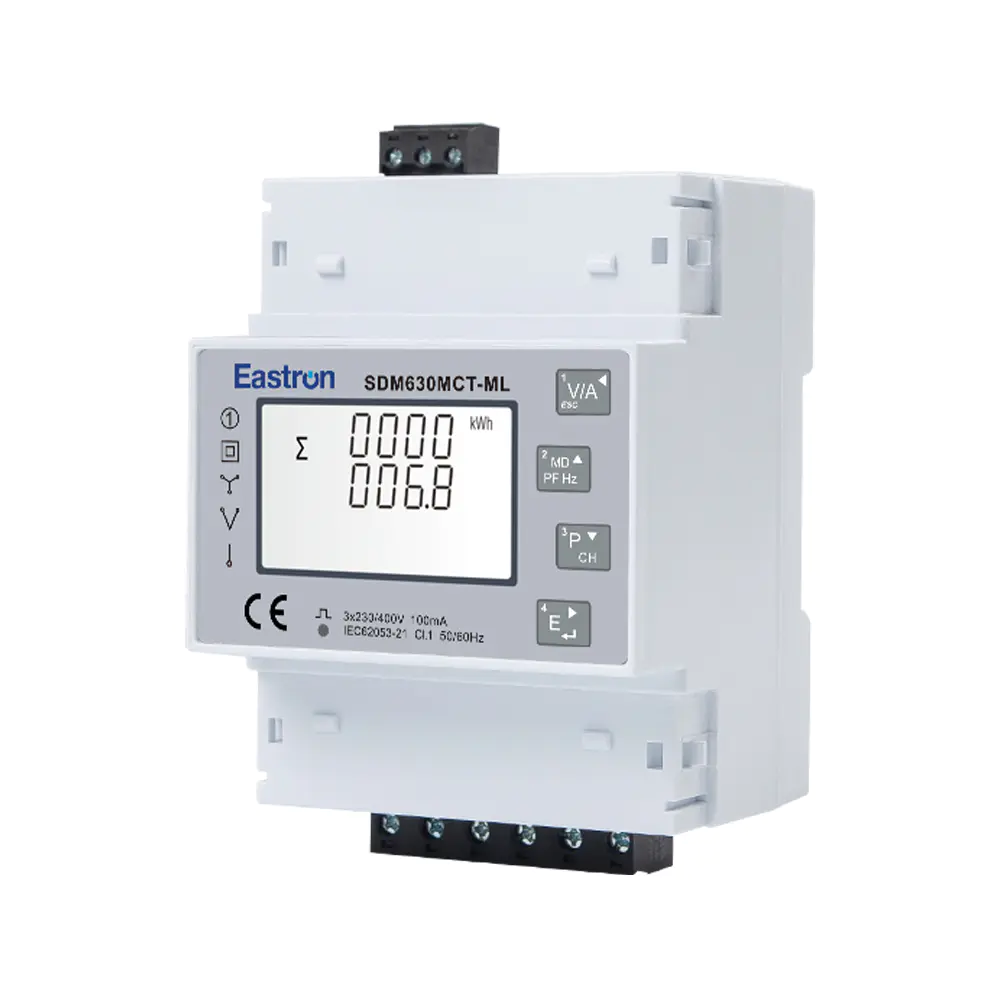
Multi-Circuit Three Phase Ethernet Modbus TCP Energy Meter for Data Center Metering
Aug 03,2022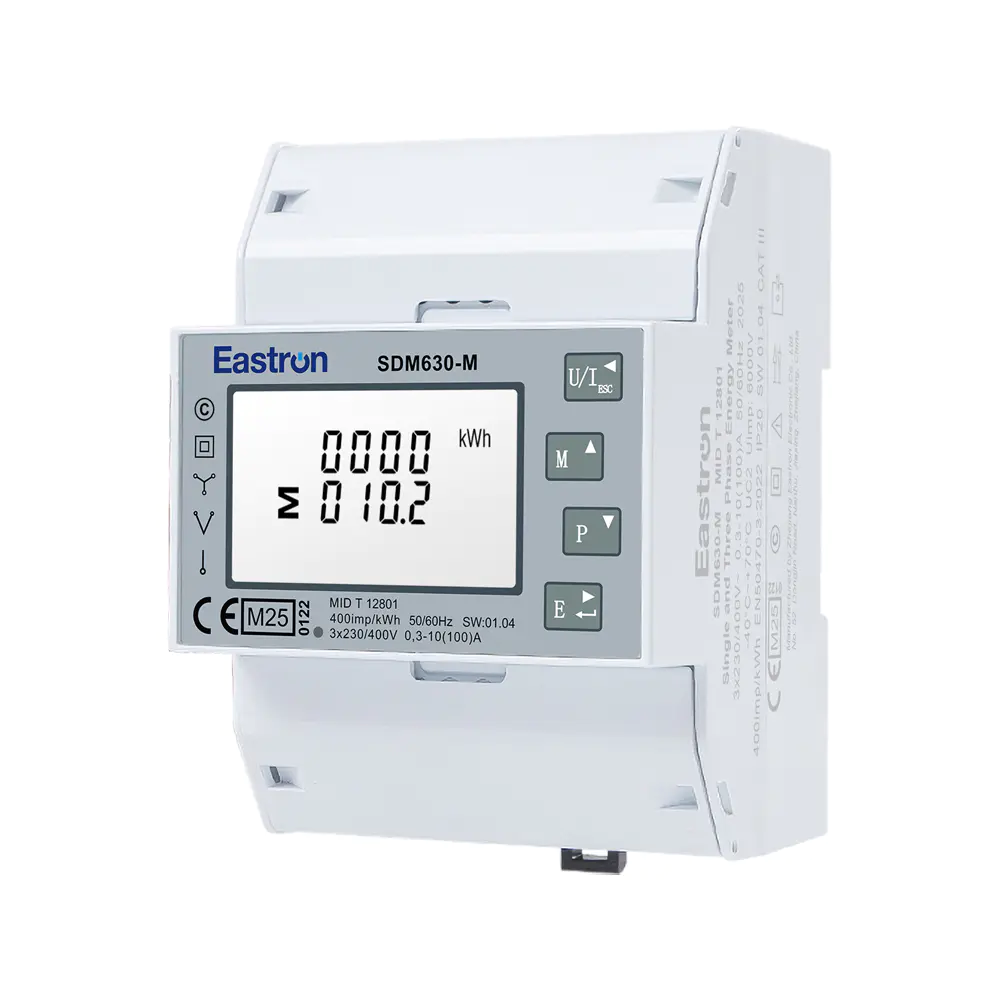
MID UL Certified Din Rail Three Phase Multi-function Energy Meter for EV Charging Metering
Aug 02,2022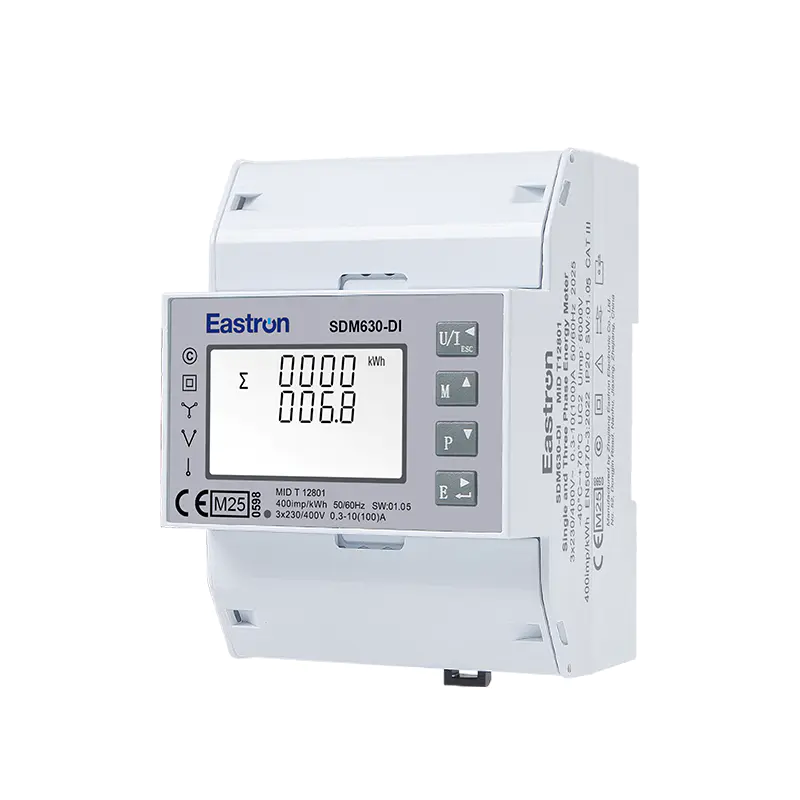
MID & UL Approved Three Phase Din Rail Type Multi-function Energy Meter for EV Charging Metering
Nov 24,2022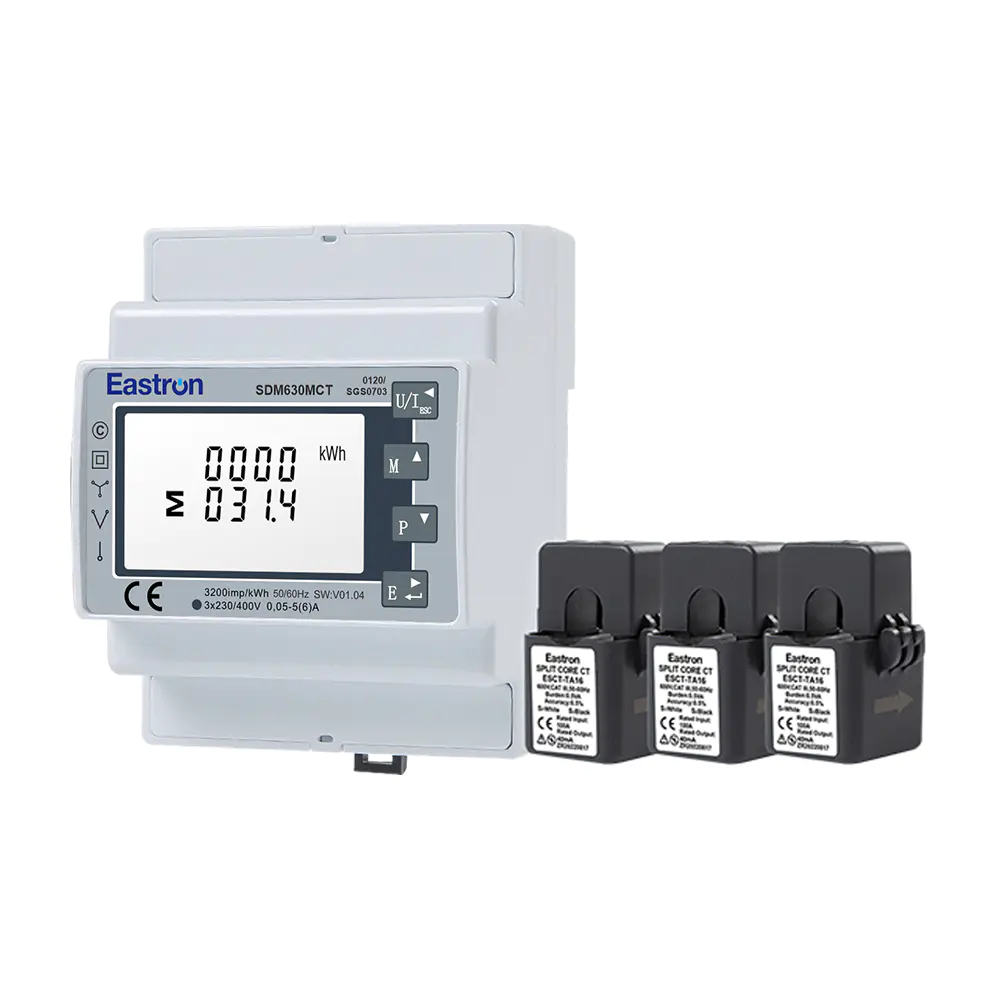
MID/UL CT Type Din Rail Three Phase Multi-function Energy Meter for EV Charging Metering
Nov 24,2022
MID 3 Modules Din Rail Three Phase Multi-function Solar PV /Zero Export Meter for PV Metering
Aug 02,2022
Dual RS485 Din Rail Single Phase Multi-function Solar PV/Zero Export Meter with 50mS Data Update for VPP Solution
Nov 24,2022Content
Modern electrical installations increasingly require more than a simple measurement of total kilowatt-hours. Commercial buildings, industrial facilities, renewable-energy systems, data centers, apartment complexes, and electric-vehicle infrastructure often operate with multiple power sources, variable tariffs, and different electrical configurations. In these environments, the ability to measure imported and exported energy accurately, separate consumption by tariff, communicate with supervisory systems, and fit the device into a compact distribution board is essential.
The SDM630-MB-2T addresses these requirements as a three-phase, direct-connected, DIN-rail energy meter with M-Bus communication and dual-tariff functionality. It is designed for systems using 3P3W, 3P4W, or 1P2W wiring and supports direct loads up to 100 A. In addition to active energy, the meter measures reactive energy, voltage, current, frequency, power factor, active power, reactive power, apparent power, demand, total harmonic distortion, and other electrical parameters.
Its combination of measurement capability, communication, compact installation, dual-source operation, pulse outputs, and MID-oriented certification makes it suitable for applications where energy data must be dependable, accessible, and useful for billing, allocation, monitoring, or operational analysis.
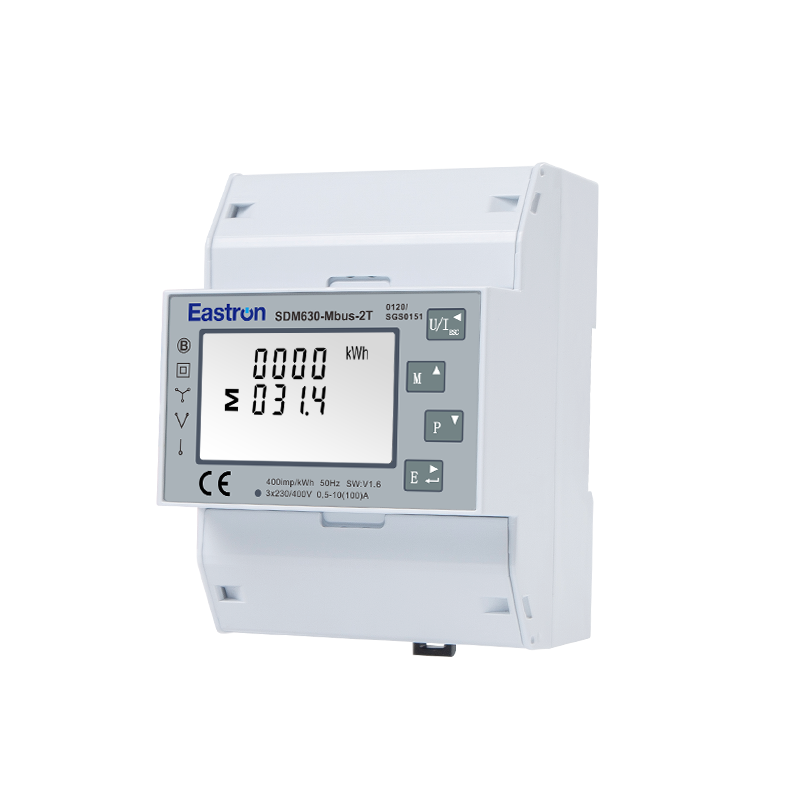
Dual Tariffs Mbus Din Rail Three Phase MID Energy Meter
The SDM630-MB-2T belongs to a family of multifunction three-phase energy meters intended for direct connection to low-voltage electrical systems. Its maximum current rating is 100 A, eliminating the need for external current transformers in many small and medium-sized installations. This direct-load design simplifies wiring, reduces the number of components in the panel, and can lower installation time compared with transformer-operated metering arrangements.
The meter occupies four DIN modules, equivalent to approximately 72 millimeters in width. This compact form factor allows it to be installed alongside circuit protection devices, contactors, distribution terminals, communication equipment, and control modules. For retrofit projects, the standardized DIN-rail format is especially valuable because it can often be integrated into an existing cabinet without extensive mechanical modification.
The product is configured for two tariffs and two power sources. This feature is useful when an installation receives electricity from both the public grid and a generator, backup supply, or other secondary source. Rather than treating all energy as a single undifferentiated total, the meter can support separate tariff-related measurement for the available sources. This creates a clearer foundation for energy allocation, cost analysis, and source comparison.
M-Bus communication is integrated into the meter. M-Bus, standardized under EN 13757, is widely used for utility and sub-metering applications because it is designed for reliable communication with meters over structured field networks. The product also provides two pulse outputs for energy impulses, allowing it to connect to pulse counters, building-management controllers, energy-management systems, or legacy data-acquisition equipment.
The meter measures both imported and exported energy. Bidirectional measurement is important in installations with generators, photovoltaic systems, battery systems, combined heat and power units, or other sources that may sometimes deliver electricity to the network and at other times consume it.
| Item | Specification |
|---|---|
| Product model | SDM630-MB-2T |
| Meter type | Three-phase multifunction energy meter |
| Installation | DIN rail |
| Width | Four modules, approximately 72 mm |
| Supported wiring | 3P3W, 3P4W, and 1P2W |
| Maximum direct current | 100 A |
| Rated current | 10 A |
| Minimum current | 0.3 A |
| Starting current | 40 mA |
| Rated voltage | 230 V L-N / 120 V L-N |
| Operating voltage | 80% to 120% of rated voltage |
| Energy measurement | Imported and exported active and reactive energy |
| Communication | M-Bus according to EN 13757-3 |
| Outputs | Two pulse outputs |
| Tariffs | Two tariffs for dual-source applications |
| Active energy accuracy | Class 1/0.5 IEC 62053-21; Class B/C EN 50470-3:2022 |
| Reactive energy accuracy | Class 2 IEC 62053-23 |
Many energy meters use external current transformers when measuring larger currents. Current transformers are valuable in high-current installations, but they introduce additional design considerations. The installer must select suitable transformer ratios, observe polarity, provide correct secondary wiring, and account for the accuracy and burden characteristics of the transformer. Incorrect transformer selection or wiring can cause substantial measurement errors.
A direct-connected meter rated for up to 100 A avoids these complications in suitable applications. The load conductors pass directly through the meter’s current terminals, allowing the device to measure current without an external transformer interface. This can simplify panel design and reduce the number of auxiliary components that must be sourced, mounted, labeled, tested, and maintained.
Direct connection is particularly useful for small commercial premises, workshops, distribution boards, tenant circuits, small renewable-energy installations, and residential or mixed-use buildings. It also supports repeatable installation practices for contractors working on projects with many similar panels.
However, direct connection does not mean that every installation can use the meter without engineering review. The installer must verify the maximum continuous current, conductor size, terminal capacity, short-circuit protection, isolation arrangements, ambient conditions, and local electrical regulations. Where current exceeds the direct rating or where the installation requires transformer-based metering, a suitable CT meter should be selected instead.
The SDM630-MB-2T supports 3P4W and 3P3W three-phase systems and can also be used with 1P2W arrangements. This flexibility is a practical advantage over meters restricted to one wiring topology. A 3P4W system includes three phases and a neutral conductor and is common in low-voltage distribution networks supplying both three-phase and single-phase loads. A 3P3W system has three phases without a neutral and is used in specific industrial and commercial configurations. A 1P2W system is a single-phase, two-wire arrangement.
A single meter family that can serve different configurations helps standardize procurement and training. Electrical contractors can become familiar with one interface, one enclosure format, and one general commissioning procedure while applying the appropriate wiring configuration for each project.
System compatibility must always be confirmed before installation. The nominal voltage, phase sequence, neutral arrangement, frequency, load current, and wiring diagram should be checked against the actual installation. Correct connection is also important for accurate direction-of-energy detection and for the correct display of imported and exported values.
The meter operates with rated line-to-neutral voltages of 230 V or 120 V and an operating range of 80% to 120% of the nominal voltage. This operating range provides useful tolerance for normal voltage variation, although it is not a substitute for power-quality analysis or protective equipment where the supply is unstable.
A basic energy meter may provide only a cumulative kWh reading. That information is valuable, but it does not explain why energy use changes, how efficiently a system operates, or whether electrical problems are developing. The SDM630-MB-2T provides a wider set of measurements so that users can evaluate both energy consumption and the electrical conditions behind it.
Measured parameters include voltage, current, frequency, active power, reactive power, apparent power, power factor, active energy, reactive energy, demand, and total harmonic distortion. These values can be viewed locally on the meter and made available to external systems through the communication interface.
Voltage measurement helps users identify supply variation between phases or across operating periods. Current measurement shows loading on the circuit and can support capacity planning. Active power indicates the rate at which useful electrical energy is being consumed or delivered. Reactive power identifies the non-working component associated with inductive or capacitive loads. Apparent power combines the active and reactive components and is important when assessing the loading of electrical equipment.
Power factor is useful for evaluating how effectively current is being converted into active power. A low power factor can increase current for a given active load, raise losses, and consume capacity in cables and transformers. Monitoring power factor can therefore support corrective action, such as load balancing or the appropriate use of power-factor correction equipment.
Frequency measurement provides an additional indication of supply condition. In generator-backed systems, frequency data can help operators assess the stability of the source and compare grid and generator behavior.
Total harmonic distortion measurement is valuable where nonlinear loads are present. Variable-speed drives, switching power supplies, LED drivers, information-technology equipment, and other electronic loads can introduce harmonics. Harmonic information does not by itself diagnose every power-quality issue, but it gives facility managers and engineers a useful indicator for further investigation.
The increasing use of distributed generation has changed the way energy flows through many electrical installations. A building may import electricity from the grid during normal operation, receive energy from a generator during an outage, and export energy from a photovoltaic or combined-generation system under favorable conditions. A unidirectional meter cannot describe these operating states adequately.
The SDM630-MB-2T supports bidirectional measurement, enabling the recording of imported and exported active and reactive energy. This makes it suitable for systems where the direction of power flow changes over time. It can help users distinguish energy received from a source from energy delivered back toward a network or internal bus.
The dual-tariff function extends this capability for installations with two power sources. For example, a facility may need to compare grid energy with generator energy, separate normal supply from backup supply, or apply different accounting rules to two sources. The meter’s two-tariff arrangement provides a structured way to organize these values.
Dual-source measurement can support several operational objectives:
First, it can improve cost allocation. If grid electricity and generator electricity have different operating costs, the measured values can help calculate the cost associated with each source.
Second, it can support generator management. Recording the energy contribution of a generator helps operators evaluate runtime, fuel efficiency, maintenance intervals, and the effectiveness of backup strategies.
Third, it can assist tenant or department billing. A building owner may need to allocate energy consumption between common services, individual tenants, emergency systems, and special-purpose equipment.
Fourth, it can improve energy reporting. A facility can report total consumption while also showing how much energy came from each source and how much was exported.
Finally, bidirectional measurement supports the transition toward distributed energy resources. As batteries, solar arrays, microgrids, and flexible loads become more common, energy meters must describe changing power-flow conditions rather than simply accumulate one total.
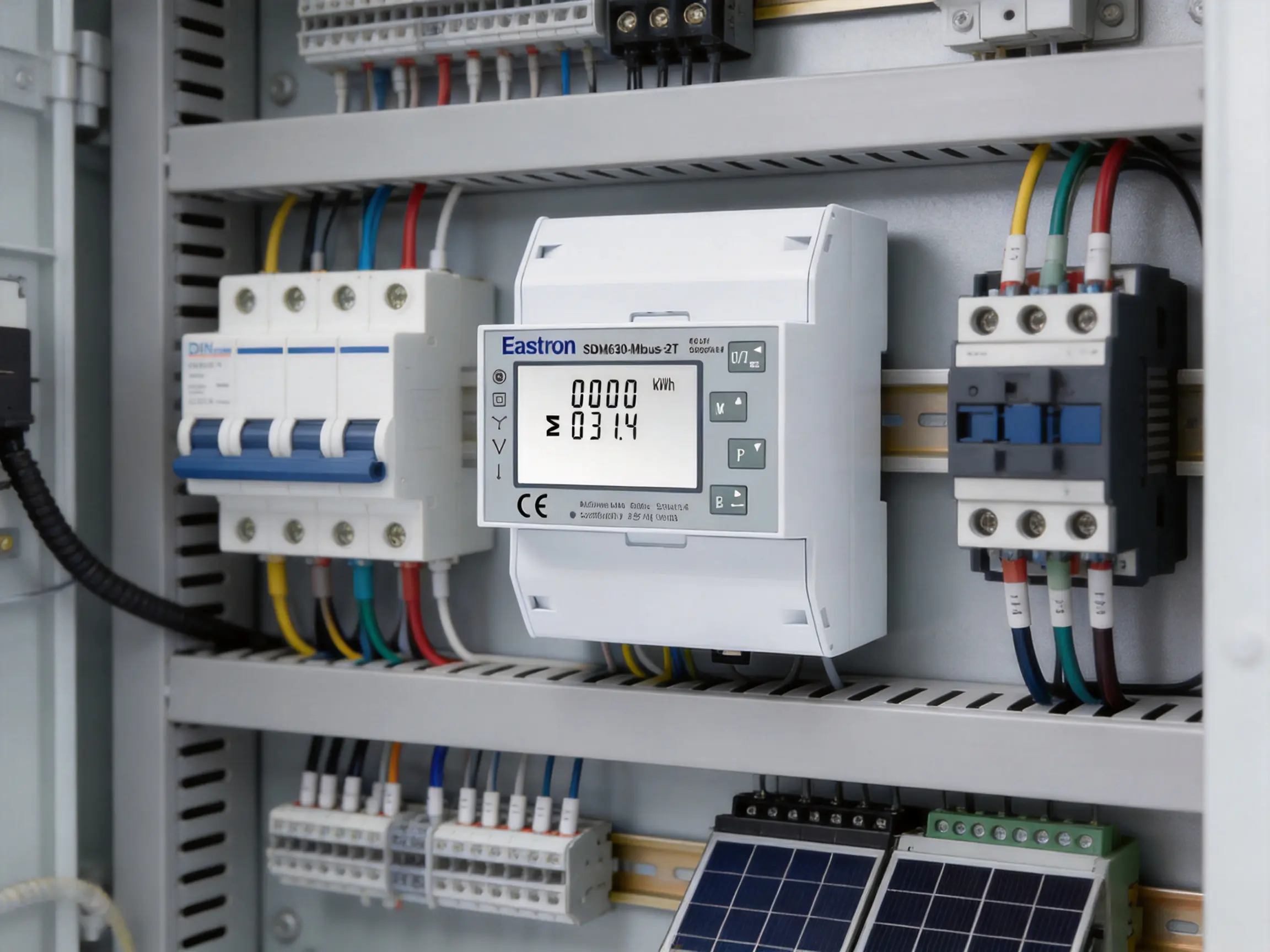
M-Bus communication is one of the central features of this model. The interface follows EN 13757-3 communication principles and is intended for meter networks in which a central system collects data from multiple field devices. Compared with manual reading, automated M-Bus communication can improve data availability, reduce labor, and provide a stronger foundation for regular energy analysis.
The meter supports communication addresses from 1 to 250. This address range allows multiple devices to coexist on a network when each meter is assigned a unique address. The maximum stated transmission distance is 1,000 meters, although the actual achievable distance depends on cable type, network topology, installation environment, power supply conditions, and the number of connected devices.
Supported M-Bus baud rates range from 600 to 9,600 bps. The meter supports none, odd, or even parity and one or two stop bits. These settings provide flexibility when integrating the meter with a gateway, data concentrator, building-management system, energy-management platform, or industrial controller.
M-Bus is particularly appropriate for sub-metering because it is designed around the practical requirements of utility measurement networks. A central master can poll multiple meters, collect energy values, and store them in a database for billing or analysis. The system can also combine readings from electricity meters with readings from heat, water, or gas meters when the wider installation uses a common M-Bus architecture.
For larger sites, the meter can form part of a layered communication structure. Field meters communicate through M-Bus to a concentrator or gateway. The gateway then forwards data to a local server, cloud platform, supervisory system, or building-management application. This arrangement keeps the meter close to the electrical measurement point while allowing authorized users to view information at a higher operational level.
Communication planning remains important. The installer should document meter addresses, cable routes, network polarity where applicable, master capacity, termination requirements, and commissioning settings. Clear labeling and a maintained device schedule can prevent problems when meters are added, replaced, or reconfigured.
Although M-Bus provides a digital communication path, pulse outputs remain useful in many installations. The SDM630-MB-2T includes two pulse outputs for imported and exported energy. These outputs can connect to pulse counters, programmable logic controllers, remote terminal units, building controllers, or older monitoring equipment that does not support M-Bus.
Pulse-based integration can be useful when a project already has a pulse-collection system or when a simple cumulative energy signal is sufficient. It also provides a secondary integration method during system upgrades. For example, a facility may initially connect the pulse outputs to a local controller and later add an M-Bus gateway for detailed data collection.
The two outputs help distinguish energy directions or energy categories, depending on the configured application. Before commissioning, the installer should confirm the pulse meaning, pulse constant, voltage requirements, maximum permissible load, and input specifications of the receiving device. Correct electrical separation and compatible interface wiring are essential for reliable operation.
Measurement accuracy is a primary consideration when an energy meter is used for cost allocation, tenant billing, energy management, or formal reporting. The product documentation identifies active energy accuracy classes under IEC 62053-21 and EN 50470-3:2022, including Class 1/0.5 and Class B/C classifications. Reactive energy is specified as Class 2 under IEC 62053-23.
The product has been assessed and certified as meeting the requirements of European Union Directive 2014/32/EU. This directive concerns measuring instruments and establishes requirements for instruments used in regulated measurement applications. The term MID is commonly associated with this European framework.
Compliance with a relevant standard or directive is not simply a marketing label. It provides a reference for performance, testing, documentation, and application suitability. Nevertheless, users should confirm the exact approval scope, marking, verification requirements, sealing arrangements, local legal-metering rules, and permitted use before applying any instrument to regulated billing.
The stated measurement performance includes voltage and current accuracy of ±0.5%, frequency accuracy of ±0.2%, power-factor accuracy of ±0.01, and active, reactive, and apparent power accuracy of ±1%. These specifications provide a useful basis for system design, but field accuracy also depends on installation quality, conductor configuration, temperature, waveform characteristics, operating range, and periodic verification.
For best results, the meter should be installed according to the approved wiring diagram, with secure terminals, correct phase identification, suitable conductor preparation, and appropriate overcurrent protection. Commissioning should include a comparison with a trusted reference instrument where the application requires documented verification.
Space inside electrical distribution boards is increasingly limited. Designers must accommodate protective devices, residual-current devices, contactors, surge protection, communication gateways, power supplies, terminal blocks, and monitoring components in compact enclosures. A four-module, approximately 72-millimeter-wide meter helps conserve panel space while still providing multifunction measurement.
DIN-rail mounting also supports modular construction. A device can be installed, removed, or replaced without fabricating a custom mounting plate. Standardized mounting is convenient for panel builders and service technicians and helps create consistent layouts across multiple sites.
The front-facing display provides local access to measured data and meter status. Local visibility is helpful during commissioning and maintenance because technicians can verify voltage, current, power, energy direction, and other values without immediately connecting a computer or communication tester.
The compact housing does not remove the need for proper thermal and mechanical planning. The panel designer should consider terminal spacing, conductor bending radius, heat generated by adjacent equipment, enclosure ventilation, access for inspection, and the required degree of protection. The meter should be installed in an environment compatible with its technical documentation and local electrical standards.
The most important advantage of the SDM630-MB-2T is the way several functions are combined in one device. A basic meter, a separate power-quality monitor, a pulse-output module, a communications adapter, and an additional tariff controller may otherwise be required to achieve a similar overall function. Combining these capabilities can reduce panel space, wiring complexity, procurement effort, and the number of devices that must be coordinated during commissioning.
Compared with a single-tariff meter, the dual-tariff design is better suited to installations with two sources or different accounting periods. Compared with a unidirectional meter, bidirectional measurement is more appropriate for generation and storage systems. Compared with a meter that requires an external communication converter, the integrated M-Bus interface can simplify network design.
Compared with a transformer-operated meter used in a suitable sub-100 A application, direct connection can reduce the risk of ratio errors and polarity mistakes associated with current transformers. Compared with a single-function kWh meter, multifunction measurement provides more information for diagnosing load behavior and power quality.
Compared with a large panel instrument, the DIN-rail format is easier to integrate into compact distribution boards. Compared with manually read meters, M-Bus communication makes regular data collection and centralized analysis more practical.
These advantages do not mean that the meter is suitable for every project. High-current systems above the direct rating, installations requiring specialized revenue-metering functions, networks with unusual voltage arrangements, and sites needing advanced power-quality analysis may require different or additional equipment. The product’s advantage is strongest where direct 100 A measurement, dual-source tariff management, M-Bus communication, and multifunction monitoring are required together.
Eastron Electronic Co., Ltd. is presented as a high-technology manufacturer focused on electricity meters and energy measurement solutions. Its product portfolio includes electricity meters, power analyzers, current sensors, communication modules, and management systems. This breadth is important because it indicates experience across the measurement chain rather than concentration on a single isolated product.
The company has development teams in China and the United Kingdom and reports cooperation with universities and research institutions. Such cooperation can support the development of measurement algorithms, embedded software, communication functions, electronic hardware, and application-specific solutions. Energy measurement products require coordinated expertise in analog circuitry, digital processing, firmware, mechanical design, standards, and field installation practices.
The company also reports an in-house professional laboratory capable of conducting electromagnetic compatibility, low-voltage directive, accuracy, and environmental tests according to IEC, EN, GB, and UL standards. Internal testing capability can strengthen product development because engineers can evaluate design changes earlier and repeat tests during verification rather than relying exclusively on external laboratories for every development iteration.
Accuracy testing is especially important for energy meters. It can be used to assess performance at different currents, power factors, voltage conditions, frequencies, and energy directions. EMC testing helps determine whether the meter can operate reliably in electrically noisy environments and whether it might interfere with other equipment. Environmental testing can evaluate performance under temperature, humidity, vibration, or other conditions relevant to the intended application.
The company states that it follows an ISO 9001 quality management system. A quality-management system supports controlled processes for design, purchasing, production, inspection, nonconformance handling, corrective action, traceability, and continuous improvement. While certification alone does not guarantee that every installation will be trouble-free, a structured quality system is an important foundation for consistent manufacturing.
The company reports patents in software, embedded software, and hardware, as well as recognition as a high-technology enterprise and high-technology research and development center for electricity application. These capabilities are relevant to a smart meter because modern energy measurement depends not only on sensors and terminals but also on embedded computation, data processing, display control, communication protocols, and configuration management.
Production is also reported to be approved by SGS according to MID standards. Independent assessment by a recognized organization can provide additional confidence in conformity evaluation, especially for products intended for regulated European measurement applications. Buyers should still review the current certificates, declarations, model variants, and marking details for the exact product being purchased.
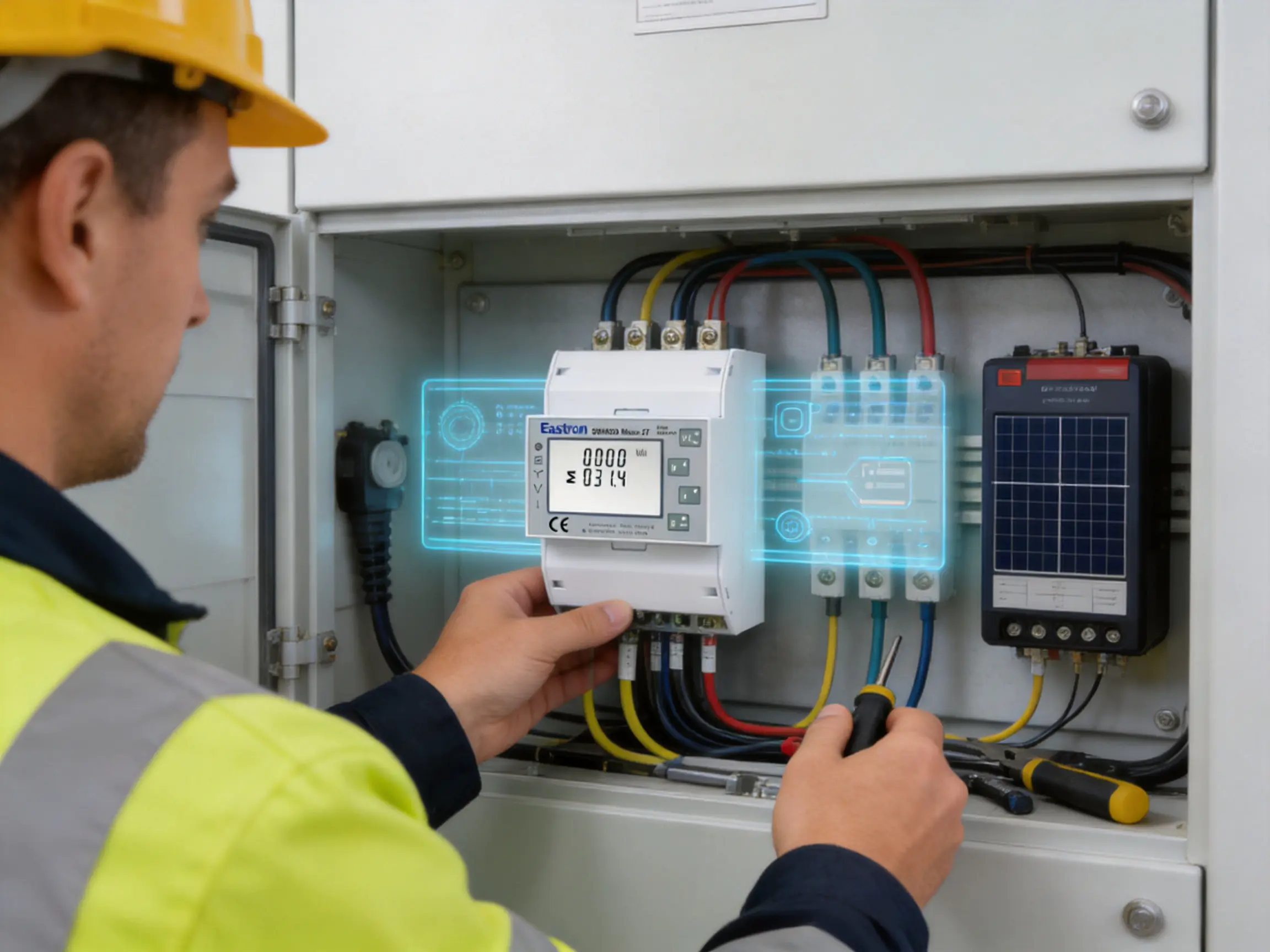
The meter is suitable for commercial buildings where electricity consumption must be divided among tenants, departments, floors, retail units, workshops, or common services. Each relevant feeder can be equipped with a meter, and the resulting data can be collected through an M-Bus network. This creates a more transparent basis for cost allocation than estimating consumption from floor area or operating hours.
In industrial facilities, the meter can monitor production lines, auxiliary systems, pumps, compressors, ventilation equipment, and workshops. Its current, power, power-factor, demand, and harmonic measurements can help maintenance and energy teams identify unusual behavior. For example, a rising current at a stable production level may indicate equipment wear, process changes, or a developing electrical issue.
In office buildings and data-related facilities, detailed energy data can support the evaluation of heating, ventilation, air-conditioning, lighting, and information-technology loads. Power-factor and harmonic information can be useful where electronic loads are concentrated.
In apartment and mixed-use buildings, the meter can support sub-metering of individual units or shared systems. A centralized M-Bus network can reduce the need for manual readings and provide a regular record for billing or internal reporting.
Generator installations are one of the clearest use cases for dual-source measurement. A facility may have a utility supply and a standby generator, with automatic transfer equipment selecting the active source. Measuring the source-specific energy contribution can help verify generator operation and calculate the amount of energy supplied during an outage.
Renewable-energy systems also benefit from bidirectional measurement. A photovoltaic installation may produce electricity during the day, serve local loads, charge a battery, or export surplus energy. At night or during periods of low solar generation, the site may import energy. A bidirectional meter can record these opposing flows and provide data for self-consumption analysis.
Microgrids can use the meter as part of a wider monitoring architecture. A microgrid may contain a grid connection, generator, renewable source, storage system, and controllable loads. Although one meter does not replace a complete microgrid controller, its measurements can contribute to source accounting, operational dashboards, and energy-management decisions.
For dual-source projects, the engineering team should define exactly how the tariff inputs or source states are controlled. The source-change signal, tariff assignment, and data-recording strategy should be documented so that the energy values are interpreted correctly after installation.
Installation should be performed by qualified personnel familiar with low-voltage electrical systems and the requirements applicable in the installation location. Before work begins, the circuit should be isolated and verified as de-energized using appropriate procedures and instruments.
The installer should confirm the system type, nominal voltage, frequency, phase sequence, maximum current, conductor size, protective-device rating, and intended energy-flow direction. The wiring diagram supplied for the exact meter variant should be followed. Although the product supports several system configurations, the terminals and configuration settings must correspond to the actual wiring arrangement.
After wiring, all terminals should be checked for secure connection and correct torque according to the product documentation and applicable standards. Loose connections can cause heat generation, inaccurate readings, intermittent operation, or equipment damage. Phase and neutral identification should be clearly maintained throughout the installation.
For M-Bus networks, each device should be assigned a unique address. The communication master should be configured with the correct baud rate, parity, and stop-bit settings. The installer should test communication from the central system and verify that the data received corresponds to the correct physical meter.
Commissioning should include a functional review of the display, voltage readings, current readings, power direction, active and reactive energy values, pulse outputs, tariff operation, and communication data. If a generator or second source is present, the source-switching sequence should be tested under controlled conditions.
The panel should be labeled with the meter identity, circuit designation, source information, communication address, and any relevant tariff or pulse-output configuration. Good documentation reduces service time and helps prevent errors when the installation is expanded.
A meter creates the greatest value when its measurements are converted into useful decisions. M-Bus data can be collected at regular intervals and stored in an energy-management platform. Users can then review daily, weekly, monthly, and seasonal patterns, compare sources, and identify unusual demand.
Demand data can help facilities understand short-duration peaks that may affect contracted capacity or operating cost. Power-factor trends can indicate whether corrective measures are needed. Voltage and current data can support load balancing. Harmonic measurements can indicate whether specialist power-quality assessment should be considered.
Sub-metering also encourages accountability. When departments or tenants can see their own consumption, they are more likely to identify waste and adopt practical measures such as scheduling equipment, reducing standby loads, improving ventilation control, or replacing inefficient devices.
For generator and renewable-energy applications, separate source data can show whether the facility is using locally generated energy effectively. Operators can compare generation, self-consumption, import, export, and storage behavior. This information can guide future investment in solar capacity, batteries, controls, or efficiency upgrades.
| Metering approach | Typical limitation | Benefit of the SDM630-MB-2T |
|---|---|---|
| Basic single-function kWh meter | Limited information about power quality, demand, or operating conditions | Provides multifunction measurement including voltage, current, power, power factor, frequency, and THD |
| Single-tariff meter | Cannot separate two source or tariff categories effectively | Provides two-tariff functionality for dual-source applications |
| Unidirectional meter | Not suitable for installations with changing energy direction | Measures imported and exported energy |
| Transformer-operated meter | Requires external CTs, ratio selection, polarity checks, and additional wiring | Provides direct measurement up to 100 A in suitable applications |
| Meter without integrated communications | Requires manual reading or an additional communication interface | Includes M-Bus communication according to EN 13757-3 |
| Large panel meter | Consumes more enclosure space or requires custom mounting | Uses a compact four-module DIN-rail format |
| Pulse-only meter | Provides limited data to the monitoring system | Combines two pulse outputs with local display and M-Bus data |
Before selecting the SDM630-MB-2T, the project team should establish whether the installation is within the 100 A direct-measurement limit. If the expected current exceeds this level, a CT-operated product should be evaluated. The team should also verify whether the voltage system is compatible with the stated rated voltage range.
The communication requirements should be reviewed at the design stage. If the project uses M-Bus, the engineer should confirm the required number of meters, cable distance, master capacity, data-collection interval, and gateway interface. If a project uses Modbus rather than M-Bus, another version in the product family may be more appropriate.
The intended legal and commercial use should also be clarified. A meter used for internal monitoring may have different documentation and verification requirements from a meter used for regulated billing. The applicable national rules should be reviewed, and the exact certificate and product marking should be confirmed before procurement.
Finally, the project should define how dual tariffs will be controlled and recorded. A clear source-switching or tariff-selection strategy is essential. Without a defined operating method, even an accurate meter may produce data that is difficult to interpret.
Routine maintenance should include visual inspection of the enclosure, terminals, conductors, display, and communication wiring. The meter should be checked for signs of overheating, discoloration, mechanical damage, condensation, or loose connections. Any abnormal condition should be investigated by qualified personnel.
Communication health can be monitored by checking whether the central system receives readings within the expected interval. Missing data may result from a disconnected cable, incorrect address, power interruption, communication configuration error, or gateway problem.
Where the meter is used for important financial or operational decisions, periodic comparison with a reference instrument can provide confidence in continued performance. The verification interval should be based on local regulations, application risk, operating environment, and the requirements of the responsible metrology authority or site quality system.
Firmware, configuration, and communication records should be maintained as part of the site documentation. When a meter is replaced, the new device should be assigned a clear identity and its historical relationship to the previous device should be recorded.
It is a multifunction three-phase energy meter designed for DIN-rail installation. It supports direct loads up to 100 A, M-Bus communication, two pulse outputs, bidirectional energy measurement, and two tariffs for dual-source applications.
Yes. The product supports 3P3W and 3P4W systems, as well as 1P2W applications. The correct wiring diagram and configuration must be selected for the actual electrical system.
The maximum direct current is 100 A. Applications above this rating should be evaluated with a suitable current-transformer-operated meter or another product designed for higher current.
Yes. It supports bidirectional measurement, including imported and exported active and reactive energy. This is useful for generator, photovoltaic, battery, and microgrid installations.
The two tariffs can be used to distinguish energy associated with two power sources or tariff categories. A typical example is a facility that uses both grid supply and generator supply. The source-selection and tariff-control method should be defined during system design.
The SDM630-MB-2T uses M-Bus communication according to EN 13757-3. It supports addresses from 1 to 250 and baud rates from 600 to 9,600 bps.
The SDM630-MB-2T is the M-Bus version. Other models in the wider product family provide RS485 Modbus, but the communication interface should be confirmed from the exact model designation before ordering.
The two pulse outputs can provide energy impulses for external counters, controllers, data-acquisition equipment, or legacy monitoring systems. The receiving equipment must be compatible with the output specifications and configured pulse meaning.
The meter measures voltage, current, frequency, active power, reactive power, apparent power, power factor, reactive energy, demand, and total harmonic distortion, in addition to active energy.
The product documentation states that it has been assessed and certified as meeting the requirements of EU Directive 2014/32/EU and identifies active-energy classes under relevant IEC and EN standards. The exact permitted use should be confirmed against the current certificate, national regulations, and the requirements of the billing application.
The meter occupies four DIN modules and is approximately 72 millimeters wide.
Its four-module DIN-rail format is intended for compact distribution boards and control panels. The designer must still verify conductor space, heat dissipation, terminal access, and compliance with enclosure requirements.
Installation should be completed by qualified electrical personnel who can verify isolation, select appropriate protection, follow the wiring diagram, configure communication, and test the completed installation.
The SDM630-MB-2T is designed for electrical installations that need more capability than a basic energy counter can provide. Its direct 100 A measurement, support for 3P3W, 3P4W, and 1P2W systems, compact DIN-rail housing, multifunction measurement, bidirectional energy recording, two pulse outputs, M-Bus communication, and dual-tariff operation form a practical combination for modern sub-metering and source-monitoring projects.
Its strongest advantage is integration. A single compact device can provide energy measurement, electrical-parameter monitoring, communication, pulse signaling, and source-related tariff functionality. This can simplify panel construction and support centralized data collection without requiring a large collection of separate instruments.
The product is also supported by the manufacturing capabilities of Eastron Electronic Co., Ltd., including research and development activity, dedicated laboratory testing, quality-management practices, standards-oriented evaluation, and experience across electricity meters, power analyzers, sensors, communication modules, and energy-management systems.
For commercial buildings, industrial facilities, generator-backed sites, renewable-energy systems, mixed-use properties, and other applications with changing power flows, the meter provides a useful foundation for accurate measurement and better energy decisions. Correct product selection, installation, commissioning, communication planning, and regulatory verification remain essential, but when these requirements are addressed, the SDM630-MB-2T can serve as a compact and capable component in a connected energy-measurement system.
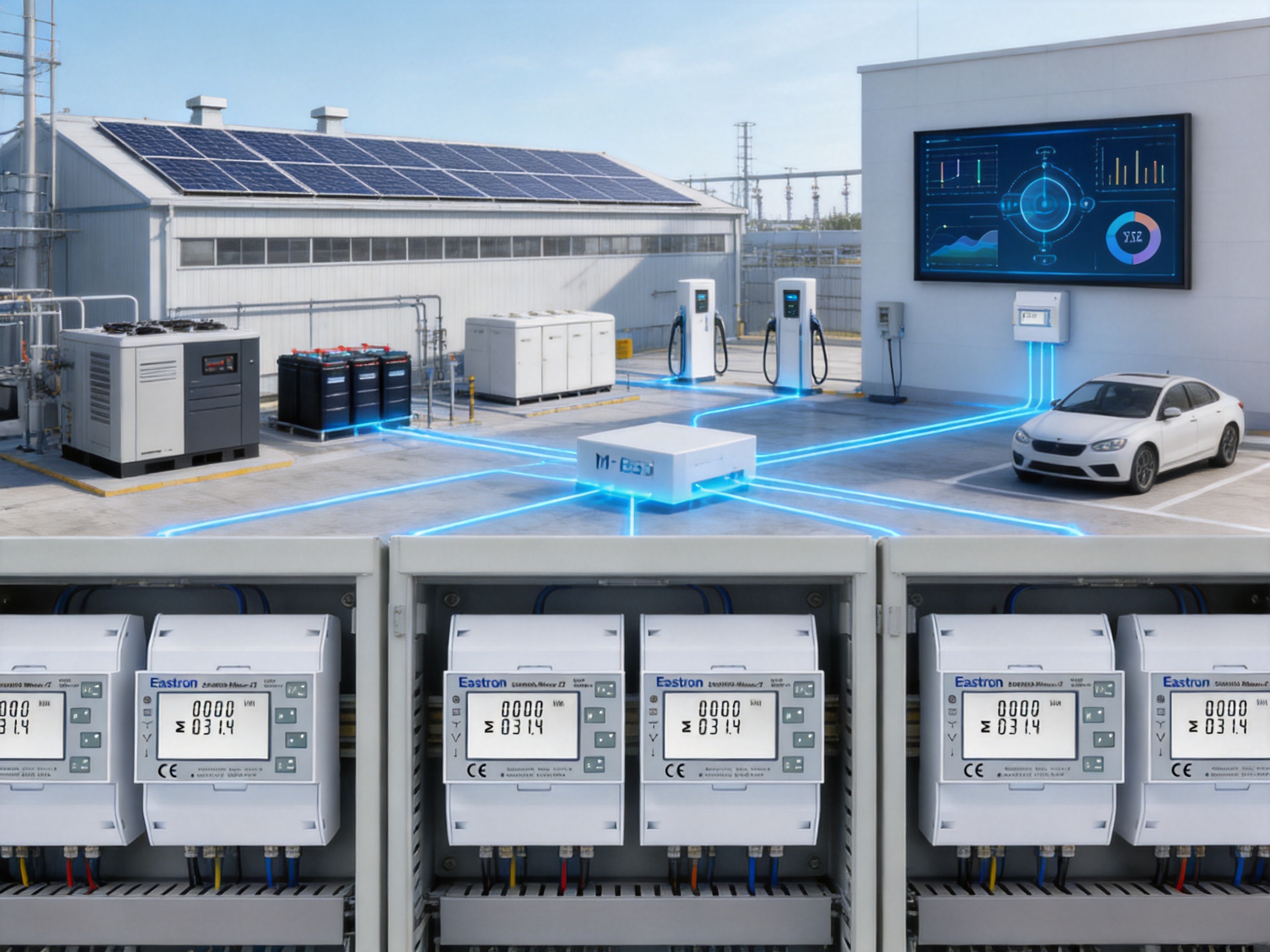
IEC 62053-21, Electricity Metering Equipment: Particular Requirements for Static Meters for Active Energy.
IEC 62053-23, Electricity Metering Equipment: Particular Requirements for Static Meters for Reactive Energy.
EN 50470-3:2022, Electricity Metering Equipment: Particular Requirements for Static Meters for Active Energy.
EN 13757-3, Communication Systems for Meters and Remote Reading of Meters: Application Layer Protocol.
European Union Directive 2014/32/EU on Measuring Instruments.
ISO 9001, Quality Management Systems: Requirements.
Product technical information for the SDM630-MB-2T three-phase multifunction energy meter.
Your email address will not be published. Required fields are marked *

We develop and produce high performance electricity meters, power analyzers, current sensors, communication modules and management systems.
Address:NO. 52, Dongjin Road, Nanhu, Jiaxing, Zhejiang, China
Copyright @ Eastron Electronic Co., Ltd. All rights reserved
