

 English
 Español
 Deutsch
 中文简体
中文简体

Product Consultation
Your email address will not be published. Required fields are marked *
Europe's Solar and Energy Storage Transition: Transforming the Power System Infrastructure for a Renewable Future
Jul 10,2026
Power Systems Are Becoming “Real-Time Systems”: Why Data Is More Critical Than Electricity
Jul 06,2026
New EPBD Regulations Drive HVAC Energy Transparency and Boost Demand for Smart Meters
Jul 07,2026Content
Modern electrical installations demand meters that are accurate, compact, easy to install, and suitable for the wiring practices of the target market. The 2P+N DIN rail single phase electronic kWh meter with pulse output, model SDM320E, is designed for single phase AC systems using a 1P3W network and a two-line-plus-neutral wiring method. With a maximum direct load capacity of 100A, support for 110V/230V voltage input, LCD energy display, and active energy pulse output, it provides a practical metering solution for residential, light commercial, distribution-board, and sub-metering applications.
This article focuses on the product’s technical value, application advantages, competitive strengths, and the manufacturing capabilities behind it. It also explains why the combination of 2P+N wiring, direct 100A measurement, compact DIN rail mounting, Class 1.0 energy accuracy, and pulse output makes this meter a strong choice for energy measurement projects, especially where American-style single phase installations and economical monitoring solutions are required.
2P+N Din Rail Single Phase Electronic kWh meter with Pulse Output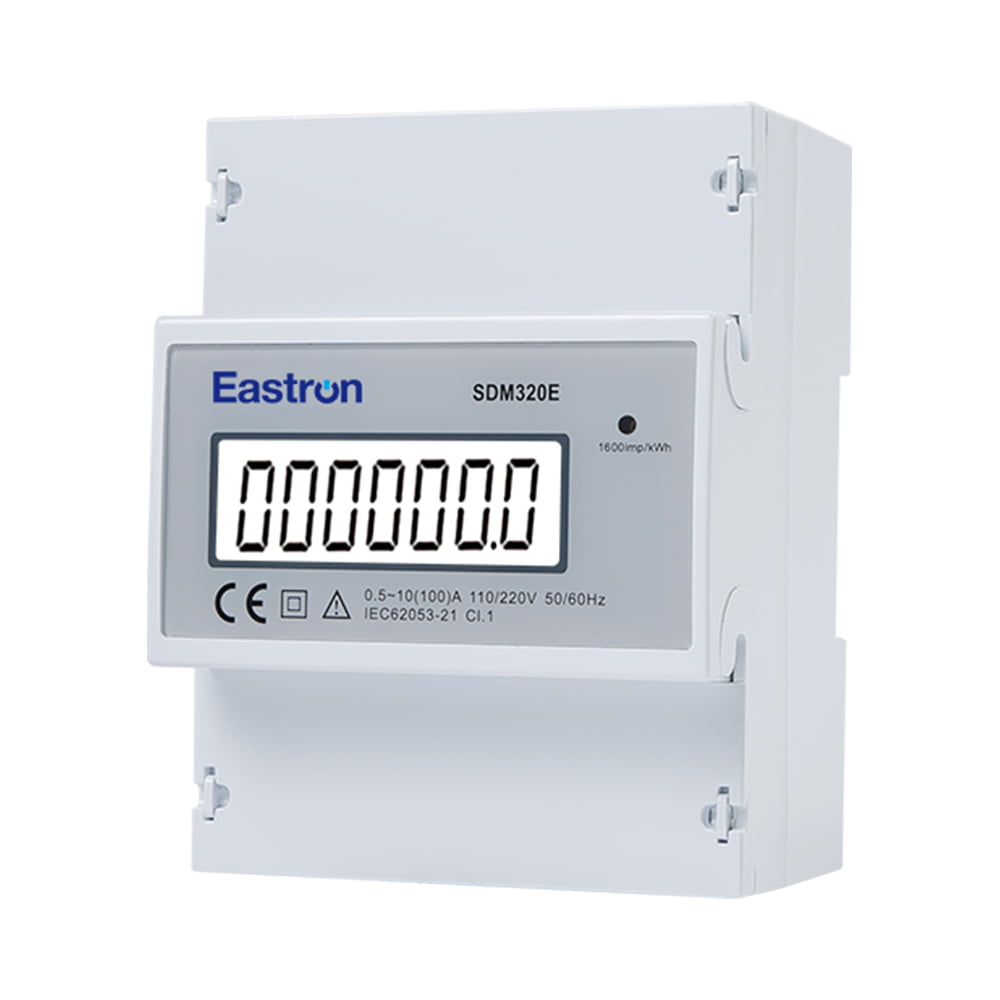
The SDM320E is a 2P+N DIN rail single phase electronic kWh meter with pulse output. It is built as a four-module-width meter for installation on standard DIN rail systems, making it convenient for use in distribution boards, control panels, energy monitoring cabinets, and electrical enclosures. The meter measures active energy in kilowatt-hours and provides a clear LCD reading for on-site observation.
Unlike many simple compact single phase meters intended only for one live conductor and one neutral conductor, this product is specifically designed for a 1P3W network. The 2P+N configuration makes it suitable for installations where two line conductors and one neutral conductor are used, a wiring method that is commonly found in certain American market energy measurement scenarios. This characteristic allows the meter to serve projects that need a single phase energy meter but cannot be addressed well by a standard 1P2W configuration.
The meter supports 110V/230V voltage input, with rated voltage information listed as 120/220V in the input specification. This gives it practical flexibility across applications where single phase voltage levels may differ according to regional installation practice. It is rated for a basic current of 10A and a maximum current of 100A, enabling direct load measurement without requiring external current transformers in many installations. The minimum current is 0.5A, and the starting current is 40mA, helping the meter detect low-load energy usage and begin registration at a low current threshold.
For communication or system integration, the SDM320E provides a pulse output for active energy. Pulse output is one of the most widely used and reliable methods for transmitting energy consumption data to external counters, data loggers, building management systems, monitoring devices, or gateway equipment. It is simple, robust, and easy to integrate, making the meter suitable for projects where cost-effective energy data acquisition is required.
The meter’s main characteristics can be summarized as follows: it is a 2P+N DIN rail electronic kWh meter, suitable for 1P3W single phase AC systems, with direct measurement up to 100A, active energy measurement, LCD display, pulse output, 110V/230V voltage input support, and a compact four-module body. Each of these characteristics contributes to its value in practical energy measurement applications.
The direct load capacity of up to 100A is especially important. In many sub-metering and branch-circuit monitoring projects, the use of current transformers increases installation complexity, takes additional panel space, introduces wiring errors, and raises total system cost. A direct-connected 100A meter reduces those issues by allowing the load conductors to pass through the meter terminals directly, provided the installation follows the meter’s rated parameters and relevant electrical regulations.
The 2P+N wiring design is another important differentiator. Many single phase DIN rail meters are optimized for standard 1P2W networks, but not all target installations use that arrangement. Where two line conductors plus neutral are present, selecting a meter designed for this network improves suitability and simplifies system planning. The SDM320E was developed with this requirement in mind, giving it a practical advantage for energy measurement solutions in the American market.
The LCD display offers clear local reading of accumulated active energy. For installers, building managers, landlords, facility engineers, and maintenance teams, a local display remains valuable even when pulse output is connected to a remote system. It allows quick verification during installation, inspection, troubleshooting, or periodic reading.
The pulse output for active energy supports external monitoring. This is useful when energy consumption must be recorded by a data collector, automation controller, gateway, or centralized energy management system. Because pulse output is simple and widely accepted, the meter can be incorporated into many system architectures without the complexity of advanced communication protocols.
Item |
Specification |
Practical Value |
Product Type |
2P+N DIN rail single phase electronic kWh meter |
Suitable for single phase 1P3W energy measurement installations |
Model |
SDM320E |
Designed for active energy metering with pulse output |
Network |
1P3W, 2 line conductors plus neutral |
Well suited for American-style single phase wiring applications |
Measurement Method |
RMS on single phase AC system |
Supports reliable energy calculation under normal AC operating conditions |
Energy Accuracy |
IEC 62053-21 Class 1.0 |
Provides dependable accuracy for active energy billing reference and monitoring |
Rated Current |
10A |
Appropriate for common metering loads |
Maximum Current |
100A |
Allows direct load measurement without external CTs in many applications |
Minimum Current |
0.5A |
Supports measurement across a practical load range |
Starting Current |
40mA |
Enables energy registration at low current levels |
Voltage Input |
110V/230V, rated voltage information 120/220V |
Provides flexibility for regional single phase voltage conditions |
Display |
LCD kWh display |
Allows convenient local reading and inspection |
Output |
Pulse output for active energy |
Supports connection to counters, loggers, gateways, and monitoring systems |
Mounting |
DIN rail installation |
Fast installation in standard distribution boards and electrical panels |
Width |
4 modules |
Compact enough for organized panel layouts while supporting 100A direct wiring |
The 2P+N structure is one of the central reasons this meter stands out. In many electrical markets, single phase energy measurement is often associated with one live conductor and one neutral conductor. However, in American-style single phase systems, split-phase or related wiring arrangements can require metering that recognizes two line conductors and a neutral. A meter that is not designed for this network may create installation complications or fail to match the intended measurement architecture.
The SDM320E responds to this need by measuring active energy on a single phase AC system with a 2P+N configuration. This allows it to serve distribution systems where two line conductors are present and the neutral is part of the circuit reference. For contractors and system integrators, this reduces the need for workaround wiring or selection of more complex metering devices than necessary.
Compared with competitors that mainly offer standard 1P2W DIN rail meters, this product has a clearer fit for 1P3W applications. That fit can reduce engineering time during project design, simplify stock selection for suppliers serving American market projects, and improve installation confidence for technicians who need a meter aligned with the actual site wiring.
This wiring compatibility also improves economic value. Instead of using a larger multi-function meter or a more expensive three-phase meter for a single phase 2P+N application, the project can use a dedicated compact single phase electronic kWh meter. The result is a more appropriate balance of cost, size, and function.
A maximum direct load rating of 100A gives the meter a major practical advantage. Many sub-metering applications require measurement of circuits that are larger than small appliance loads but still within a range suitable for direct metering. A 100A direct-connected meter is convenient for apartment distribution, small commercial units, workshops, charging-related auxiliary loads, HVAC sub-circuits, panel-level monitoring, and tenant energy allocation systems.
Competitor products with lower direct current ratings may require current transformers once the load exceeds their maximum capacity. CT-based installation is effective in many contexts, but it adds cost and complexity. CTs must be correctly selected for current ratio and accuracy, physically installed around conductors, wired to the meter, and checked for polarity. Incorrect CT orientation or loose secondary wiring can cause measurement errors. A direct-connected meter removes these CT-related risks for loads within the meter’s current rating.
The 100A maximum current rating also supports simplified inventory management. Distributors and installers can use one compact meter model for a wider range of circuits, rather than carrying separate low-current direct meters and CT-operated meters for medium loads. This streamlines procurement and helps project managers standardize installation procedures.
At the same time, direct measurement must always be used responsibly. Installers should verify conductor size, terminal tightening torque, protective device ratings, local electrical codes, enclosure conditions, and heat dissipation. When properly installed within specification, the SDM320E provides a clean and efficient approach to direct energy measurement.
The meter’s active energy accuracy is specified according to IEC 62053-21 Class 1.0. This standard is widely recognized for static meters for active energy. Class 1.0 accuracy provides a dependable level of performance for monitoring, tenant sub-metering reference, energy cost allocation, internal management, and many non-utility billing-related measurement tasks, depending on local regulations.
Accuracy is not only a matter of a laboratory number. It also depends on product design, component selection, manufacturing control, calibration, environmental stability, and inspection. A reliable kWh meter must continue to perform under real electrical panel conditions where temperature, load variation, wiring arrangement, and electromagnetic disturbance may influence operation.
The manufacturer behind this product maintains a professional laboratory capable of performing EMC, LVD, accuracy, and environmental tests according to IEC, EN, GB, and UL standards. This testing capability is significant because metering products must be evaluated under multiple stress conditions. EMC testing helps confirm resistance to electromagnetic interference and control of emissions. LVD-related evaluation supports electrical safety. Accuracy testing verifies metering performance. Environmental testing helps confirm stability under temperature and humidity conditions.
Compared with competitors that rely heavily on outsourced validation or limited inspection procedures, a manufacturer with in-house testing capability can shorten development cycles, identify design weaknesses earlier, and maintain tighter quality feedback between engineering and production. This contributes to consistent product quality and supports long-term customer confidence.
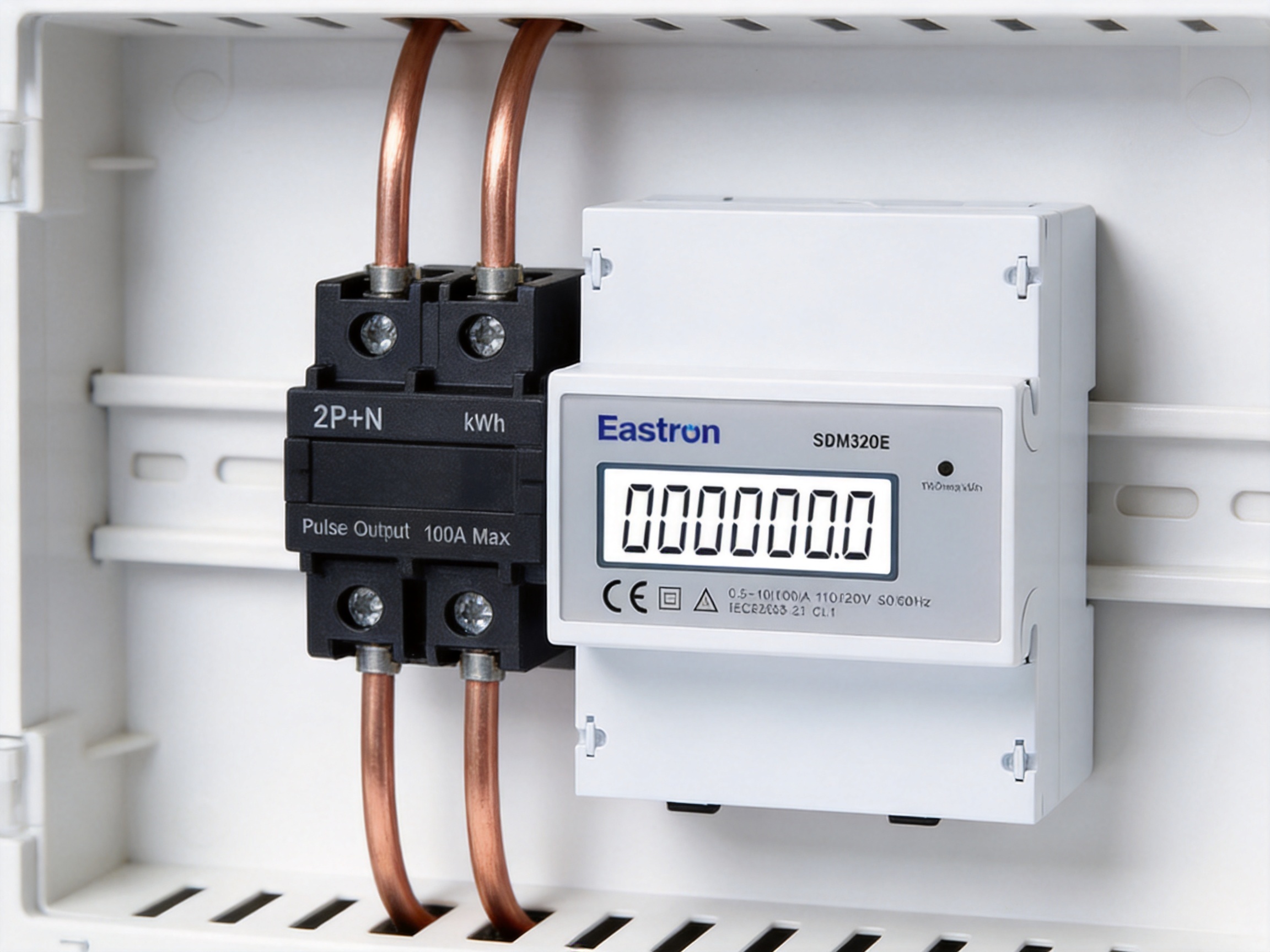
Although energy monitoring systems increasingly rely on remote data, the importance of a local LCD display should not be underestimated. Field technicians often need immediate visual confirmation that a meter is powered, operating, and accumulating energy. Building managers may need to read consumption directly without connecting a computer or communication interface. Inspectors may need to confirm meter identity and energy value during site checks.
The SDM320E includes an LCD kWh meter display, allowing active energy to be read locally. This makes the product simple and user-friendly. Unlike meters that depend entirely on remote communication, this design preserves independence at the device level. Even if the external data logger, gateway, or monitoring software is temporarily unavailable, the meter can still provide an on-site reading.
In competitive comparison, products with no display may be slightly smaller or cheaper, but they can create inconvenience during commissioning and maintenance. A display helps installers verify load direction, energization, and consumption accumulation more easily. For projects involving multiple meters in one panel, visible readings help identify abnormal consumption patterns and support troubleshooting.
The LCD also supports transparency. In tenant sub-metering or energy allocation scenarios, a local visible kWh reading can reduce disputes because the measured value can be checked at the point of installation. This is especially useful in multi-unit residential buildings, commercial spaces, shared facilities, and managed electrical distribution systems.
The pulse output for active energy is one of the product’s most useful integration features. A pulse output represents energy consumption through a sequence of electrical pulses, where each pulse corresponds to a defined amount of energy. External equipment such as counters, PLCs, data loggers, building automation controllers, and gateways can count these pulses to calculate consumption over time.
Pulse output has several advantages. It is simple, reliable, and broadly compatible. It does not require complex configuration, network addressing, or protocol interpretation. It can be used in systems where only energy accumulation is needed and where advanced real-time parameters are not required. For many cost-sensitive projects, pulse output is the most economical method of connecting meters to a central monitoring system.
Compared with competitors that either provide no output or require more expensive communication interfaces, the SDM320E’s pulse output gives customers a valuable middle ground. It enables remote data collection without increasing product complexity unnecessarily. For applications such as tenant energy counting, equipment energy tracking, distributed consumption monitoring, and simple energy management dashboards, pulse output can be entirely sufficient.
Pulse output also supports system reliability through separation of functions. The meter performs energy measurement, while the external device performs data recording, visualization, or reporting. This modular approach allows system designers to select the most suitable data acquisition equipment for each project and to upgrade monitoring systems later without replacing the meter itself.
Panel space is always valuable. Electrical enclosures often contain circuit breakers, residual current devices, surge protection devices, contactors, relays, terminal blocks, communication modules, and wiring ducts. A meter that takes excessive space can increase enclosure size and installation cost. The SDM320E uses a four-module-width DIN rail housing, balancing compactness with the physical requirements of 100A direct wiring.
DIN rail mounting is a major advantage for installation efficiency. Electricians are familiar with DIN rail components, and the mounting method supports organized panel construction. A DIN rail kWh meter can be placed beside protective devices and other control components, making the final panel easier to wire, inspect, and maintain.
Some competitor meters may require special mounting arrangements, larger panel cutouts, or dedicated mounting plates. DIN rail mounting reduces those mechanical complications. It is particularly beneficial for projects that require multiple meters installed in rows, such as apartment sub-metering boards, small commercial energy panels, or branch-circuit monitoring systems.
The four-module design also helps thermal and wiring management. For direct 100A metering, terminal access and conductor clearance are important. An overly narrow housing may be difficult to wire safely at higher currents. By using a four-module format, the product offers practical panel compatibility while maintaining sufficient size for robust terminal arrangement.
The SDM320E can be used in a range of single phase energy measurement applications. Its suitability is strongest where a 1P3W network, 100A direct load measurement, LCD display, and pulse output are needed. Typical uses include residential distribution measurement, apartment or suite sub-metering, light commercial tenant metering, workshop energy tracking, electrical panel monitoring, equipment energy allocation, and basic integration into energy management systems.
In residential buildings, the meter can help record consumption for individual circuits or separate units. In light commercial buildings, it can support energy cost allocation among tenants, departments, or equipment groups. In industrial auxiliary systems, it can monitor energy used by small workshops, offices, lighting panels, pumps, or support equipment. In renewable-energy-adjacent systems, it may be used for consumption-side tracking where the electrical arrangement matches the meter’s specifications.
The pulse output makes the product suitable for central data collection. A building manager can install multiple meters and connect their pulse outputs to a data acquisition device. This creates a basic but effective energy monitoring system. The LCD display remains available for local verification, while the pulse output provides data for trend analysis and reporting.
For distributors serving the American market, the product’s wiring method is particularly valuable. Its two-line-plus-neutral arrangement makes it a more targeted solution than generic single phase meters. This helps distributors address customer needs more precisely and reduces the risk of mismatched product selection.
The product’s advantages become clearer when compared with common alternatives in the market. A standard 1P2W compact kWh meter may be inexpensive, but it is not always appropriate for 1P3W systems. A three-phase meter may be technically capable in some cases, but it can be larger, more expensive, and unnecessarily complex for a single phase 2P+N measurement task. A CT-operated meter may handle high currents, but it requires additional components and careful CT installation. A no-output meter may provide local readings, but it cannot easily connect to monitoring systems.
The SDM320E occupies a strong position between these alternatives. It is dedicated to 2P+N single phase measurement, supports direct 100A current, mounts on DIN rail, provides an LCD display, and offers pulse output. This combination is practical, economical, and easy to apply.
Compared with lower-current direct meters, the 100A rating expands application range. Compared with CT meters, direct connection reduces system complexity. Compared with advanced multi-function meters, the product avoids unnecessary functions when only active energy and pulse output are required. Compared with non-display pulse meters, the LCD improves local usability. Compared with meters not designed for 1P3W networks, the 2P+N structure provides a better wiring match.
This is an important principle in energy measurement: the best meter is not always the most complex meter. The best meter is the one that matches the application accurately, installs easily, performs reliably, and offers the necessary data output at a reasonable cost. The SDM320E is designed around that principle.
A metering product’s long-term performance depends heavily on the manufacturer’s engineering and production capability. Eastron Electronic Co., Ltd., headquartered in Jiaxing, China near Shanghai, Hangzhou, and Jiangsu, is a high-tech manufacturer and supplier of electricity products and energy measurement solutions. Its product scope includes electricity meters, smart meters, power analyzers, current sensors, communication modules, and management systems.
The company’s manufacturing strength is supported by continuous research and development. Development teams in China and the United Kingdom contribute to product innovation, electronic design, embedded software, metering algorithms, mechanical structure, and application adaptation. Cooperation with universities and professional institutions helps introduce advanced technologies into product development. This is important in the metering industry, where standards, market requirements, communication methods, and installation practices continue to evolve.
In addition to R&D capability, the company has established a professional laboratory for EMC, LVD, accuracy, and environmental testing according to IEC, EN, GB, and UL standards. This laboratory capability supports both new product development and quality assurance for existing products. Products such as the SDM320E benefit from engineering verification that addresses not only accuracy, but also safety, electromagnetic compatibility, and environmental durability.
The company follows the ISO 9001 quality management system, and its production is approved by SGS according to MID standards. While the SDM320E itself is presented as an electronic kWh meter with IEC Class 1.0 energy accuracy, the broader manufacturing system demonstrates attention to quality management, process control, and compliance culture. This background matters to customers who need stable supply and consistent product performance.
The company also holds patented technologies in software, embedded software, and hardware and has been recognized as a High-tech Enterprise and a High-tech R&D Centre of Electricity Application. These strengths show that the manufacturer is not merely assembling standard products; it is actively engaged in technical development and long-term product improvement.
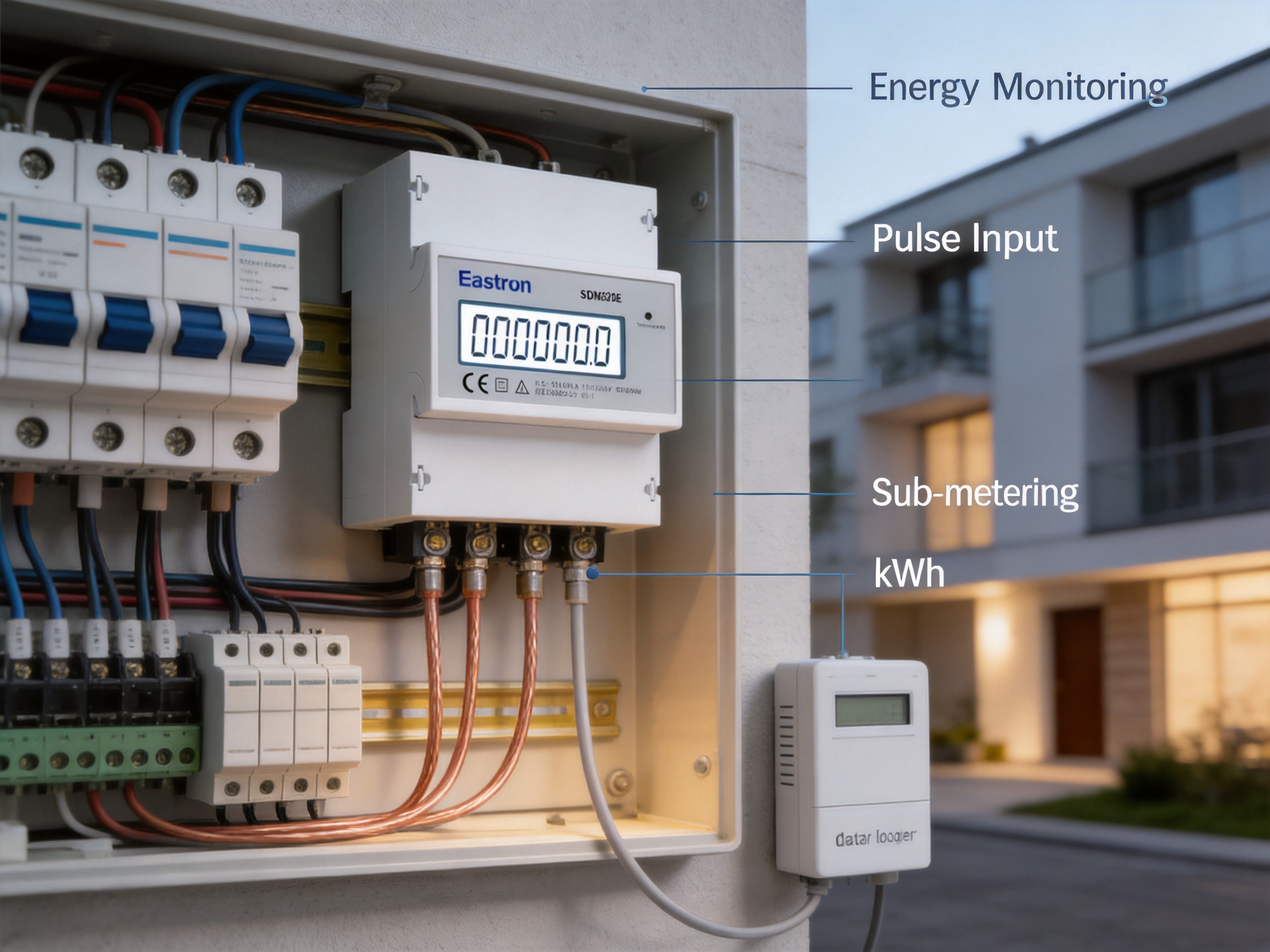
High-quality energy meters require disciplined production processes. A typical advanced manufacturing flow for electronic kWh meters includes incoming material inspection, printed circuit board assembly, soldering process control, firmware programming, metering calibration, functional testing, insulation and safety testing, display verification, pulse output testing, aging or stability evaluation, final inspection, packaging, and traceability recording. Each stage must be controlled to reduce defects and ensure consistency.
Component selection is especially important. Metering integrated circuits, resistive sampling networks, shunts, voltage sampling components, power supplies, LCD modules, terminals, enclosures, and output circuits all influence final performance. The manufacturer’s ability to inspect and qualify components helps ensure that the finished meter performs within specification.
Calibration is another critical step. Energy meters must be adjusted and verified against reference equipment so that their measurement error remains within the required accuracy class. For a Class 1.0 active energy meter, calibration and accuracy verification help confirm that the device measures consumption reliably across defined load conditions. Automated calibration systems can improve production efficiency and reduce human error.
Functional testing confirms that the meter display, pulse output, internal metering circuit, power supply, and related electronics operate correctly. For the SDM320E, pulse output verification is particularly important because many customers rely on that output for remote monitoring. A meter may display energy correctly, but if its pulse output is not tested properly, system integration can fail. Comprehensive testing helps prevent such issues.
Safety-related checks are also essential. Since the meter is directly connected to mains circuits and may carry up to 100A, insulation, terminal reliability, enclosure design, and heat performance must be carefully managed. LVD-related testing and production inspections help support electrical safety. Environmental tests help evaluate whether product performance remains stable under temperature and humidity changes.
Traceability completes the quality loop. By recording production batches, test results, calibration data, and inspection information, the manufacturer can identify process trends and respond quickly if any quality issue is reported. This is a significant advantage over competitors with less mature quality systems because it supports continuous improvement and customer accountability.
Energy meters are not used only by engineers in laboratories; they are installed by electricians in real panels. Practical design therefore matters. The SDM320E’s DIN rail body, four-module width, direct current capacity, LCD display, and pulse output reflect an installer-oriented design philosophy.
The DIN rail format allows the meter to be installed using familiar panel-building methods. The four-module width gives the unit enough presence for wiring while remaining compact. The LCD provides immediate feedback during commissioning. The pulse output can be connected to low-voltage monitoring wiring. The direct 100A input eliminates CT mounting for suitable loads. These details reduce installation time and help lower total project cost.
In comparison, some competing products may look attractive on paper but create difficulties during installation. Very compact devices may have cramped terminals. Advanced communication meters may require software configuration that is unnecessary for simple kWh collection. CT-based systems may introduce polarity and ratio errors. Non-DIN products may require additional panel modifications. A well-designed DIN rail kWh meter avoids many of these problems.
For installers working across multiple sites, repeatability is valuable. A product that installs consistently, displays readings clearly, and provides a simple pulse signal can reduce training requirements and service calls. This makes the meter suitable not only as a component, but as part of a repeatable energy measurement solution.
The product information specifically notes that the meter’s good performance and wiring method, using two lines plus neutral, make it a good and economical choice for energy measurement solutions in the American market. This point deserves emphasis because market fit is as important as technical specification.
Electrical systems vary by region. A meter designed primarily for one market may not be ideal in another. American single phase installations often differ from many European or Asian 1P2W arrangements. A 2P+N meter fills a practical gap by addressing the wiring configuration more directly. For importers, distributors, panel builders, and system integrators serving North America or American-style installations, this reduces adaptation work.
Economical choice does not simply mean low purchase price. It means appropriate total cost. A meter that avoids unnecessary CTs, fits standard DIN panels, provides direct readings, and outputs pulses for monitoring can lower installation, integration, and maintenance costs. It can also reduce the risk of ordering the wrong type of meter for a 1P3W application.
The support for 110V/230V voltage input, with rated voltage information of 120/220V, further aligns the product with practical voltage environments. This makes it adaptable for projects where nominal voltage may be described differently depending on local conventions and system design.
Sub-metering is increasingly important as building owners, facility managers, and tenants seek more transparent energy information. A main utility meter provides overall consumption, but it does not show how energy is distributed among units, departments, equipment, or circuits. Sub-metering fills that gap by placing additional meters at strategic points in the electrical system.
The SDM320E is well suited to sub-metering where the circuit structure matches its 2P+N, 1P3W design. Its direct 100A capacity supports common sub-distribution levels. Its LCD display supports local reading. Its pulse output allows energy data collection. Together, these features make it possible to build a simple, scalable monitoring system.
For landlords, sub-metering can support fairer cost allocation. For commercial property managers, it can identify high-consumption areas and encourage energy-saving behavior. For facility engineers, it can help evaluate equipment efficiency and detect abnormal usage patterns. For sustainability teams, it can provide data for energy reduction programs.
Compared with installing only one main meter, sub-metering gives actionable detail. Compared with installing complex power analyzers at every point, a kWh meter with pulse output provides a lower-cost way to collect essential consumption data. This is where the SDM320E’s balanced feature set becomes especially useful.
The manufacturer’s broader product range includes electronic kWh meters, multi-function energy meters, MID energy meters, ETL energy meters, DC energy meters, power analyzers, systems and solutions, current transformers, relays and switches, PTB and Eichrecht energy meters, UL and ETL energy meters, and gateways. This broader ecosystem is important because energy measurement projects often require more than one product type.
For example, a project may use simple pulse-output kWh meters for branch circuits, multi-function meters for main distribution panels, current transformers for high-current feeders, and gateways for data collection. A supplier that understands the full energy measurement chain can provide better technical guidance and product matching. This reduces integration risk and helps customers design coherent systems.
The SDM320E can therefore serve as one part of a larger monitoring architecture. Its pulse output may connect to a gateway or pulse collector, while other meters in the system provide more detailed electrical parameters. This layered approach allows customers to optimize cost: use advanced meters where detailed analysis is necessary and economical kWh meters where only consumption data is required.
Compared with competitors that offer only isolated meter models, a manufacturer with a broad product portfolio can support system-level planning. This is valuable for distributors and integrators who need consistent supply, technical documentation, and coordinated product families.
Energy meters must be reliable because they are often installed for years in electrical panels. Failure creates inconvenience, service cost, and loss of measurement data. Standards-oriented development helps reduce these risks by requiring products to meet defined safety, accuracy, and electromagnetic performance expectations.
The SDM320E’s energy accuracy reference to IEC 62053-21 Class 1.0 places it within a recognized framework for active energy measurement. The manufacturer’s laboratory testing according to IEC, EN, GB, and UL standards further indicates a disciplined approach to product validation. The ISO 9001 quality management system supports consistent production processes, while SGS approval according to MID standards demonstrates broader manufacturing compliance capability.
In competitive terms, this standards-focused background is an important differentiator. Some low-cost meters may meet basic functional needs but lack strong evidence of design validation, production control, or long-term quality management. For professional buyers, the cost of a failed or inaccurate meter can be much greater than the initial price difference. Selecting a meter from a manufacturer with established testing and quality systems helps manage that risk.
Standards alignment also supports international sales. Since energy measurement products are used in many regions, familiarity with IEC, EN, GB, UL, MID, and related requirements allows the manufacturer to adapt products to different market expectations. This global experience contributes to better product design and customer support.
The company’s products and services have been supplied to more than 50 countries across Europe, Asia-Pacific, America, the Middle East, and Africa. This international experience matters because electrical products must satisfy diverse installation practices, regulatory expectations, environmental conditions, and customer preferences. A manufacturer active in many markets learns from a wide range of applications and can apply that knowledge to product improvement.
Technical support and after-sales service are also essential in metering projects. Customers may need help selecting the right meter, interpreting wiring diagrams, understanding pulse output connection, planning panel layouts, or troubleshooting installation issues. A company with professional technical and service teams can reduce project delays and improve customer satisfaction.
For distributors, reliable communication and support are part of product value. If a customer asks about 1P3W wiring, pulse output, maximum current, or voltage compatibility, the distributor needs accurate answers. Working with a manufacturer experienced in energy measurement solutions helps ensure that those answers are available.
The company’s mission to create value for customers and grow together with partners is reflected in this support-oriented approach. The product is not merely sold as a standalone device; it can be supported as part of a broader energy measurement solution.

When selecting the SDM320E, users should verify that the installation matches the product’s electrical characteristics. The meter is intended for RMS measurement on a single phase AC system with 2P+N wiring. The network should be 1P3W. The voltage should be within the supported input range, and the current should not exceed the maximum rating of 100A. Protective devices, conductor sizing, terminal connection, and enclosure design should comply with applicable electrical codes and professional installation practices.
Because the meter is direct-connected, correct wiring is essential. Installers should follow the official wiring diagram and ensure that line and neutral conductors are connected to the correct terminals. Tight and secure terminal connections are important for safety and measurement reliability, especially at higher currents. After installation, the LCD reading and pulse output should be checked to confirm normal operation.
For pulse output integration, system designers should verify the electrical characteristics required by the receiving device. Pulse input counters or data loggers should be compatible with the meter’s pulse output type and signal requirements. Cable routing should consider electrical noise and separation from high-voltage conductors where appropriate. The pulse count should be configured correctly in the monitoring system so that energy values are calculated accurately.
In projects involving multiple meters, labeling is recommended. Each meter should be clearly associated with its circuit, tenant, panel, or equipment load. This prevents confusion during readings and maintenance. If pulse outputs are connected to a centralized collector, the channel mapping should be documented carefully.
The economic benefit of this meter comes from the combination of suitable function, compact installation, and reduced system complexity. A buyer does not pay for unnecessary multi-function analysis when the project requires active energy measurement and pulse output. At the same time, the product provides more capability than a basic display-only meter because it supports remote counting through pulse output.
Direct 100A measurement can reduce accessory costs by eliminating current transformers for suitable circuits. DIN rail installation can reduce panel-building labor. The LCD display can reduce commissioning time. Pulse output can enable centralized data collection without requiring a more expensive communication interface. The 2P+N design can reduce product mismatch costs in American-style single phase applications.
For project owners, accurate sub-metering can produce long-term savings by making energy consumption visible. When people can see or be allocated their actual energy use, they often become more conscious of consumption. Facility managers can identify unusual usage, detect inefficient equipment, and make better operational decisions. Even a simple kWh meter can contribute to meaningful energy management when installed at the right measurement points.
For distributors and panel builders, the product’s balanced feature set supports repeat sales. A meter that solves a clear wiring and application need is easier to recommend. Its compact DIN rail body and pulse output make it suitable for many standard panel designs, while the manufacturer’s broader product range allows customers to source related metering products from the same supplier.
The SDM320E is designed to measure active energy in kilowatt-hours on a single phase AC system using a 2P+N, 1P3W network. It provides an LCD kWh reading and a pulse output for active energy.
2P+N means the meter is designed for two line conductors plus neutral. This wiring method is suitable for certain single phase systems, especially applications associated with American-style 1P3W energy measurement.
The meter supports a maximum current of 100A for direct load measurement. This allows it to be used without external current transformers in many applications, provided the installation remains within the meter’s specifications and local electrical requirements.
For loads within its direct measurement rating, the meter does not require current transformers. This can reduce installation cost, save panel space, and avoid CT wiring or polarity errors.
The product information states support for 110V/230V voltage input, with rated voltage listed as 120/220V. Users should confirm that the installation voltage matches the product specification before installation.
The active energy measurement accuracy is specified as IEC 62053-21 Class 1.0. This provides dependable accuracy for many monitoring, sub-metering, and energy allocation applications.
The pulse output transmits active energy consumption information to external devices such as pulse counters, data loggers, gateways, building management systems, or energy monitoring platforms. It is a simple and cost-effective method for remote energy data collection.
The LCD display allows local reading and on-site verification. Even if the external monitoring system is not connected or temporarily unavailable, users can still check the meter reading directly at the panel.
It can be used in residential, light commercial, sub-metering, distribution-board, tenant energy allocation, equipment energy tracking, and basic energy management applications where the electrical system matches its 2P+N, 1P3W design.
A three-phase meter may be larger, more expensive, and unnecessarily complex for a single phase 2P+N application. The SDM320E provides a more focused and economical solution when only single phase active energy measurement is required.
A standard 1P2W meter is not always suitable for 1P3W systems. The SDM320E’s 2P+N design makes it better matched to installations requiring two line conductors plus neutral.
The product is supported by a manufacturer with R&D teams in China and the United Kingdom, a professional laboratory for EMC, LVD, accuracy, and environmental tests, ISO 9001 quality management, SGS-approved production according to MID standards, patented technologies, and global supply experience.
The 2P+N DIN rail single phase electronic kWh meter with pulse output is a focused and practical product for energy measurement applications requiring 1P3W wiring, direct 100A current capacity, LCD display, and pulse output. Its strengths come from matching real installation needs rather than adding unnecessary complexity. For American-style single phase energy measurement solutions, the two-line-plus-neutral wiring method is a particularly important advantage.
Compared with common competitors, the meter offers a strong balance of function and economy. It is more suitable for 1P3W applications than standard 1P2W meters, simpler and more compact than many three-phase alternatives, easier to install than CT-based systems for suitable loads, and more integration-ready than display-only meters. Its pulse output enables practical remote monitoring, while its LCD display supports convenient local reading.
The manufacturing background further strengthens the product’s value. Eastron Electronic Co., Ltd. combines R&D capability, professional testing laboratories, standards-oriented quality management, patented technologies, and international market experience. These strengths support consistent product performance and give customers confidence in long-term energy measurement projects.
For distributors, panel builders, contractors, building managers, and energy solution providers, the SDM320E represents a reliable and economical choice when the application calls for compact DIN rail single phase metering with 2P+N wiring and pulse output. It demonstrates how a well-designed kWh meter can deliver accuracy, usability, installation efficiency, and system integration value in one compact device.
International Electrotechnical Commission. IEC 62053-21: Electricity Metering Equipment, Static Meters for Active Energy.
International Electrotechnical Commission. IEC Standards for Electrical Safety, Electromagnetic Compatibility, and Metering Performance.
ISO. ISO 9001 Quality Management Systems: Requirements and Implementation Principles.
European Committee for Electrotechnical Standardization. EN Standards for Low Voltage Electrical Equipment and EMC Compliance.
Underwriters Laboratories. UL Standards Related to Electrical Measurement and Safety Evaluation.
SGS. Guidance on Manufacturing Assessment and MID-Related Production Approval for Measuring Instruments.
General technical literature on DIN rail energy meters, pulse output integration, and sub-metering system design.
Your email address will not be published. Required fields are marked *

We develop and produce high performance electricity meters, power analyzers, current sensors, communication modules and management systems. China Custom Smart Meters Manufacturers and Factory
Address:NO 52, Dongjin Road, Nanhu, Jiaxing, Zhejiang, China
Copyright @ Eastron Electronic Co., Ltd. All rights reserved Electricity Meters Manufacturers
