

 English
 Español
 Deutsch
 中文简体


Product Consultation
Your email address will not be published. Required fields are marked *
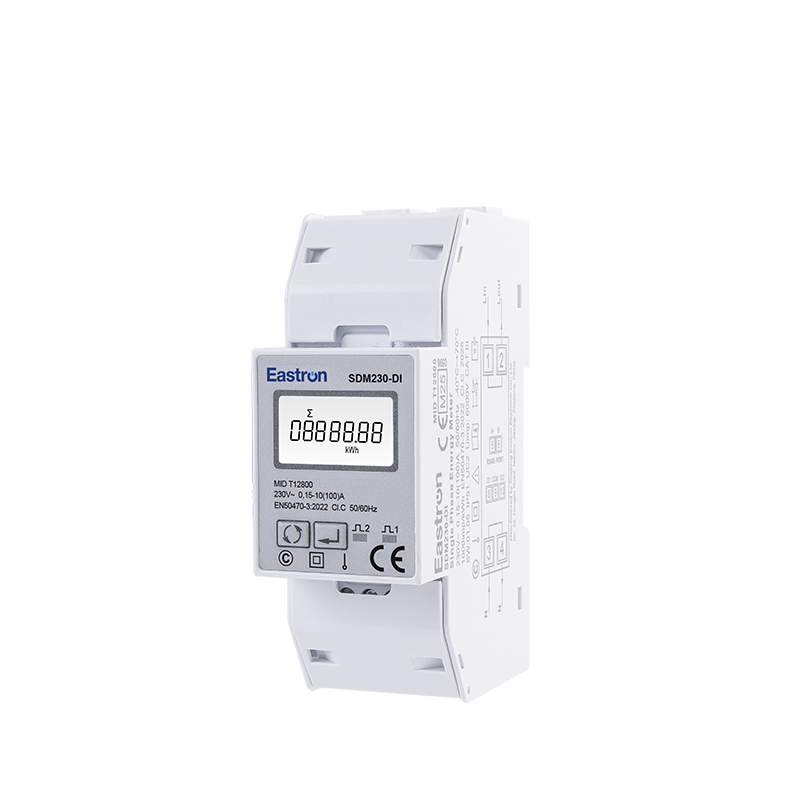
MID/ UL Approved Single Phase Din Rail Type Multi-function Energy Meter for EV Charging Metering
Nov 24,2022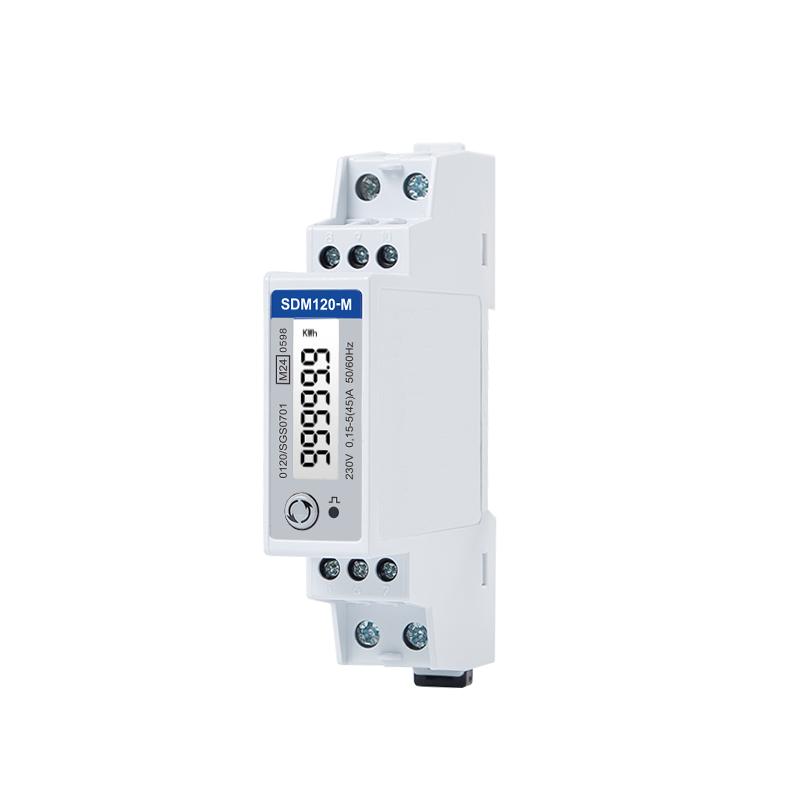
MID Din Rail Type Single Phase Multi-function Energy Meter for EV Charging Metering
Jul 26,2022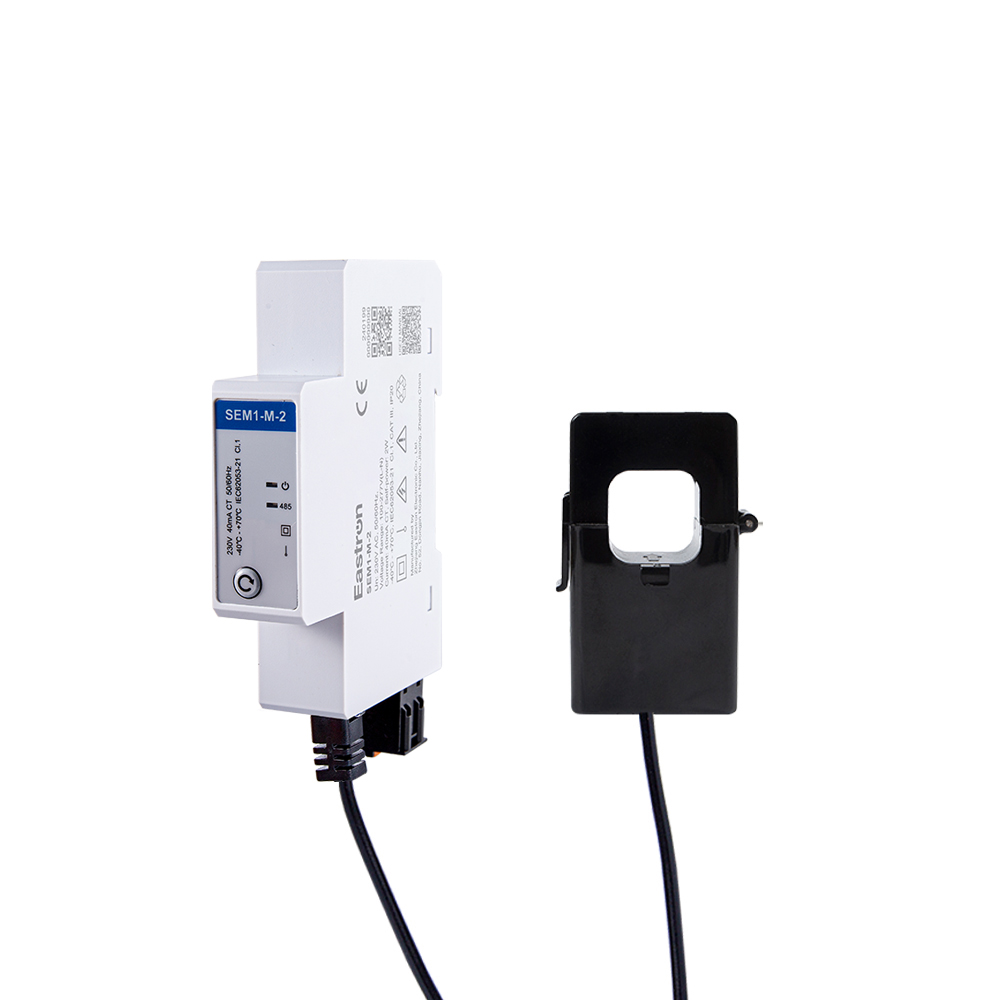
CT Type RS485 Modbus Single Phase Din Rail Energy Meter for PV Metering
May 30,2025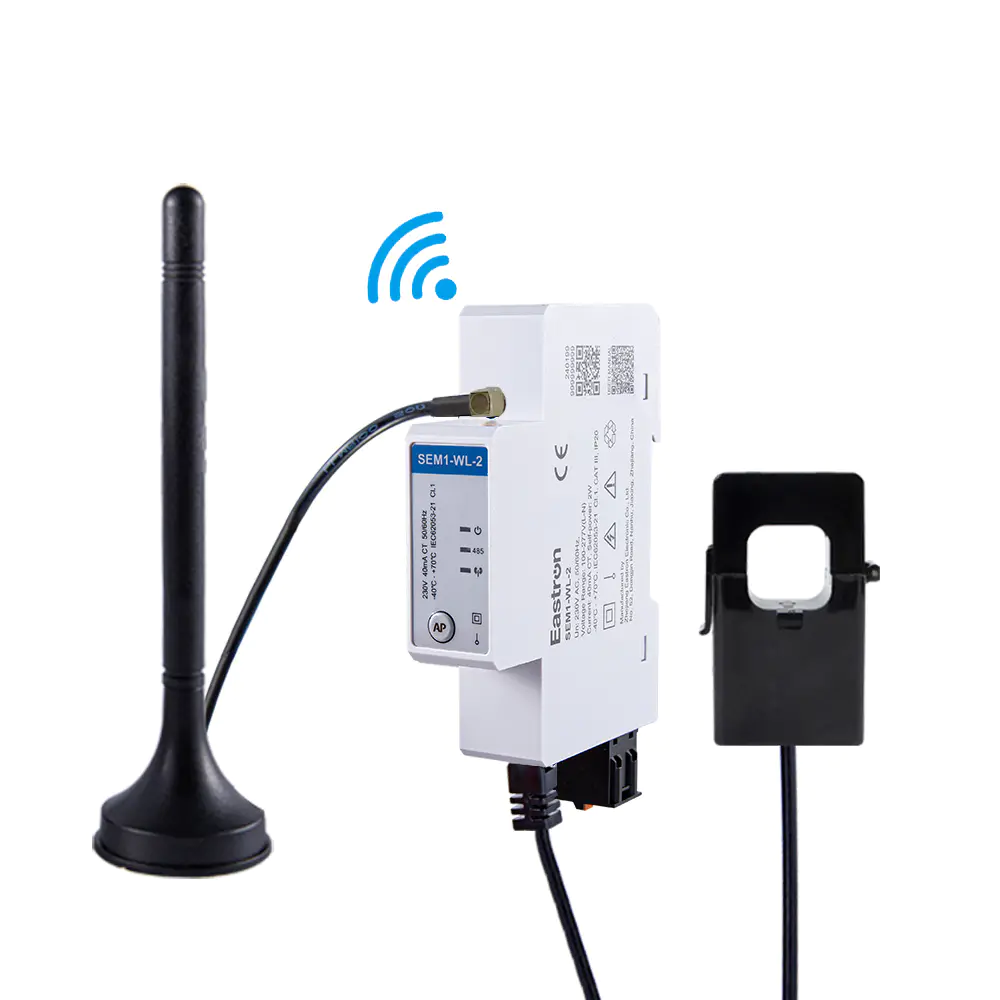
CT Connection Single Phase Din Rail Wifi Energy Meter for PV Metering
May 30,2025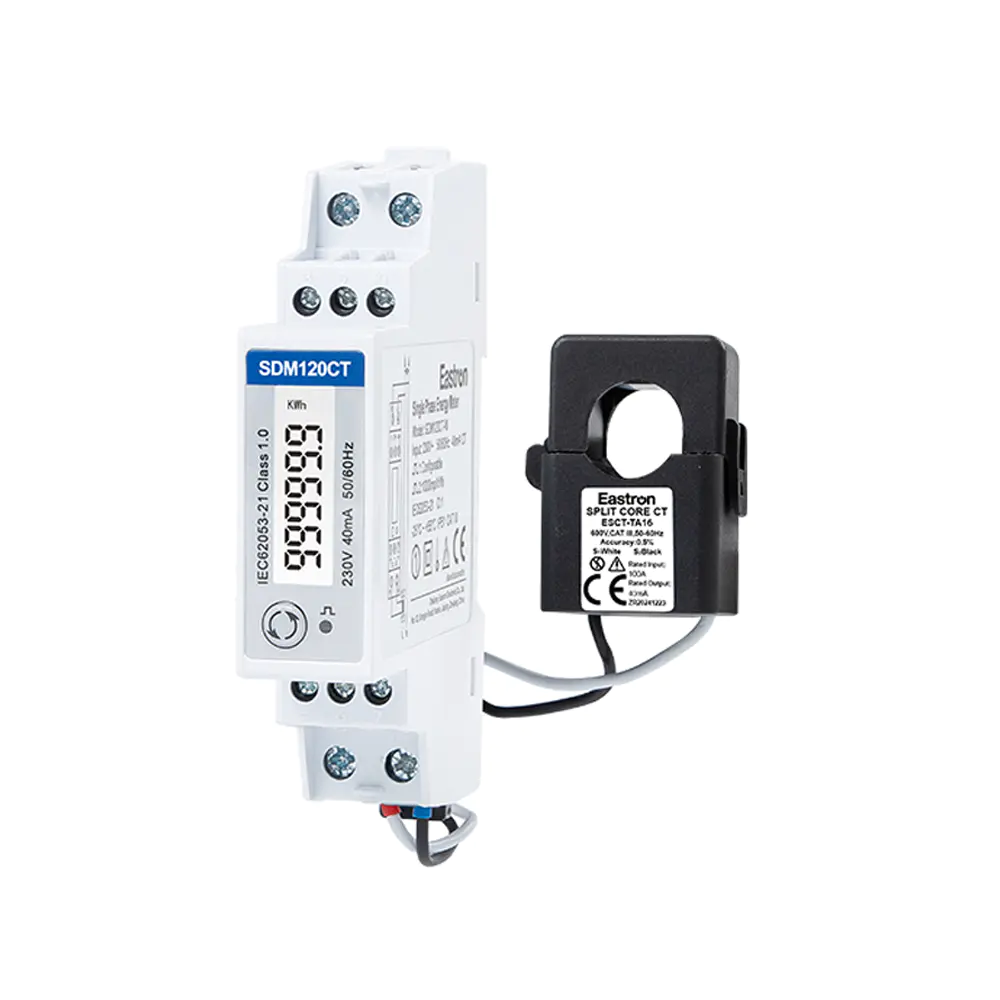
RCM 40mA CT Input Din Rail Single Phase Multi-function Solar PV /Zero Export Meter for PV Metering
Nov 24,2022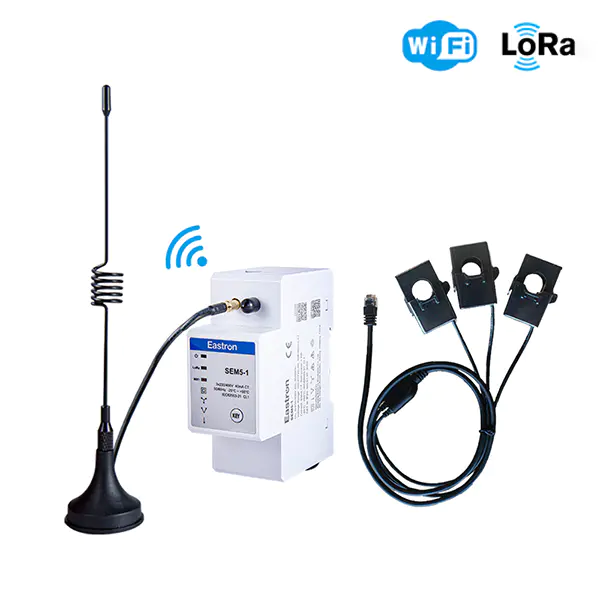
Wifi & LoRa Three Phase Din Rail Energy Meter for PV Metering
Sep 19,2025Content
Modern electricity users need more than a basic consumption counter. Property owners, charging-station operators, facility managers, landlords, and utility service providers increasingly require accurate measurement, flexible payment management, reliable communication, and convenient installation in one compact device. The SDM320Y-RF prepaid IC RF card DIN rail single-phase multifunction energy meter is designed to meet these combined requirements.
Built for 1P2W single-phase systems and direct loads up to 100 A, the meter combines electricity measurement with prepaid credit management, RF card recharging, credit alarms, pulse output, and a compact four-module DIN rail format. It is suitable for commercial households, small and medium power users, accommodation facilities, AC charging posts, photovoltaic applications, and other locations where energy consumption and payment status must be monitored efficiently.
The product is part of a broader energy measurement portfolio developed by Eastron Electronic Co., Ltd., a manufacturer focused on electricity meters, power analyzers, current sensors, communication modules, and energy management solutions. Its product development capabilities, testing facilities, standards-based quality management, and experience serving international markets support the reliability expected from a modern smart metering product.
The SDM320Y-RF is particularly valuable where conventional postpaid metering creates administrative difficulties. By allowing users to purchase or recharge credit through an RF card and by displaying both consumed energy and remaining credit, the meter helps reduce payment delays, simplify collection, and improve visibility into electricity use. Its communication and output capabilities also allow it to participate in wider monitoring and control systems.
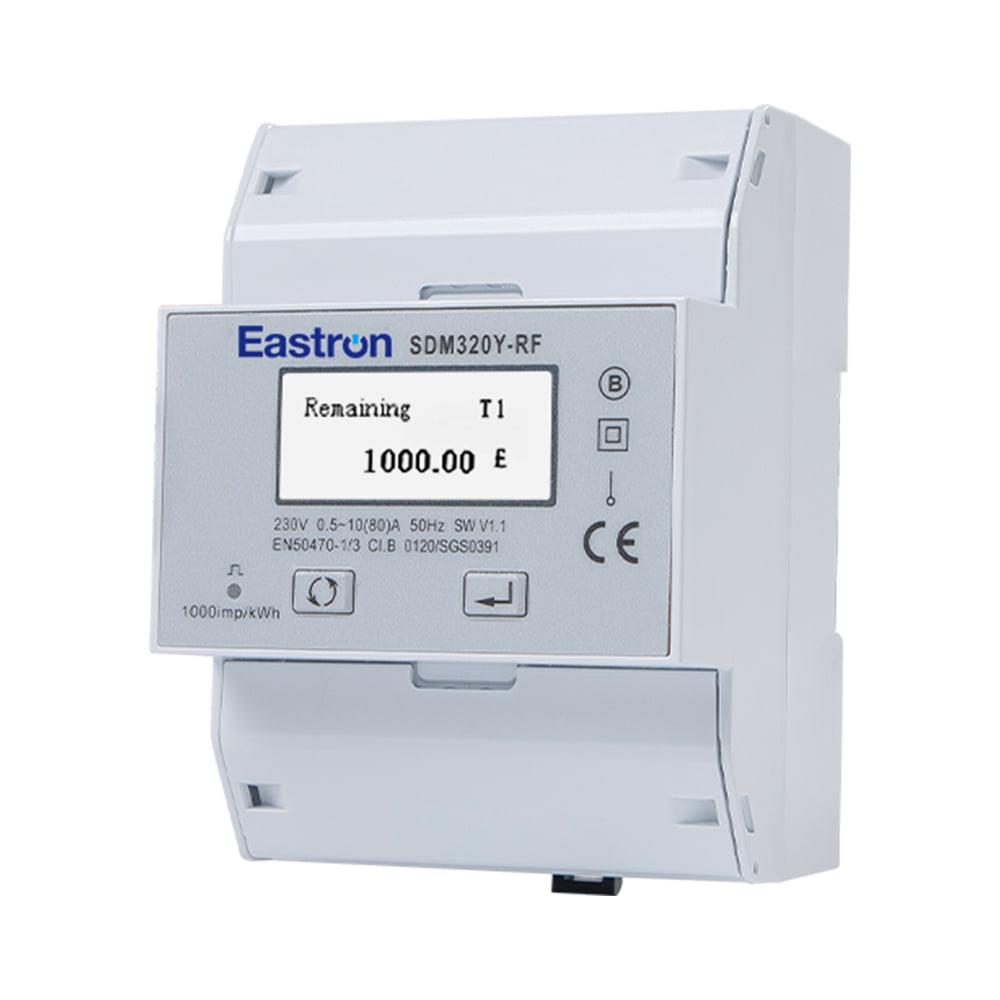
Prepaid IC RF Card Din Rail Single Phase Multi-function Energy Meter
Traditional electricity billing normally depends on a postpaid process. Energy is consumed first, a meter records the total, and a supplier or property manager later calculates and collects payment. While this model is effective in many large utility networks, it can be less convenient for smaller commercial properties, rented premises, temporary accommodation, shared facilities, and decentralized charging installations.
Postpaid arrangements may require manual meter reading, repeated billing, follow-up communication, and credit-risk management. If a user moves frequently or several tenants share a building, determining responsibility for electricity consumption can become difficult. Property owners may also face uncertainty when an account remains unpaid after energy has already been consumed.
A prepaid energy meter changes the process by linking electricity access to available credit. Users recharge before or during use, while the meter continuously tracks consumption and remaining balance. The arrangement can make energy costs more visible and encourage better consumption habits. For operators, it can reduce collection work and provide a more predictable payment process.
The SDM320Y-RF supports this model through RF card recharging. The card-based arrangement is useful in locations where a local operator, property manager, or service counter distributes credit. It avoids the need for a permanent computer at every meter and can be adapted to different management procedures.
Prepayment does not eliminate the need for accurate measurement. In fact, it makes measurement quality even more important because the meter directly influences the amount of energy available to the user. The SDM320Y-RF therefore combines prepaid functions with measurement performance aligned with recognized energy-metering standards. It provides active-energy accuracy corresponding to IEC 62053-22 Class 0.5S and IEC 62053-21 Class 1.0, depending on the applicable measurement classification.
The SDM320Y-RF is a single-phase multifunction energy meter intended for 1P2W AC systems. It is installed on a DIN rail and occupies four modules of cabinet width. The meter supports direct connection for loads up to 100 A, making it appropriate for many small commercial and residential applications without requiring an external current transformer for the stated direct-load range.
Its primary functions include active-energy measurement, reactive-energy measurement, voltage measurement, current measurement, frequency measurement, power measurement, and power-factor measurement. Alongside these electrical parameters, the device manages prepaid credit, displays used energy and remaining balance, and provides credit alarms for T1 and T2 thresholds.
The product also provides a pulse output and RF communication. The pulse interface can be connected to external counting or monitoring equipment, while RF card functionality supports local credit recharging. The broader SDM320 product family includes variants with RS485 Modbus communication and digital input options, demonstrating that the platform is designed to serve different integration requirements. The SDM320Y-RF itself is specified with pulse output and RF functionality.
| Product characteristic | Specification or function |
|---|---|
| Measurement system | Single-phase, two-wire AC system |
| Direct-load capacity | Maximum 100 A |
| Rated voltage | 230 V |
| Operating voltage | 80% to 120% of rated voltage |
| Prepayment method | RF card recharging |
| Credit management | Used amount, remaining credit, T1 alarm, and T2 alarm |
| Installation format | DIN rail, four-module width |
| Output for SDM320Y-RF | Pulse output plus RF |
| Maximum communication distance stated for the platform | Up to 1,000 m for RS485 versions |
One of the main advantages of the SDM320Y-RF is that prepaid management is integrated into the meter rather than being handled by a separate external controller. The product measures electricity and manages credit in the same enclosure. This can simplify installation, reduce the number of components in a distribution cabinet, and make the system easier for operators to understand.
In a conventional arrangement, a property manager may need a standard energy meter, a separate payment controller, and additional wiring or control equipment. Each component introduces installation work, configuration requirements, and potential points of failure. The integrated design of the SDM320Y-RF creates a more direct relationship between measurement, credit status, and user access.
Integration also supports compact installations. The four-module DIN rail format makes the meter suitable for distribution boards where cabinet space is limited. Compact dimensions are especially helpful in apartment service cabinets, small retail units, charging installations, and retrofit projects.
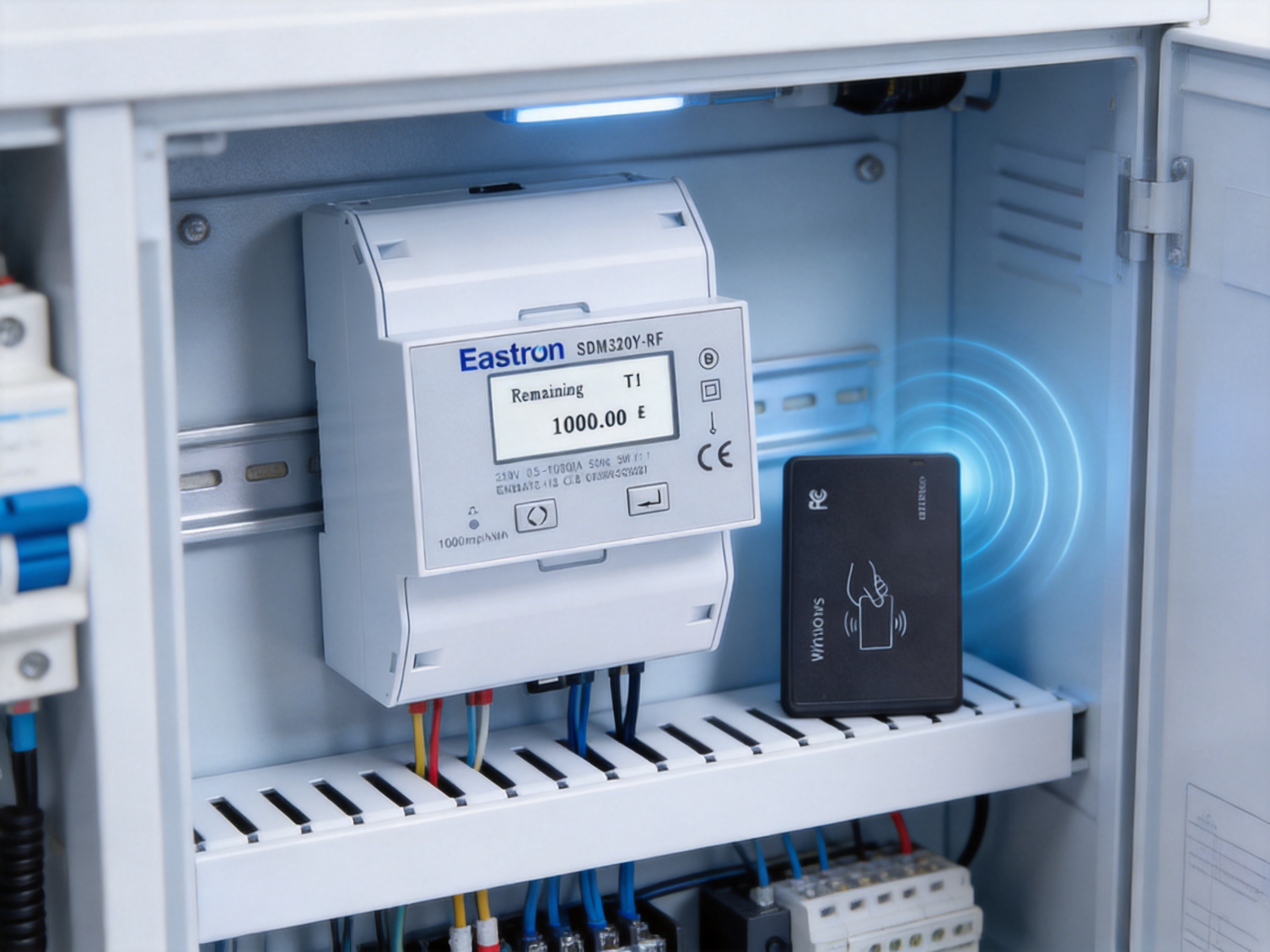
RF card recharging provides a practical alternative to wired communication or internet-dependent payment equipment. An operator can issue or manage a card-based credit process while the meter remains installed in the customer’s distribution board. This approach can be convenient in buildings, temporary facilities, shared accommodation, and local charging environments.
The RF card method also avoids placing a mechanical card slot or exposed electrical interface on the front of the device. A contactless method can support a cleaner user experience and may reduce concerns associated with wear on physical contacts. The exact card-management procedure depends on the project’s prepaid system and operating rules, but the meter is designed to receive credit through RF interaction.
The maximum direct-load rating of 100 A is a significant practical benefit. Many small and medium users can be measured without adding an external current transformer, which helps simplify wiring and reduces the number of accessories required. Direct connection can also make commissioning easier because the installer is not required to select, install, and verify a separate transformer ratio for ordinary applications within the meter’s rating.
The technical data identifies a rated current of 5 A, a maximum current of 100 A, a minimum current of 0.25 A, and a starting current of 40 mA. These values should be interpreted according to the manufacturer’s wiring instructions, local electrical regulations, and the intended installation configuration. The high direct-load capability should not be confused with the nominal current value; protection devices and conductors must always be selected for the actual installation.
The meter provides credit alarms for T1 and T2 credit levels. These staged warnings can help users recognize that the available balance is approaching a defined threshold. Instead of waiting until credit is exhausted, the user can recharge in advance and avoid an unexpected interruption.
For property managers and facility operators, staged credit warnings can also improve communication. T1 may be used as an early notification level, while T2 may represent a more urgent condition. The precise alarm behavior and threshold settings should be confirmed during project configuration, but the two-level concept supports more flexible prepaid administration than a single low-credit warning.
A meter that only records active energy may be sufficient for simple billing, but modern facilities often need a broader picture of electrical conditions. The SDM320Y-RF measures or supports measurement of power, active energy, reactive energy, frequency, current, voltage, and power factor. These values can help users and operators identify abnormal loading, poor power factor, voltage variation, and changes in consumption behavior.
Power measurement accuracy is specified at 1%. Active-energy accuracy is listed as IEC 62053-22 Class 0.5S and IEC 62053-21 Class 1.0. Reactive-energy accuracy is listed as IEC 62053-23 Class 2 and IEC 61557-12 Class 2. Frequency accuracy is ±0.2%, current accuracy is ±0.5%, voltage accuracy is ±0.5%, and power-factor accuracy is ±0.01.
The pulse output allows the meter to communicate energy-counting information to an external device. Pulse outputs are widely used in energy management systems, data loggers, building controllers, and industrial monitoring equipment. They can provide a straightforward way to transfer consumption data without requiring a complex software integration.
The SDM320Y-RF product description specifies pulse output plus RF. The related product family includes versions with pulse output and RS485 Modbus, as well as a model with pulse output, RS485 Modbus, and digital input. This family structure can benefit engineering projects because a designer may be able to select a communication variant that matches the requirements of different locations while maintaining a familiar mechanical and measurement platform.
Where RS485 Modbus is required, the appropriate model should be selected rather than assuming that the RF version includes the same interface. For the Modbus versions in this platform, the stated communication address range is 1 to 247, transmission distance is up to 1,000 m, baud rate is 1,200 to 9,600 bps, and selectable parity includes none, odd, and even. These details demonstrate the platform’s suitability for structured monitoring networks, while the SDM320Y-RF remains focused on RF-based prepaid operation.
The meter is designed for RMS measurement on a single-phase AC system. RMS values are important because they represent the effective electrical magnitude used by practical AC loads. Accurate RMS measurement supports meaningful readings for voltage, current, and power, including loads whose waveforms may vary during operation.
In a typical 1P2W installation, the meter is connected between the phase conductor and neutral conductor. The current path passes through the meter so that the device can determine the energy supplied to the connected load. All wiring must follow the supplied wiring diagram and applicable national requirements. Work on energized distribution equipment should be performed only by qualified personnel.
The rated voltage is 230 V, with an operational voltage range of 80% to 120% of rated voltage. This corresponds to a stated operating range of approximately 184 V to 276 V under the specified conditions. Actual installation suitability depends on the electrical network, local standards, protective equipment, ambient conditions, and the complete product specification.
The direct current path supports loads up to 100 A. The minimum current is listed as 0.25 A, and the starting current is 40 mA. These values are useful when assessing low-load behavior and the point at which the meter begins registering consumption. System designers should consider the expected load profile, especially where equipment spends long periods in standby mode.
Active energy is the energy converted into useful work, heat, light, or other practical output by electrical equipment. It is normally the primary basis for prepaid billing. Reactive energy is associated with inductive and capacitive behavior in AC systems. Although reactive energy may not always be billed in small installations, measuring it can help diagnose motor loads, transformers, power supplies, and power-factor issues.
The SDM320Y-RF supports active-energy measurement to the stated IEC classifications and reactive-energy measurement to the stated Class 2 classifications. This combination provides more information than a basic kWh counter and can support a better understanding of how connected loads behave.
Power factor indicates the relationship between useful active power and apparent power. A lower power factor may cause higher current for the same active-power demand, increasing losses and reducing available capacity in some systems. By providing power-factor information, the meter can help operators identify facilities that may benefit from improved load management or correction equipment.
Frequency measurement is also useful for identifying the condition of the supply network. The specified frequency accuracy of ±0.2% supports monitoring of the nominal AC system frequency. Voltage, current, power factor, and frequency readings can be considered together to help distinguish a high-consumption condition from a supply-quality or load-quality issue.
| Measured parameter | Stated accuracy or classification | Practical value |
|---|---|---|
| Power | 1% | Indicates instantaneous electrical demand |
| Active energy | IEC 62053-22 Class 0.5S; IEC 62053-21 Class 1.0 | Supports energy accounting and prepaid consumption management |
| Reactive energy | IEC 62053-23 Class 2; IEC 61557-12 Class 2 | Helps assess reactive loading and power-system behavior |
| Frequency | ±0.2% | Supports supply-frequency monitoring |
| Current | ±0.5% | Helps evaluate loading and overload risk |
| Voltage | ±0.5% | Supports supply and equipment assessment |
| Power factor | ±0.01 | Provides an indication of load efficiency |
The prepaid concept is simple for the end user: energy consumption reduces the available credit, and an RF card is used to add credit according to the operator’s system. The meter displays the used amount and remaining credit, allowing users to understand their status without relying entirely on a later invoice.
Visibility is an important advantage. When electricity use is separated from a monthly bill, users may not immediately recognize which appliances or operating patterns are increasing cost. A displayed balance provides more immediate feedback. This can encourage users to switch off unnecessary loads, schedule equipment more efficiently, and investigate unusual consumption.
The credit alarm system adds another layer of convenience. T1 and T2 alarms can be configured as staged notifications, subject to the project’s prepaid control rules. These alarms help users plan recharging rather than discovering an empty balance after the supply has reached a cutoff condition.
For operators, prepaid metering can improve cash flow and reduce exposure to unpaid consumption. It may also simplify tenant changes. When a user leaves a property, the meter’s recorded balance and consumption status can be reviewed as part of the handover process. In a charging-post environment, prepaid management can help ensure that electricity is paid for before or during the charging service.
Prepaid systems must always be implemented fairly and transparently. Users should receive clear information about tariffs, credit rules, emergency procedures, alarm levels, and any supply-control behavior. The meter provides the technical foundation, while the operating organization remains responsible for appropriate policies and compliance with local regulations.
Small shops, workshops, offices, and service businesses often need accurate energy measurement without the complexity of a large industrial metering system. A four-module DIN rail meter can fit into compact distribution boards, while the 100 A direct-load capacity covers many typical single-phase installations.
Prepaid operation can be useful where the business rents a unit or where the property owner wants electricity costs to be separated from rent and other services. The multifunction measurements can also help identify equipment that operates outside normal schedules, such as refrigerators, compressors, pumps, vending systems, and small heating or cooling devices.
Landlords and accommodation operators may manage several rooms, apartments, cabins, or temporary units. Installing a separate prepaid meter for each unit can make energy responsibility clearer. Users can recharge their own balance, while the operator can reduce the need for manual readings and individual billing calculations.
The RF card interface is particularly suitable for local management arrangements. A card can be issued, recharged, or administered through a designated office or service point. Because the meter is installed on a DIN rail, it can be incorporated into a centralized electrical cabinet or a unit-level distribution enclosure.
The product information identifies AC charging posts as a possible application. In small charging environments, the meter can help manage the energy supplied to a charging user while providing a prepaid mechanism. It may be appropriate for residential parking areas, small commercial parking facilities, workplace charging points, and other controlled installations, subject to the electrical and regulatory requirements of the charging application.
Charging loads can be relatively continuous and substantial compared with ordinary household appliances. The direct-load capability and measurement functions therefore provide useful operating information. Voltage, current, power, active energy, and power factor can assist with assessing charging performance and distribution-board loading.
The product can also be applied in solar photovoltaic-related projects where a single-phase energy measurement point is required. Depending on the electrical architecture, it may be used to monitor consumption or a defined AC-side energy flow. Designers must determine whether the meter’s measurement direction, tariff logic, prepaid behavior, and electrical ratings match the intended photovoltaic arrangement.
In distributed-energy projects, the combination of local display, credit status, pulse output, and compact DIN rail installation can be useful. However, the meter should not be treated as a complete photovoltaic controller or protection device. Inverters, isolation equipment, overcurrent protection, anti-islanding measures, and grid-connection requirements remain separate design responsibilities.
Construction compounds, event facilities, seasonal commercial spaces, and other temporary installations may benefit from prepaid energy measurement. These locations can have changing users, variable operating periods, and a need to control consumption without creating a long-term billing account for every user.
The meter’s compact installation format supports modular electrical systems. Before deployment, the project team should verify environmental conditions, enclosure protection, temperature range, mechanical arrangement, and local approval requirements.
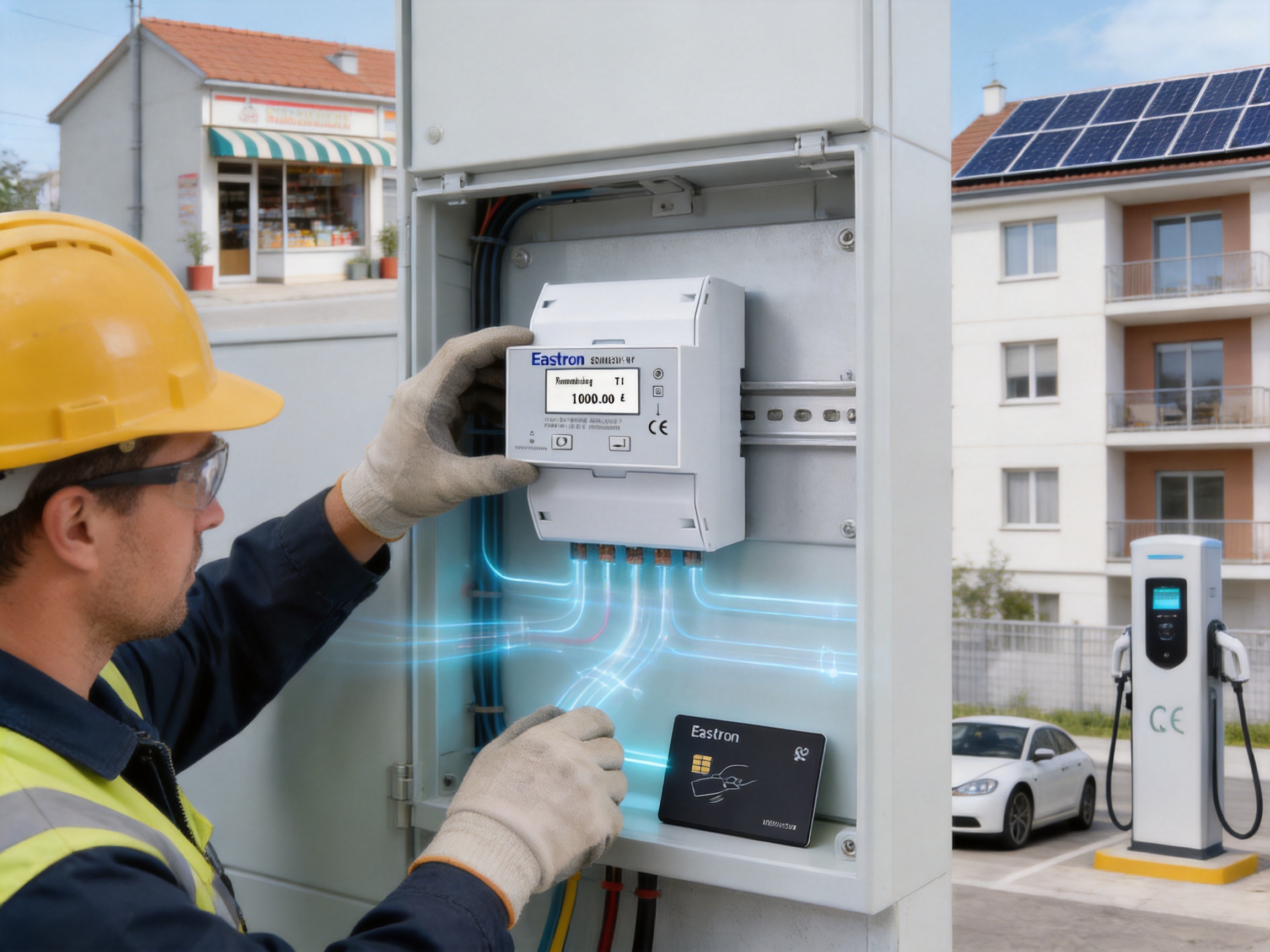
DIN rail installation is widely used in modern low-voltage distribution equipment because it provides a standardized method for mounting meters, circuit breakers, contactors, protective devices, and control components. The SDM320Y-RF uses this format and occupies four modules, allowing it to be placed alongside other modular devices.
A four-module width offers a balance between functionality and cabinet efficiency. The meter provides considerably more capability than a simple single-function counter while remaining suitable for compact boards. This is valuable in retrofit work, where available enclosure space may already be limited.
Installation planning should include the meter, upstream and downstream protection, terminal access, conductor bending radius, heat dissipation, RF card accessibility, and safe isolation. The installer should confirm the correct phase and neutral connections, verify that current passes through the designated terminals, and ensure that the maximum direct current is not exceeded.
Commissioning should include a visual inspection, wiring verification, supply-voltage check, functional test, credit test, alarm test, and comparison with a suitable reference instrument when required. Pulse-output wiring should be separated and protected according to the system design. If the meter is used with an external prepaid management process, card initialization and credit-transfer procedures should be tested before the installation is handed over.
The performance of an energy meter depends not only on its published functions but also on the discipline used to design, manufacture, test, and support it. Eastron Electronic Co., Ltd. has developed a product portfolio covering electricity meters, power analyzers, current sensors, communication modules, and management systems. This breadth provides an engineering foundation for products that must combine measurement, embedded electronics, communication, and user-facing functions.
The company invests in the research and development of electricity metering technologies and related products. Its development teams in China and the United Kingdom contribute to product engineering and technological development. Cooperation with universities and research institutions further supports the introduction of advanced technologies into electricity measurement products.
A prepaid RF meter requires more than a current and voltage measurement circuit. It involves embedded firmware, credit accounting, card communication, display logic, alarm management, electrical safety, and manufacturing consistency. The ability to work across hardware and software disciplines is therefore a major advantage when developing and maintaining this type of product.
The company reports patented technologies in software, embedded software, and hardware. Such capabilities can support product differentiation, long-term firmware development, and adaptation to changing customer requirements. They also provide a foundation for building related meters and communication products around compatible technical concepts.
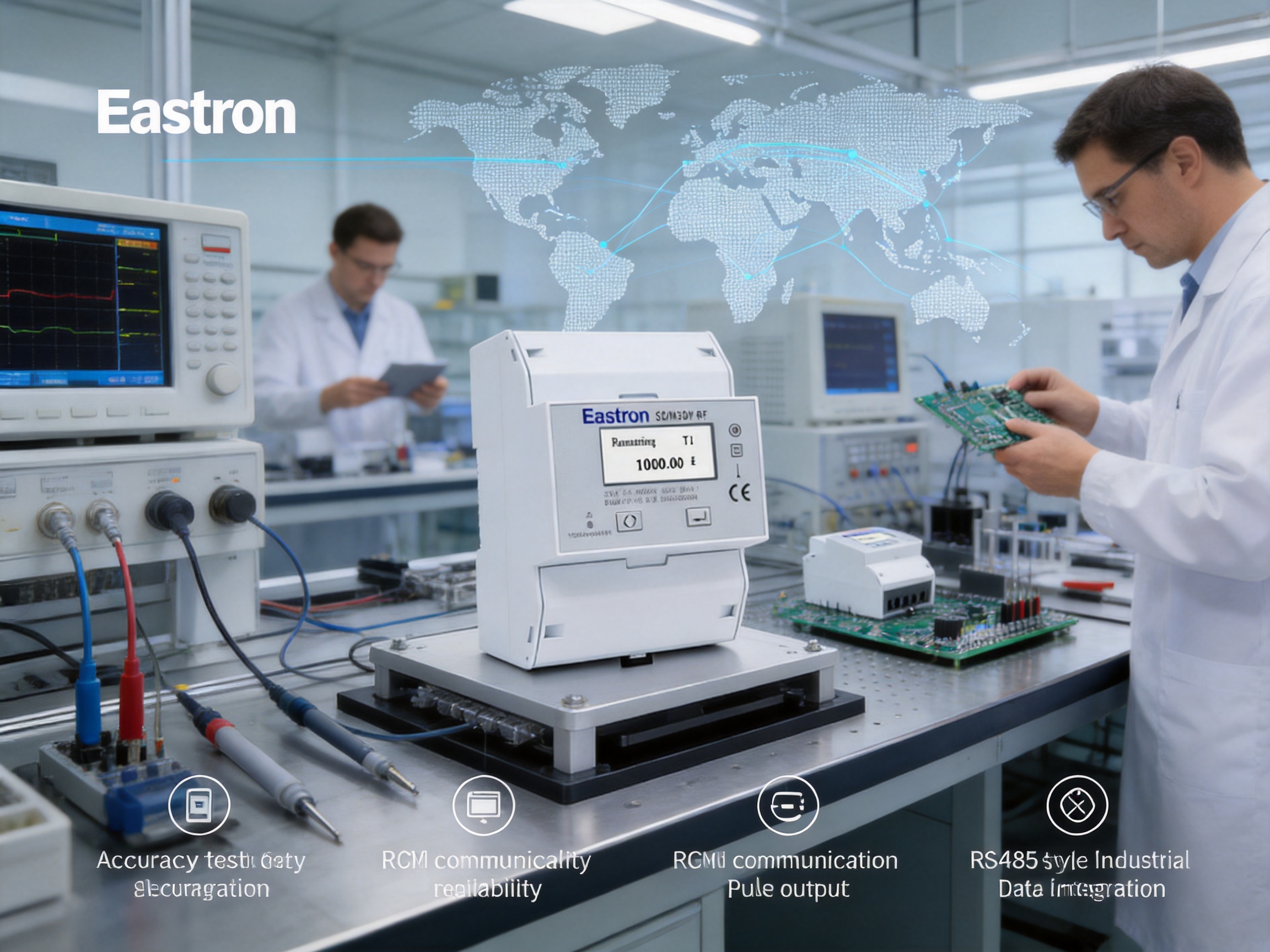
Reliable metering products must maintain performance under electrical, environmental, and electromagnetic stresses. Eastron has established a professional laboratory capable of carrying out EMC, LVD, accuracy, and environmental testing according to IEC, EN, GB, and UL standards.
EMC testing examines whether a product can operate correctly in the presence of electromagnetic disturbances and whether it creates unacceptable interference. Low-voltage directive-related testing addresses electrical safety requirements. Accuracy testing verifies measurement behavior against defined references, while environmental testing evaluates performance under specified conditions such as temperature or humidity variation.
Having internal testing capability can shorten development feedback cycles. Engineers can identify design weaknesses earlier, repeat verification after changes, and maintain greater control over product qualification. It also helps a manufacturer prepare products for different international markets, where standards and approval expectations may vary.
The company follows the ISO 9001 quality management system. A structured quality system supports documented processes for design, purchasing, production, inspection, corrective action, and customer service. For a metering product, these processes are important because small variations in components, assembly, calibration, or firmware configuration can affect long-term performance.
Production approval by SGS according to MID standards further demonstrates engagement with recognized metering requirements. The exact approval applicable to a particular model, market, or configuration should always be confirmed through the relevant product documentation and certification records. Nevertheless, standards-based production and third-party assessment are important indicators for customers evaluating a meter supplier.
Eastron supplies products to more than 50 countries across Europe, Asia-Pacific, America, the Middle East, and Africa. Serving different regions requires attention to electrical systems, documentation, communication practices, approval requirements, packaging, technical support, and after-sales service.
International experience can benefit customers because products are developed with a broader understanding of installation environments. It also encourages a manufacturer to maintain consistent documentation and repeatable production processes. For distributors and system integrators, a supplier with international reach may provide more dependable support for multi-site or export-oriented projects.
The most suitable meter depends on the application, but the SDM320Y-RF offers a distinctive combination of functions. A basic kWh meter may be less expensive for simple measurement, yet it normally does not provide prepaid credit management, RF recharging, or staged credit alarms. A large industrial power meter may provide more advanced networking and analysis, but it may be unnecessarily complex or physically large for a small single-phase user.
| Solution type | Typical strength | Potential limitation compared with the SDM320Y-RF |
|---|---|---|
| Basic single-phase kWh meter | Simple energy counting and low-complexity installation | Usually lacks prepaid credit, RF recharging, staged alarms, and broader electrical data |
| Separate meter and payment controller | Flexible system architecture | Requires more components, wiring, cabinet space, and coordination |
| Large networked power meter | Advanced communications and extensive data functions | May be more costly or oversized for small single-phase applications |
| Manual postpaid submeter | Familiar billing process | Requires meter reading, invoicing, collection, and follow-up administration |
| SDM320Y-RF | Prepaid RF card operation, 100 A direct load, multifunction measurement, DIN rail installation, and credit alarms | RF-based operation must be matched to the project’s card-management process and communication needs |
Compared with a manual postpaid submeter, the SDM320Y-RF can reduce the administrative burden associated with collecting payment. Compared with a separate payment controller, it provides a more integrated installation. Compared with a basic meter, it offers greater visibility and user interaction. Compared with a large industrial meter, it is targeted at compact single-phase applications rather than high-voltage or large-scale three-phase measurement.
Its strongest competitive position is therefore not one isolated specification. It is the combination of direct 100 A capacity, prepaid operation, RF card recharging, credit alarms, multifunction measurement, and compact DIN rail construction. These functions address both the electrical and administrative sides of energy management.
Energy meters are increasingly connected to wider systems, but not every project requires the same communication method. RF card functionality is useful for local prepaid transactions, while pulse output can provide a simple energy signal to an external device. Some installations may additionally require RS485 Modbus for centralized data acquisition.
The product family includes RS485 Modbus variants, which can be valuable when a project uses a building management system, programmable controller, gateway, or energy dashboard. Modbus RTU is widely recognized in industrial and building automation environments. The stated address range, baud-rate options, parity settings, and transmission distance provide a basis for network planning on the applicable models.
For an RF prepaid project, the system integrator should define how cards are issued, how credit is generated, how transactions are authorized, and how the meter’s prepaid records are reconciled with the operator’s accounting system. Clear procedures are essential to prevent duplicate credit, incorrect tariff application, or loss of transaction traceability.
Where pulse output is used, the receiving system should be configured for the meter’s pulse constant and electrical interface requirements. The pulse signal should be tested under real operating conditions. Cable routing, grounding, signal isolation, and maximum cable length should be addressed in accordance with the installation design.
The SDM320Y-RF can support energy management at several levels. At the user level, the remaining credit display makes consumption financially visible. At the property level, separate meters can help compare usage among rooms, tenants, or operating zones. At the equipment level, multifunction values can reveal high current, unusual power factor, or changes in operating demand.
Energy management begins with measurement, but the quality of the result depends on how the information is used. A facility manager can review consumption trends, investigate abnormal readings, and communicate specific conservation measures. Users are more likely to respond to energy-saving advice when they can observe its effect on credit consumption.
Prepayment can also encourage load planning. For example, a user may avoid operating several high-power devices simultaneously if the effect on available credit is immediately visible. In a small business, this information can help identify whether extended operating hours, heating equipment, refrigeration, or charging loads are affecting costs disproportionately.
The product is not a complete energy management platform on its own. Data storage, dashboards, tariff engines, remote reporting, and automated control may require additional equipment or software. However, its measurement outputs and prepaid functions provide useful building blocks for a broader solution.
Before ordering the SDM320Y-RF, project engineers should confirm the system voltage, wiring arrangement, maximum current, expected minimum load, installation environment, communication requirements, and prepaid operating model. The meter is intended for a single-phase two-wire AC system with a rated voltage of 230 V. It is not automatically suitable for every single-phase or split-phase network.
The maximum current should be assessed together with the expected continuous load, peak demand, protective-device rating, conductor size, and local regulations. A 100 A maximum does not mean that every installation should be protected or operated at 100 A. The complete distribution system must be designed with appropriate safety margins.
Customers should also distinguish between the SDM320Y-RF and related models. The RF version is specified with pulse output and RF, while other SDM320 variants provide RS485 Modbus or digital input combinations. Selecting the correct model at the beginning avoids unnecessary changes during installation.
For prepaid projects, the operator should establish tariff rules, credit units, low-credit thresholds, emergency-credit policies, recharge procedures, card security, and record-keeping responsibilities. These are application-level decisions that should be documented before meters are commissioned.
In metering applications, a product’s value is strongly influenced by stability over time. A meter may be installed in a cabinet for many years, exposed to electrical transients, changing loads, temperature variations, and repeated user interactions. Consistent component selection, controlled assembly, calibration, software verification, and final inspection are therefore essential.
Eastron’s combination of product development, internal laboratory testing, ISO 9001 quality management, and international market experience gives customers a stronger basis for evaluating long-term supply. The company’s own laboratory supports verification of EMC, low-voltage safety, accuracy, and environmental performance. These testing areas correspond directly to the risks faced by an installed energy meter.
Manufacturing strength also includes the ability to maintain product consistency across batches. Metering customers often require repeat orders, replacement units, and compatible models for multiple projects. A structured production system helps reduce variation and supports more predictable commissioning and maintenance.
The company’s focus on electricity measurement solutions is another advantage. A supplier that understands meters, power analyzers, current sensors, communication modules, and management systems can provide broader technical context than a manufacturer focused only on a single low-cost meter. This is particularly helpful when a customer’s requirements expand from local prepaid measurement to centralized monitoring or energy management.
Verify that the supply is a compatible single-phase two-wire AC system and that the rated voltage is appropriate. Confirm the expected current and maximum direct-load requirement. Select protective devices and conductors according to local electrical codes and the complete installation design.
Reserve four DIN modules in the distribution enclosure and ensure that there is sufficient space for safe conductor routing, terminal access, heat dissipation, and inspection. The RF card should be usable without opening energized parts of the enclosure where the project design permits.
Use the manufacturer’s wiring diagram for phase, neutral, load, pulse, and any associated interfaces. Do not rely solely on terminal appearance or assumptions based on another meter. Incorrect current-path wiring can produce inaccurate readings or create a safety hazard.
Define the credit process, card procedure, tariff information, alarm thresholds, and user instructions. Test a normal recharge, a low-credit condition, a T1 alarm, a T2 alarm, and the relevant end-of-credit behavior before the meter is placed into routine service.
Compare the meter’s readings with a calibrated reference instrument when required. Test voltage, current, active power, energy accumulation, and the behavior of the pulse output. The test load should represent the actual application as closely as practical.
Record the meter identification, installation location, initial reading, initial credit, configuration settings, card-management information, protection details, and commissioning results. Good documentation simplifies future maintenance and supports transparent customer service.
Digital energy meters generally require less routine maintenance than mechanical meters, but periodic inspection remains important. Operators should check for loose terminals, overheating, discoloration, abnormal odor, physical damage, moisture, and changes in displayed values. Any work inside the distribution board must follow safe isolation procedures.
The credit system should also be reviewed. Operators can examine recharge records, investigate rejected or unusual transactions, and confirm that alarm thresholds remain appropriate. User instructions should be updated when tariffs, recharge locations, or operating policies change.
If the meter is connected to an external pulse receiver, the receiving equipment should be checked for signal continuity and correct scaling. In a wider energy management system, the operator should compare data from the meter with expected consumption and investigate significant discrepancies.
Accuracy verification intervals depend on local regulations, application requirements, and the operator’s quality plan. Where the meter is used for regulated billing or legally relevant measurement, the responsible organization should follow the applicable verification and certification rules.
Product quality is supported by the service available before and after delivery. Energy-metering projects can involve questions about model selection, wiring, communication, tariff configuration, installation, and troubleshooting. A manufacturer with dedicated technical and after-sales teams can help reduce project delays and improve commissioning outcomes.
Eastron describes its service approach as including professional technical support and after-sales service. This is important for distributors and system integrators that may deploy meters in different countries or across multiple project types. Clear manuals, stable product documentation, responsive troubleshooting, and replacement support all contribute to the total value of the meter.
Customers should provide complete application information when requesting technical assistance. Useful details include the network voltage, wiring arrangement, load current, installation photographs, meter model, symptoms, display information, wiring status, and prepaid-system configuration. Accurate information allows support teams to distinguish installation issues from product issues more efficiently.
It is designed for a single-phase, two-wire AC system, identified as 1P2W. The stated rated voltage is 230 V, with an operational range of 80% to 120% of rated voltage.
The meter supports a maximum direct load of 100 A. The actual installation must still use suitable conductors, protective devices, terminals, and enclosure arrangements in accordance with local regulations and the complete product documentation.
The technical information lists a rated current of 5 A and a maximum current of 100 A. These are different specifications. The maximum value indicates the upper direct-load capability, while the rated-current value is part of the meter’s electrical specification and should be interpreted together with the wiring method and manufacturer’s instructions.
The SDM320Y-RF uses RF card recharging. The user or operator presents an authorized RF card according to the prepaid system’s procedure, and the meter receives the relevant credit information.
The meter measures consumed energy and displays the used amount and remaining credit. It also provides alarms for T1 and T2 credit levels. The exact display sequence and configuration should be confirmed in the product operating instructions.
T1 and T2 are two staged credit alarm levels. They are intended to warn the user as available credit decreases. The specific threshold values and alarm behavior depend on the prepaid configuration and should be established during commissioning.
The product information identifies the SDM320Y-RF output as pulse output plus RF. Other members of the SDM320 family provide pulse output plus RS485 Modbus, and another variant provides pulse output, RS485 Modbus, and digital input. Customers requiring Modbus should select and confirm the appropriate model.
The pulse output can transmit energy-counting pulses to an external monitoring device, data logger, controller, or energy management system. The receiving system must be configured for the correct pulse characteristics and scaling.
Yes. It is designed for DIN rail mounting and occupies four modules. The installer must still provide adequate space for wiring, protection, heat dissipation, safe access, and compliance with electrical regulations.
The product information identifies AC charging posts as a possible application. Suitability depends on the charging-post design, current requirements, protective equipment, local regulations, payment architecture, and whether the meter’s functions match the intended charging service.
It may be applied in suitable AC-side photovoltaic measurement arrangements. The project designer must verify the required measurement direction, voltage, current, prepaid behavior, inverter arrangement, protection, and grid-connection requirements before installation.
Active-energy accuracy is listed as IEC 62053-22 Class 0.5S and IEC 62053-21 Class 1.0. The applicable classification depends on the relevant measurement context and certification or product configuration.
The stated multifunction capabilities include power, active energy, reactive energy, frequency, current, voltage, and power factor. These readings can support both billing-related measurement and general electrical assessment.
The operating voltage is stated as 80% to 120% of the 230 V rated voltage. This corresponds approximately to 184 V to 276 V, subject to the complete specification and installation conditions.
A qualified electrical professional should install and commission the meter. The work involves connection to an electrical distribution system, and incorrect wiring or inadequate protection can create serious safety risks.
Confirm the phase and wiring system, rated voltage, maximum and expected current, DIN rail space, prepaid operating method, RF card requirements, alarm policy, pulse-output needs, environmental conditions, approvals, and whether an RS485 Modbus variant is required instead.
The SDM320Y-RF is a practical solution for applications that need both electricity measurement and prepaid credit management. Its combination of RF card recharging, used-energy and remaining-credit display, T1 and T2 alarms, pulse output, multifunction measurement, 100 A direct-load capacity, and four-module DIN rail construction gives it a strong position in the small and medium single-phase metering market.
Its advantages over a basic energy meter are especially clear where payment control, user visibility, and flexible administration are important. Compared with a separate meter and payment controller, its integrated design can reduce installation complexity and cabinet-space requirements. Compared with a large industrial monitoring meter, it offers a focused solution for compact 1P2W applications.
The product is also supported by the broader engineering and manufacturing capabilities of Eastron Electronic Co., Ltd. Research and development teams, internal EMC, LVD, accuracy, and environmental testing, ISO 9001 quality management, standards-based production, international supply experience, and technical support contribute to the product’s overall value.
For property managers, charging operators, commercial households, photovoltaic project designers, distributors, and system integrators, the meter provides a foundation for clearer energy accountability and more efficient payment management. Proper model selection, professional installation, transparent prepaid policies, and regular verification will allow users to obtain the greatest benefit from its capabilities.
1. Eastron Electronic Co., Ltd., SDM320Y-RF Product Information and Technical Data.
2. International Electrotechnical Commission, IEC 62053-21, Electricity Metering Equipment: Particular Requirements for Static Meters for Active Energy.
3. International Electrotechnical Commission, IEC 62053-22, Electricity Metering Equipment: Particular Requirements for Static Meters for Active Energy, Class 0.1S, 0.2S and 0.5S.
4. International Electrotechnical Commission, IEC 62053-23, Electricity Metering Equipment: Particular Requirements for Static Meters for Reactive Energy.
5. International Electrotechnical Commission, IEC 61557-12, Electrical Safety in Low-Voltage Distribution Systems: Power Metering and Monitoring Devices.
6. International Organization for Standardization, ISO 9001, Quality Management Systems: Requirements.
7. International Electrotechnical Commission, IEC 61158 and related industrial communication standards for digital field communication principles.
Your email address will not be published. Required fields are marked *

We develop and produce high performance electricity meters, power analyzers, current sensors, communication modules and management systems.
Address:NO. 52, Dongjin Road, Nanhu, Jiaxing, Zhejiang, China
Copyright @ Eastron Electronic Co., Ltd. All rights reserved
