

 English
 Español
 Deutsch
 中文简体


Product Consultation
Your email address will not be published. Required fields are marked *
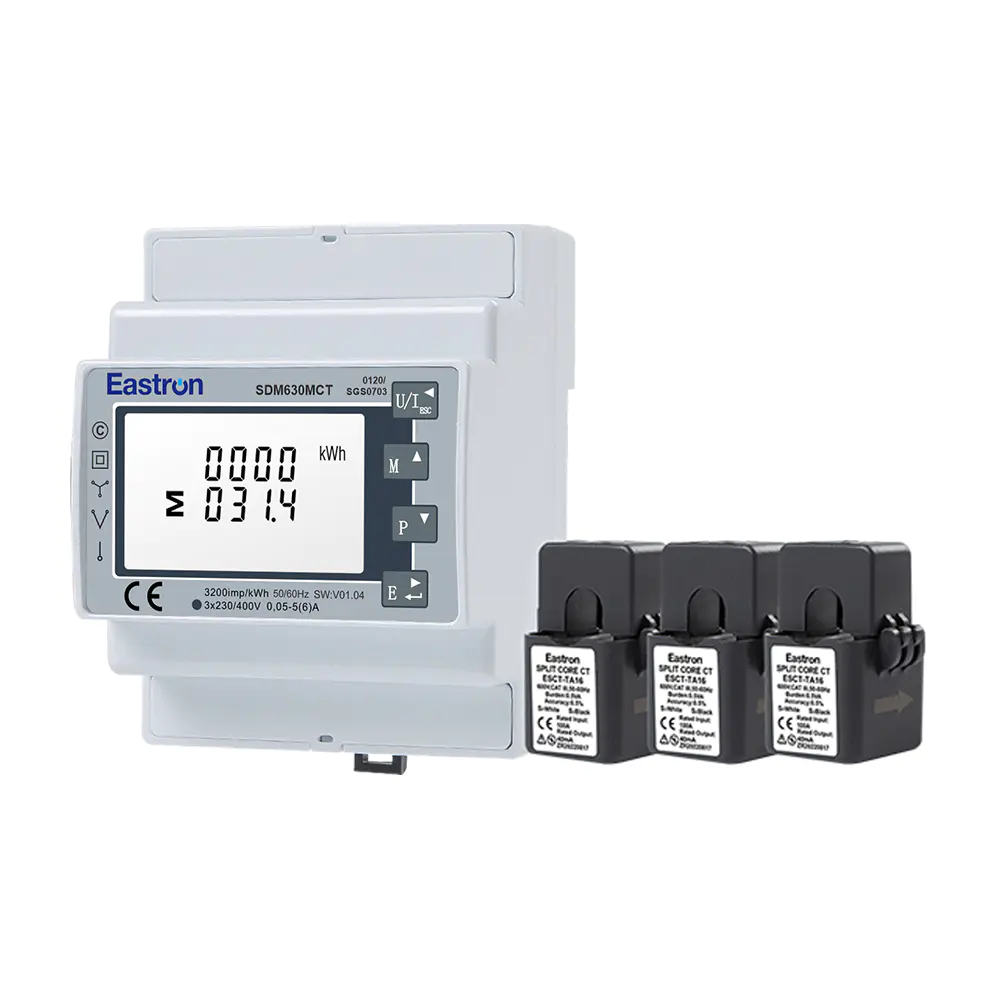
MID/UL CT Type Din Rail Three Phase Multi-function Energy Meter for EV Charging Metering
Nov 24,2022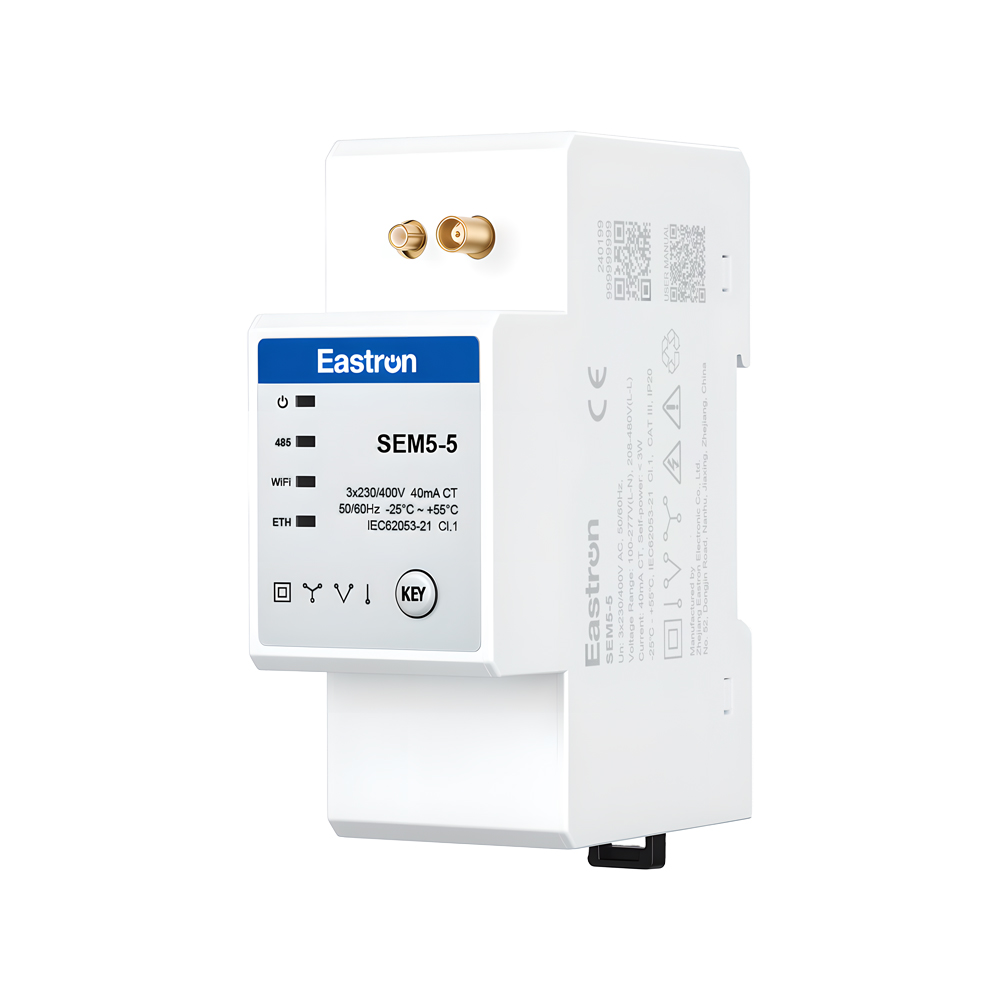
CT Operated Wireless Three Phase Energy Meter for PV Metering
May 30,2025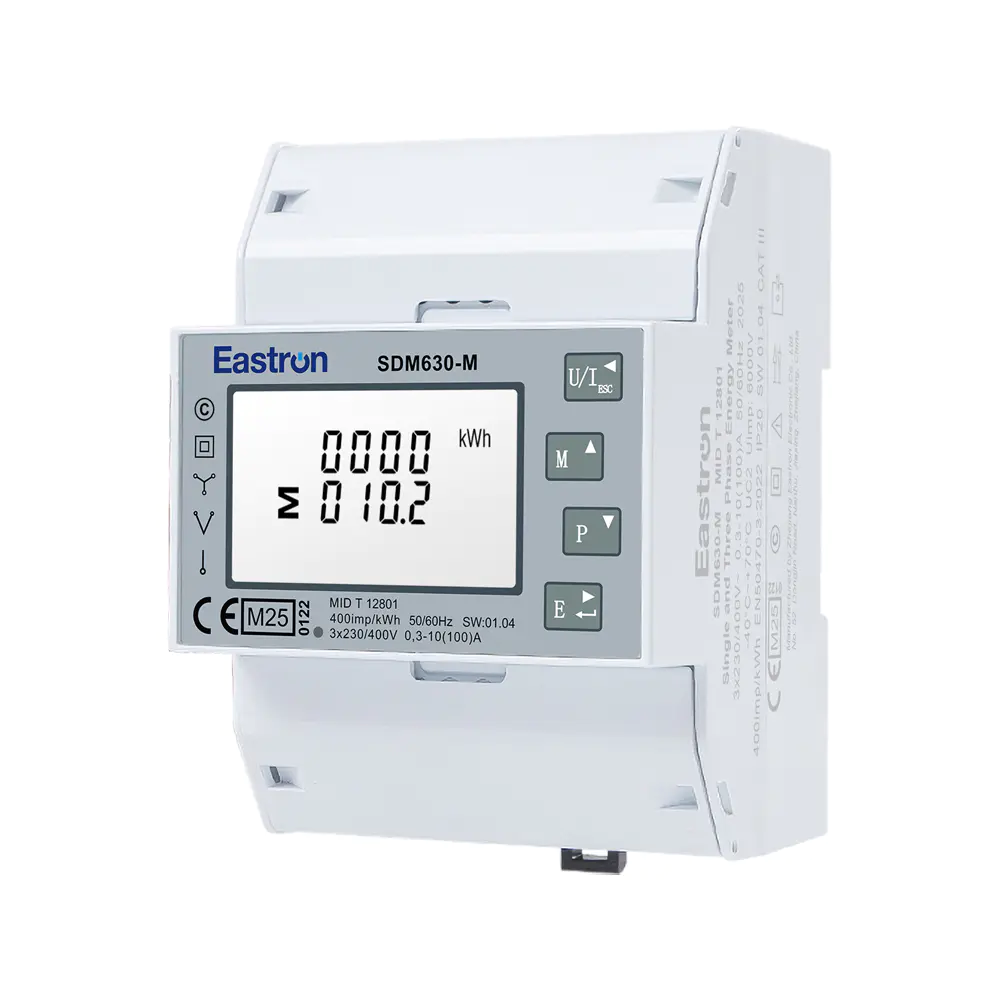
MID UL Certified Din Rail Three Phase Multi-function Energy Meter for EV Charging Metering
Aug 02,2022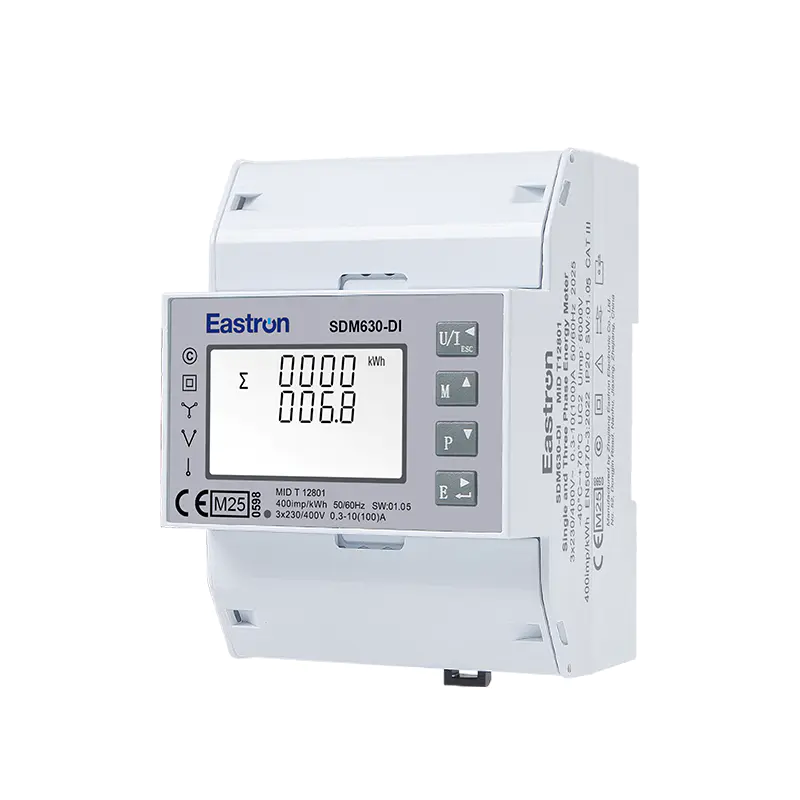
MID & UL Approved Three Phase Din Rail Type Multi-function Energy Meter for EV Charging Metering
Nov 24,2022
CT Type Three Phase Din Rail Wifi Energy Meter for PV Metering
May 30,2025
MID Approved CT Type Din Rail Three Phase Multi-function Solar PV /Zero Export Meter for PV Metering
Nov 24,2022Content
Modern electrical installations require more than a simple kWh counter. Commercial buildings, industrial facilities, renewable-energy systems, electric vehicle charging sites, rental properties, and distributed infrastructure all need accurate measurement, dependable communication, flexible installation, and efficient access to operating data. The LoRaWAN CT-operated DIN-rail three-phase MID energy meter is designed to meet these requirements in one compact metering platform.
Based on the SDM630MCT-Lora, this meter combines three-phase electrical measurement, external current-transformer operation, DIN-rail mounting, pulse outputs, and integrated LoRaWAN communication. It is suitable for installations where direct-connected meters cannot accommodate the current level, where cable distances make traditional communication difficult, or where operators need wireless data transmission without installing a separate communication gateway for every meter.
The meter supports three-phase three-wire and three-phase four-wire systems and measures a broad range of electrical parameters, including active energy, reactive energy, active power, apparent power, power factor, voltage, current, frequency, demand, and other operational values. Its CT-operated architecture allows the current range to be configured according to the selected transformer ratio, making the meter adaptable to a wide variety of electrical distribution applications.
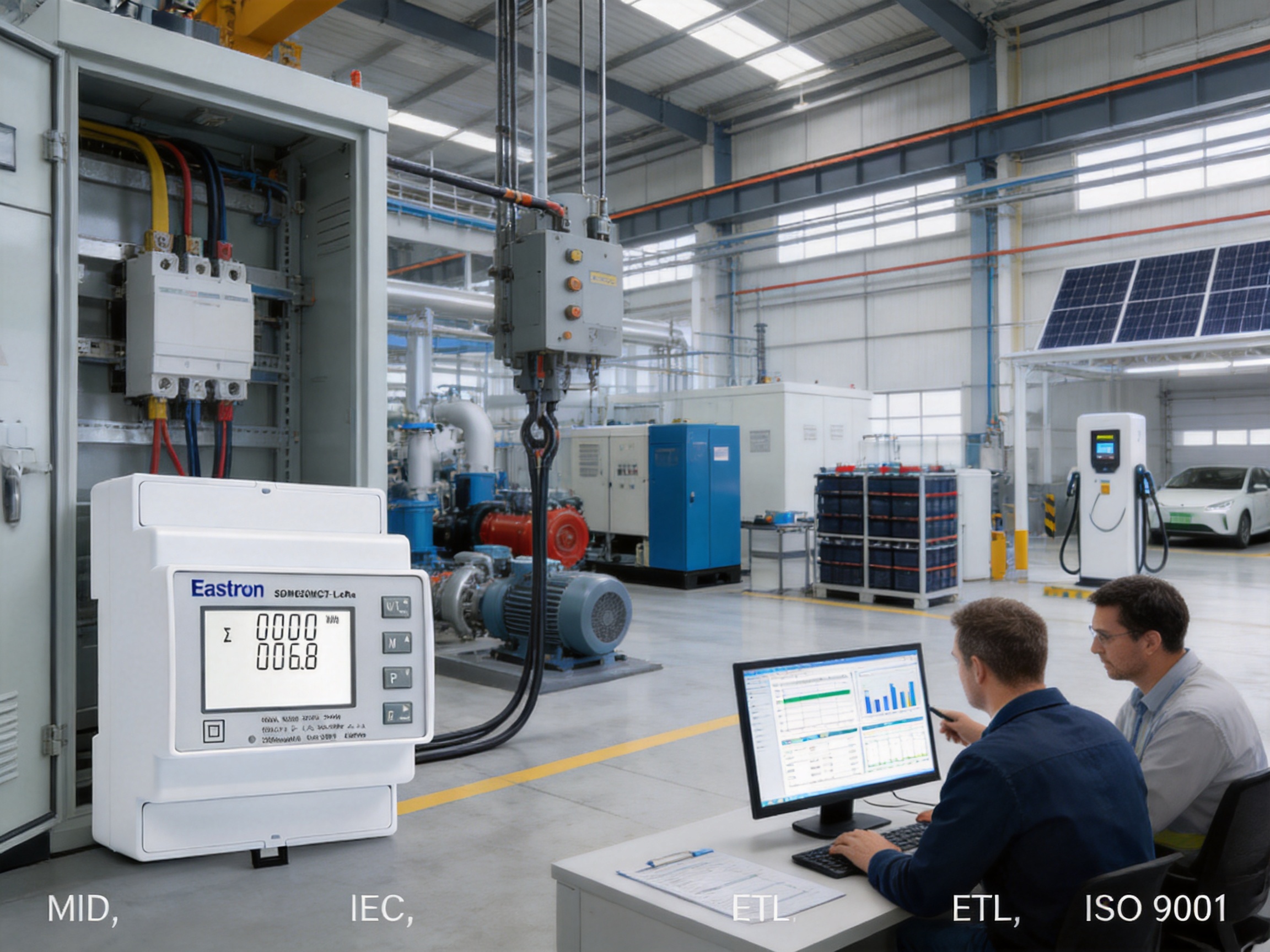
In addition to its measurement capabilities, the product is designed for certified energy billing and sub-metering applications. Its active-energy performance is specified at Class 0.5 under IEC 62053-21 and Class C under EN 50470-3:2022. The product has also been assessed for compliance with the requirements of EU Directive 2014/32/EU and is ETL listed by Intertek. These certifications provide important support for applications requiring traceable and professionally verified metering performance.
The integrated LoRaWAN module adds a further level of flexibility. Depending on the regional version and network configuration, the meter can operate on frequency bands such as EU868, AS923, AU915, US915, and other applicable bands. It can support automatic data-upload modes, adjustable upload and download intervals, confirmation functions, offline detection, and automatic resume operation. These functions are especially valuable for large-scale meter deployments where manual data collection would be slow, expensive, or impractical.
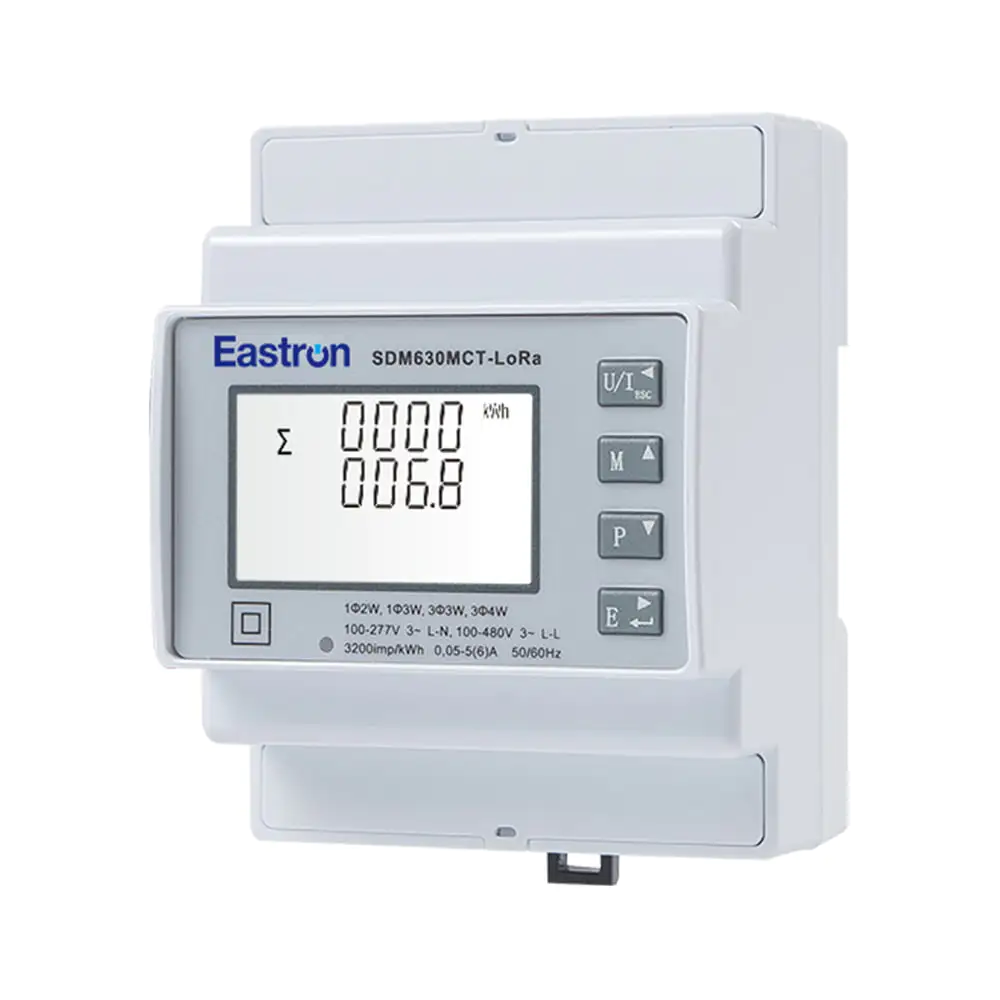
LoRaWAN CT operated Din Rail Three Phase MID Energy Meter
The SDM630MCT-Lora is a multi-function three-phase energy meter intended for connection through 1 A or 5 A current transformers. It is installed on a DIN rail, allowing it to fit naturally into control panels, distribution boards, energy-management cabinets, and equipment enclosures. The DIN-rail format helps reduce installation complexity and makes it easier to organize multiple measuring points in a limited cabinet space.
The meter can measure RMS values, including harmonics, on three-phase AC systems. It is suitable for 3P3W and 3P4W electrical arrangements, while the underlying SDM630MCT family also supports additional wiring configurations depending on the model and application. The product measures voltage and current on each phase and calculates power and energy values for the complete system as well as individual phases.
Its measurement functions include:
• Active energy in kilowatt-hours.
• Reactive energy in kilovolt-ampere reactive hours.
• Active power in kilowatts.
• Reactive power in kilovolt-amperes reactive.
• Apparent power in kilovolt-amperes.
• Voltage and current.
• Frequency.
• Power factor.
• Maximum demand and related demand information.
• RMS measurements that include harmonics.
By combining these measurements in one device, the product can support energy accounting, equipment monitoring, tenant billing, load analysis, power-quality observation, and energy-efficiency programs. A facility operator can use the same meter to determine how much energy a load consumes, how effectively it uses power, whether phase loading is balanced, and whether operating conditions are changing over time.
One of the most important advantages of the meter is its current-transformer-operated design. Instead of carrying the full load current through the meter terminals, the meter receives a standardized CT secondary signal of 1 A or 5 A. The primary current value can be configured from 1 A to 9999 A, allowing the meter to work with a broad selection of external current transformers.
This architecture is particularly useful in high-current installations. A direct-connected meter may be limited by its terminal capacity or maximum current rating. In contrast, a CT-operated meter can measure a large feeder by using appropriately rated transformers while keeping the meter itself compact and suitable for panel mounting. It also allows an existing electrical installation to be measured without redesigning the complete power distribution arrangement.
The CT configuration is password protected. This helps prevent unauthorized changes to the transformer ratio, which could otherwise cause significant errors in reported energy values. Correct configuration is essential because the meter calculates primary current and energy from the relationship between the measured CT secondary signal and the programmed CT primary rating.
The stated input characteristics include a minimum current of 0.05 A and a starting current of 0.005 A. These specifications support measurement across a wide operating range, from low-load conditions to higher-current distribution circuits. When the appropriate CT is selected and installed correctly, the meter can provide reliable information for feeders, motors, HVAC systems, pumps, production equipment, data-center circuits, and building services.
Compared with a fixed-range direct meter, the CT-operated design gives system integrators more freedom when planning installations. The same meter platform can be used on different circuits with different current capacities, provided that the transformer selection and configuration are suitable. This reduces the need to stock many current-specific meter models and can simplify project standardization.
Accuracy is central to any meter used for energy allocation or billing. A monitoring device can be useful even when it provides approximate information, but a meter used for commercial settlement, tenant billing, or certified sub-metering must offer a higher level of documented performance. The SDM630MCT-Lora is designed for these more demanding applications.
Its active-energy accuracy is specified as Class 0.5 under IEC 62053-21 and Class C under EN 50470-3:2022. The product has also been assessed and certified as meeting the requirements of EU Directive 2014/32/EU. The provided certification information identifies the traceable number as 0120/SGS0703. In addition, the meter is ETL listed by Intertek.
These certifications distinguish the product from basic, non-certified monitoring meters. They provide users with greater confidence when measured energy is used for cost allocation, operational reporting, or regulated applications. Certification does not eliminate the need for correct installation, suitable CTs, wiring verification, and periodic maintenance, but it establishes an important foundation for accurate measurement.
The electrical measurement specifications include voltage accuracy of ±0.2%, current accuracy of ±0.2%, frequency accuracy of ±0.05%, and power-factor accuracy of ±0.01. Active power and apparent power accuracy are specified as ±0.5% over the stated operating range, while reactive power accuracy is specified as ±1% over the corresponding range. Reactive energy performance is specified as Class 2 under IEC 62053-23.
| Measurement or Function | Specification |
|---|---|
| Measurement system | RMS measurement including harmonics on three-phase AC systems |
| Voltage accuracy | ±0.2% |
| Current accuracy | ±0.2% |
| Frequency accuracy | ±0.05% |
| Power-factor accuracy | ±0.01 |
| Active-power accuracy | ±0.5% over the stated operating range |
| Reactive-power accuracy | ±1% over the stated operating range |
| Apparent-power accuracy | ±0.5% over the stated operating range |
| Active-energy accuracy | Class 0.5 IEC 62053-21; Class C EN 50470-3:2022 |
| Reactive-energy accuracy | Class 2 IEC 62053-23 |
The integrated LoRaWAN module is one of the product’s strongest differentiating features. Conventional wired communication can provide excellent reliability, but installing RS485 cables over long distances may increase project cost and installation time. Wireless communication is often more practical in existing buildings, geographically distributed sites, temporary installations, and facilities where new communication cables are difficult to route.
LoRaWAN is designed for low-power wide-area communication. It can connect meters over substantial distances while transmitting relatively small data packets efficiently. This makes it well suited to energy meters, which generally send structured measurement data rather than continuous high-bandwidth information such as video or audio.
The meter supports a wide range of regional LoRa frequency bands, including EU868, AS923, CN433, CN470, AU915, and US902, with additional regional versions available according to market requirements. This broad frequency coverage allows system designers to select a version suitable for the target country or region instead of developing a completely different hardware platform for every deployment.
The communication system supports an automatic upload mode for sending data to a management platform or network server. Upload and download intervals can be set or adjusted, allowing operators to balance data freshness, network capacity, and energy consumption. A site requiring frequent updates can use shorter intervals, while a basic monthly or daily reporting application can use longer intervals.
Confirmation functions and offline detection are also available. Confirmation mechanisms help the system identify whether a communication exchange has been completed successfully. Offline detection can alert an operator when a meter is no longer communicating as expected. These functions are valuable in large installations because a communication failure may otherwise remain unnoticed until the next manual inspection.
The automatic resume mode supports recovery after a temporary communication interruption. In practical terms, this can help the meter return to normal data transmission when the network becomes available again. This is particularly important in facilities where wireless conditions can change because of construction, equipment movement, temporary interference, or network maintenance.
Compared with meters that only offer local display or pulse output, the LoRaWAN version can contribute to a centralized and scalable energy-management system. Operators can collect information from multiple buildings or distribution boards without visiting each cabinet. The result is better visibility of energy use, faster identification of abnormal conditions, and more efficient management of maintenance resources.
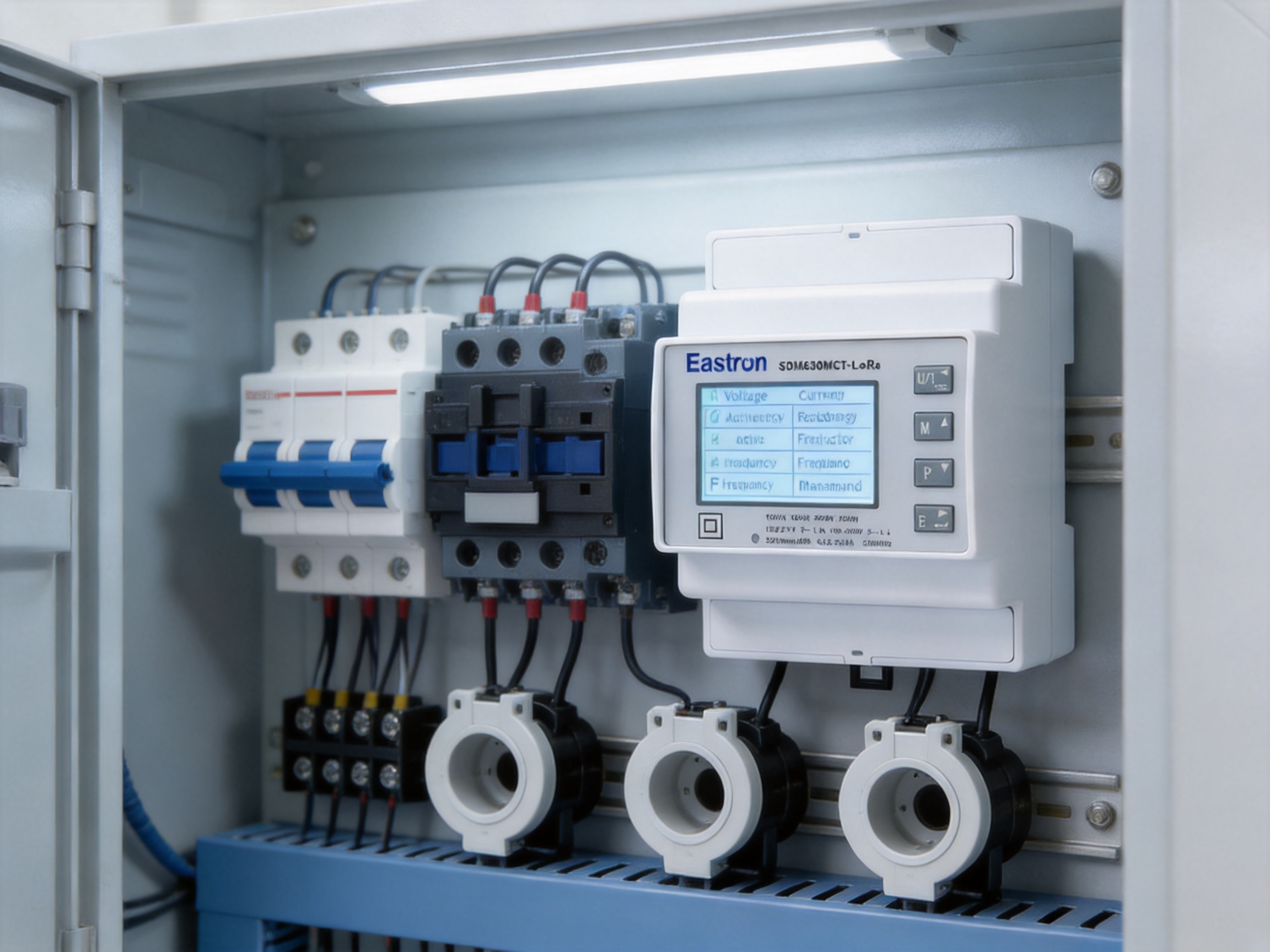
The SDM630MCT product family is available with several output and communication configurations. The LoRaWAN version provides two pulse outputs and LoRaWAN communication. Other family versions may include RS485 Modbus, dual power-source capability, or M-Bus EN 13757 communication. This family approach gives project designers a choice of communication method while preserving a familiar measurement platform.
| Model Configuration | Available Outputs or Communication |
|---|---|
| SDM630MCT or MT | Two pulse outputs and RS485 Modbus |
| SDM630MCT-2T | Two pulse outputs, RS485 Modbus, and dual power source |
| SDM630MCT-Mbus | Two pulse outputs and M-Bus EN 13757 |
| SDM630MCT-Mbus-2T | Two pulse outputs, M-Bus EN 13757, and dual power source |
| SDM630MCT-LoRa | Two pulse outputs and LoRaWAN |
The two pulse outputs can be used to interface with external equipment such as building-management controllers, data loggers, pulse concentrators, or legacy energy-monitoring systems. This provides an additional integration path for users who want local or supplementary data collection.
For systems using RS485 Modbus, the stated communication address range is 1 to 247. Transmission distance can reach up to 1000 meters under suitable installation conditions, and selectable transmission speeds range from 1200 bps to 38400 bps. Parity can be set to none, odd, or even, while one or two stop bits are available. The specified response time is less than 100 milliseconds.
Although the LoRaWAN version is intended primarily for wireless communication, the availability of related Modbus and M-Bus models makes the product family useful for mixed communication environments. A project can use wireless communication in difficult-to-wire locations and wired communication in local equipment rooms, while retaining similar measurement functions and installation concepts.
The meter is rated for a nominal voltage of 3 × 230/400 VAC. Its voltage range is specified as 100 to 277 V AC line-to-neutral and 100 to 480 V AC line-to-line. These ranges cover common low-voltage three-phase distribution systems used in commercial, industrial, and building-service applications.
The meter measures RMS values, including harmonics. This is important because modern electrical systems increasingly contain nonlinear loads such as variable-speed drives, switched-mode power supplies, LED lighting, information-technology equipment, battery chargers, and power-electronic converters. A measurement approach that accounts for harmonic content can provide a more representative view of actual operating conditions than a basic average-value measurement.
Voltage and current information can be used to identify phase imbalance, overloaded conductors, abnormal voltage conditions, or unexpected changes in equipment behavior. Power factor can indicate whether a load is consuming energy efficiently from the viewpoint of apparent power. Demand information can support peak-load management, capacity planning, and tariff analysis.
By measuring active, reactive, and apparent power together, the meter provides a more complete electrical profile. Active power represents the useful power converted into work, heat, light, or other output. Reactive power is associated with inductive and capacitive behavior, while apparent power represents the combined electrical loading seen by the supply. Viewing these parameters together can help engineers investigate poor power factor, transformer loading, and the effectiveness of compensation equipment.
The DIN-rail format is a practical advantage for panel builders and electrical contractors. DIN rails are widely used in distribution boards and control cabinets, and a standardized mounting arrangement allows the meter to be installed alongside circuit breakers, contactors, relays, terminal blocks, gateways, and other control components.
A compact DIN-rail instrument can reduce the space required for metering equipment. This is useful when a panel must contain multiple meters, protection devices, communication components, and control equipment. It also simplifies replacement because service personnel can work with a familiar mounting method rather than requiring a custom enclosure or dedicated meter bracket.
Installation quality remains essential. Current transformers must be selected according to the actual primary current and installed with the correct polarity and phase association. Voltage connections must correspond to the selected three-phase wiring arrangement. Before commissioning, the installer should verify phase sequence, CT orientation, transformer ratio settings, communication parameters, and pulse-output configuration.
For safety, all wiring should be completed by qualified personnel following applicable electrical codes and the product documentation. CT secondary circuits require particular attention because an energized current transformer should not be operated with its secondary circuit improperly open. Proper isolation, shorting provisions, protective devices, and terminal practices should be included in the installation design.
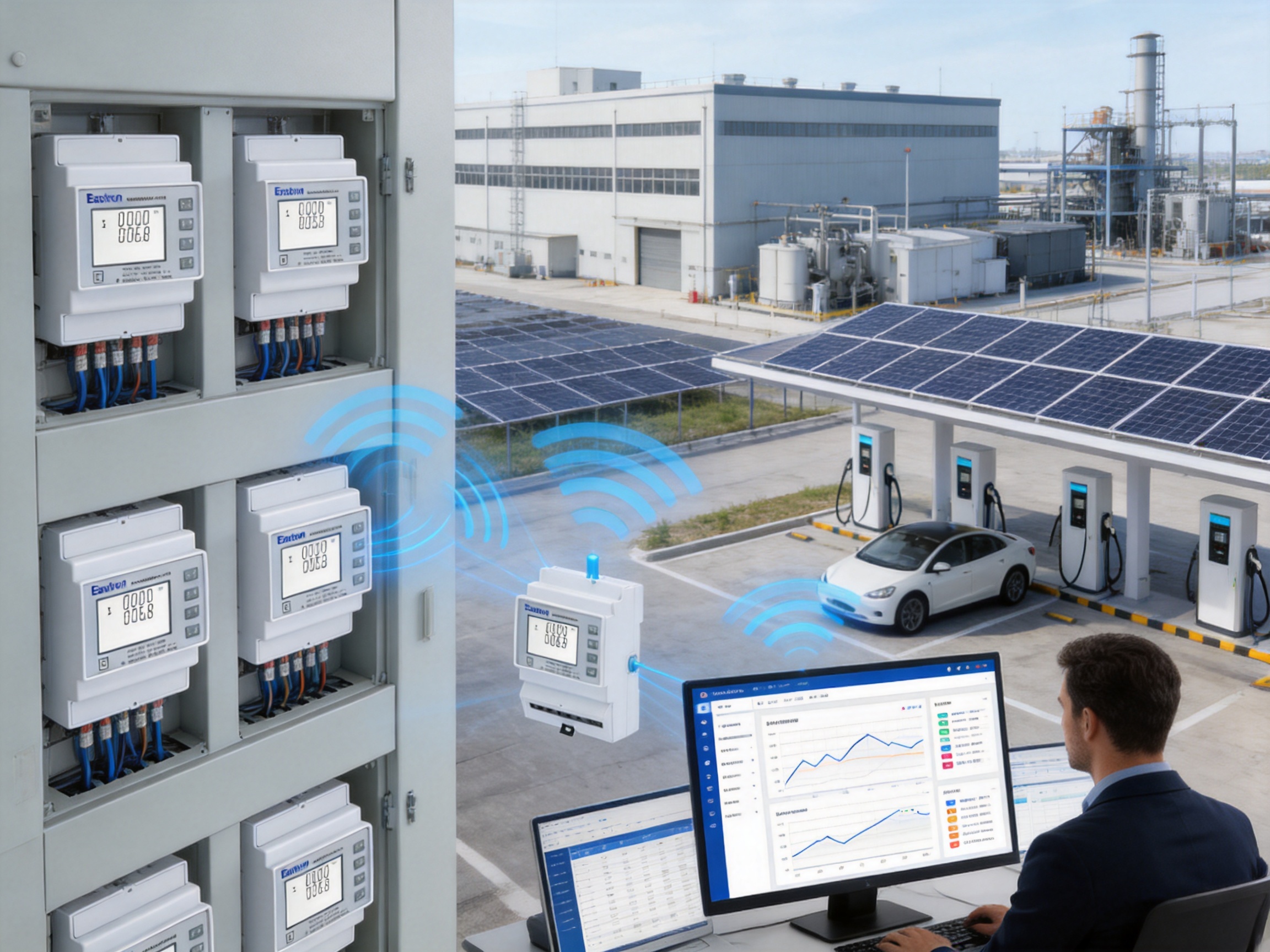
Office buildings, retail centers, hotels, and mixed-use properties often require sub-metering for tenants, departments, floors, or shared services. The LoRaWAN meter can measure individual distribution circuits and transmit energy information to a centralized platform. This can support tenant billing, internal cost allocation, and the identification of high-consumption areas.
Because wireless installation can reduce the need for long communication cables, the meter is suitable for retrofit projects where the building structure makes new cable routes expensive or disruptive. A facility manager can gradually add meters to important circuits and expand the system as additional monitoring needs emerge.
Manufacturing plants commonly contain multiple production lines, motors, compressors, pumps, heating systems, and auxiliary services. Monitoring each major feeder helps plant managers understand the energy intensity of individual processes. CT operation allows the meter to be applied to higher-current feeders without placing the full load current through the meter.
Power, energy, power factor, and demand data can support production analysis and maintenance planning. For example, an unexpected increase in apparent power or a reduction in power factor may indicate changing operating conditions, equipment deterioration, or a need to review compensation settings.
Solar photovoltaic systems, battery-storage installations, and other distributed-energy projects require measurement at different points, including generation output, grid import, grid export, and auxiliary consumption. The meter can be used as part of a broader monitoring arrangement where three-phase electrical parameters must be collected from remote or separate equipment locations.
Wireless communication can be useful when the metering point is located away from the main control room. The meter can transmit data to a LoRaWAN network, allowing operators to compare production and consumption trends without relying on a long dedicated RS485 cable.
Charging stations can create significant loads and may be distributed across parking areas, commercial properties, campuses, or transport facilities. A CT-operated three-phase meter can monitor the associated feeder and provide information about energy consumption, demand, and operating conditions. Certified active-energy measurement can also support charging-service cost allocation where the application and local regulations permit.
Data centers require continuous attention to energy consumption and electrical loading. Metering at distribution-board or equipment-group level can help operators compare loads, monitor capacity, and identify changes in power usage. LoRaWAN communication may be useful for supplementary monitoring in areas where conventional wiring is difficult, although critical infrastructure should always be designed with communication redundancy and the appropriate operational safeguards.
Energy service companies and property managers can use connected meters to gather data from multiple sites. Automatic uploads reduce manual meter reading and enable standardized reporting. A single platform can compare buildings, identify inefficient assets, and prioritize energy-saving projects based on measured performance rather than estimates.
The product’s competitive advantages result from the combination of functions rather than from a single specification. Many basic meters can display voltage, current, and energy. However, a CT-operated, certified, multi-function meter with integrated LoRaWAN communication provides a broader solution for professional energy-management projects.
First, the external CT input supports a much wider current range than many direct-connected meters. This makes the unit suitable for large feeders and retrofit installations while maintaining a compact DIN-rail form factor.
Second, the product combines energy measurement with power analysis. Users can review active energy, reactive energy, power, apparent power, power factor, frequency, voltage, current, and demand instead of relying on a single cumulative kWh value.
Third, the product offers certified active-energy performance. MID and ETL credentials can be important differentiators in markets where project owners require documented compliance or where energy data will influence financial transactions.
Fourth, the integrated LoRaWAN module reduces the need for a separate external wireless converter. Fewer components can simplify panel design, reduce points of failure, and shorten installation time. The system designer still needs a suitable LoRaWAN network and data platform, but the meter itself is prepared for wireless integration.
Fifth, adjustable upload and download intervals, confirmation functions, offline detection, and automatic resume operation support more robust remote monitoring. These features are especially valuable when a project includes dozens or hundreds of meters.
Sixth, the broad regional frequency-band support helps manufacturers, integrators, and international customers use a related product platform across multiple markets. This can simplify procurement, training, documentation, and maintenance.
Finally, the product family includes Modbus and M-Bus variants. Customers are not forced into one communication architecture for every project. They can select LoRaWAN for distributed wireless metering, Modbus for local automation networks, or M-Bus for applications built around established metering infrastructure.
The strength of a professional energy meter depends not only on its published specifications but also on the manufacturing systems behind the product. Eastron Electronic Co., Ltd. develops and manufactures electricity meters, power analyzers, current sensors, communication modules, and energy-management products. Its operations are supported by engineering teams in China and the United Kingdom, together with cooperation involving universities and technical institutions.
The company has established a professional laboratory capable of performing electromagnetic compatibility, low-voltage directive, accuracy, and environmental testing according to IEC, EN, GB, and UL requirements. This capability is important because modern meters must operate accurately in electrically noisy environments and across a range of temperature and installation conditions.
In-house or closely controlled laboratory testing helps connect product development with verification. Engineers can evaluate circuit designs, firmware behavior, communication performance, measurement accuracy, and environmental stability before products reach customers. This is particularly relevant for a device that combines precision measurement with wireless communication, because both functions must operate correctly at the same time.
The company follows the ISO 9001 quality-management system. A structured quality system supports controlled design processes, supplier management, production inspection, nonconformance handling, corrective actions, traceability, and continuous improvement. These processes are important for maintaining consistent performance across production batches.
The company’s production has also been approved by SGS according to MID standards. Together with the product’s MID assessment and ETL listing, this reflects an emphasis on formal compliance rather than relying solely on internal performance claims.
Research and development is another manufacturing strength. Eastron has developed patented technologies in software, embedded software, and hardware. For a connected energy meter, embedded software is especially important because it controls measurement calculations, display functions, configuration security, data storage, communication scheduling, error handling, and automatic recovery.
The LoRaWAN version requires coordination among metrology, firmware, antenna or radio design, regional frequency configuration, and cloud-network compatibility. An experienced manufacturer can manage these elements as one product-development process instead of treating the communication module as an unrelated add-on.
Manufacturing quality also depends on repeatability. A meter may pass a laboratory test during development but still require robust production controls to ensure that every unit is assembled, calibrated, programmed, and inspected consistently. Controlled production procedures, accuracy verification, functional testing, and final inspection help reduce variation and support dependable field operation.
Metering is most valuable when the collected information leads to action. The LoRaWAN meter can provide data for dashboards, alarms, reports, benchmarking, and energy-management algorithms. Facility operators can establish a baseline, compare current consumption with historical data, and investigate deviations.
Automatic data uploading can reduce the labor associated with manual readings. It also increases the frequency of available information. Instead of receiving one monthly value, an operator may be able to review daily or shorter-interval data, depending on network design and configured settings.
More frequent data can reveal patterns that a cumulative meter cannot show. A building may appear efficient when viewed only through monthly totals, while interval data may reveal unnecessary overnight consumption, excessive weekend loads, or simultaneous heating and cooling. In an industrial plant, production energy can be compared with output to calculate more meaningful performance indicators.
Demand information can help organizations manage peak usage. If a site approaches a contracted capacity limit, operators can identify which loads contribute most to the peak and develop a load-scheduling strategy. Power-factor information can support decisions about capacitor banks, active compensation, or equipment upgrades.
Wireless metering can also support preventive maintenance. A change in voltage balance, current profile, power factor, or demand may indicate a developing problem. The meter is not a complete diagnostic instrument for every fault, but it provides valuable operating data that can help maintenance teams decide when additional investigation is warranted.
A successful deployment begins with a clear measurement plan. The project team should identify which feeders or loads need to be measured, the required accuracy class, the appropriate CT primary ratings, the communication coverage, the desired data interval, and the way the information will be used.
CT selection should consider normal load, maximum load, expected overload, accuracy class, burden, physical dimensions, and installation method. The transformer ratio must be configured correctly in the meter. If the CT ratio is wrong, the displayed current and energy values will be proportionally incorrect even if the meter itself is operating normally.
Phase identification is equally important. Each CT should correspond to the correct voltage phase, and polarity must be observed. Incorrect phase association can result in incorrect power-factor or power readings and may cause energy values to be understated or overstated.
The LoRaWAN network should be assessed before large-scale installation. Building materials, metal enclosures, equipment rooms, underground locations, distance, antenna position, gateway capacity, and regional frequency requirements can all influence communication performance. A pilot installation is recommended for complex sites.
Data security and access control should also be considered. Meter configuration is password protected, but the complete system should include appropriate network-server, application-platform, user-account, and maintenance policies. The meter should be integrated into an overall cybersecurity and operational-management plan.
Commissioning should include a documented checklist. The installer should record the meter serial number, CT ratio, wiring arrangement, communication identity, location, initial energy value, and test results. This information simplifies future maintenance and helps preserve measurement traceability.
For system integrators, standardization is a major practical benefit. Using a consistent meter family across different projects can reduce engineering effort and simplify training. The same general product concept can be applied to wired Modbus networks, M-Bus systems, or wireless LoRaWAN deployments.
The CT-operated design also reduces product-selection complexity. Rather than choosing a different direct-connected meter for every current range, integrators can use a common meter platform with suitable external CTs. This can improve purchasing efficiency and simplify replacement-stock management.
Integrated communications can reduce the number of components in a panel. An external converter, pulse interface, or wireless adapter may not be required for the LoRaWAN version. Fewer components can result in simpler wiring and a cleaner cabinet layout, although the project still requires suitable gateways, network services, and application software.
Certification support can help integrators respond to tenders and compliance requirements. MID and ETL credentials may be particularly valuable when customers require recognized third-party assessment. The integrator should always confirm that the exact product version and intended application meet local legal and metering requirements.
Technical support and after-sales service are also important for connected-meter projects. Eastron states that it provides professional technical support and after-sales service, supported by teams serving customers across Europe, Asia-Pacific, America, the Middle East, and Africa. International support capability can help integrators address regional communication, installation, and commissioning questions.
The meter is designed for three-phase AC measurement and supports three-phase three-wire and three-phase four-wire systems. The broader product family also supports additional wiring configurations depending on the specific model.
No. The SDM630MCT-Lora is a CT-operated meter. It receives a 1 A or 5 A CT secondary signal, while the CT primary rating can be configured from 1 A to 9999 A.
The rated voltage is 3 × 230/400 VAC. The specified range is 100 to 277 V AC line-to-neutral and 100 to 480 V AC line-to-line.
The meter measures active energy and reactive energy. It also measures or calculates active power, reactive power, apparent power, voltage, current, frequency, power factor, demand, and other electrical values.
The SDM630MCT-Lora includes LoRaWAN communication and two pulse outputs. Related models in the same family are available with RS485 Modbus or M-Bus communication.
Available regional bands include EU868, AS923, CN433, CN470, AU915, US902, and other applicable regional options. The exact version should be selected according to the installation location and local network requirements.
Yes. The communication system supports adjustable upload and download time intervals. The appropriate interval depends on the application, network capacity, required reporting frequency, and data-management strategy.
Confirmation functions and offline detection are available. These functions can help identify whether communication has succeeded and whether a meter has stopped reporting as expected.
The meter supports an automatic resume mode designed to help restore normal communication after a temporary interruption, subject to the availability and operation of the external LoRaWAN network.
The meter has MID-related certification information and Class C active-energy performance under EN 50470-3:2022, as well as ETL listing. Suitability for a specific billing application depends on local regulations, installation conditions, verification requirements, and the exact product certification scope.
The CT primary rating must be programmed to match the installed transformer. Configuration is password protected. Incorrect CT-ratio settings can produce incorrect current and energy values.
Yes. The meter is designed for DIN-rail installation and can be integrated into distribution boards, energy-management panels, control cabinets, and equipment enclosures.
Modern loads can produce distorted current waveforms. RMS measurement including harmonics provides a more representative view of electrical quantities in systems containing variable-speed drives, switched-mode power supplies, LED lighting, chargers, and other nonlinear loads.
Installers should verify the voltage wiring, phase sequence, CT orientation, phase-to-CT matching, CT ratio, communication settings, regional LoRaWAN configuration, pulse-output settings, and safety provisions. Commissioning should be performed by qualified electrical personnel.
The LoRaWAN CT-operated DIN-rail three-phase MID energy meter provides a balanced combination of measurement accuracy, installation flexibility, communication capability, and certification support. Its external CT inputs allow it to serve circuits across a broad current range, while its DIN-rail housing supports efficient panel integration.
Its multi-function measurement capability goes beyond basic energy accumulation. Voltage, current, frequency, power factor, active power, reactive power, apparent power, demand, and energy data can give operators a detailed understanding of electrical performance. RMS measurement including harmonics further supports monitoring in modern installations with power-electronic loads.
The integrated LoRaWAN module is particularly valuable for distributed and retrofit applications. Automatic upload operation, adjustable communication intervals, confirmation functions, offline detection, and automatic resume mode help create a scalable remote-metering system. Broad regional frequency support makes the platform suitable for projects across multiple markets.
Certification to relevant IEC and EN performance requirements, MID assessment, and ETL listing provide additional confidence for professional metering projects. Behind the product, Eastron’s engineering resources, laboratory capabilities, ISO 9001 quality-management system, compliance experience, and focus on electricity measurement technologies support a manufacturing approach centered on reliability and continuous development.
For commercial buildings, industrial plants, renewable-energy systems, electric vehicle infrastructure, data centers, and energy-service projects, the meter can serve as a practical foundation for accurate sub-metering and connected energy management. When correctly specified, installed, configured, and integrated with a suitable LoRaWAN platform, it can help organizations reduce manual readings, improve operational visibility, allocate energy costs more fairly, and make better-informed energy decisions.
IEC 62053-21, Electricity Metering Equipment: Particular Requirements for Static Meters for Active Energy.
IEC 62053-23, Electricity Metering Equipment: Particular Requirements for Static Meters for Reactive Energy.
EN 50470-3:2022, Electricity Metering Equipment: Particular Requirements for Static Meters for Active Energy.
EU Directive 2014/32/EU on Measuring Instruments.
EN 13757-3, Communication Systems for Meters and Remote Reading of Meters.
ISO 9001, Quality Management Systems: Requirements.
SDM630MCT-Lora product information and electrical specifications supplied for this article.
Your email address will not be published. Required fields are marked *

We develop and produce high performance electricity meters, power analyzers, current sensors, communication modules and management systems.
Address:NO. 52, Dongjin Road, Nanhu, Jiaxing, Zhejiang, China
Copyright @ Eastron Electronic Co., Ltd. All rights reserved
