

 English
 Español
 Deutsch
 中文简体


Product Consultation
Your email address will not be published. Required fields are marked *
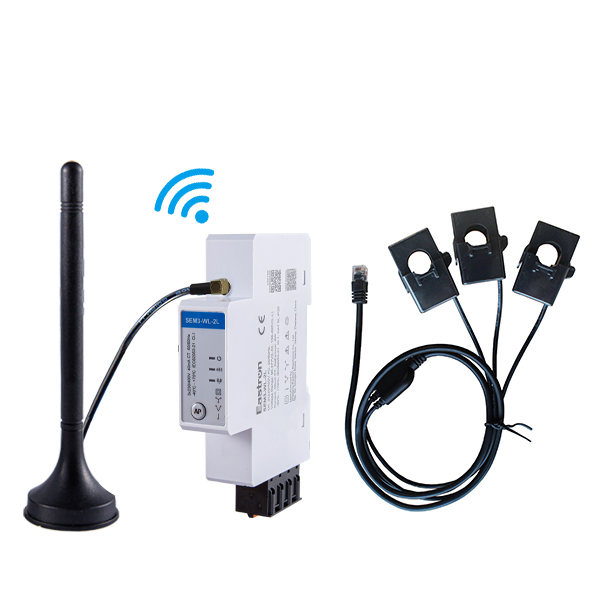
CT Type Three Phase Din Rail Wifi Energy Meter for PV Metering
May 30,2025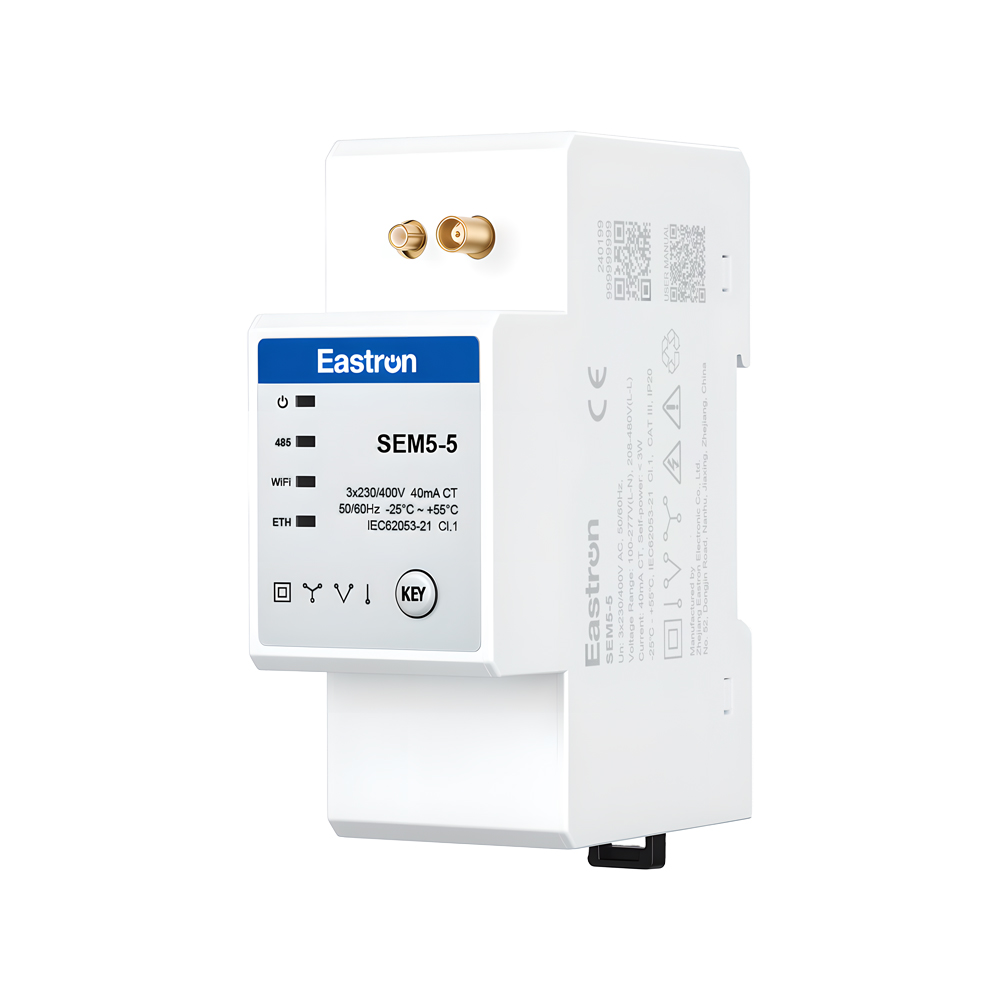
CT Operated Wireless Three Phase Energy Meter for PV Metering
May 30,2025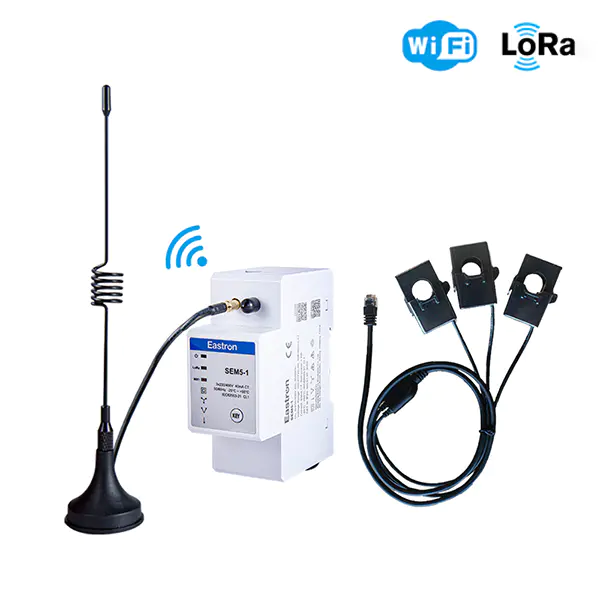
Wifi & LoRa Three Phase Din Rail Energy Meter for PV Metering
Sep 19,2025
RCM CT Type Din Rail Three Phase Multi-function Solar PV /Zero Export Meter for PV Metering
Aug 03,2022
MID Approved CT Type Din Rail Three Phase Multi-function Solar PV /Zero Export Meter for PV Metering
Nov 24,2022
CT Type RS485 Modbus Single Phase Din Rail Energy Meter for PV Metering
May 30,2025Content

Modern solar photovoltaic systems require more than a simple energy counter. Installers, system integrators, facility managers and operators increasingly need accurate information about voltage, current, power, energy direction, power factor, frequency and communication status. They also need that information to be available remotely, integrated into a control platform and collected without creating a complicated installation process. The SEM3-WL-2 CT-type three-phase DIN rail energy meter is designed to meet these requirements in a compact device for solar PV metering, zero-export control, distributed energy monitoring and general electrical management.
The meter combines external current transformer measurement, Wi-Fi communication and RS485 Modbus RTU communication in one DIN rail-mounted instrument. Its flexible architecture enables it to operate as one three-phase meter or as three independent single-phase meters. This gives designers greater freedom when monitoring photovoltaic generation, grid import and export, individual loads, subcircuits or multiple single-phase consumers within the same electrical installation.
With support for 1P2W, 3P3W and 3P4W systems, the device is suitable for many low-voltage electrical networks. It measures imported and exported active and reactive energy and provides a broad collection of real-time electrical parameters. Its compact design, automatic phase-sequence detection, external CT connection and dual communication interfaces make it particularly useful for applications where space, installation flexibility and remote data access are important.
Solar PV installations are becoming more complex as energy users seek higher self-consumption, lower grid dependence and more reliable control over power flows. A typical system may include photovoltaic inverters, batteries, grid connections, electric vehicle chargers, heat pumps, industrial machinery and other variable loads. Without accurate measurement, it is difficult to determine whether generated power is being consumed locally, exported to the grid or curtailed by a control system.
A suitable energy meter provides the measurement foundation for these decisions. It can identify the direction of active energy flow, measure the instantaneous power exchanged with the grid and provide data to an energy management system. When combined with inverter or controller software, this information can support zero-export operation, load scheduling, demand management and performance analysis.
Traditional direct-connected meters can be practical in some installations, but their current capacity and wiring arrangement may limit flexibility. A CT-type meter uses external current transformers, allowing the measuring circuit to be adapted to different current levels and physical layouts. The meter can be installed in a control cabinet or distribution board while the CTs are positioned around the relevant conductors. This arrangement is helpful when conductors cannot be routed directly through the meter or when the measured current exceeds the direct connection range of a compact meter.
The SEM3-WL-2 is intended for applications in which electrical information must be collected continuously and shared with other systems. Its combination of local measurement and communication makes it more than a standalone display instrument. It functions as a compact data source for modern energy infrastructure.
The SEM3-WL-2 is a CT-connected, three-phase DIN rail energy meter with Wi-Fi and RS485 connectivity. It measures electrical characteristics on three-phase AC systems and can also be configured for individual single-phase loads. The meter supports both wired and wireless communications, allowing users to select the connection method that best matches the installation environment.
In three-phase mode, the unit operates as one three-phase energy meter. This configuration is suitable for measuring a photovoltaic system, a main incomer, a grid connection, a three-phase machine or a complete distribution circuit. In single-phase mode, the three measurement channels can be used as three independent single-phase energy meters. External CTs may be configured with different CT ratios for the three independent loads, increasing the usefulness of the device in mixed-load applications.
The meter measures voltage, current, frequency, power, power factor, active energy and reactive energy. Both imported and exported energy can be monitored. Energy values are expressed in kWh and kVArh, supporting the analysis of real and reactive energy in commercial, industrial and renewable-energy applications.
The device is rated for active-energy measurement according to IEC 62053-21 Class 1. Its current, voltage, frequency, power and reactive-energy accuracy specifications make it suitable for energy monitoring and operational control where dependable data is required.
Its DIN rail mounting format helps simplify installation in electrical distribution boards and control cabinets. The compact form factor makes it possible to add measurement capability without occupying the space required by larger panel meters or separate communication modules.
CT Type Three Phase Din Rail Wifi Energy Meter for PV Metering
The meter supports three-phase systems with or without a neutral connection. It can measure 3P4W and 3P3W supplies, making it suitable for common low-voltage distribution arrangements. The nominal input voltage is 3 × 230 V line-to-neutral or 400 V line-to-line. The working range extends from 90 to 277 V AC line-to-neutral and from 156 to 480 V AC line-to-line.
This operating range provides useful tolerance for normal supply variation and allows the meter to be deployed across a broad selection of commercial and industrial networks. It can monitor a main switchboard, a PV coupling point, a building distribution panel or a dedicated industrial feeder.
One of the key advantages of the SEM3-WL-2 is its ability to function as three individual single-phase meters. This can reduce the number of separate devices required in installations containing several single-phase circuits. For example, one channel may monitor a lighting circuit, another may monitor an HVAC circuit and the third may monitor a battery charger or auxiliary load.
Different CT ratios can be assigned to the three channels in single-phase mode. This is especially useful where the loads have different current capacities or where the monitored circuits are physically separated. A single compact meter can therefore provide a flexible measurement solution without forcing all three channels to use the same current transformer ratio.
External CT connection offers several installation benefits. It reduces the need to route high-current conductors directly through the meter and allows the sensing elements to be positioned where they are most effective. It can also make retrofit work easier because the meter can be installed without significantly modifying existing busbars or cables.
CT-based measurement is valuable in solar PV applications because the meter may need to be installed at a grid connection point that carries current from several sources. The external CTs can be selected and positioned according to the system design, while the meter remains safely located inside a control enclosure.
Correct CT orientation and ratio configuration are essential for accurate measurement. The CT primary direction should correspond to the intended import and export convention, and the configured ratio should match the installed transformer. Once correctly installed, the meter can report the direction and magnitude of power flow for energy-management purposes.
The SEM3-WL-2 measures RMS electrical values, including harmonics, on three-phase AC systems. Its measurement functions cover the principal parameters required for electrical monitoring and solar energy management.
| Parameter | Specification |
|---|---|
| Supported systems | 1P2W, 3P3W and 3P4W |
| Voltage input | 3 × 230 V line-to-neutral / 400 V line-to-line nominal |
| Working voltage range | 90–277 V AC line-to-neutral; 156–480 V AC line-to-line |
| Frequency | 50/60 Hz |
| Current accuracy | ±0.5% from 4 A to 120 A; ±1% from 1 A to 4 A; ±3% from 0.06 A to 1 A |
| Voltage accuracy | ±0.5% |
| Power accuracy | ±1% |
| Active-energy accuracy | ±1%, IEC 62053-21 Class 1 |
| Reactive-energy accuracy | ±2% |
| Frequency accuracy | ±0.2% |
| Power factor specification | ±0.1 |
| Energy direction | Imported and exported active and reactive energy |
| Energy units | kWh and kVArh |
Voltage measurement allows users to review phase-to-neutral and phase-to-phase conditions. Current measurement indicates the loading of each monitored conductor. Active power shows the real-time rate of energy transfer, while reactive power and reactive energy help identify inductive or capacitive behavior. Frequency measurement can support supply-quality monitoring, and power factor information can help evaluate the efficiency of electrical loads.
In a solar PV system, these measurements can be used to distinguish between generation and consumption. During periods of high solar output, the meter can indicate whether energy is being used locally or exported. During low-generation periods, it can show the amount of energy imported from the grid. This data helps operators evaluate self-consumption and identify opportunities to improve energy performance.
Solar PV systems frequently operate in both directions. Energy may flow from the grid to the facility when local generation is insufficient, or from the facility to the grid when PV generation exceeds local demand. A measurement device that only records one direction cannot provide a complete picture of the system.
The SEM3-WL-2 supports bi-directional measurement. It can monitor imported and exported active energy, as well as imported and exported reactive energy. This capability is important for grid-interactive systems, net-energy analysis, feed-in monitoring and zero-export applications.
For zero-export control, the meter can provide real-time power information to a controller or inverter management system. When export power approaches a configured limit, the control system can reduce inverter output, adjust battery charging or activate suitable loads. The meter itself is the measurement component in this process; the actual control response depends on the connected inverter, controller or energy management platform.
Bi-directional measurement also supports financial and operational analysis. Facility managers can compare the value of locally consumed solar energy with the amount exported to the grid. They can review import patterns, identify peak demand periods and evaluate whether storage or load shifting would improve the project’s return.
The RS485 interface provides a robust wired communication option for industrial and building-management applications. The meter uses Modbus RTU, a widely adopted protocol for connecting meters, controllers, gateways, programmable logic controllers and supervisory software.
The communication address can be configured from 1 to 247, allowing multiple meters to share an RS485 network when each device is assigned a unique address. The interface uses half-duplex transmission and supports baud rates from 2400 bps to 115200 bps. None parity is the default setting, with odd and even parity also available. Stop-bit selection can be configured as one or two bits.
| RS485 feature | Specification |
|---|---|
| Protocol | Modbus RTU |
| Communication address | 1–247 |
| Transmission mode | Half duplex |
| Data type | Floating point |
| Maximum transmission distance | 1000 m |
| Transmission speed | 2400–115200 bps |
| Parity | None, odd or even |
| Stop bits | 1 or 2 |
| Response time | Less than 50 ms |
The maximum communication distance of up to 1000 meters makes RS485 appropriate for larger electrical rooms, factories and distributed building systems when suitable cable, termination and installation practices are used. Its wired nature can also be preferred in areas where radio communication is restricted or where a fixed industrial network is required.
The integrated Wi-Fi interface provides a convenient alternative to physical communication cabling. It uses Modbus TCP and operates in the 2.4 GHz to 2.5 GHz radio band. The supported Wi-Fi protocol is 802.11 b/g/n, making the meter compatible with widely deployed wireless network equipment.
| Wi-Fi feature | Specification |
|---|---|
| Protocol | Modbus TCP |
| Data type | Floating point |
| RF band | 2.4–2.5 GHz |
| Maximum RF power | Less than 20 dBm |
| Wi-Fi standard | 802.11 b/g/n |
| Typical range | Up to 30 m indoors and 50 m outdoors, depending on local conditions |
Wi-Fi can reduce installation time when a suitable network is already available. It is useful in retrofit projects, temporary monitoring installations, smaller commercial systems and locations where running a dedicated RS485 cable would be inconvenient. Users can select Wi-Fi for rapid deployment while retaining RS485 for installations that require a wired connection.
Wireless range is affected by enclosure materials, building construction, interference, antenna placement and local network conditions. For this reason, the actual installation should include an assessment of Wi-Fi coverage. Where radio conditions are unsuitable, the RS485 interface remains an alternative.
Many conventional meters are designed for one specific wiring mode. A three-phase-only device may not be suitable for independent single-phase loads, while a single-phase meter cannot monitor a complete three-phase feeder. The SEM3-WL-2 addresses this limitation through configurable measurement architecture.
Its support for one three-phase meter or three individual single-phase meters reduces the need to maintain multiple product types. This can simplify project specification, inventory management, technician training and replacement planning. A system integrator can use the same basic meter platform across different applications while adapting the configuration to the measured circuit.
A meter with only a local display may require additional hardware before its data can be used by a digital energy platform. The SEM3-WL-2 includes both Wi-Fi and RS485 communication. This provides flexibility during initial design and allows the same product family to serve wireless and wired projects.
RS485 is suitable for structured industrial networks, while Wi-Fi can simplify retrofit work. The availability of two communication methods also gives system designers a practical backup option if the preferred communication method is changed during commissioning.
Large panel instruments can consume valuable cabinet space and may require more complicated mechanical installation. The DIN rail design of the SEM3-WL-2 supports fast mounting in standard control panels and distribution enclosures. The compact arrangement is particularly advantageous where a PV installation already contains breakers, surge protection, inverter interfaces and communication equipment.
Compact construction does not eliminate the need for correct wiring and clearance, but it can make the overall cabinet design more efficient. For multi-meter projects, the space savings can become significant.
External CT connection provides a more adaptable solution than fixed direct-current terminals in many retrofit situations. The sensing elements can be selected for the application and installed around existing conductors. This is beneficial when the monitored current is high, access to conductors is restricted or the meter must be separated physically from the main power path.
Incorrect phase order can cause measurement errors, incorrect power-flow interpretation and problems in three-phase systems. The meter includes automatic phase-sequence detection and an alarm function. If the phase sequence is reversed, the meter issues an alarm, and the phase sequence can be adjusted through communication.
This function helps commissioning personnel identify wiring problems earlier. It can reduce troubleshooting time and provide an additional check before the meter is placed into continuous operation.
Energy-management applications benefit from timely data. The specified active-power update rate is 50 milliseconds through RS485 and 100 milliseconds through Wi-Fi. These update intervals support responsive monitoring and provide suitable input for many control and visualization applications.
Actual system response also depends on network latency, controller processing, software polling intervals and the response characteristics of the connected inverter or energy management system. Nevertheless, the meter’s rapid measurement updates provide a strong foundation for near-real-time power monitoring.
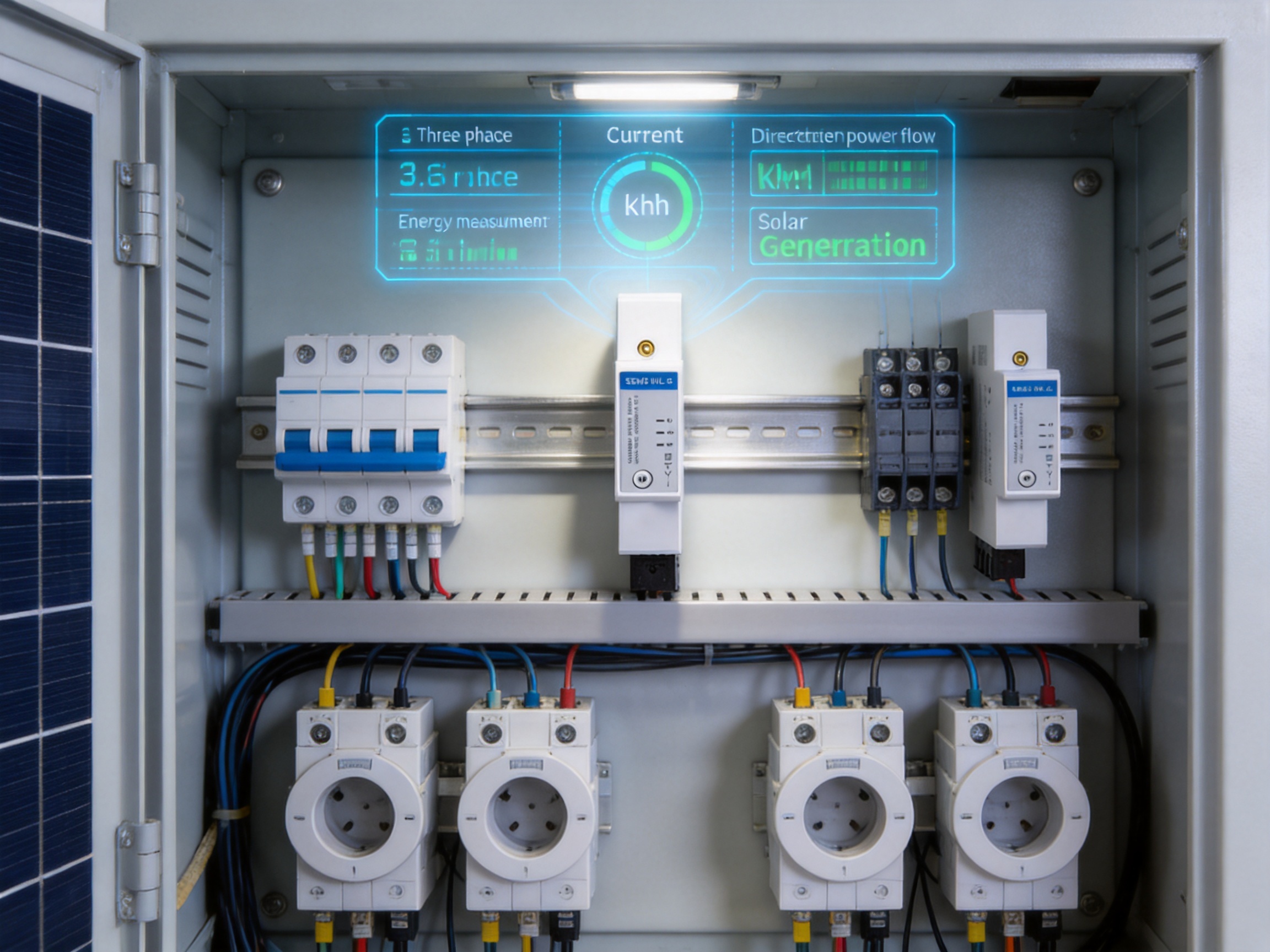
At the grid connection point, the meter can monitor the exchange of energy between a facility and the utility network. This is often the most important measurement location for a zero-export system because it shows whether the site is importing or exporting energy after local generation and consumption have been considered.
By measuring the grid-side current through external CTs and reading voltage at the appropriate points, the meter can provide the information needed by a compatible control system. The data can be used to monitor export levels, verify system behavior and support alarms when power flow exceeds a defined threshold.
The meter can also be used to monitor a PV feeder or generation circuit. Operators may compare the power produced by the solar installation with the site’s total load. This helps identify periods of high generation, inverter underperformance, unexpected curtailment or unusual consumption.
When several generation sources are present, individual meters can be allocated to separate feeders. The meter’s flexible mode selection makes it possible to monitor a three-phase PV source or several single-phase branches, depending on the design.
Self-consumption is the proportion of generated solar energy used at the site rather than exported. Accurate measurement of generation, consumption, import and export allows system owners to calculate this value over time. The results can guide decisions about battery storage, electric vehicle charging, process scheduling or additional solar capacity.
For commercial facilities, self-consumption analysis can reveal whether energy-intensive processes should be scheduled during daylight hours. For residential or small commercial installations, it can help determine whether a battery or smart load controller would provide meaningful benefits.
Battery systems require knowledge of real-time power flow. When the site is exporting energy, the battery may be charged if capacity is available. When the site is importing energy, the battery may discharge, subject to operating rules and battery limits. A meter with bi-directional power measurement can supply this information to a compatible energy management system.
The meter is not a battery controller by itself. Instead, it serves as a measurement device that can communicate with external equipment through Modbus RTU or Modbus TCP. This separation allows the system designer to select the most appropriate controller or software platform for the project.
Although the SEM3-WL-2 is well suited to solar PV metering, its functions also support many other applications. In smart buildings, it can monitor distribution boards, tenant circuits, HVAC equipment, lighting systems and common-area loads. In industrial plants, it can collect data from production lines, motors, compressors and auxiliary systems.
Facility operators can use the meter for submetering, energy benchmarking and operating-cost allocation. Because three single-phase channels can be used independently, one unit may monitor several smaller loads that would otherwise require separate meters.
In data and communication rooms, the meter can provide information about equipment power demand and help identify unusual changes. In retail or office environments, it can support tenant billing and comparison of energy use between departments. In educational facilities and public buildings, it can be used for energy-awareness programs and efficiency verification.
The device can also support commissioning and maintenance. Engineers can review voltage balance, current loading, power factor and frequency. Maintenance teams may use historical data from a connected software system to identify changes in equipment behavior before a failure occurs.
Before installation, the electrical system should be identified as 1P2W, 3P3W or 3P4W. The voltage arrangement, frequency and measurement objective should be confirmed. Designers should determine whether the meter will operate as one three-phase device or as three independent single-phase meters.
The CT ratio must match the measured circuit and the meter configuration. CTs should be installed in the correct direction so that imported and exported energy are interpreted correctly. Incorrect orientation may cause a negative reading, reversed energy direction or inaccurate system-level control decisions.
Current transformers should be installed according to their electrical ratings and manufacturer instructions. The secondary circuit must be handled safely, and the installation should be completed by qualified personnel familiar with CT measurement systems.
Phase conductors should be identified before voltage and CT connections are made. Each CT channel must correspond to the correct voltage phase. A mismatch between CT and voltage channels can produce incorrect power and energy values even when the individual voltage and current readings appear reasonable.
For RS485 operation, the communication address, baud rate, parity and stop-bit settings should match the connected master device. Multiple meters on one network must have unique addresses. Cable routing, shielding, grounding and termination should follow the requirements of the overall RS485 network design.
For Wi-Fi operation, the installation location should provide reliable wireless coverage. Network security policies, IP configuration and Modbus TCP access should be planned before commissioning. Where the meter is installed inside a metal enclosure, the effect of the enclosure on radio performance should be evaluated.
After wiring, the automatic phase-sequence detection function should be reviewed. If the meter reports reversed phase sequence, the wiring and configuration should be checked before normal operation. The sequence can be adjusted through communication where appropriate, but wiring accuracy should always be verified as part of commissioning.
The performance of an energy meter depends not only on its circuit design but also on the consistency of its manufacturing process. Eastron Electronic Co., Ltd. combines product development, production capability, laboratory testing and international quality practices to support the reliability of its electricity measurement products.
The company is headquartered in Jiaxing, China, near major industrial and commercial centers including Shanghai, Hangzhou and Jiangsu. Its product development activities cover electricity meters, power analyzers, current sensors, communication modules and energy-management systems. This broad technical scope supports the integration of measurement, communication and system-level functions in products such as the SEM3-WL-2.
A strong manufacturing organization must control the complete product lifecycle. This includes electrical design, embedded software, mechanical construction, component selection, assembly, calibration, testing, packaging and after-sales support. Experience across these stages helps ensure that the final meter performs consistently in real installation conditions.
Eastron maintains development teams in China and the United Kingdom and continues to invest in new electricity measurement technologies. Its work includes software, embedded software and hardware development. This combination is particularly relevant to a connected energy meter because accurate measurement, communication stability and configuration management must operate together.
Research and development capability also allows the company to respond to changing requirements in distributed energy, smart buildings, renewable generation and digital energy management. A meter designed for modern applications must accommodate more than basic energy counting; it must provide flexible interfaces, rapid data access and compatibility with wider automation systems.
The company has established a professional laboratory capable of performing EMC, LVD, accuracy and environmental tests. These test capabilities support product verification at several levels.
Electromagnetic compatibility testing evaluates whether the meter can operate correctly in electrically active environments and whether it avoids causing unacceptable interference. Low-voltage testing addresses safety-related electrical requirements. Accuracy testing confirms measurement performance against defined standards, while environmental testing examines operation under relevant temperature, humidity and other conditions.
Having professional laboratory resources available during development and production can shorten feedback cycles. Engineers can identify design weaknesses, make improvements and verify changes before products are released or supplied in volume. This is an important strength compared with manufacturers that rely entirely on external testing without an integrated development-and-verification process.
Eastron follows the ISO 9001 quality management system. A quality management system provides a structured framework for design control, purchasing, manufacturing, inspection, documentation and corrective action. For customers, this can improve confidence that product quality is managed through repeatable procedures rather than informal practices.
The company’s production has also been approved by SGS according to MID standards. While the precise compliance requirements depend on the intended product variant and application, independent assessment adds credibility to the manufacturer’s quality and production controls. Customers should always confirm the exact certification and approval status required for their market and project.
The company holds patented technologies in software, embedded software and hardware. Patented engineering work indicates continued investment in product differentiation and technical development. In a connected meter, innovation may involve measurement methods, communication functions, configuration processes, mechanical integration or data handling.
These capabilities contribute to products that are not limited to basic metering. The SEM3-WL-2 demonstrates this approach through its combined CT measurement, dual communication, automatic phase-sequence detection and flexible three-phase or three-channel operating modes.
Eastron products and services have been supplied to more than 50 countries across Europe, Asia-Pacific, America, the Middle East and Africa. International experience gives a manufacturer exposure to different electrical standards, installation practices, network architectures and application requirements.
For customers, technical support and after-sales service are important parts of product value. A meter is often integrated into a larger system, and successful operation may depend on correct CT configuration, Modbus mapping, network setup and commissioning support. A manufacturer with dedicated technical and service teams can help reduce project delays and improve long-term usability.

System integrators often need to balance technical performance, installation time, product availability and future service requirements. A flexible meter can simplify this balance. The SEM3-WL-2 can be specified for a range of low-voltage measurement tasks without requiring a separate product for every circuit arrangement.
The common hardware platform can help standardize engineering documents, wiring practices and software templates. Integrators can create reusable Modbus maps and commissioning procedures for projects that use several meters. The option of Wi-Fi or RS485 also allows communication architecture to be selected according to the building layout and customer requirements.
For solar installers, the CT connection can reduce the need for major changes to existing distribution equipment. The meter can be positioned on a DIN rail, while the CTs are installed around the selected conductors. This can be useful in retrofit projects where shutdown time must be limited.
For facility-management providers, the measurement data can be integrated into dashboards, alarms and reporting systems. Active and reactive energy data can support monthly analysis, while voltage, current, power factor and frequency values can assist maintenance teams.
Accurate measurement can improve energy decisions even when the meter is not used for formal billing. By identifying when and where electricity is consumed, users can focus efficiency measures on the circuits with the greatest potential. This can reduce unnecessary energy use, improve equipment scheduling and support verification of energy-saving projects.
In a solar PV project, accurate import and export information helps prevent incorrect conclusions about system performance. A PV array may produce substantial energy, but if most of that energy is exported while the facility continues to import power at other times, the site may benefit from load scheduling or storage. Detailed metering reveals these patterns.
In industrial environments, power factor and reactive-energy information can help identify the need for compensation or equipment review. Current measurements can show whether a feeder is approaching its practical capacity. Voltage information may reveal unbalanced conditions or supply issues that should be investigated.
The economic value of a meter therefore extends beyond the purchase price. A device that is easier to install, adaptable to several configurations and straightforward to integrate can reduce engineering and commissioning costs. Reliable data can also support operational improvements throughout the life of the installation.
A successful application begins with a clear measurement objective. The designer should define whether the meter is intended to monitor PV generation, grid exchange, total facility consumption, individual loads or several independent single-phase circuits.
Next, the electrical topology should be confirmed. The selected mode must correspond to the supply arrangement and the intended CT placement. CT ratios, conductor sizes, voltage levels and system frequency should be reviewed before procurement.
The communication method should then be selected. RS485 Modbus RTU is appropriate for a structured wired network and longer-distance communication. Wi-Fi Modbus TCP may be preferable for retrofit applications or installations with an established wireless network. In some projects, both interfaces may be retained to provide flexibility during commissioning or future system expansion.
Finally, the software integration should be planned. Register mapping, scaling, energy direction, phase association, alarms and data-logging intervals should be documented. This preparation helps ensure that the meter’s measurements are interpreted correctly by the supervisory system.
It is a CT-type, three-phase DIN rail energy meter with integrated Wi-Fi and RS485 communication. It measures electrical parameters and active and reactive energy in low-voltage AC systems.
Yes. It is suitable for PV generation monitoring, grid import and export measurement, self-consumption analysis and zero-export system monitoring when connected to a compatible controller or inverter management system.
Yes. The meter supports bi-directional measurement of imported and exported active and reactive energy.
Yes. The meter can operate as three independent single-phase meters. In this mode, the three external CTs can be configured with different CT ratios for independent loads.
The meter supports 1P2W, 3P3W and 3P4W supplies. Its nominal input is 3 × 230 V line-to-neutral or 400 V line-to-line, with a working range of 90–277 V AC line-to-neutral and 156–480 V AC line-to-line.
RS485 communication uses Modbus RTU. Wi-Fi communication uses Modbus TCP. The two interfaces provide wired and wireless integration options.
The specified maximum transmission distance is up to 1000 meters. Actual performance depends on cable selection, network topology, baud rate, termination and the surrounding electrical environment.
The stated range is up to 30 meters indoors and 50 meters outdoors, depending on local conditions. Building construction, metal enclosures, interference and network layout can affect the actual range.
Yes. It includes automatic phase-sequence detection and an alarm function. If the phase sequence is reversed, the meter can issue an alarm, and the phase sequence can be adjusted through communication.
Active-energy accuracy is specified as ±1% and is identified as IEC 62053-21 Class 1.
The specified current accuracy is ±0.5% from 4 A to 120 A, ±1% from 1 A to 4 A and ±3% from 0.06 A to 1 A.
Yes. The meter measures reactive energy in kVArh and specifies reactive-energy accuracy of ±2%.
Yes. Its CT connection, DIN rail mounting, RS485 Modbus RTU interface, broad measurement functions and support for three-phase systems make it suitable for industrial equipment, feeders, distribution boards and energy-management systems.
The electrical system type, voltage, frequency, CT ratio, CT orientation, phase association, communication settings and Wi-Fi coverage should be checked. Installation and commissioning should be performed by qualified personnel following applicable electrical safety requirements.
The manufacturer develops electricity meters, power analyzers, current sensors, communication modules and management systems. It maintains research and development teams, a professional testing laboratory, ISO 9001 quality management practices and testing capabilities for EMC, low-voltage safety, accuracy and environmental performance.
The SEM3-WL-2 is a versatile energy measurement device for modern electrical and renewable-energy systems. Its CT connection supports flexible installation, while its three-phase and three-independent-single-phase operating modes allow one product to address different measurement requirements. Bi-directional active and reactive energy measurement makes it suitable for monitoring the two-way power flows found in solar PV systems.
The combination of Wi-Fi Modbus TCP and RS485 Modbus RTU gives users freedom to choose between wireless deployment and robust wired networking. Automatic phase-sequence detection, multi-parameter measurement, rapid data updates and compact DIN rail mounting further strengthen its practical value.
Compared with conventional single-purpose meters, the device offers a broader application range and a more adaptable integration platform. It can support PV generation monitoring, zero-export measurement, grid exchange analysis, smart building submetering, industrial energy monitoring and multi-load measurement.
Its technical value is reinforced by the manufacturer’s research and development resources, professional laboratory capabilities, quality-management system, standards-oriented testing and international service experience. Together, these strengths provide a solid foundation for customers seeking dependable energy measurement solutions for distributed power systems and intelligent electrical networks.
IEC 62053-21, Electricity Metering Equipment: Particular Requirements for Static Meters for Active Energy.
Modbus Application Protocol Specification, Modbus Organization.
Modbus over Serial Line Specification and Implementation Guide, Modbus Organization.
IEEE 802.11 Wireless Local Area Network Standards, Institute of Electrical and Electronics Engineers.
ISO 9001, Quality Management Systems—Requirements, International Organization for Standardization.
General principles of current-transformer installation and secondary-circuit safety for electrical measurement applications.
Manufacturer product documentation for the SEM3-WL-2 CT-type three-phase DIN rail Wi-Fi energy meter.
Your email address will not be published. Required fields are marked *

We develop and produce high performance electricity meters, power analyzers, current sensors, communication modules and management systems.
Address:NO. 52, Dongjin Road, Nanhu, Jiaxing, Zhejiang, China
Copyright @ Eastron Electronic Co., Ltd. All rights reserved
