

 English
 Español
 Deutsch
 中文简体


Product Consultation
Your email address will not be published. Required fields are marked *
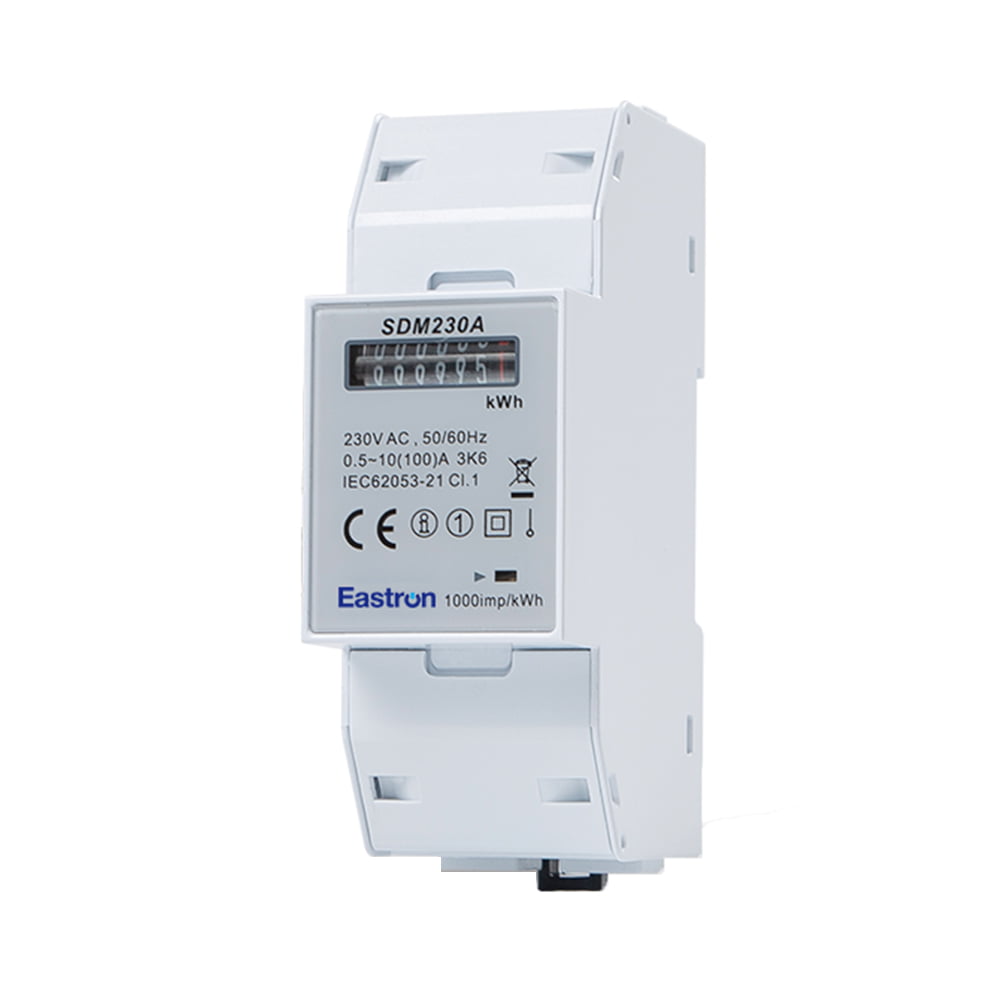
Analog Display 100A Din Rail Single Phase Electronic kWh meter with Pulse Output
Aug 11,2022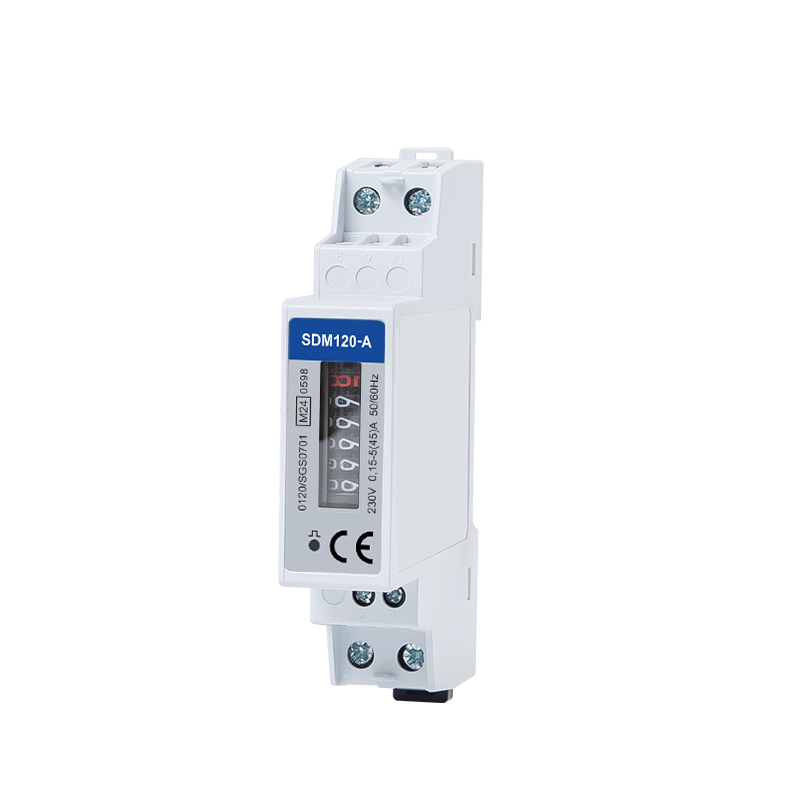
Analog Display Din Rail Single Phase Electronic kWh meter with Pulse Output
Aug 11,2022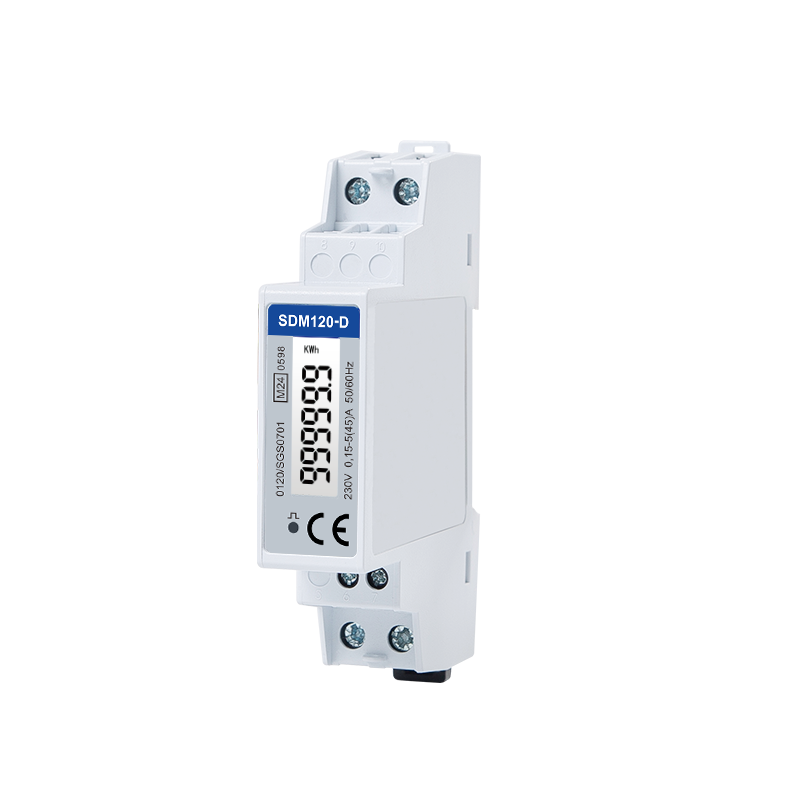
LCD Display Din Rail Single Phase Electronic kWh meter with Pulse Output
Aug 11,2022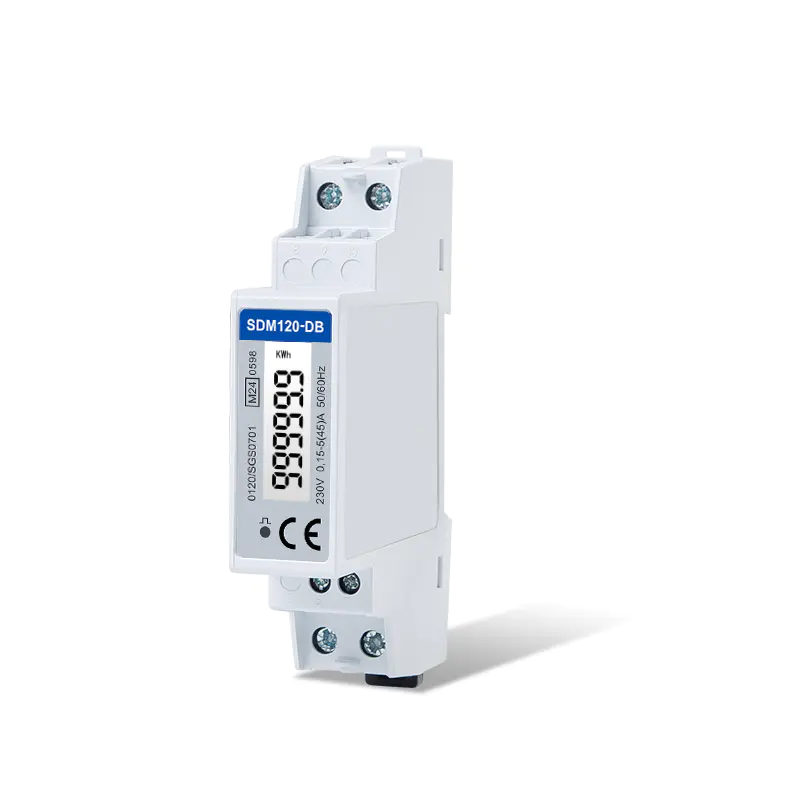
Backlit LCD Display Din Rail Single Phase Electronic kWh meter with Pulse Output
Aug 11,2022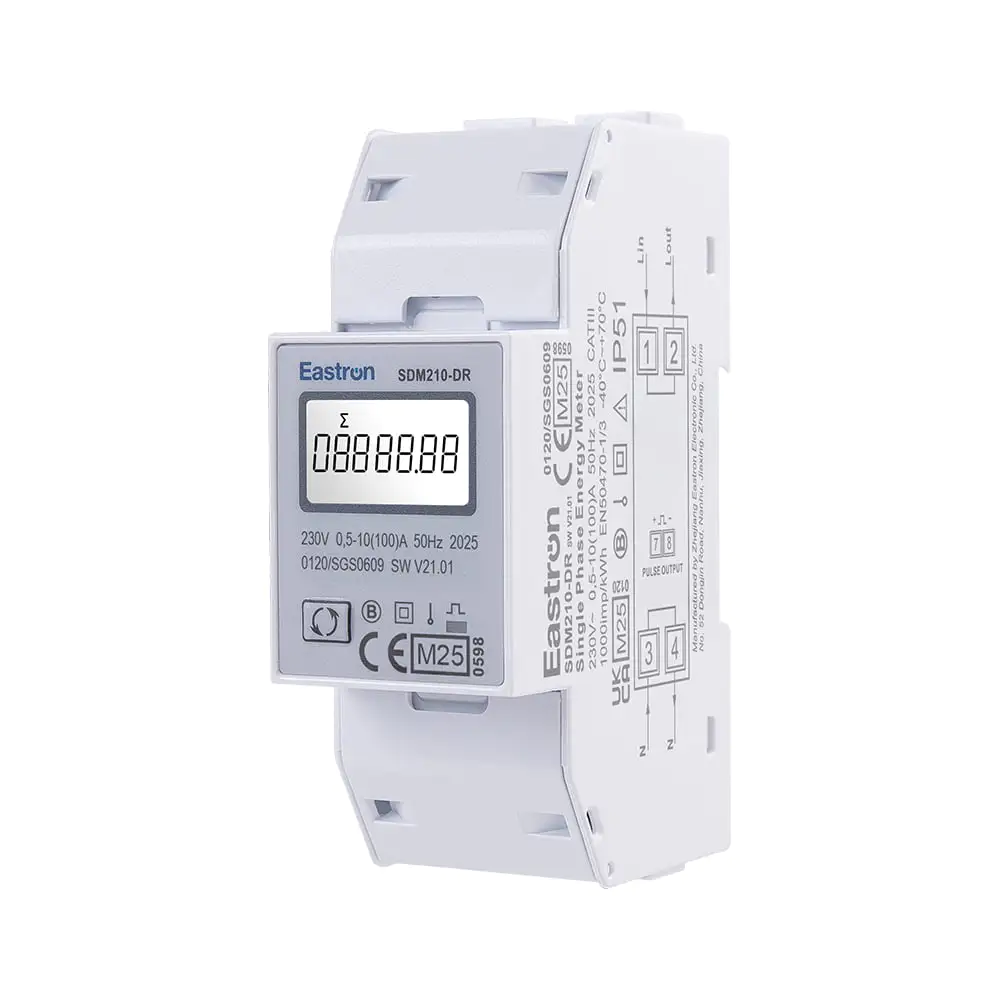
Resettable Din Rail Single Phase Electronic Energy meter with Pulse Output
Aug 11,2022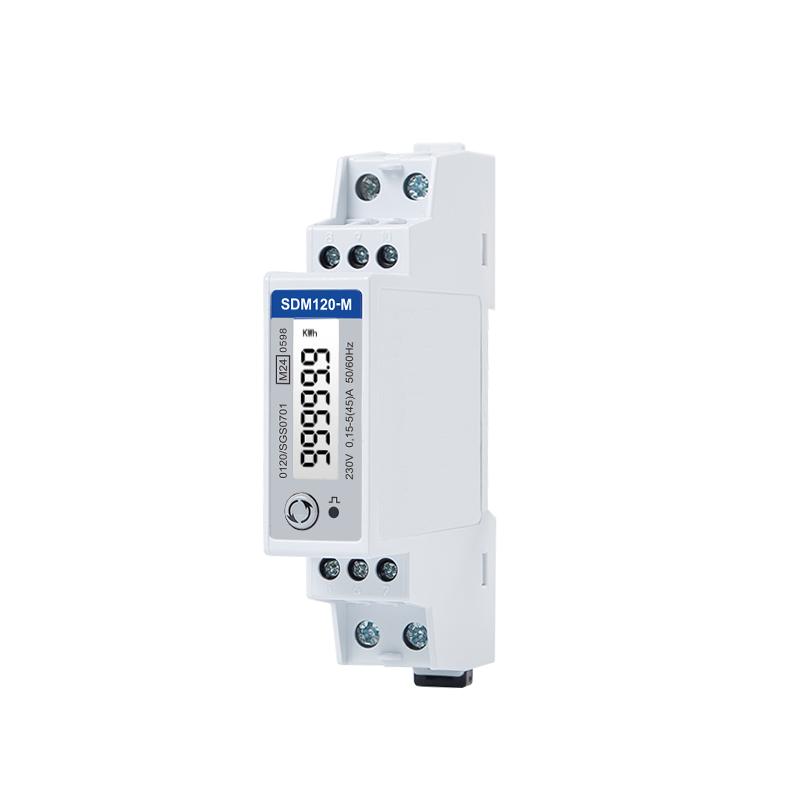
MID Din Rail Type Single Phase Multi-function Energy Meter for EV Charging Metering
Jul 26,2022Content

Accurate energy measurement is essential in residential distribution, commercial buildings, renewable-energy installations, workshops, rental properties, and small industrial applications. While many modern electricity meters emphasize digital screens, wireless communications, and complex software, there remains a strong demand for compact, dependable, and easy-to-read meters that provide straightforward active-energy measurement. The SDM120-A addresses this requirement through a practical combination of an analog display, direct current measurement, pulse output, DIN-rail installation, and MID approval.
Designed for single-phase, two-wire systems, the meter is suitable for applications where users need a clear indication of accumulated kilowatt-hours without installing a large multifunction instrument. Its one-module, 18 mm housing makes it especially valuable when distribution-board space is limited. With a maximum direct current rating of 45 A, the meter can be installed in a wide variety of small-load and sub-metering applications without requiring an external current transformer.
The product is manufactured by Eastron Electronic Co., Ltd., a specialist in electricity meters, power analyzers, current sensors, communication modules, and energy-management products. The company combines product development, laboratory testing, standards compliance, and international technical support to provide energy measurement equipment for customers in more than 50 countries.
The SDM120-A is a single-phase electronic kilowatt-hour meter designed for 1P2W electrical systems. It measures active energy and presents the accumulated result through an analog display. In addition, a pulse output enables the meter to be connected to a data logger, building-management system, energy controller, or other external monitoring equipment.
The meter is intended for direct connection to loads with a maximum current of 45 A. Its rated voltage is 230 V, and it operates within 80% to 120% of the rated voltage. The rated current is 5 A, the minimum current is 0.15 A, and the starting current is 20 mA. These characteristics allow the instrument to register low-load operation while also supporting ordinary small-scale electrical circuits.
As a DIN-rail device, the meter can be mounted neatly inside a distribution board or modular enclosure. Its 18 mm width corresponds to one standard DIN module, allowing installers to use the available space efficiently. This compact format is particularly useful for apartment sub-metering, individual office circuits, small workshops, photovoltaic generation measurement, and equipment-level monitoring.
The SDM120-A belongs to a product family that includes related SDM120 versions. Depending on the selected model, the family can support different display or output configurations. The SDM120-A version is characterized by its analog display and pulse-output function.
The meter measures active energy in a single-phase AC system. Active energy is the portion of electrical energy that performs useful work in appliances, motors, lighting systems, heating equipment, and electronic devices. It is normally expressed in kilowatt-hours, the unit used for electricity billing and energy consumption reporting.
By concentrating on active energy, the product offers a clear and focused solution for applications that do not require a full power-quality analyzer. Users can install the meter to measure the energy consumed by a tenant, a dedicated machine, a solar-generation circuit, a commercial area, or a specific household load.
The analog display provides a direct visual indication of accumulated energy. It does not depend on a menu system, software interface, network connection, or external power-monitoring platform. An operator can inspect the register locally and record the displayed value during routine maintenance or meter reading.
This simplicity is an important advantage in environments where the user wants a meter that is immediately understandable. Maintenance personnel can identify the reading without learning a communication protocol or navigating multiple digital screens. The display is also suitable for installations where a basic, continuously visible energy register is preferred.
The pulse output extends the usefulness of the analog meter. It provides a signal associated with active-energy measurement, allowing an external system to count pulses and calculate energy consumption. This makes the product suitable for integration with data acquisition equipment, energy-management systems, programmable controllers, and remote monitoring arrangements.
A pulse-output meter can serve as a practical bridge between simple local indication and more advanced energy management. The meter itself remains compact and easy to read, while a separate control or monitoring system can collect the pulse data for trend analysis, tenant allocation, equipment comparison, or generation monitoring.
The maximum direct current rating is 45 A. Direct connection eliminates the need for an external current transformer in applications that remain within the meter’s specified current range. This can simplify installation, reduce component count, minimize panel wiring, and lower the total cost of a sub-metering project.
Direct measurement can also reduce the number of potential installation errors. A current transformer requires correct primary and secondary connections, suitable shorting or terminal arrangements, and attention to polarity. For loads appropriate to a 45 A direct meter, the SDM120-A provides a more straightforward alternative.
The one-module, 18 mm housing is one of the product’s strongest practical advantages. Distribution boards often contain circuit breakers, residual-current devices, surge-protection equipment, contactors, timers, and communication components. A narrow meter helps preserve valuable rail space and allows more functions to be fitted into a compact enclosure.
The small footprint is also useful when an installer needs to add measurement to an existing panel. Instead of replacing the enclosure or reorganizing a complete row of devices, the installer may be able to reserve a single module for the energy meter, subject to the requirements of the applicable electrical installation rules.
The meter is MID approved to meet the requirements of European Measuring Instruments Directive 2014/32/EU. This is significant for applications where measured energy may be used for commercial allocation, tenant billing, or other regulated measurement purposes, subject to the specific national and installation requirements that apply.
MID compliance provides confidence that the product has been assessed against relevant requirements for measuring instruments. It distinguishes the meter from basic monitoring devices that may show energy values but are not intended for approved measurement applications.
| Parameter | Specification |
|---|---|
| Measurement system | RMS measurement on a single-phase AC system, 1P+N |
| Wiring configuration | Single-phase, two-wire |
| Rated voltage | 230 V |
| Operating voltage range | 80% to 120% of rated voltage |
| Rated current | 5 A |
| Maximum current | 45 A |
| Minimum current | 0.15 A |
| Starting current | 20 mA |
| Energy measured | Active energy |
| Accuracy classification | IEC 62053-21 Class 1; EN 50470-3:2022 Class B/C |
| Output | Pulse output for active energy |
| Mounting format | DIN rail, one module, 18 mm |
The published accuracy information identifies compliance with IEC 62053-21 Class 1 and EN 50470-3:2022 Class B/C classifications. The applicable class depends on the relevant standard and product configuration. Installers and system designers should consult the current technical documentation before using the device in a particular billing or compliance application.
The stated measurement method is RMS measurement on a single-phase AC system. This makes the meter appropriate for ordinary 230 V single-phase circuits. It should not be treated as a three-phase meter, a reactive-energy meter, or a general-purpose power-quality analyzer unless a different product is selected for those functions.
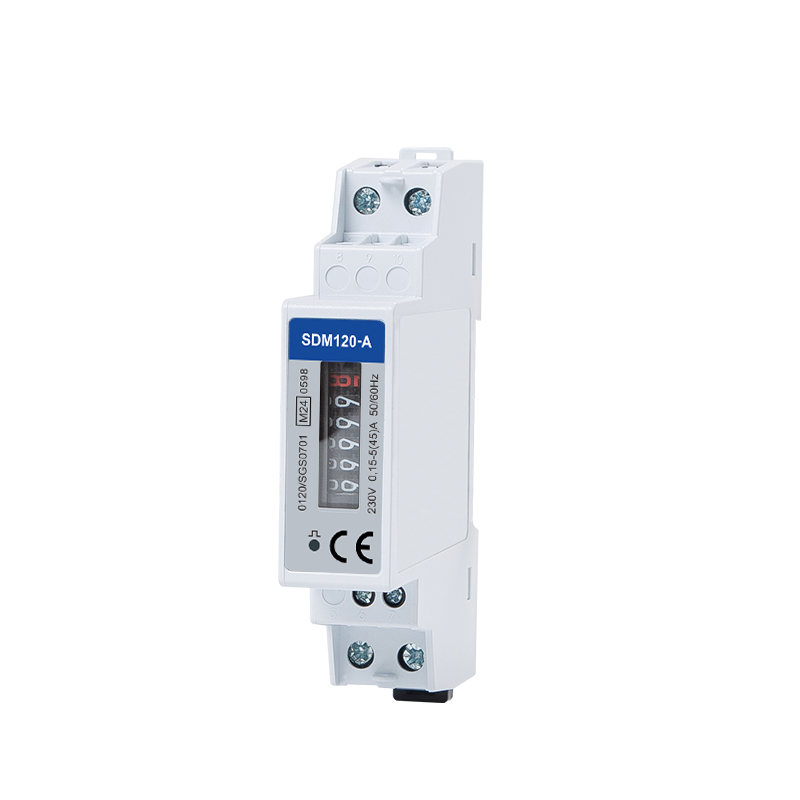
Analog Display Din Rail Single Phase MID Energy Meter with Pulse Output
The meter can be used to measure the energy consumed by an individual apartment, annex, rental unit, garage, workshop, or dedicated household circuit. The analog register provides an easily accessible local reading, while the pulse output can supply information to a separate monitoring system.
For landlords and property managers, a compact MID-approved meter may help support energy allocation where the installation and local regulations permit such use. The direct 45 A input is suitable for many small residential loads, although the total circuit design, protective devices, conductor ratings, and local electrical requirements must always be evaluated by a qualified professional.
Small offices, shops, studios, kiosks, and service areas often need individual energy measurement without the expense or complexity of a large multifunction meter. The SDM120-A can be installed to monitor a lighting circuit, tenant area, vending area, office suite, or auxiliary equipment group.
Because it occupies only one DIN module, the meter can be incorporated into compact commercial distribution boards. Its pulse output can also be connected to a building-management system to compare consumption among different areas or to establish operating profiles over time.
The product description identifies a unidirectional, anti-reverse measurement version for solar-generation energy measurement. Such a configuration can be used where the energy flow must be measured in one intended direction, for example when monitoring generated energy from a small photovoltaic installation.
Solar applications require careful attention to the selected version, wiring arrangement, direction of energy flow, protection, and local grid requirements. The meter should be selected and installed according to the manufacturer’s instructions and the relevant electrical regulations.
Factories, workshops, and service facilities frequently need to understand the energy consumption of individual machines or work areas. A compact direct-connected meter can be installed for equipment that falls within the current rating. This helps operators compare operating costs, identify abnormal consumption, and evaluate the effect of maintenance or process changes.
When the pulse output is connected to a data-collection system, the meter can contribute to dashboards, energy reports, production analysis, and maintenance records. It offers a practical measurement point without requiring a large multifunction analyzer at every machine.
Energy-efficiency programs depend on measurement. A building owner cannot reliably evaluate improvements without knowing where energy is consumed and how consumption changes over time. The meter can provide an economical sub-metering point for lighting, heating auxiliaries, pumps, ventilation equipment, or tenant circuits.
Its straightforward design is useful in projects that require many measurement points. The narrow housing can reduce panel size, and the pulse interface can support centralized collection without requiring a network-enabled meter at every location.
Traditional mechanical meters use a rotating disk and electromechanical registers. Although such meters have a long history, they are generally larger, heavier, and less convenient to integrate into modern modular distribution boards. The SDM120-A uses electronic measurement technology in a compact DIN-rail package.
The electronic design supports a small enclosure, direct pulse output, and compatibility with current energy-management practices. It also avoids the moving measurement disk associated with induction-type meters. For new installations and retrofit projects, the electronic DIN-rail format is normally easier to standardize.
A multifunction power meter may measure voltage, current, frequency, power factor, active power, reactive power, harmonics, demand, and energy. These capabilities are valuable in advanced industrial systems, but they may be unnecessary for a simple active-energy measurement point.
The SDM120-A offers a more focused alternative. It provides the essential active-energy function, local indication, and pulse output in a one-module housing. This can reduce purchase cost, installation complexity, panel space, and operator training when advanced power-quality functions are not required.
Networked smart meters can provide extensive remote data, but they may require communication wiring, network configuration, gateways, software licensing, cybersecurity procedures, and ongoing system maintenance. Not every project needs those features.
The SDM120-A can operate as a simple local meter while still offering pulse integration. This gives the installer a choice: use the analog reading alone, or connect the pulse output to an existing monitoring platform. The approach is especially practical for small projects where a complete communications infrastructure would be disproportionate.
Current-transformer-operated meters are necessary for higher-current applications, but they add hardware and installation requirements. The SDM120-A can measure loads up to 45 A directly, avoiding the need for a separate current transformer within its intended application range.
This reduces the number of components in the panel and can improve installation efficiency. It also removes the need to select a transformer ratio for a modest load. For higher currents, a suitable transformer-operated meter must be chosen instead.
Many low-cost energy monitors are intended only for general observation. They may be useful for identifying consumption trends, but they are not necessarily approved for measurement applications involving regulated energy allocation or commercial billing.
The MID approval of the SDM120-A provides an important distinction. It supports use in applications where compliance and measurement credibility are important, subject to correct installation, verification of the specific model, and applicable national legislation.
Eastron Electronic Co., Ltd. focuses on electricity products and energy measurement solutions. Its product range includes electricity meters, power analyzers, current sensors, communication modules, and management systems. This specialization helps the company develop products around the practical requirements of electrical measurement rather than treating metering as an incidental product category.
The SDM120-A reflects this focused approach. Its design combines measurement accuracy, modular installation, local indication, and system integration in a compact product. The result is a meter that serves both simple and expandable applications.
The company continues to invest in research and development for new electricity-metering technologies and products. Development teams in China and the United Kingdom contribute to the company’s technical capabilities, while collaboration with universities and research institutions supports the introduction of advanced technologies.
For customers, research and development strength is valuable because electrical standards, energy-management practices, renewable-energy applications, and communication requirements continue to change. A manufacturer with an active development program is better positioned to update products and create compatible solutions for different markets.
Eastron has established an in-house professional laboratory capable of performing electromagnetic compatibility, low-voltage directive, accuracy, and environmental tests. These test capabilities are important for electricity meters because reliability depends on more than nominal measurement accuracy.
Electromagnetic compatibility testing helps evaluate whether a meter can operate correctly in electrically noisy environments and whether it avoids causing unacceptable interference. Low-voltage and safety-related testing supports assessment of the product’s electrical construction. Accuracy testing verifies measurement behavior, while environmental testing evaluates operation under defined temperature, humidity, and other conditions.
Maintaining internal laboratory capabilities can improve development efficiency. Engineers can identify design issues earlier, repeat tests during product refinement, and verify production-related changes more systematically. External certification and approval remain important, but internal testing provides an additional layer of engineering control.
The company follows an ISO 9001 quality-management system. A quality-management system establishes controlled processes for design, purchasing, production, inspection, documentation, corrective action, and continual improvement. In metering products, process consistency is particularly important because small variations in components, assembly, calibration, or testing can affect long-term performance.
Quality management also supports traceability. When manufacturing records, inspection results, and corrective actions are properly controlled, the manufacturer can investigate issues more effectively and improve production reliability over time.
The company’s production is approved by SGS according to MID standards. This supports confidence that manufacturing procedures are aligned with the requirements associated with approved measuring instruments. For customers purchasing meters for regulated or semi-regulated applications, the production environment is an important consideration in addition to the product’s published electrical specifications.
Approval does not remove the responsibility of the installer or system operator. The product must still be correctly selected, wired, sealed where required, commissioned, and used within the conditions defined by the applicable regulations. Nevertheless, controlled production and recognized conformity processes provide a stronger foundation than an unverified general-purpose monitoring device.
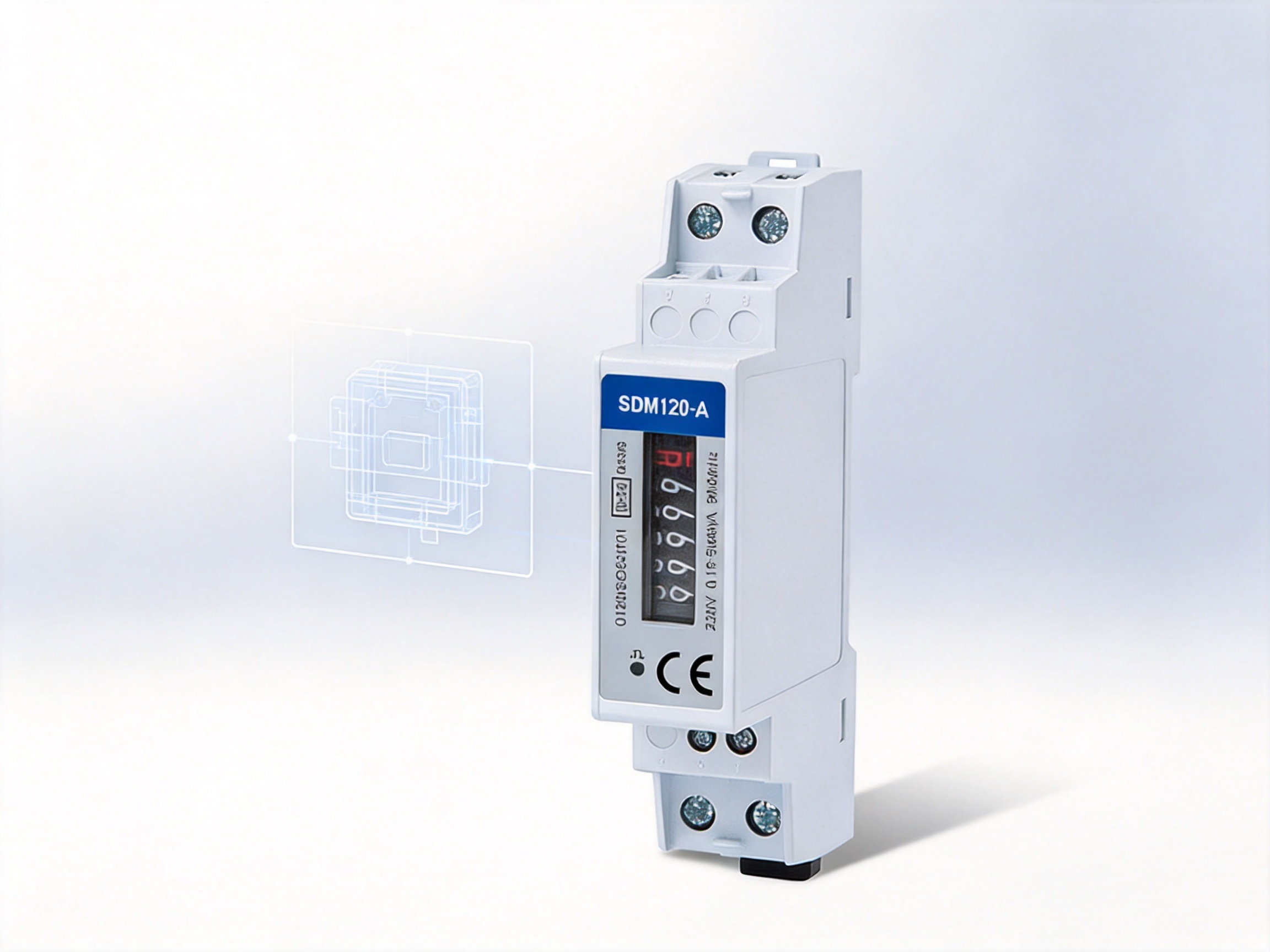
The SDM120-A is intended for DIN-rail installation in a suitable electrical enclosure. Installation should be carried out by a qualified electrician who understands the local wiring rules, protective requirements, isolation procedures, conductor sizing, and meter connection diagram.
Before installation, the user should confirm that the system is a 230 V single-phase, two-wire circuit and that the expected current remains within the specified direct-load range. The rated and maximum current values should be considered together with the circuit breaker, cable capacity, ambient temperature, enclosure conditions, and prospective fault current.
The wiring diagram supplied with the product should be followed exactly. Correct line and neutral identification, input and output terminal arrangement, polarity, and pulse-output connections are essential. Incorrect wiring may produce inaccurate measurement, prevent the meter from operating correctly, or create a safety hazard.
The meter should be installed in an enclosure that protects it from excessive dust, moisture, mechanical impact, condensation, and unauthorized access. The surrounding equipment should not obstruct heat dissipation or place mechanical stress on the meter terminals.
Where the pulse output is connected to a monitoring system, the external equipment must be compatible with the output characteristics and wiring requirements. Signal cables should be routed in a way that minimizes the possibility of interference from high-current conductors, contactors, motors, or variable-frequency drives.
After installation, the electrician should verify the voltage, connections, pulse behavior, and energy registration under a known load. Any commissioning procedure required for MID or local billing applications should also be completed and documented.
The analog display makes routine reading uncomplicated. A maintenance worker can inspect the energy register without connecting a laptop or opening a software application. This is useful for periodic manual readings, service inspections, and situations where network access is unavailable.
The pulse output allows the meter to participate in a larger monitoring system when required. An organization can begin with local readings and later add centralized data collection. This staged approach can help control project costs and avoid installing unnecessary communications features at the initial stage.
The 18 mm width allows the meter to fit into compact boards. When a project includes numerous measurement points, the space savings can become substantial. A narrow meter can also simplify retrofit work where existing cabinets have limited free capacity.
For direct loads within 45 A, the product does not require an external current transformer. Fewer components can mean less wiring, fewer mounting tasks, fewer points of failure, and a simpler bill of materials.
The meter can be used in residential, commercial, renewable-energy, and light-industrial environments. Its functionality is deliberately focused, but the combination of local display, pulse output, direct measurement, and MID approval supports a broad range of practical applications.
A responsible product evaluation must also consider the situations where the SDM120-A may not be the correct choice. It is designed for single-phase measurement and should not be used as a substitute for a three-phase meter. Projects involving three-phase loads require a suitable three-phase product.
The maximum direct current is 45 A. Installations above this value require an appropriate transformer-operated meter or another device rated for the intended current. Selecting a meter solely because its physical size is convenient, without checking the current requirement, could create a serious design problem.
The meter focuses on active energy. If a project requires reactive-energy measurement, power factor, demand, harmonics, waveform recording, frequency analysis, or extensive communications, a multifunction energy meter or power analyzer may be more appropriate.
The analog display is useful for direct reading, but it does not provide the same type of high-resolution information as a digital screen with multiple parameters. Users who need instantaneous power, voltage, current, or historical data should select a product designed for those functions.
Finally, MID approval should be interpreted in the context of the intended application. National rules may define requirements for verification, installation, sealing, ownership, billing, and periodic inspection. Users should confirm these obligations before deploying the product for commercial measurement.
The performance of an energy meter depends on its circuit design, sensors, firmware, display, enclosure, terminals, calibration process, and production controls. A product’s reliability is therefore closely connected to the manufacturer’s engineering and manufacturing capability.
Eastron’s specialization in energy measurement gives customers access to a broader technical ecosystem. A customer who begins with a compact active-energy meter may later require current transformers, gateways, communication modules, power analyzers, or energy-management systems. A manufacturer with products across these categories can help create a more consistent measurement architecture.
The company’s international customer base also indicates experience in adapting products to different market expectations and regulatory environments. Its products and services have been supplied across Europe, Asia-Pacific, the Americas, the Middle East, and Africa. Such geographical reach requires attention to documentation, certification, technical support, logistics, and after-sales service.
Professional technical support is particularly important in energy measurement. Questions about wiring, pulse integration, measurement direction, accuracy, commissioning, and application suitability can affect the success of an installation. A manufacturer that provides technical and after-sales resources adds value beyond the physical meter.
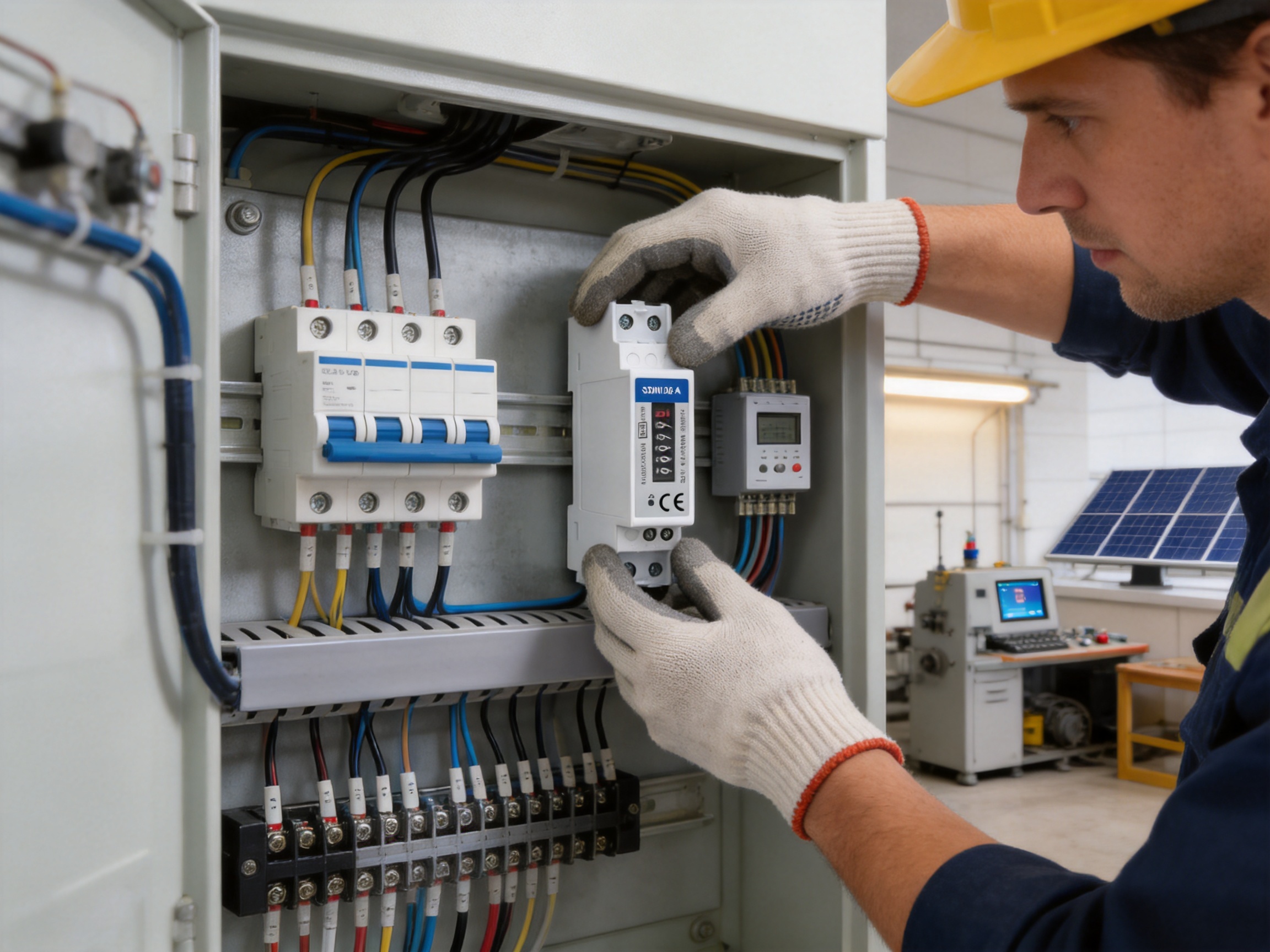
Routine maintenance should begin with visual inspection. The installer or operator should check that the meter remains securely mounted, the enclosure is intact, terminals show no signs of overheating, and wiring remains properly supported. Any discoloration, odor, loose connection, or abnormal noise should be investigated by qualified personnel.
The analog register can be recorded at regular intervals to establish a consumption history. Comparing readings over time may reveal unusual increases, equipment changes, seasonal effects, or possible circuit problems. When the pulse output is connected to a data logger, automated records can provide more detailed analysis.
The meter should be operated within the specified voltage, current, environmental, and installation conditions. Overloading, exposure to moisture, excessive heat, or incorrect wiring can reduce service life and compromise measurement reliability.
For installations associated with regulated energy measurement, inspection and verification should follow the requirements of the relevant authority or contract. Seals and adjustment controls should not be disturbed by unauthorized personnel.
Energy management begins with dependable measurement. A facility may have efficiency goals, renewable-energy targets, or cost-reduction plans, but these objectives require trustworthy data. The SDM120-A can act as a measurement point within a broader strategy by showing accumulated energy locally and supplying pulses to a central system.
Multiple meters can be installed across separate circuits to create a basic energy map. This can reveal which areas consume the most energy and whether equipment operates outside expected schedules. In a commercial building, sub-metering can support tenant comparisons. In a workshop, it can help associate energy use with production activity. In a solar installation, it can assist with generation monitoring when the correct directional version is selected.
The meter’s simplicity may also encourage more widespread deployment. A complex meter with features that are never used can increase project cost and maintenance effort. A focused meter that provides the required data at each measurement point may deliver better value across a large installation.
It is designed for RMS measurement on a single-phase AC system with a single-phase, two-wire configuration, commonly described as 1P2W or 1P+N.
The rated voltage is 230 V. The stated operating range is 80% to 120% of the rated voltage.
The maximum direct current is 45 A. Loads above this value require a meter and current-measurement arrangement designed for the higher current.
For applications within its specified 45 A direct-load capacity, the meter is designed for direct connection and does not require an external current transformer.
The meter measures active energy. It is not presented as a reactive-energy meter or a complete power-quality analyzer.
The pulse output provides an active-energy signal that can be counted by external equipment such as a data logger, controller, gateway, or energy-management system.
The meter occupies one DIN module and has an 18 mm width.
The meter is MID approved, which supports applications requiring approved measurement, subject to correct installation and the specific legal, regulatory, and national requirements applicable to the project.
The product information identifies a unidirectional, anti-reverse measurement version for solar-generation energy measurement. The correct version, wiring method, and application suitability must be confirmed before installation.
The SDM120-A is described as an analog active-energy meter. It should not be assumed to display instantaneous voltage, current, power factor, or other parameters unless those functions are specified for the selected model.
Installation should be performed by a qualified electrician in accordance with the supplied wiring diagram, applicable electrical standards, and local regulations.
Users should verify the phase configuration, rated voltage, maximum current, measurement direction, pulse-output requirements, MID application requirements, enclosure space, environmental conditions, and any need for additional measurements or communications.
The SDM120-A offers a practical answer to a common metering requirement: accurate and approved active-energy measurement in a compact single-phase DIN-rail format. Its analog display provides immediate local visibility, while the pulse output allows integration with external monitoring and management systems. The 45 A direct-load capacity reduces the need for additional current-measurement components, and the one-module housing helps conserve distribution-board space.
Compared with mechanical meters, large multifunction instruments, transformer-operated devices, and basic non-approved monitors, the product provides a balanced combination of simplicity, compactness, integration capability, and measurement credibility. It is well suited to residential sub-metering, commercial circuits, equipment monitoring, small photovoltaic applications, and energy-efficiency projects.
The manufacturer’s strengths extend beyond the individual product. Specialized energy-measurement expertise, research and development resources, an internal professional laboratory, ISO 9001 quality management, MID-related production approval, and international support capabilities provide a strong foundation for dependable supply and long-term application support.
For users who need a focused active-energy meter rather than a complex power analyzer, the SDM120-A represents an efficient and scalable solution. Its design supports straightforward installation today while retaining the flexibility to become part of a wider energy-monitoring system tomorrow.
1. Eastron Electronic Co., Ltd., SDM120-A product information and technical specifications.
2. IEC 62053-21, Electricity Metering Equipment: Particular Requirements for Static Meters for Active Energy.
3. EN 50470-3:2022, Electricity Metering Equipment: Particular Requirements for Static Meters for Active Energy.
4. European Union Directive 2014/32/EU on Measuring Instruments.
5. ISO 9001, Quality Management Systems — Requirements.
6. General principles of DIN-rail electrical installation and low-voltage distribution-board design.
Your email address will not be published. Required fields are marked *

We develop and produce high performance electricity meters, power analyzers, current sensors, communication modules and management systems.
Address:NO. 52, Dongjin Road, Nanhu, Jiaxing, Zhejiang, China
Copyright @ Eastron Electronic Co., Ltd. All rights reserved
