

 English
 Español
 Deutsch
 中文简体
中文简体

Product Consultation
Your email address will not be published. Required fields are marked *
Europe's Solar and Energy Storage Transition: Transforming the Power System Infrastructure for a Renewable Future
Jul 10,2026
Power Systems Are Becoming “Real-Time Systems”: Why Data Is More Critical Than Electricity
Jul 06,2026
New EPBD Regulations Drive HVAC Energy Transparency and Boost Demand for Smart Meters
Jul 07,2026Content
In modern electrical distribution, precise energy measurement is no longer a simple matter of recording consumption at the end of a billing period. It has become a foundation for cost allocation, energy efficiency, tenant metering, renewable generation tracking, equipment supervision, and regulatory compliance. A compact single phase DIN rail energy meter with an analog display and pulse output meets these needs by combining proven metering reliability with straightforward installation and practical system integration.
This article introduces a single phase two wire kWh meter designed for DIN rail mounting, active energy measurement, pulse output communication, and MID-approved applications. With a maximum direct load of 45A, a slim one-module 18mm housing, analog display readability, and support for single phase AC systems, the meter is suitable for residential distribution boards, commercial sub-metering panels, small industrial cabinets, photovoltaic generation monitoring, and energy management systems that require dependable kWh data.
Rather than focusing only on basic metering, this article explores why this type of product is valuable in real projects: how it saves panel space, how pulse output simplifies integration, how MID approval supports trust and compliance, how analog display technology remains relevant, and how advanced manufacturing, laboratory testing, quality systems, and engineering expertise contribute to long-term reliability.
Analog Display Din Rail Single Phase MID Energy Meter with Pulse Output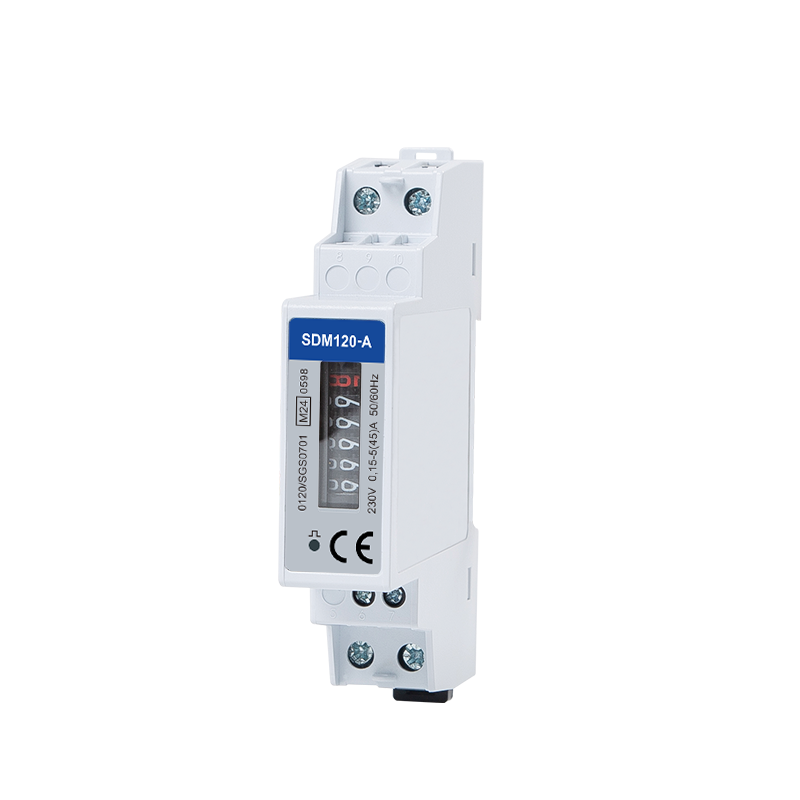
The product is a DIN rail single phase electronic kWh meter with an analog display and pulse output. It is designed for a 1P2W electrical system, meaning one phase and one neutral, and it measures active energy on a single phase AC network. Its direct current input capability reaches a maximum of 45A, making it practical for many low-voltage single phase circuits without the need for an external current transformer.
The meter is part of a compact 1-DIN module format. With a width of only 18mm, it occupies the same panel space as a typical single modular circuit device. This makes it especially useful in distribution boards where available DIN rail space is limited. Many competing meters require two, three, or even more DIN modules, which can create difficulties in retrofitting existing panels. By keeping the housing narrow, the meter helps installers add metering functionality without redesigning the entire enclosure.
The product supports active energy measurement and provides pulse output for active energy. Pulse output is a simple but highly useful communication method. Each pulse represents a defined unit of energy, allowing the meter to be connected to data loggers, building management systems, energy monitoring devices, gateways, or PLC-based acquisition systems. For projects that do not require a full digital communication protocol but still need remote energy data, pulse output offers an economical and reliable solution.
The analog display provides direct local reading. In many field conditions, analog or mechanical-style displays remain valued because they are intuitive, stable, and easy to verify. Technicians can read the energy value directly at the cabinet without connecting a computer or configuring software. This supports fast commissioning, simple inspection, and convenient manual auditing.
The unit is MID approved, meeting requirements related to the European Measuring Instruments Directive 2014/32/EU. For metering applications where measured energy may be used for billing, tenant cost allocation, or formal reporting, compliance is critical. MID approval gives users confidence that the meter has passed recognized requirements for accuracy, consistency, and conformity.
The meter is engineered for RMS measurement on a single phase AC system. RMS measurement is essential for accurate energy monitoring because AC voltage and current are time-varying signals. In real electrical systems, loads are often nonlinear, and waveforms may not be perfectly sinusoidal. By measuring RMS values and calculating energy according to applicable metering standards, the meter delivers practical accuracy for everyday power distribution environments.
The rated current is 5A, while the maximum current is 45A. The minimum current is 0.15A, and the starting current is 20mA. These values indicate that the meter can begin detecting energy flow at a very low current level while still tolerating significantly higher direct load conditions. This range is useful in residential and light commercial applications where load current can vary from standby consumption to full operating demand.
The rated voltage is 230V, with an operating voltage range of 80% to 120% of rated voltage. This allows the meter to continue functioning under normal supply variation. In real installations, voltage may fluctuate due to grid conditions, local load changes, distance from the transformer, or temporary disturbances. A practical operating voltage window contributes to dependable operation across different environments.
The energy measurement accuracy follows IEC 62053-21 Class 1 and related EN 50470-3:2022 Class B/C references. These standards are important in the energy metering field because they define accuracy expectations, testing procedures, and performance levels. When a meter is designed and verified according to recognized IEC and EN standards, users can compare its performance more confidently with other professional metering products.
Feature |
Specification |
Practical Value |
System Type |
Single phase two wire, 1P2W |
Suitable for common residential and light commercial AC circuits |
Measurement Type |
RMS on single phase AC system |
Supports dependable active energy measurement |
Measured Energy |
Active energy |
Records kWh for consumption monitoring and allocation |
Display |
Analog display |
Easy local reading without software or communication tools |
Output |
Pulse output for active energy |
Simple integration with monitoring systems and data loggers |
Maximum Direct Current |
45A |
Direct connection for many single phase circuits |
Width |
1 module, 18mm |
Saves space in compact distribution boards |
Rated Voltage |
230V |
Matches standard single phase low-voltage networks |
Compliance |
MID approved |
Supports regulated and trusted metering applications |
Digital displays are common in modern energy meters, but analog display meters continue to have important advantages in specific applications. An analog display is easy to understand, requires no menu navigation, and can be read quickly by users with different technical backgrounds. In shared facilities, rental properties, maintenance rooms, and small commercial panels, a simple display can reduce training requirements and prevent operating errors.
Another advantage is reading stability. A user who wants to confirm cumulative kWh consumption can look directly at the display and record the value. There is no need to scroll through multiple parameters or wait for a display cycle. This is particularly useful when the meter is used for sub-metering or manual monthly energy recording.
Analog displays also support practical verification. During commissioning, an installer can energize the circuit, apply a known load, and observe that the display and pulse output behave as expected. The directness of the interface is a benefit in environments where fast installation and minimal configuration are preferred.
In addition, analog display technology can be attractive for long-term field use because it avoids unnecessary complexity. Not every application needs a multifunction screen, RS485 communication, remote parameter setting, or power quality diagnostics. In many cases, the customer simply needs a certified, compact, reliable kWh meter. For those users, an analog display combined with pulse output creates an excellent balance between simplicity and integration capability.
Pulse output is one of the most widely used methods for basic energy data acquisition. It works by generating electrical pulses proportional to active energy consumption. A connected device counts the pulses and converts them into kWh values according to the pulse constant. This approach is simple, robust, and cost-effective.
Compared with advanced communication protocols, pulse output has fewer configuration requirements. It does not require addressing, baud rate setting, register mapping, or communication troubleshooting. This makes it suitable for installers who need quick and reliable integration. It is also useful where the monitoring system already has pulse input channels.
For building energy management, pulse output allows the meter to feed consumption data into a central monitoring device. Facility managers can track different circuits, tenants, machines, lighting groups, or renewable generation lines. Because pulse output is based on accumulated energy, it is well suited for consumption analysis, cost allocation, and efficiency comparisons.
In solar generation monitoring, a pulse output kWh meter can be used to record generated energy or exported energy depending on the installation design. The product’s availability in a unidirectional anti-reverse measurement version further supports generation applications where it is important to prevent reverse energy from reducing the recorded total. This feature is valuable when measuring photovoltaic output or dedicated production circuits.
Pulse output also supports long-term reliability because it is a mature and widely accepted method. Many data acquisition systems, gateways, controllers, and energy platforms include pulse counting functions. For users who want dependable energy data without the cost and complexity of a full smart meter network, pulse output is often the most efficient choice.
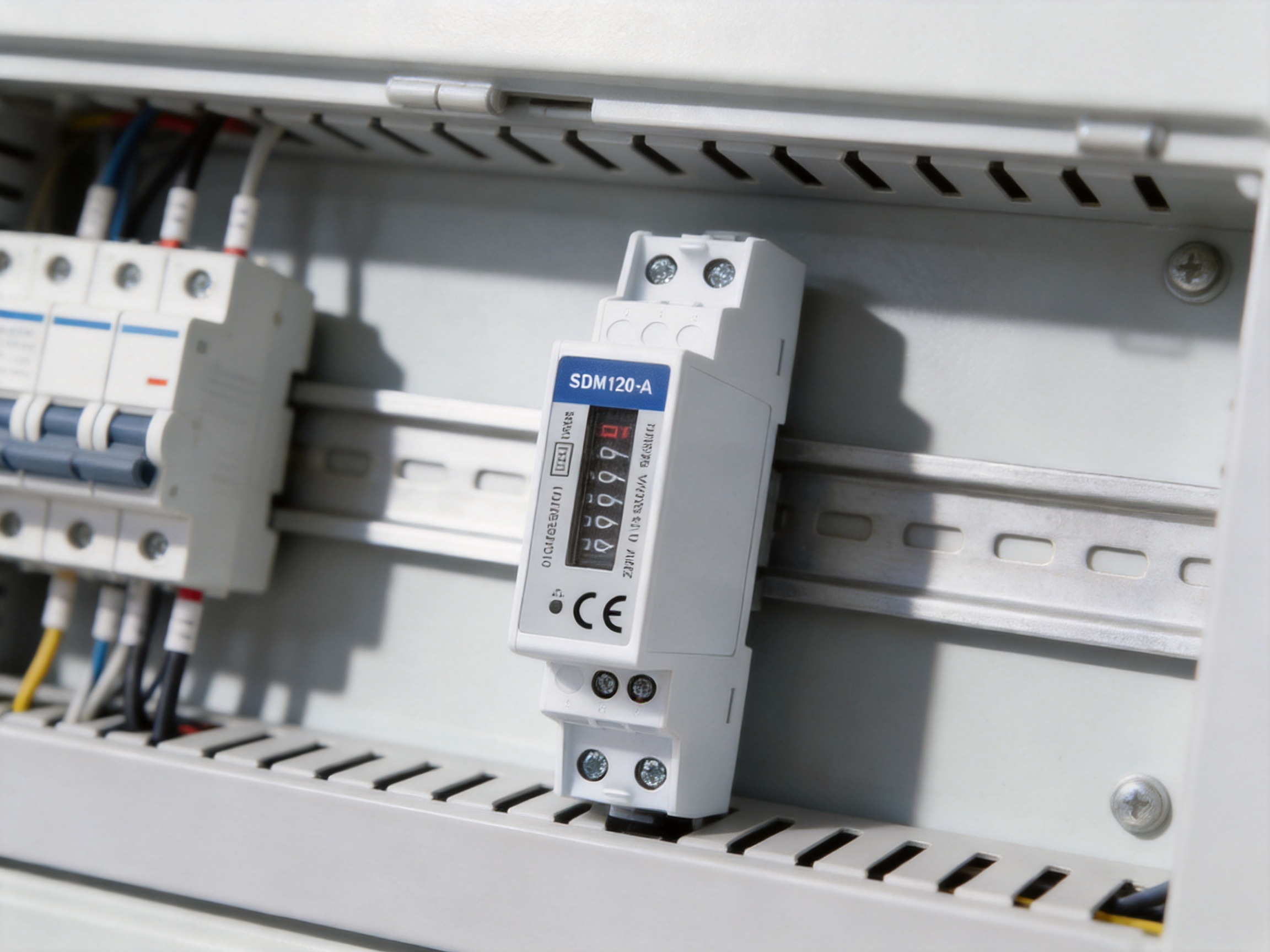
The 18mm one-module housing is one of the strongest practical advantages of this meter. In electrical panels, space is always valuable. Every additional module affects enclosure size, wiring layout, heat distribution, installation time, and future expansion capacity. A compact energy meter allows engineers to add metering points while preserving room for protective devices, terminals, relays, power supplies, communication modules, or gateways.
For retrofit projects, compactness is even more important. Existing distribution boards are often crowded. Replacing the panel may be expensive and disruptive, especially in commercial buildings, apartment complexes, retail units, and operational facilities. A slim DIN rail meter can often be added into an existing cabinet with minimal modification.
Direct 45A input also improves installation efficiency. In many comparable installations, meters require external current transformers, which add cost, take space, and introduce wiring complexity. A direct connected meter eliminates CT selection, CT mounting, secondary wiring, and ratio configuration. This reduces the risk of wiring mistakes and shortens commissioning time.
The 1P2W wiring structure is straightforward for single phase circuits. Installers can connect line and neutral according to the wiring diagram and verify operation using the display and pulse output. Simpler wiring supports consistent installation quality, especially across large projects with many metering points.
The meter’s DIN rail mounting format matches standard electrical distribution practices. It can be installed alongside miniature circuit breakers, residual current devices, contactors, relays, and terminals. This standardization reduces mechanical integration issues and allows panel builders to design neat, professional layouts.
MID approval is a key advantage for energy meters used in regulated or semi-regulated applications. The Measuring Instruments Directive establishes requirements for measuring devices placed on the European market. For electricity meters, MID approval indicates that the product has been evaluated according to specific standards and conformity procedures.
In practical terms, MID approval helps protect the interests of both the energy provider and the energy user. When measured values are used for billing or cost allocation, trust is essential. A non-certified meter may be acceptable for informal monitoring, but it may not be suitable where money is exchanged based on measured energy. MID approval provides a recognized basis for confidence.
For landlords, property managers, industrial parks, charging facility operators, and building owners, using MID-approved meters can reduce disputes. Tenants and users are more likely to accept readings from a certified meter. This is especially important in shared premises where electricity costs must be divided among multiple parties.
Compared with competing low-cost meters that lack certification, a MID-approved meter offers stronger market acceptance. It may have a higher initial value, but it reduces compliance risk and supports professional project documentation. For contractors and system integrators, this can be a decisive advantage when bidding for projects with formal metering requirements.
Energy meter accuracy is not only about the stated class; it is about consistent performance across operating conditions. The meter is designed around recognized measurement standards, including IEC 62053-21 Class 1 and EN 50470-3:2022 Class B/C references. These standards help define how a meter should perform at different current levels, power factors, voltages, and environmental conditions.
The specified current range demonstrates practical sensitivity. A starting current of 20mA means the meter can begin registering energy at very low current. This matters because modern facilities contain many small standby loads, such as chargers, controllers, routers, sensors, emergency lighting, small power supplies, and automation devices. If a meter cannot detect low current accurately, it may under-record real consumption over time.
At the other end of the range, a maximum current of 45A allows the meter to serve circuits with meaningful load capacity. Typical single phase distribution circuits can include lighting groups, socket circuits, small appliances, heating controls, workshop equipment, or dedicated tenant loads. The ability to measure these circuits directly is valuable for sub-metering and consumption analysis.
Measurement confidence is also supported by the manufacturer’s laboratory capabilities. Testing for accuracy, electromagnetic compatibility, low voltage safety, and environmental performance helps verify that meters are not only accurate in ideal laboratory conditions but robust enough for real electrical environments. This is a significant differentiator from suppliers that depend only on outsourced or minimal testing.
Compared with many basic single phase meters, this product offers a strong combination of compact size, MID approval, direct 45A input, analog display, and pulse output. Some competitors may offer one or two of these characteristics, but not always in the same slim one-module format.
One major advantage is space efficiency. A two-module or four-module meter may be acceptable in new large panels, but it becomes inconvenient in compact boards. The 18mm housing gives designers more flexibility and makes the product attractive for retrofit applications.
A second advantage is installation simplicity. Direct current input avoids external CTs for loads up to 45A. This reduces wiring labor, component count, and potential errors. In contrast, CT-operated systems can be more flexible for high-current applications but are unnecessary for many small circuits and can be overcomplicated for simple kWh metering.
A third advantage is regulatory confidence. MID approval separates the meter from low-end monitoring-only devices. In applications where billing, cost allocation, or formal reporting matters, certification is not just a technical detail; it is a commercial requirement.
A fourth advantage is practical readability. Analog display technology offers a clear cumulative energy reading without software, buttons, or display cycling. Competing digital meters may show more parameters, but they can also require navigation and user training. For simple kWh reading, analog remains highly effective.
A fifth advantage is pulse output integration. Some low-cost meters only provide local display and cannot be connected easily to monitoring systems. Others offer digital communication but may cost more or require configuration. Pulse output occupies a middle ground: simple, affordable, and compatible with many systems.
A sixth advantage is manufacturing depth. A product made by an experienced electricity measurement specialist with in-house testing facilities, ISO 9001 quality management, SGS-approved MID production processes, and R&D teams in China and the UK offers a stronger foundation than generic meters from suppliers without comparable engineering and quality infrastructure.
In residential buildings, the meter can be used to measure individual apartments, rooms, garages, heat pump circuits, electric water heaters, lighting circuits, or auxiliary consumption. Its compact size makes it suitable for apartment distribution boards where space is limited. The analog display allows residents, landlords, or maintenance personnel to read consumption directly.
Shopping centers, office buildings, shared workshops, and small business premises often need to allocate electricity costs among tenants. A MID-approved single phase meter supports transparent measurement. Pulse output can connect tenant consumption data to a central monitoring system, reducing manual reading workload.
Solar generation systems require accurate measurement of generated or consumed energy. The meter’s active energy measurement and pulse output make it useful for PV monitoring panels. A unidirectional anti-reverse measurement option is especially relevant when reverse energy flow could otherwise affect recorded totals.
Factories and workshops often have single phase auxiliary loads such as control cabinets, lighting, small pumps, fans, office areas, testing benches, or maintenance circuits. Measuring these circuits helps identify energy use patterns and supports energy-saving programs.
When connected through pulse input modules, the meter can provide energy data to building management systems. Facility managers can compare consumption between zones, detect abnormal usage, and evaluate the impact of efficiency improvements.
Some businesses need to know how much energy is used by a specific machine, vending unit, kiosk, laboratory instrument, or service station. A compact DIN rail meter installed in the equipment supply panel provides a dedicated kWh record.
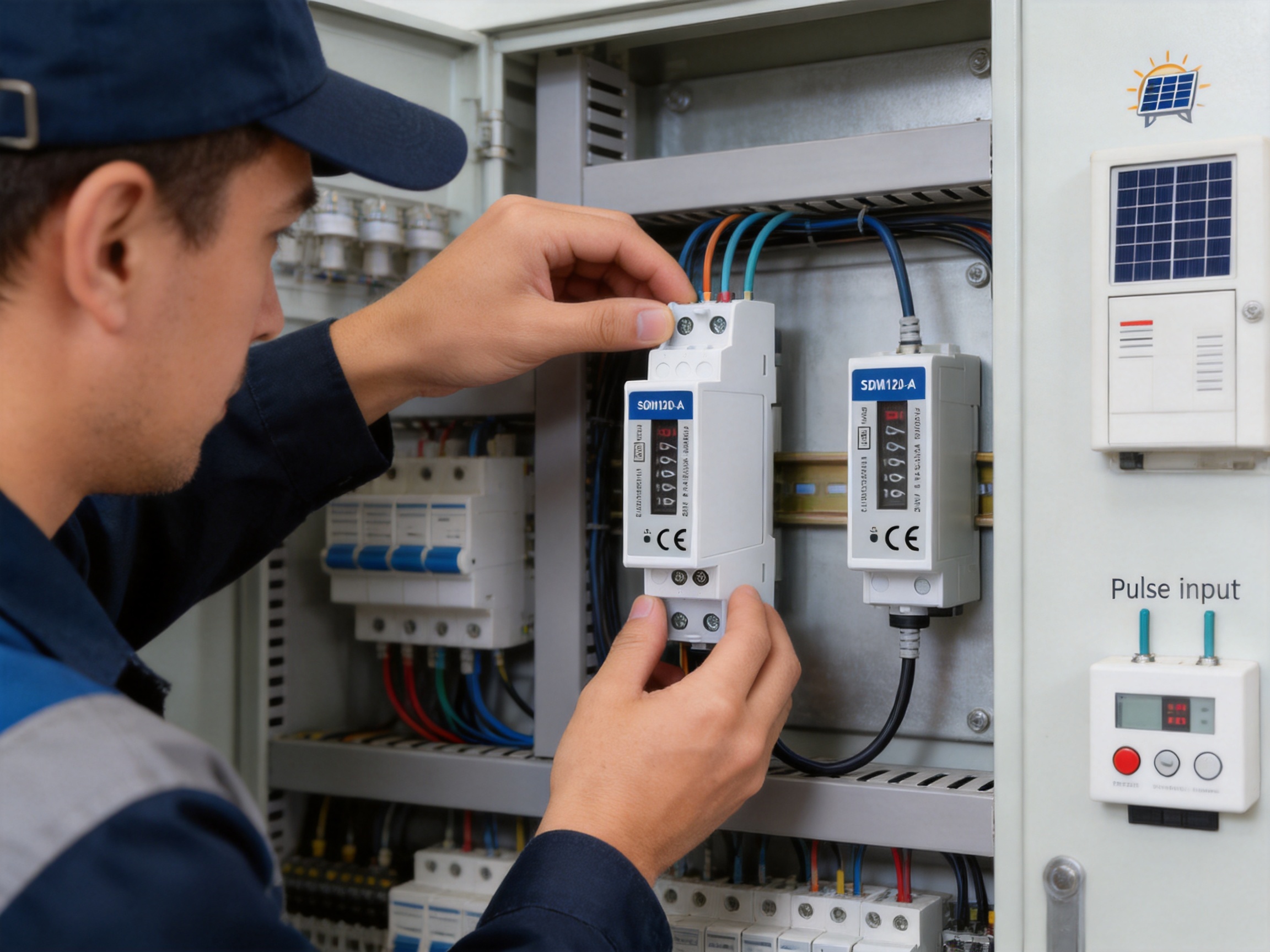
A high-quality energy meter depends on much more than its external specifications. Reliability comes from engineering design, component selection, production discipline, calibration, testing, and continuous improvement. The manufacturer behind this meter is a high-tech producer of electricity products and energy measurement solutions, with experience in electricity meters, power analyzers, current sensors, communication modules, and management systems.
The company’s location in Jiaxing, China, near Shanghai, Hangzhou, and Jiangsu, provides access to a strong manufacturing and technology ecosystem. This regional advantage supports efficient supply chains, skilled labor availability, logistics access, and collaboration opportunities. For international customers, a mature manufacturing base also contributes to stable production capacity and consistent delivery.
Research and development are important strengths. Energetic development teams in China and the UK contribute to product innovation, metering technology improvement, and adaptation to different market requirements. Cooperation with universities and professional institutions helps introduce advanced technologies into products. This engineering foundation is important because energy metering standards, communication requirements, enclosure designs, and application scenarios continue to evolve.
The company has established a professional laboratory capable of EMC, LVD, accuracy, and environmental testing according to IEC, EN, GB, and UL standards. This in-house testing capability is highly significant. It allows engineers to evaluate product behavior during design, validate improvements quickly, identify weaknesses before mass production, and maintain consistent quality across batches.
Electromagnetic compatibility testing helps ensure that the meter can operate in environments with electrical noise, switching devices, relays, contactors, inverters, and other disturbances. Low voltage directive-related testing supports electrical safety. Accuracy testing verifies measurement performance. Environmental testing evaluates product behavior under temperature, humidity, and other operating conditions. Together, these tests reduce field failure risk.
The company follows the ISO 9001 quality management system, which provides a structured approach to process control, documentation, corrective action, supplier management, and continuous improvement. Its production is approved by SGS according to MID standards, supporting regulated meter manufacturing. These quality systems are essential for customers who require stable performance, traceability, and long-term supply reliability.
The company also holds patented technologies in software, embedded software, and hardware. Although this analog display single phase meter is designed for simplicity, it benefits from the broader technical knowledge gained through multifunction meters, power analyzers, communication modules, and smart energy systems. A manufacturer with broad metering expertise is better able to design robust circuits, optimize calibration methods, and respond to customer requirements.
Quality control for an energy meter begins before production. During product design, engineers evaluate measurement architecture, circuit protection, component durability, housing structure, terminal layout, thermal behavior, and compliance requirements. Design choices affect not only laboratory performance but also installation convenience and long-term reliability in the field.
Component selection is another critical stage. Metering products require stable electronic components, reliable terminals, durable display mechanisms, insulating materials, and housings that can withstand electrical cabinet environments. Poor component choices may not fail immediately, but they can lead to drift, communication issues, display problems, or premature aging. A professional manufacturer uses approved suppliers and incoming inspection procedures to reduce these risks.
During production, process control ensures that each meter is assembled consistently. This includes PCB manufacturing control, soldering quality, assembly accuracy, terminal fitting, enclosure closing, labeling, and calibration. For metering products, calibration and verification are particularly important because each unit must measure energy correctly within specified tolerances.
Testing during and after production may include visual inspection, functional testing, insulation checks, accuracy verification, pulse output checks, display inspection, and final quality review. For MID-approved products, conformity processes must be maintained carefully. Documentation, labeling, and production traceability help ensure that delivered meters match approved specifications.
Packaging and logistics also matter. Energy meters must arrive at project sites in good condition, with terminals protected and markings legible. A manufacturer experienced in supplying more than 50 countries understands the importance of export packaging, documentation, and reliable delivery coordination.
Energy management begins with measurement. Without accurate circuit-level data, it is difficult to know where energy is consumed, which loads are inefficient, or whether improvement measures are working. A compact single phase energy meter helps create visibility in smaller circuits that might otherwise be ignored.
In residential and commercial buildings, sub-metering can encourage energy-saving behavior. When users see their own consumption, they are more likely to reduce unnecessary usage. For landlords and facility managers, measured data makes cost allocation more transparent and fair.
In commercial facilities, meter data can reveal abnormal consumption. For example, a circuit that remains active overnight may indicate equipment left running, faulty controls, or unauthorized use. Pulse output data collected over time can support trend analysis and demand-side decisions.
In renewable energy applications, generation measurement helps users understand system output and compare it with expectations. Accurate kWh data supports maintenance decisions, financial calculations, and sustainability reporting. Even a simple pulse output meter can become part of a wider energy monitoring architecture when connected to a gateway or management platform.
The product’s compact design also supports sustainability indirectly by reducing material use and panel space compared with larger devices. Direct connection avoids additional current transformers in suitable applications. Reliable products also reduce replacement frequency, waste, and maintenance visits.
When selecting this meter, users should first confirm that the electrical system is single phase two wire and that the nominal voltage is compatible with 230V operation. They should also verify that the circuit current does not exceed the maximum direct current rating of 45A. For higher-current circuits, a CT-operated meter may be more appropriate.
The next consideration is application purpose. If the meter is used for monitoring only, many devices may seem acceptable. However, if readings are used for billing, tenant allocation, or formal cost sharing, MID approval becomes a major advantage. Choosing a certified meter from the start can prevent future disputes or replacement costs.
Users should also consider whether pulse output is needed. If local manual reading is enough, the analog display may be sufficient. If data must be collected remotely, pulse output should be connected to a compatible pulse input device. The monitoring system must be configured according to the meter’s pulse constant and wiring requirements.
Panel space should be reviewed. The one-module 18mm width makes the meter highly suitable for compact boards, but installers still need to ensure adequate wiring clearance, ventilation, and safe access. Proper installation according to wiring diagrams and local electrical regulations is essential.
For solar or generation applications, users should confirm whether a unidirectional anti-reverse version is required. This depends on how energy flow is expected in the circuit and how the measurement result will be interpreted.
Professional installation is recommended for all electrical metering devices. Before installation, the power supply should be isolated according to safety procedures. The installer should verify the circuit type, voltage, current rating, and panel environment. Terminals should be tightened properly to prevent overheating and unreliable measurement.
The wiring diagram should be followed carefully. Incorrect line and neutral connections may affect measurement or safety. After installation, the installer should energize the circuit and check that the display operates normally. A known load can be applied to confirm that energy accumulation begins and that pulse output is generated.
If pulse output is connected to a monitoring device, polarity, input type, and pulse counting configuration should be checked. The acquisition system should be tested by applying a measurable load and comparing displayed energy accumulation with counted pulses over a suitable period.
For formal metering applications, installation records should be kept. These may include meter identification, installation date, circuit description, initial reading, wiring confirmation, and user information. Good documentation supports future audits and maintenance.
Energy meters generally require little routine maintenance when installed correctly, but periodic inspection is useful. Technicians should check that terminals remain secure, the enclosure is undamaged, the display is readable, and pulse output data remains consistent with local readings. Any signs of overheating, discoloration, moisture ingress, or mechanical damage should be investigated.
In billing or cost allocation applications, readings should be recorded according to a consistent schedule. If pulse output data is collected remotely, occasional comparison with the local analog display helps verify system integrity. Differences may indicate pulse input configuration errors, wiring issues, or data acquisition problems.
Environmental conditions should remain within the product’s intended operating range. Electrical cabinets should protect meters from excessive moisture, dust, vibration, and unauthorized access. Good panel design improves the service life of all electrical components, including meters.
Because the product is compact and direct connected, replacement or expansion can be straightforward when performed by qualified personnel. However, any meter used for regulated purposes should be handled according to applicable certification and sealing requirements.

The manufacturer is a specialist in electricity metering and energy measurement solutions, supplying products and services to more than 50 countries across Europe, Asia-Pacific, America, the Middle East, and Africa. This international experience is important because metering requirements vary by region, standard, voltage practice, installation habit, and customer expectation.
A broad product range allows customers to source related solutions from a single experienced supplier. In addition to single phase energy meters, the company develops and produces multifunction energy meters, MID energy meters, ETL energy meters, DC energy meters, power analyzers, current transformers, relays and switches, gateways, and systems and solutions. This ecosystem supports projects that may begin with simple kWh measurement and later expand into advanced energy monitoring.
Technical support and after-sales service are also important strengths. Metering projects often involve questions about wiring, pulse output integration, certification, panel design, and application suitability. A professional support team can help distributors, panel builders, contractors, and end users choose the right product and resolve field questions efficiently.
The company’s mission emphasizes creating value for customers and growing with partners. Its culture values integrity, pragmatism, refinement, and innovation. These principles are reflected in a product strategy that combines practical field usability with compliance and manufacturing discipline.
The economic value of a compact MID-approved pulse output meter is not limited to purchase price. The total value includes installation time, panel space savings, reduced auxiliary components, lower risk of disputes, easier reading, and long-term data usefulness.
For installers, a one-module direct connected meter can reduce labor. There is no need to mount current transformers for suitable circuits, no need to configure CT ratios, and less wiring is required. Faster installation improves project efficiency, especially when many meters are installed across a building or site.
For panel builders, compact devices improve cabinet design flexibility. Smaller enclosures may be possible, or more functions can be included in the same space. Clean DIN rail layouts also improve professional appearance and maintenance access.
For property managers and landlords, MID approval supports credible billing or cost allocation. Avoiding disputes can save significant administrative time. Accurate sub-metering encourages responsible energy use and can improve tenant satisfaction.
For facility managers, pulse output enables data collection without expensive communication infrastructure. The meter can be connected to existing pulse input systems, gateways, or monitoring controllers. Over time, collected consumption data can help identify savings opportunities and justify efficiency investments.
For end users, the analog display provides transparency. They can see their cumulative energy consumption directly. This builds trust and supports energy awareness.
It is designed for a single phase two wire system, commonly described as 1P2W or 1P+N. It measures active energy on a single phase AC supply.
The meter supports a maximum direct current of 45A. This allows it to be connected directly in many residential, commercial, and light industrial single phase circuits without external current transformers.
The analog display provides a direct local reading of accumulated active energy. It allows users to record kWh consumption without software, communication tools, or menu operation.
Pulse output allows active energy data to be collected by external devices such as data loggers, pulse counters, building management systems, gateways, or controllers. It is a simple and reliable way to integrate the meter into an energy monitoring system.
The meter is MID approved, which supports use in applications where certified energy measurement is required, including billing or cost allocation depending on local regulations and installation requirements.
Its combination of 18mm one-module width, 45A direct input, analog display, pulse output, and MID approval gives it a practical advantage. Many competing meters may be larger, lack certification, require more complex wiring, or provide no remote pulse output.
Yes, it can be used for active energy measurement in solar generation-related circuits when the electrical design is suitable. A unidirectional anti-reverse version is available for applications where reverse energy should not reduce the recorded energy value.
For circuits up to its rated direct current capability, external current transformers are not required. This simplifies installation. For circuits above 45A, another metering solution may be needed.
MID approval indicates conformity with recognized European measuring instrument requirements. It improves trust, supports regulatory acceptance, and helps reduce disputes in cost allocation or billing-related applications.
The manufacturer has professional R&D teams, broad experience in energy measurement products, ISO 9001 quality management, SGS-approved MID production, patented technologies, and an in-house laboratory for EMC, LVD, accuracy, and environmental testing according to IEC, EN, GB, and UL standards.
A single phase DIN rail kWh meter with analog display and pulse output is a practical solution for many energy measurement needs. It provides the simplicity of direct local reading, the integration value of pulse output, the installation efficiency of direct 45A input, and the space-saving benefit of a one-module 18mm DIN rail design.
MID approval strengthens its value for professional applications where measurement credibility matters. Its design suits residential sub-metering, commercial tenant allocation, solar generation monitoring, auxiliary industrial circuits, building management systems, and equipment-level energy tracking.
Compared with many competing meters, the product stands out because it balances compactness, certification, ease of installation, reliable active energy measurement, and practical system integration. It avoids unnecessary complexity while still providing the features most needed in real projects.
Behind the meter is a manufacturer with advanced production capabilities, international market experience, strong R&D resources, in-house testing facilities, ISO 9001 quality management, and MID-related production approval. These strengths help ensure that the product is not merely a basic kWh counter, but a dependable energy measurement device developed for long-term field use.
For customers seeking a compact, certified, direct connected single phase meter with clear local reading and pulse output connectivity, this type of product offers an excellent combination of performance, compliance, and economic value.
International Electrotechnical Commission. IEC 62053-21: Electricity Metering Equipment, Particular Requirements for Static Meters for AC Active Energy.
European Committee for Standardization. EN 50470-3:2022: Electricity Metering Equipment, Particular Requirements for Static Meters for Active Energy.
European Union. Directive 2014/32/EU on Measuring Instruments.
International Organization for Standardization. ISO 9001 Quality Management Systems, Requirements.
General technical documentation on low-voltage electrical metering, DIN rail installation practice, pulse output energy monitoring, and single phase active energy measurement.
Your email address will not be published. Required fields are marked *

We develop and produce high performance electricity meters, power analyzers, current sensors, communication modules and management systems. China Custom Smart Meters Manufacturers and Factory
Address:NO 52, Dongjin Road, Nanhu, Jiaxing, Zhejiang, China
Copyright @ Eastron Electronic Co., Ltd. All rights reserved Electricity Meters Manufacturers
