

 English
 Español
 Deutsch
 中文简体


Product Consultation
Your email address will not be published. Required fields are marked *
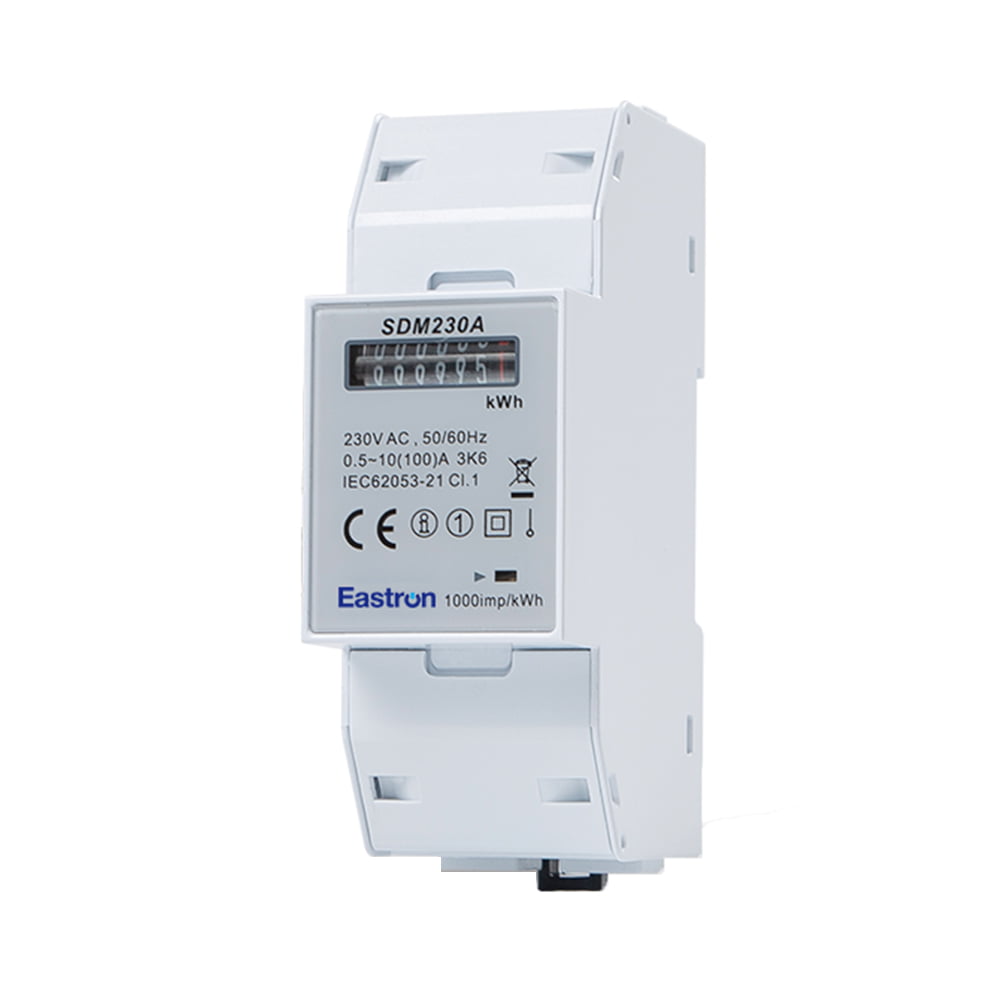
Analog Display 100A Din Rail Single Phase Electronic kWh meter with Pulse Output
Aug 11,2022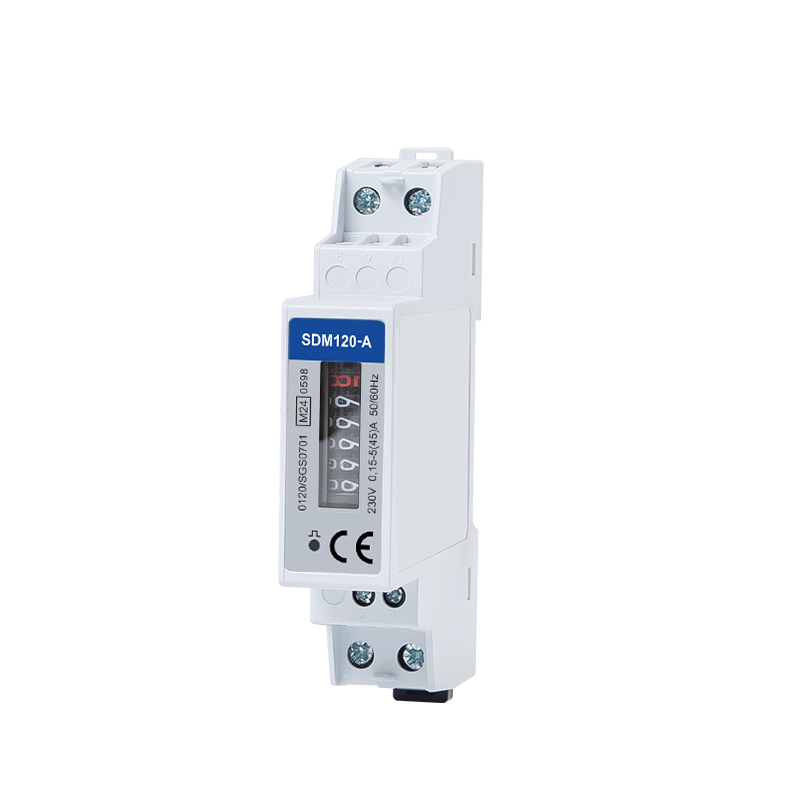
Analog Display Din Rail Single Phase Electronic kWh meter with Pulse Output
Aug 11,2022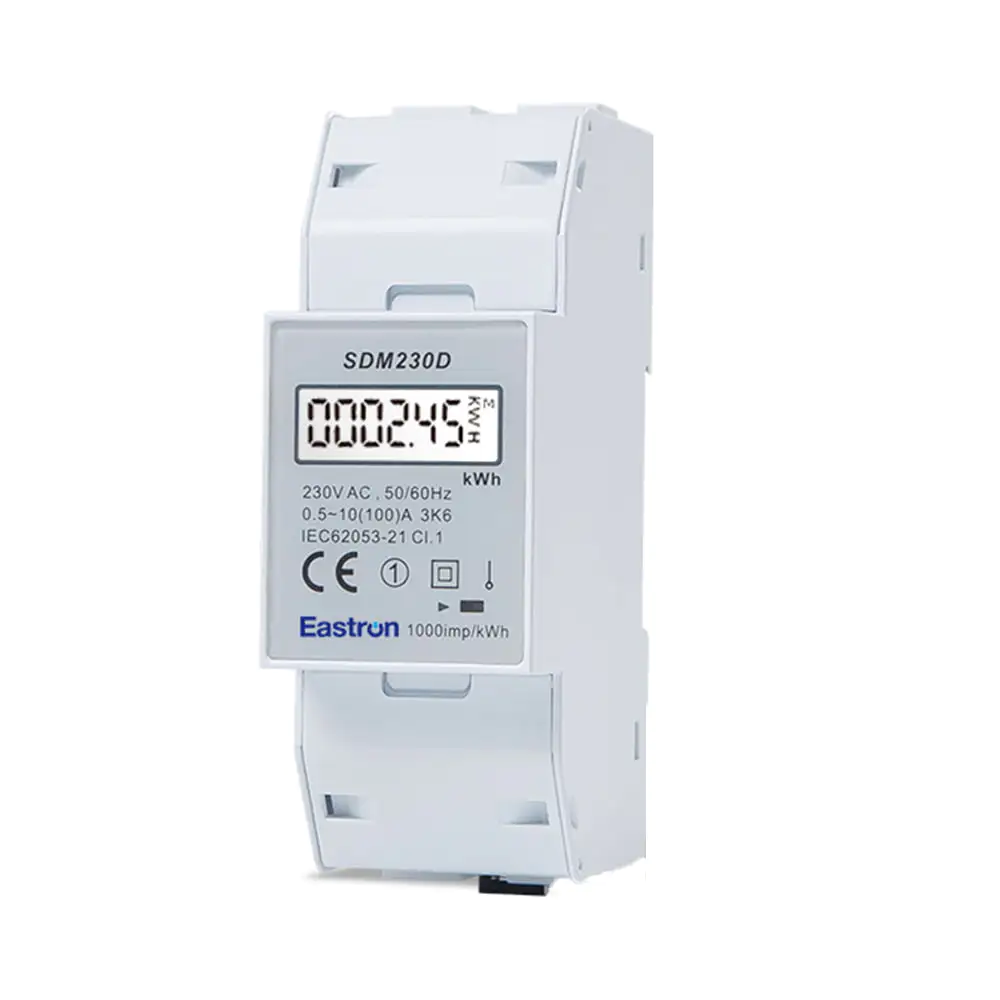
LCD Display 100A Din Rail Single Phase Electronic kWh meter with Pulse Output
Aug 11,2022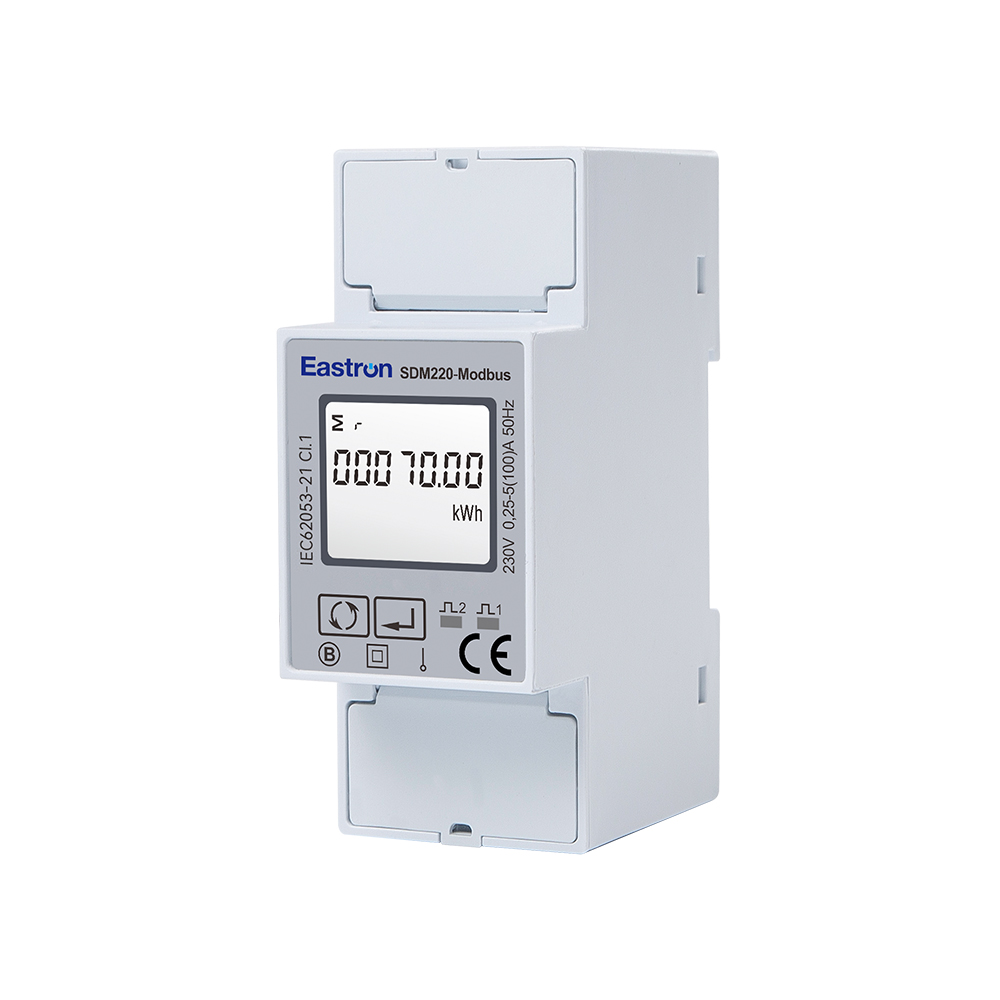
100A Single Phase Din Rail Multi-function Meter for EV Charging Metering
Aug 11,2022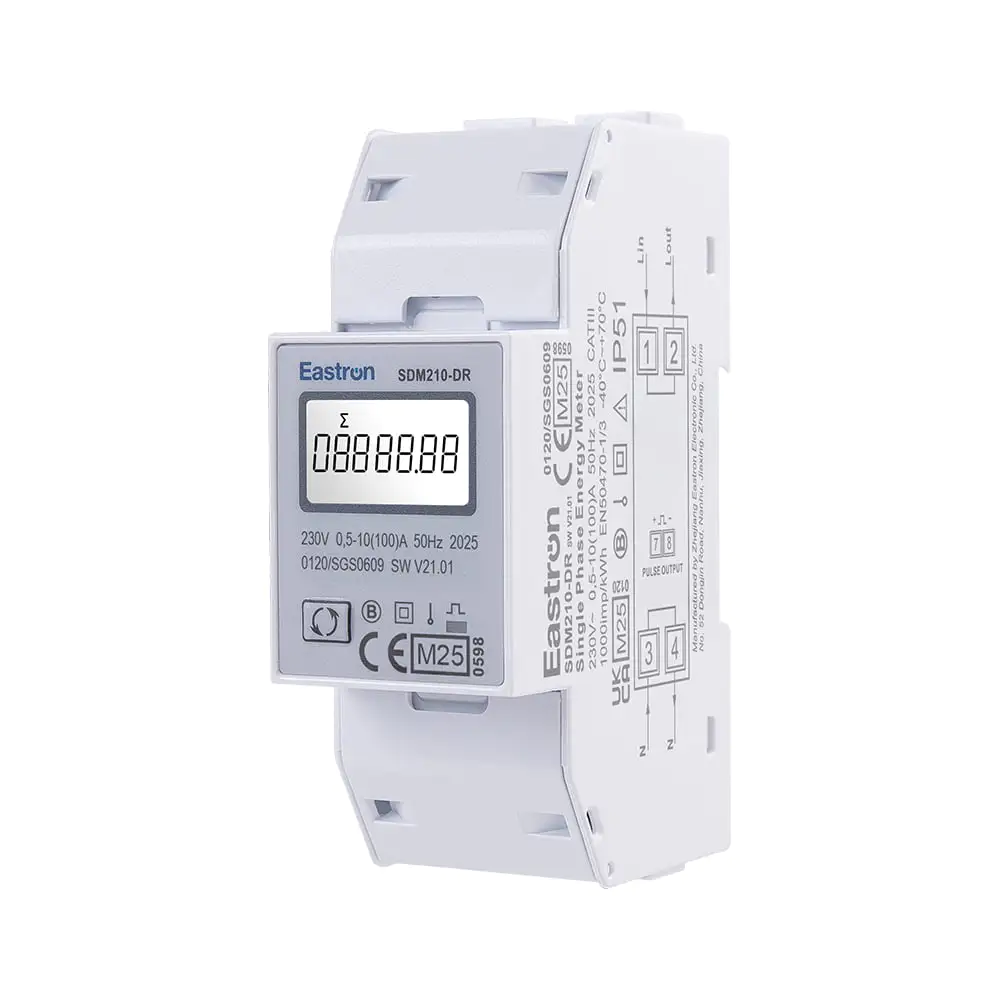
Resettable Din Rail Single Phase Electronic Energy meter with Pulse Output
Aug 11,2022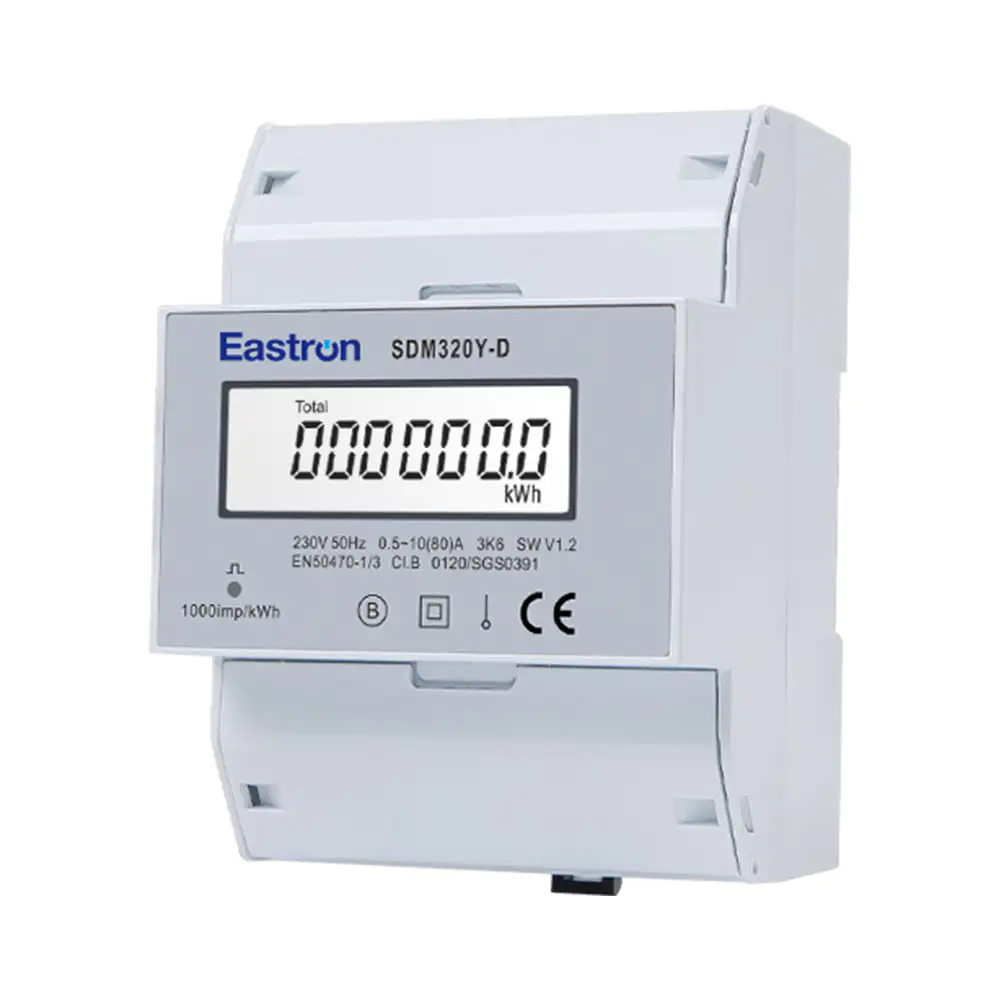
Single Phase Electronic kWh meter with Pulse Output
Nov 24,2022Content

Accurate energy measurement is essential in residential, commercial, industrial and renewable-energy applications. Whether the objective is tenant billing, equipment monitoring, solar-generation measurement, sub-metering or basic energy management, the selected meter must combine dependable measurement, practical installation, clear reading and long service life. The SDM230A is designed to meet these requirements in a compact DIN rail format.
This single-phase electronic kilowatt-hour meter measures active energy on a 1P2W system and supports direct loads up to 100A. Its analog display provides a straightforward local indication of accumulated energy, while the pulse output allows the measured consumption to be connected to external monitoring, data collection or management equipment. With a two-module, 36 mm housing, it makes efficient use of distribution-board space without requiring a current transformer for direct loads within its specified range.
The product is manufactured by Eastron Electronic Co., Ltd., a specialist in electricity meters, power analyzers, current sensors, communication modules and energy measurement solutions. The company combines product development, laboratory testing, standards-based production and international technical support to supply metering products for customers in more than 50 countries.
The SDM230A is a single-phase, two-wire electronic kWh meter intended for active-energy measurement. It is suitable for a conventional 1P+N AC system and is rated for a nominal voltage of 230V. The meter has a maximum direct current capability of 100A, making it suitable for many small commercial, residential, light industrial and distributed-generation applications.
Unlike a purely mechanical meter, the SDM230A uses electronic measurement technology to calculate active energy. Electronic measurement enables a compact product design, an integrated pulse interface and stable performance across the specified operating range. The analog display preserves a familiar and easily understood method of reading accumulated energy, which can be valuable in installations where users want a local visual indication without relying on a digital communication network.
The model is supplied in a DIN rail enclosure. This allows it to be fitted into standard electrical distribution boards, metering cabinets and control panels. Its 36 mm width corresponds to two standard modular positions, giving installers a practical way to add energy measurement without occupying excessive panel space.
The principal product characteristics are summarized below.
| Characteristic | Specification |
|---|---|
| Product model | SDM230A |
| Measurement system | Single-phase, two-wire system |
| Electrical configuration | 1P2W, 1P+N |
| Measured quantity | Active energy |
| Display | Analog energy display |
| Nominal voltage | 230V |
| Rated current, Ib | 10A |
| Maximum current, Imax | 100A |
| Minimum current, Imin | 0.5A |
| Starting current | 40mA |
| Operating voltage | 80% to 120% of Un |
| Energy accuracy | IEC 62053-21 Class 1.0 and EN 50470-1/3 Class B |
| Output | Pulse output for active energy |
| Housing width | Two modules, 36 mm |
One of the most important advantages of the SDM230A is its ability to measure a direct load up to 100A. Direct connection means that the monitored circuit can be connected through the meter without requiring an external current transformer for loads within the specified maximum. This simplifies the installation and reduces the number of components required in the metering circuit.
A current-transformer-based system can be useful for very high-current applications, but it also introduces additional considerations. The installer must select a suitable transformer ratio, provide space for the transformer, route the secondary wiring correctly and ensure that polarity and terminal connections are accurate. A direct-input meter avoids these additional sizing and wiring steps for compatible single-phase loads.
The 100A maximum current rating makes the meter suitable for a wide range of circuits, including apartments, offices, workshops, retail units, small production areas, auxiliary buildings, charging-related auxiliary circuits and solar-generation measurement systems. The final application must always be checked against local electrical regulations, installation conditions, conductor ratings and protective-device requirements.
The product data identifies a rated current of 10A and a maximum current of 100A. The rated current is the reference current used for the meter’s performance designation, while the maximum current identifies the upper direct-measurement limit. These two values should not be confused when selecting protective devices or designing the circuit. A qualified electrical professional should confirm that the complete installation is correctly coordinated.
Space is often limited inside distribution boards and control cabinets. Conventional energy meters with large cases may require additional cabinet width or a separate enclosure. The SDM230A addresses this issue with a two-module, 36 mm DIN rail housing.
The compact format provides several practical benefits. It leaves more room for circuit breakers, residual-current devices, contactors, terminal blocks and communication equipment. It can also reduce the overall size of a new panel or help installers add metering to an existing board with minimal modification.
DIN rail installation is widely used in low-voltage electrical distribution. A standardized mounting method allows the meter to be installed alongside compatible modular devices. This can simplify panel assembly, replacement and service work. The enclosure format is particularly useful for contractors and system integrators who need a repeatable layout across multiple projects.
A compact enclosure does not remove the need for careful installation. The meter should be mounted in an environment suitable for its electrical and environmental ratings, with appropriate clearance, conductor preparation and terminal tightening. Wiring should follow the supplied diagram and applicable national standards.
Analog Display 100A Din Rail Single Phase Electronic kWh meter with Pulse Output
The SDM230A uses an analog display to present the accumulated energy value. This display approach is simple, familiar and independent of a digital communications interface. Users can inspect the meter directly at the panel, which is useful during commissioning, routine inspection and manual readings.
An analog display can be advantageous in locations where only basic visual access is required. A building manager, technician or property owner can observe the energy register without connecting a laptop, configuring software or accessing a communication gateway. For straightforward sub-metering projects, this can help keep the system easy to operate.
The display also supports applications in which the meter is installed as a visible reference instrument. For example, a facility may use the register to compare the consumption of a workshop, a common area, an auxiliary building or a dedicated equipment circuit with the values collected by a separate energy-management system.
Digital meters with network interfaces offer extensive data functions, but not every application requires interval data, remote configuration or cloud connectivity. In many installations, a dependable local register combined with a pulse output provides a more economical and less complicated solution. The SDM230A is positioned for this type of application.
When manual readings are used for billing or internal allocation, the operator should establish a consistent reading procedure. Readings should be recorded with the date, time, meter identification and relevant circuit information. The meter register records active energy, while other instruments may be needed if the project also requires voltage, current, reactive energy, power factor or demand data.
In addition to the analog display, the SDM230A provides a pulse output for active energy. This output allows an external device to receive energy-consumption pulses and convert them into accumulated or time-based data. Depending on the application, the receiving equipment may include a pulse counter, programmable controller, building-management system, data logger or energy-monitoring gateway.
The pulse interface provides a practical bridge between a basic local meter and a wider monitoring system. A facility can retain direct visual reading at the panel while also collecting energy information electronically. This is particularly useful where the user wants centralized data without replacing every meter with a more complex multifunction instrument.
Pulse-based integration is also useful for phased system development. A project may begin with local measurement and later add a data-collection device. Because the meter already provides a pulse output, the later expansion may be achieved without replacing the metering unit, provided that the external equipment is compatible with the meter’s output characteristics.
The pulse output is intended for active-energy measurement. Before installation, the system designer should verify the pulse relationship, interface requirements, wiring method and receiving-device compatibility from the applicable technical documentation. The output should be connected and commissioned by qualified personnel.
Compared with a fully networked meter, a pulse-output meter can reduce communication complexity. There is no requirement for every individual meter to have its own network address, software account or communication cable. A suitable pulse counter or concentrator can collect signals from multiple meters and transfer the data to a higher-level system.
Measurement accuracy is central to any energy-metering application. The SDM230A is specified with energy accuracy corresponding to IEC 62053-21 Class 1.0 and EN 50470-1/3 Class B. These references provide recognized performance classifications for electricity meters and help users compare products using established technical criteria.
Class 1.0 indicates a defined accuracy level for active-energy measurement under applicable reference conditions. EN 50470-1/3 Class B is a European accuracy classification for active-energy meters. The selected meter should be matched to the requirements of the project, particularly where the measured value is used for cost allocation, tenant billing or performance verification.
Accuracy in the field depends on more than the meter’s nominal class. Correct wiring, suitable voltage, proper current range, stable environmental conditions and appropriate installation all contribute to reliable results. Loose terminals, incorrect polarity, excessive heat, electromagnetic interference or operation beyond the specified range can affect system performance.
The SDM230A measures RMS quantities on a single-phase AC system. It is intended for active-energy measurement rather than comprehensive power-quality analysis. If an application requires harmonics, voltage unbalance, transient recording, waveform capture, reactive power, demand or multiple tariff functions, a more advanced power analyzer or multifunction meter may be more appropriate.
This focused design can be an advantage when the project requires one clearly defined measurement function. Users do not need to pay for advanced features that will not be used. The meter offers a practical balance between measurement capability, installation simplicity and system expandability through the pulse output.
The nominal operating voltage of the SDM230A is 230V, and the specified operating range is 80% to 120% of nominal voltage. This corresponds to the expected voltage variation range for the intended single-phase application. System designers should confirm that the actual supply voltage and connection arrangement match the product requirements before installation.
The minimum current is specified as 0.5A, while the starting current is 40mA. These values describe the meter’s ability to begin registering energy at low load conditions. Such characteristics can be important in circuits where equipment operates intermittently or where standby consumption needs to be included in the overall energy record.
For correct results, the current and voltage paths must be connected according to the wiring diagram. The meter is designed for a 1P2W arrangement, so it should not be treated as a three-phase meter or installed in a circuit configuration outside its intended application. A qualified installer should verify the phase and neutral conductors, terminal designations and direction of energy flow.
The product information also identifies a unidirectional, anti-reverse measurement version for solar-generation energy measurement. This feature is relevant to applications where energy flows in a defined direction from a generating source. Project documentation should identify the exact model configuration required, especially when the meter is used to distinguish generated energy from imported or exported energy.
The compact size and direct 100A measurement capability make the SDM230A suitable for residential sub-metering applications. It can be used to monitor an apartment, annex, workshop, common area or other separately supplied circuit. The local analog register supports manual inspection, while the pulse output can feed a centralized collection system.
For multi-occupancy buildings, a meter of this type can help allocate consumption among individual areas when installed as part of a properly designed metering system. The project owner must comply with local requirements concerning metering, billing, electrical safety and access to measurement equipment.
Small offices, retail units, restaurants, storage areas and service facilities often need energy information for individual tenants or equipment groups. A two-module meter can fit into compact distribution boards and monitor circuits without requiring a large communications platform.
Pulse collection can allow building operators to compare consumption between different areas. This information may support operating reviews, maintenance decisions and energy-saving programs. For more advanced commercial energy management, the pulse output can be connected to a gateway that combines readings from multiple meters.
Workshops and light industrial facilities may need to measure individual machines, production zones or auxiliary services. The direct current capacity is useful for compatible single-phase equipment, while the analog display gives maintenance personnel a quick local reference.
The product should be selected only after confirming the load profile. Motors, welders, heaters and other equipment may have starting or operating characteristics that require careful assessment. Where the load is outside the meter’s voltage, current or phase configuration, an alternative metering solution must be used.
The SDM230A product family includes a version intended for unidirectional, anti-reverse measurement and solar-generation energy measurement. This can be useful when the objective is to record energy produced by a single-phase photovoltaic system or another distributed-generation source.
Solar applications require particular attention to conductor direction, system topology and local grid requirements. The meter should be installed at the correct measurement point and configured according to the intended energy-flow direction. If both import and export energy must be measured separately, the overall system may require additional meters or a bidirectional energy-metering solution.
Individual equipment circuits can be monitored to identify operating patterns and energy use. The meter can provide a simple local indication and a pulse signal for logging. This approach is appropriate where the user needs active-energy information but does not require full real-time power-quality data.
Examples include pumps, ventilation systems, auxiliary heaters, workshop tools, refrigeration circuits and small process equipment. The meter can support maintenance teams by establishing a consumption baseline and identifying changes that may indicate altered operating schedules or equipment problems.
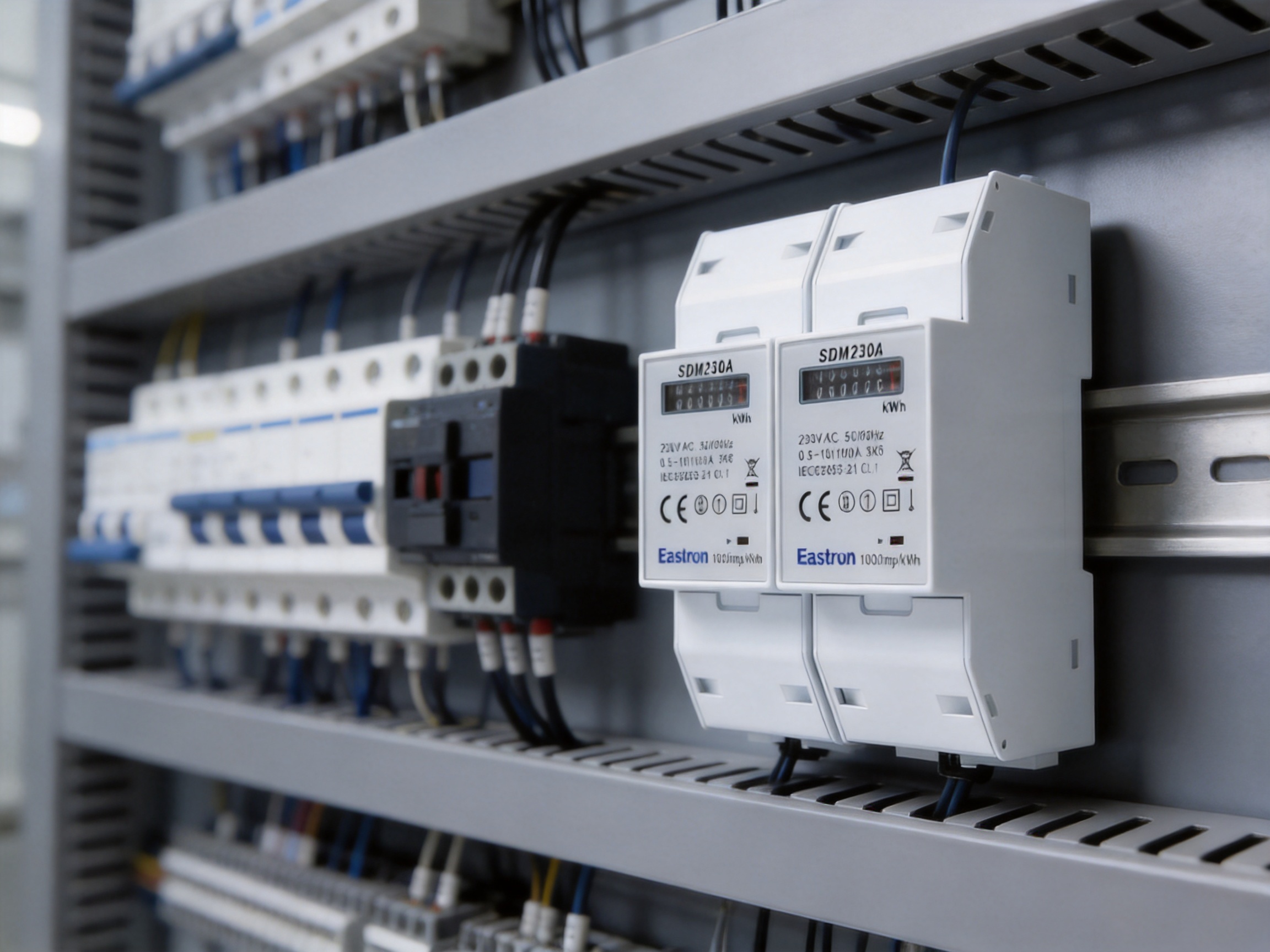
Product selection should be based on the actual requirements of the installation. The SDM230A does not attempt to replace every type of energy meter. Instead, its advantage is its focused combination of direct measurement, compact installation, local display and pulse integration.
Compared with transformer-operated meters, the direct 100A input can reduce component count and simplify wiring for compatible circuits. There is no need to select a transformer ratio for loads within the direct-input range. This can lower installation effort and reduce opportunities for ratio or polarity errors.
Compared with large panel meters, the 36 mm housing saves valuable board space. The two-module design allows the meter to be installed in a compact distribution assembly and can make it easier to add metering to an existing panel.
Compared with fully networked smart meters, the analog display and pulse output may offer a more economical and straightforward solution for projects that require basic energy data. The installation does not necessarily need a dedicated communication network for every meter. A pulse counter or gateway can be added according to the scale of the project.
Compared with basic mechanical meters, the electronic design supports an integrated pulse output and a low starting current. It also provides performance classifications associated with modern electricity-meter standards. The product therefore combines the familiarity of a simple local register with the integration potential of electronic measurement.
Compared with multifunction power analyzers, the SDM230A has a narrower function set. This is an advantage when only active-energy measurement is required. A focused product can be easier to specify, install and operate, while avoiding unnecessary features and configuration steps.
| Requirement | How the SDM230A responds |
|---|---|
| Local energy reading | Analog display provides direct visual access to the energy register |
| Direct measurement | Supports direct loads up to 100A within the specified application |
| Limited panel space | Two-module, 36 mm DIN rail housing |
| External data collection | Pulse output for active energy |
| Single-phase distribution | Designed for 1P2W and 1P+N systems |
| Accuracy requirements | IEC 62053-21 Class 1.0 and EN 50470-1/3 Class B specification |
| Basic solar measurement | Product-family option for unidirectional, anti-reverse measurement |
Eastron Electronic Co., Ltd. is headquartered in Jiaxing, China, in a location connected with the manufacturing and technology resources of the Yangtze River Delta. The company develops and produces electricity meters, power analyzers, current sensors, communication modules and management systems.
The company’s product capability is supported by development teams in China and the United Kingdom. This international technical structure contributes to product development, application knowledge and support for customers in different markets. Cooperation with universities and institutions also supports the company’s efforts to advance electricity-measurement technologies.
A significant manufacturing strength is the company’s professional laboratory. The laboratory is capable of carrying out electromagnetic compatibility, low-voltage directive, accuracy and environmental tests according to applicable IEC, EN, GB and UL standards. These test capabilities are important because a meter must perform reliably not only under ideal laboratory conditions but also in the electrical environments found in actual installations.
EMC testing helps evaluate immunity to disturbances and emissions associated with electronic equipment. Accuracy testing verifies measurement performance against the applicable criteria. Environmental testing helps assess performance under relevant temperature, humidity and other conditions. Low-voltage safety testing addresses essential electrical-safety considerations.
By maintaining internal testing capability, a manufacturer can perform verification during development and production improvement rather than relying exclusively on external facilities. This can support faster engineering feedback, more consistent quality control and better traceability of product performance.
The company states that it holds patented technologies in software, embedded software and hardware. These capabilities are relevant to modern meter development because measurement products combine sensing circuits, processing algorithms, display functions, output interfaces and protective design. Although the SDM230A is a focused analog-display meter, its development benefits from experience across a wider product portfolio.
The manufacturing system follows ISO 9001 quality-management principles. The company also states that its production is approved by SGS according to MID standards. Such quality and conformity activities support consistent manufacturing practices and provide confidence for customers evaluating products for regulated or standards-sensitive markets.
Reliability is not created by one component alone. It depends on design engineering, component selection, assembly control, calibration, inspection, testing, documentation and after-sales support. A manufacturer with capabilities across these areas is better positioned to provide repeatable products for distribution, metering and energy-management applications.
The development of an energy meter begins with the definition of its electrical and mechanical requirements. For the SDM230A, those requirements include single-phase two-wire measurement, active-energy registration, a 230V nominal supply, direct current measurement up to 100A, an analog display, pulse output and a compact DIN rail enclosure.
Electronic measurement products must be designed with attention to signal processing, thermal behavior, insulation, terminal construction and resistance to electrical disturbance. The meter must also fit within the required modular dimensions while providing adequate separation and safe connection arrangements.
Prototype testing can identify problems before volume production. Accuracy evaluation across current levels, voltage variation and relevant environmental conditions helps confirm that the design meets its intended performance. EMC and safety tests provide additional information about the suitability of the meter for installation in electrical distribution environments.
During production, consistent assembly is essential. The display, electronic circuits, terminals, housing and pulse-output interface must be assembled according to controlled procedures. Inspection and test stages help identify manufacturing variation before products are released.
Documentation is another important quality factor. Wiring diagrams, dimensions, technical tables and application information allow installers and system designers to use the product correctly. Clear documentation reduces the risk of incorrect connection and helps users select the correct model for a particular application.
After-sales service completes the product-support process. Eastron provides technical and after-sales teams to support customers. This is valuable for distributors, contractors and system integrators who may need assistance with selection, installation, troubleshooting or project-specific requirements.
Installation should be carried out by qualified electrical personnel in accordance with local laws, safety requirements and the applicable wiring diagram. Before work begins, the circuit should be isolated and verified as de-energized using approved procedures and equipment.
The meter should be installed on a suitable DIN rail inside an appropriate distribution board or enclosure. The surrounding equipment should not expose the meter to conditions outside its specified operating environment. Adequate space should be maintained for safe wiring, inspection and future service.
The current path must be connected according to the product wiring diagram. Because the meter is intended for a 1P2W system, the installer should confirm that the circuit includes the correct phase and neutral arrangement. Terminals should be prepared correctly, and conductor sizes should be selected according to the current, installation method and applicable electrical code.
Protective devices must be coordinated with the circuit and the meter. The 100A maximum direct current specification does not by itself determine the correct upstream protection. The complete installation must consider conductor capacity, fault levels, disconnection requirements and local regulations.
The pulse output should be wired separately from power conductors where appropriate, using a method suitable for the receiving equipment. The system designer should verify the required input type and pulse parameters before commissioning. If the pulse signal is connected to a building-management system or programmable controller, the receiving device should be tested to confirm correct counting.
After installation, the technician should inspect all connections, energize the circuit using safe procedures and compare the meter behavior with the expected load. The analog register and pulse output should be checked where practical. Any abnormal heating, noise, display behavior or unexpected measurement should be investigated before the installation is placed into normal service.
Energy meters generally require limited routine maintenance when correctly installed. Periodic visual inspection can identify loose covers, signs of overheating, damaged wiring, contamination or unusual display behavior. Inspection intervals should be based on the environment, the importance of the circuit and the requirements of the facility-maintenance plan.
The analog display should remain legible and should advance in a manner consistent with the connected load. A sudden change in energy use may reflect a genuine change in operation, a wiring issue, an equipment fault or a measurement-system problem. Comparing the register with the pulse counter can help identify discrepancies.
Terminals and protective devices should be inspected by qualified personnel during scheduled electrical maintenance. Thermal imaging or torque verification may be used where appropriate and permitted by the site’s procedures. Work on energized equipment should be avoided unless specifically justified and controlled under applicable safety rules.
Where the meter is used for cost allocation or formal measurement, the owner should establish a verification and recordkeeping policy. This may include periodic comparison with a reference instrument, documentation of meter readings and review of the installation environment.
The SDM230A is a strong choice when the application has the following characteristics: single-phase 1P2W supply, nominal voltage near 230V, active-energy measurement, direct current up to 100A, local analog reading, compact DIN rail mounting and pulse-based data collection.
It may be especially suitable when the project values simple installation and dependable basic measurement more than advanced communication functions. It can also be useful where a system needs a local register today but may add centralized monitoring in the future.
A different product should be considered when the application requires three-phase measurement, current-transformer inputs, bidirectional import and export recording, reactive-energy measurement, demand calculation, harmonic analysis, communication protocols or revenue-grade certification beyond the stated specifications.
Before ordering, purchasers should confirm the exact model suffix, output details, wiring arrangement, display behavior, environmental requirements and certification needs. The product family includes SDM230 variants, and the required configuration should be matched carefully to the project documentation.

Choosing an energy meter is not only a comparison of nominal voltage and current. Long-term value also depends on the manufacturer’s ability to maintain product quality, provide technical information and support future requirements. A supplier with expertise in electricity measurement can help customers select an appropriate product instead of treating every application as a generic meter installation.
Eastron’s broader product portfolio includes electricity meters, power analyzers, current sensors, communication modules and energy-management systems. This range indicates experience across different levels of measurement and system integration. Customers beginning with a basic pulse-output meter may later require additional measurement points, communication devices or more advanced analysis equipment.
The company’s laboratory resources, quality-management system, standards knowledge and international support structure are important strengths for distributors and project integrators. These capabilities can help support consistent supply, product evaluation and technical response across different markets.
Manufacturing strength is particularly important when energy meters are installed in large quantities. A project may require hundreds or thousands of units with consistent dimensions, terminals, displays and electrical performance. Controlled production and testing help reduce variation and simplify installation across multiple sites.
Measurement is the first step in energy management. A facility cannot effectively evaluate consumption if important circuits are not measured. The SDM230A provides a practical method for adding active-energy measurement to individual circuits without requiring a large and complex monitoring architecture.
When pulse data is collected over time, operators can create consumption profiles. These profiles may reveal peak operating periods, overnight loads, seasonal changes or differences between similar areas. Such information can support operating adjustments and energy-saving projects.
Local display access also encourages awareness. Personnel can observe the energy register during inspections and compare it with production schedules or occupancy patterns. Although the meter does not itself control equipment, its data can inform decisions about scheduling, maintenance and system upgrades.
For solar applications, measurement can help verify generation performance and compare expected output with actual energy production. The correct measurement arrangement is essential, and users should distinguish between generation measurement, building-consumption measurement and grid-import or export measurement.
It is an electronic single-phase two-wire kilowatt-hour meter for measuring active energy. It is designed for a 1P2W or 1P+N AC system.
The maximum direct current is 100A. The product information also lists a rated current of 10A, a minimum current of 0.5A and a starting current of 40mA. These values have different technical meanings and should be considered separately during system design.
The nominal voltage is 230V. The specified operating voltage range is 80% to 120% of the nominal voltage.
For compatible single-phase loads within the specified 100A direct-input limit, the meter is designed for direct measurement and does not require an external current transformer. Loads outside the specified range require a different metering arrangement.
The SDM230A has an analog display for local reading of accumulated active energy. This allows users to inspect the register directly at the distribution board or control panel.
The pulse output provides an active-energy signal to external equipment such as a pulse counter, data logger, programmable controller or energy-management gateway. The receiving equipment must be compatible with the meter’s output requirements.
The stated energy accuracy is IEC 62053-21 Class 1.0 and EN 50470-1/3 Class B.
The meter occupies two DIN rail modules and has a stated width of 36 mm.
The SDM230 product family includes a unidirectional, anti-reverse measurement version intended for solar-generation energy measurement. The exact model configuration and installation direction should be confirmed before ordering and commissioning.
No. It is focused on active-energy measurement. Applications requiring harmonics, reactive energy, power factor, demand, waveform analysis or advanced communication should be evaluated against a multifunction meter or power analyzer.
It can be installed in a suitable DIN rail distribution board, metering cabinet or control panel designed for the electrical and environmental conditions of the application. Installation must follow the wiring diagram and local electrical requirements.
A qualified electrical professional should install and commission the meter. Correct isolation, wiring, protection, conductor sizing and testing are essential for safe operation.
Eastron states that it maintains a professional laboratory for EMC, LVD, accuracy and environmental testing according to IEC, EN, GB and UL standards. The company also follows ISO 9001 quality-management practices and has production approved by SGS according to MID standards.
The SDM230A is a practical solution for single-phase active-energy measurement where direct 100A capability, compact DIN rail mounting, local analog indication and pulse-output integration are important. Its design avoids unnecessary complexity while retaining the electronic measurement functions needed for modern sub-metering and energy-monitoring projects.
The combination of a 36 mm two-module housing and direct input can simplify panel design. The analog display supports clear local reading, while the pulse output allows the meter to participate in a broader data-collection system. Its stated IEC and EN accuracy classifications provide a recognized basis for product evaluation.
The product is supported by Eastron’s experience in electricity meters and energy measurement solutions, together with laboratory testing, quality-management processes, standards expertise and international technical support. For residential, commercial, light industrial and selected solar-generation applications, the SDM230A offers a balanced approach to dependable energy measurement and straightforward system integration.
1. Product technical information for the SDM230A single-phase two-wire electronic kWh meter.
2. IEC 62053-21, Electricity metering equipment: particular requirements for static meters for active energy.
3. EN 50470-1, Electricity metering equipment: general requirements, tests and test conditions.
4. EN 50470-3, Electricity metering equipment: particular requirements for static meters for active energy.
5. ISO 9001, Quality management systems — requirements.
6. Manufacturer information concerning electricity meters, power analyzers, current sensors, communication modules and energy measurement solutions.
7. Manufacturer information concerning laboratory testing for EMC, low-voltage safety, accuracy and environmental performance.
Your email address will not be published. Required fields are marked *

We develop and produce high performance electricity meters, power analyzers, current sensors, communication modules and management systems.
Address:NO. 52, Dongjin Road, Nanhu, Jiaxing, Zhejiang, China
Copyright @ Eastron Electronic Co., Ltd. All rights reserved
