

 English
 Español
 Deutsch
 中文简体


Product Consultation
Your email address will not be published. Required fields are marked *
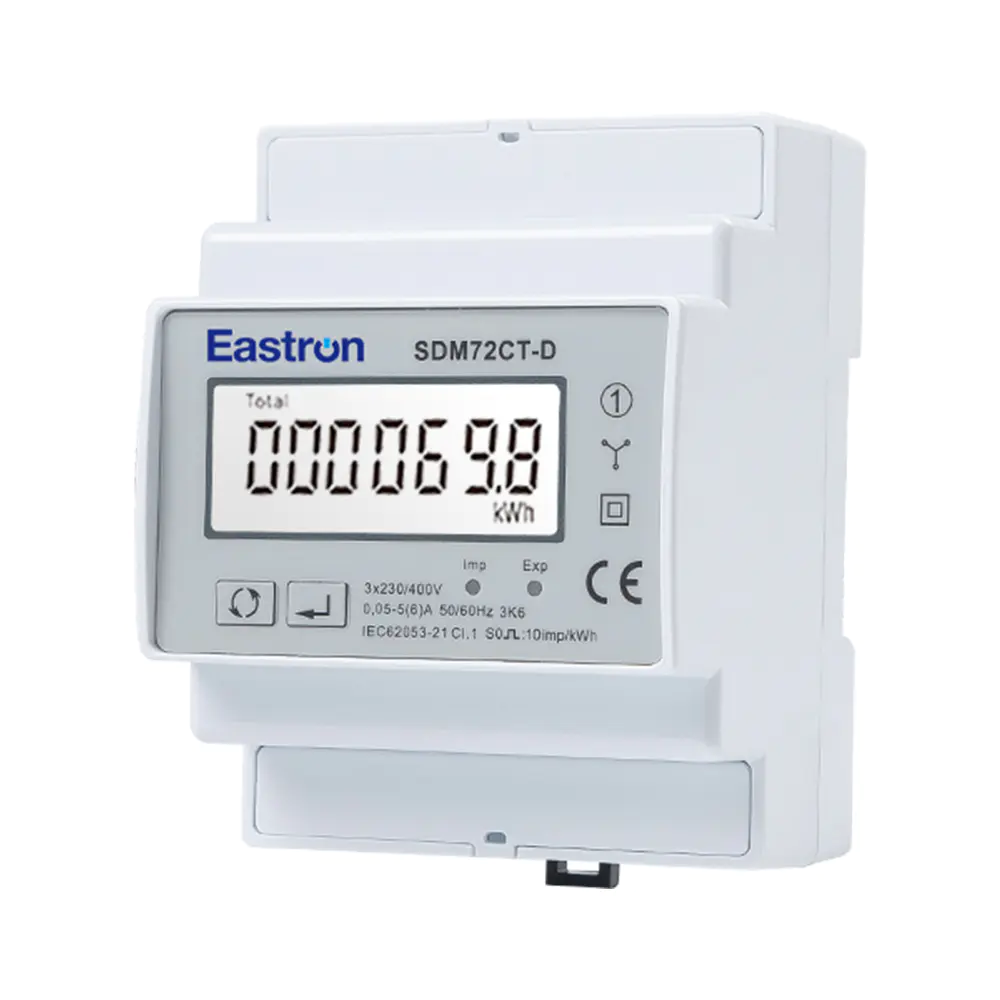
CT Type Din Rail Three Phase Electronic kWh meter with Pulse Output
Aug 11,2022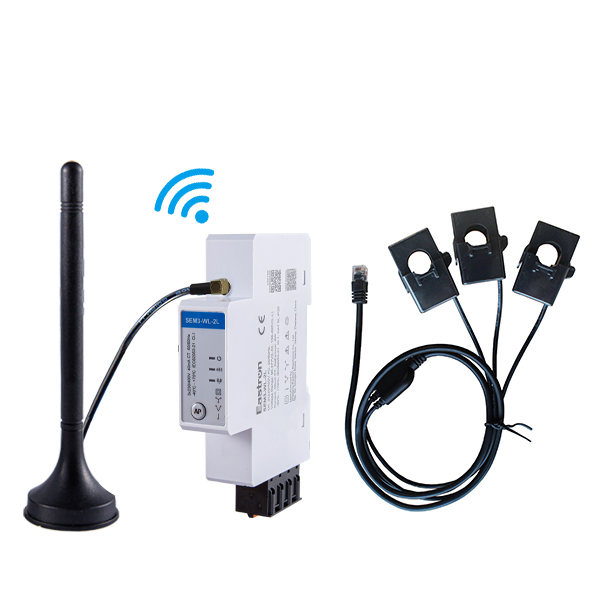
CT Type Three Phase Din Rail Wifi Energy Meter for PV Metering
May 30,2025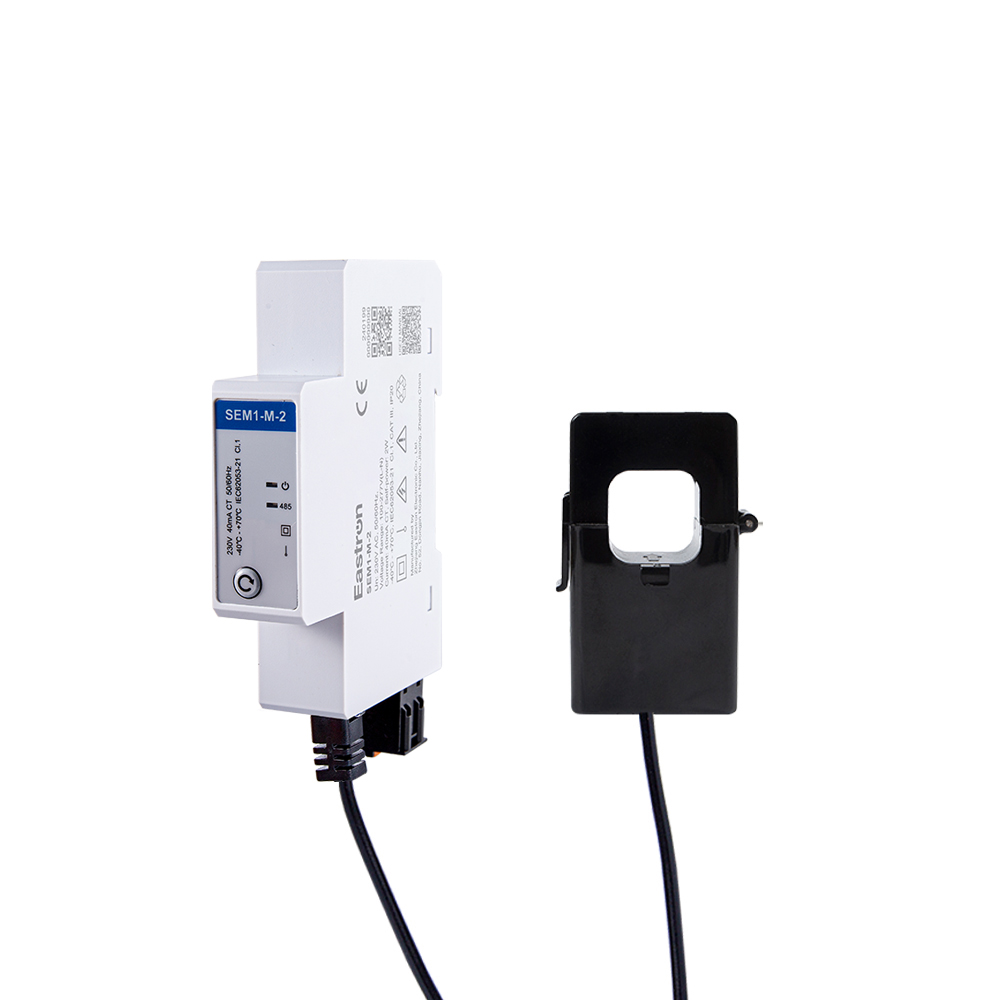
CT Type RS485 Modbus Single Phase Din Rail Energy Meter for PV Metering
May 30,2025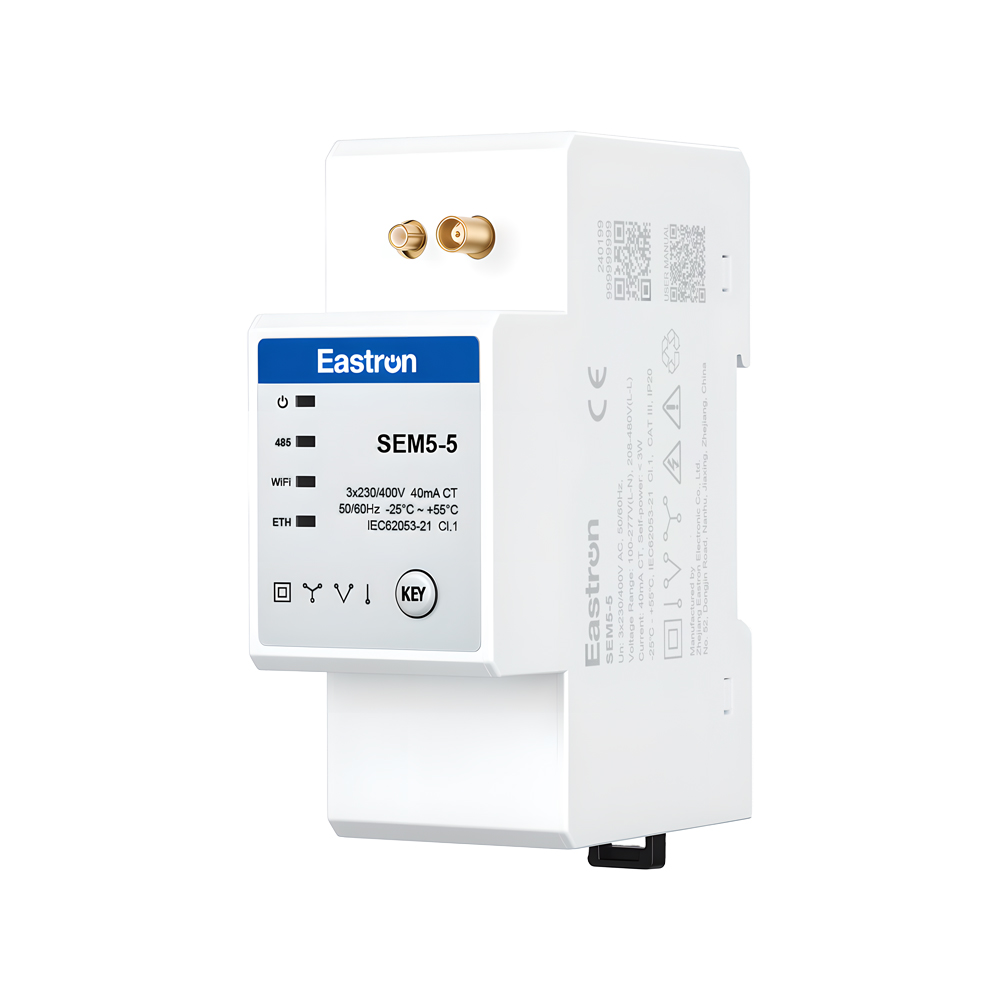
CT Operated Wireless Three Phase Energy Meter for PV Metering
May 30,2025
Multi-Circuit Three Phase Ethernet Modbus TCP Energy Meter for Data Center Metering
Aug 03,2022
Direct Type Three Phase Ethernet Modbus TCP Energy Meter for Data Center Metering
Nov 24,2022Content
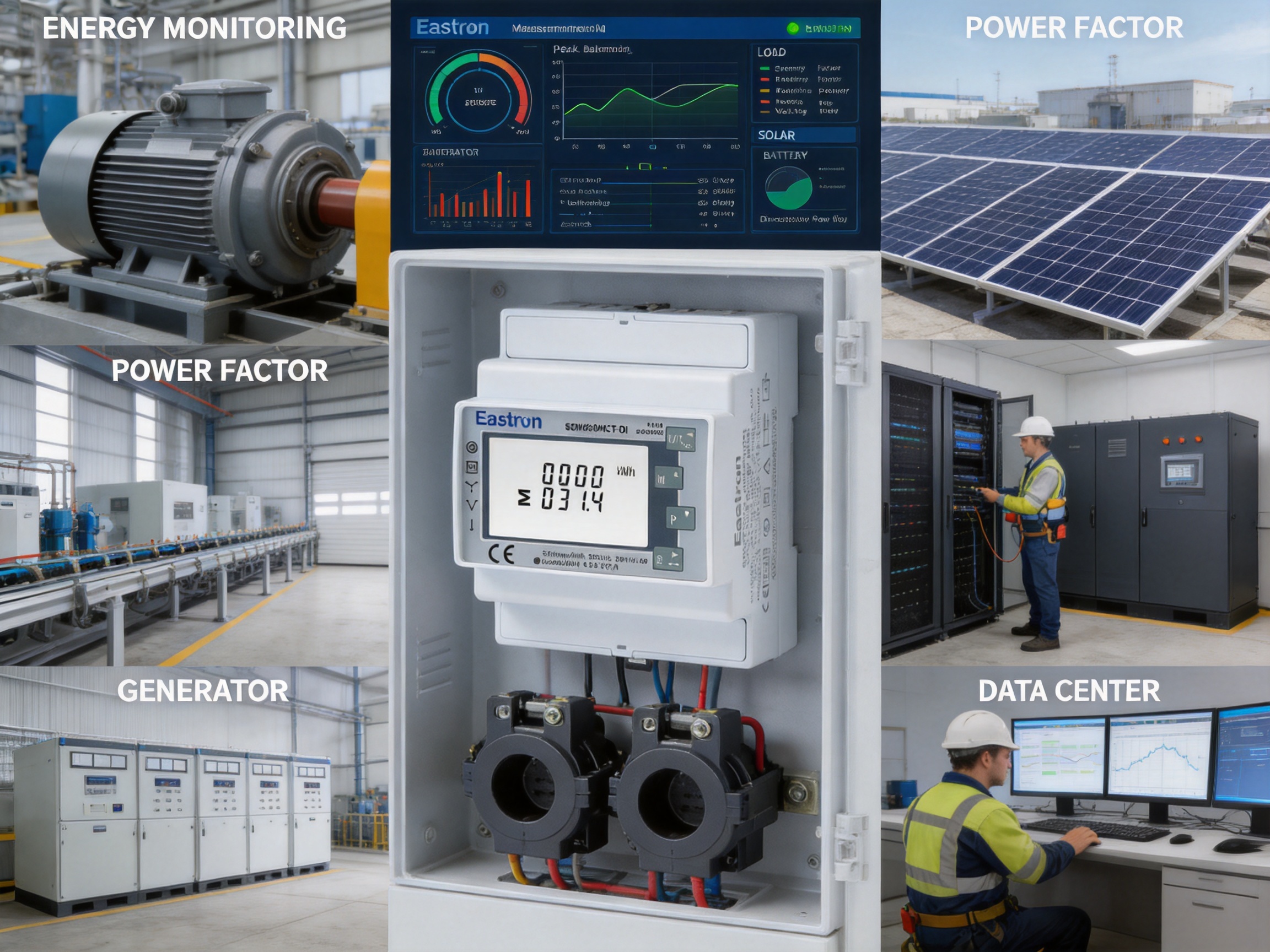
Modern electrical installations require more than a simple indication of voltage or current. Facility managers, electrical contractors, energy consultants, automation engineers, and equipment manufacturers increasingly need detailed, dependable, and accessible information about how electrical systems operate. They need to measure energy consumption, identify abnormal conditions, compare loads, monitor power quality indicators, integrate data into supervisory systems, and support more efficient energy management. The SDM630MCT-DI has been developed for these requirements as a compact, CT-operated, three-phase multifunction energy meter with digital inputs and RS485 Modbus RTU communication.
This type of meter is particularly useful where the measured current is too high for direct connection or where a panel requires flexible installation, broad measurement capability, and communication with a building management system. Instead of providing only accumulated kilowatt-hours, the meter brings voltage, current, frequency, power factor, active power, reactive power, apparent power, demand-related information, and bidirectional energy measurement into one instrument.
The product supports 3P3W and 3P4W systems and can also be applied to single-phase two-wire installations. Its current input is designed for 1 A or 5 A CT secondaries, while the CT primary ratio can be configured from 1 A to 9,999 A. This provides considerable flexibility for distribution boards, commercial buildings, industrial machines, renewable energy systems, generator installations, and submetering applications.
With a four-module, 72 mm wide DIN-rail format, the meter uses valuable panel space efficiently. Its integrated digital inputs add a further layer of monitoring by allowing external status or contact signals to be brought into the energy management system. RS485 Modbus RTU communication then makes measured values and input states available to a PLC, data logger, energy management platform, or building automation network.
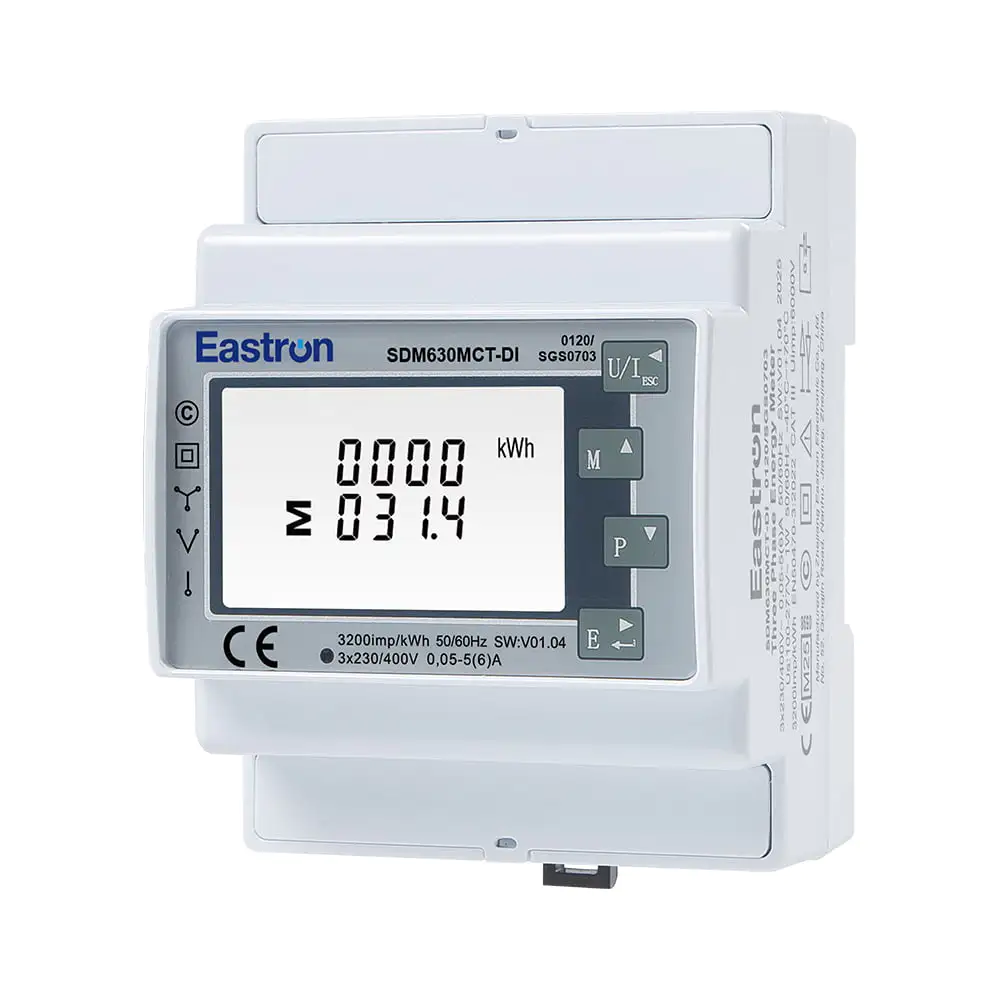
Digital Input RS485 Modbus CT Operated Three Phase Multi-function Energy Meter
Electrical energy is not consumed in isolation. The same installation can experience changes in voltage, current, frequency, load balance, power factor, and direction of energy flow. A basic energy counter may record consumption but cannot explain the conditions under which that consumption occurred. A multifunction meter gives operators a more complete view of the electrical system.
Voltage measurement helps identify supply variation and abnormal operating conditions. Current measurement reveals loading on individual phases and helps indicate whether circuits are approaching their design limits. Active power shows the useful electrical power being consumed or delivered. Reactive power indicates the effect of inductive or capacitive loads, while apparent power represents the combined electrical demand placed on the system. Power factor helps users understand how efficiently current is being converted into useful work.
Frequency measurement provides an additional indication of supply stability, especially in installations supplied by generators, isolated networks, or systems with variable operating conditions. Energy registers provide long-term consumption information, and bidirectional measurement is valuable where power can flow in both directions, such as installations with photovoltaic generation, battery storage, standby generation, or regenerative equipment.
By combining these functions in one device, the SDM630MCT-DI can reduce the need for separate meters and transducers. This simplifies panel design, reduces wiring complexity, and creates a more consistent measurement structure. It also makes the collected data easier to manage because the measurements originate from one integrated instrument rather than several unrelated devices.
The SDM630MCT-DI is a CT- and PT-operated three-phase multifunction energy meter. It is designed to measure RMS values, including harmonics, on three-phase AC systems. The product can be used on three-phase, three-wire and three-phase, four-wire networks, with support also listed for single-phase, two-wire applications.
Because the meter operates through current transformers, the high primary current does not pass directly through the meter terminals. Instead, the CT converts the primary current to a standardized secondary signal of 1 A or 5 A. The meter uses the configured CT ratio to calculate and display the corresponding primary current and power values. This approach is appropriate for medium- and high-current distribution circuits where direct connection would not be practical.
The voltage side is designed around rated voltage values of 230 V line-to-neutral or 120 V line-to-neutral, with an operational range of 80% to 120% of the rated voltage. The product requires an auxiliary AC or DC supply to power its internal electronics. This arrangement allows the measuring circuits and the meter electronics to be applied in a controlled and clearly defined manner.
The device includes two digital inputs. These inputs can be used to monitor external dry-contact or status signals, subject to the installation requirements and the meter’s wiring instructions. In an industrial or commercial system, digital inputs may be used to record the state of a breaker auxiliary contact, a generator status signal, a tariff signal, a control relay, or another binary condition. Bringing these signals into the same communication network as the energy data helps correlate electrical consumption with equipment operation.
A major advantage of a multifunction meter is the breadth of information available from one front-panel instrument and one communication interface. The SDM630MCT-DI is specified to measure or calculate kilowatt-hours, kilovar-hours, watts, vars, volt-amperes, power factor, frequency, demand-related values, voltage, and current.
Voltage measurement provides a direct view of the supply available to connected equipment. Monitoring voltage can help maintenance teams identify persistent under-voltage or over-voltage conditions before they result in equipment malfunction or premature component wear. In a three-phase installation, comparing phase voltages can also reveal imbalance or wiring problems.
Current measurement is performed through external CTs. The configurable CT primary range from 1 A to 9,999 A makes the meter suitable for a broad range of circuits. Users can select a CT ratio appropriate to the feeder or load being monitored, while the 1 A or 5 A secondary selection aligns the meter with common current transformer standards.
The specified current accuracy is ±0.5%. The minimum current is listed as 0.25 A, and the starting current is listed as 20 mA. These characteristics help the meter cover both normal operating loads and lower-current conditions, although the final application should always consider CT accuracy, burden, wiring length, and the complete measurement chain.
Active power, expressed in watts, represents the power converted into useful work, heat, light, or mechanical output. It is the value most closely associated with actual energy consumption. The product specifies active power accuracy of ±1%, allowing it to support general-purpose monitoring, submetering, load comparison, and energy management applications.
Reactive power, expressed in vars, is associated with energy exchange between the electrical network and reactive components such as motors, transformers, and capacitors. Although reactive power does not perform useful work in the same way as active power, it affects current flow and system loading. The meter specifies reactive power accuracy of ±1% and reactive energy accuracy of Class 2 according to IEC 62053-23.
Apparent power, expressed in volt-amperes, combines the effects of active and reactive power. It is important when evaluating the total demand placed on transformers, cables, switchgear, and generators. Apparent power measurement can help users determine whether equipment capacity is being used efficiently and whether power factor correction may be beneficial.
Power factor indicates the relationship between active power and apparent power. A low power factor can cause higher current for the same useful power output, increasing losses and reducing the available capacity of electrical infrastructure. The product provides power factor measurement with specified accuracy of ±1%.
Frequency measurement is specified with accuracy of ±0.2%. Frequency is generally stable on a utility grid, but it can be important in generator systems, microgrids, industrial networks, and installations where supply conditions must be verified. Changes in frequency may indicate generator loading, control problems, or an unstable source.
Bidirectional measurement is an important feature for modern energy systems. Traditional metering arrangements were often designed around one-way energy flow from the utility toward the load. Today, an installation may contain solar inverters, battery systems, combined heat and power equipment, regenerative drives, or parallel generators. In such systems, energy may flow toward the load at one moment and back toward the network at another.
The SDM630MCT-DI supports bidirectional measurement, allowing users to distinguish energy imported from and exported to the electrical network. This supports generation monitoring, self-consumption analysis, export verification, and more accurate energy accounting in systems with distributed resources.
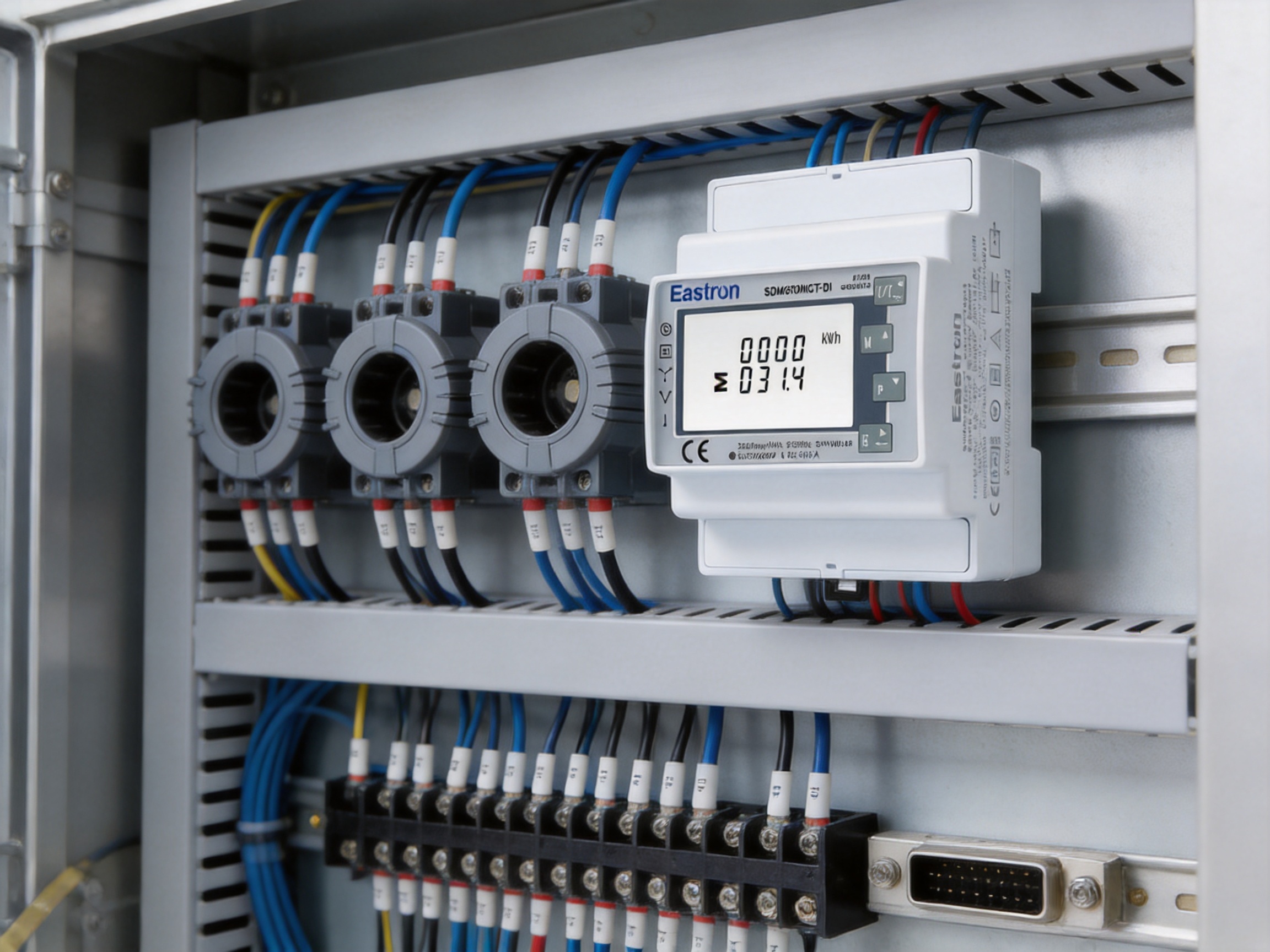
Measurement accuracy is central to the value of any energy meter. Accurate data supports billing-related applications, performance analysis, energy-saving programs, maintenance decisions, and investment planning. The SDM630MCT-DI provides separate accuracy specifications for its main electrical measurements rather than presenting a single general accuracy figure.
| Measured Parameter | Specified Accuracy or Class |
|---|---|
| Voltage | ±0.5% |
| Current | ±0.5% |
| Frequency | ±0.2% |
| Power factor | ±1% |
| Active power | ±1% |
| Reactive power | ±1% |
| Apparent power | ±1% |
| Active energy | Class 0.5S according to IEC 62053-22; Class 1.0 according to IEC 62053-21; Class B and C according to EN 50470-3:2022 |
| Reactive energy | Class 2 according to IEC 62053-23 |
The active energy classifications are particularly significant. The product information states Class 0.5S performance under IEC 62053-22 and Class 1.0 performance under IEC 62053-21. It also identifies Class B and Class C performance under EN 50470-3:2022. These classifications indicate that the meter has been designed and assessed against recognized energy-metering requirements.
The product has also been assessed and certified as meeting the requirements of EU Directive 2014/32/EU. The stated traceable instrument number is 0120/SGS0703. Such assessment provides an important foundation for users who require a meter aligned with European measuring-instrument requirements, although the exact permitted application should always be confirmed in relation to local regulations, installation conditions, and the intended metering purpose.
Accuracy in the field depends on more than the meter alone. Correct CT selection, appropriate CT class, proper polarity, secure terminal connections, suitable conductor routing, correct phase association, and accurate configuration of the CT ratio are all important. A high-quality meter can deliver reliable results only when the complete measurement installation is correctly designed and commissioned.
Electrical installations are not uniform. Some use three-phase, four-wire distribution with a neutral conductor; others use three-phase, three-wire systems without a neutral. Certain equipment and small circuits are single-phase. A meter limited to one wiring arrangement may require additional models or external conversion equipment. The SDM630MCT-DI is designed to support 3P4W, 3P3W, and 1P2W configurations, giving installers greater flexibility.
Three-phase, four-wire capability is useful in commercial buildings, residential distribution, offices, retail facilities, and many industrial systems where individual phase-to-neutral voltages are available. Three-phase, three-wire capability is suitable for certain motor feeders, industrial distribution systems, and networks where the neutral is not present. Single-phase, two-wire operation can support selected standalone or smaller monitoring tasks when the application is configured appropriately.
Before installation, engineers should confirm the voltage system, phase sequence, neutral arrangement, CT secondary rating, auxiliary supply requirements, and intended communication topology. Correct configuration at the beginning avoids inaccurate readings and minimizes commissioning time.
One of the strongest advantages of the product is its integrated RS485 Modbus RTU interface. Modern energy monitoring is increasingly network-based. A meter that can communicate directly with a controller or software platform is more useful than an isolated display because its data can be collected automatically, stored historically, visualized remotely, and combined with information from other equipment.
RS485 is widely used in industrial automation and building management because it supports economical multi-drop communication over substantial distances. The SDM630MCT-DI provides a maximum stated transmission distance of 1,000 meters, depending on cable selection, network layout, electromagnetic conditions, termination, baud rate, and installation practice.
The communication address can be set from 1 to 247, allowing multiple meters to operate on a shared RS485 network. Transmission speeds range from 1,200 bps to 38,400 bps. Supported parity options include none, odd, and even, while stop bits can be set to one or two. These settings make the meter adaptable to a wide range of PLCs, gateways, supervisory systems, and data acquisition platforms.
The default parity is none. The response time is specified as less than 100 milliseconds. In a properly designed network, these characteristics support responsive polling and near-real-time visibility of electrical operating conditions. The actual system performance will depend on the number of connected devices, polling strategy, communication speed, software configuration, and network quality.
Direct Modbus communication reduces the need for separate pulse counters, analog converters, or proprietary communication modules. A control system can obtain multiple electrical values from the meter through a standardized protocol. This can reduce hardware costs and simplify data architecture.
Communication also enables automatic alarms. For example, a supervisory system can generate notifications when current exceeds a defined threshold, power factor falls below a target value, voltage moves outside a permitted range, or energy export exceeds an expected level. Historical data can be used to compare production shifts, identify baseload consumption, verify energy-saving measures, and support maintenance planning.
For larger sites, multiple meters can be installed at incoming feeders, production lines, tenant areas, HVAC systems, server rooms, and renewable energy sources. Because each device can have its own address, the resulting network can provide a structured map of energy use throughout the facility.
Electrical measurements become more meaningful when they can be associated with equipment status. The two digital inputs in the SDM630MCT-DI allow external binary signals to be monitored alongside electrical values. This feature differentiates the product from basic meters that provide only measurement data.
For example, a digital input could be associated with a generator running signal. When energy consumption rises, the monitoring platform can determine whether the generator was operating at that time. A breaker auxiliary contact can indicate whether a feeder is open or closed. A production machine status signal can help compare energy consumption during operating and idle periods. A tariff or control signal can support time-based analysis where appropriate.
Digital inputs can also help with fault investigation. If a motor protection device changes state while current falls sharply, the event can be correlated in the monitoring system. This does not replace dedicated protection equipment or event recorders, but it provides useful operational context without requiring a separate input module.
Because digital input behavior depends on the wiring method and external circuit, installation designers should follow the product’s wiring diagram and electrical safety requirements. The inputs should not be connected to signals outside their permitted specifications.
Space inside electrical panels is often limited. Every additional instrument increases the required rail length, wiring space, and enclosure size. The SDM630MCT-DI occupies four modules, or 72 mm, making it compact for a device that combines measurement, communication, and digital input functions.
A compact format can provide several practical benefits. It may allow monitoring to be added to an existing panel without replacing the enclosure. It can help keep measurement devices close to the associated CT terminals and voltage connections. It can also simplify visual inspection because the meter, communication terminals, and other control components remain organized within a standard DIN-rail layout.
Compactness should not be considered only a dimensional feature. It can affect project cost, installation labor, transport requirements, and future expansion. A multifunction meter that combines several capabilities in one housing can reduce the number of separate instruments required for each monitored feeder.
Nevertheless, installers must preserve adequate clearance, access, ventilation, conductor bending radius, and separation between power and communication wiring. The meter’s compact body does not remove the need for sound panel engineering.
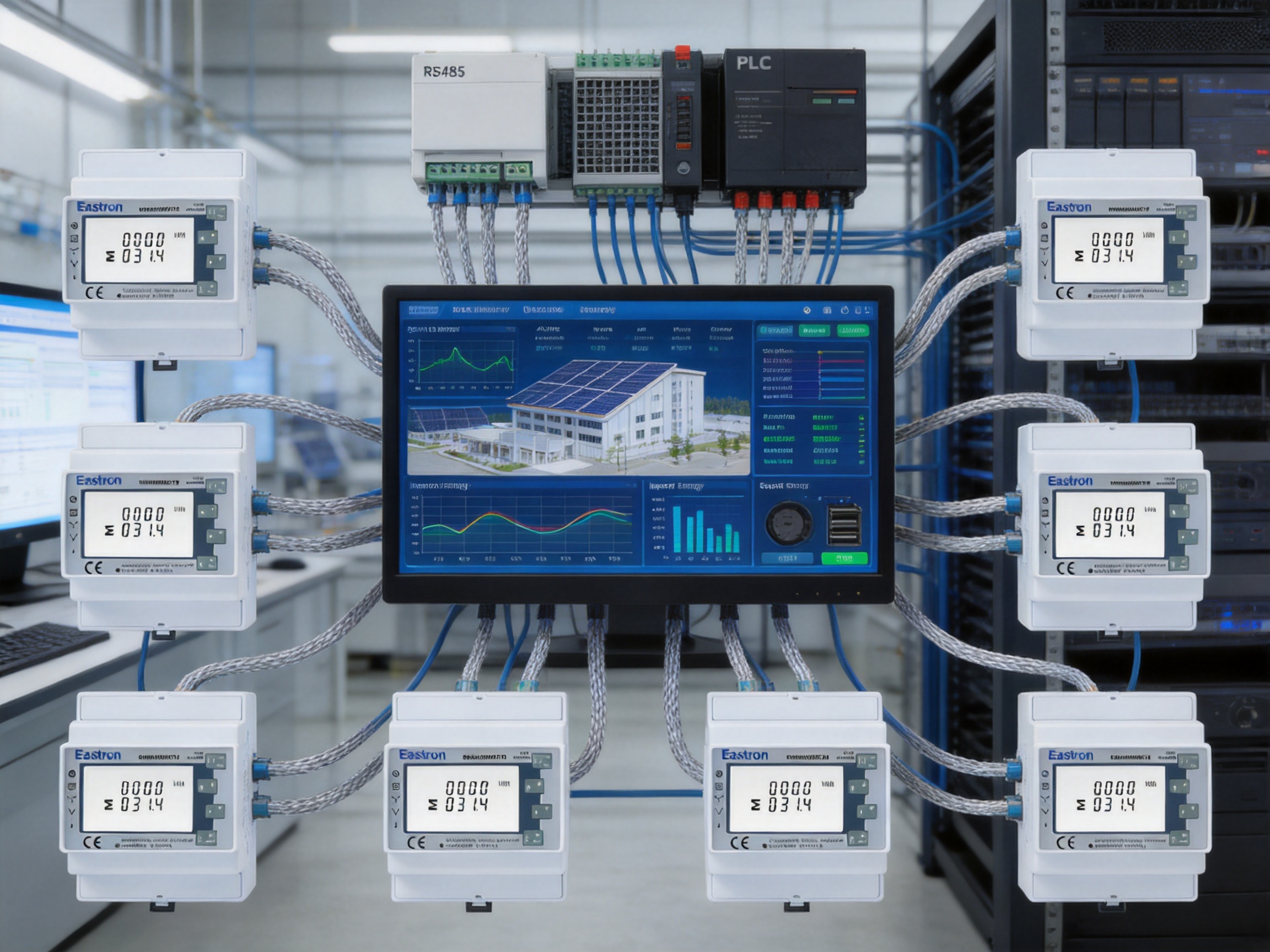
The product’s advantages are clearest when compared with more limited monitoring approaches. A basic single-function kWh counter may provide accumulated energy but no voltage, current, power factor, frequency, reactive power, or communication capability. Such a device can be appropriate for a simple application, but it cannot offer the same diagnostic depth.
A direct-connected meter may be easy to install on a small circuit, but it is not suitable for high-current feeders beyond its terminal rating. CT operation allows the SDM630MCT-DI to monitor circuits with primary currents up to the configured 9,999 A range, provided that suitable CTs and installation practices are used.
Some meters provide RS485 communication but lack digital inputs. In those systems, status signals must be collected by a separate input module or controller. The integrated two digital inputs of the SDM630MCT-DI can simplify the hardware architecture for applications that need both electrical data and contact-state monitoring.
Other devices may support only one network configuration. The ability to work with 3P4W, 3P3W, and 1P2W systems provides greater model versatility for contractors and system integrators. A single product family can cover multiple project requirements, simplifying procurement, training, panel documentation, and spare-parts management.
Some low-cost meters provide a narrow group of measurements with limited accuracy documentation. By contrast, the SDM630MCT-DI provides stated measurement accuracies for voltage, current, frequency, power factor, active power, reactive power, apparent power, and energy classes. Clear specifications make it easier for engineers to assess suitability before installation.
The product should not be selected solely on the basis of the number of features. Engineers should compare the full requirements of the application, including environmental ratings, auxiliary supply, display functions, pulse output needs, communication register structure, certification requirements, CT compatibility, and local regulations. Within its specified scope, however, the SDM630MCT-DI offers a strong combination of measurement depth, communication, input flexibility, and compact design.
The performance of an electrical meter depends on the quality of its design, components, firmware, assembly, calibration, testing, and final inspection. Eastron Electronic Co., Ltd. has developed a product portfolio covering electricity meters, power analyzers, current sensors, communication modules, and energy management systems. This broader product experience supports the development of instruments intended to operate as part of complete energy measurement solutions rather than as isolated display devices.
The company is headquartered in Jiaxing, China, in a region with close connections to major technology and manufacturing centers. Its development activities are supported by teams in China and the United Kingdom. According to the provided company information, Eastron works with universities and institutions to advance product technologies. This type of collaboration can contribute to product improvement in measurement algorithms, embedded systems, communications, and application engineering.
The company has established its own professional laboratory for EMC, LVD, accuracy, and environmental testing. These testing capabilities are important because a meter must do more than display correct values under ideal laboratory conditions. It must also withstand the electrical noise, transient conditions, temperature changes, and installation environments commonly found in real facilities.
Electromagnetic compatibility testing evaluates whether a product operates properly in the presence of electromagnetic disturbances and whether it avoids emitting unacceptable interference. This is particularly important for meters installed near contactors, variable-frequency drives, motors, switching power supplies, and other sources of electrical noise.
Low-voltage directive-related testing and electrical safety evaluation help verify insulation, protection, and safe operation under applicable conditions. Accuracy testing checks the relationship between applied electrical quantities and the values reported by the instrument. Environmental testing helps evaluate performance under specified temperature, humidity, and other conditions.
Having internal laboratory capability can improve the efficiency of product development and quality verification. Engineers can test design revisions, investigate issues, validate production changes, and perform repeat measurements without relying exclusively on external facilities. External certification and assessment remain important where required, but internal testing provides an additional layer of engineering control.
The company follows the ISO 9001 quality management system, according to the supplied information. A quality management system supports documented processes for design, purchasing, production, inspection, corrective action, and customer service. For measurement instruments, process consistency is especially important because small variations in assembly, calibration, or component performance can affect long-term reliability.
The company’s production is approved by SGS according to MID standards, and the SDM630MCT-DI has been assessed for EU Directive 2014/32/EU requirements. These assessments provide evidence that the product has been developed and evaluated within recognized quality and metrology frameworks.
The company also reports patented technologies in software, embedded software, and hardware. These areas are central to modern energy meters. Hardware design affects signal acquisition and isolation. Embedded software determines measurement calculations, display behavior, communication handling, and configuration. Firmware quality is therefore as important as the external enclosure or terminal arrangement.
In offices, shopping centers, hotels, and mixed-use buildings, the meter can be installed on incoming supplies or individual distribution boards. Facility managers can monitor tenant areas, lighting, HVAC systems, lifts, kitchens, and other major loads. Modbus communication allows data to be transferred to a building management system for dashboards, reports, and alarms.
Bidirectional measurement is also useful where a building includes rooftop solar generation. Imported and exported energy can be analyzed separately, helping the operator assess self-consumption and system performance.
Industrial plants often have multiple production lines and large motor loads. Monitoring current, active power, reactive power, apparent power, and power factor can help engineers understand how each area uses electricity. Digital inputs can associate measurements with machine status or feeder conditions.
Because the meter can use 1 A or 5 A CTs and supports a wide CT primary range, it can be applied to distribution feeders with different current ratings. Engineers can select CTs suitable for each circuit while maintaining a consistent meter platform throughout the facility.
Solar photovoltaic systems, battery systems, and generator installations require accurate information about energy import and export. A bidirectional multifunction meter can monitor the point of connection and provide data to an energy management controller. The RS485 interface can deliver measurements to a gateway or control platform that coordinates generation, storage, and load consumption.
Data centers and communication facilities require continuous awareness of electrical loading. Monitoring current and apparent power can help operators track capacity utilization, while voltage and frequency information can support power-quality supervision. Separate meters can be installed on incoming supplies, uninterruptible power supply outputs, cooling systems, and rack distribution areas.
Energy consultants and facility operators can use the product for submetering programs. Data from different areas can be compared to establish baselines, identify unusual consumption, and verify the results of efficiency projects. Examples include evaluating a new HVAC control strategy, comparing production shifts, measuring compressed-air systems, or tracking energy use per unit of output.
Correct installation is essential to achieving the specified measurement performance. Before wiring, the installer should confirm the system type, voltage, phase sequence, CT secondary rating, CT polarity, CT ratio, auxiliary supply, and communication parameters.
Current transformers must be selected with suitable primary and secondary ratings. The CT secondary should match the meter configuration, either 1 A or 5 A. The CT primary ratio must be entered correctly so that the meter can calculate the actual primary current and energy. A mismatch between the physical CT ratio and the configured value will produce incorrect readings even if the meter itself is functioning normally.
CT polarity and phase association are equally important. Each current transformer must correspond to the correct voltage phase, and the CT orientation must follow the wiring instructions. Reversed polarity or mismatched phases can lead to incorrect power factor, power direction, and energy results.
Communication wiring should use suitable twisted-pair cable and follow RS485 practices. Excessive branches, poor shielding, missing termination where required, incorrect polarity, and incompatible baud or parity settings can cause communication failures. Each meter on a shared network must have a unique address.
Commissioning should include a visual inspection, verification of terminal tightness, confirmation of configuration values, comparison with a trusted reference where appropriate, and communication testing from the intended supervisory device. The commissioning record should include the CT ratio, wiring mode, communication address, baud rate, parity, and any relevant site information.
The greatest value of a communicating meter often emerges after installation. A single reading may show the condition of a circuit at one moment, but a time series reveals patterns. Energy managers can identify baseloads, peak periods, startup behavior, weekend consumption, production-related changes, and unexpected overnight operation.
Voltage and current trends can reveal developing problems. A gradual increase in current under the same production conditions may indicate mechanical wear, blocked filters, insulation deterioration, or process changes. A falling power factor may indicate new inductive loads or problems in compensation equipment. Increasing reactive power can help explain why apparent power is rising even when active production remains constant.
Data can also support financial decisions. By separating the consumption of different departments, tenants, or processes, an organization can allocate energy costs more fairly and identify the areas with the greatest potential for improvement. Where renewable generation is present, import and export data can support investment analysis and operational optimization.
Integration through Modbus permits the meter to become part of a larger digital system. Data can be displayed locally, sent to a gateway, recorded in a database, or used in automated control logic. The two digital inputs add contextual information that makes the data more useful for event analysis.
The SDM630MCT-DI is a suitable choice when an application requires CT-operated measurement, multiple electrical parameters, bidirectional energy measurement, digital inputs, and RS485 Modbus communication in a compact DIN-rail enclosure.
It is especially appropriate where current levels exceed the practical range of direct-connected meters, where several parameters must be monitored simultaneously, or where the meter must communicate with a larger automation system. The product is also attractive for projects that may use different wiring arrangements because it supports 3P3W, 3P4W, and 1P2W systems.
Before specifying the product, the engineer should verify the required voltage range, auxiliary power supply, CT secondary type, measurement class, environmental conditions, enclosure requirements, and regulatory purpose. If the meter is intended for a legally controlled billing application, the responsible organization should confirm the applicable national requirements and approval conditions.
Where pulse outputs, additional relay outputs, expanded digital input capacity, or special communication protocols are required, the system designer should confirm whether the selected model provides those functions or whether another model in the product range is more appropriate. Product selection should always be based on the complete project specification rather than on one feature alone.
It is a CT- and PT-operated three-phase multifunction energy meter with two digital inputs and RS485 Modbus RTU communication. It measures electrical quantities such as voltage, current, power, power factor, frequency, and energy.
The product is designed for 3P4W and 3P3W systems and can also work with 1P2W applications when wired and configured correctly. The selected wiring mode must match the actual installation.
The meter supports 1 A and 5 A CT secondary inputs. The CT primary value can be configured from 1 A to 9,999 A.
Yes. It supports bidirectional measurement, making it suitable for installations with photovoltaic generation, batteries, generators, regenerative equipment, or other sources that can send energy back toward the network.
The meter uses RS485 Modbus RTU. Communication addresses range from 1 to 247, transmission speeds range from 1,200 bps to 38,400 bps, and parity can be set to none, odd, or even.
The stated maximum transmission distance is 1,000 meters. The achievable distance depends on cable quality, network topology, electromagnetic conditions, baud rate, termination, and the number of devices connected.
The two digital inputs can monitor external binary status signals, such as breaker contacts, generator status, equipment running signals, or other suitable contact inputs. The external wiring must comply with the product’s electrical specifications.
The meter provides measurements including kilowatt-hours, kilovar-hours, watts, vars, volt-amperes, power factor, frequency, demand-related values, voltage, and current. It also supports bidirectional energy measurement.
The product information specifies Class 0.5S under IEC 62053-22, Class 1.0 under IEC 62053-21, and Class B and C under EN 50470-3:2022. The appropriate classification for a particular installation should be confirmed against local regulations and the intended use.
The meter occupies four DIN modules and is 72 mm wide. Its compact format is suitable for space-conscious distribution and control panels.
Yes. The unit requires an auxiliary AC or DC power supply to operate its electronics. The supply arrangement should be checked before installation and connected according to the wiring instructions.
The configured CT ratio must match the installed CT. If the ratio is incorrect, the displayed current, power, and energy values will not represent the actual primary circuit accurately. CT polarity and phase matching must also be checked.
The SDM630MCT-DI is manufactured by Eastron Electronic Co., Ltd., a China-based supplier of electricity meters, power analyzers, current sensors, communication modules, and energy measurement solutions.
The SDM630MCT-DI brings together the functions required for modern electrical monitoring in a compact and flexible instrument. Its CT-operated design supports a broad range of primary currents, while 1 A and 5 A secondary compatibility makes it suitable for common current transformer arrangements. Support for 3P3W, 3P4W, and 1P2W systems gives installers additional application flexibility.
Its measurement portfolio extends well beyond basic energy counting. Voltage, current, active power, reactive power, apparent power, power factor, frequency, demand-related values, and bidirectional energy information provide a more complete picture of electrical performance. Two digital inputs allow equipment or circuit status to be monitored together with electrical data.
RS485 Modbus RTU communication makes the product suitable for connected energy management systems, PLC networks, building management platforms, gateways, and data logging applications. Its compact four-module DIN-rail format helps reduce panel space while integrating capabilities that might otherwise require several separate devices.
The product is supported by the manufacturer’s broader engineering and manufacturing strengths, including a professional laboratory for EMC, LVD, accuracy, and environmental testing, ISO 9001 quality management, development teams in China and the United Kingdom, cooperation with universities and institutions, and assessment against recognized metering requirements. These factors strengthen its suitability for professional energy measurement projects.
When correctly specified, installed, configured, and commissioned, the SDM630MCT-DI can serve as a practical foundation for energy visibility, electrical diagnostics, submetering, load analysis, renewable energy monitoring, and automated facility management. Its combination of measurement accuracy, communication capability, digital input functionality, system compatibility, and compact construction gives it a strong position among integrated three-phase energy monitoring solutions.
IEC 62053-21, Electricity Metering Equipment: Particular Requirements for Static Meters for Active Energy.
IEC 62053-22, Electricity Metering Equipment: Particular Requirements for Static Meters for Active Energy, Class 0.1S, 0.2S, and 0.5S.
IEC 62053-23, Electricity Metering Equipment: Particular Requirements for Static Meters for Reactive Energy.
EN 50470-3:2022, Electricity Metering Equipment: Particular Requirements for Static Meters for Active Energy.
European Union Directive 2014/32/EU on Measuring Instruments.
RS485 serial communication and Modbus RTU implementation principles for industrial automation networks.
Manufacturer-provided product specifications and technical information for the SDM630MCT-DI three-phase multifunction energy meter.
Manufacturer-provided corporate information concerning product development, laboratory testing, quality management, certification, and energy measurement solutions.
Your email address will not be published. Required fields are marked *

We develop and produce high performance electricity meters, power analyzers, current sensors, communication modules and management systems.
Address:NO. 52, Dongjin Road, Nanhu, Jiaxing, Zhejiang, China
Copyright @ Eastron Electronic Co., Ltd. All rights reserved
